
Propagating lavender from cuttings is simple, thrifty, and satisfying. With a sharp snip, a gritty mix, and a gentle mist, you can root fresh plants at home.
Below is a clear, step by step method that keeps moisture balanced, roots unstressed, and growth on track.
Lavender Propagation from Cuttings Essentials
You need a healthy lavender plant, a 50-50 mix of sharp sand and free-draining soil, a small container with a lightly opaque cover to soften sunlight, scissors, and a spray bottle.
A natural rooting solution made from cider vinegar and water helps kickstart roots.
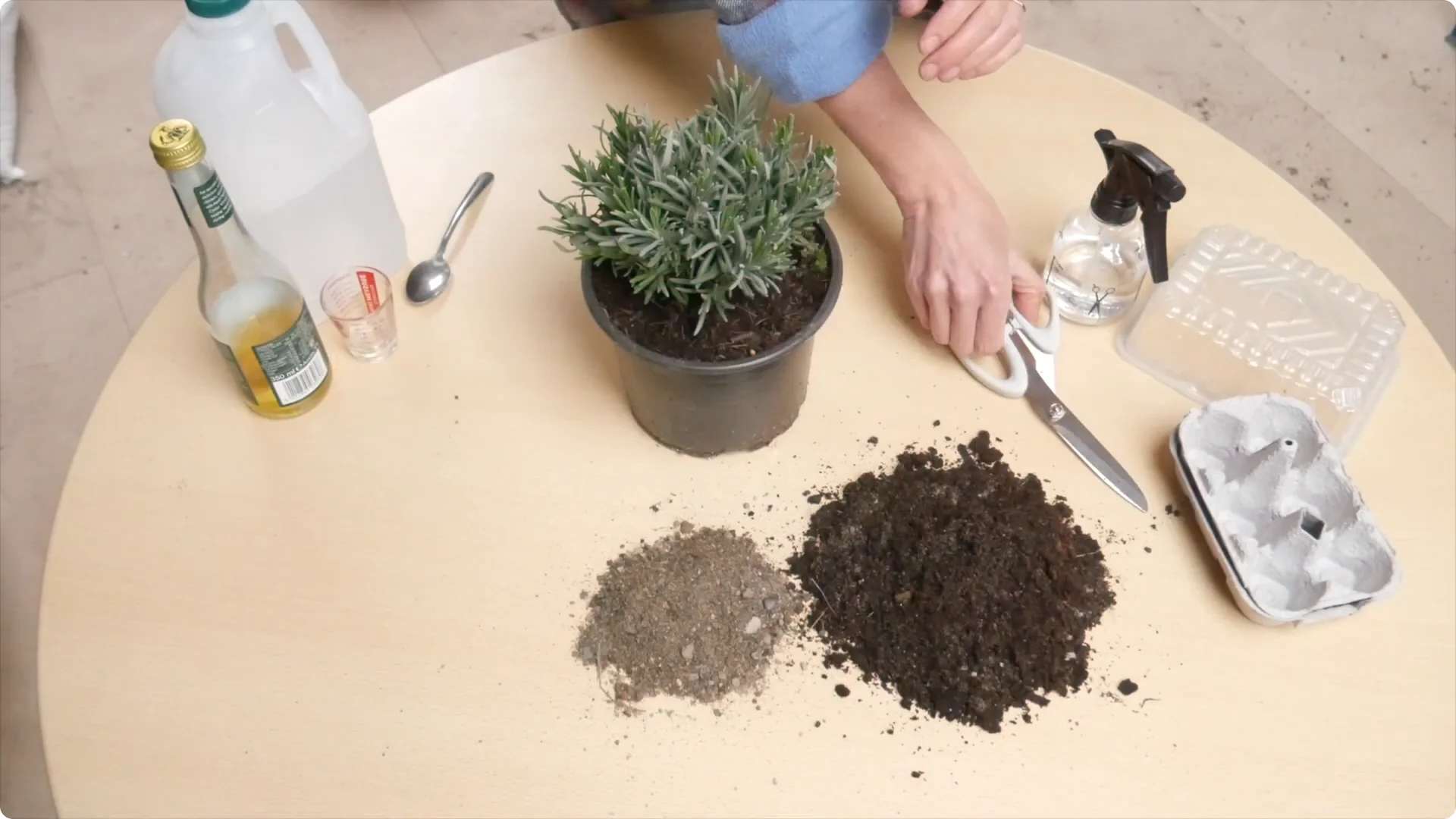
Reused items like an egg carton or an old veg carton work well as trays and covers.
For stronger mother plants, see these lavender growing secrets.
Lavender Propagation from Cuttings Select and Prep the Tip
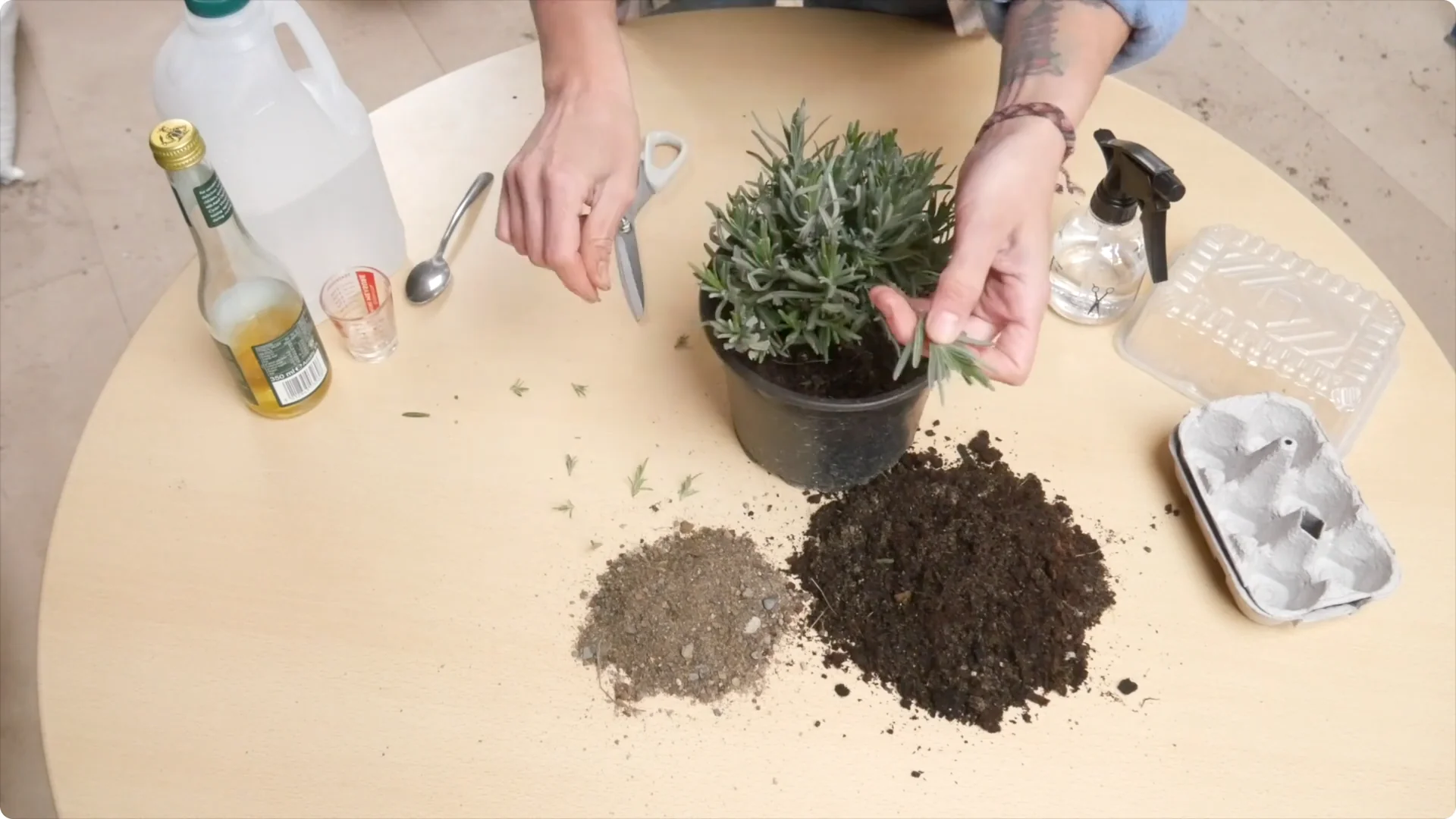
Pick a vigorous, leafy stem and make your cut where the stem just begins to firm up.
Strip the lower leaves from the stem, then snip a little off the tip to push more energy toward root formation.
Avoid common growing mistakes that weaken cuttings: Lavender Growing Mistakes To Avoid.
Lavender Propagation from Cuttings Make a Natural Rooting Solution
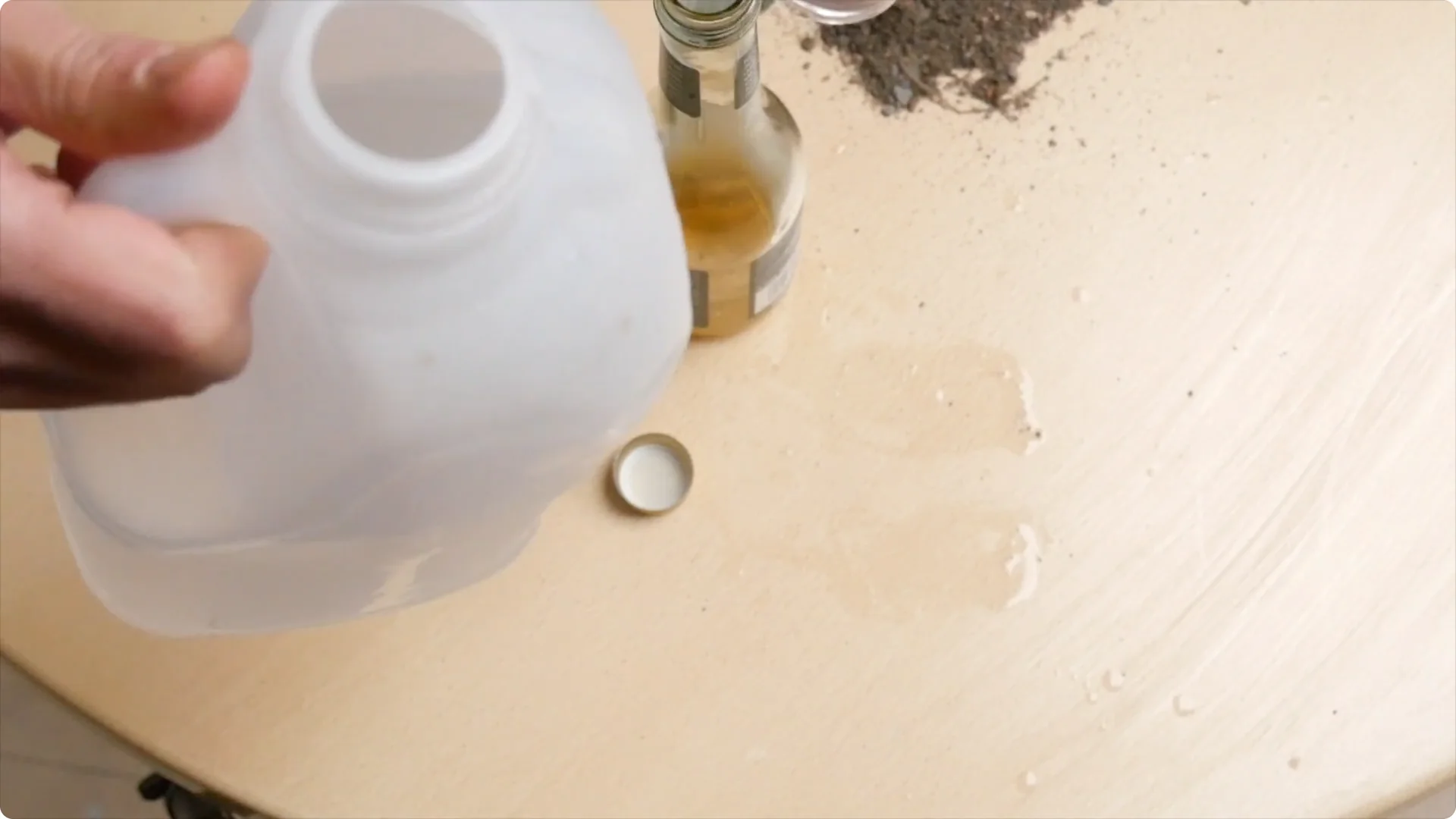
Mix 1.2 to 1.5 liters of water with 1 teaspoon of cider vinegar, shake, and pour into a small container.
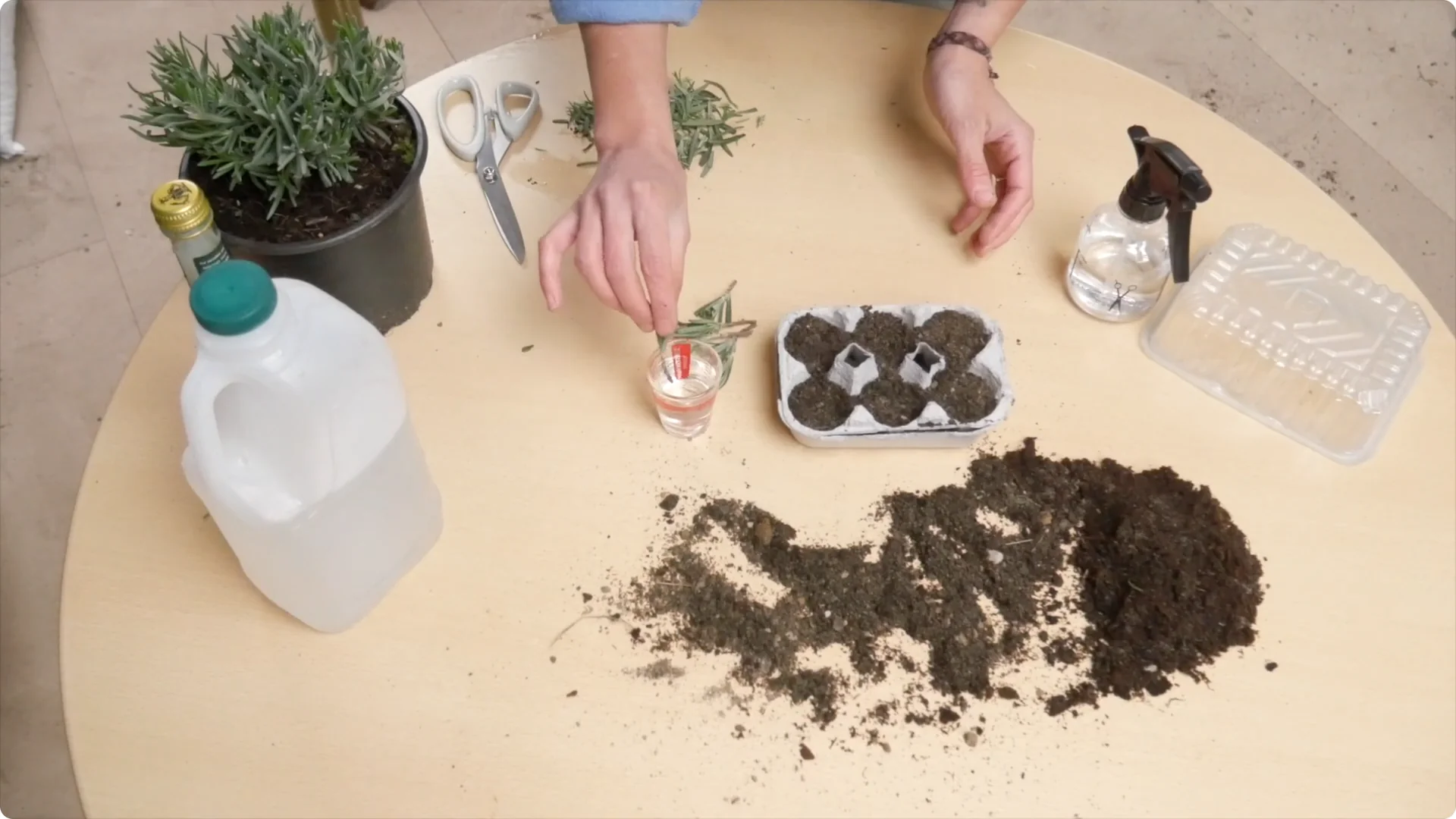
You can also use a rooting powder if you prefer.
Propagating other plants too?
Try this tomato trick for rose cuttings.
Read More: Kitchen Secret Boosts Orchid Growth Blooms
Lavender Propagation from Cuttings Mix the Growing Medium
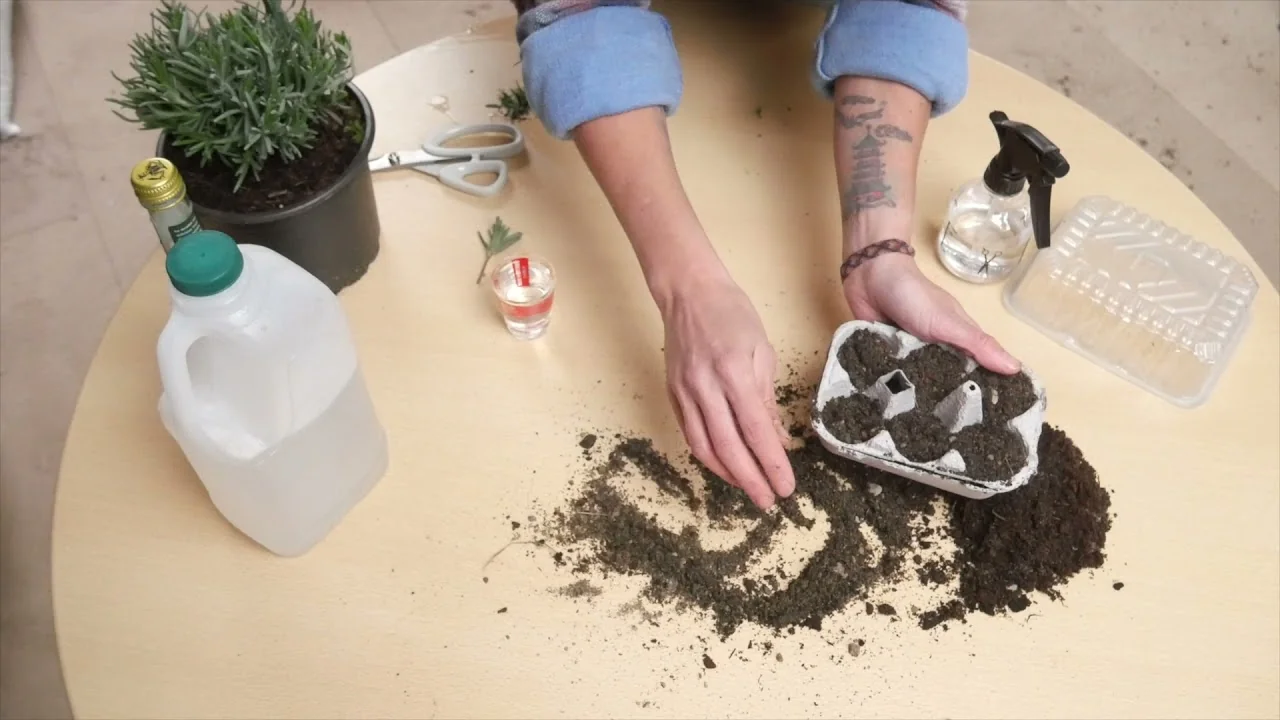
Combine equal parts sharp sand and soil for a gritty, airy medium that roots can move through easily.
An egg carton makes a handy, low-cost tray and stays dry enough for these lightly watered starts.
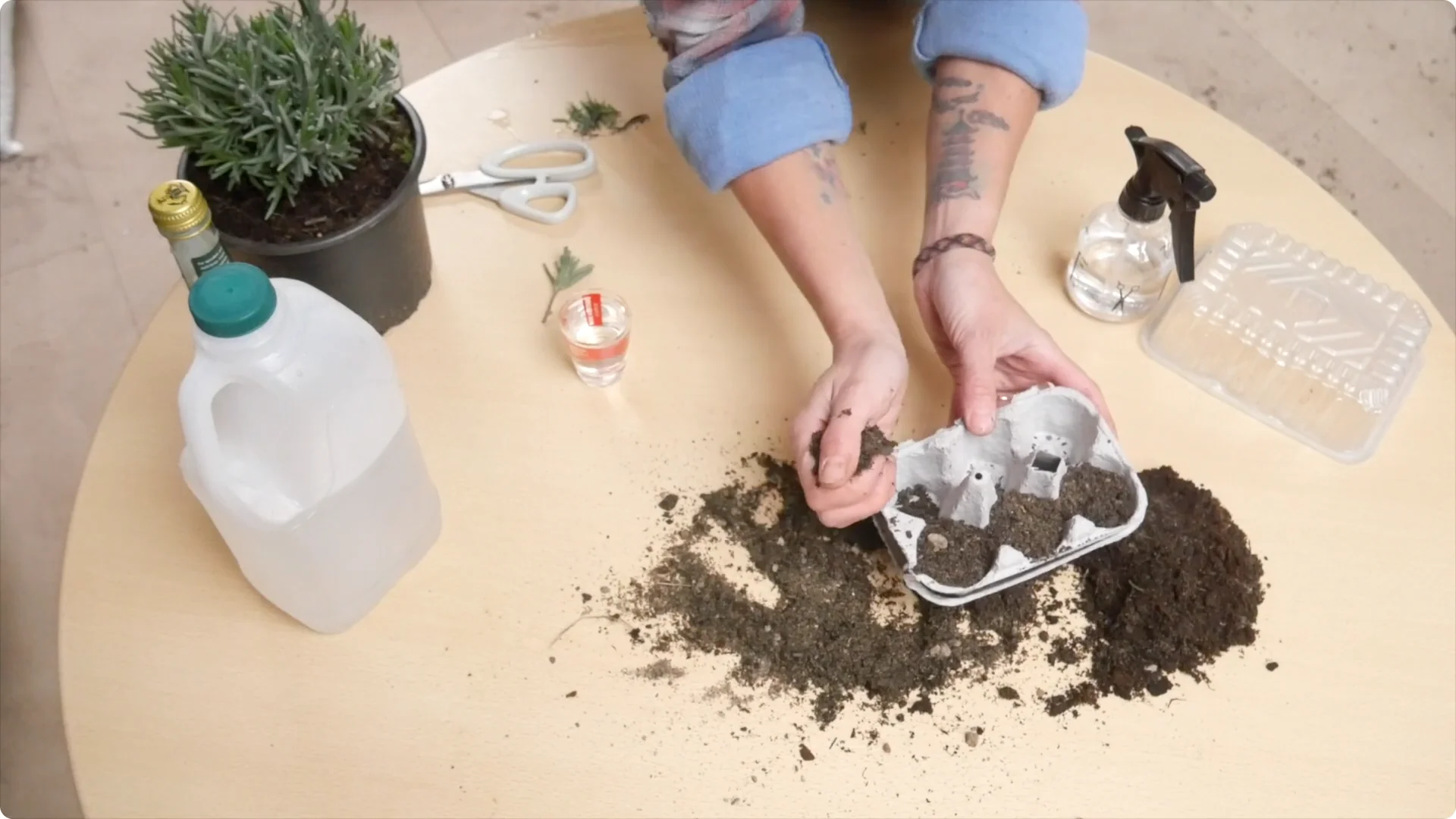
Set yourself up for success by avoiding key planting mistakes: Lavender Planting Mistakes To Avoid.
Lavender Propagation from Cuttings Plant the Cuttings
Dip the cut end into the vinegar solution or rooting powder, then insert it into the sandy mix.
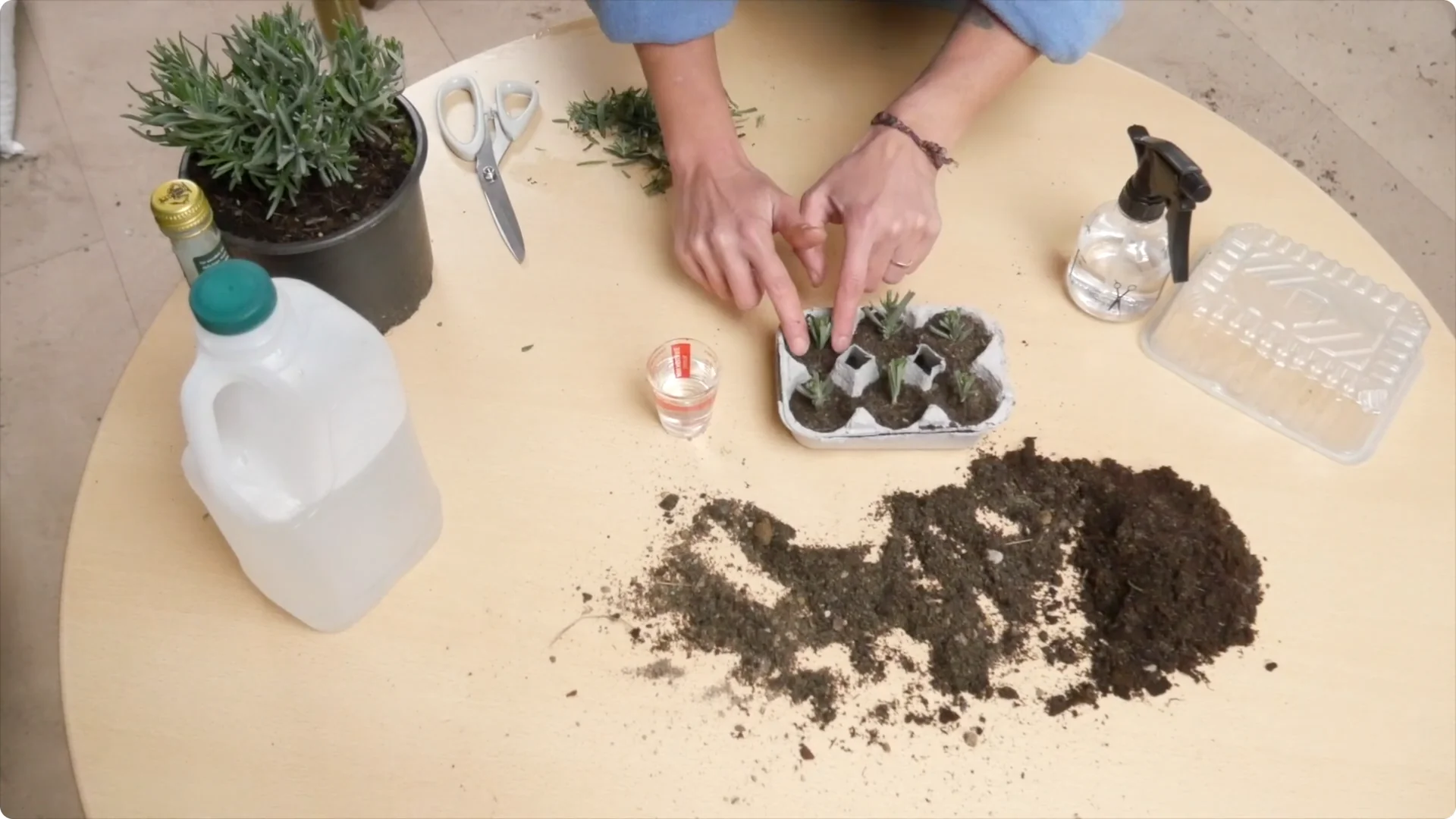
Do not compact the soil; keep it loose so new roots can spread.
Press just enough so each cutting stays upright.
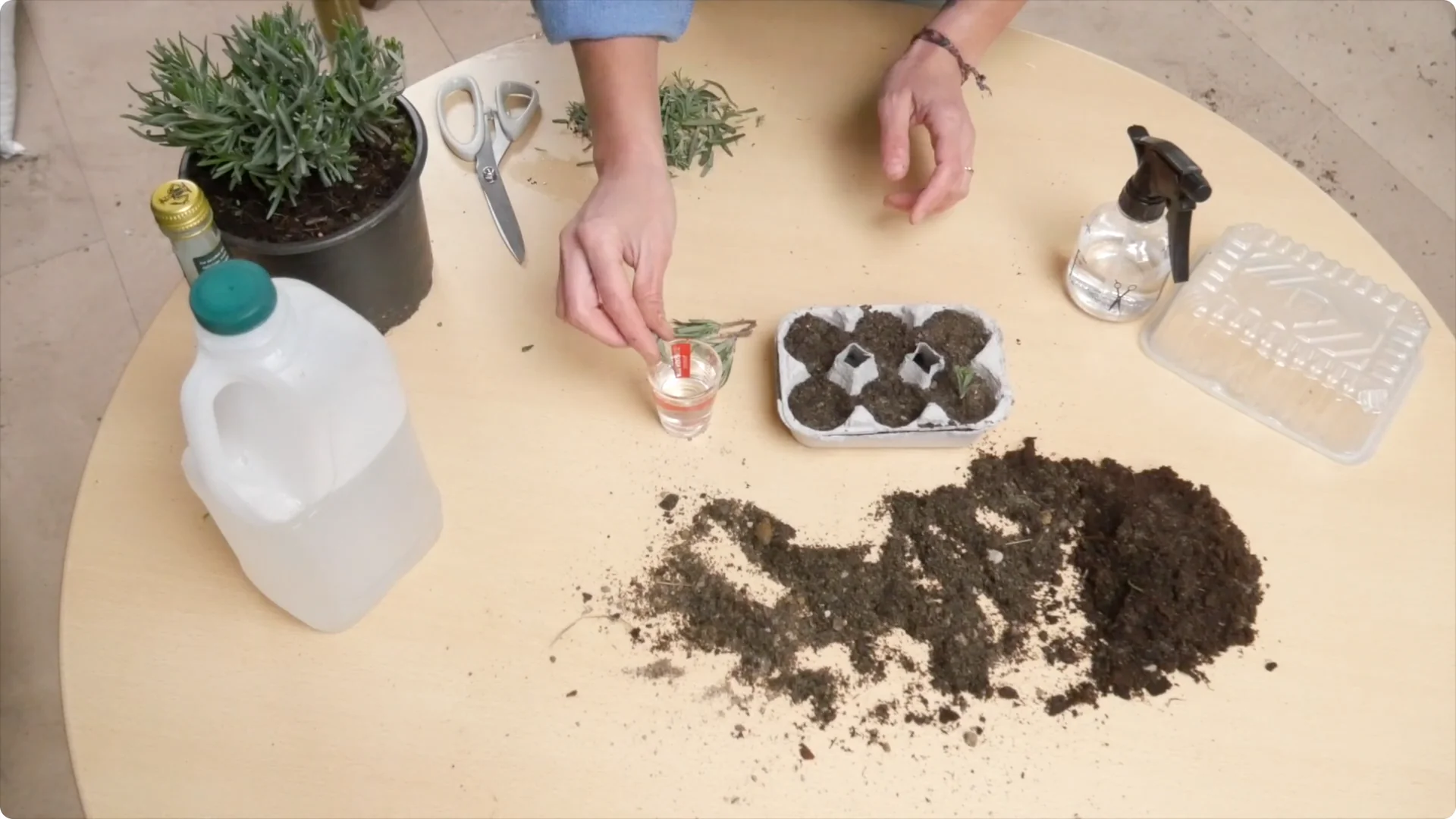
Lavender Propagation from Cuttings Water and Cover
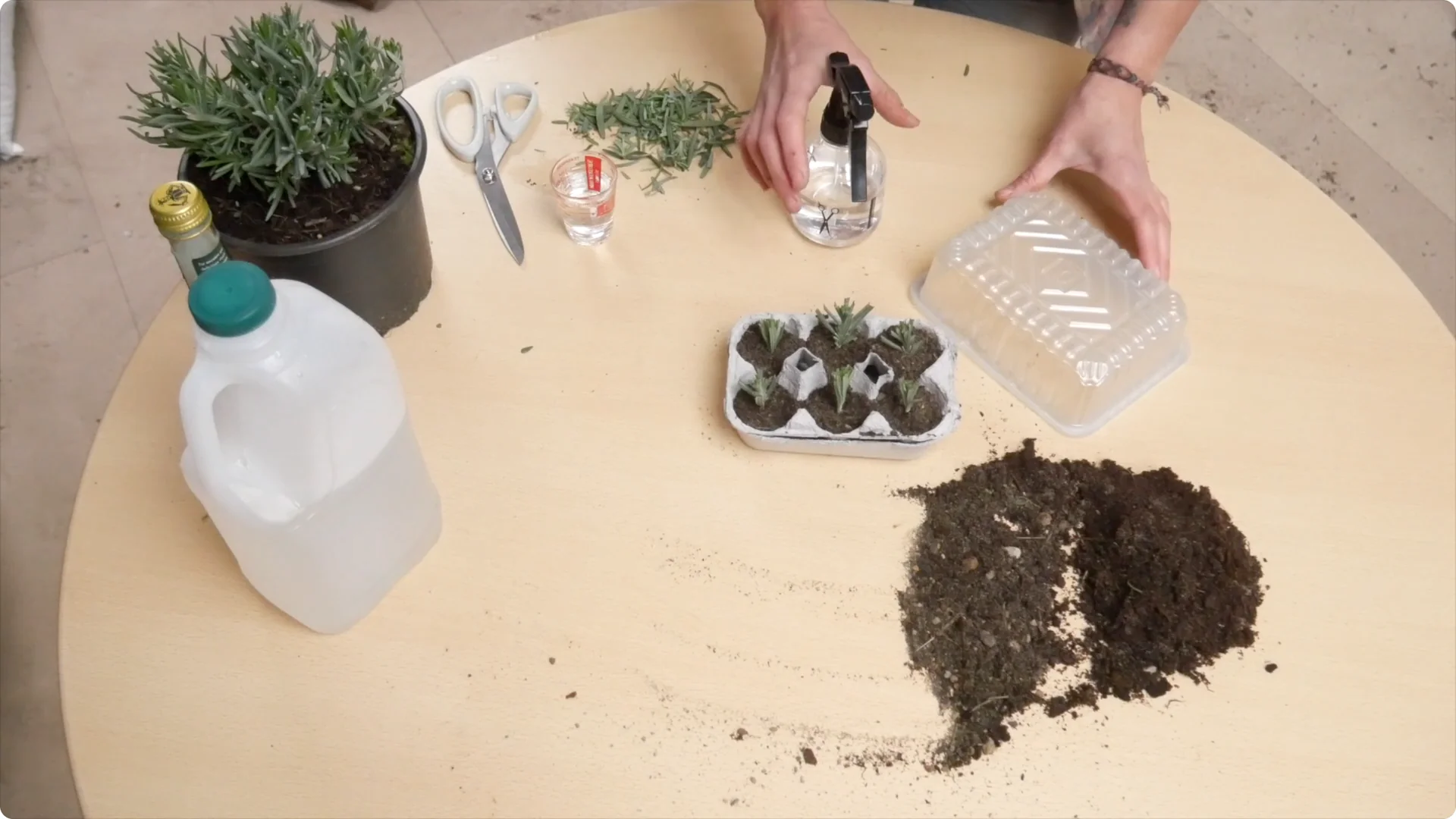
Give a light mist with a spray bottle and keep the medium barely moist.
Avoid waterlogging and check every other day.
Cover with a vented, slightly opaque lid to create a gentle greenhouse effect, then place the tray in a sunny spot.
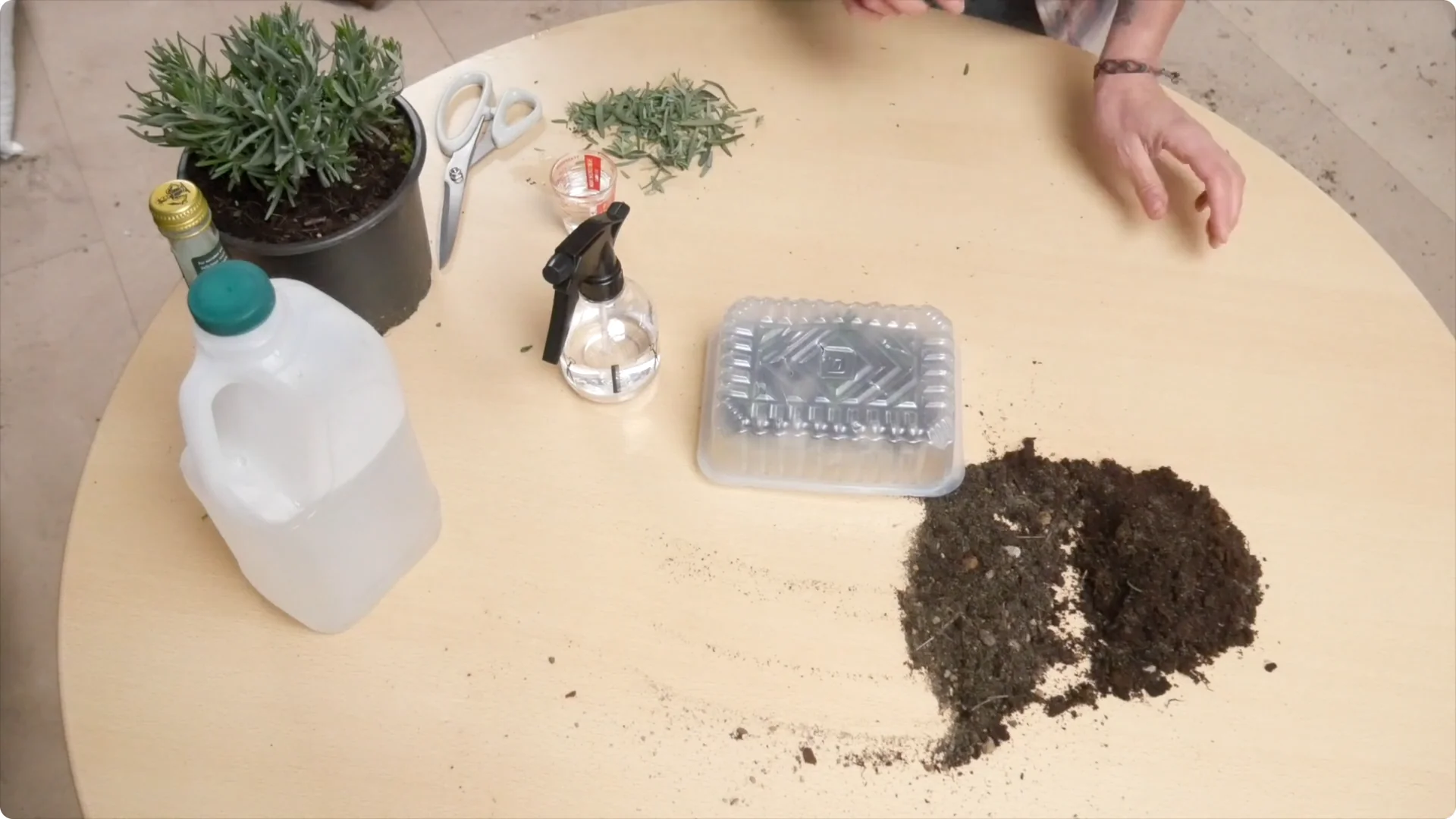
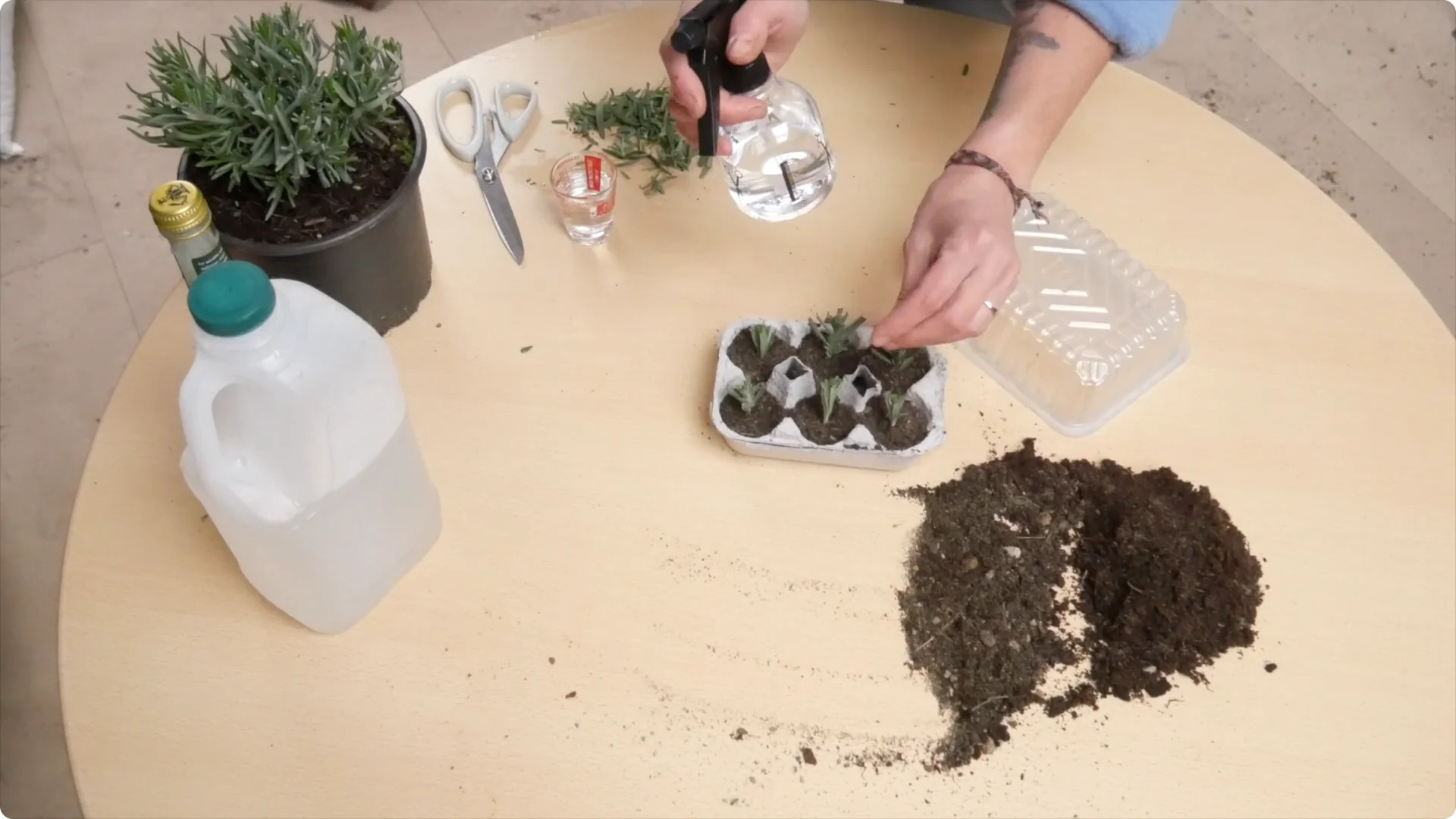
If mature plants struggle later, learn how to revive struggling lavender with natural fertilizers: Revive Dead Lavender Natural Fertilizers.
Final Thoughts
Keep the mix gritty, the moisture light, and the cover vented. Select firm tips, strip leaves, and avoid compacting the medium for fast, clean rooting. Stay consistent, and your tray of lavender cuttings will settle in and grow.