

Simple ingredients like onions can become a powerful assistant in rose propagation. With this method, you can successfully propagate roses while taking advantage of natural nutrients that are safe for the plant.
I prepare an onion, wash it, and peel off the dry outer skin. Do not throw the skin away because it contains many flavonoid compounds, quercetin, and strong antioxidants. These substances can inhibit bacteria and mold, helping to protect cuttings from root rot.
Onion Extract for Rose Cuttings
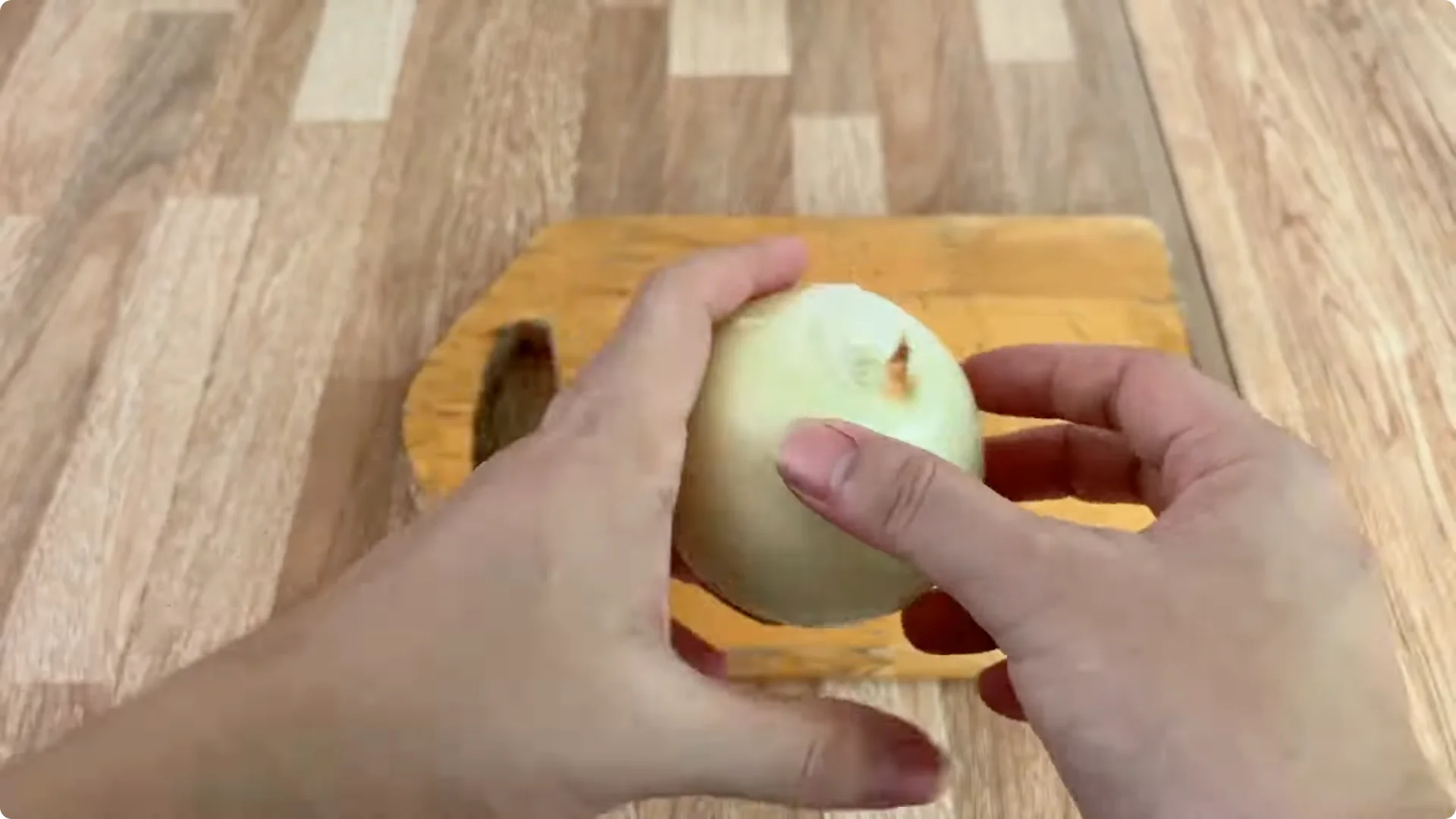
1. Onion skin benefits
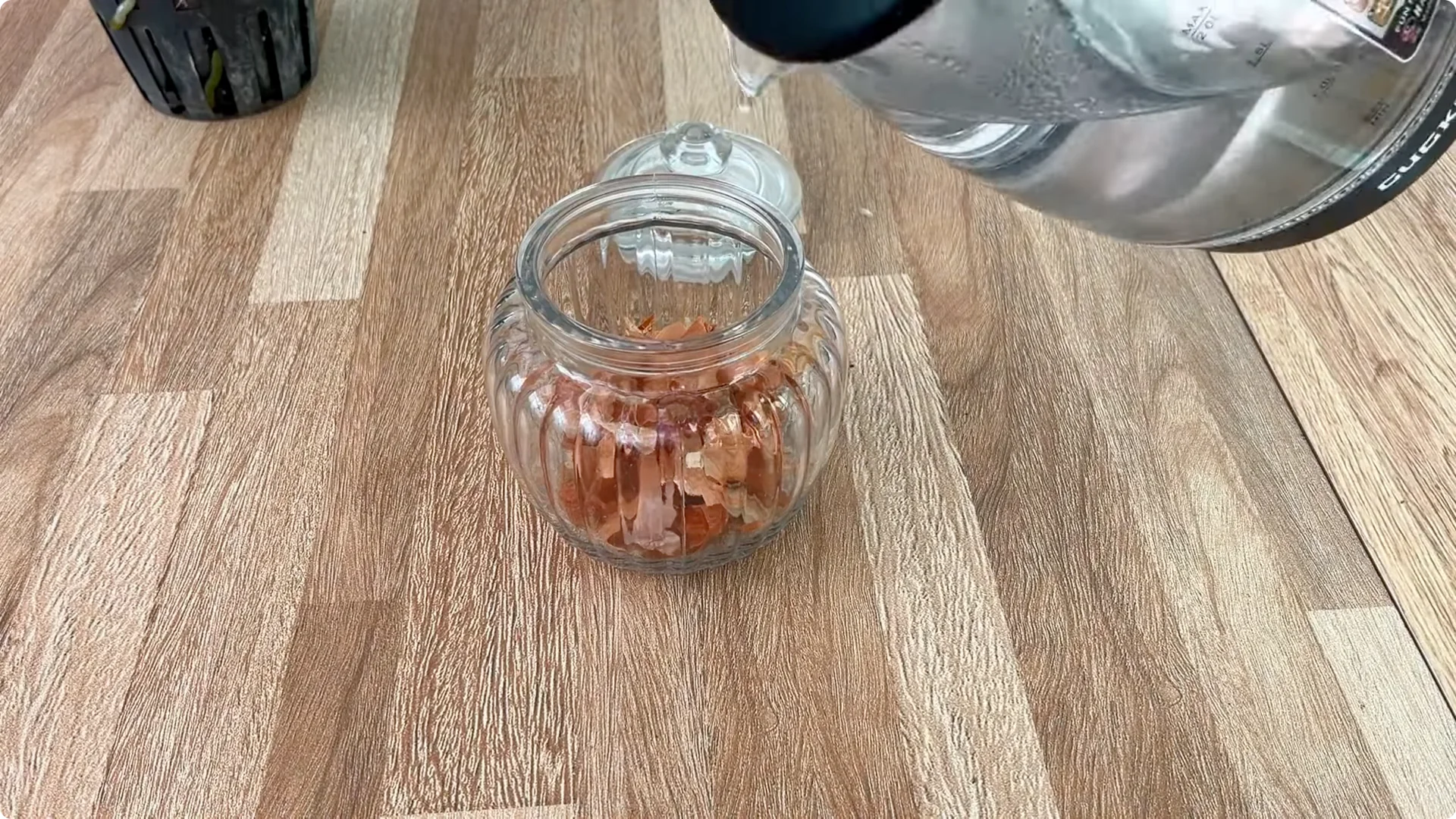
Chop the onion skin and put it in a clean glass jar. Add 500 ml of boiling water, stir well, and let it cool. When the hot water penetrates, the natural active ingredients in the onion skin are released, creating a solution that acts as a natural antibiotic for the plant.
For another kitchen approach that helps rose stems root, see a simple trick that helps rose stems root.
2. Fresh onion solution
The onion flesh is also very useful. Take about 30 grams of fresh onion, chop it, and put it in a clean plastic cup, then add 500 ml of water. Fresh onions are rich in sulfur, vitamin C, and some beneficial enzymes that play a role in stimulating the formation of new roots.
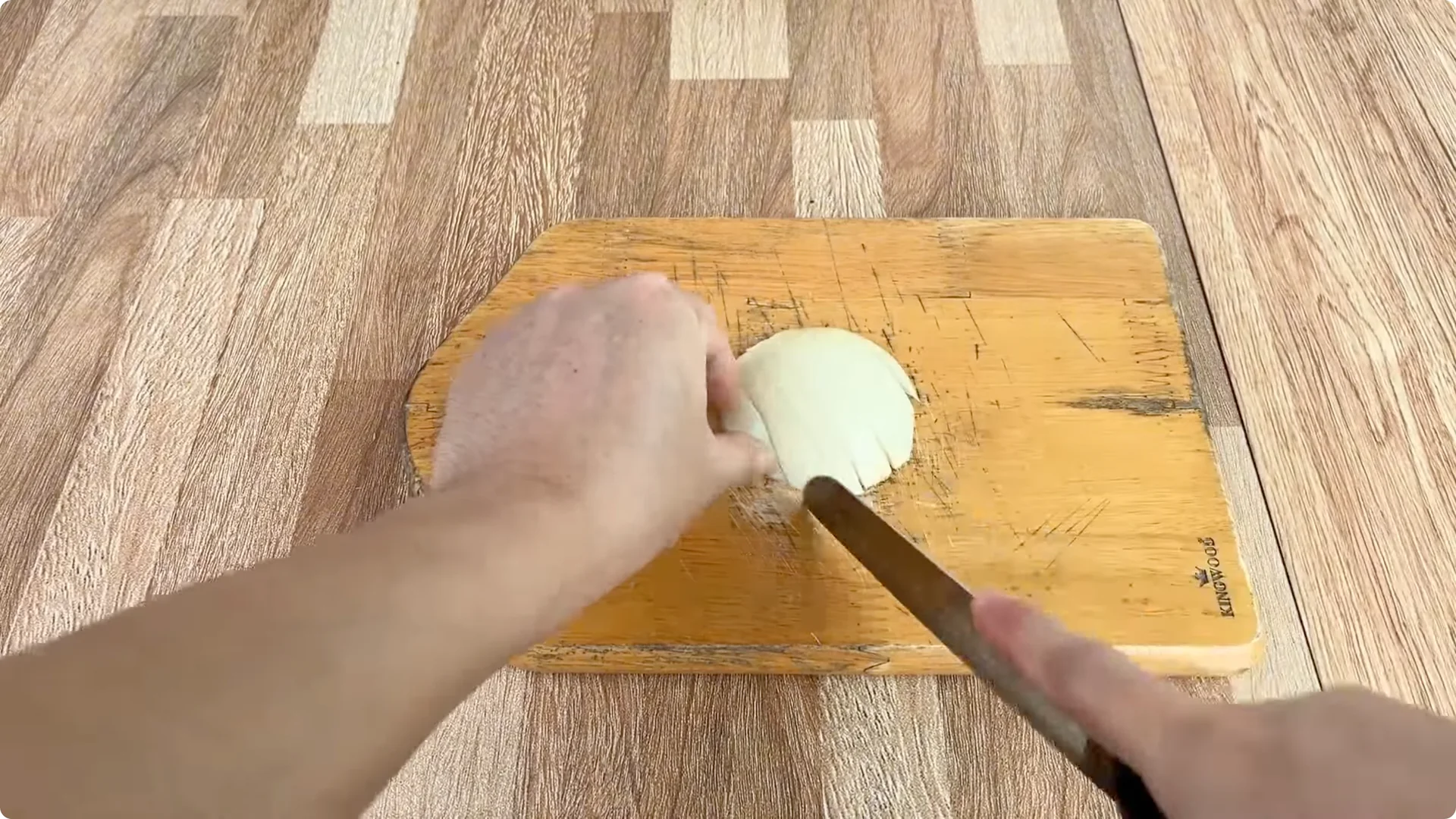
The organosulfur compound in onions helps increase the resistance of cuttings. It reduces the risk of disease in the early stages.
3. Choose and prep the cutting
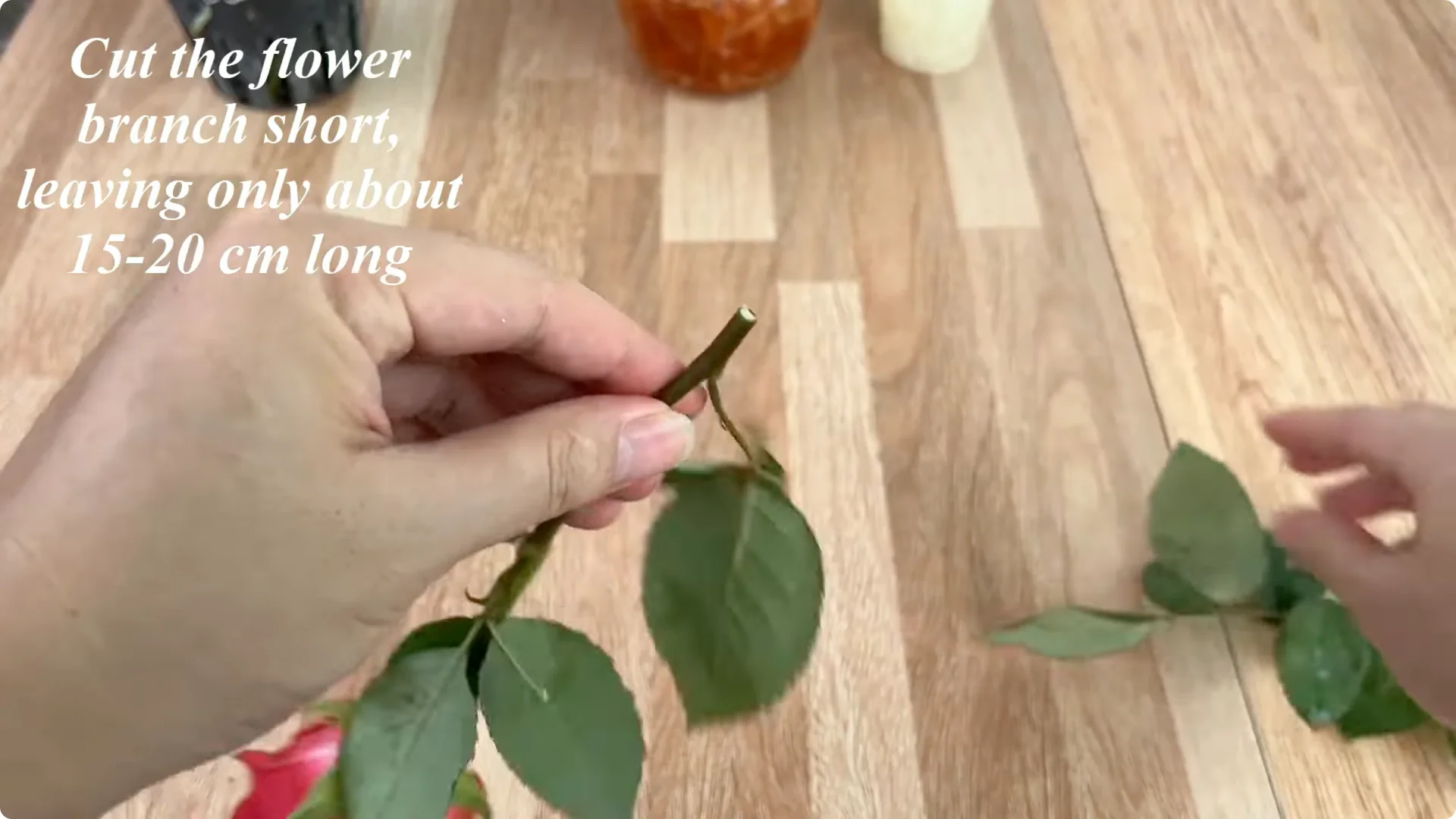
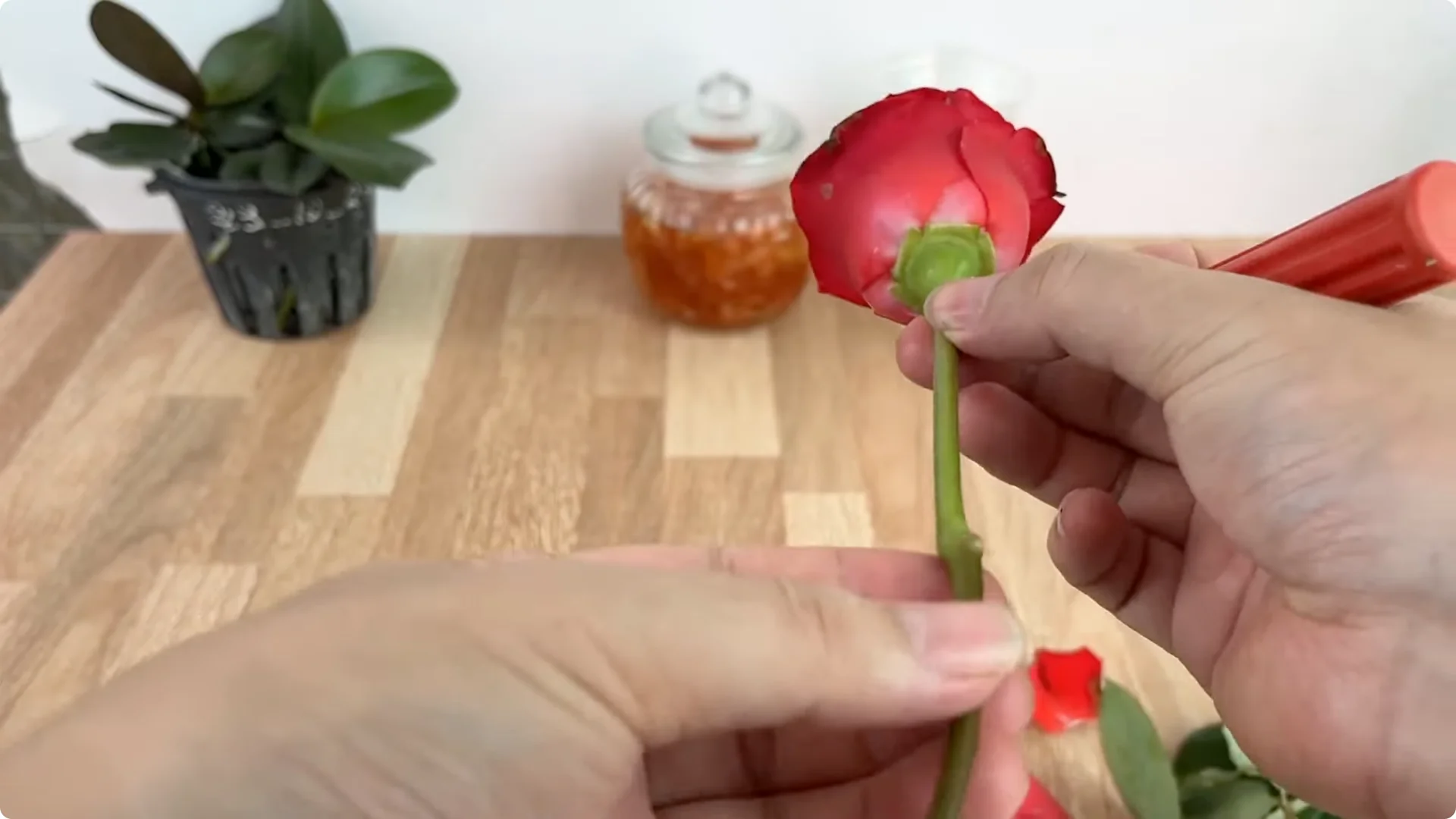
Choose a healthy rose branch that is free of pests and diseases with moderate age. If the branch is too young, it will easily wither, and if it is too old, it will be difficult to root. Cut it short, keeping only 15 to 20 cm, and remove all the leaves and sharp thorns so the plant can concentrate nutrients on the stem.
4. Soak to sterilize and stimulate
Soak the rose branch directly in the fresh onion solution for about 30 minutes. This stage allows the nutrients to penetrate, sterilize the stem, and stimulate the stem cells to begin forming callus. Callus is a prerequisite for new roots to develop.
To support vigorous early growth after rooting, see tips that can boost rose growth.
5. Set up the rooting cup
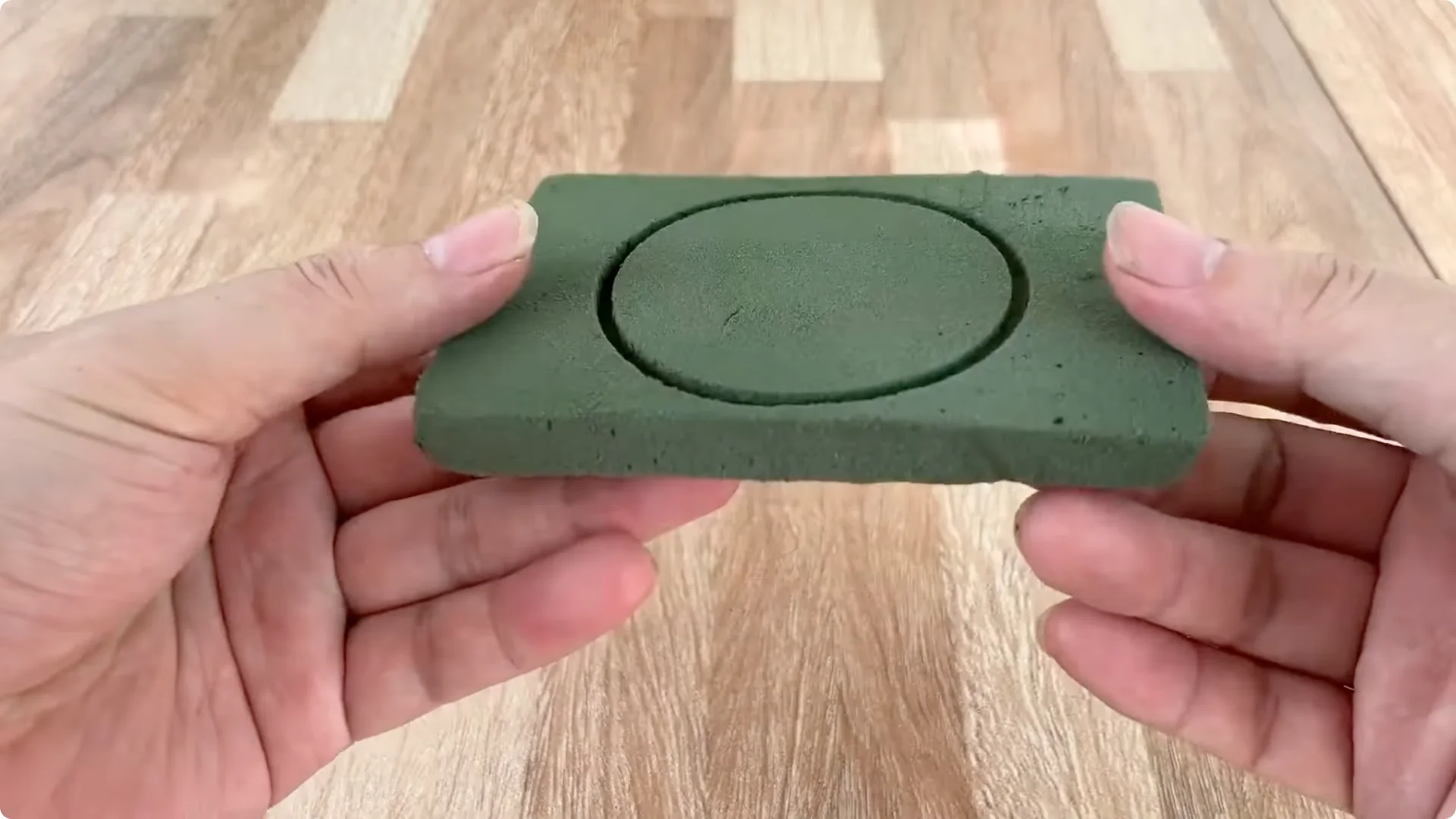
Prepare a clean glass cup and a piece of foam. Cut the foam so that it fits the mouth of the cup. This small detail fixes the cutting while limiting evaporation of the solution inside.
6. Filter and combine solutions
After 30 minutes of soaking, take the rose branch out of the fresh onion solution. Carefully filter this solution to remove residue, retaining the clear water. Filter the cooled onion peel solution and mix it with the fresh onion solution.
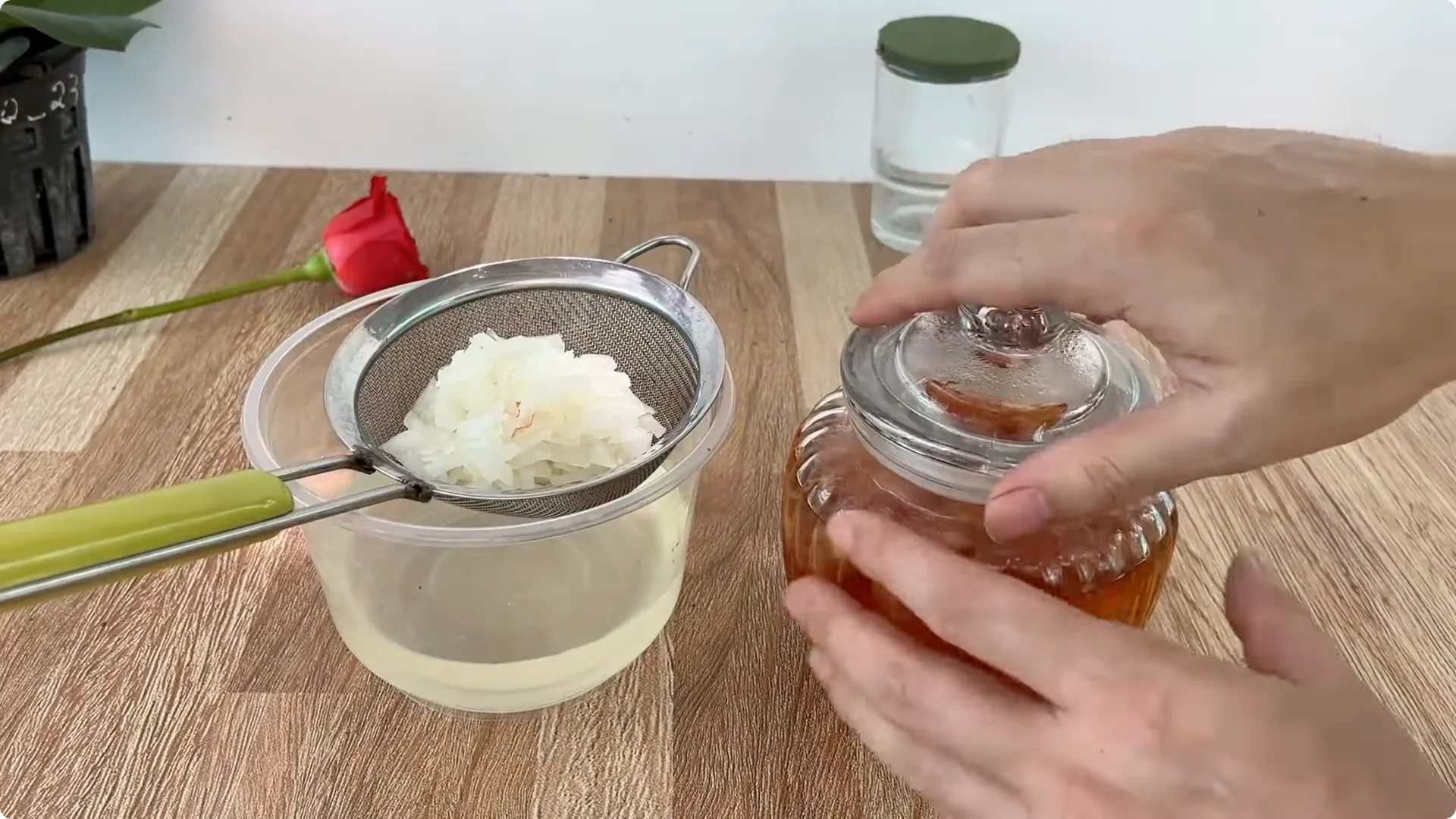
When the two are combined, you have a mixture that is rich in nutrients and has natural antibacterial properties.
7. Insert the cutting
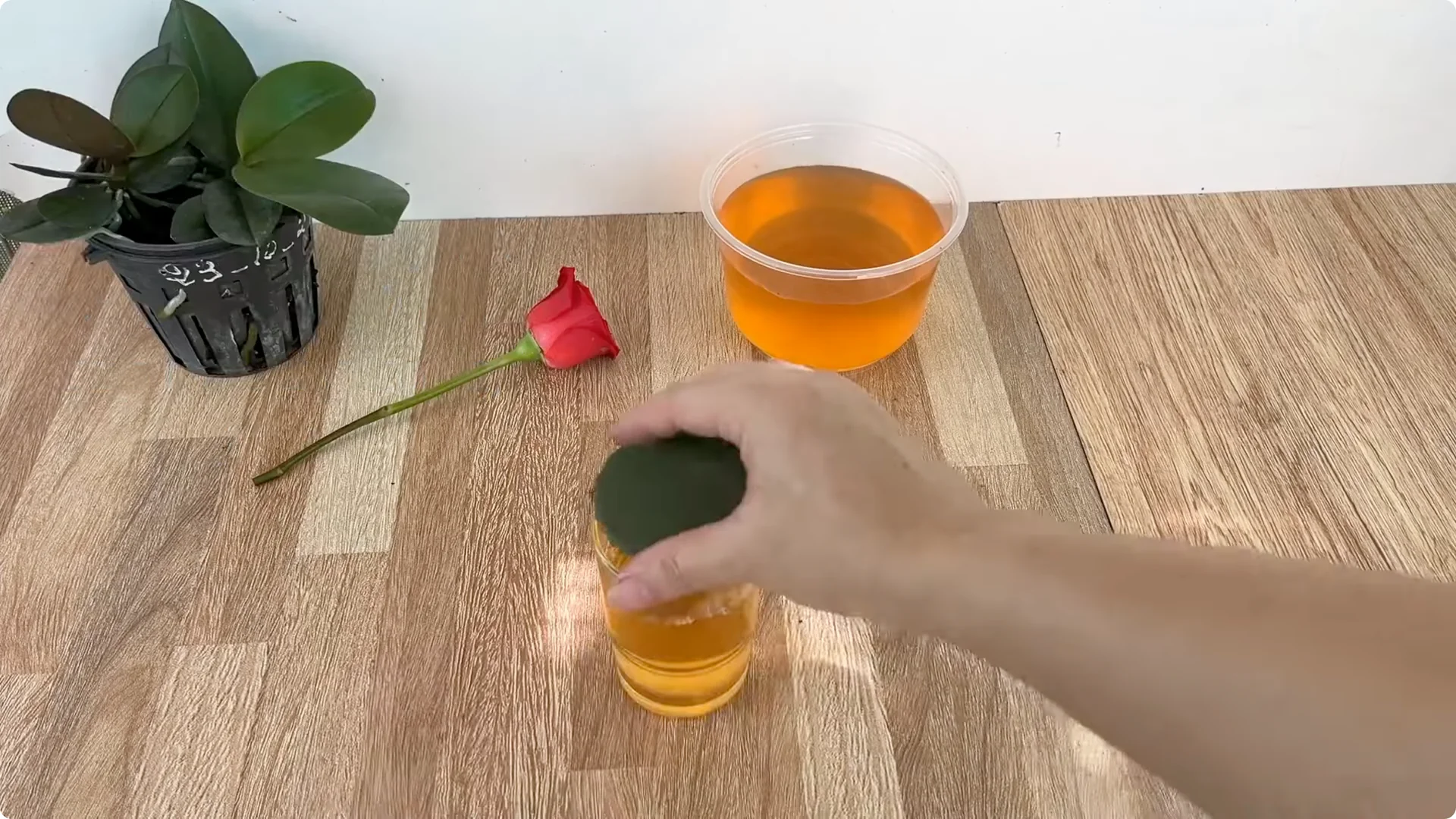
Pour the solution almost full into a glass cup. Cover it with the piece of foam and insert the rose branch through the middle so the stem is deeply immersed in the solution. For a glass based rooting approach that also produces blooms, explore the beer glass method.
8. Create a humid mini greenhouse
To keep moisture better, cover the mouth of the cup with a transparent plastic bag. This creates a microclimate like a mini greenhouse, maintaining stable humidity and temperature. Place the cup in a cool spot away from strong sunlight and strong winds, because young shoots need maximum protection.

9. Results to expect
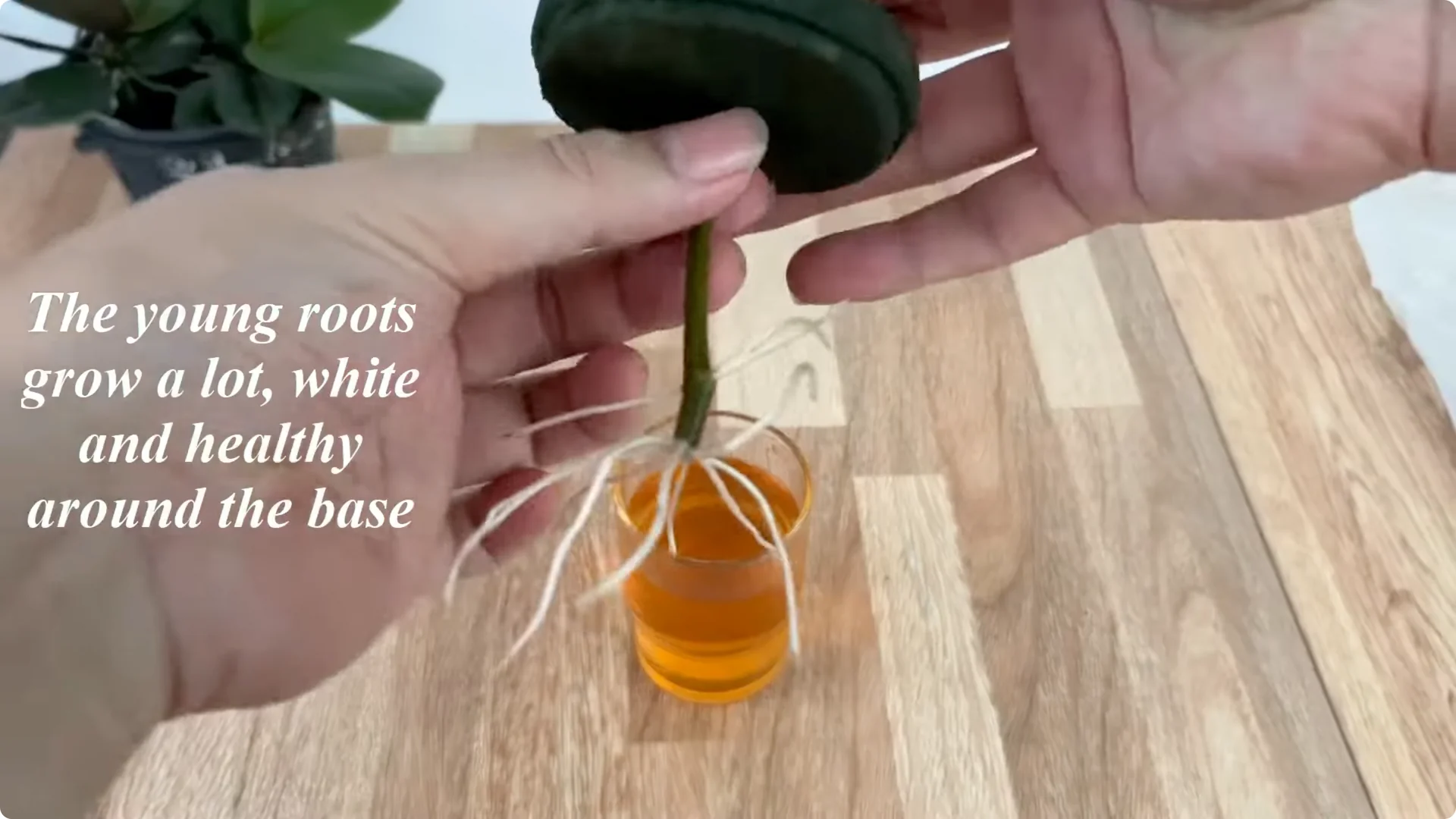
After only 7 days, you will witness a change. From the seemingly dry and hard rose branch, young green shoots begin to sprout. Young, white, healthy roots grow around the base, showing the plant is ready to enter a new growth stage.
10. Potting up
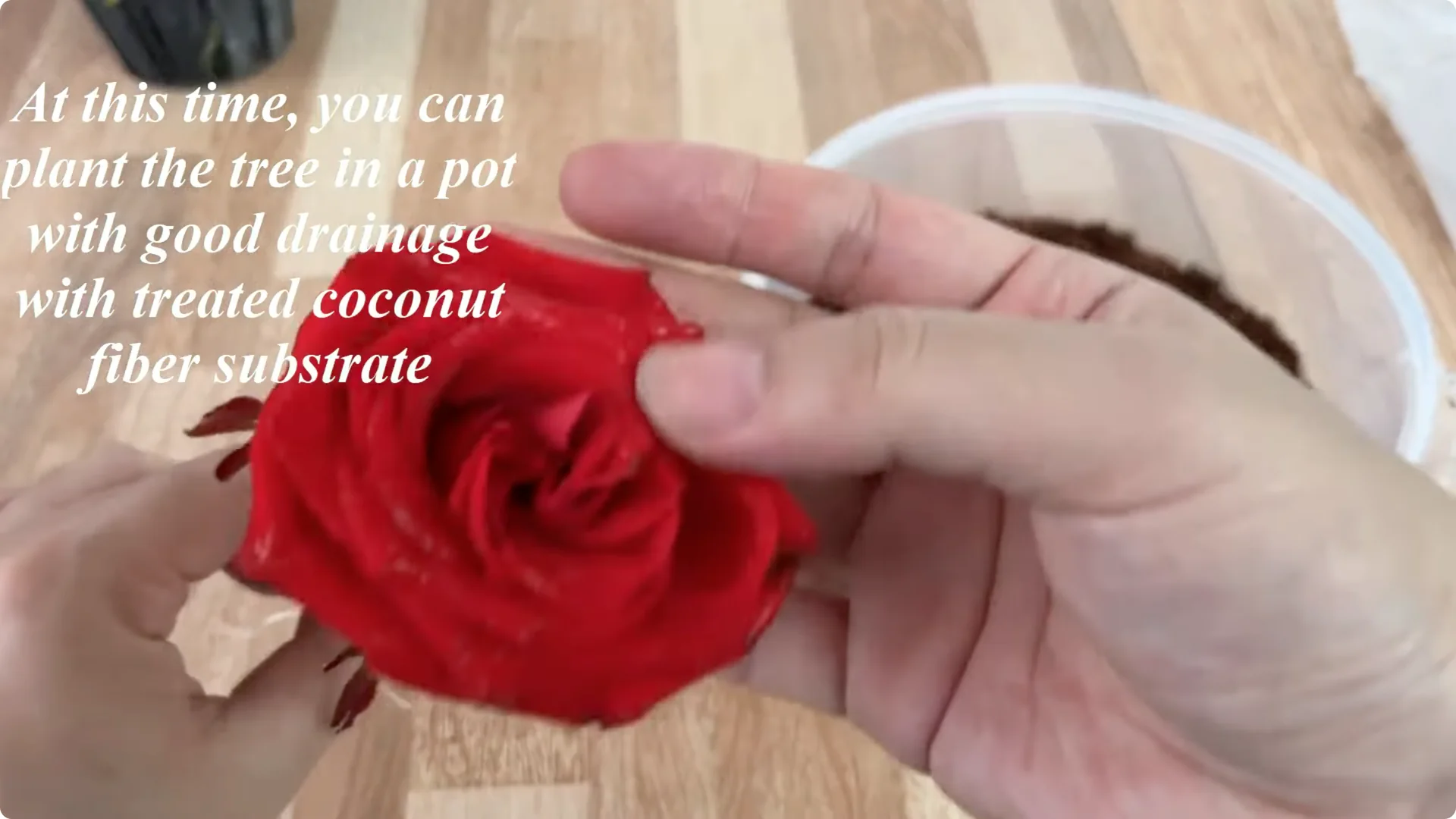
Gently move the branch to a pot with treated coconut fiber substrate. You can also mix it with humus soil to help the plant grow more sustainably. Keep the medium lightly moist and protected as the roots establish.
Final Thoughts
This method is simple and safe, making the most of natural resources. From dried onion peel to fresh onion flesh, both protect and stimulate the growth of rose branches. When you see green shoots and white roots, that is the sweet moment when your care is rewarded.