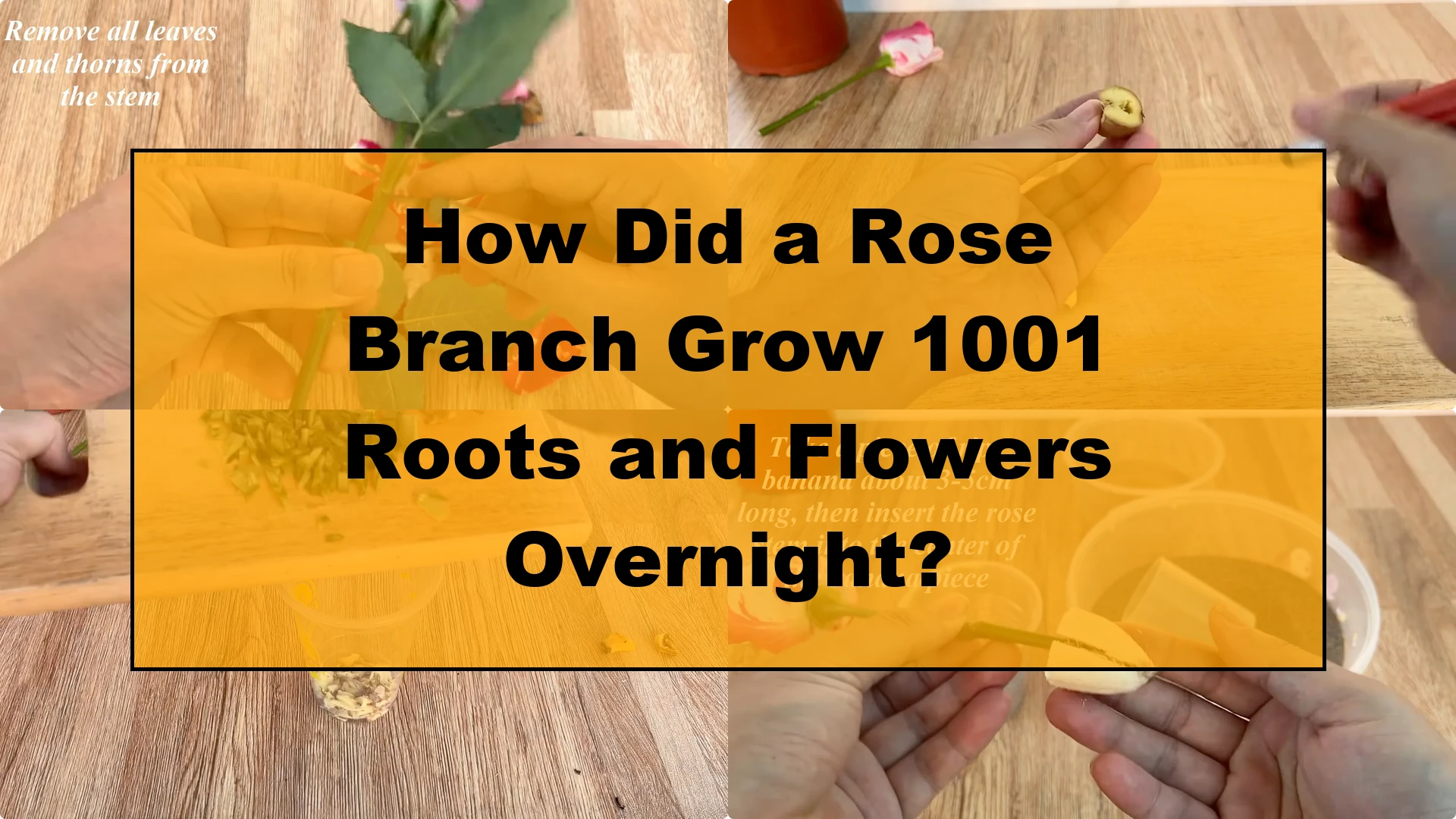
Here is a manual but extremely effective method of propagating roses using familiar ingredients from your kitchen to create a powerful rooting solution. Follow each step correctly, and your rose cutting will sprout new shoots, develop roots, and grow into a healthy plant.
What makes this technique stand out is the combination of the antibacterial power of fresh ginger, the concentrated nutrients from ripe banana, and the moisture-retention ability of cucumber peels. Each ingredient plays a unique role, and together they create an ideal environment for quick recovery, new shoots, and strong root formation.
1. Rooting Rose Cuttings: Prepare the Cutting
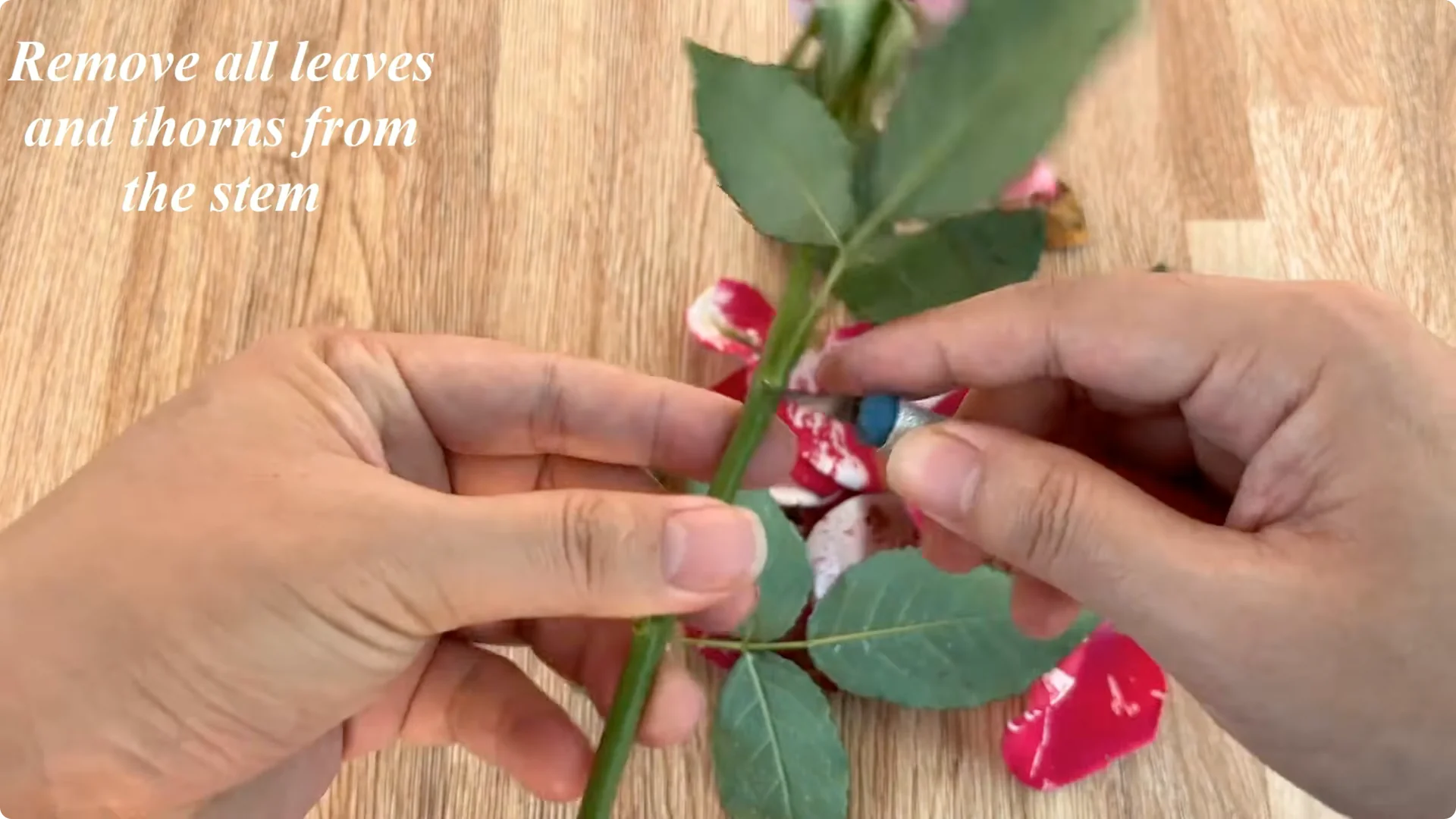
Prepare a healthy rose cutting of moderate age to ensure a high propagation rate. Gently remove any withered or damaged petals to prevent the spread of fungal diseases. Cut off all leaves and thorns on the cutting to minimize water loss in the initial stage.
Trim the branch, leaving a length of about 20 cm. This is the standard length to ensure the branch has enough stored nutrients without excessive energy depletion.
2. Rooting Rose Cuttings: Prep the Ginger
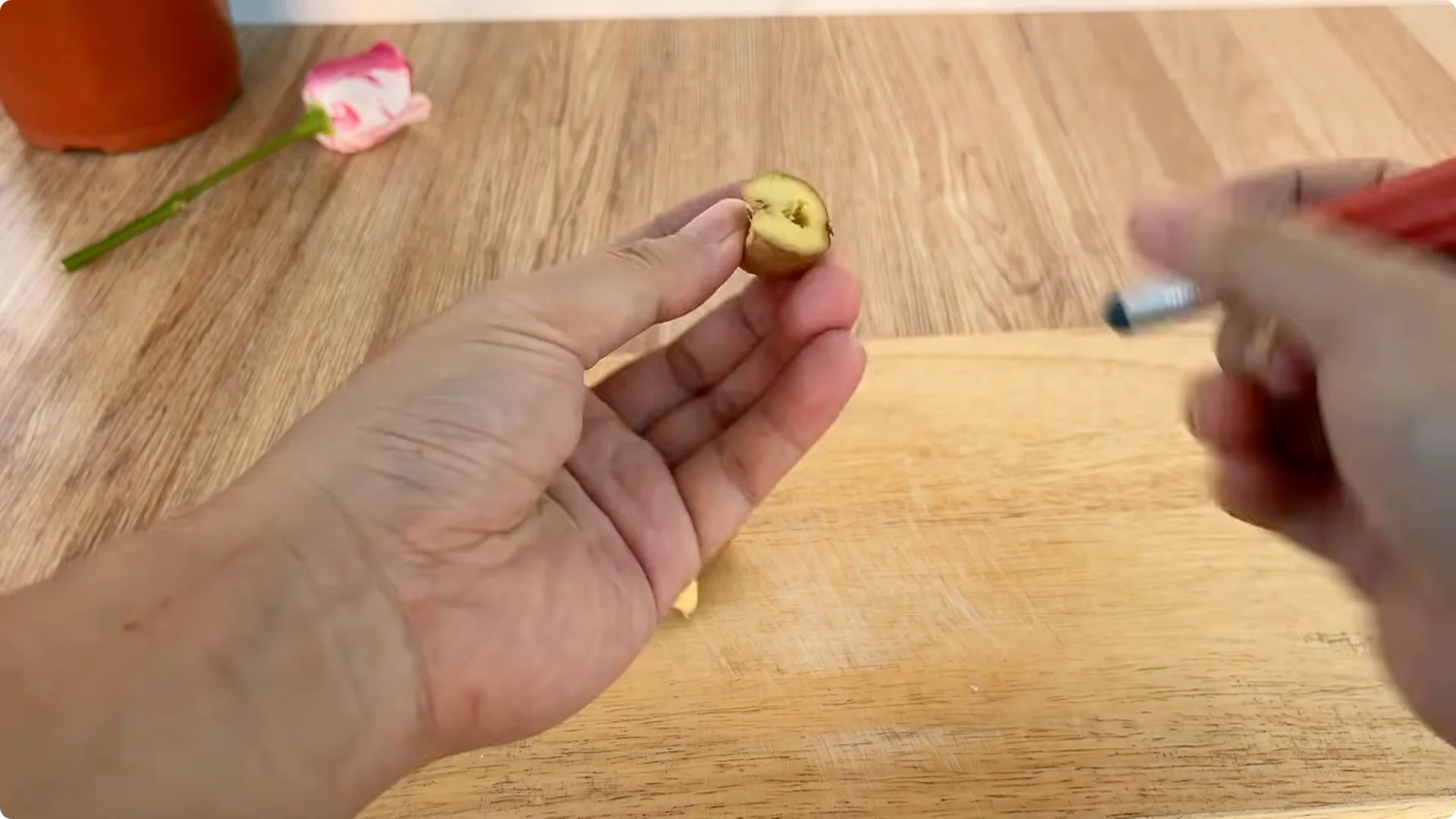
Use fresh ginger. Ginger contains gingerol, a compound with very strong natural antibacterial and antifungal properties that helps protect the cut and prevent bacterial invasion.
Wash the ginger and cut a section about 3 cm long. Use a small knife to gently hollow out a hole in the middle of the ginger piece, just large enough to fit the flower stem. Insert the base of the stem into this hole so it contacts the ginger for natural antifungal protection that minimizes root rot in the early days.
Chop the remaining ginger and place it in a clean plastic cup.
3. Rooting Rose Cuttings: Add Banana and Cucumber
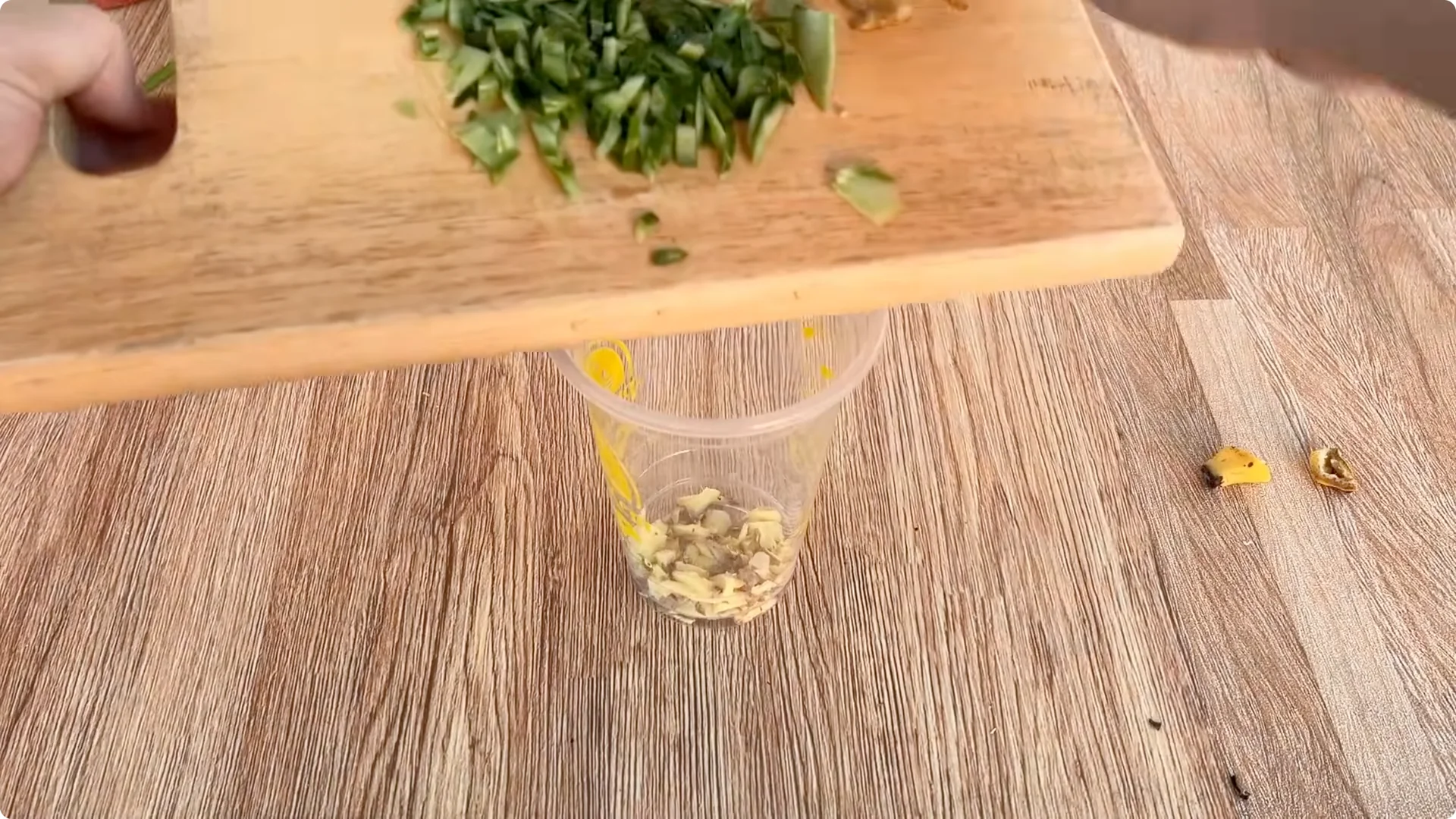
Use a ripe banana, which is rich in potassium, vitamin B, and natural sugars that provide energy for tissue regeneration and stimulate new root growth. Wash the banana peels, peel the banana, and chop the peels into small pieces.
Wash the cucumber, remove the green outer layer, and chop it into small pieces. Cucumber peels are rich in silica and natural water, which helps increase the moisture content of the rooting mixture and helps root tissue retain water better.
Combine the chopped ginger, banana peels, and cucumber peels in a cup. Add 500 ml of warm water and stir well. Let the mixture sit for 30 minutes to allow the nutrients to dissolve into the water, then filter to obtain a nutrient-rich rooting solution that both feeds new roots and disinfects naturally.
4. Rooting Rose Cuttings: Set the Planting Cup
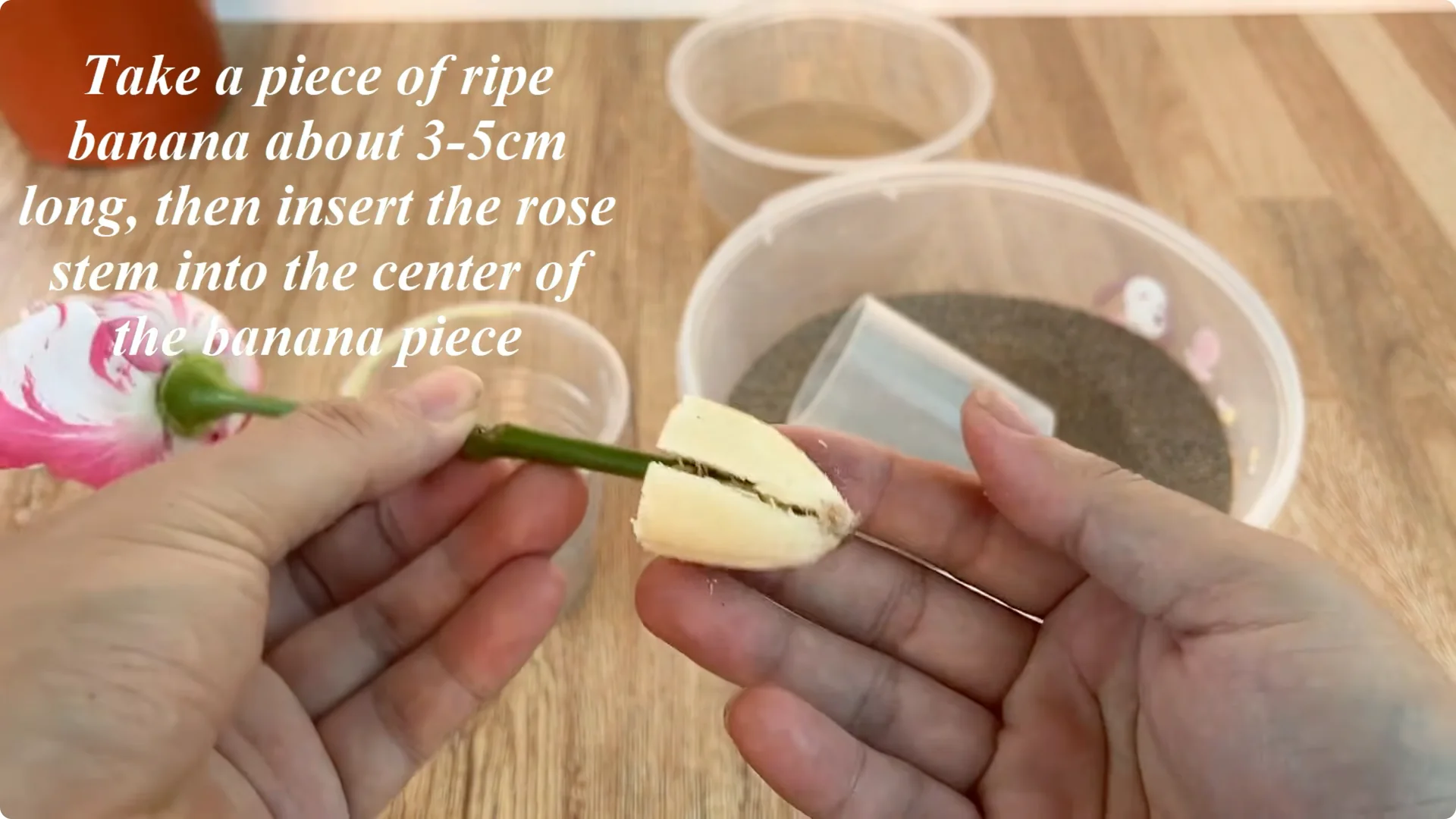
Prepare a clean plastic cup and fill it about one-third full with treated river sand. Remove the rose stem from the ginger piece and prepare for the next step.
Cut a piece of ripe banana about 3-5 cm long and insert the base of the rose stem into the center of this piece. Place the banana piece containing the stem into the cup of sand, then add more sand until the cup is full to secure the stem and ensure good aeration. The ripe banana acts as a soft nutrient substrate, providing natural sugars and vitamins to the stem in the first few days.
5. Rooting Rose Cuttings: Water and Cover
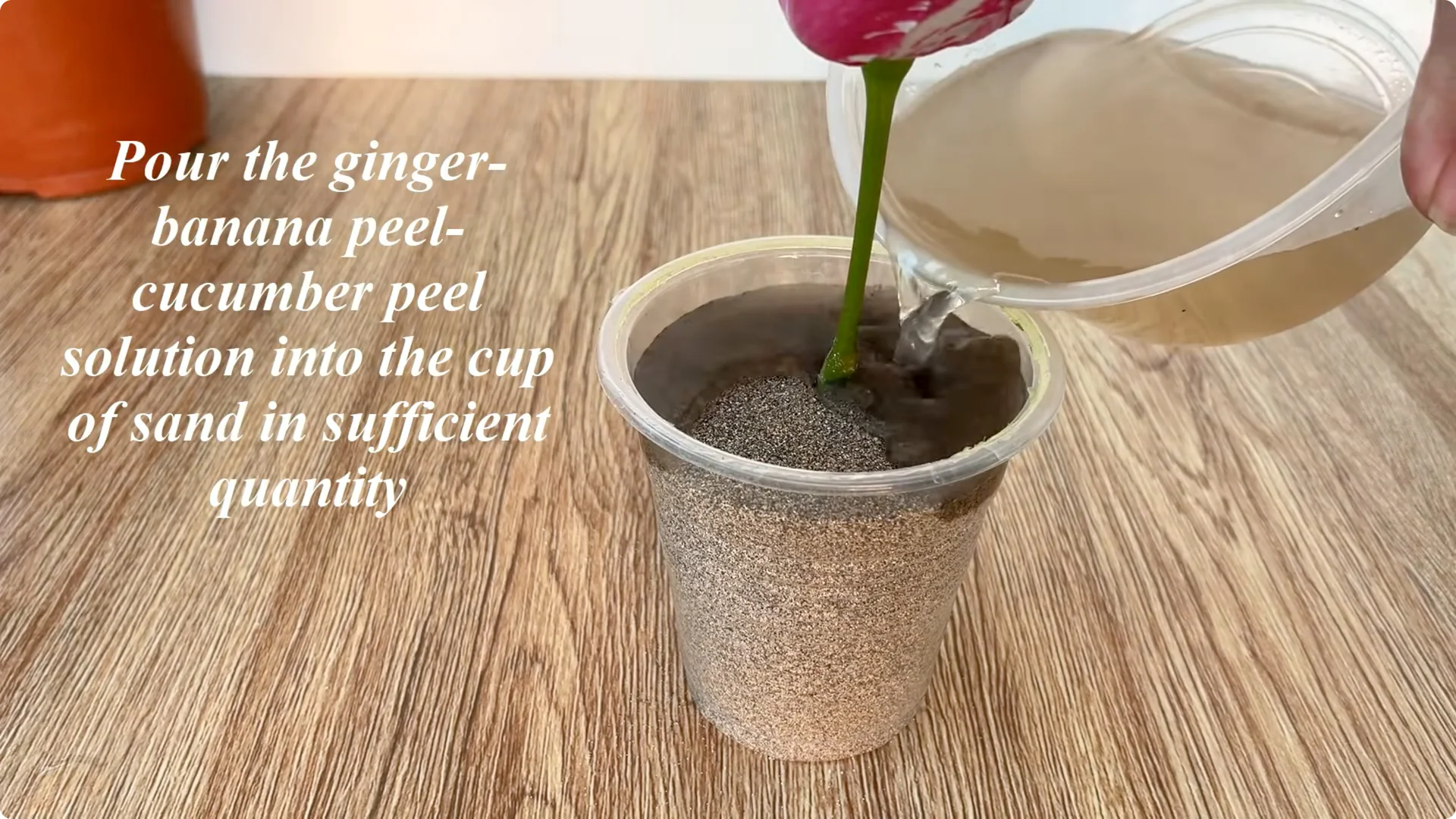
Pour the ginger-banana peel-cucumber peel solution into the cup just enough to create good moisture, without completely submerging the sand. Cover the mouth of the cup and the rose stem with a plastic bag or a clear plastic cup to create a miniature greenhouse environment.
This maintains high humidity and a stable temperature, helping the stem avoid water loss during root formation. Place the cup in a cool, well-ventilated place, away from strong winds and absolutely not in direct sunlight.
Read More: Rose Branch Root Sprout Overnight
6. Rooting Rose Cuttings: What To Expect
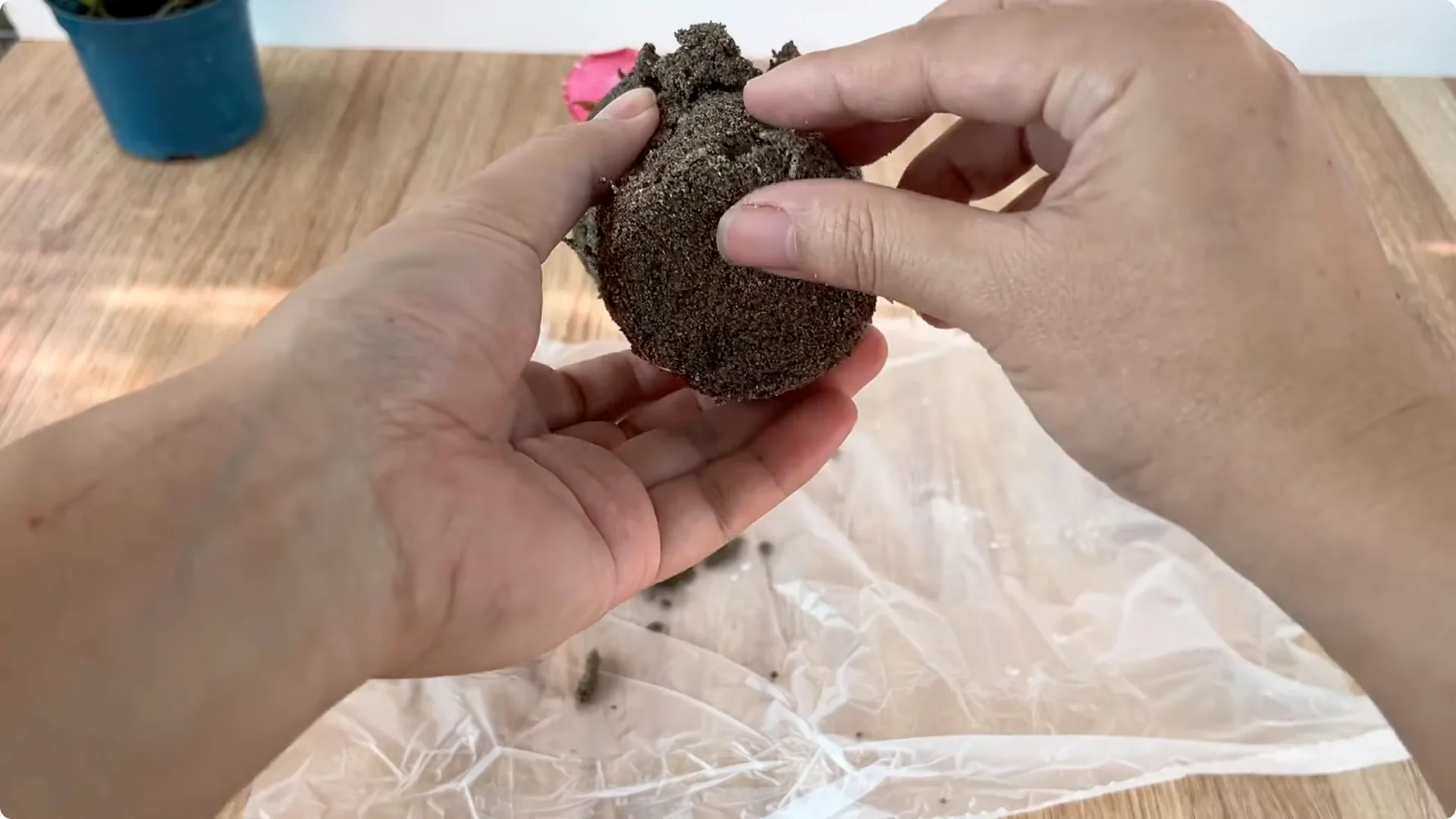
After about 10 days, you will notice significant changes in the branch. Fresh green shoots begin to sprout, indicating that the cutting has adapted well to its new environment.
At the base, you will see many new, white, thick, and succulent roots, which is a sign of healthy growth. This is the perfect time to gently transfer the branch to a new, well-draining pot. Use coconut fiber as a growing medium to help the roots continue to grow vigorously.
Read More: Eggshells Grow Strong Rose Roots
7. Rooting Rose Cuttings: Why This Works
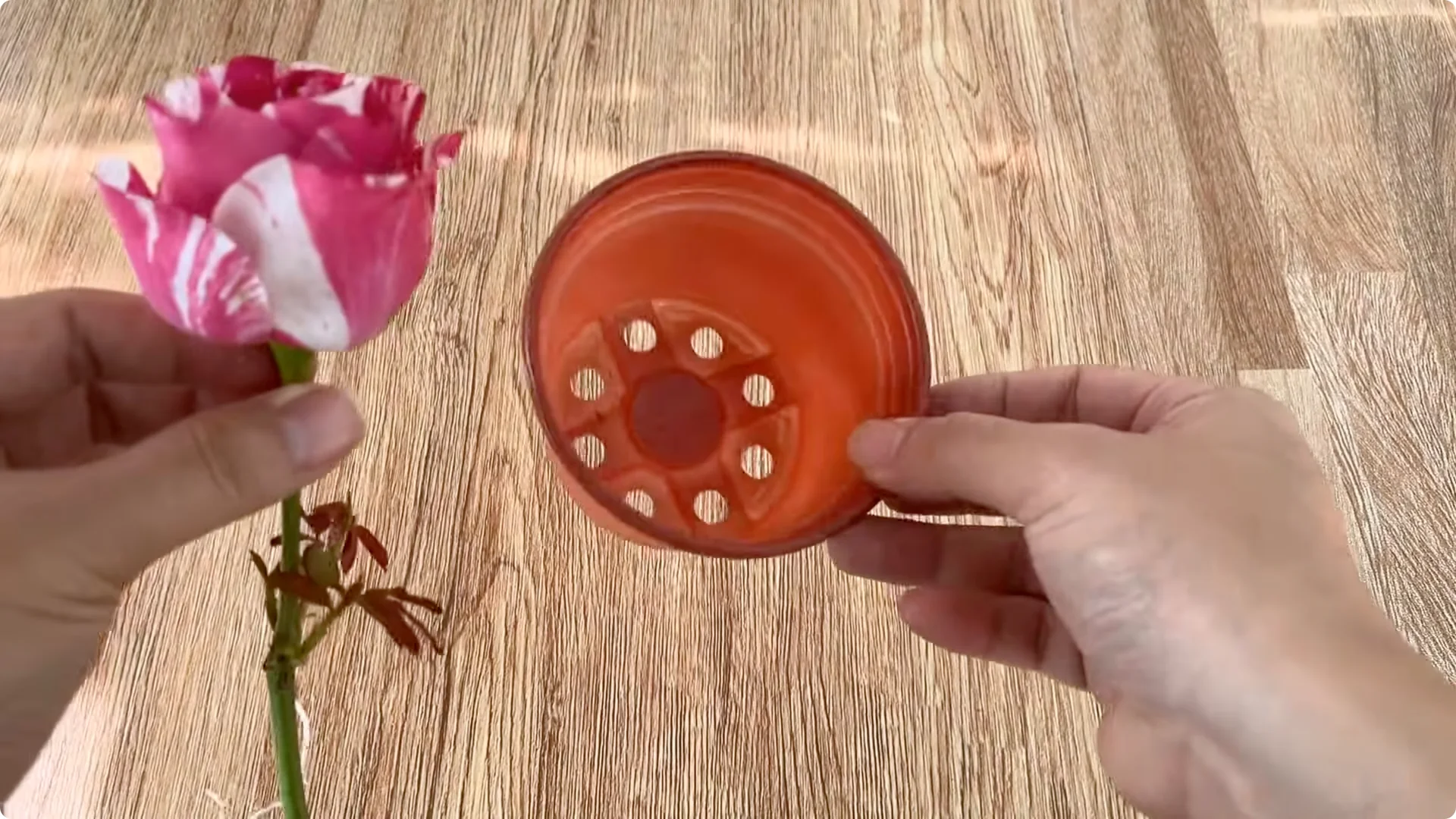
This method is special because of the harmonious combination of ingredients. Ginger guards against bacterial and fungal attack at the cut, ripe bananas deliver concentrated nutrients and natural sugars, and cucumber peels support moisture balance for tender new tissues.
Together, they create an ideal environment that helps cuttings recover quickly, sprout new shoots, form roots, and develop into a healthy new rose plant. Hopefully, this technique will help you expand your rose collection and bring more fragrance to your garden.
Rooting Rose Cuttings: Final Thoughts
Gardening is not just about planting and caring for plants. It is a journey of sowing joy, nurturing patience, and enjoying peaceful moments amidst the bustle of life.
I wish you continued passion and love for these small but vibrant flowers.
Read More: 1 Cup Grow Rose Plant Flowers