
Wishing you a relaxing day, full of positive energy, and even more love for your little garden. Here is a simple yet highly effective method for propagating rose cuttings. It uses everyday ingredients and careful preparation to support clean rooting and steady growth.
1. Rose Cutting Propagation – Ginger Solution
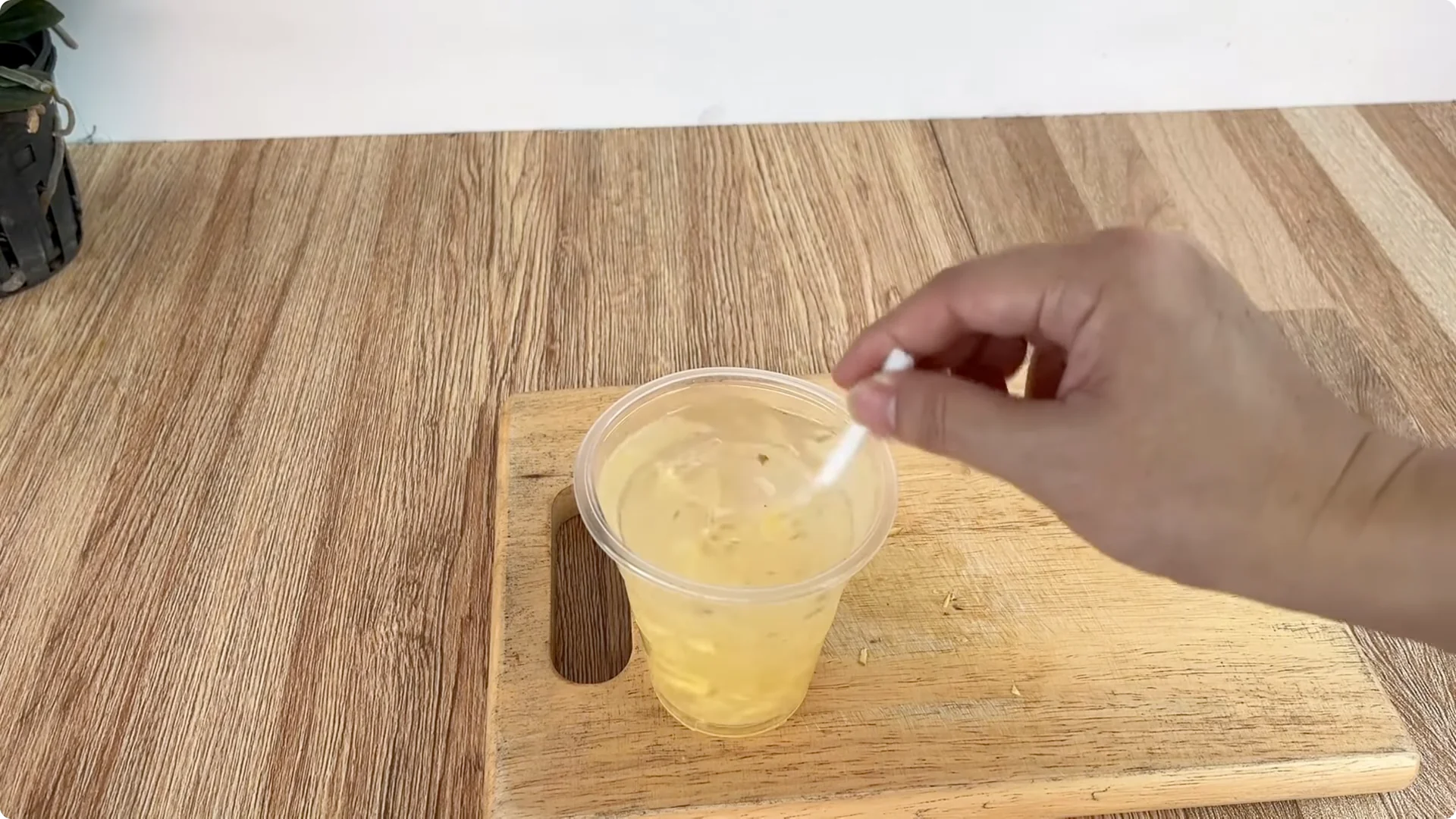
Prepare about 10 grams of fresh ginger. Choose firm, fresh ginger that is not bruised or rotten. Put all the chopped ginger into a clean plastic cup, then add about 500 ml of warm water.
Stir well with a spoon and let it sit for about 15 minutes. During this time, the natural compounds in ginger will release into the water, forming a solution with mild antibacterial and antifungal properties. It is ideal for treating rose cuttings before rooting.
2. Rose Cutting Propagation – Select and Prepare the Cutting
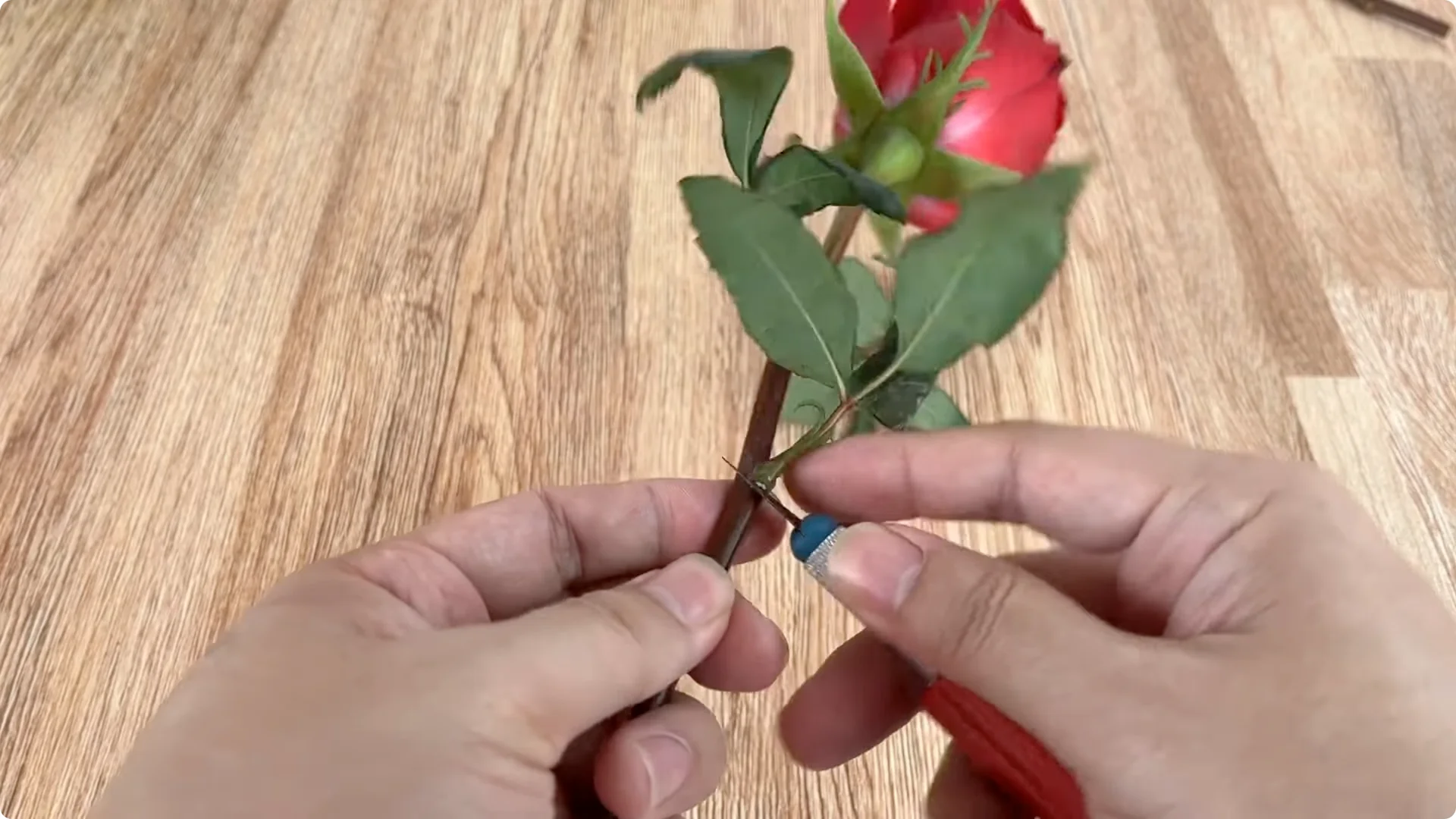
Choose a favorite rose cutting, ensuring it is healthy, free from pests and diseases, and not bruised or soft. The cutting should be of moderate age, with a sturdy stem but still capable of good growth. Use scissors or a sharp knife to remove all leaves, thorns, and any old, withered petals remaining on the cutting.
This reduces water loss, limits fungal infection, and allows the cutting to focus its energy on root development. Trim the cutting, leaving only about 20 cm in length to allow it to adapt to the new environment. Soak the rose cutting in a cup of ginger water for about 15 minutes.
The ginger solution will help clean the cut, reduce the risk of root rot, and stimulate root tissue activity. Keep the cutting submerged for the full time for best effect. Set it aside while you prepare the nutrient boost.
3. Rose Cutting Propagation – Enrich With Carrot Peel
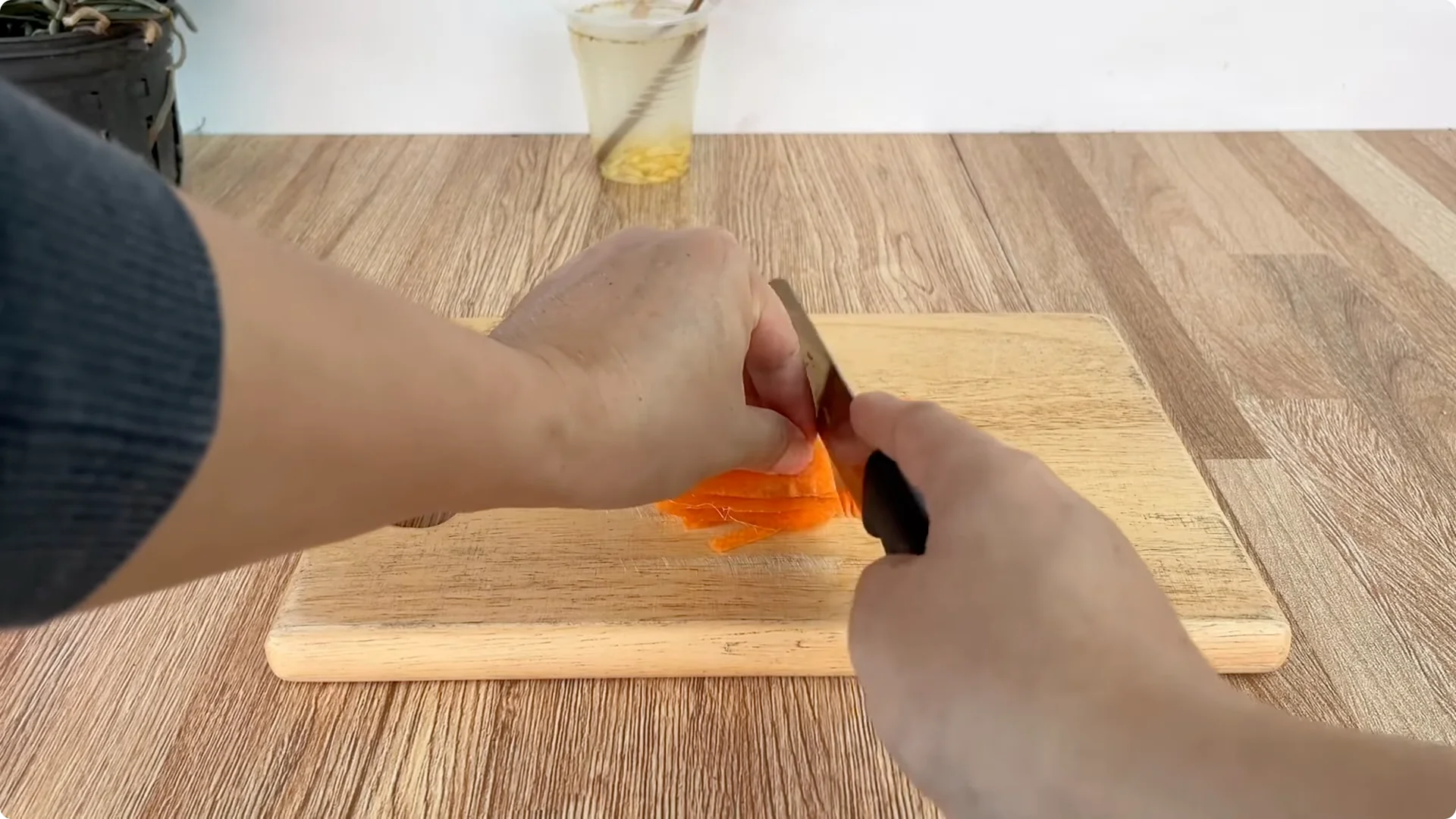
Take a fresh carrot, wash it, and peel it. Do not discard the carrot peel as it contains many vitamins and trace minerals beneficial for the development of young roots. Chop the carrot peel into small pieces and add it directly to the ginger water.
Stir well to mix the carrot peel with the ginger solution, then let it sit for another 15 minutes. During this time, the nutrients from the carrot peel will gradually dissolve into the water. This adds a mild source of nutrients, making the solution more balanced and friendly to the rose stems.
After soaking for the required time, gently remove the rose stems from the mixture. Next, filter out all the ginger pulp and carrot peel, keeping only the clear ginger-carrot peel solution. Thorough filtering ensures a clean solution, reduces unwanted microorganisms, and prevents clogging of the growing medium when watering the sand.
4. Rose Cutting Propagation – Add Fresh Milk
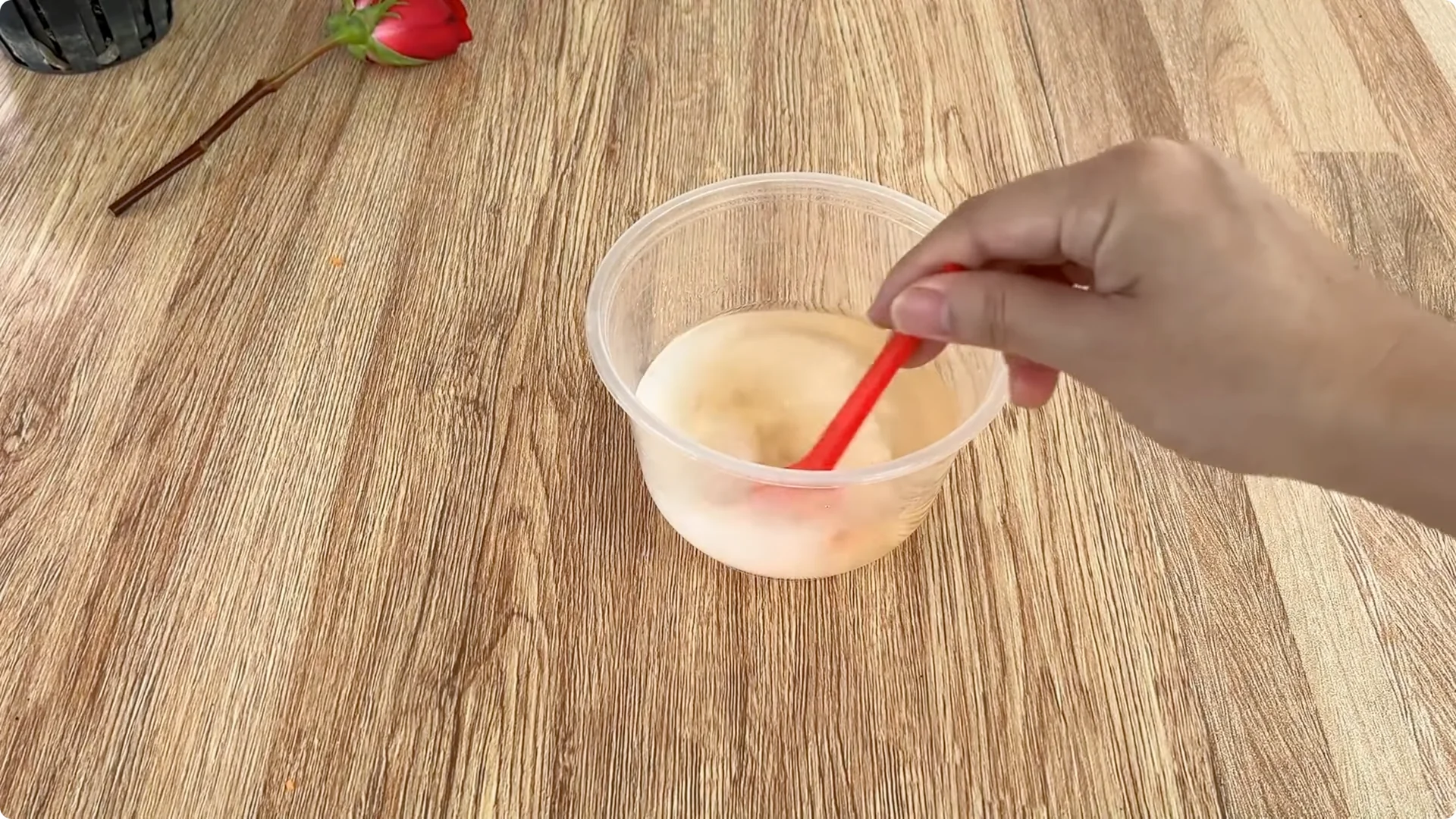
The next step is to add fresh milk. Fresh milk contains a lot of protein, calcium, and some amino acids. When properly diluted, it becomes a very mild nutrient source that supports the formation of new roots.
Add about 1 tablespoon of fresh milk to the filtered solution. After adding the milk, dilute the mixture with about 0.5 liters of clean water, then stir well until all the ingredients are completely mixed. At this point, you have a natural, gentle, yet nutrient-rich rooting solution.
5. Rose Cutting Propagation – Prepare the Medium
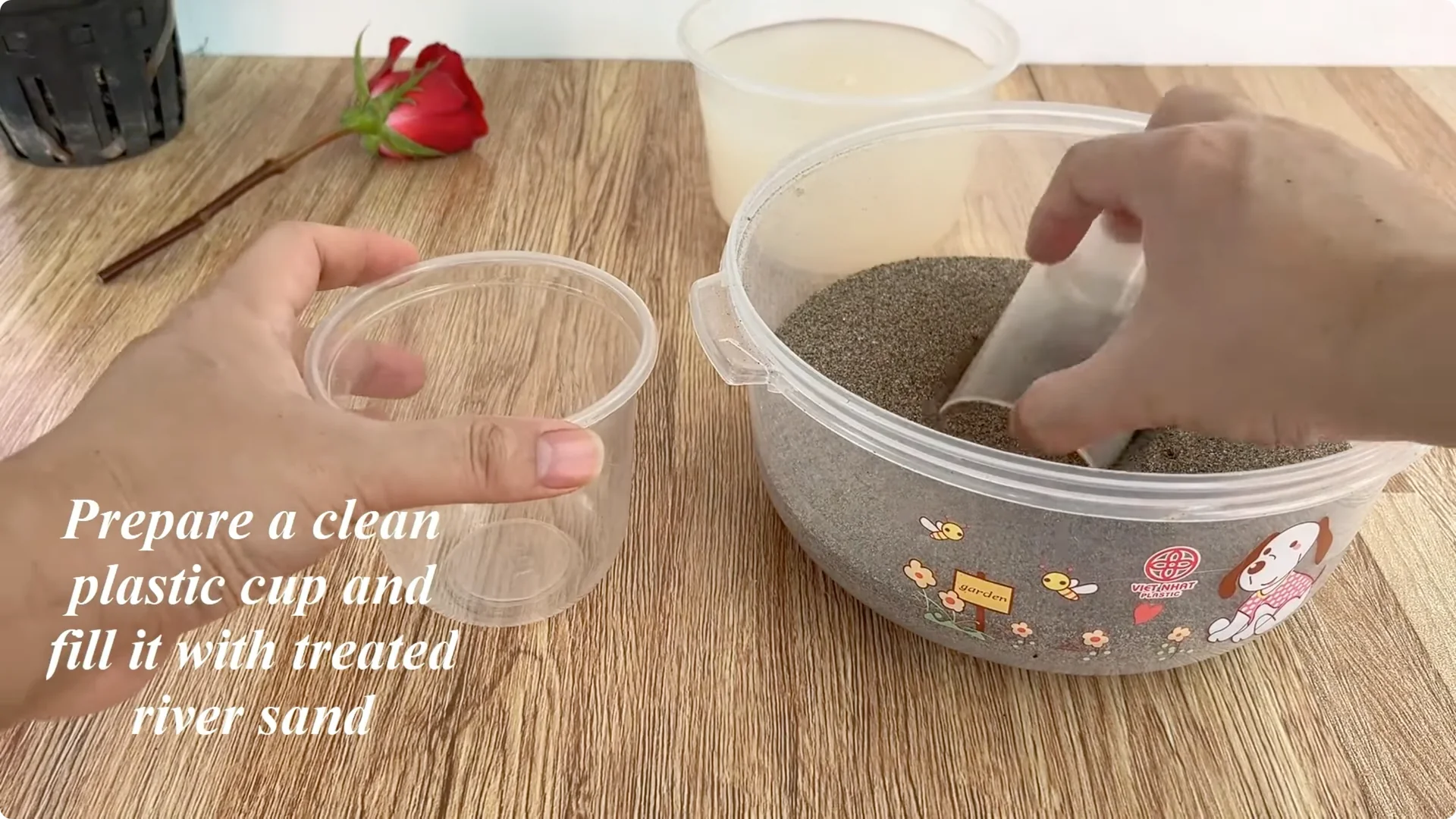
Prepare a clean plastic cup and fill it with treated river sand. The river sand needs to be washed, impurities removed, and dried before use to ensure good aeration and limit pathogens. Slowly pour the ginger-milk-carrot peel solution into the cup of sand, ensuring the sand is evenly moist but not waterlogged.
Then, insert the rose cutting into the center of the cup, burying the base deep in the sand to provide stability and facilitate root growth. Use a clear plastic bag or cup to completely cover the entire cup and the rose stem. This covering helps create a stable humid environment, reduces water loss, and protects the stem from strong winds, insects, and sudden temperature changes.
Place the cup in a cool, well-lit area, avoiding direct sunlight, to provide the best conditions for the stem to recover and grow. This single-cup setup pairs well with ideas shared in One Cup Rose Branch Bloom. Keep the environment consistently humid but not soggy.
6. Rose Cutting Propagation – Care and Early Results
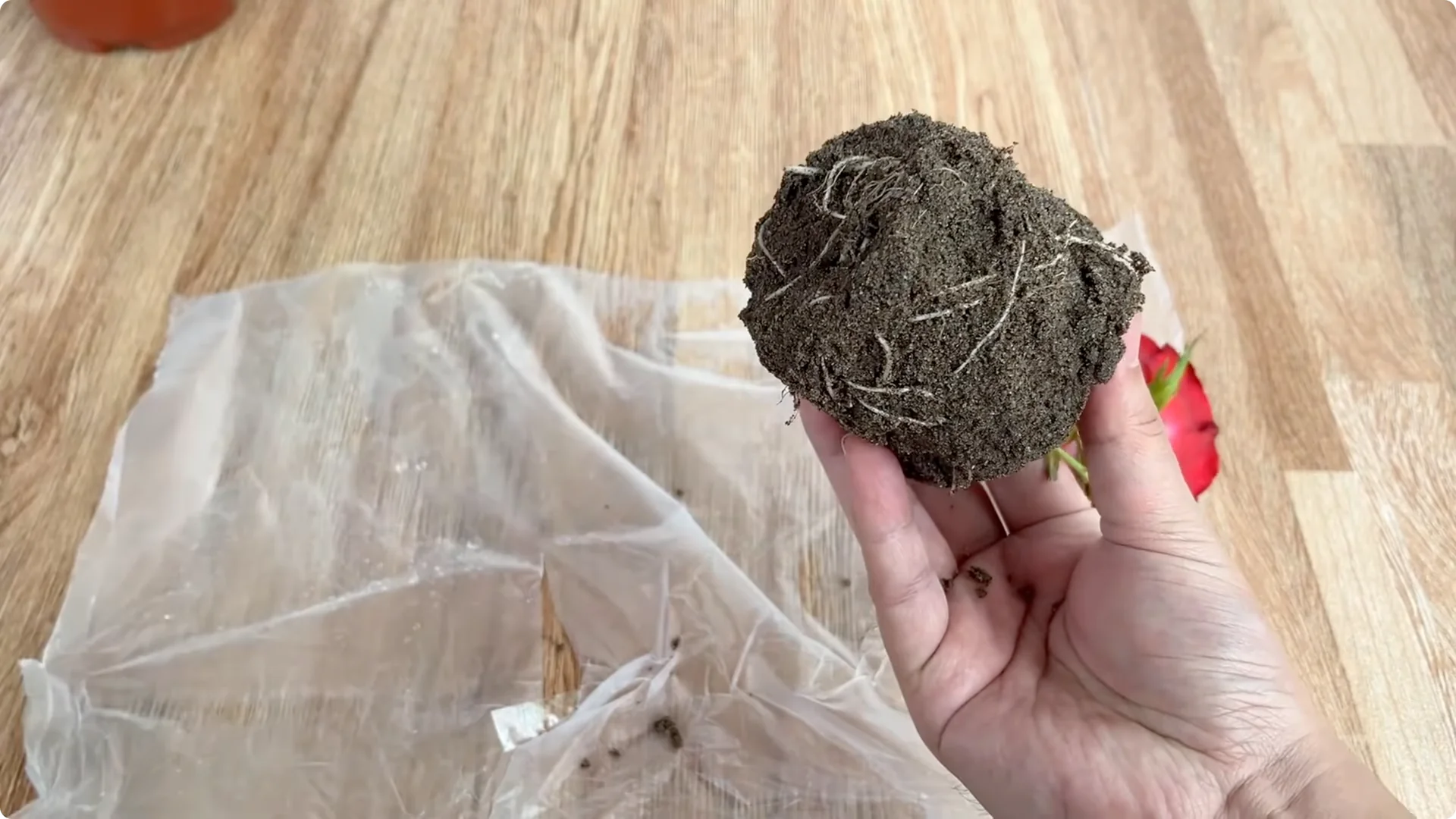
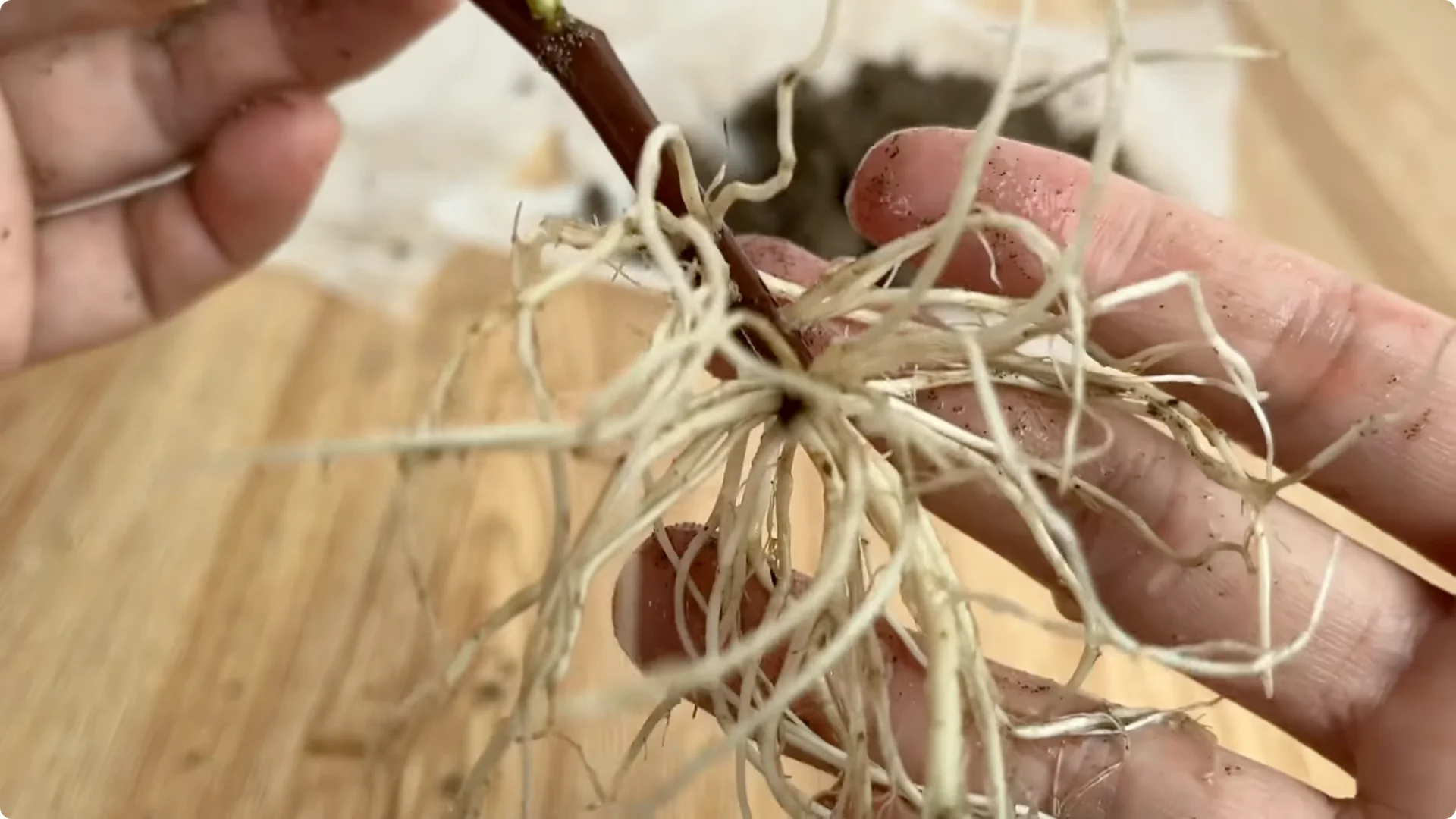
After about 10 days of proper care, you will notice very positive signs. The rose stem will begin to sprout new shoots, which will be fresh, green, and have evenly spread, healthy leaves. At the base, many new roots will have formed, appearing bright white and plump, indicating excellent water and nutrient absorption.
Once the roots have developed stably, you can gently transfer the rose stem to a pot with good drainage. Use coconut fiber as a growing medium to allow the roots to continue spreading and the plant to grow more sustainably. For boosting overall growth and future blooms, see the tips in One Cup Transform Rose Plant Growth Blooms.
7. Rose Cutting Propagation – Why This Works
This method shows that with a little finesse and patience we can use everyday ingredients to create surprising results. Not only does it help the cuttings root quickly, it also provides peace of mind because it is safe, gentle, and environmentally friendly. For another gentle rooting support, you can compare with the citrus approach in Lemons Boost Rose Root Growth Blooming.
More importantly, the process of preparing and monitoring the cuttings’ growth day by day will bring you a sense of relaxation, connection, and a deeper love for the nature around you. When the tiny rose cutting grows strong, takes root, and is ready for a new life cycle, it is a well deserved reward for the meticulousness, patience, and love for plants you have invested in each step of its care. Keep nurturing, observe the signs, and enjoy each stage.
Final Thoughts
Rose cutting propagation can be clean, gentle, and effective with ginger, carrot peel, and fresh milk. Prepare carefully, maintain humidity, and place the cup in bright, indirect light for steady progress. Transplant once roots are plump and white, and let the plant continue its healthy growth.