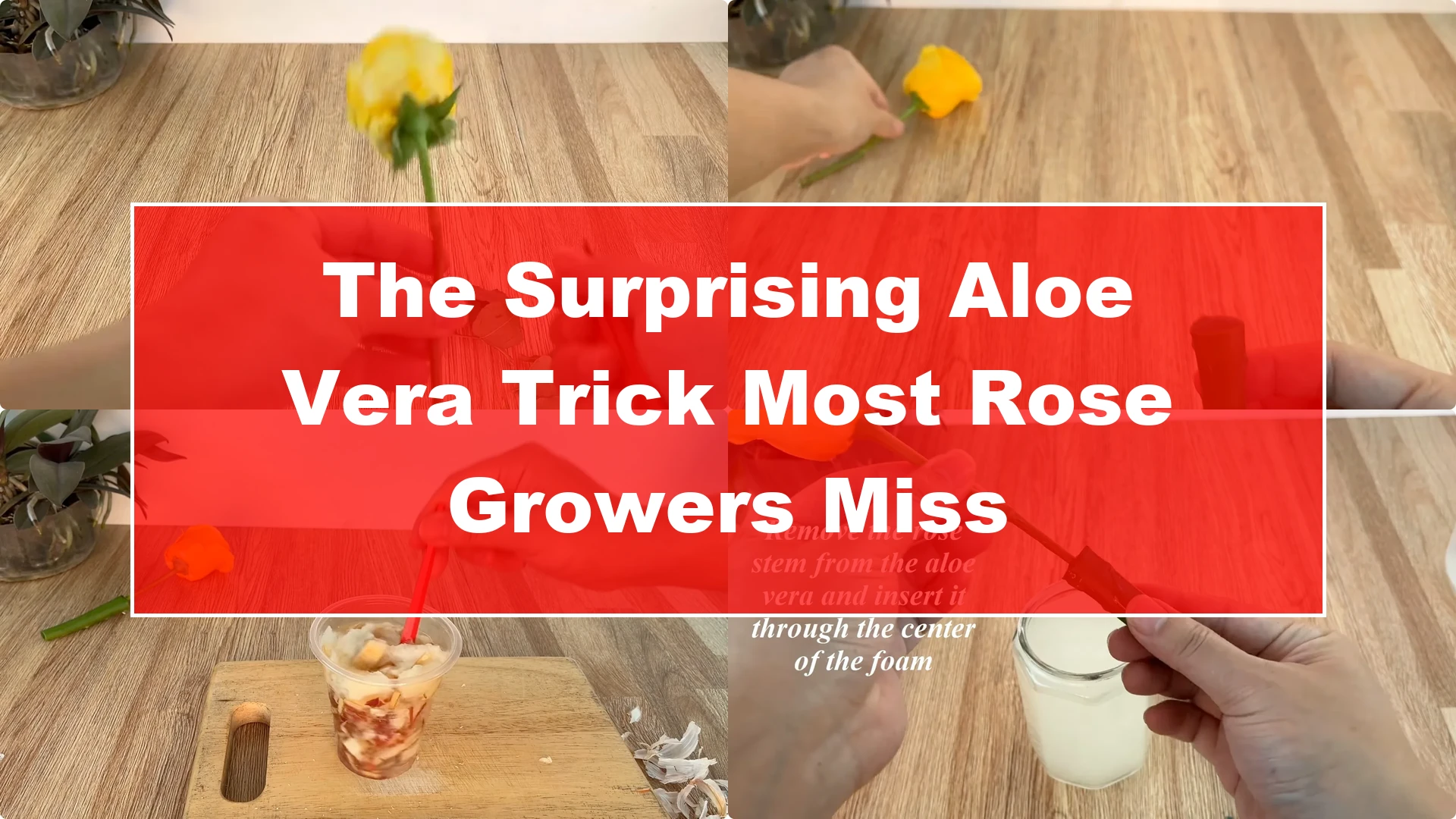
This is a completely natural method of propagating roses by cuttings, which offers surprising results in stimulating root growth and nurturing healthy rose cuttings. With meticulousness, patience and a little understanding of each ingredient, you can successfully propagate healthy, thriving rose cuttings.
Rose Propagation with Aloe Vera
1. Prepare the cutting
Choose a healthy rose cutting of moderate age. The cutting shouldn’t be too young as it’s prone to root rot, nor too old as its rooting ability will be reduced.
Use sharp scissors to cut off all leaves, thorns, and any old, withered petals remaining on the cutting.
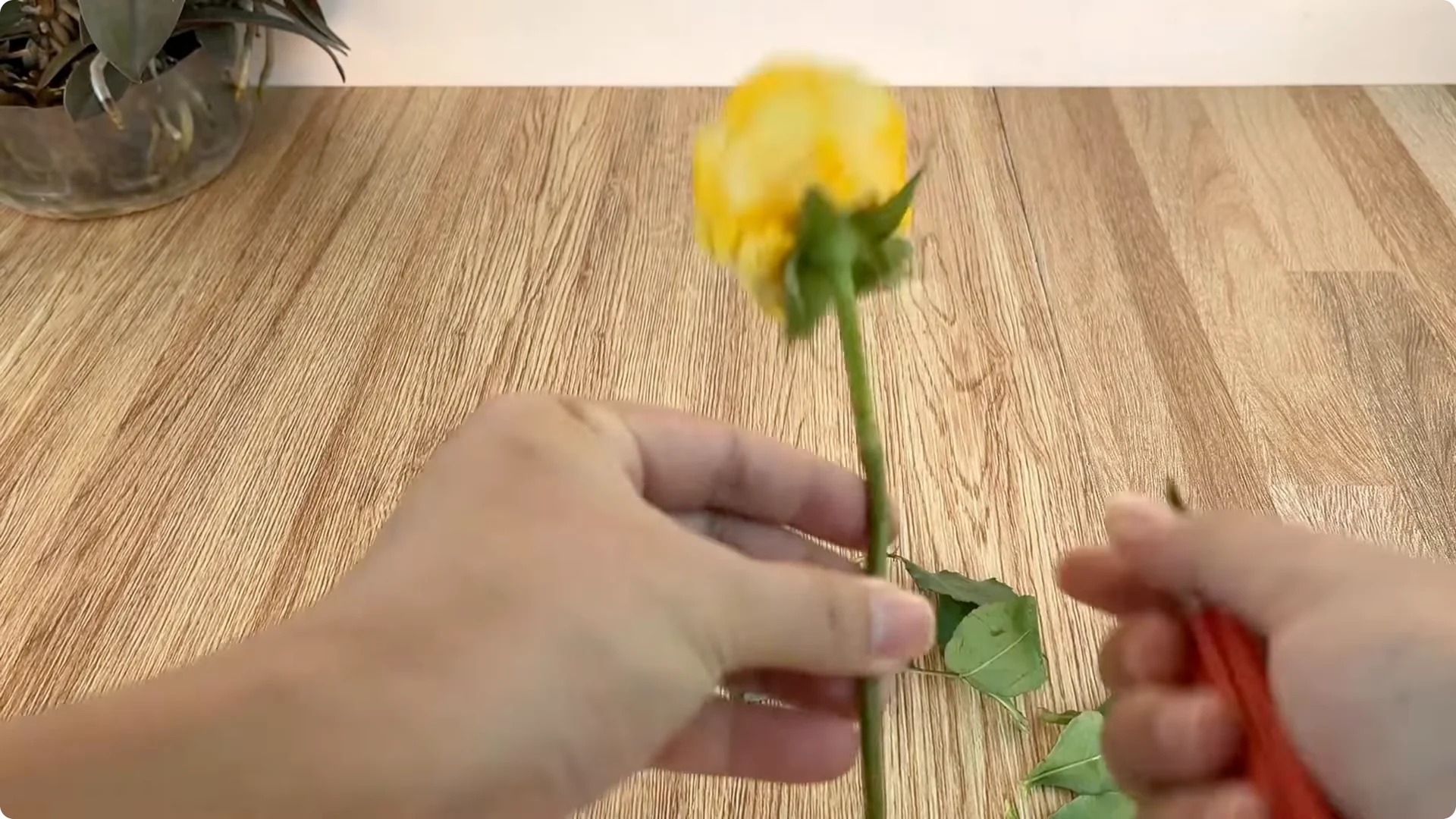
Removing excess leaves and flowers helps reduce water loss and lessen the physiological stress on the cutting during the rooting stage.
Trim the cutting, leaving it about 20 cm long to ensure it receives enough nutrients while still being easy to care for.
As discussed in Simple Trick Grows Rose Stems Roots, balanced trimming supports quick, steady rooting.
2. Treat with aloe vera
Take a small piece of aloe vera and rinse off the yellow sap to avoid damaging the plant tissue. Apply the clear gel evenly to the entire stem, paying special attention to the cut areas.
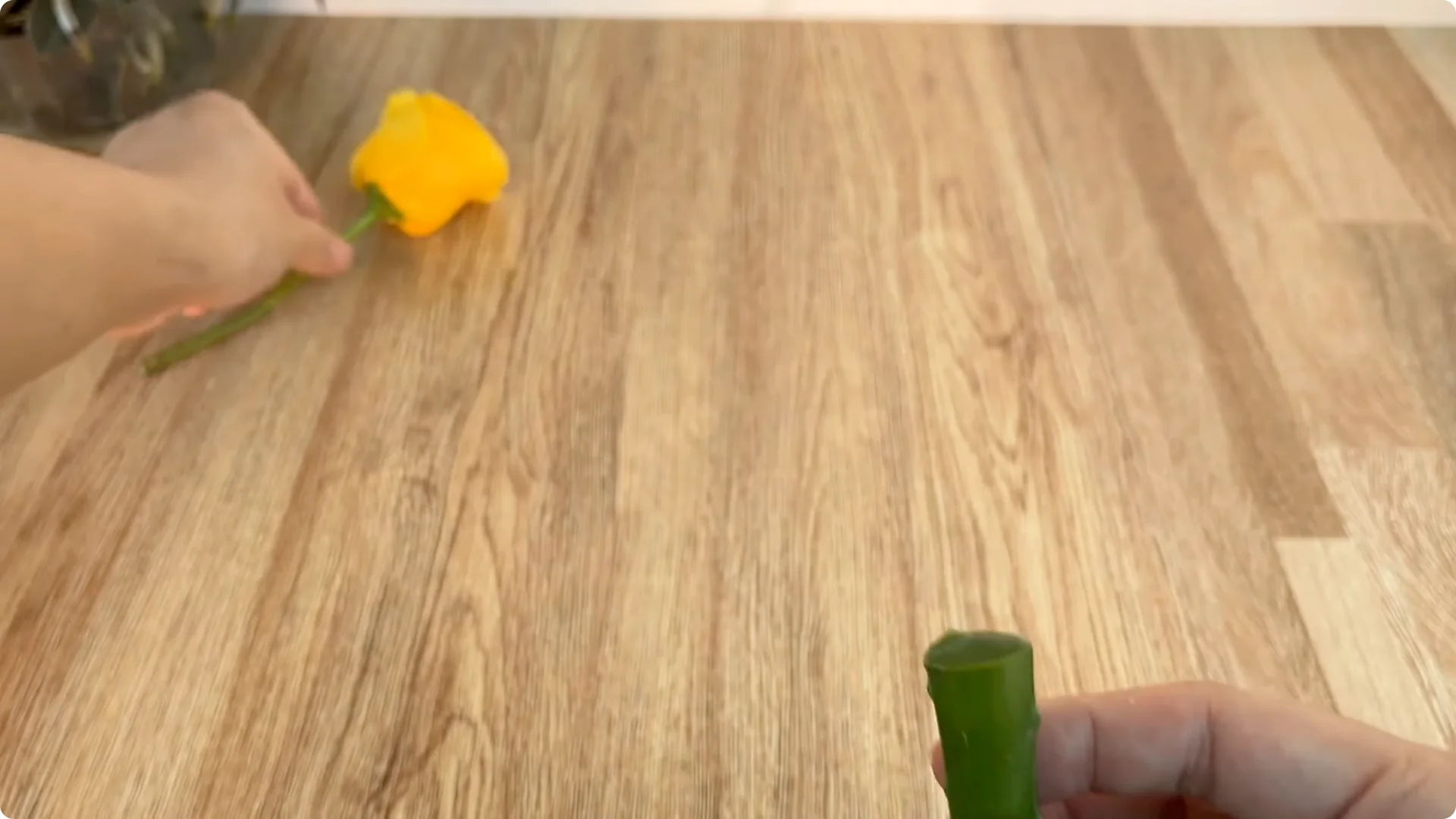
Aloe vera gel contains many enzymes, vitamins, and natural growth stimulants, which soothe damaged tissue, retain moisture, and stimulate the formation of new roots.
After applying the gel, immerse the rose stem deeply in the aloe vera gel and leave it for about 30 minutes to allow the nutrients to penetrate the tissue.
3. Make the natural nutrient solution
Apple peel
Take a fresh apple, wash it, and peel it. Apple peel contains many natural sugars and trace elements, providing a light energy source for the young roots as they begin to form.
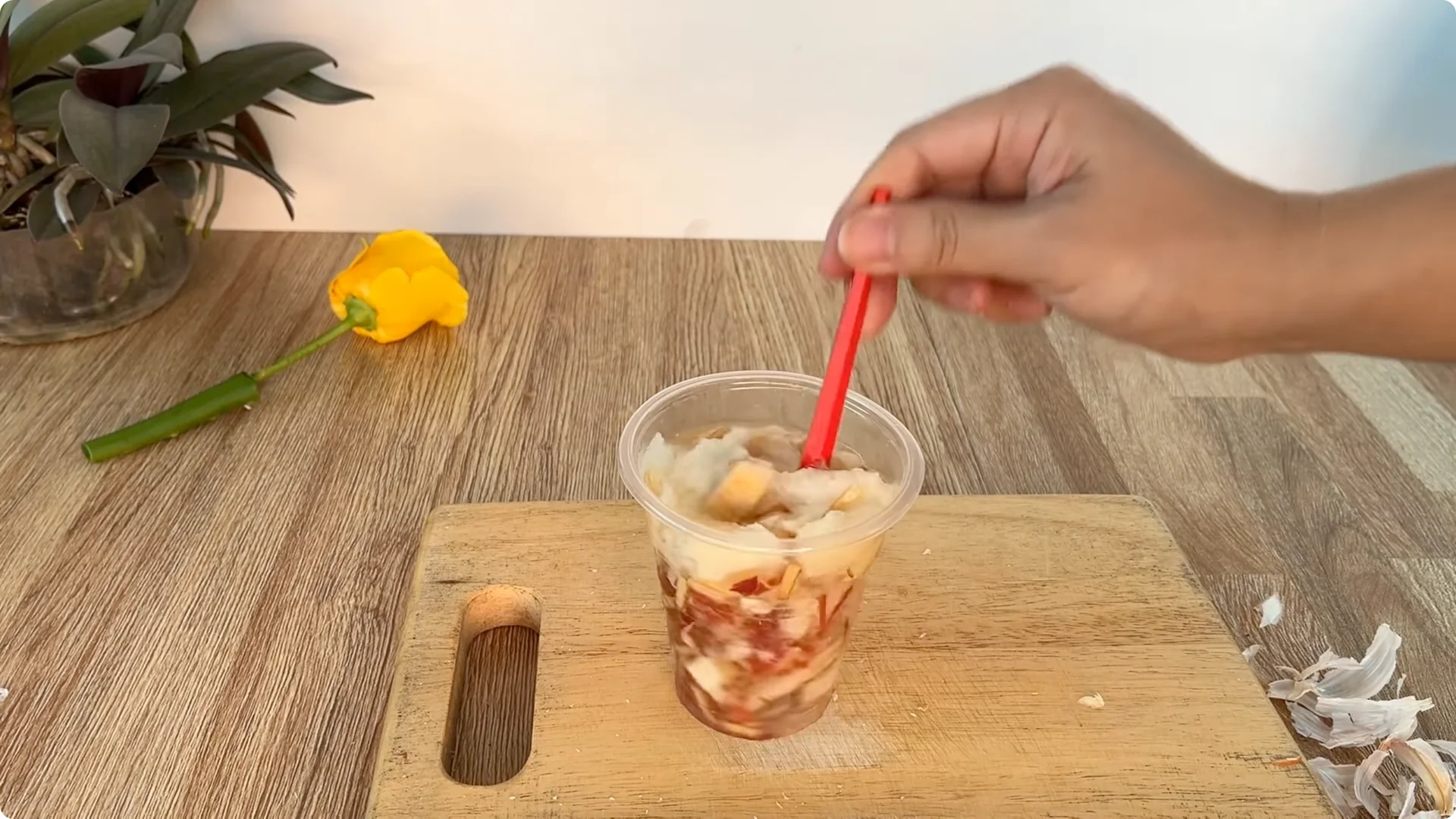
Cut the peel into small pieces and put them in a clean plastic cup.
Garlic
Take two cloves of garlic, peel them, chop them, and add them to the cup with the apple peel. Garlic has excellent antibacterial and antifungal properties, helping to limit harmful microorganisms in the rooting solution.
Bread and warm water
Prepare a slice of bread or bread crumbs, break them into small pieces, and put them in the cup. When soaked in water, the bread creates a starch-rich environment, a source of easily digestible carbon supporting beneficial microorganisms and helping the cuttings absorb nutrients more easily.
Add about 500 ml of warm water to the cup, stir well with a spoon to mix the ingredients, and let it sit for about 30 minutes.
During this time, the nutrients from the apple peel, garlic, and bread will gradually dissolve into the water, creating a natural rooting solution.
Filter and benefits
After the soaking time is complete, filter the apple peel-garlic-bread solution, completely removing the residue to make the solution clearer and cleaner.
This solution provides mild nutrition and helps protect the rootstock from fungal infections and root rot in the early days, similar to the gentle boosts shared in Spoonful Trick Rose Plant Roots Blooms.
4. Set up the jar and foam
Prepare a piece of foam and a clean glass jar. Cut the foam to fit snugly over the mouth of the glass jar, ensuring it holds the flower stem securely.
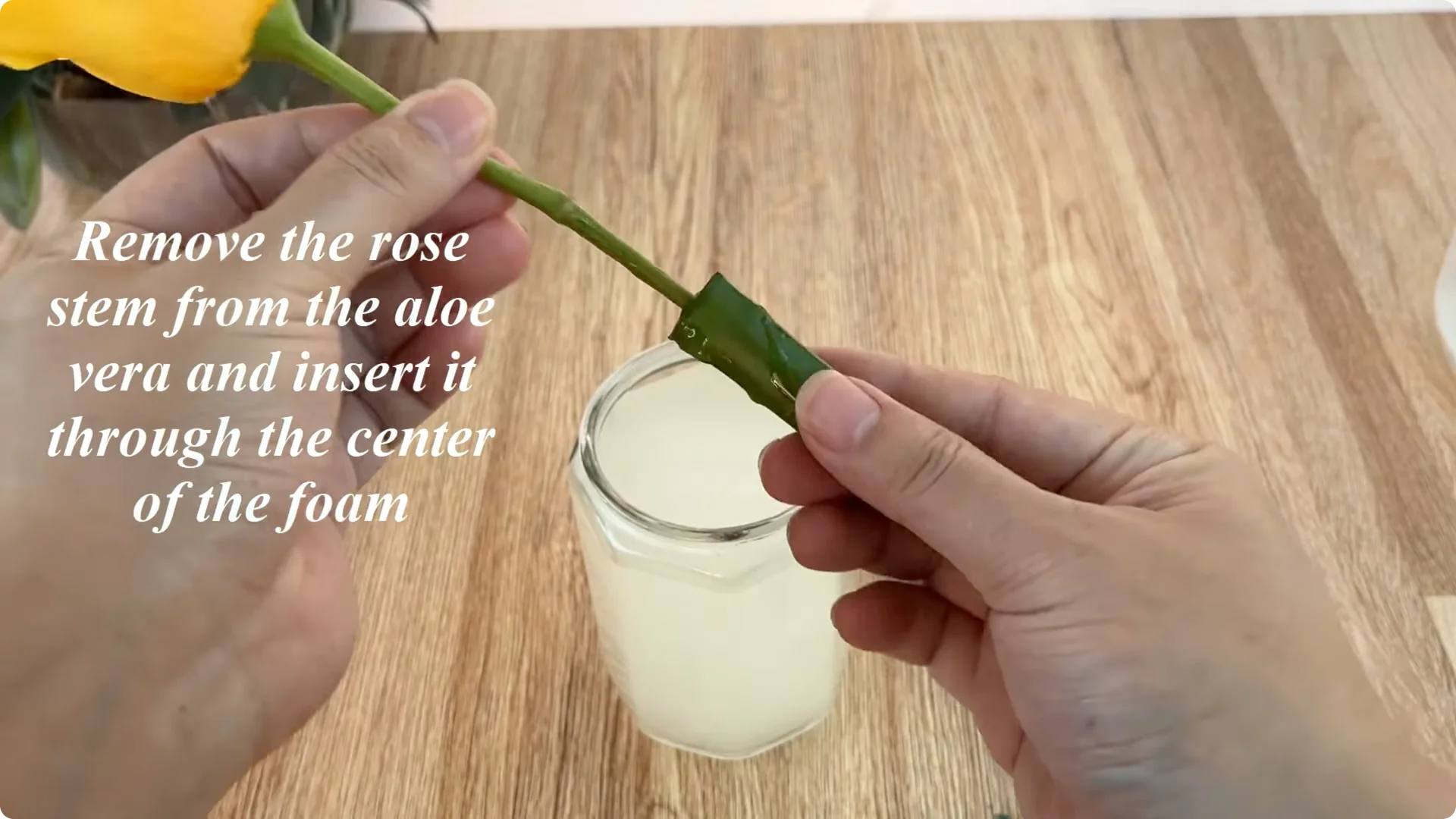
Fill the glass jar with the filtered solution. Remove the rose stem from the aloe vera leaf, gently insert the stem through the foam, and place the foam over the mouth of the glass jar.
Make sure the stem is submerged in the solution, while keeping the upper part of the stem straight and dry.
5. Create a humid chamber
Use a clear plastic bag or cup to cover the entire glass jar and rose stem. This covering creates a stable humid environment, reduces water evaporation, and helps the stem adapt quickly.
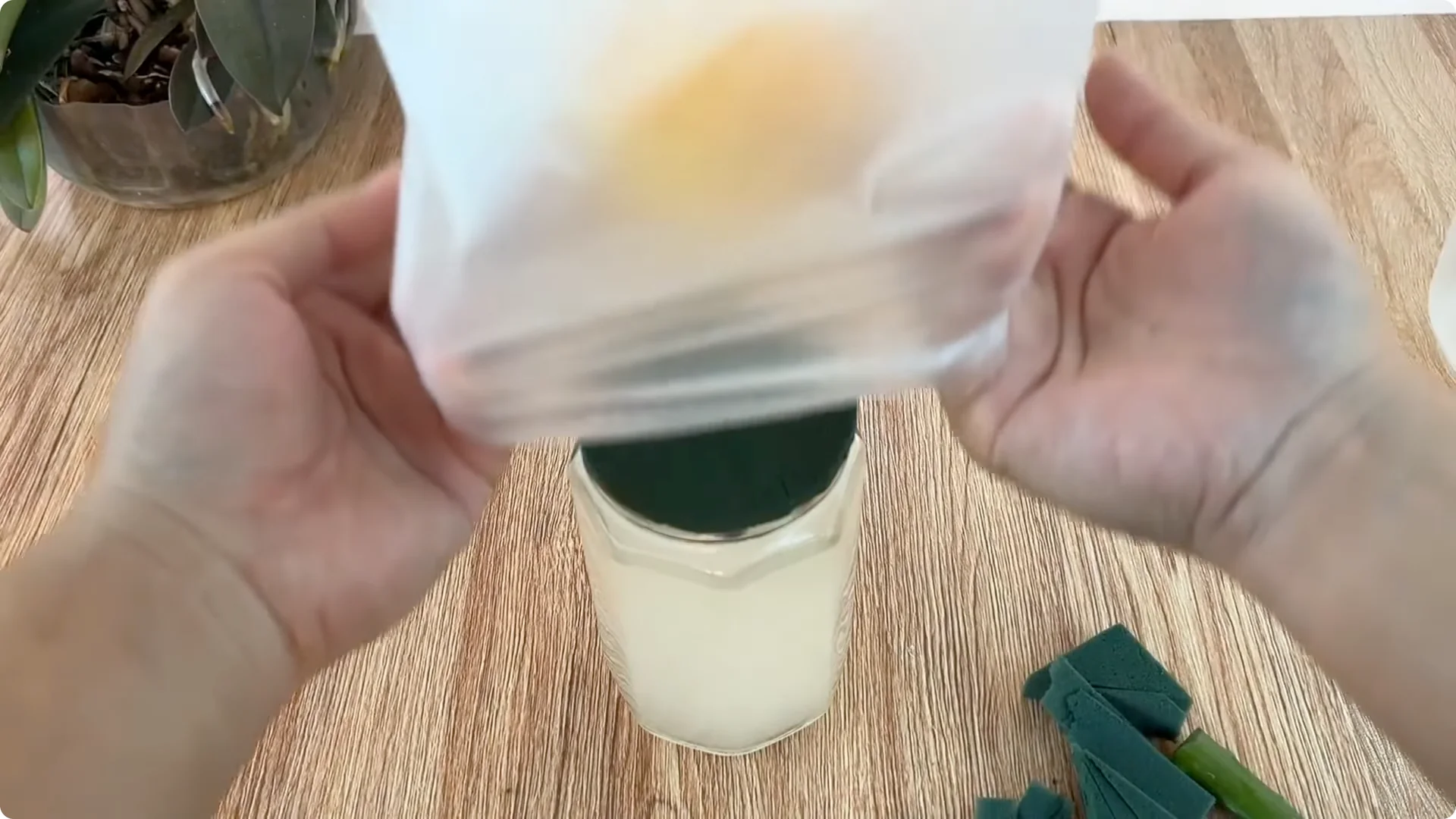
Place the jar in a cool, airy place, away from strong winds and harsh sunlight. Gentle diffused light and a stable temperature will support cell division and root formation.
6. Watch for growth
After about 10 days, if you observe carefully, you will see very positive changes.
The rose cutting begins to sprout new, vibrant green shoots with evenly spread, healthy leaves.
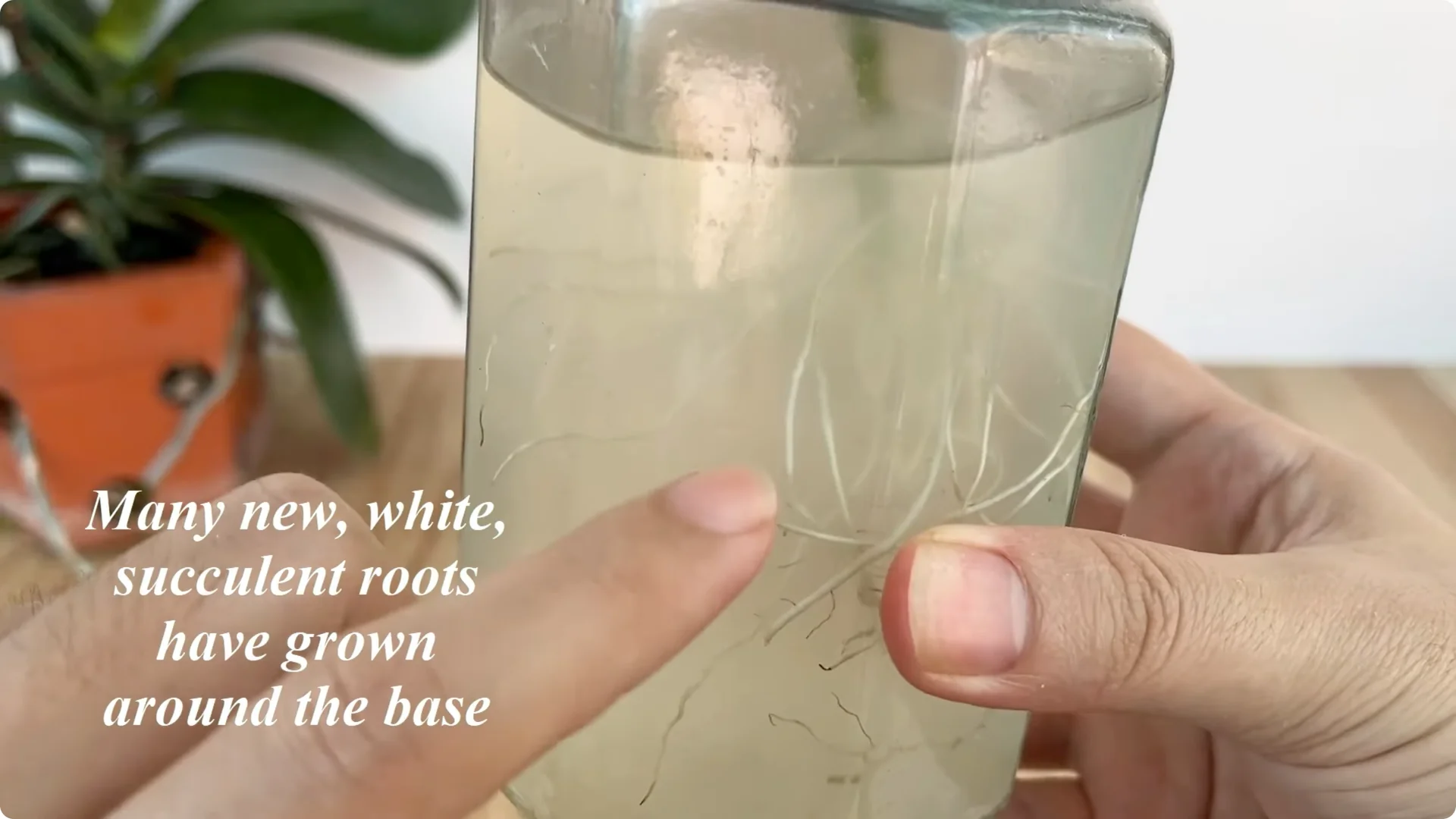
At the base, many white roots have emerged, plump and firm, indicating good water and nutrient absorption.
7. Potting up
Once the roots are strong enough, gently transfer the rose cutting to a pot with good drainage, using river sand as a growing medium to allow the roots to continue developing strongly and stably.
This careful move lines up with the practical approach in Rose Propagation Trick Gardeners for establishing vigorous plants.
Final Thoughts
The method of propagating rose cuttings using aloe vera combined with apple peel, garlic, and bread shows that nature is always ready to provide very effective solutions if we know how to use them correctly. Without the need for chemical rooting hormones, with meticulousness, patience and a little understanding of the properties of each ingredient, you can successfully propagate healthy, thriving rose cuttings.
More importantly, this process brings a sense of peace, connects people with plants, and helps each person love caring for their garden even more. Seeing that tiny rose branch grow strong, root, sprout, and gradually become a new plant is not just the result of skillful techniques but also a unique joy and satisfaction that only true plant lovers can fully appreciate.