
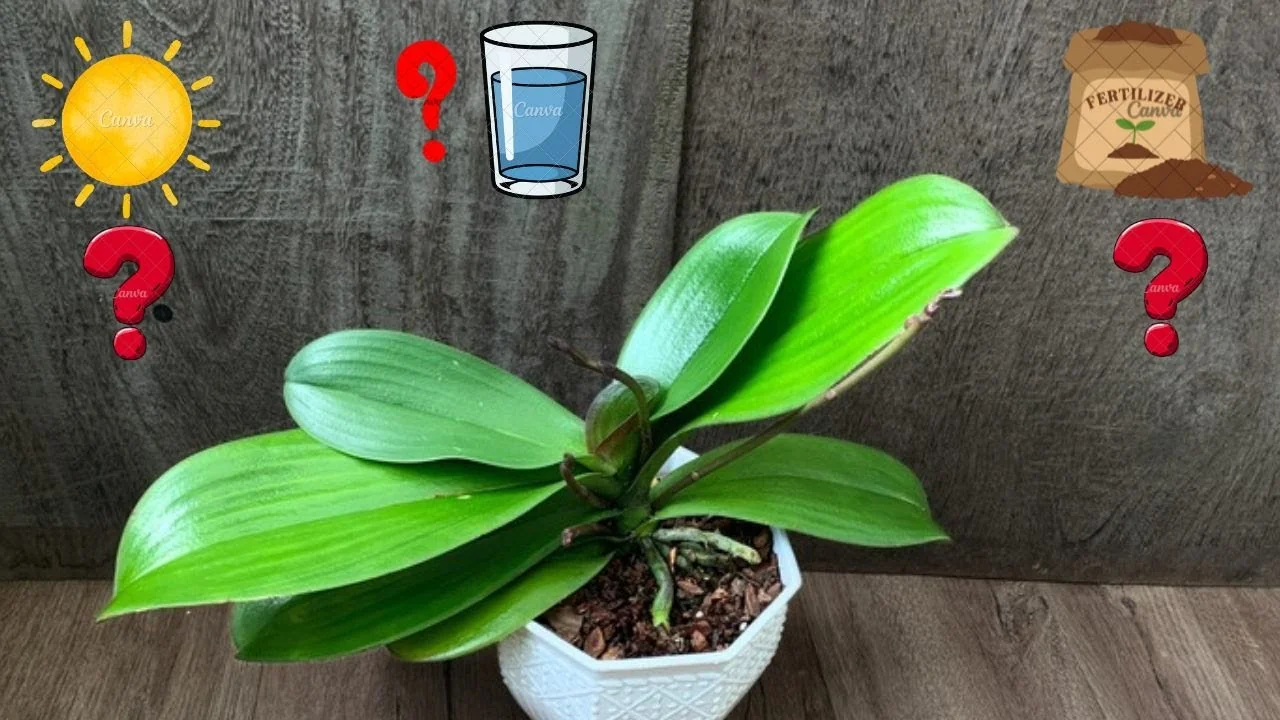
Many orchids stay green and alive for years, yet the flowers never appear. The leaves are still green and the roots are still alive, but blooming does not happen.
Many orchid growers face the same situation.
The plant is still alive and the leaves are still green, but it has not bloomed for many years.
I will share the most common reasons why orchids do not bloom, and it is very likely that you are making these mistakes too.
1. Orchid Non-Blooming Causes: The plant is alive but not healthy
Many orchids may look green on the outside, but the root system inside is weak, rotting, or suffocated. When the roots are not healthy, the plant only has enough strength to sustain the leaves and does not have enough energy to produce flowers.
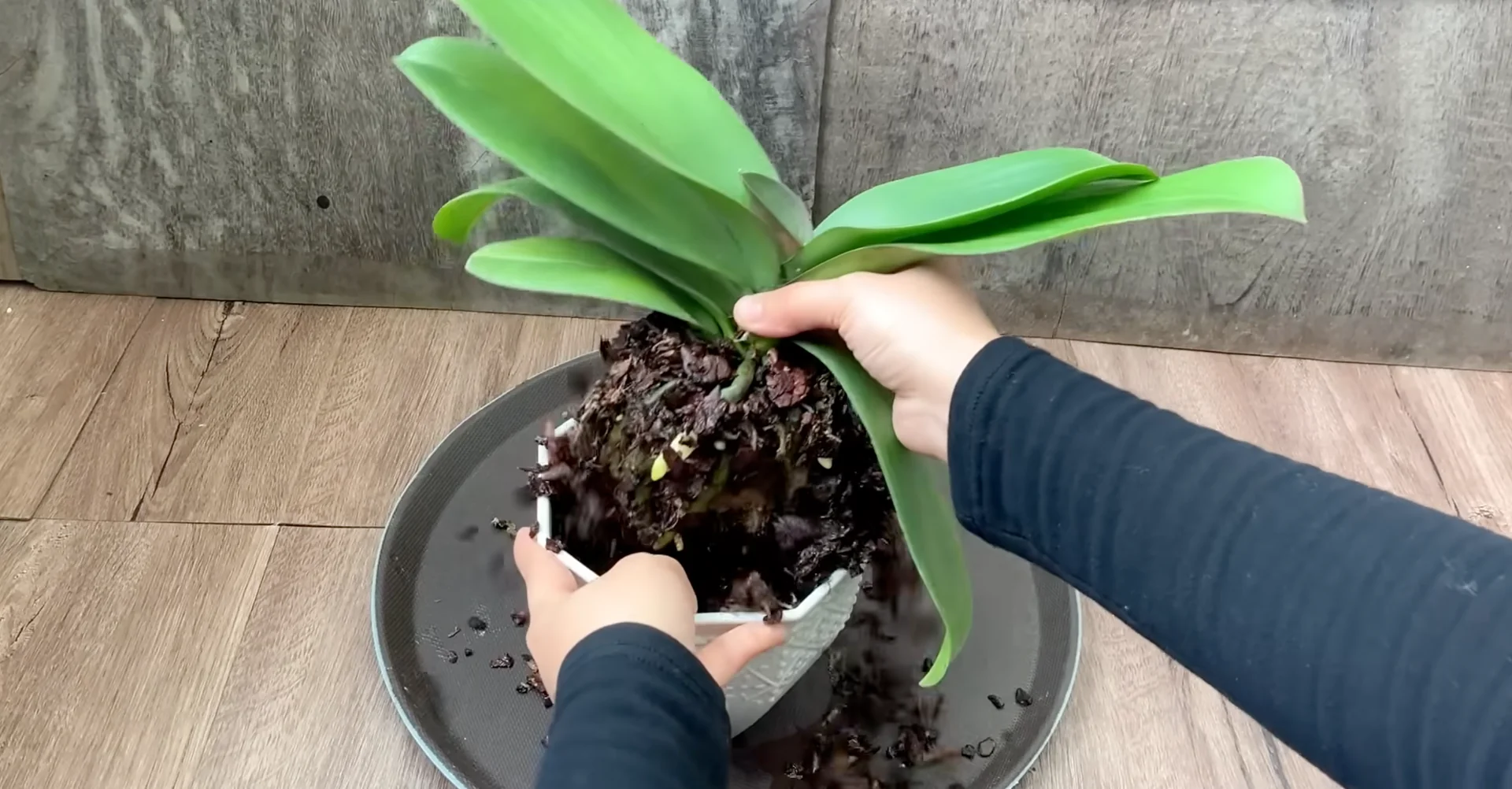
By observing the root system of this orchid you can easily notice that among the still healthy roots there are many weak roots that are rotting and waterlogged.
This damaged root condition seriously reduces the plant’s ability to absorb water and nutrients.
When the root system is not strong enough the orchid can only maintain the basic survival of its leaves and cannot accumulate enough energy to form and support flower buds.
Even though the leaves remain green and the plant appears to be alive, it is actually weakening silently on the inside. This is a key reason why orchids are unable to bloom for many years.
2. Orchid Non-Blooming Causes: Too much fertilizer or wrong type
Many people believe that the more fertilizer they apply, the more the orchid will bloom, but that is not the case. Using the wrong fertilizer or fertilizing too frequently causes orchids to grow only leaves and not form flower spikes.
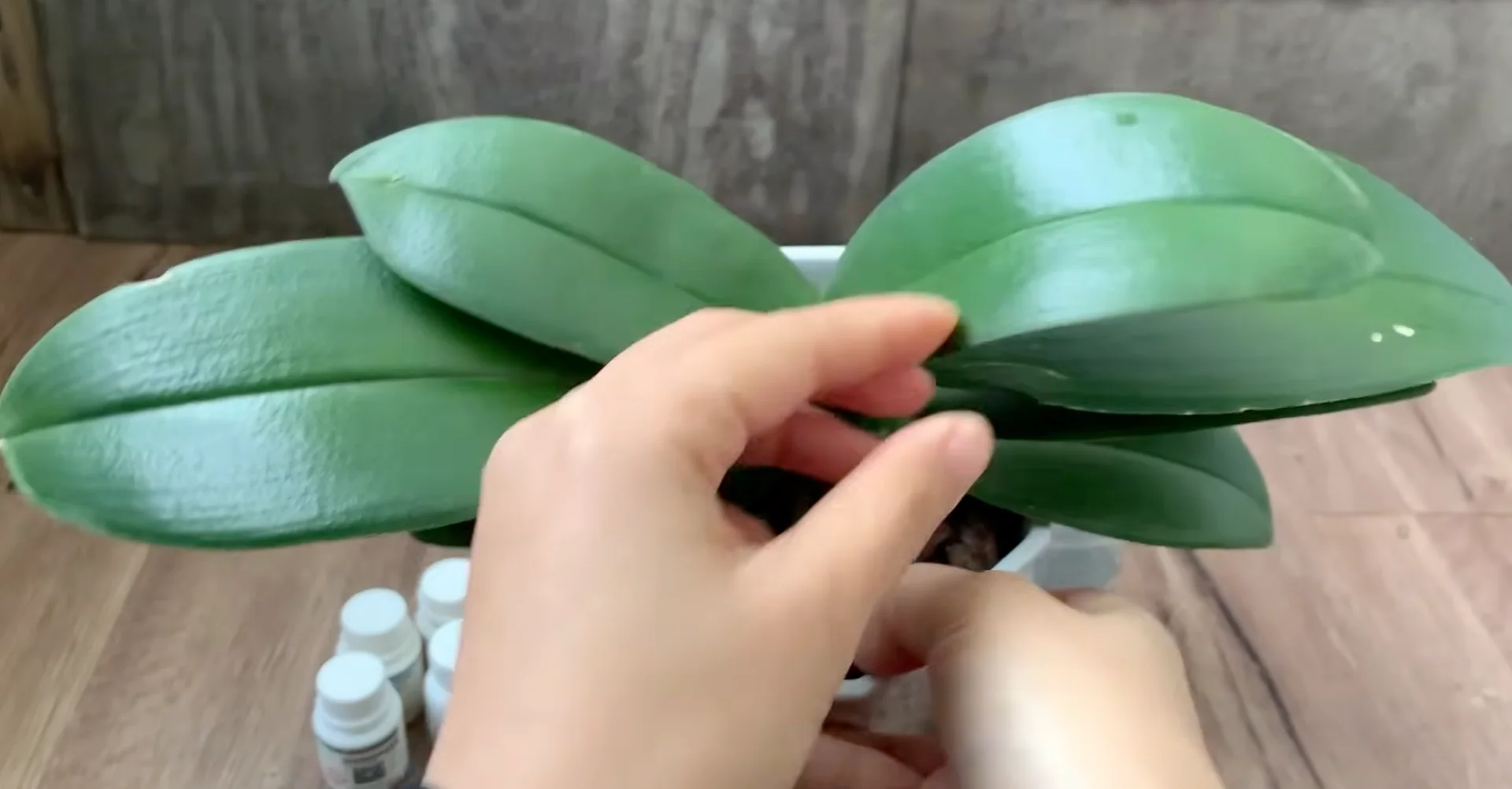
If the fertilizer contains an excessively high nitrogen content, the plant will focus on developing leaves and stems.
Nitrogen strongly stimulates vegetative growth and suppresses the formation of buds and flowering.
3. Orchid Non-Blooming Causes: No day night temperature difference
Orchids need a temperature difference between daytime and nighttime to understand that it is time to bloom. The temperature difference between day and night acts as a natural biological signal.
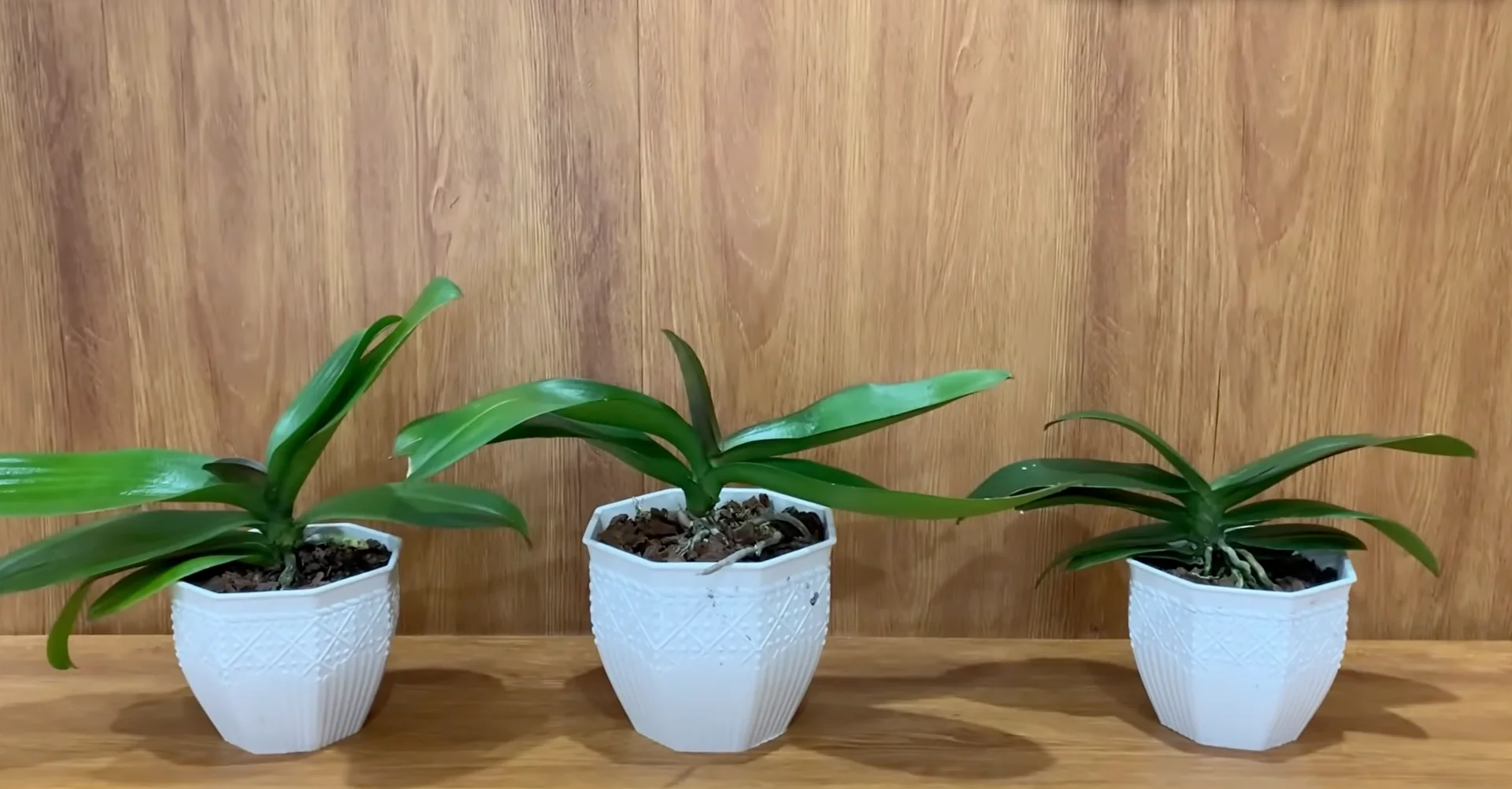
When daytime is warm and nighttime is cooler, the orchid senses this environmental change, thereby triggering the process of flower bud differentiation instead of continuing leaf growth.
Cooler nighttime temperatures help orchids reduce respiration and energy consumption, allowing the plant to accumulate nutrients.
This energy is then used to form buds and support flowering, helping orchids bloom more consistently and last longer. If orchids are kept in a closed room with a constant temperature, the plant will not receive the signal to bloom.
4. Orchid Non-Blooming Causes: Unsuitable lighting
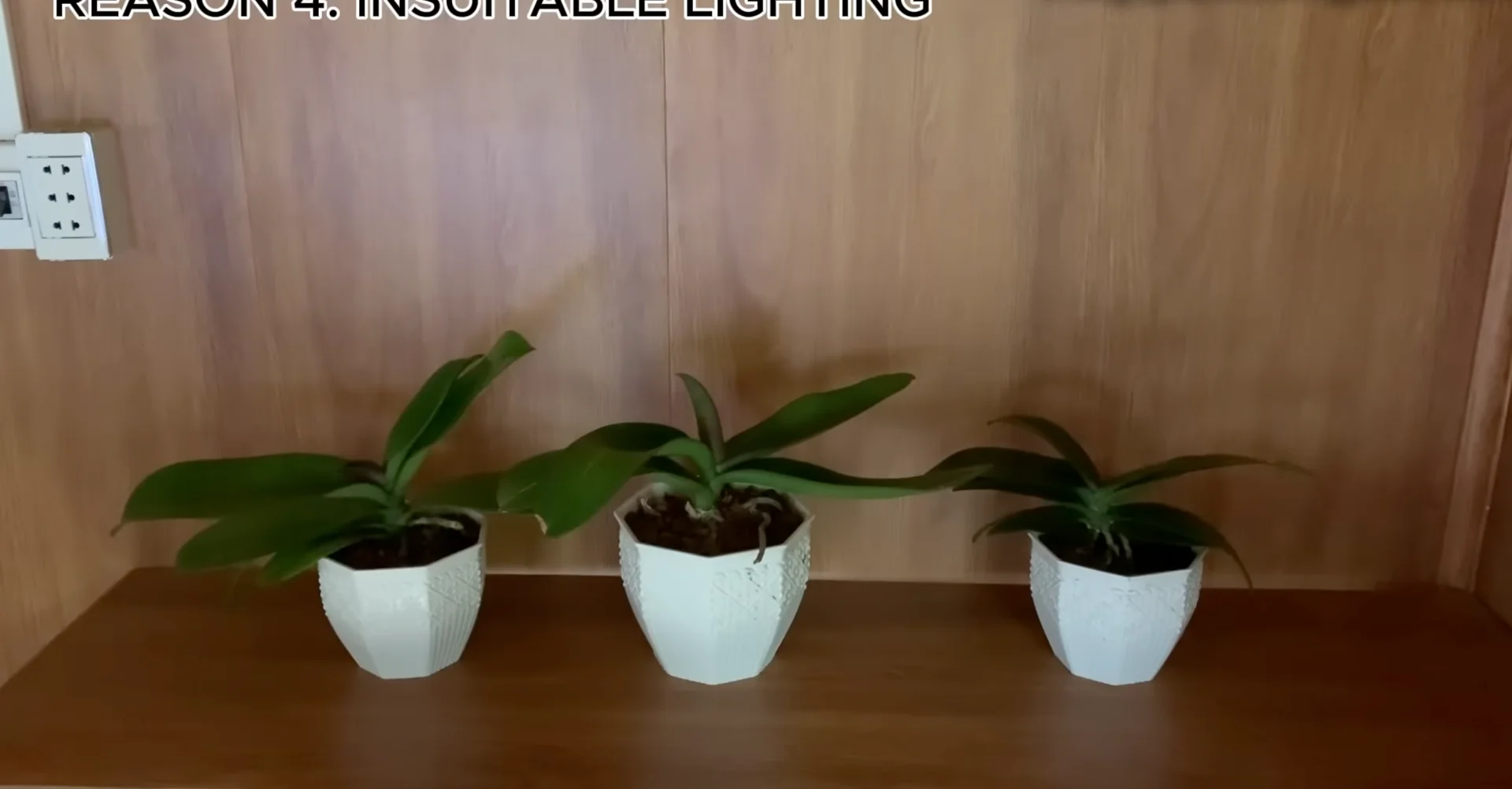
Orchid Non-Blooming Causes: Weak light
Light that is too weak prevents orchids from photosynthesis sufficiently, causing the plant to only maintain basic survival without accumulating enough energy to form buds and bloom.
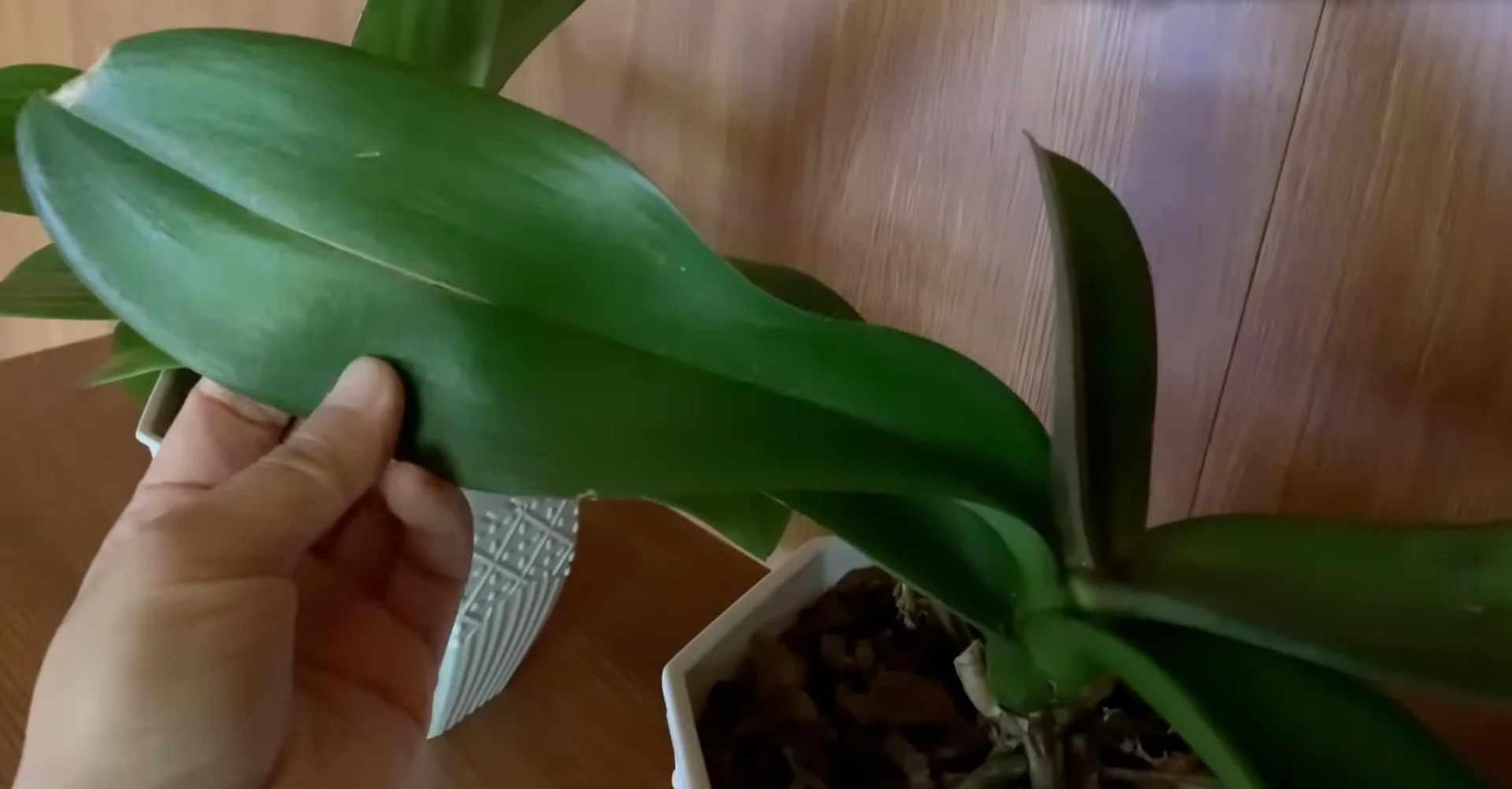
It merely survives at a minimal level for a long period.
Orchids placed in dark corners often have pale thin leaves because the plant lacks sufficient light for photosynthesis and cannot produce enough energy.
In this condition the orchid only maintains basic survival, grows weakly, and rarely blooms.
Orchid Non-Blooming Causes: Excessive light
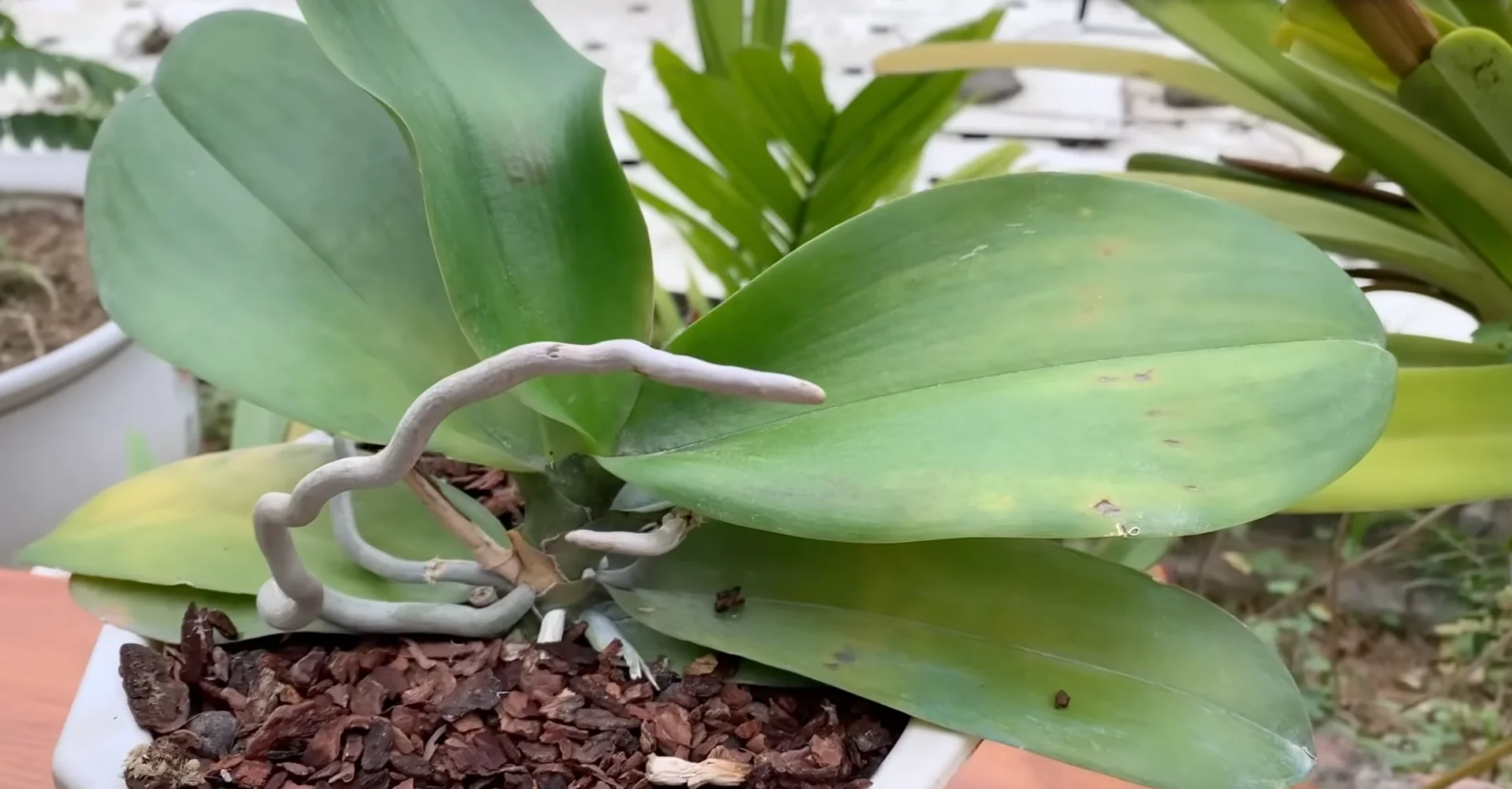
Light that is too strong causes orchids to become stressed, with leaves that are burned, yellowed, or develop brown spots, reducing photosynthetic capacity and inhibiting the flowering process.
Excessively strong light raises the temperature of the leaf surface, disrupting leaf tissue structure. As a result the leaves lose water rapidly, leading to burning, yellowing, and dry edges, especially in young leaves that face direct sunlight.
When exposed to prolonged intense sunlight, orchids shift into a self protective state, reducing photosynthesis and limiting growth.
This causes the plant to develop slowly, become progressively weaker, and struggle to accumulate enough energy to form flower buds.
Excessively strong light also disrupts the plant’s metabolic processes. When the leaves are continuously damaged, the orchid must divert energy to repairing leaf tissue instead of supporting root growth and flower buds. This reduces its ability to bloom over a long period of time.
Orchid Non-Blooming Causes: Proper diffused light
With proper lighting under diffused light, orchids photosynthesize steadily and efficiently, helping the leaves maintain an even green color, a slightly glossy surface, and a thick healthy structure.
Without stress from either insufficient or excessive light, a diffused light environment helps orchids balance their growth.
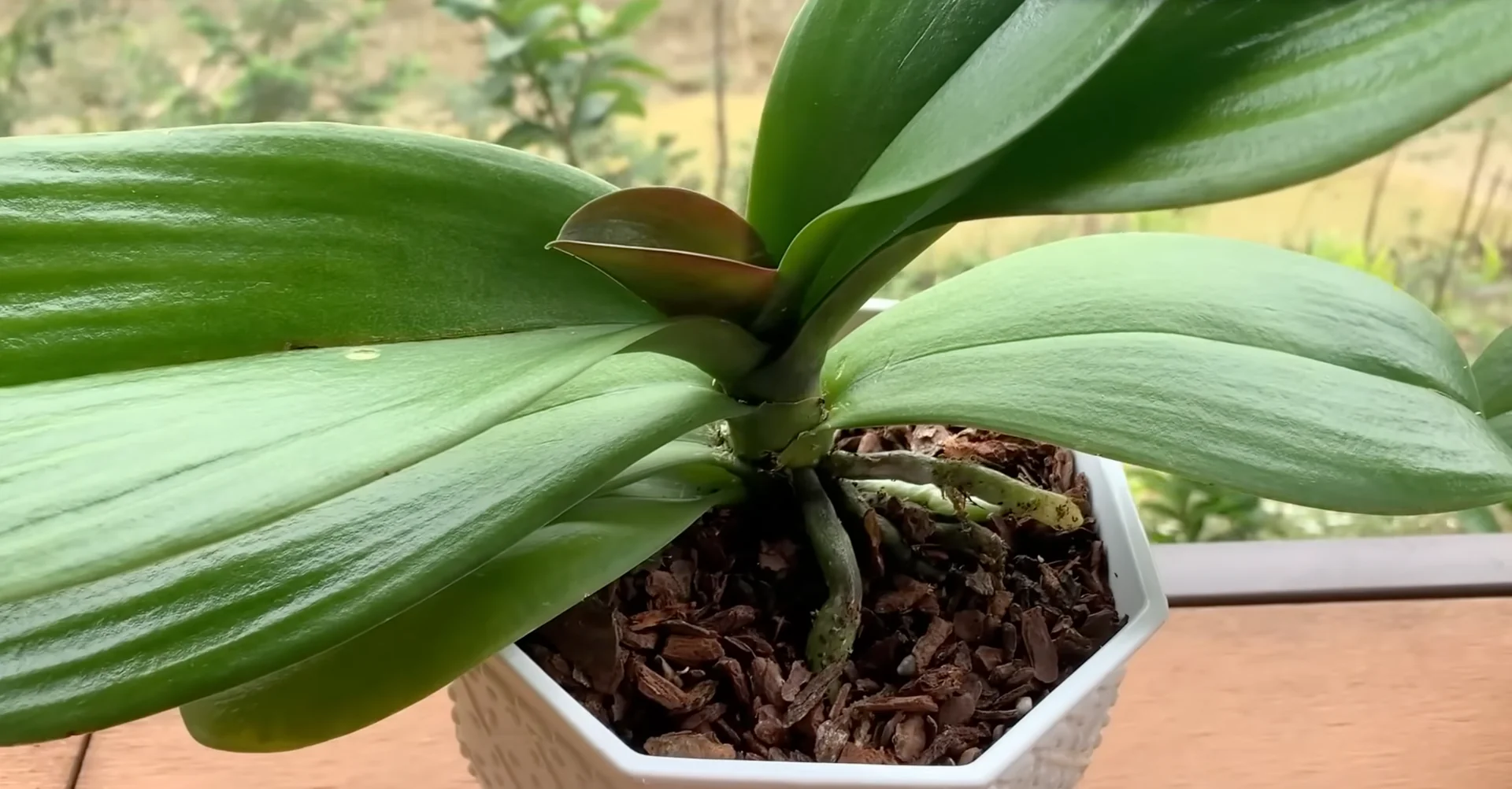
This supports both healthy roots and leaves, creating ideal conditions for the plant to accumulate energy and be ready to bloom at the proper time.
5. Orchid Non-Blooming Causes: No rest period
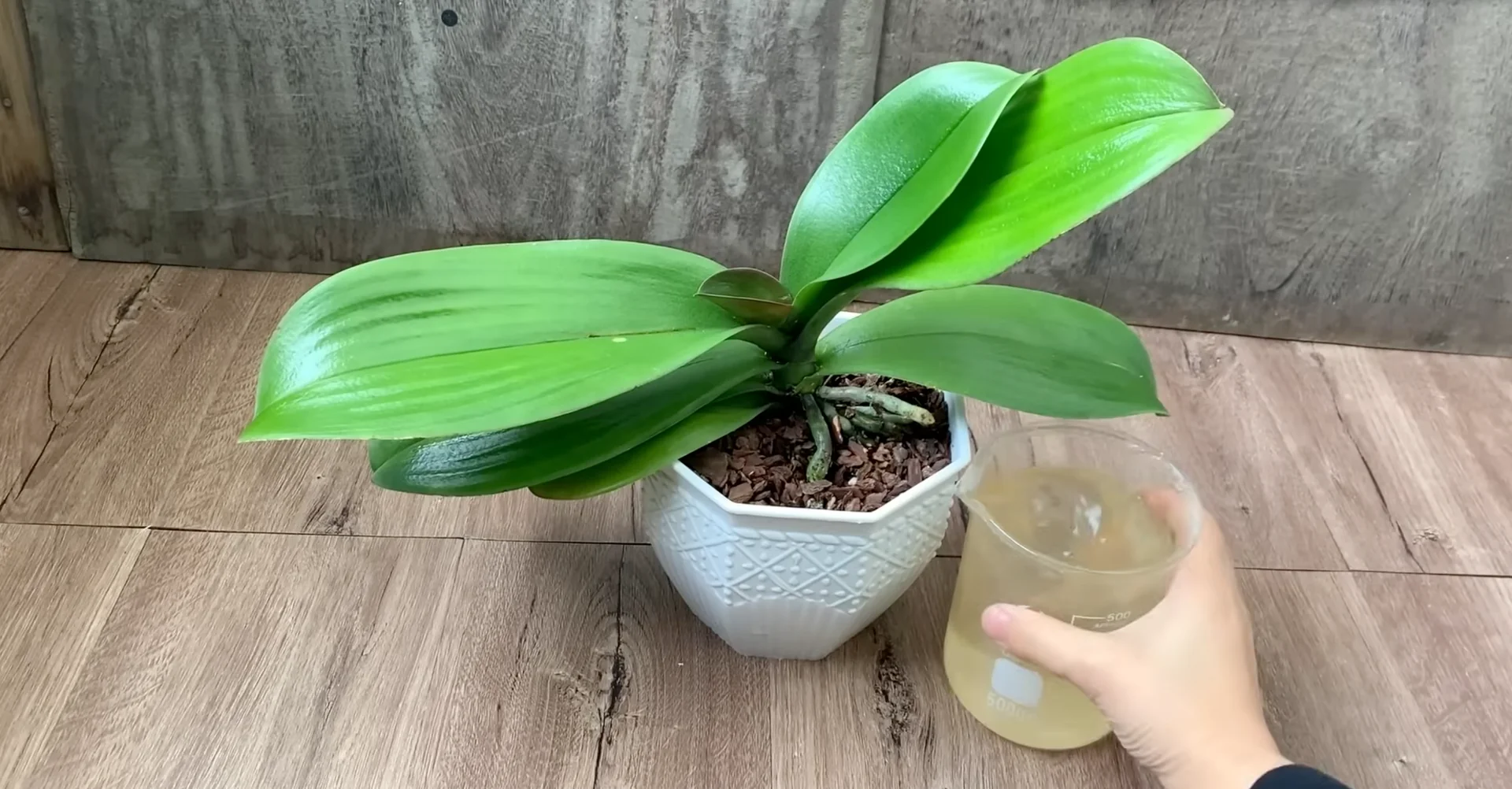
Orchids also need a rest period after each growth cycle to rebalance their physiology.
During this stage the plant slows its growth, accumulates energy, and restores the root system, thereby preparing better for the next flowering cycle.
If you continuously fertilize and stimulate the plant, it will lose its balance and fail to produce flower buds.
6. Orchid Non-Blooming Causes: Steps to help orchids bloom again
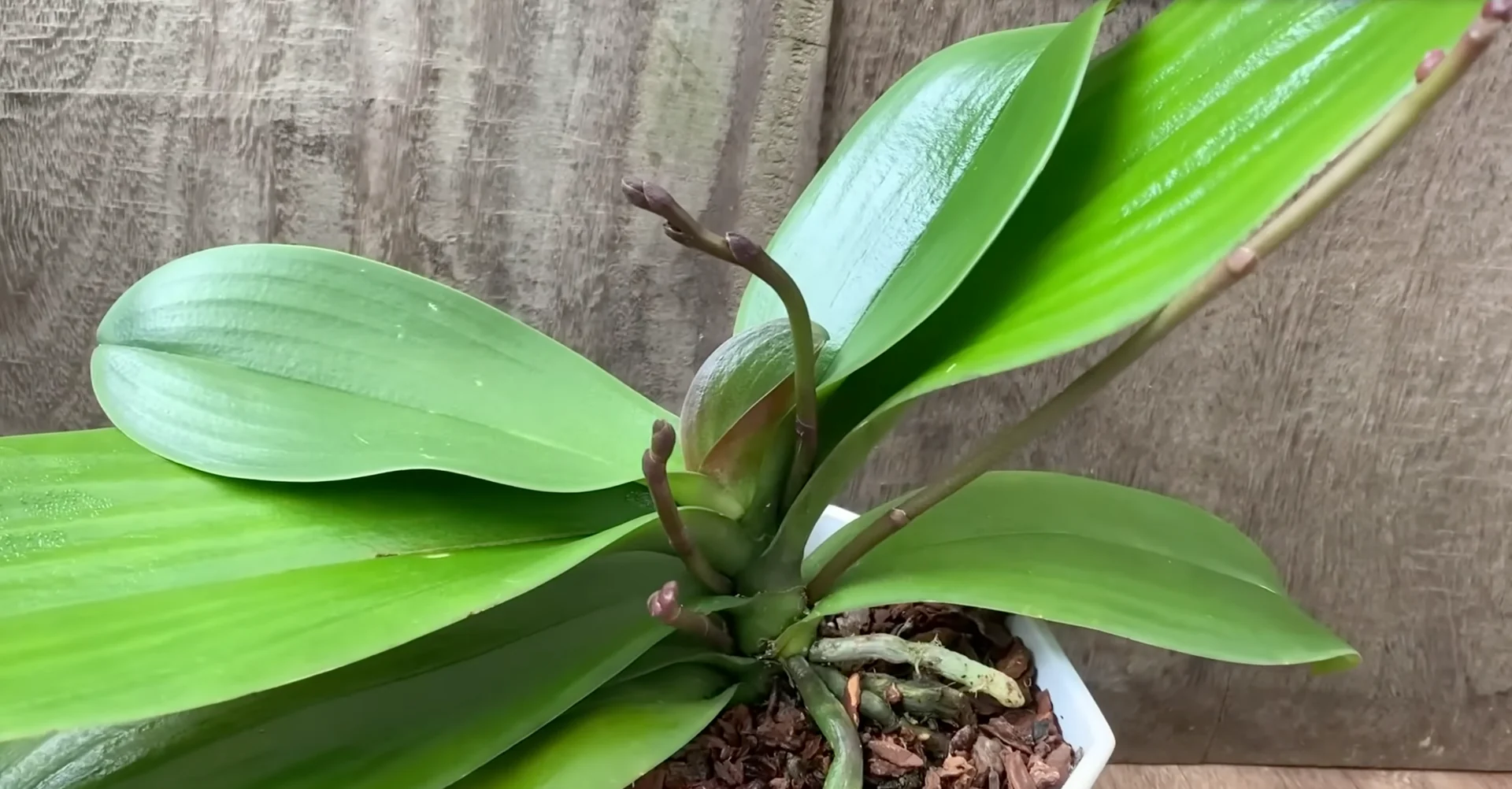
When you correctly understand the reasons why orchids do not bloom, adjusting your care routine becomes clearer and more logical.
As a result helping orchids bloom again becomes much simpler.
Step 1: Check the root system
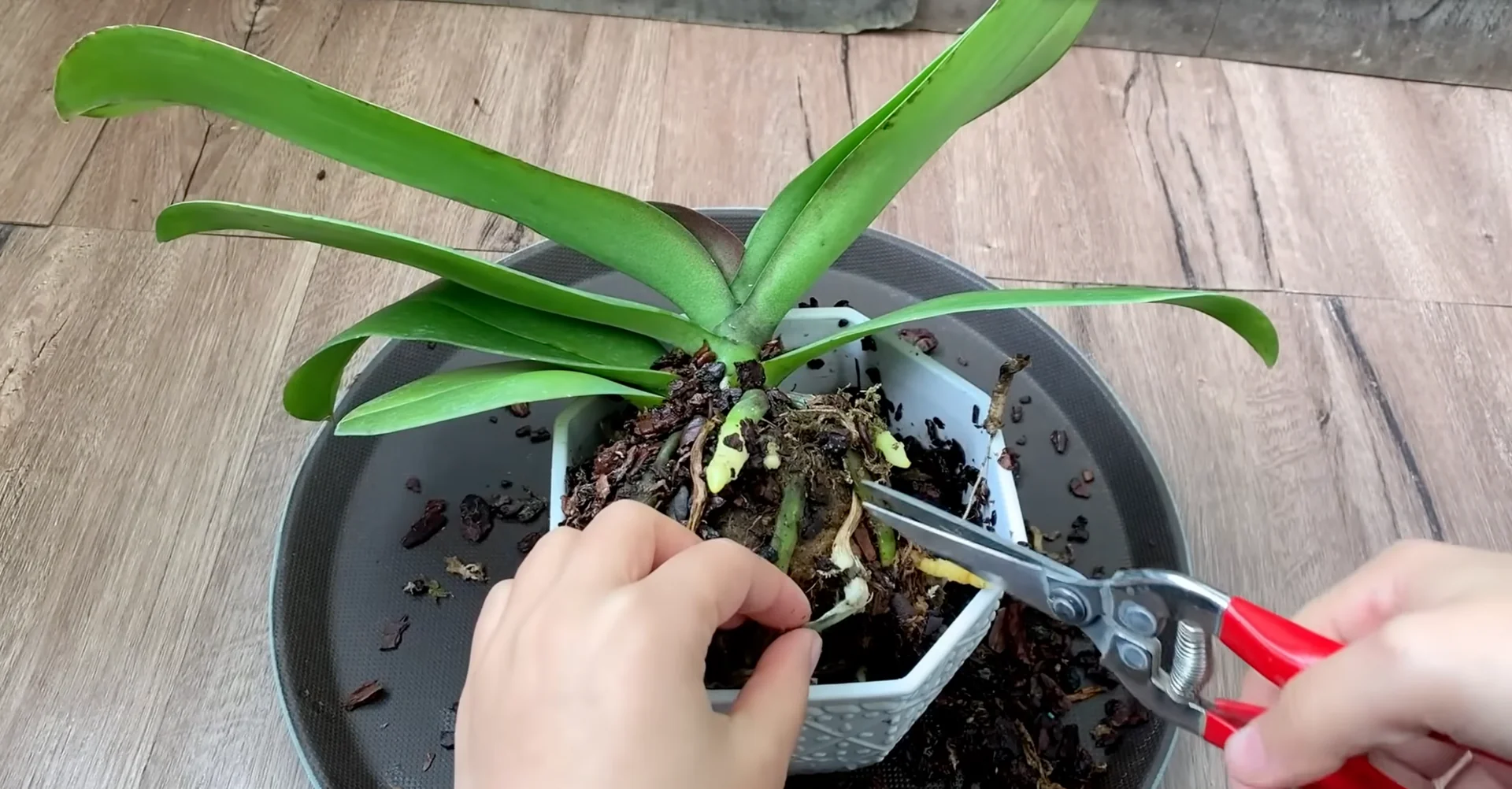
Many orchids may look green on the outside, but the root system inside is weak, rotting, or suffocated. By observing the root system you can easily notice weak, rotting, and waterlogged roots that limit water and nutrient absorption.
Step 2: Review fertilizer
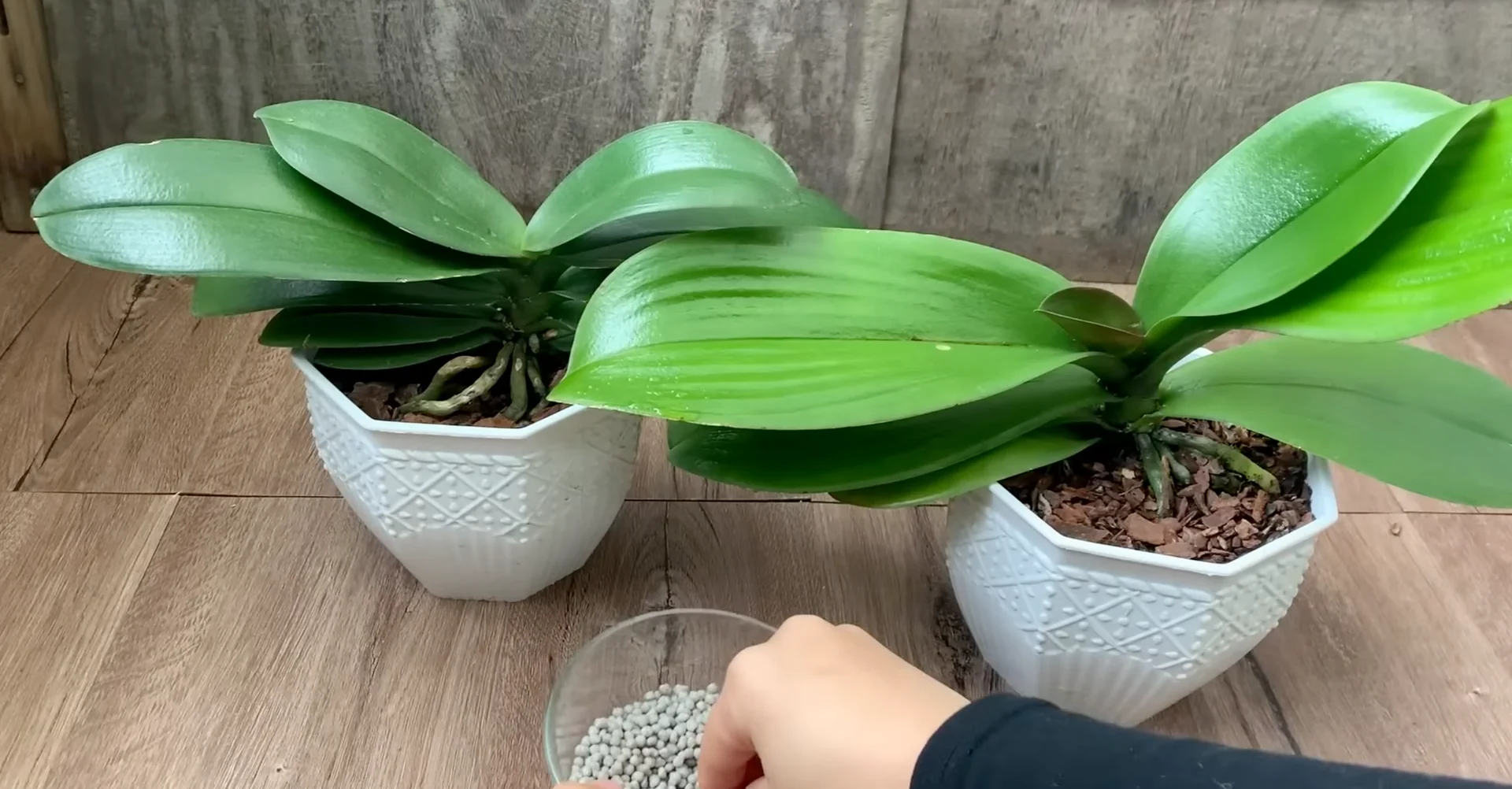
Using the wrong fertilizer or fertilizing too frequently causes orchids to grow only leaves and not form flower spikes. If the fertilizer contains excessively high nitrogen, the plant will focus on leaves and stems, and bud formation is suppressed.
Step 3: Create a day night signal
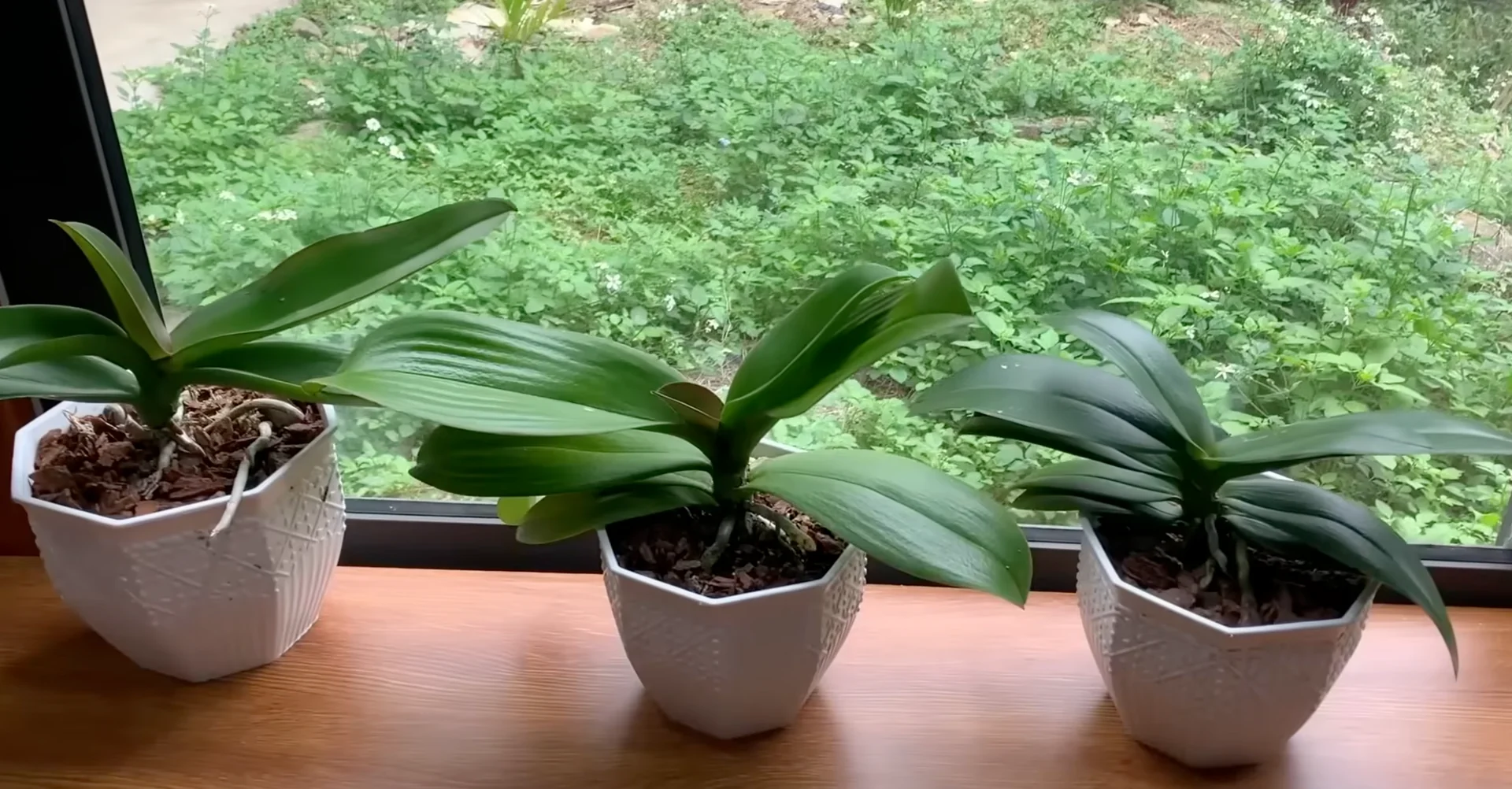
Orchids need a temperature difference between daytime and nighttime to trigger flower bud differentiation. If kept in a closed room with constant temperature, the plant will not receive the signal to bloom.
Step 4: Optimize lighting
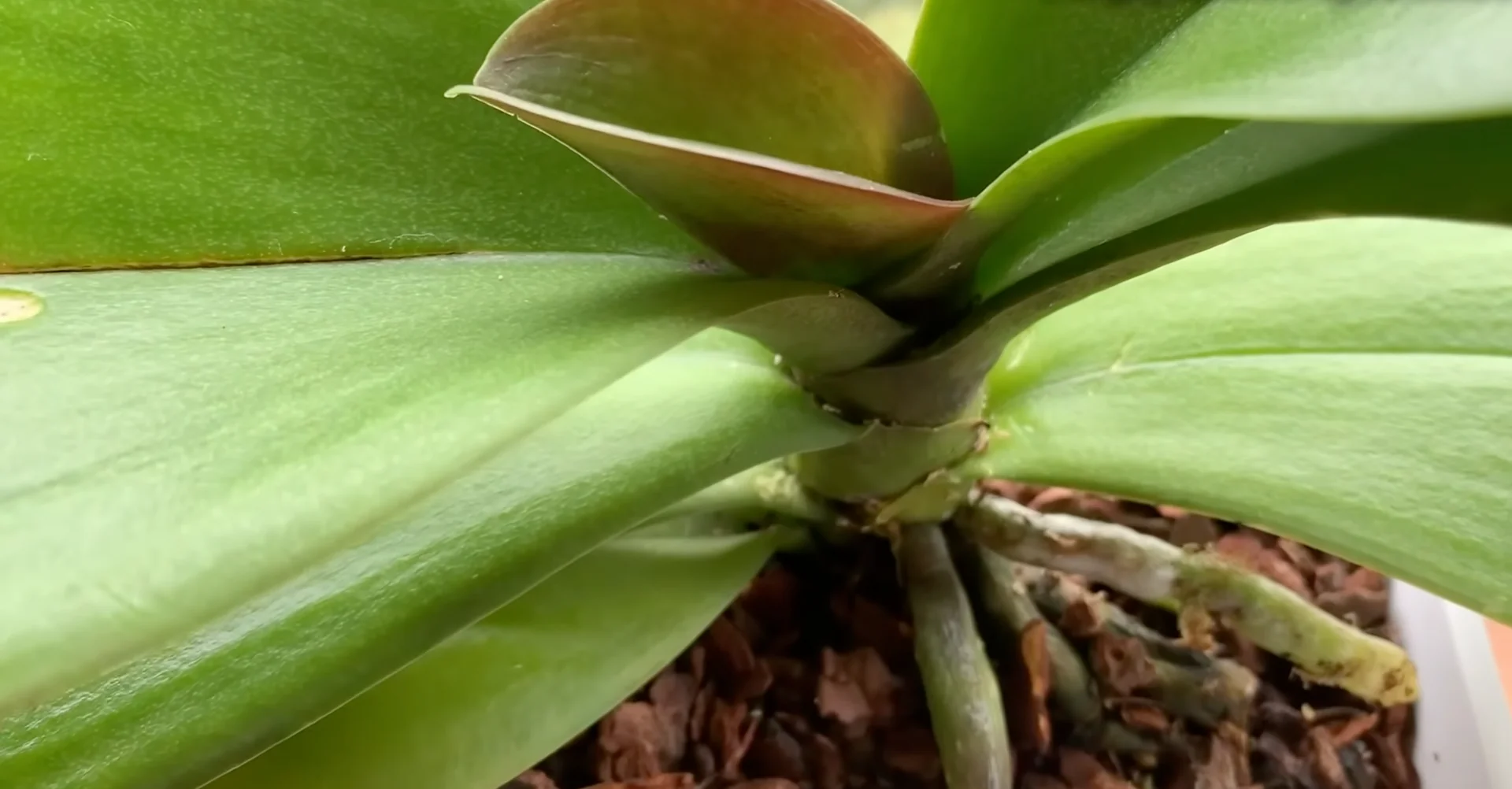
Light that is too weak prevents energy accumulation for buds, and light that is too strong burns leaves and reduces photosynthesis. Provide diffused light so the leaves maintain an even green color and the plant can balance growth.
Step 5: Allow a rest period
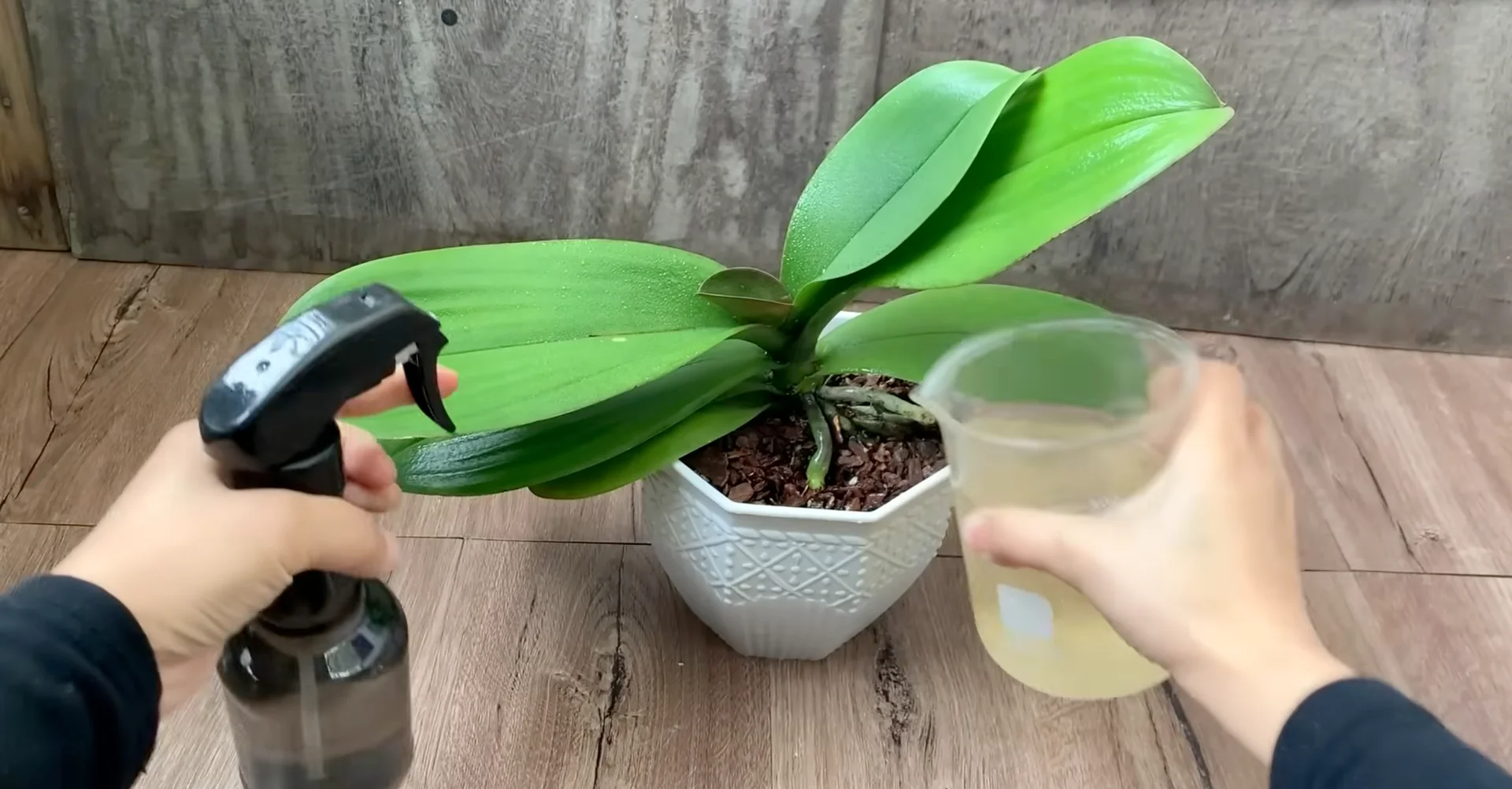
Orchids also need a rest period after each growth cycle to rebalance their physiology. If you continuously fertilize and stimulate the plant, it will lose its balance and fail to produce flower buds.
Final thoughts
Many orchids stay green for years without blooming because the plant is alive but not healthy, fertilizer use is off, the needed day night signal is missing, lighting is unsuitable, or there is no rest period. Correct these core conditions, let the plant accumulate energy, and you will see stronger buds and more consistent flowering.