
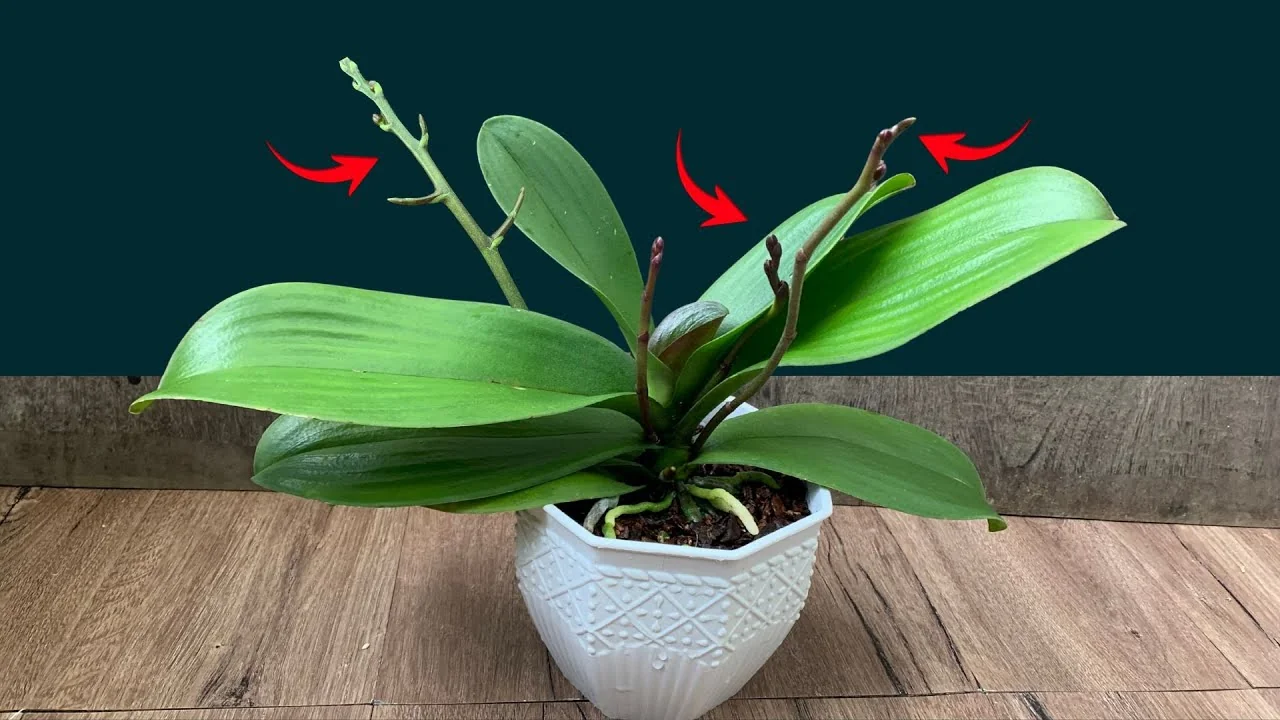
This orchid had not bloomed for many years. Now it is blooming again.
Although the leaves were still green for many months, the plant showed no signs of producing flower buds. I share simple steps to help orchids bloom again, even after many years without flowers.
Orchid Reblooming Techniques
1. Check the roots first
To have flowers, the roots must be healthy first. When I removed the growing medium to check, I discovered that the root system had a problem. Healthy young green roots were intertwined with many roots that were soft and rotten.
This condition makes it difficult for the plant to absorb water and nutrients. If left for too long, the orchid will become weaker and weaker.
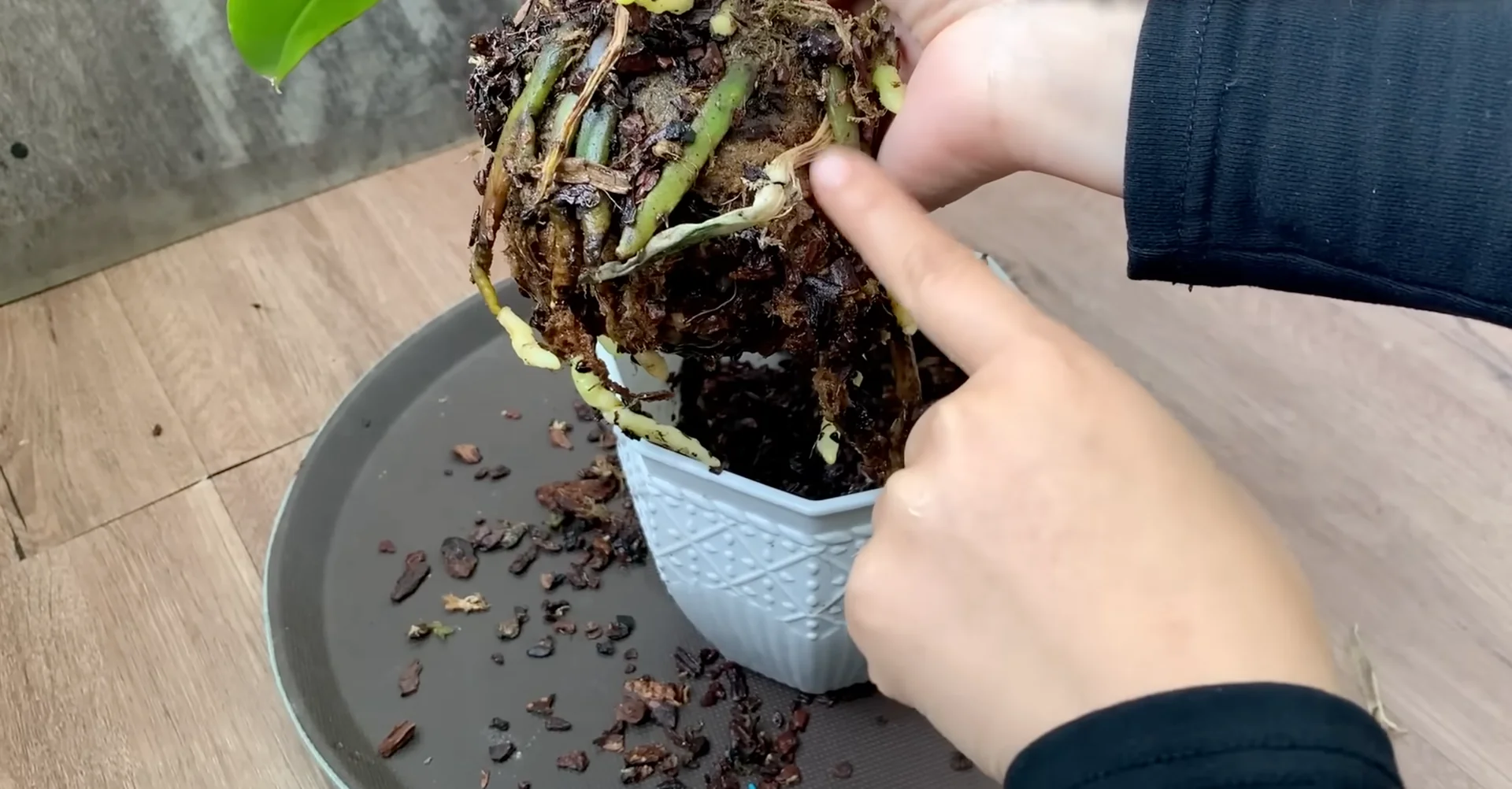
I began by gently cleaning the entire root system. I completely removed all remaining old growing medium.
After that, I cut off all the damaged soft and rotten roots. Only the roots that were still green, firm, and healthy were kept.
Proper pruning helps the root system become more airy. At the same time, it limits the growth of bacteria and fungi.
When the root system is clean and healthy, the plant can recover more easily. Its ability to absorb water and nutrients is also noticeably improved.
You can see that decomposed growing medium, which holds too much water, only damages the orchid roots, preventing the plant from absorbing enough nutrients to bloom.
After finishing the treatment, I let the plant dry naturally for a few hours. This helps the cut surfaces callous and reduces the risk of root rot later on.
2. Refresh the potting mix
I replanted the orchid into a new growing medium. A clean and well aerated medium helps the roots grow better.
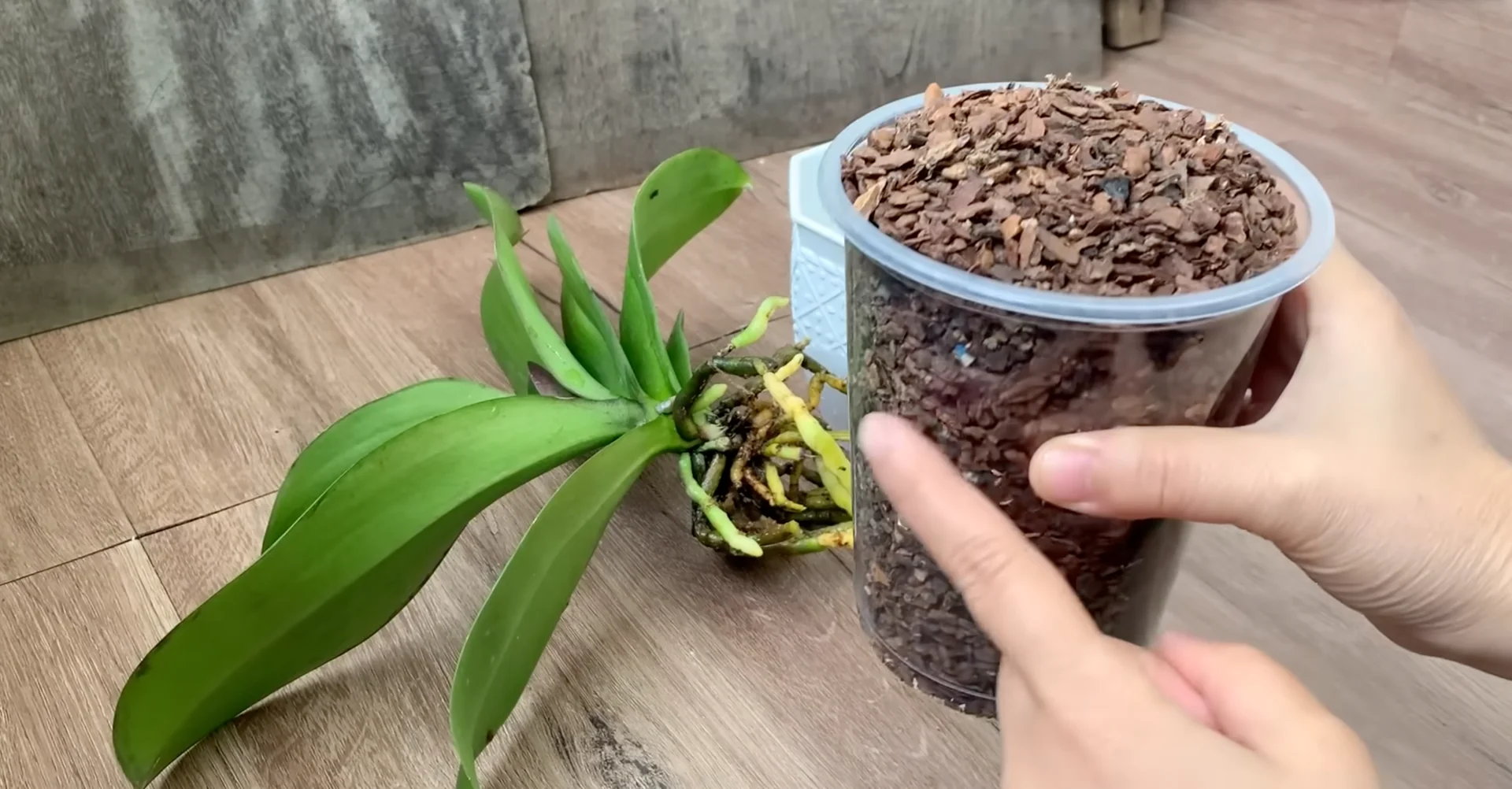
Placement and light
After repotting, I placed the plant in a cool area. I avoided direct sunlight and did not water it during the first few days.
It is best to place the plant on a window sill where there is gentle light because light is the signal that triggers flowering.
3. Reduce nitrogen and increase potassium
Banana peel solution
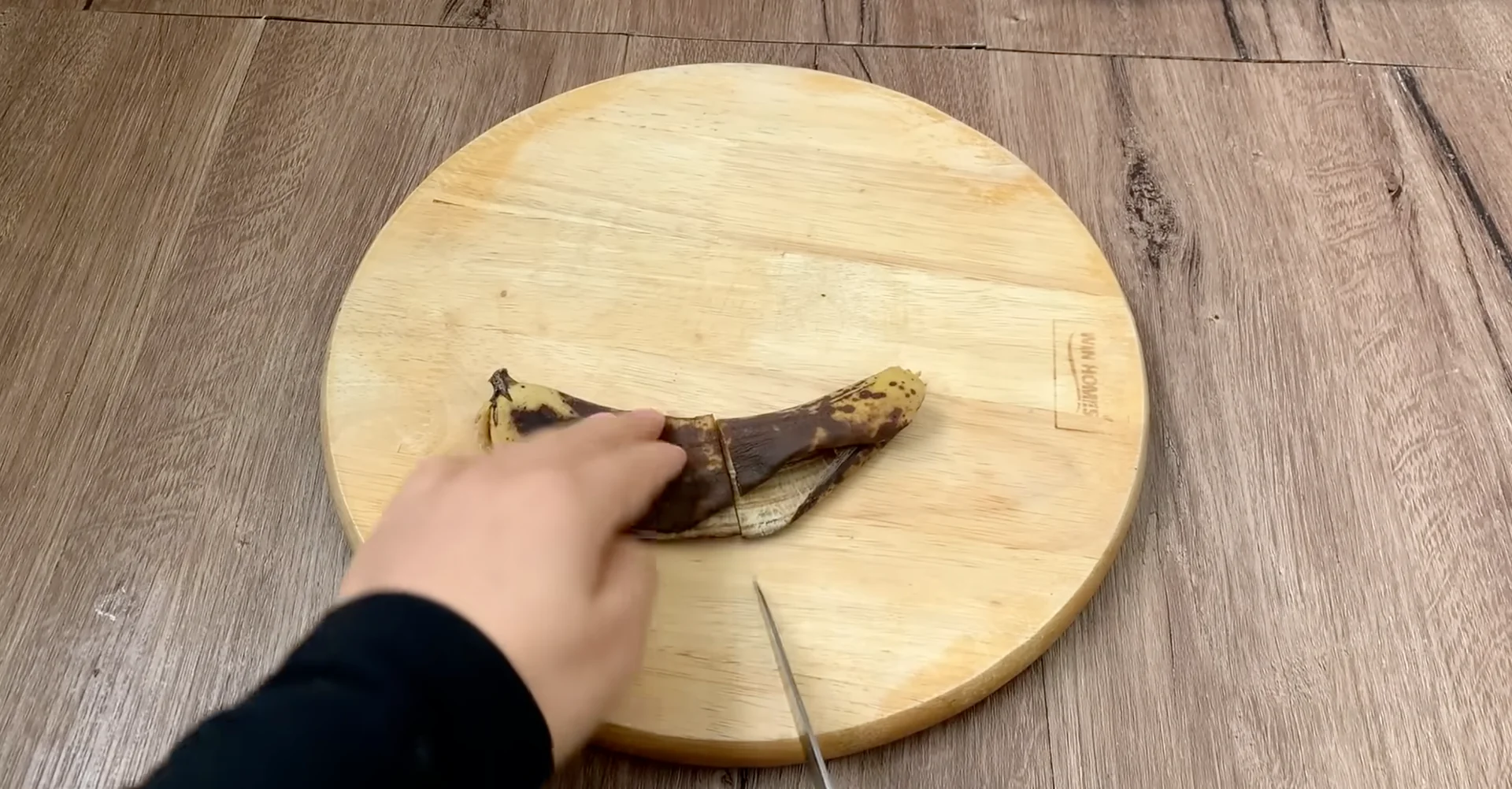
Take one banana peel and cut it into small pieces to make fertilizer. Banana peels contain a lot of natural potassium and very little nitrogen, so they are excellent for making fertilizer that helps orchids bloom.
Pour 500 ml of boiled water over the chopped banana peel and wait until the water cools. After the water has cooled, strain out the solids and add 500 ml of water.
This gives one liter of diluted fertilizer solution. Add three vitamin B1 tablets, 2.5 mg each. Vitamin B1 helps stimulate root development and regulate plant growth.
Leaf care
After finishing the mixture, use a clean soft cloth to soak up the diluted fertilizer solution. Then gently wipe both the upper and lower surfaces of the leaves thoroughly.
Wiping the leaves with diluted banana peel water helps supply potassium and natural minerals directly through the leaf surface, making the leaves greener, thicker, and noticeably glossier after a short time.
Not only does it nourish the leaves, but the solution also helps remove dust and open the stomata, thereby increasing photosynthesis and allowing the plant to absorb nutrients more effectively in the next care steps.
Spray and water
You can also pour this diluted fertilizer solution into a spray bottle. Then spray it evenly over the entire orchid plant.
When applied regularly, this solution helps maintain light humidity around the plant, supports photosynthesis, and creates favorable conditions for strong new root growth, preparing the orchid for the bud forming and flowering stages. Next, use the same diluted banana peel solution to water the orchid evenly.
Watering the plant with diluted banana peel water allows the orchid roots to absorb potassium and minerals gently, thereby stimulating new root growth, strengthening the roots, and improving their ability to absorb water and nutrients. When the root system functions steadily, the orchid grows more evenly.
The leaves maintain their glossy green color for a long time, and a strong foundation is created for the plant to store energy and prepare for future bud formation and flowering.
Frequency and cautions
For newly planted orchids, after each fertilizer spray, you should wipe off any standing water. This helps reduce fungal diseases and crown rot, especially in the leaf axils and at the base of the stem, areas that are very prone to water accumulation.
Any remaining fertilizer solution can be used to water other blooming orchids in your garden. This helps maintain bright flower colors, extend the blooming period, and keep the plants healthier throughout the entire flowering cycle.
You only need to do this two to three times per month for the orchid to absorb nutrients and grow steadily.
4. Create a temperature difference
Create a temperature difference between day and night. This change acts like a natural signal, helping the orchid recognize that it is time to form buds and bloom.
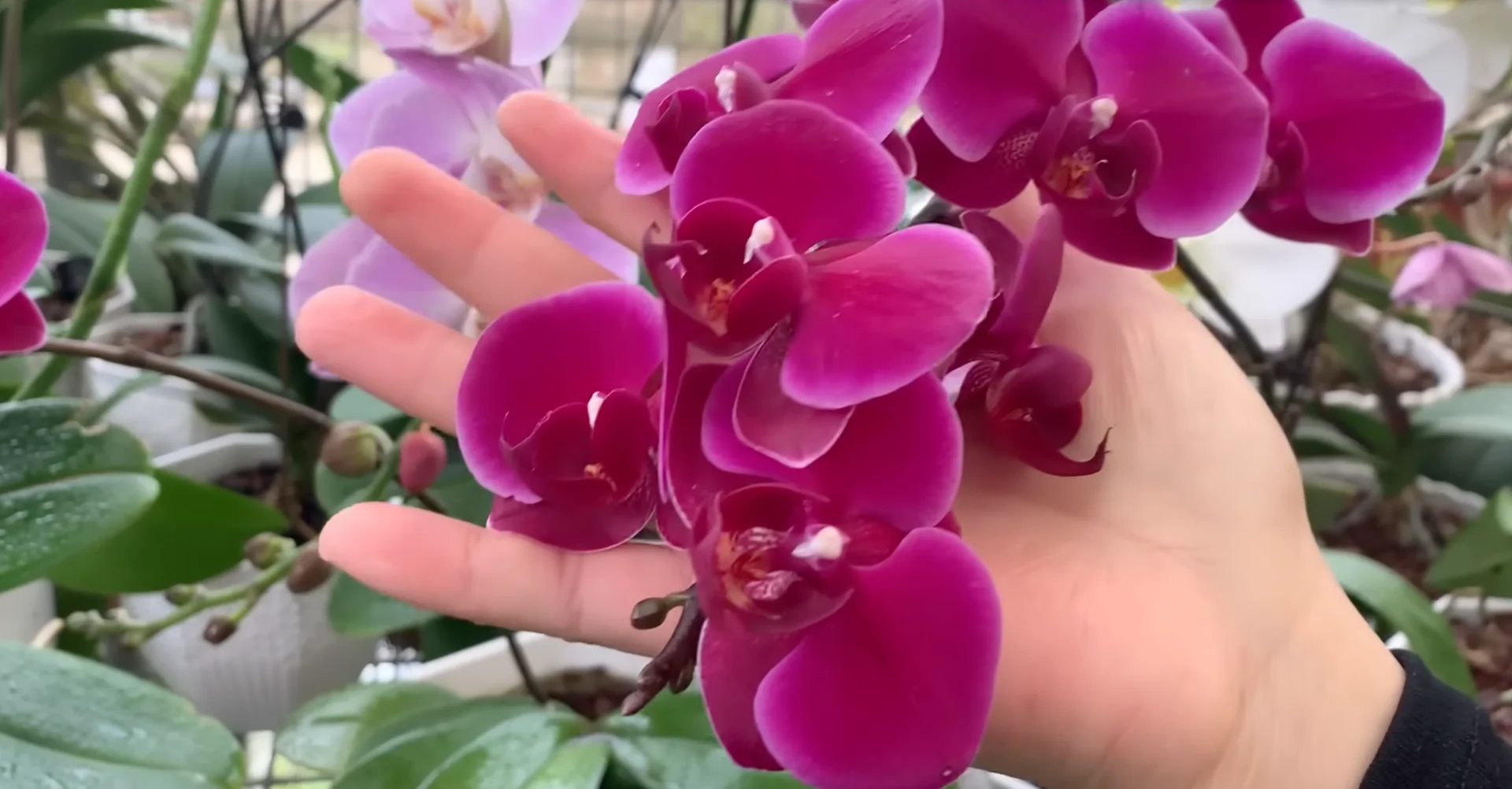
At night, place the orchid in a cool and well ventilated area. Avoid keeping it in an enclosed room continuously as this reduces the natural temperature difference.
Results with Orchid Reblooming Techniques
Here is the result after 2 months of care. You can see that the orchid has produced two strong new flower spikes.
The leaves have become noticeably greener, glossier, and firmer. This shows that the plant has recovered well and is now ready to enter a stable flowering stage.
During this stage I continue to fertilize very lightly with diluted banana peel water, applying it to orchids with buds two to three times per week to nourish the buds and support flower development.
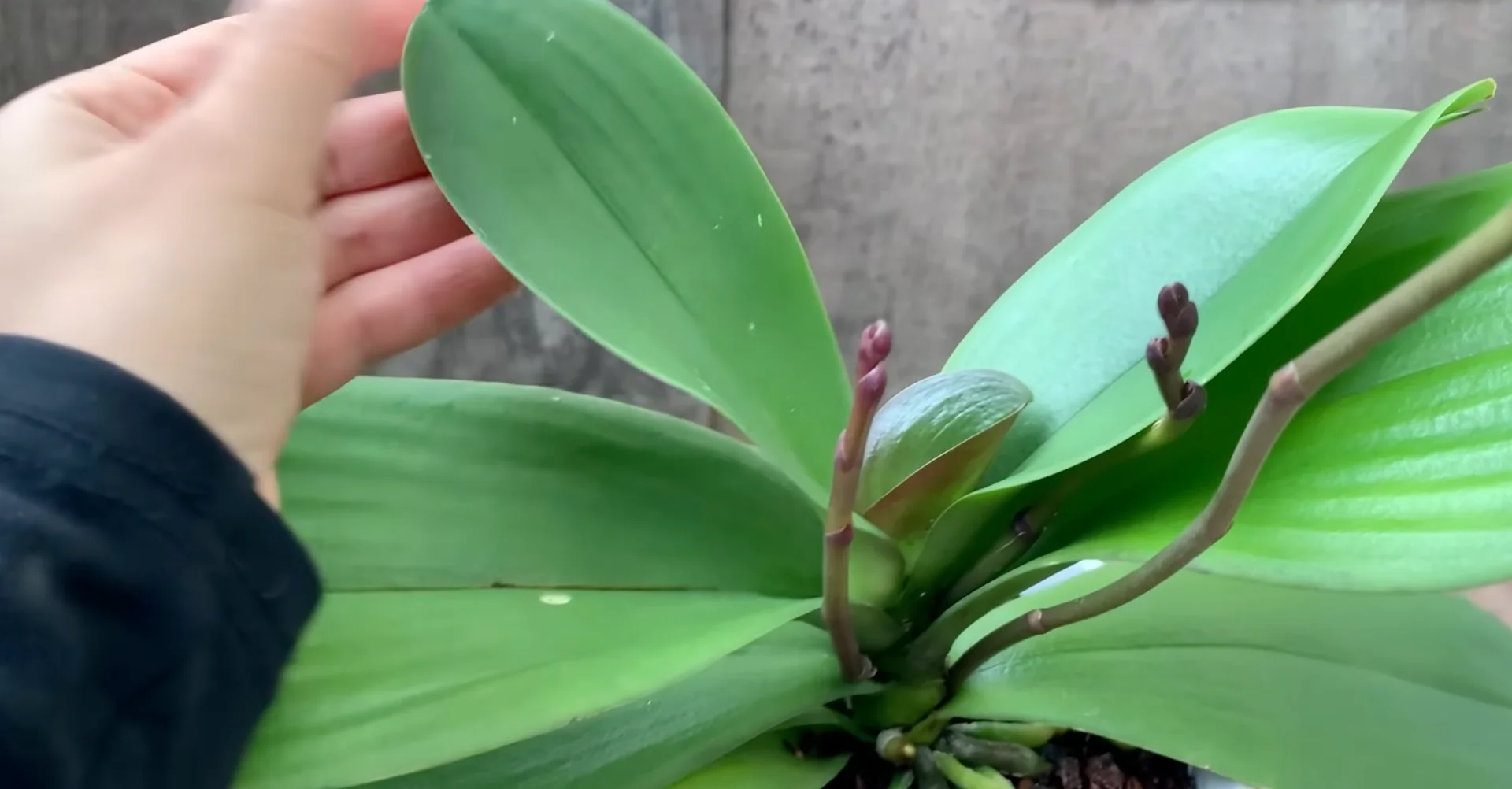
Here is the result after 80 days of care. You can see that the orchid has grown new leaves and most importantly an additional new flower spike has appeared.
At this point the orchid has three strong flower spikes on the same plant. A clear sign that it is growing very well.
Final Thoughts
Healthy roots, a fresh and airy medium, gentle light, high potassium with low nitrogen, and a day night temperature difference work together to trigger reblooming. The diluted banana peel solution supports roots, leaf health, and bud development when used consistently.
Follow these steps with patience, and your orchid can store energy, form buds, and return to reliable flowering.