
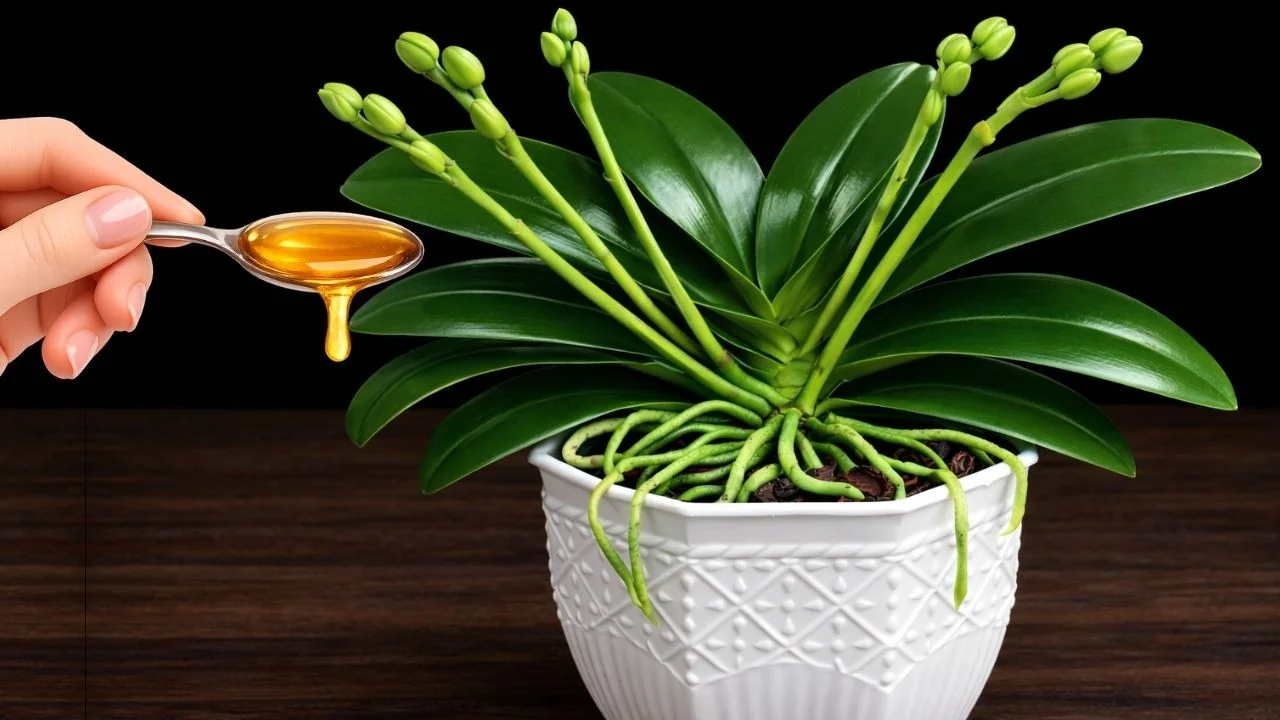
Your orchid looks healthy, but it still won’t bloom. The leaves are green. The roots seem fine.
You’re watering carefully. Why no flower spike? The problem isn’t fertilizer, and it’s not luck.
Most orchids don’t bloom because they’re missing the right signals. I will show you three hidden reasons and a simple natural method that helps trigger strong, healthy buds. This could completely change how your orchid blooms.
1. Natural Orchid Bud Induction signals
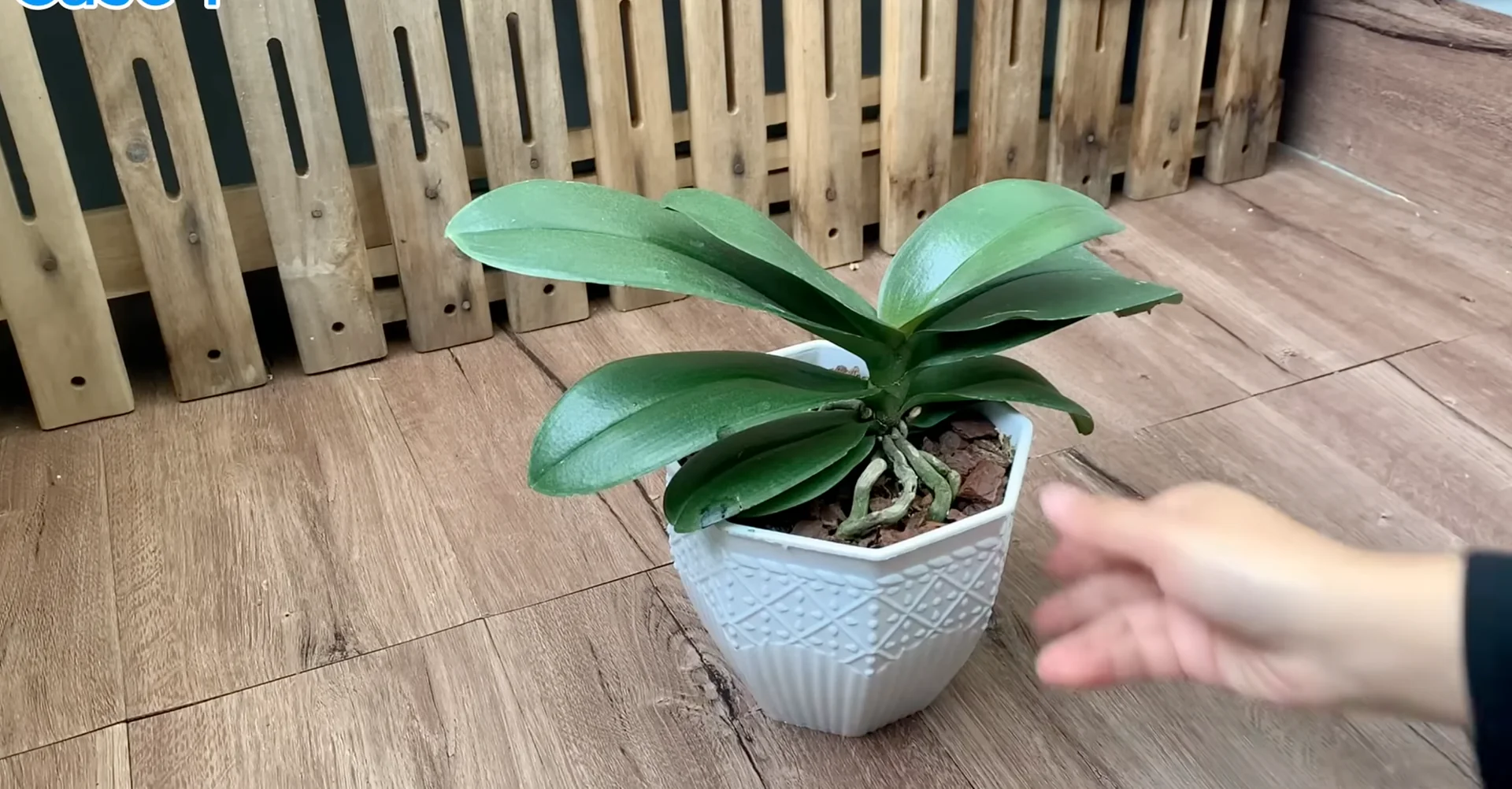
Case one, your plant is growing healthily but still never blooms. When your orchid’s leaves are darker green than usual, this is often a sign that the plant is lacking light. Dark green leaves mean the plant is trying to optimize photosynthesis by increasing its chlorophyll content.
At this point, the plant is still healthy and the leaves are growing normally, but the accumulated energy is not enough to stimulate flower buds. The orchid will bloom late or not at all.
2. Natural Orchid Bud Induction with aloe and honey
To stimulate the orchid to form buds, I use fresh aloe vera, a natural ingredient rich in nutrients. First, chop the aloe vera into small pieces to easily release nutrients into the water. Aloe vera contains many vitamins, minerals, and natural nutrients that are very beneficial for Phalaenopsis orchids.
Aloe vera contains vitamins A, C, and E that help increase the plant’s resistance, support healthy leaf development, and create favorable conditions for flower bud formation. Then add one liter of clean water and let the solution steep for about 1 hour. After 1 hour of steeping, I filter the solution to remove the residue and obtain a clear liquid.
Next, add one teaspoon of pure honey. Honey contains many natural sugars, enzymes, and trace minerals, helping to provide quick energy for the plant and stimulate root activity, while also supporting the flower bud formation process, helping the orchid grow healthily and produce buds more evenly. To make the solution gentler and safer for the orchid roots, I continue by adding 500 ml of clean water to the mixture.
Diluting the solution helps the plant absorb nutrients gently, prevents root shock, and still stimulates bud formation. It allows the plant to develop steadily.
Prepare the solution
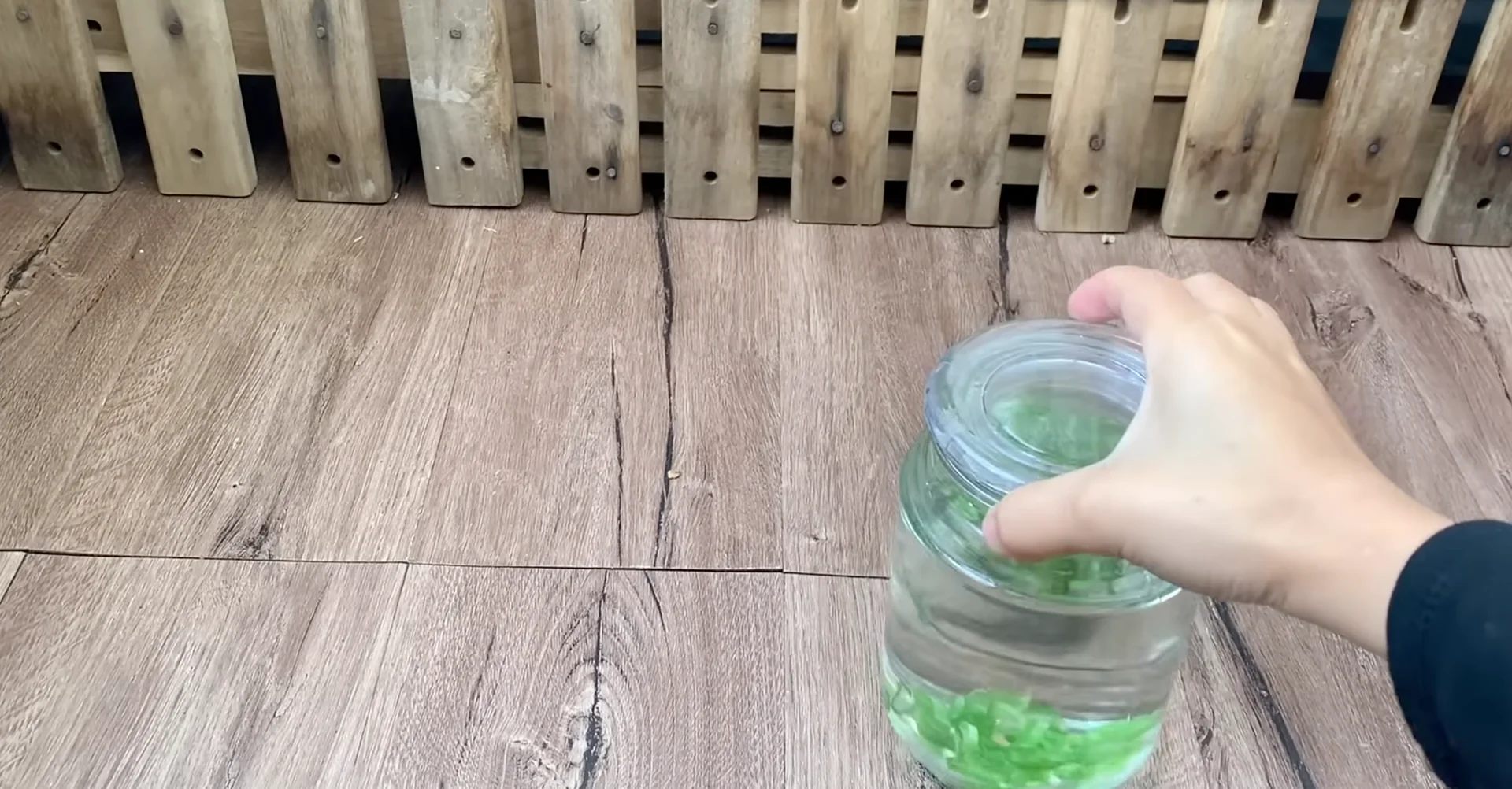
Use fresh aloe vera and chop it to release nutrients. Steep in clean water for 1 hour and strain. Add pure honey and dilute with more clean water.
Apply on schedule
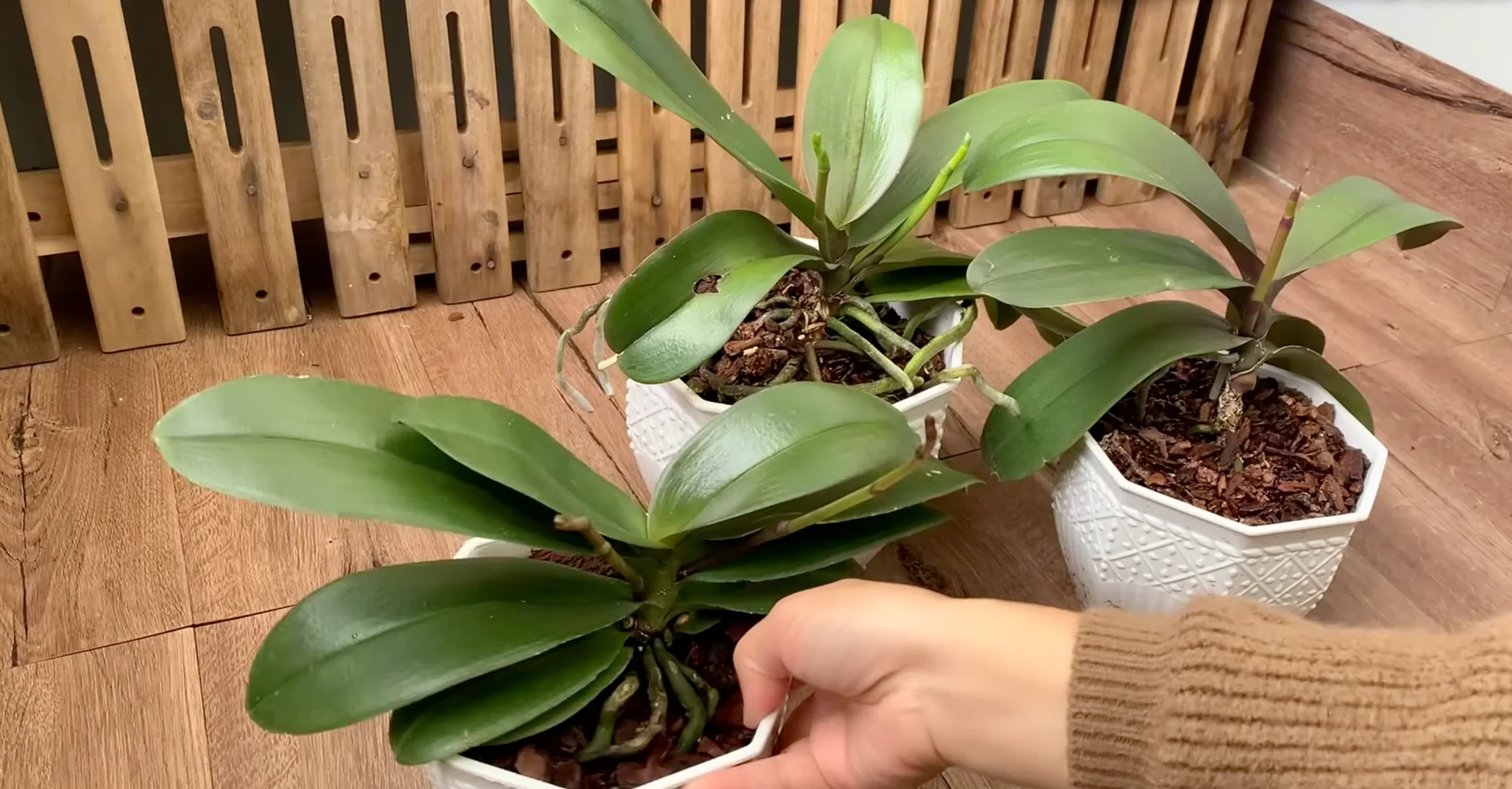
Place the plant in a spot with indirect light bright enough for the leaves to photosynthesize effectively. Keep the routine consistent.
Step 1. Wipe the leaves
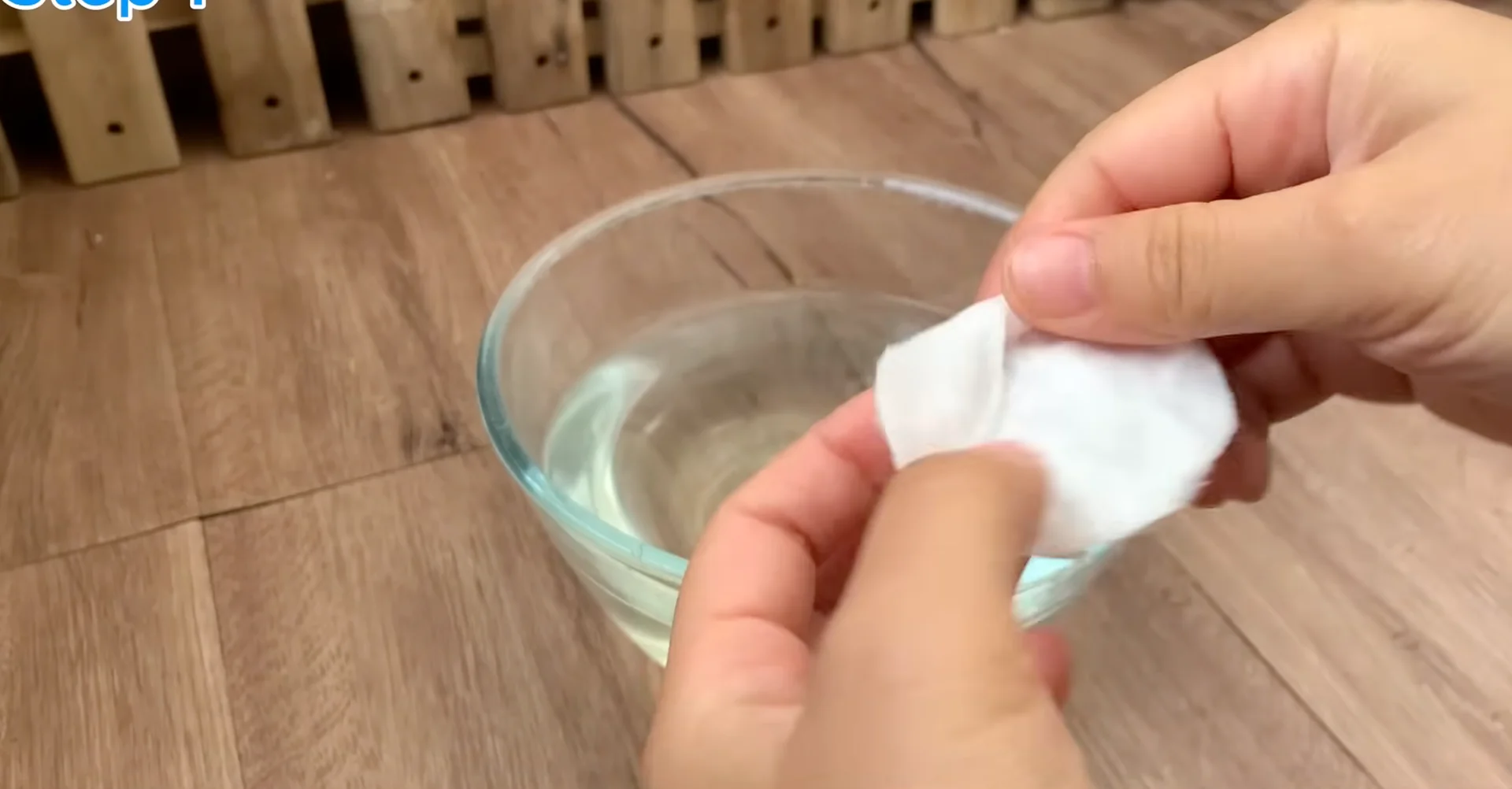
When wiping the leaves with the aloe vera and honey solution, the effect is not only cleaning, but also directly affects the flower bud formation of Phalaenopsis orchids. The natural nutrients and enzymes in the solution are absorbed through the leaf epidermis, helping to increase resistance, stabilize the plant’s physiology, and reduce stress. When the plant is no longer stressed and nutrients are distributed properly, the orchid will shift from the leaf growth stage to stimulating flower spike initiation.
This helps buds form earlier and develop evenly and healthily. Keep the plant in bright indirect light during this phase.
Step 2. Spray all leaf surfaces
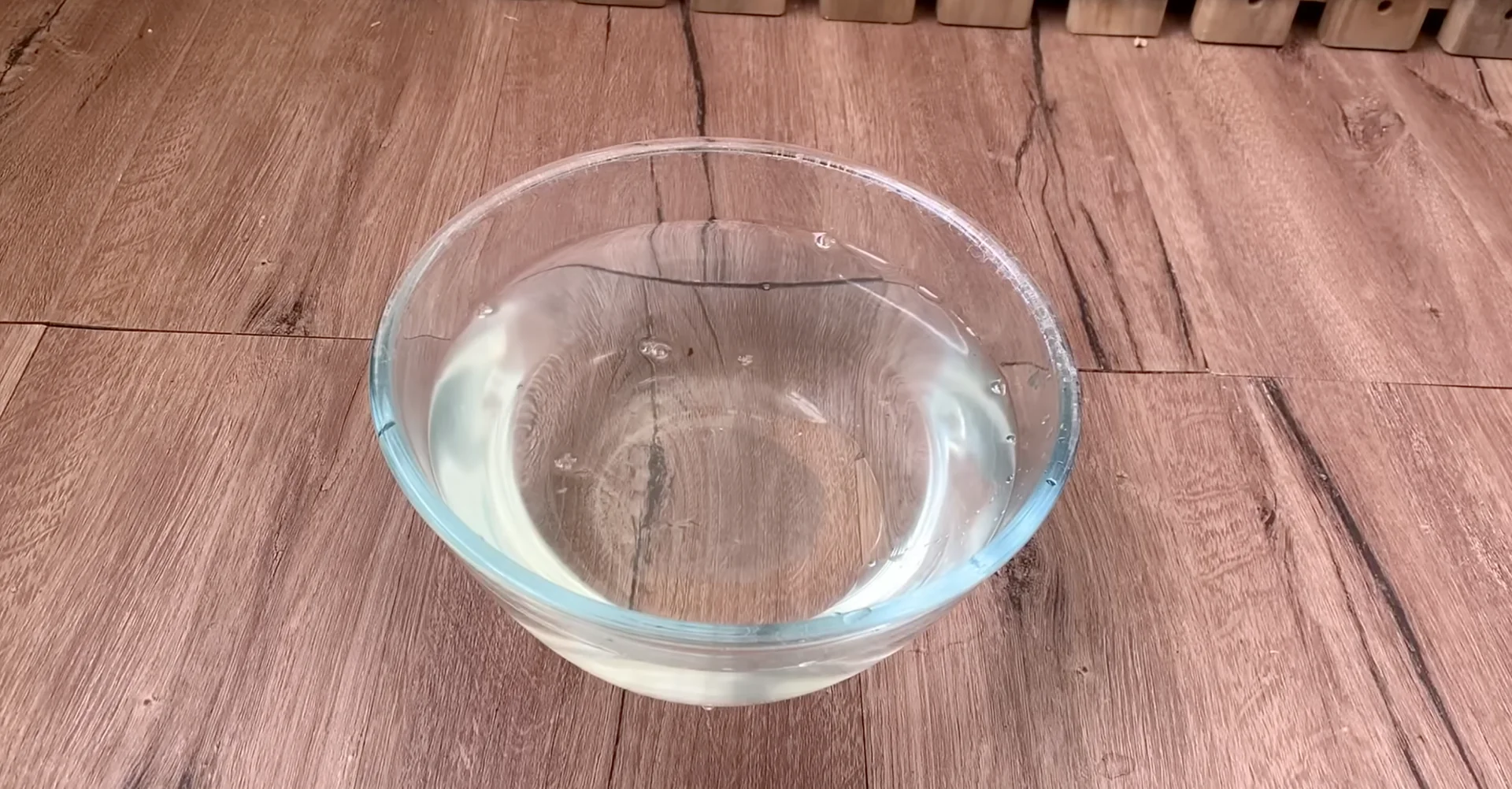
I pour the solution into a spray bottle and spray it evenly over all the leaves, both the upper and lower surfaces. Spraying the solution over all the leaves helps the plant absorb nutrients quickly through the leaves, activates photosynthesis, and balances physiological processes. When the plant accumulates enough energy and is no longer under stress, the orchid will move into the flower bud differentiation stage.
This stimulates flower spike formation earlier with more even and healthier development. When sprayed onto the leaves, aloe vera helps soothe the leaf surface, increase absorption, and support plant recovery. Honey provides quick energy and promotes flower spike formation.
Step 3. Water the growing medium
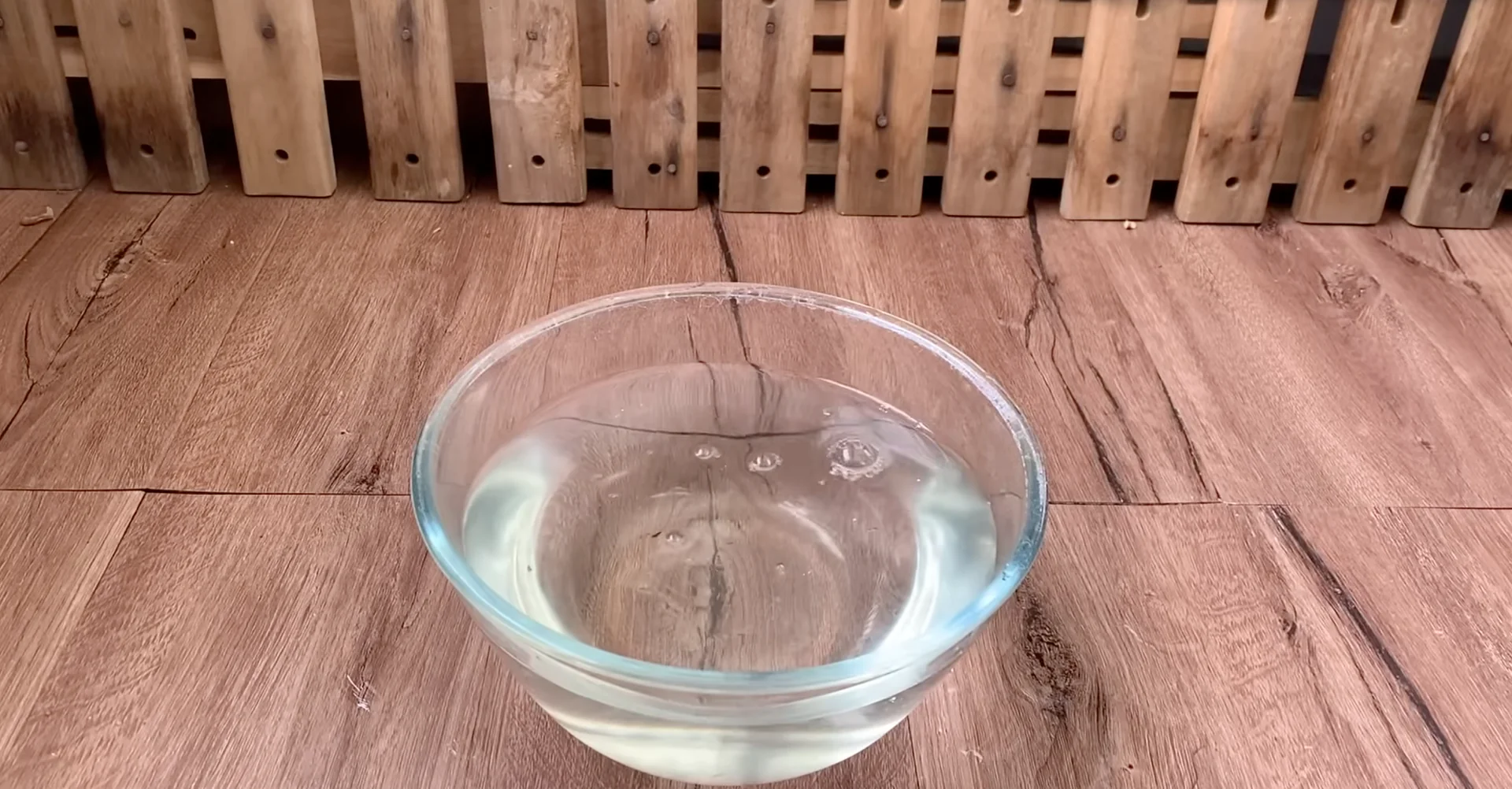
I water this mixture onto the growing medium, helping the nutrients penetrate deeply inside. This creates a solid foundation for the plant to differentiate flower buds and produce more even buds.
Step 4. Dry the leaf surfaces
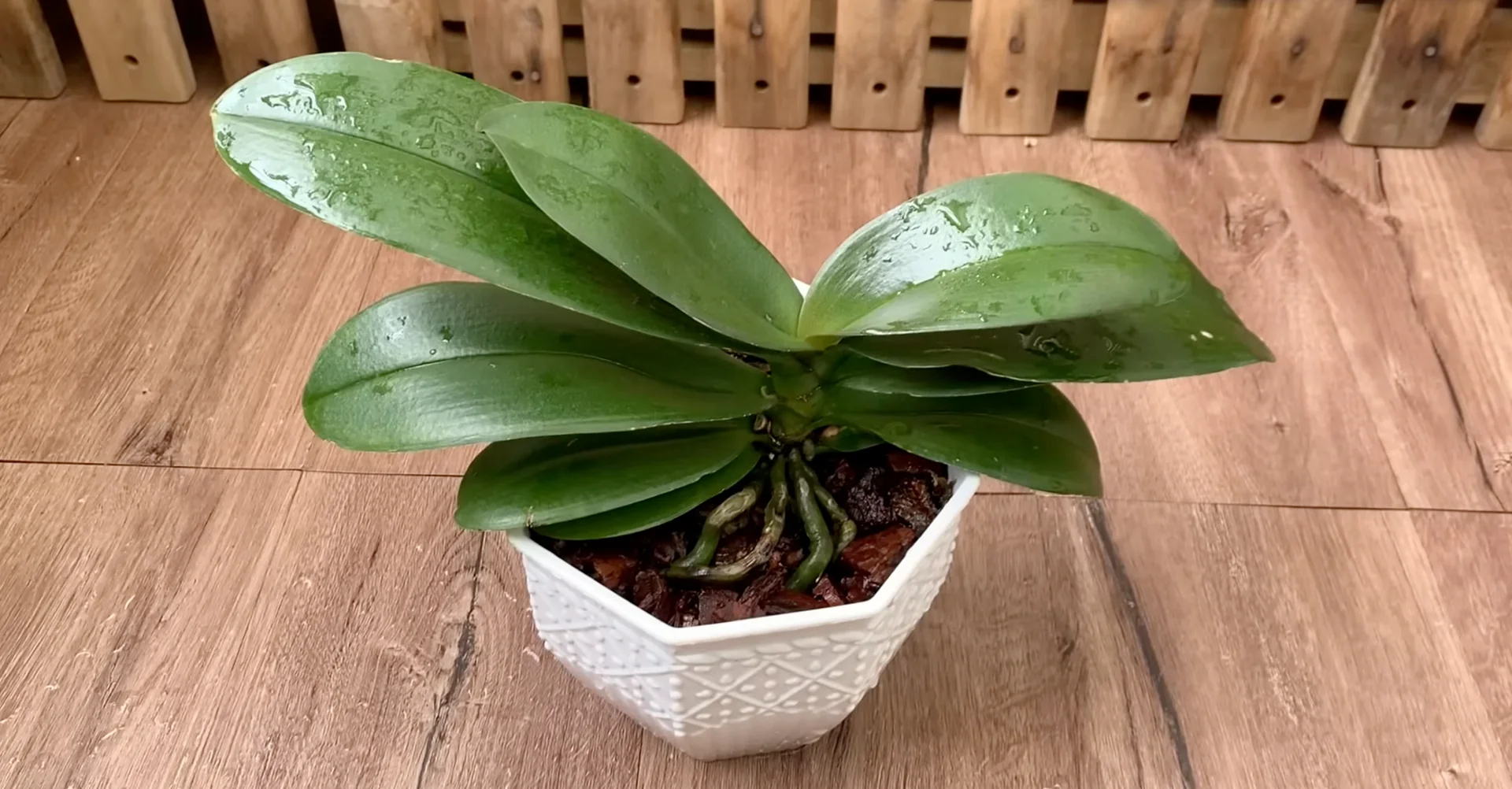
I use a soft cotton pad to gently absorb and dry any remaining mixture on the leaves. This helps keep the leaves dry and well ventilated, preventing water retention that can cause rot. It also protects the leaves so the plant can focus its energy on developing flower spikes.
3. Natural Orchid Bud Induction for stressed leaves and roots
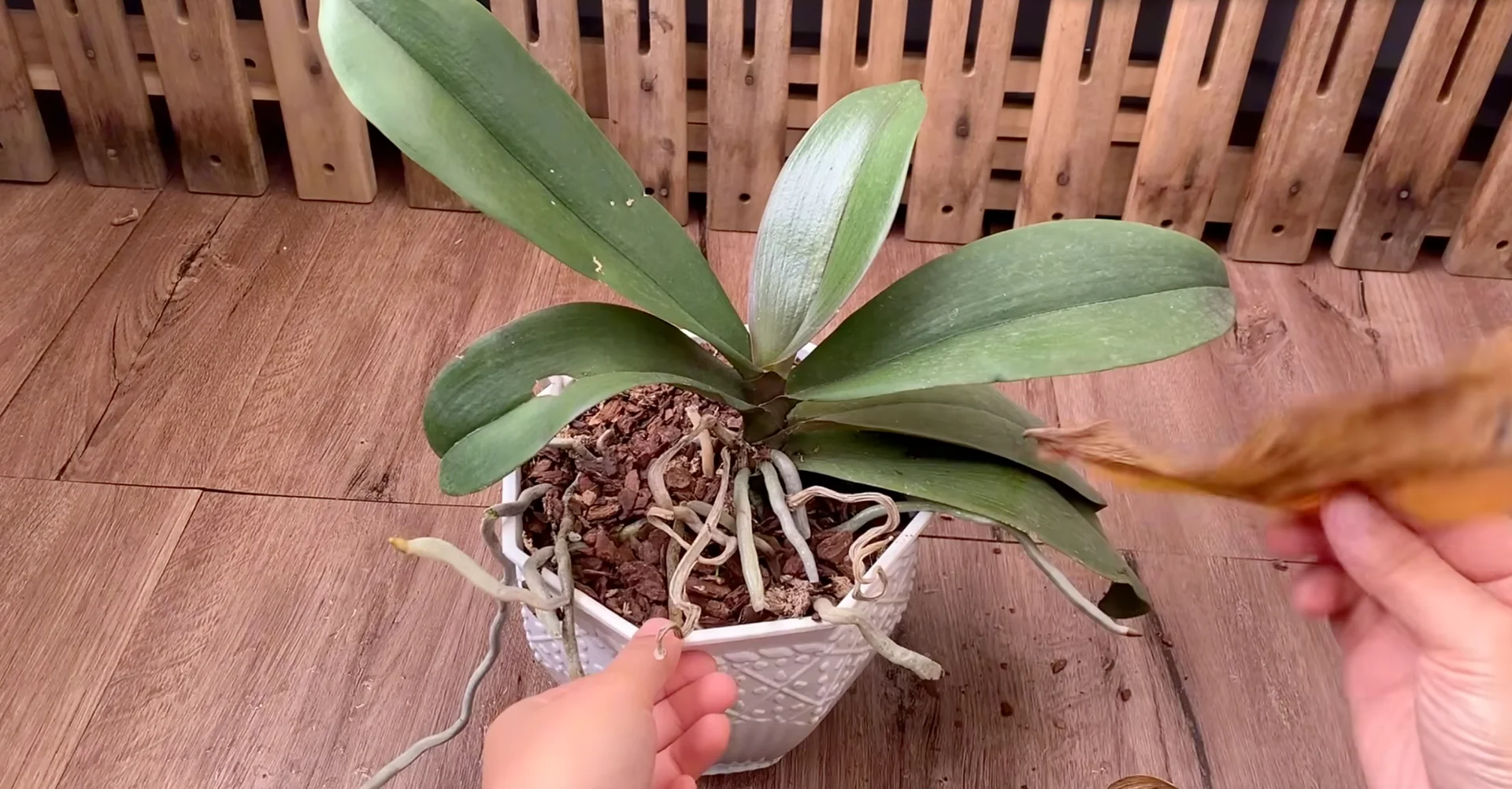
The second case is when the plant has too many dry old leaves and the roots are shriveled or damaged. The leaf surface is also covered with dust that clogs the stomata, making gas exchange and photosynthesis less efficient.
I will remove the yellow old leaves and the shriveled hollow roots, helping the plant release accumulated energy. The plant can focus nutrients on nourishing healthy leaves and stimulating flower bud differentiation, creating conditions for the orchid to produce buds more evenly and robustly.
In any case, the leaves always need to be well ventilated and clean for photosynthesis to occur effectively. This helps the plant accumulate energy to nourish the flowers.
I wipe the leaves with the aloe vera and honey mixture, both cleaning the dust and providing nutrients, helping the leaves stay healthy and supporting the plant in better flower bud differentiation.
Moisture control
Phalaenopsis orchids are very sensitive to overwatering because if the roots remain too wet for too long, it can lead to root rot. This causes the plant to lose its ability to absorb nutrients and not have enough energy to bloom.
You should water only when the growing medium is nearly dry, just enough for the roots to absorb. Avoid watering directly on the leaves as water lingering on the leaves for a long time can cause rot, fungal infections, or diseases, negatively affecting the overall health of the plant and the flower bud differentiation process.
4. Natural Orchid Bud Induction by renewing the medium
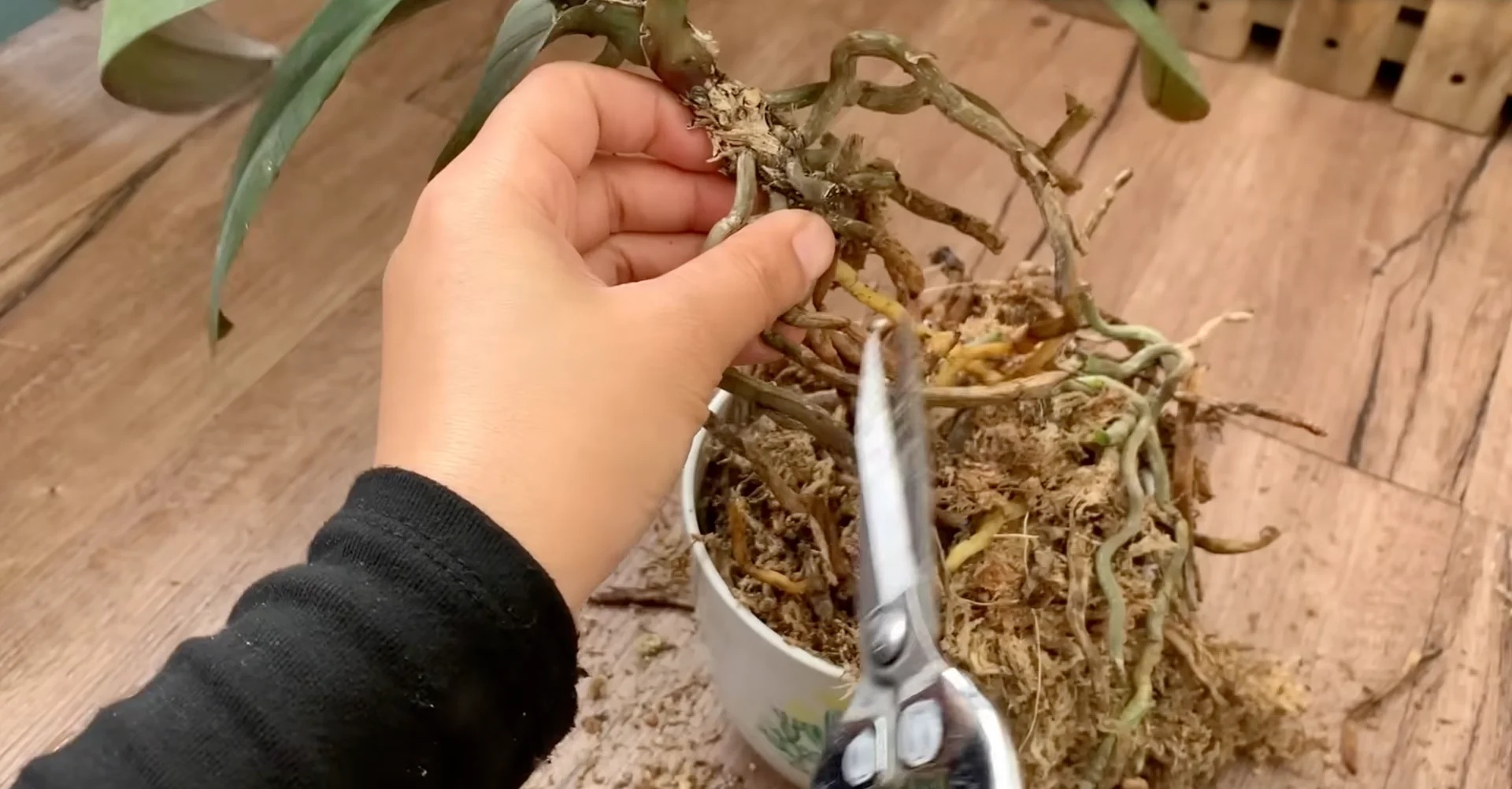
Case three, when the growing medium has aged, become compacted or decomposed, the original porous structure of the medium is lost, making it difficult for the orchid roots to absorb water and nutrients. The roots become congested, oxygen deprived, and weak, causing the plant to be unable to accumulate enough energy for flower bud differentiation. The blooming process is delayed or does not occur.
To fix this, I remove all the old moss and damaged roots and replace the growing medium with a new one, choosing a loose, airy, and nutrient rich medium. When the roots are placed in a good environment, they will grow vigorously and absorb nutrients fully, thereby giving the plant abundant vitality and producing buds more evenly and healthily.
After replacing the growing medium, water directly onto the medium to help the roots quickly absorb nutrients and stabilize after repotting. After watering, I wipe the leaves again to keep the surface well ventilated and clean, removing any remaining dust.
This helps the leaves perform photosynthesis effectively and increases their ability to absorb nutrients. It also creates favorable conditions for the plant to focus energy on developing flower spikes and producing more even buds.
5. Natural Orchid Bud Induction results
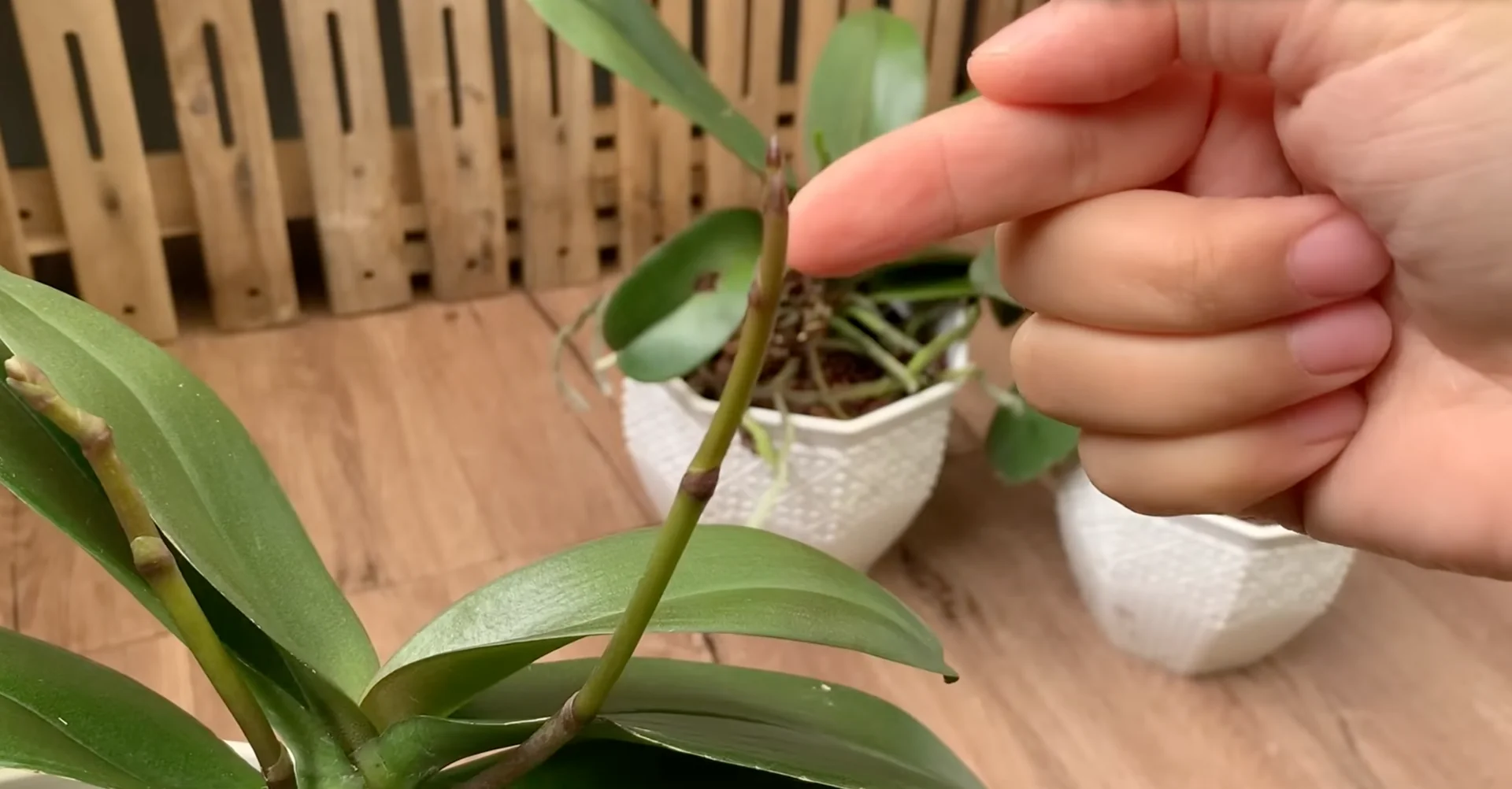
After 60 days of consistent care combined with wiping the leaves and spraying the aloe vera honey mixture, watering nutrients onto the roots and adjusting light and temperature appropriately, my Phalaenopsis orchid has shown remarkable changes. The leaves are glossy and, most importantly, many plump and sturdy flower buds have formed.
This process shows that when the plant is cared for comprehensively from leaves to roots and provided with optimal environmental conditions, the energy will be focused on flower bud differentiation. It helps the orchid bloom evenly, healthily, and long lasting.
This is clear evidence that patience combined with proper care techniques will yield brilliant results for Phalaenopsis orchids.
Final thoughts on Natural Orchid Bud Induction
Give the plant the right signals and it will respond. Keep indirect light bright, keep leaves clean and dry, and keep the growing medium fresh and airy.
Use the aloe vera and honey solution to wipe, spray, and water gently, prune old leaves and damaged roots, and avoid overwatering. With patience and consistent care, you will witness buds blooming brilliantly, healthily, and long lasting.