

We continue the journey of rose propagation with a simple, easy to implement method that anyone can do. It is highly effective and gentle on young tissue.
To start the propagation process, choose a rose branch with moderate age. The branch should not be too young to wither easily, and not too old or it will root poorly.
The Beginner’s Rose Propagation Starter Kit 🌹
A simple printable PDF guide to help you root rose cuttings successfully.
Get The Guide →1. Choose and Prepare the Cutting – Rose Cutting Propagation
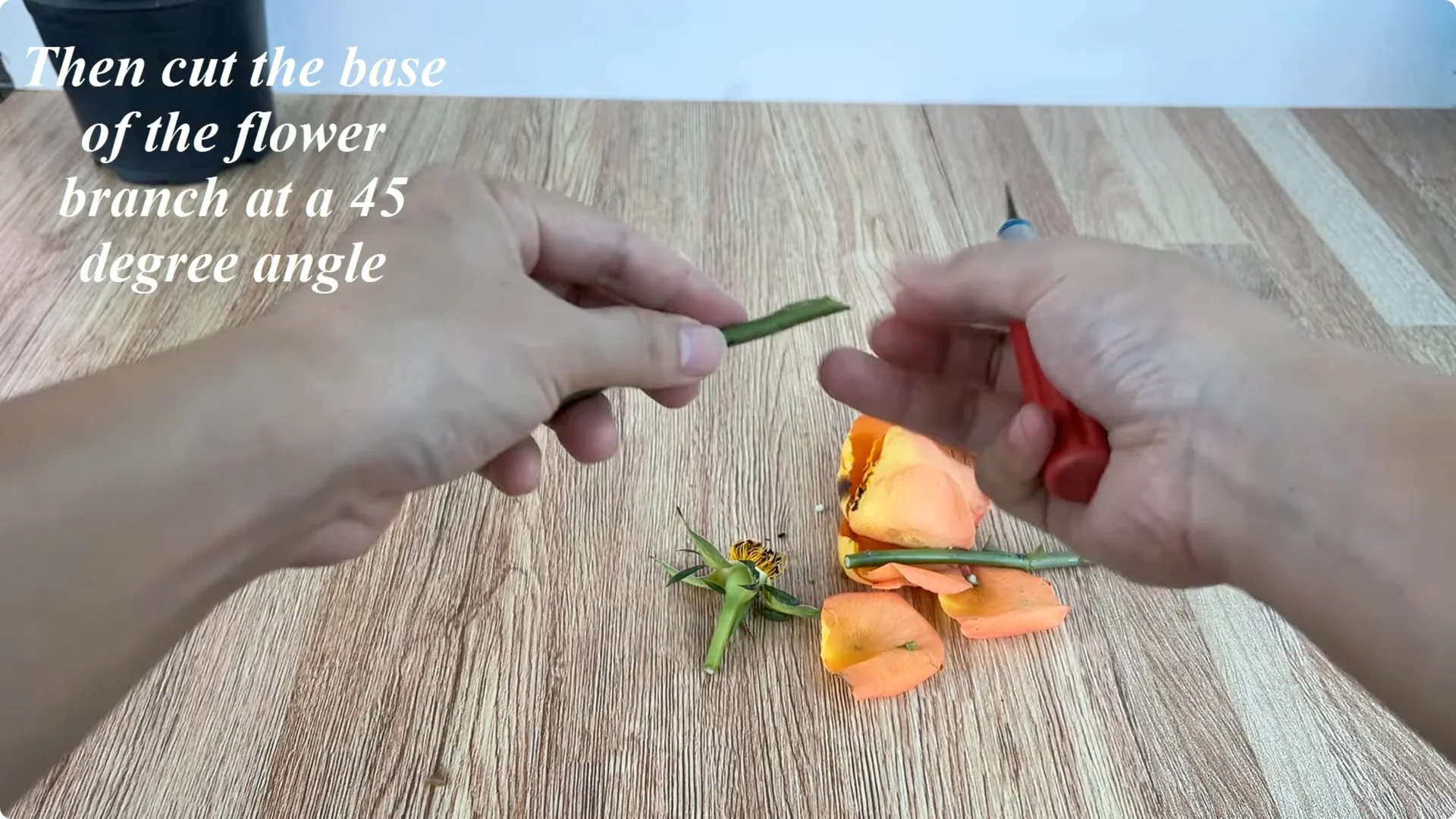
When you observe signs of mold or rot in the flower, cut off the entire flower to avoid infection down the stem. Then, remove all the leaves and sharp thorns on the branch to reduce evaporation and limit open wounds that can create opportunities for bacteria to grow.
Cut the branch to about 15-20 cm in length. This is the appropriate length for the branch to retain moisture and penetrate the substrate later.
The base of the branch should be cut at a 45-degree angle. The beveled cut increases the contact area of the root tissue with the nutrient solution and helps absorb better during the root stimulation process. This is an important technique in propagating woody plants, especially roses.
2. Make Natural Stimulants – Rose Cutting Propagation
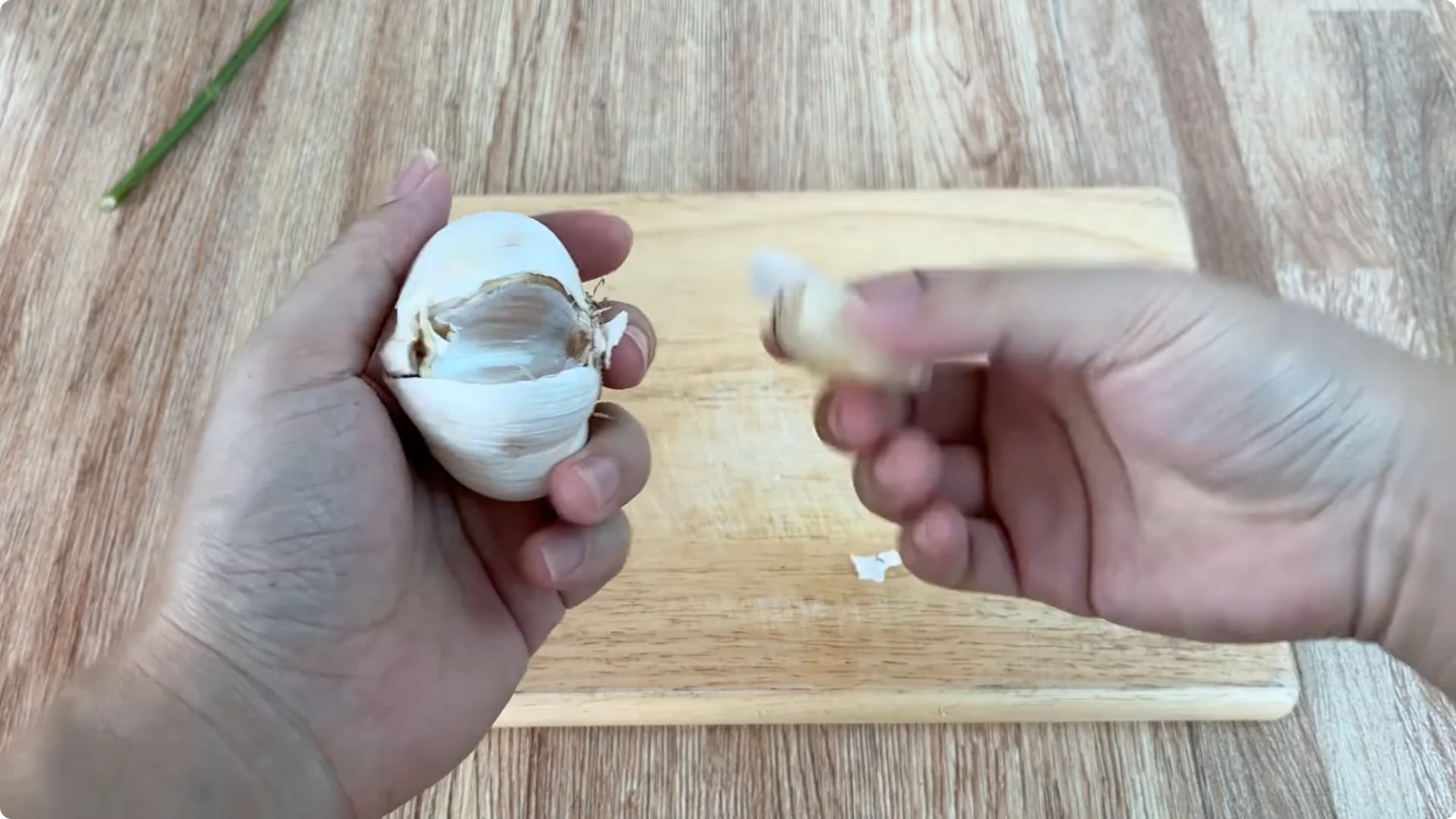
Garlic solution
Prepare the first solution: garlic solution as a natural root stimulant and disinfectant. Take 2 cloves of garlic, peel them and chop or mince them to completely release allicin, the active ingredient that can kill fungi and bacteria.
Put this garlic in a clean plastic cup, add 500 ml of clean water and stir well to spread the solution in the water. Place the rose branch in the cup of garlic solution and soak for 30 minutes. This step helps protect the root tissue from common fungal diseases such as Pythium or Fusarium.
Cucumber and oat mix
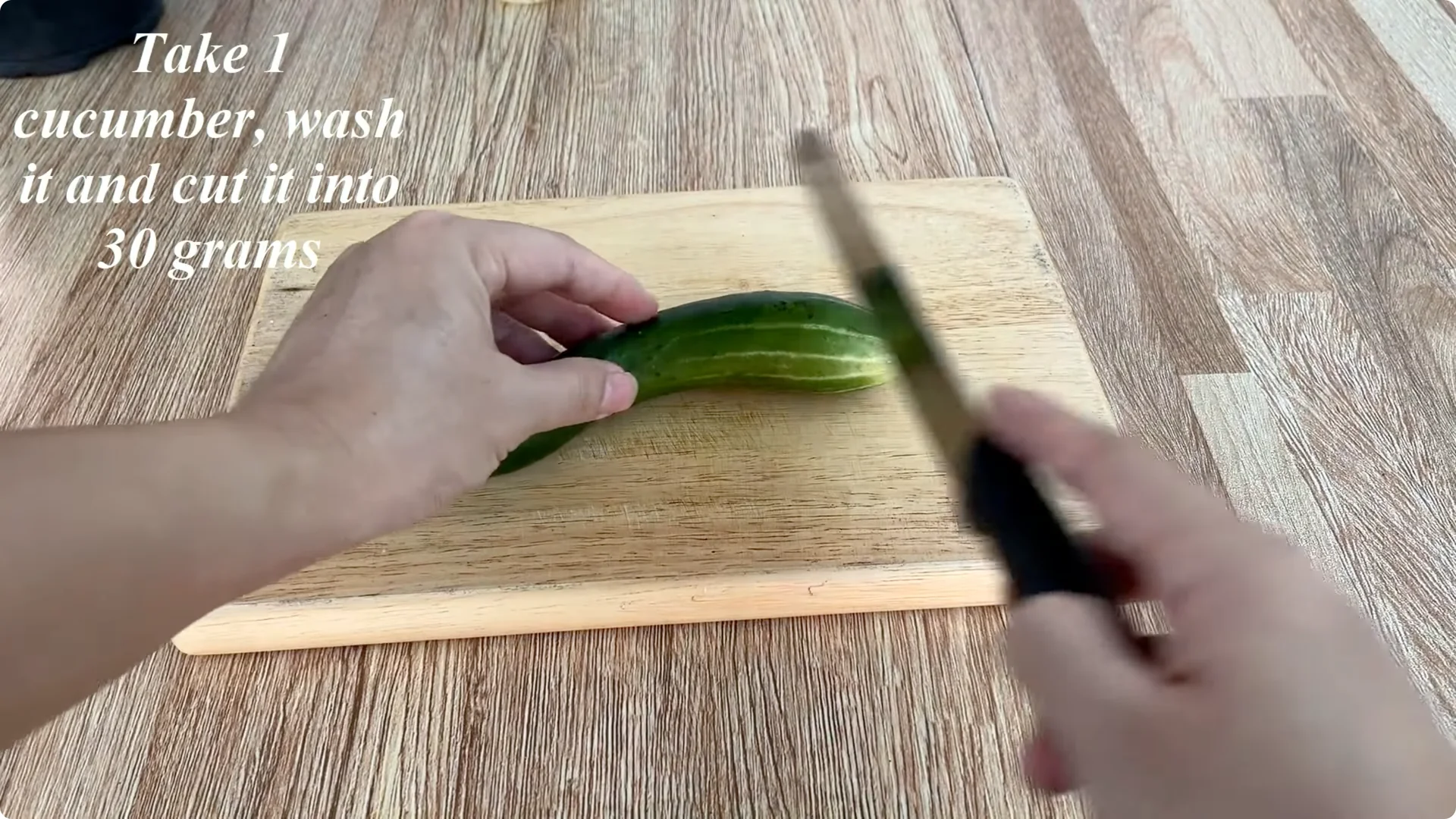
Prepare the second solution: a mixture of cucumber and oats. Take a clean cucumber, cut off 30 grams of cucumber flesh and chop it.
Cucumbers contain vitamin C, minerals and high moisture to help hydrate, soothe the root tissue and provide gentle nutrients. Put the cucumber in a clean plastic cup, add 2 spoons of oats that stabilize moisture and add energy to plant tissue.
Pour 500 ml of warm water into the cup, stir well and let stand for 30 minutes. This allows the nutrients to dissolve completely into the water.
Read More: Cup Transformed Rose Branch Blooming
3. Build the Substrate – Rose Cutting Propagation

Soft paper medium
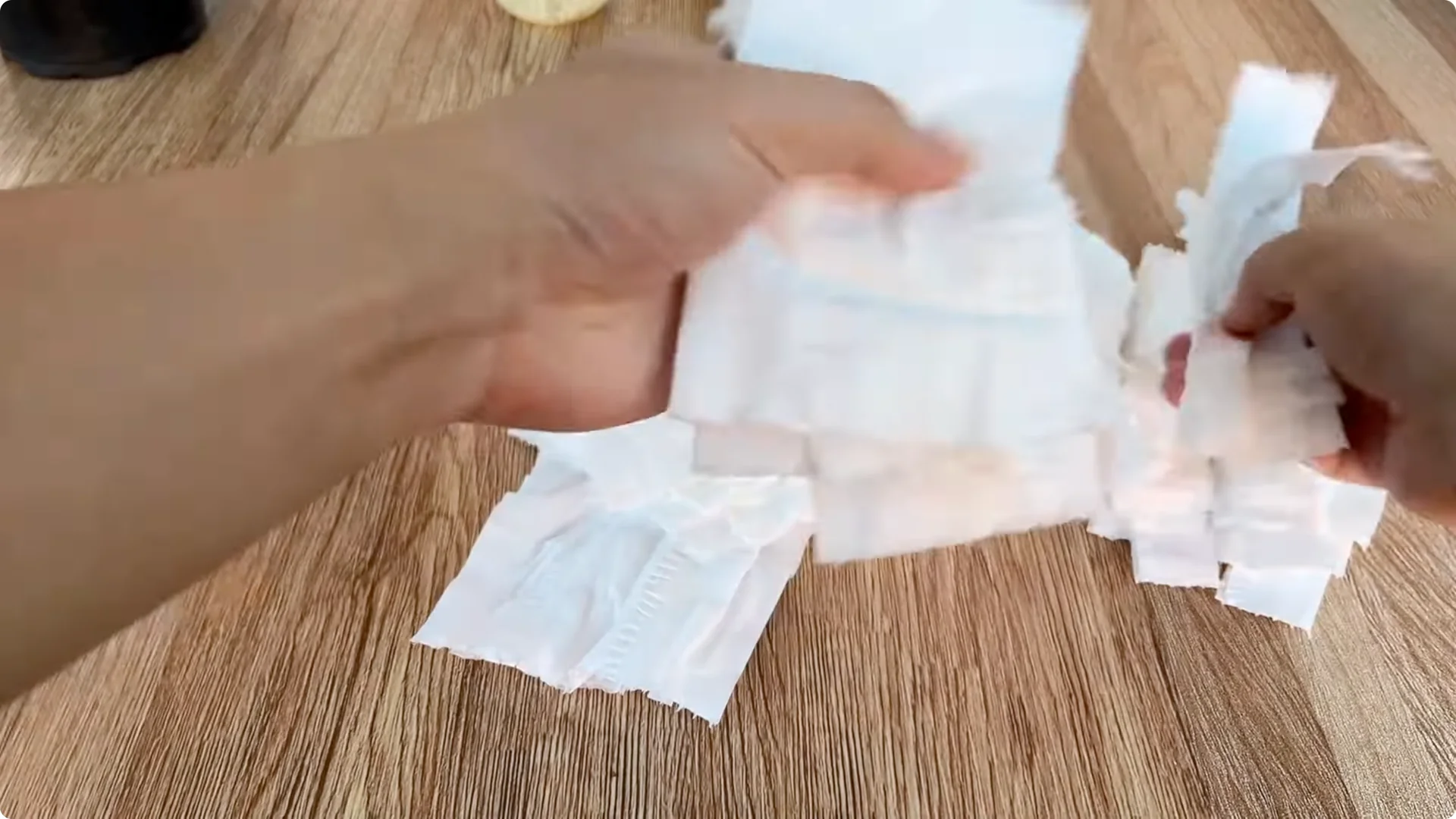
Prepare a special substrate with soft toilet paper. When the toilet paper is torn into small pieces and soaked in the solution, it creates a porous substrate that retains moisture evenly and helps the flower branches stabilize during the rooting stage.
Tear the paper into small pieces and put them in a clean plastic cup. After the flower branches have soaked in the garlic water for 30 minutes, gently remove them.
Combine the solutions
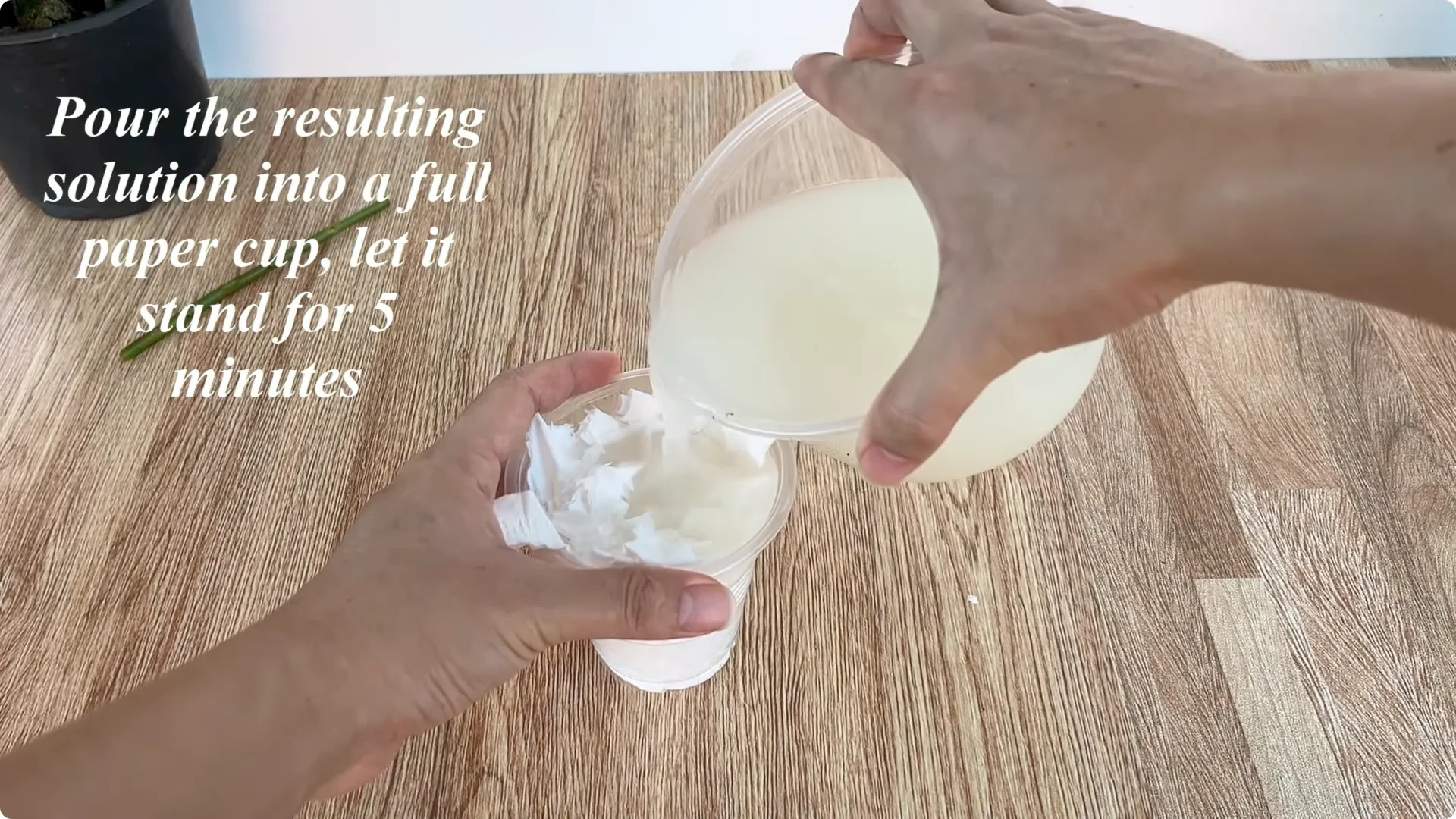
Stir the garlic solution once and filter to get clear water, discarding the garlic residue. Do the same with the cucumber and oatmeal mixture to get a liquid cucumber and oatmeal solution.
Mix these two solutions together to get a nutrient mixture rich in vitamins, minerals and mild biological activity. Pour all this solution into the paper cup containing shredded paper.
The paper will quickly absorb the nutrients. Leave it for 5 minutes for the paper to absorb evenly, then press lightly to squeeze out the excess solution. Keep it moist enough, not too wet to avoid waterlogging, and not too dry to ensure the new roots have a stable environment.
4. Plant and Protect – Rose Cutting Propagation
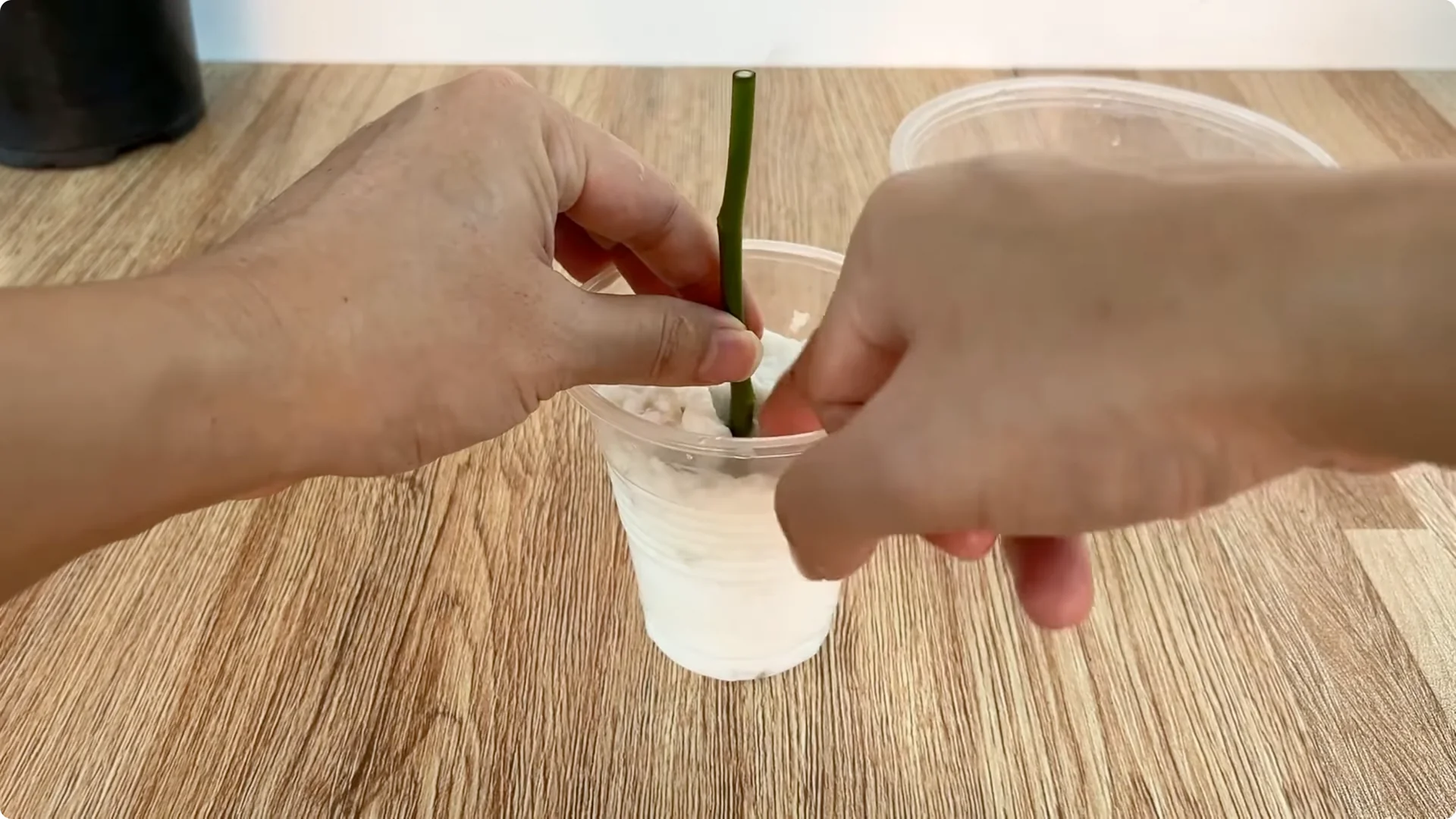
Set the cutting
Use a stick to make a small hole in the middle of the soaked paper block, then place the rose branch in it. Press lightly around to secure the flower branch, ensuring that the base is always exposed to stable humidity.
Keep the cutting from shaking, because stability is an important factor in the new root formation stage.
Make a mini greenhouse
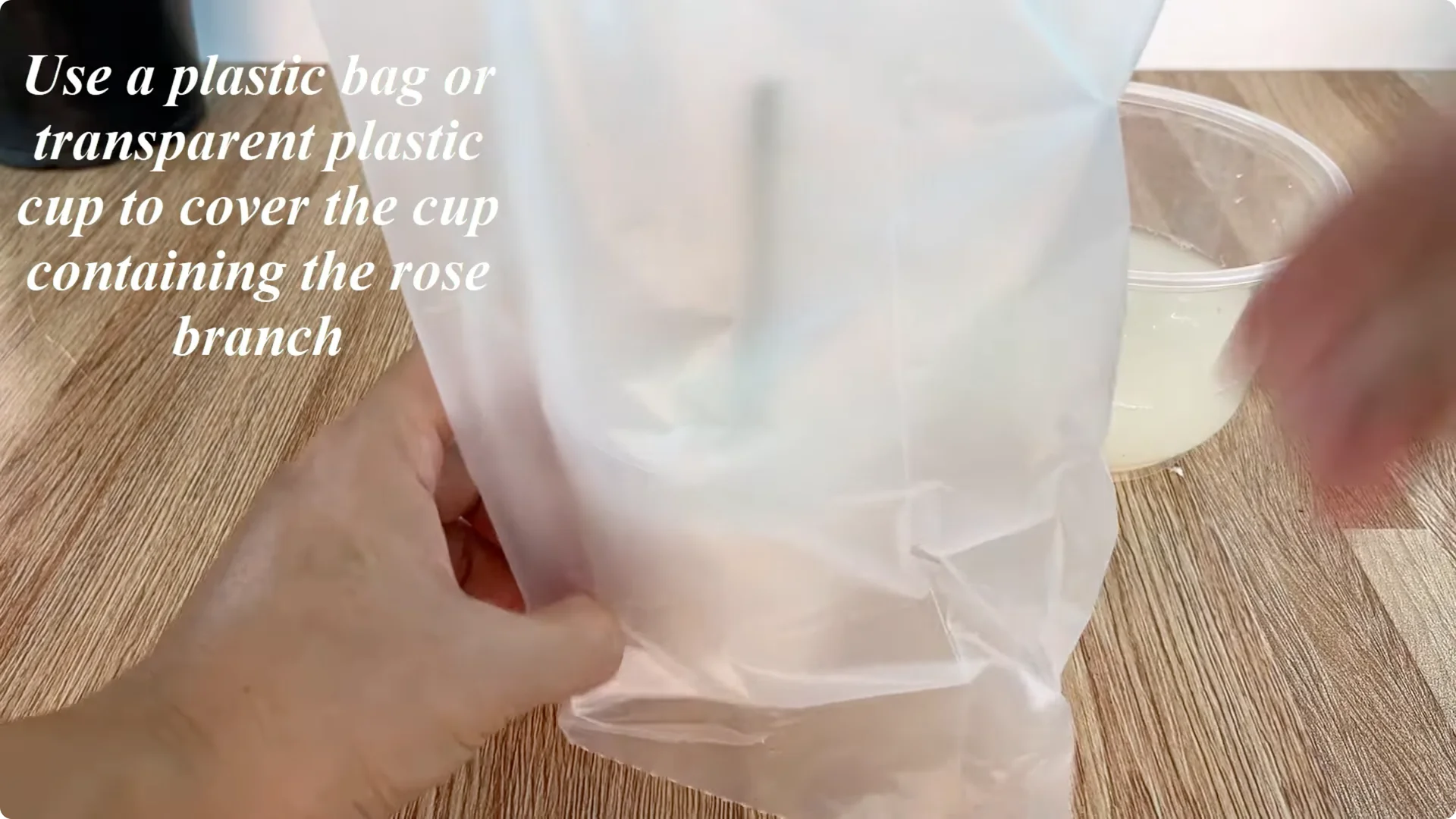
Use a plastic bag or a transparent plastic cup to cover the mouth of the paper cup. This layer acts as a miniature greenhouse system, helping to maintain high and stable humidity and limiting water evaporation in the first days.
Place the cup in a well-ventilated place, away from direct sunlight and strong winds to limit heat shock.
Read More: Rose Branch Root Sprout Overnight
5. Track Progress and Pot Up – Rose Cutting Propagation
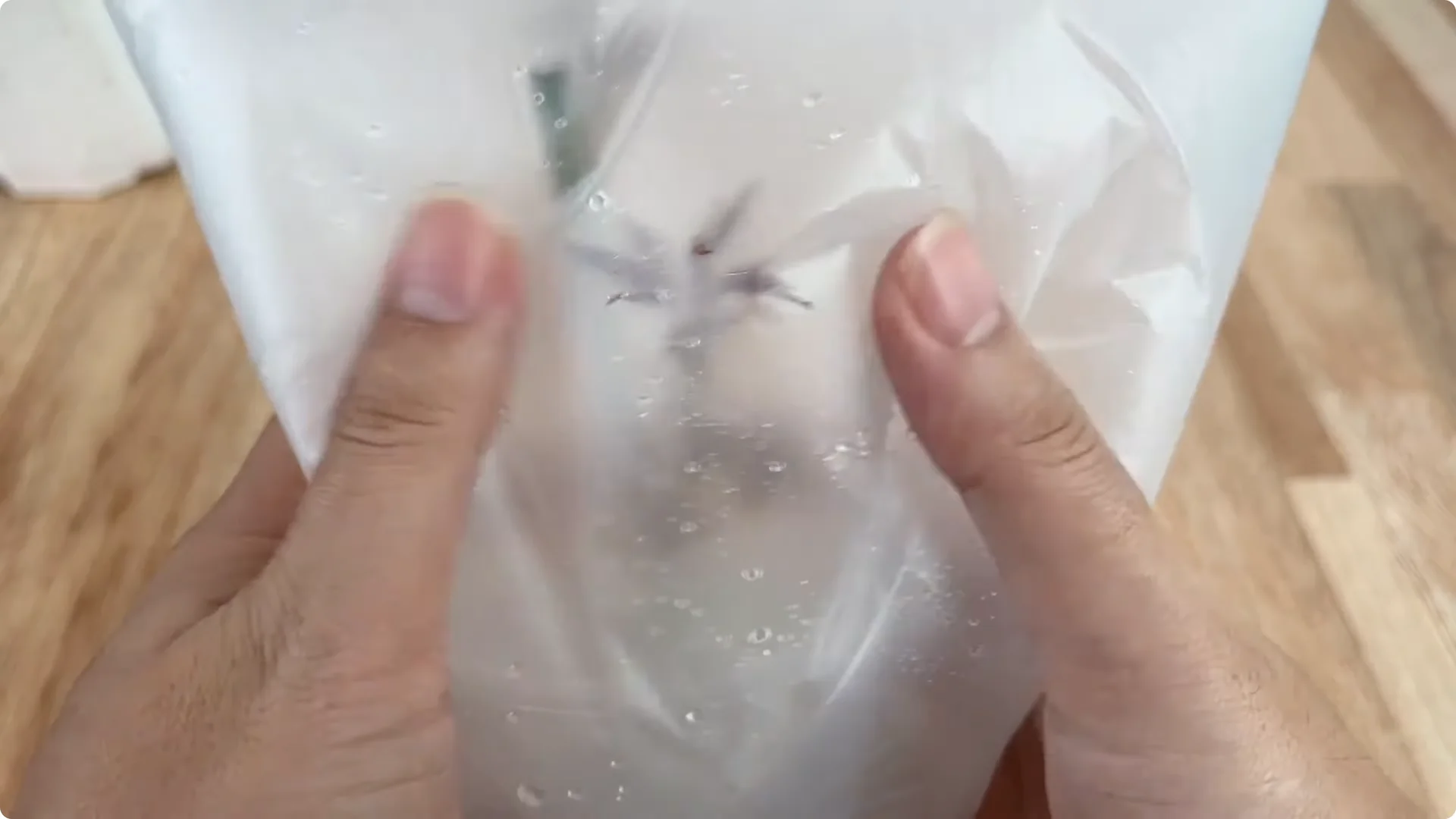
Signs of success
After 10 days, you will notice a clear change. New shoots start to sprout, and the small green leaves are a sign that the branch has begun a new growth cycle.
The base of the branch forms many new white, plump and shiny roots, proving that water and nutrient absorption has been strongly activated. These roots often grow in clusters, hugging the cut.
Transplant to a pot
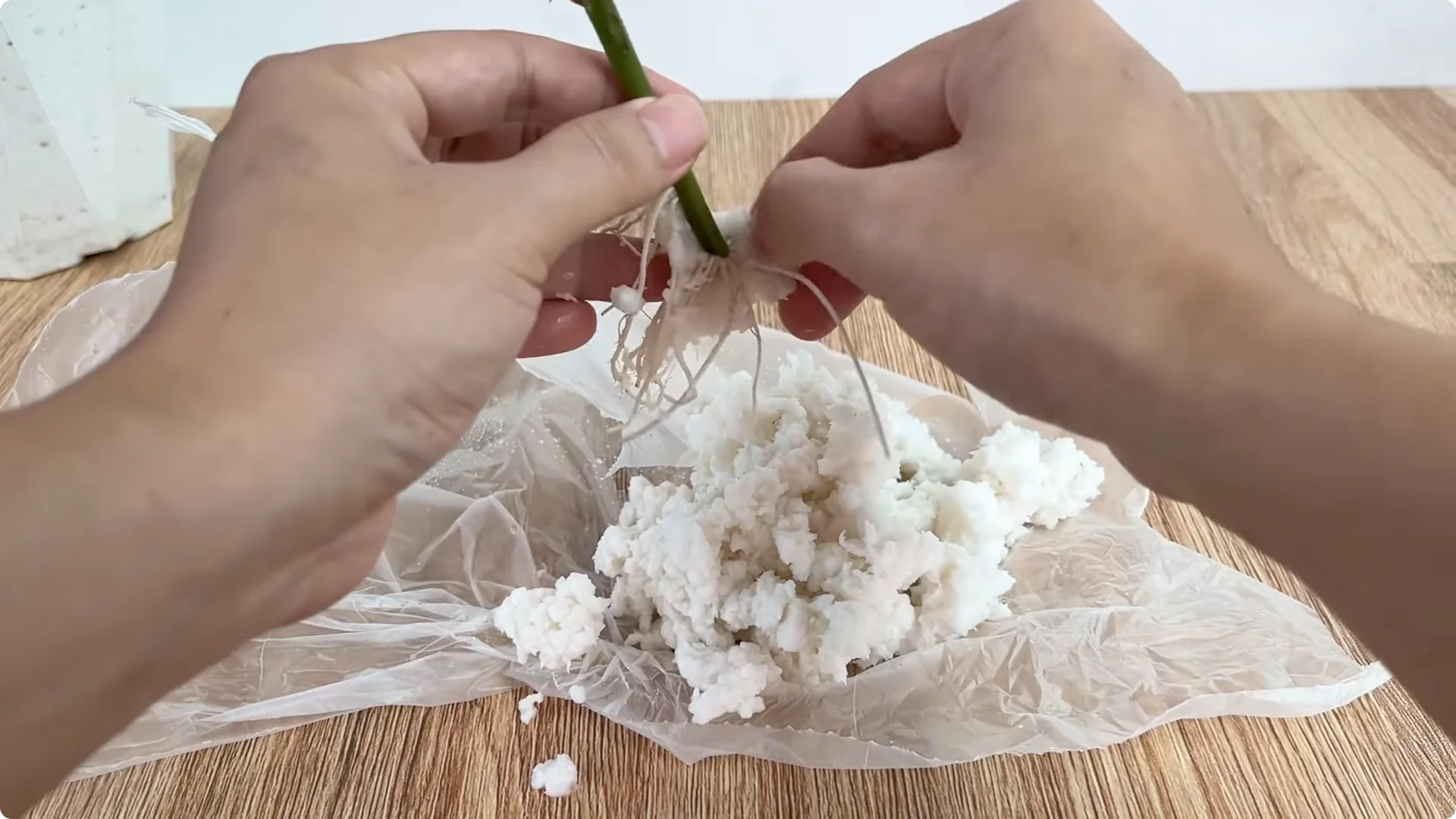
When the roots are long and strong, gently separate the branch from the paper substrate and transfer it to a new pot. Choose a pot with good drainage, line the bottom with a layer of coarse material and use river sand as the main substrate.
River sand is highly breathable and does not retain water for too long, helping the young roots avoid waterlogging and grow stronger.
Read More: Tomato Boosts Rose Cuttings Root Speed
6. Results and Notes – Rose Cutting Propagation
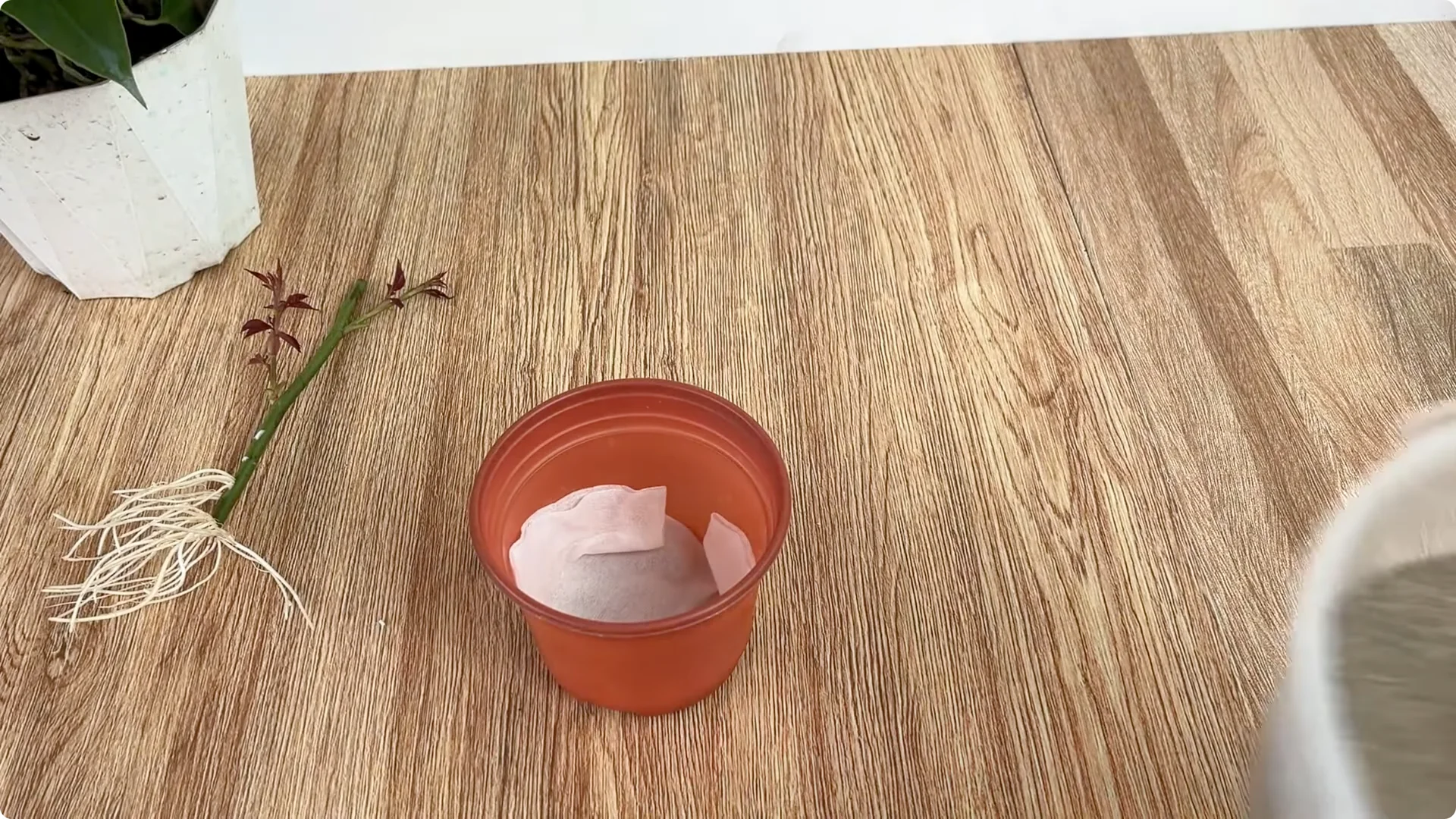
After completing the entire process and observing the growth of the rose branches after more than a week, we can clearly see the effectiveness of this method. The branches recover quickly, sprout simultaneously and form a healthy white root system.
The combination of ginger-glucose solution and coffee water has created a very stable growth stimulating environment, helping the rose branches regenerate energy and promote the formation of young roots naturally. River sand acts as a loose, disease-free substrate, creating airy conditions for the roots to grow strongly without being waterlogged.
All of these factors combined help the rose branches recover quickly and form a strong foundation for continued growth. This is also the best premise for the tree to enter the long-term potting stage.
Final Thoughts
Choose a moderately mature cutting, make clean angled cuts, and protect the tissue with gentle natural stimulants. Maintain stable moisture with a soft paper medium and a simple mini greenhouse, then shift to river sand once roots are strong.
With patience and consistent care, this Rose Cutting Propagation method can deliver vigorous roots and fresh growth at home.
About The Author

The Beginner’s Rose Propagation Starter Kit 🌹
A simple printable PDF guide to help you root rose cuttings successfully.
Get The Guide →