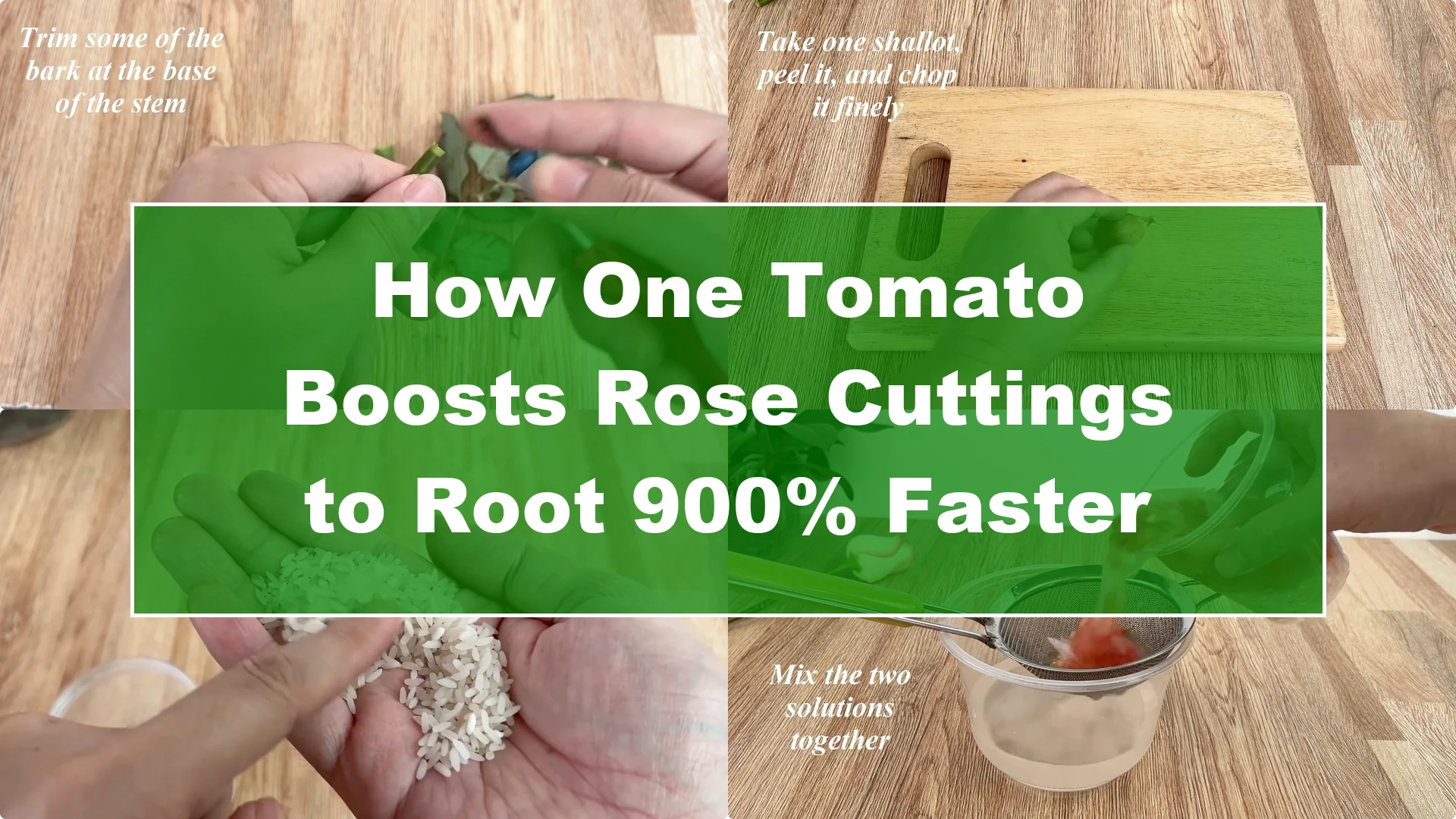
Wishing you a happy and energetic day. Today, we’ll be practicing a gentle yet highly effective method of propagating roses by cuttings. These are all natural, readily available, and safe materials, especially suitable for stimulating root and strong shoot growth in rose cuttings without damaging the young tissue at the base of the cutting.
1. Rose Cutting Propagation – Choose and Prepare the Cutting
First, prepare a favorite rose cutting, preferably a healthy one, free from pests and diseases, not broken, and of moderate age. Cuttings that are too young tend to lose water and rot easily, while cuttings that are too old have difficulty forming new roots.
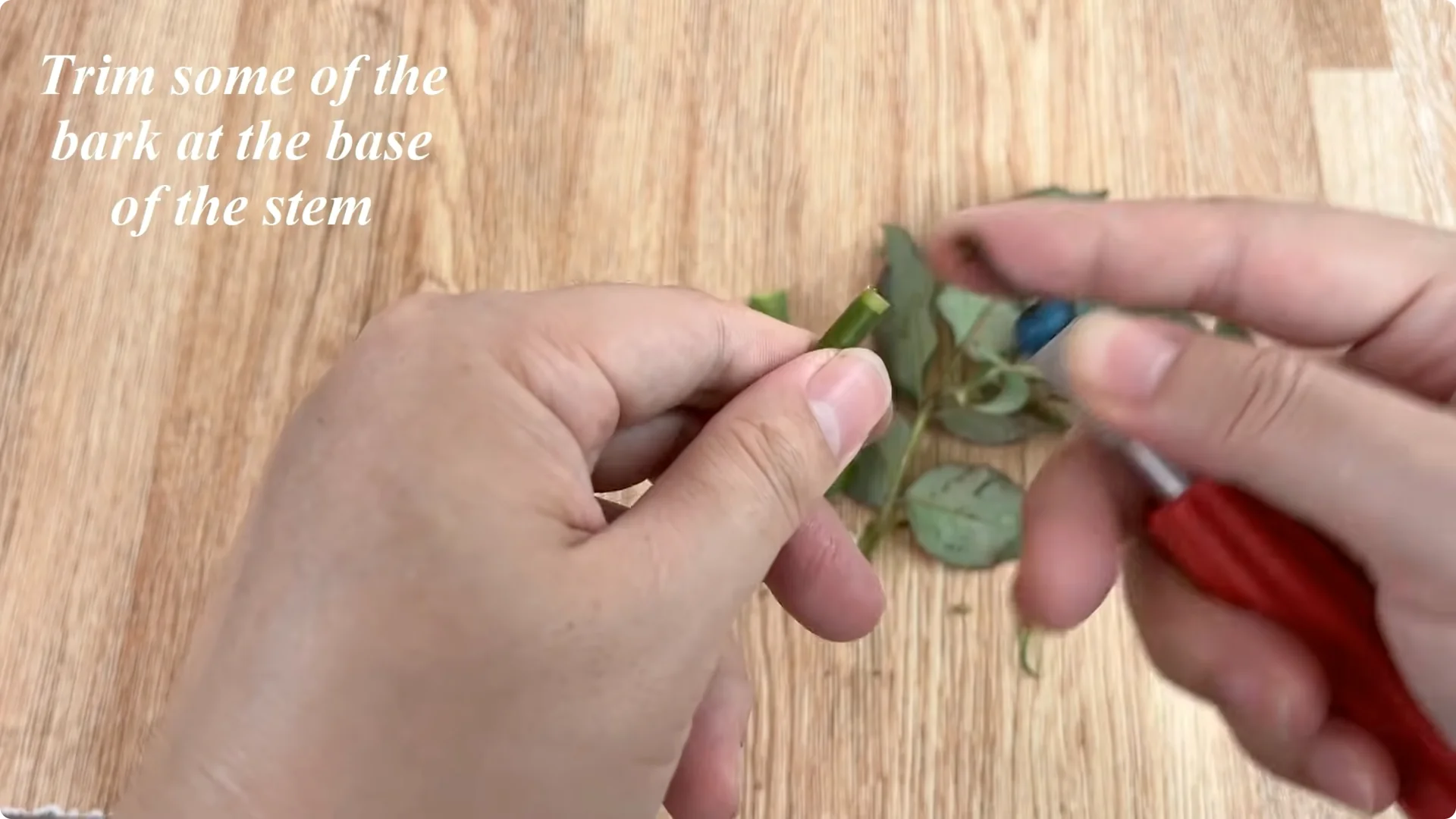
After choosing a suitable cutting, use sharp scissors to remove all leaves and thorns, and also remove any withered petals. This helps to reduce water loss and lessen the physiological stress on the cutting during the rooting stage.
Next, trim the cutting, leaving it at a length of about 20 cm. At the base, trim away a thin layer of bark to expose the tender tissue inside. This is where the roots will form, so the process requires gentle, decisive movements to avoid crushing the tissue.
2. Rose Cutting Propagation – Make the Onion Solution
Take a red onion, peel off the dry outer layer, then chop it finely and put it in a clean plastic cup. Red onions contain many natural sulfur compounds that have excellent antibacterial and antifungal properties, helping to clean the stem surface and reduce the risk of root rot.
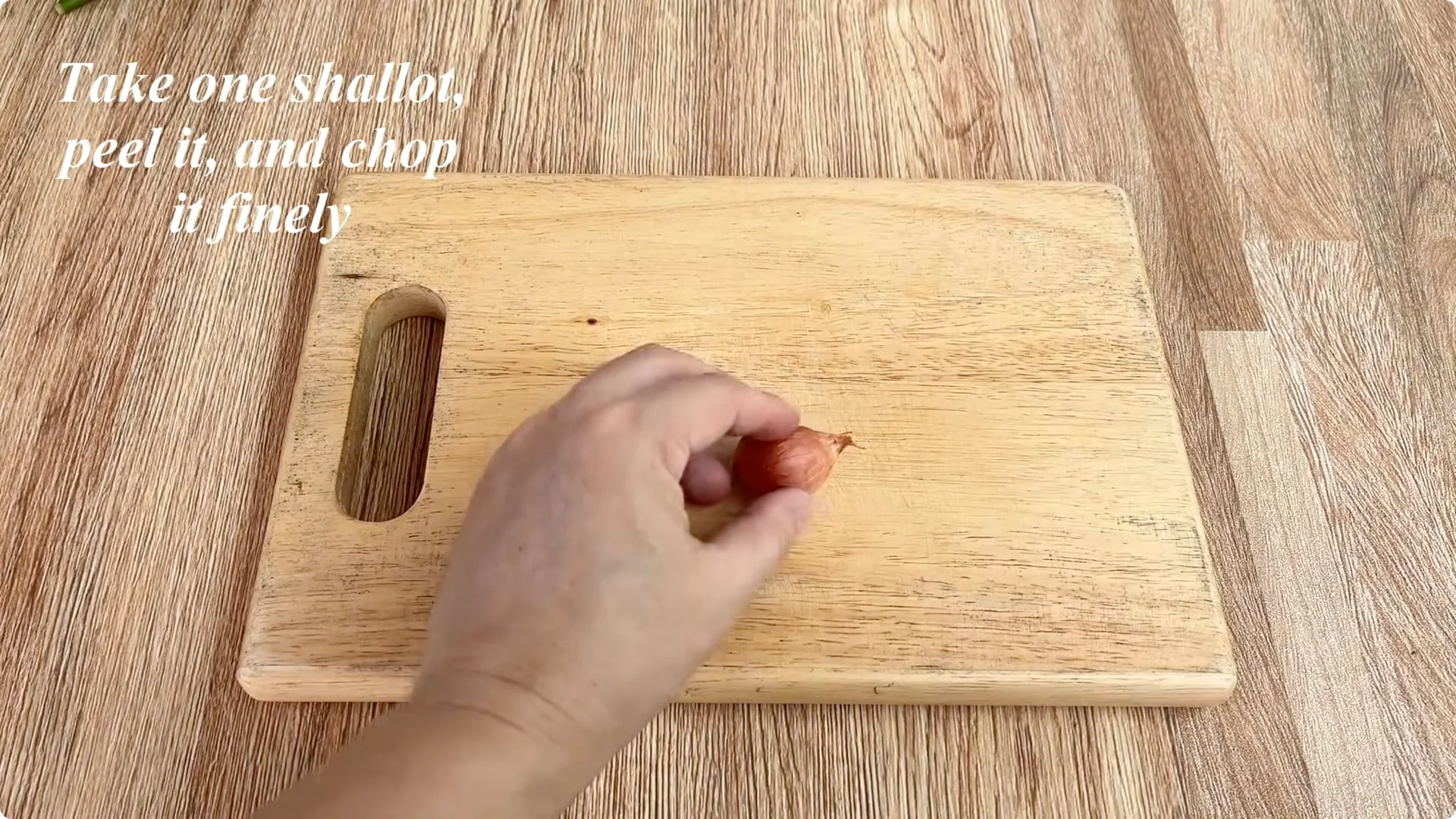
Add about 500 ml of clean water to the cup and stir well to dissolve the onion’s essence in the water. Place the rose stem in the onion water and soak it for about 30 minutes. During this time, the onion solution will gently penetrate the stem tissue, both disinfecting and awakening the cell’s ability to regenerate.
3. Rose Cutting Propagation – Prepare the Tomato and Rice Mix
Meanwhile, prepare the tomato and rice mixture. Take about 40 grams of ripe tomatoes, wash them, chop them finely, and put them in another plastic cup.
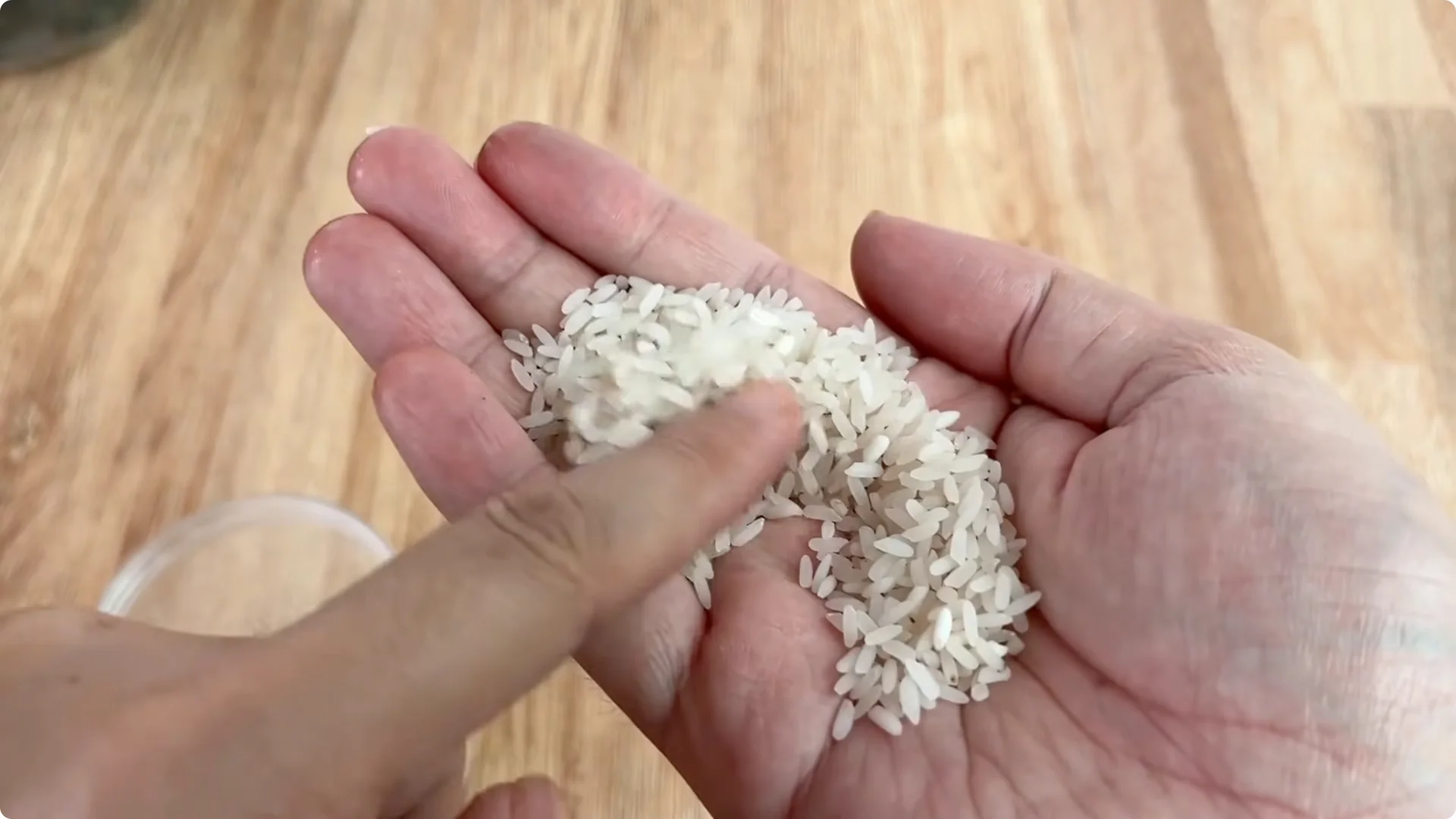
Ripe tomatoes contain many vitamins, organic acids, and trace minerals, which stimulate the activity of new tissue.
Next, add about 80 grams of rice to the cup with the tomatoes, then pour in 500 ml of clean water. Stir the mixture well and let it sit for 30 minutes. During the soaking process, the rice will release some starch and micronutrients, creating a mild nutrient environment that helps the rose cuttings adapt easily to the new environment. For a related idea, see tomato method.
4. Rose Cutting Propagation – Combine the Solutions
After the soaking time is up, remove the rose cuttings from the cup of onion water. Filter the onion solution, discarding the residue. Simultaneously, filter the rice-tomato solution in the other cup.
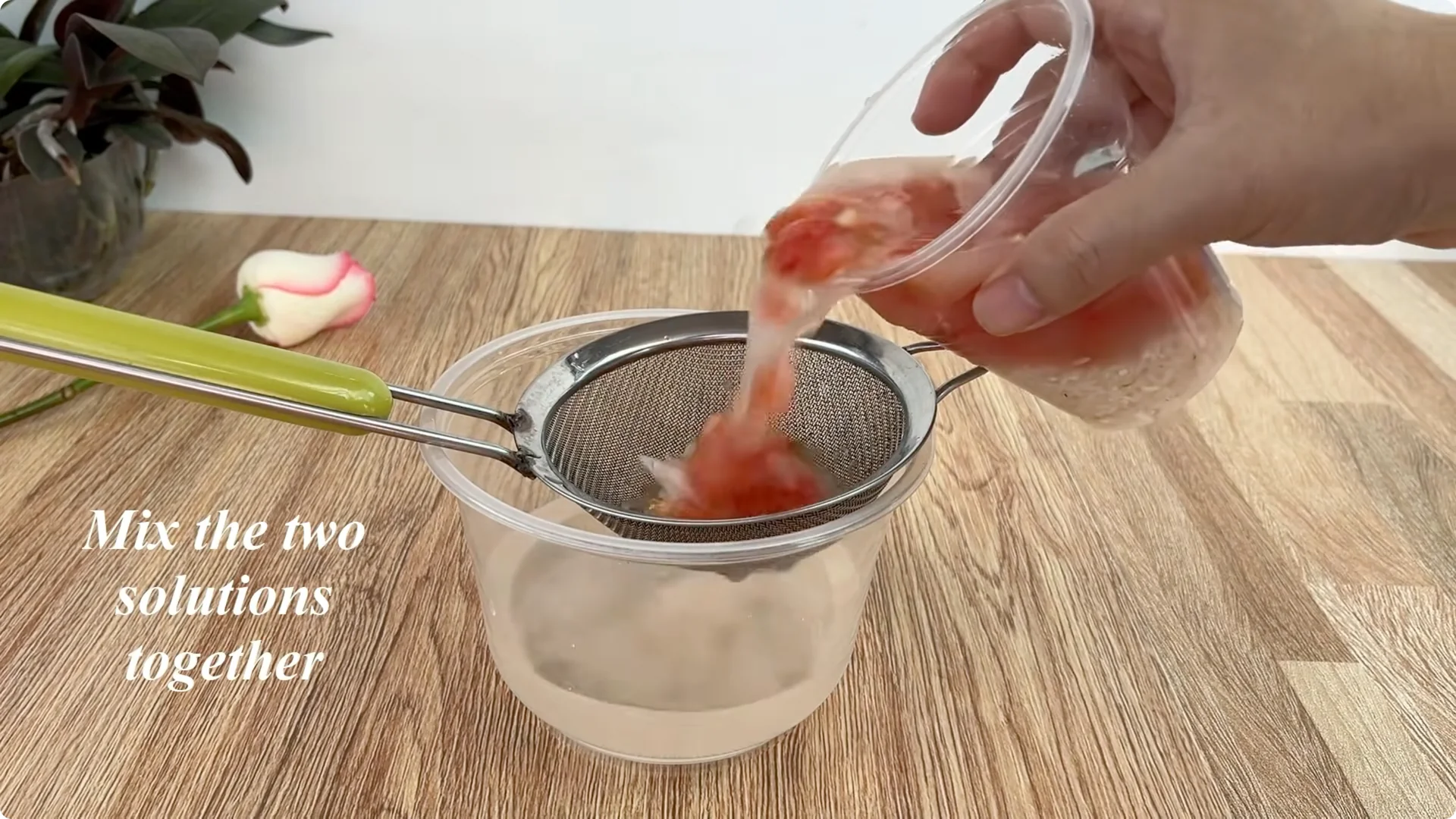
Then, mix these two solutions together. The resulting mixture has both antibacterial properties and provides a natural nutrient source at a low concentration, very suitable for the initial root stimulation stage. For quicker sprouting, see root faster.
5. Rose Cutting Propagation – Prepare the Sand Medium
Next, prepare a clean plastic cup and fill it with treated river sand. River sand needs to be washed, impurities removed, and dried before use to ensure good aeration and minimize disease.
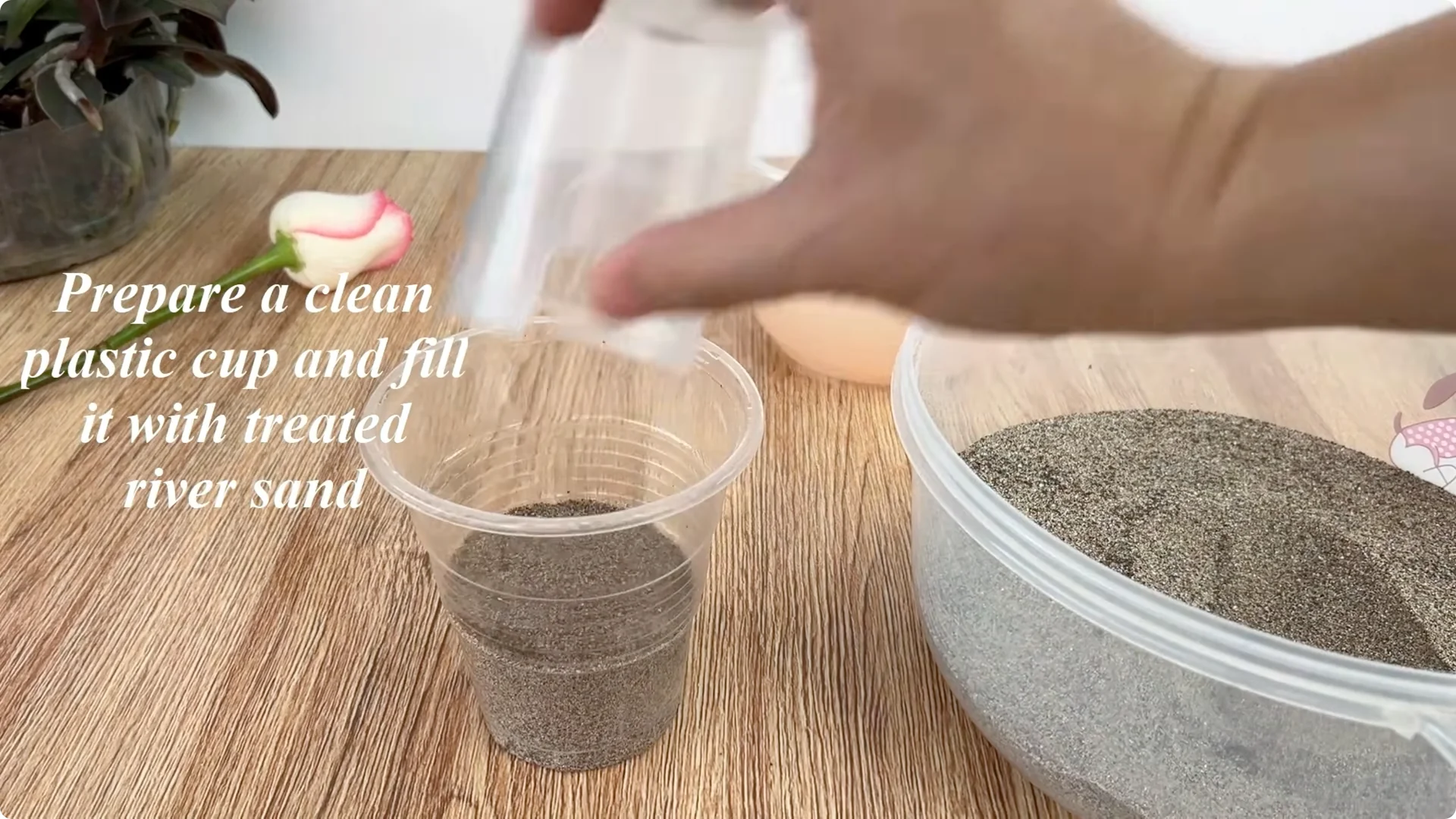
Slowly pour the onion-rice-tomato solution into the cup of sand using just enough to achieve the right moisture level – not too dry, but not waterlogged either. Then, insert the rose stem into the center of the cup, ensuring the base is fully submerged in the sand. Keep the stem straight and gently press down around it to secure it.
6. Rose Cutting Propagation – Create Humidity and Placement
To create a stable humid environment, use a plastic bag or a clear plastic cup to tightly cover the cup and the rose stem. Place the cup in a cool, airy place, avoiding strong winds and harsh sunlight.
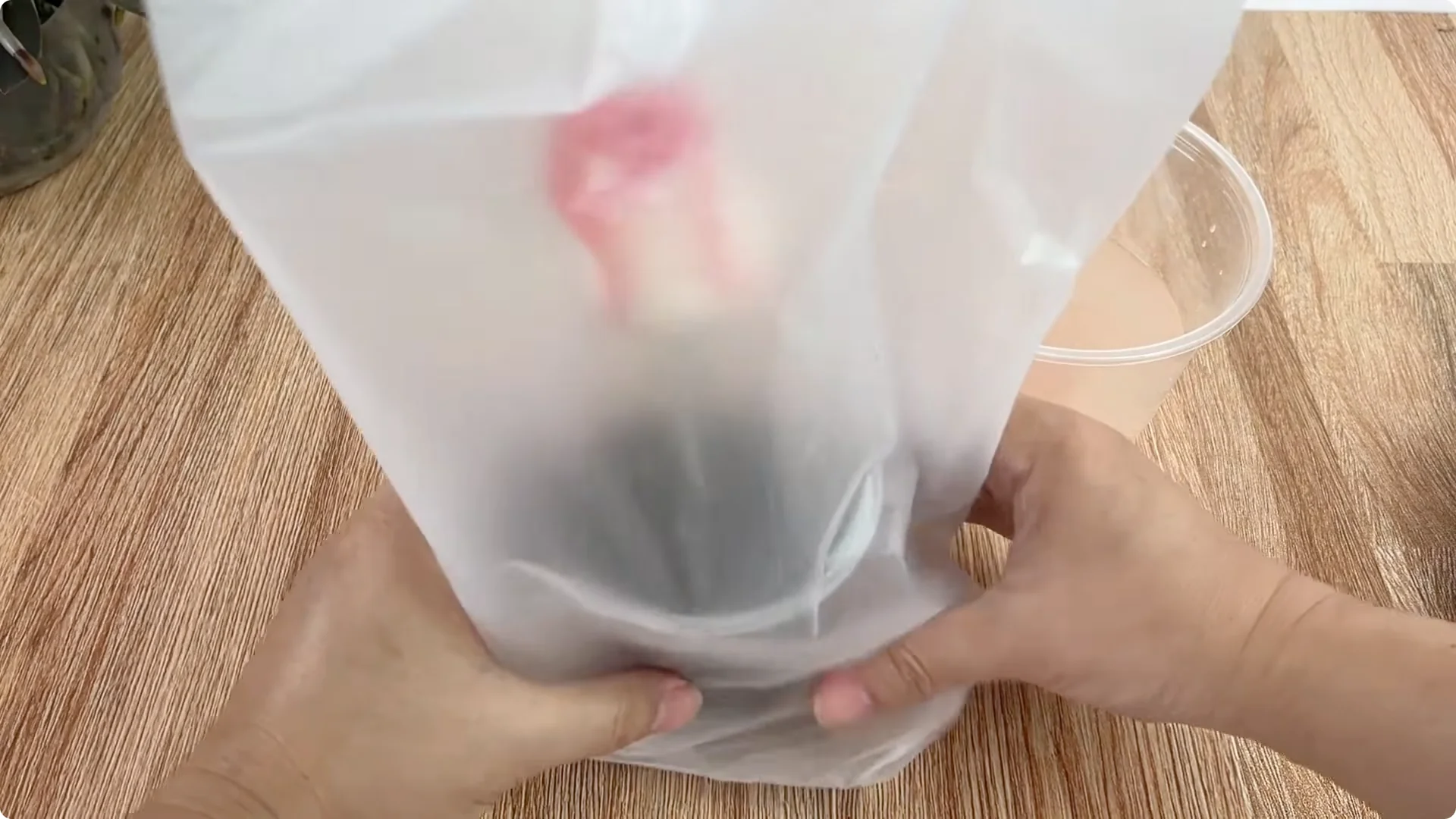
Gentle diffused light is ideal, helping the stem maintain metabolism without losing water. During this time, you don’t need to water, just check periodically to ensure the moisture level inside remains stable.
7. Rose Cutting Propagation – Observe Rooting Progress
After about 10 days, if conditions are favorable, you will notice very positive signs. The rose cutting begins to sprout new shoots, the young shoots are fresh, green, and healthy, showing clear vitality.
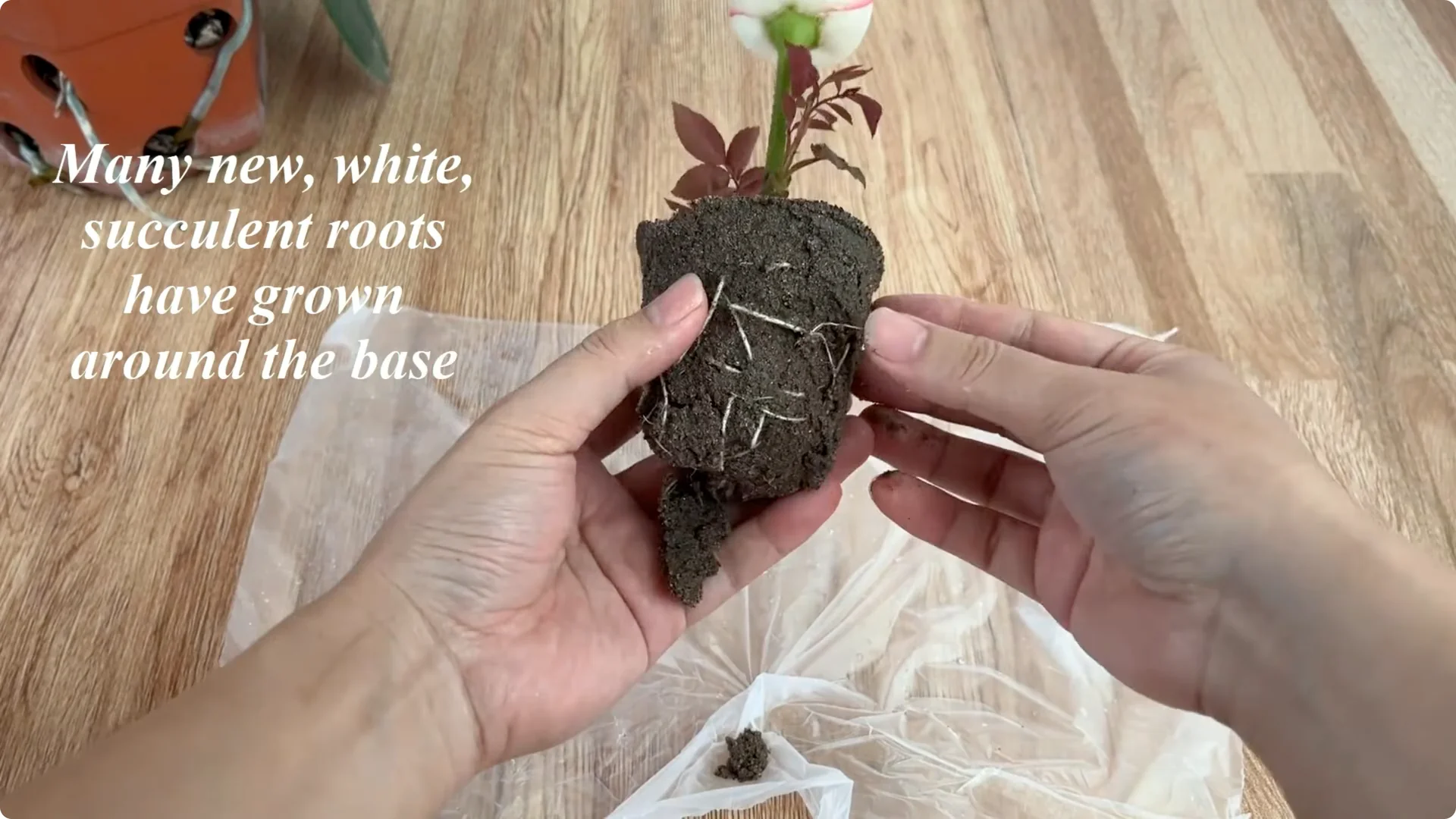
Looking closely at the base, you will see many new roots growing out, white, plump, and evenly distributed around the base. This is a sign that the cutting has fully adapted and is ready to be moved to the permanent planting stage. For extra help, see more tips.
8. Rose Cutting Propagation – Transplant and Ongoing Care
At this point, you can gently replant the rose cutting in a pot with good drainage, using coconut fiber as a growing medium for continued long-term care. The method of using shallots combined with tomatoes and rice provides a very good balance between antibacterial properties and natural nutrition.
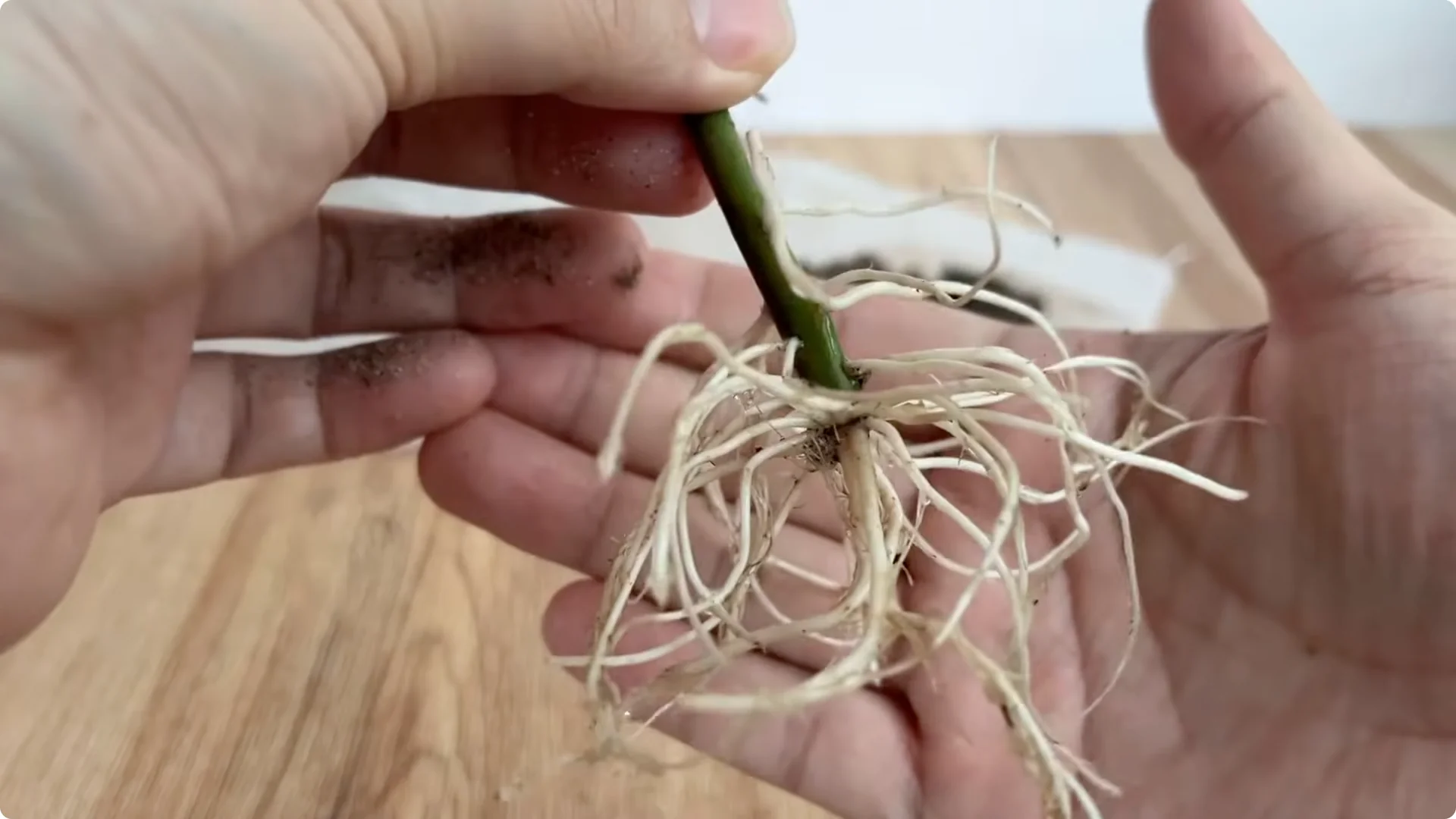
Without the need for chemical root stimulants, you can still create a safe and friendly environment, helping the rose cutting gradually develop a healthy root system. The most important thing in this process is not only following the steps correctly, but also the patience and meticulousness of the grower.
9. Rose Cutting Propagation – Mindset and Care
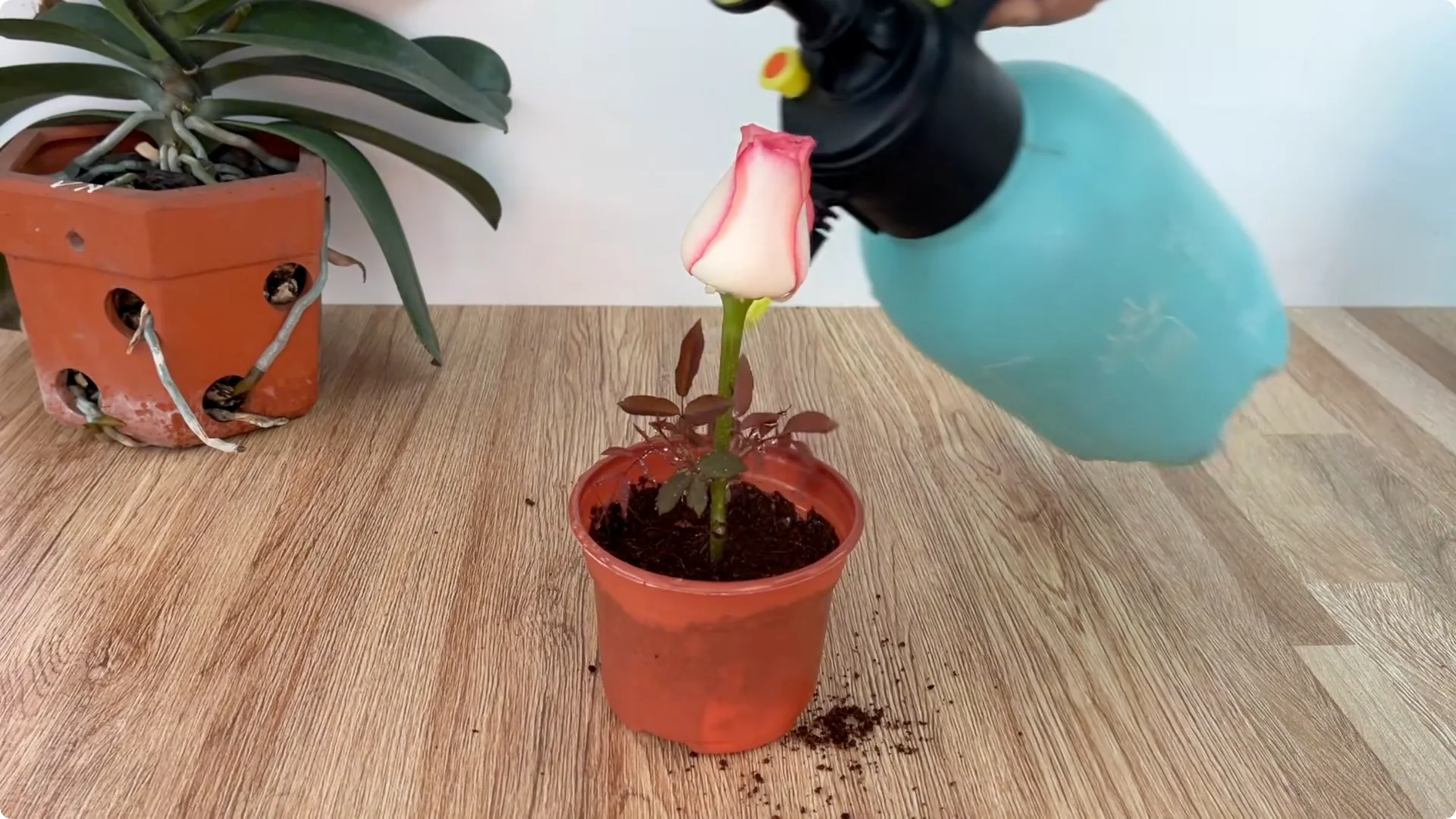
Each rose bush needs time to adapt, to hear signals from the environment and begin its new growth journey. When you see the first buds emerge and vibrant white roots appear, it’s not only the result of the right method but also a well-deserved reward for the meticulousness, gentleness, and love you have for your plants.
Final Thoughts
This gentle method of rose cutting propagation uses simple kitchen ingredients to disinfect, feed, and protect young stems. Follow the steps with care, keep humidity stable, and give the cutting soft light.
Patience and meticulous handling make a clear difference from preparation to transplanting. Your reward is healthy shoots and bright white roots ready for a new start.