
Have you tried propagating roses at home? With just a few cloves of garlic, a piece of bread and some soft toilet paper, we can turn a seemingly ordinary rose branch into a young tree full of vitality. Let’s explore each step in detail right now.
Rooting Rose Cuttings: Kitchen Method
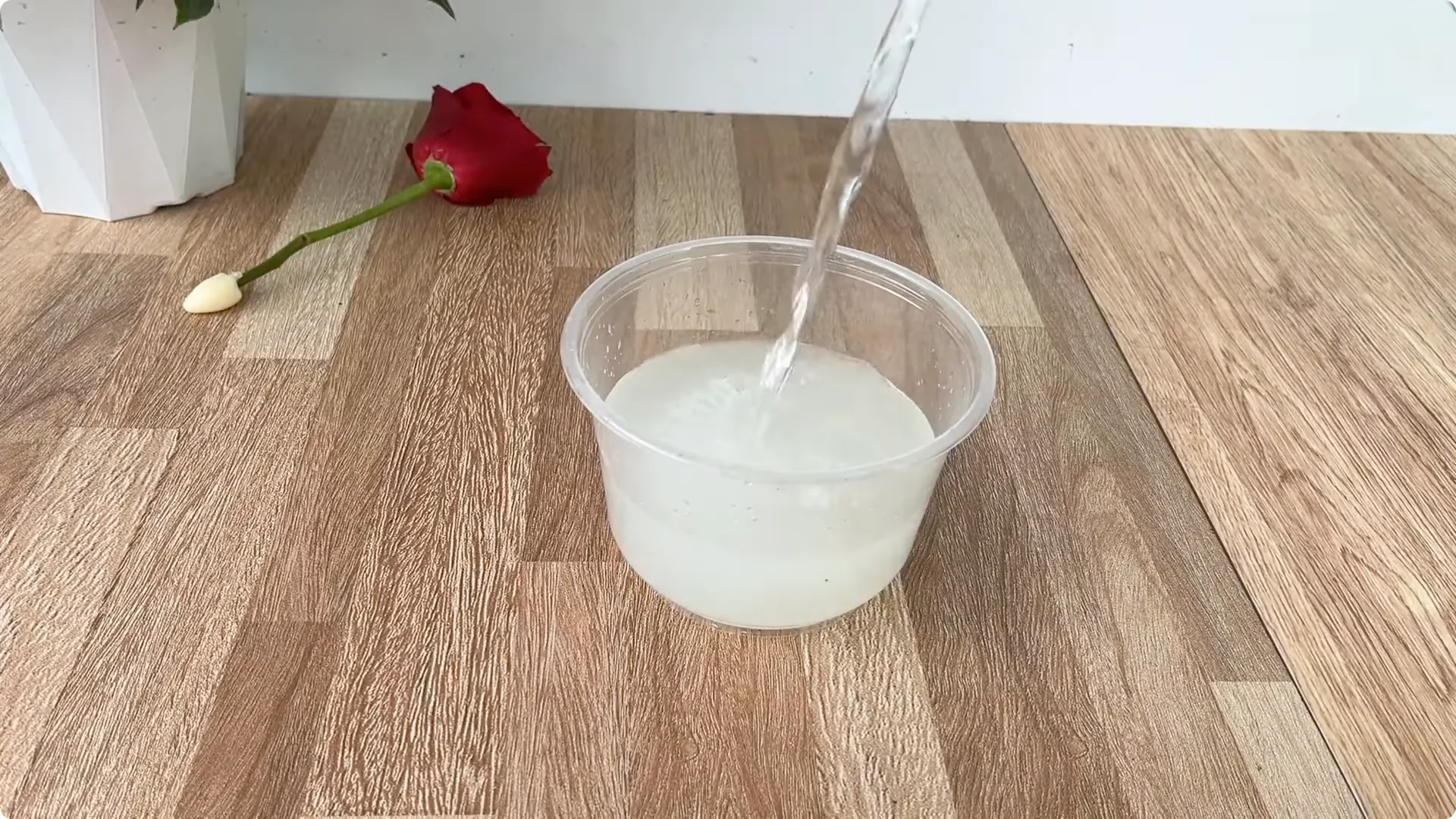
1. Rooting Rose Cuttings – Choose a healthy branch
We need a really healthy rose branch, with a moderate age. If the branch is too young, it will easily wither, and if the branch is too old, it will be difficult to root. Ideally, the branch is sturdy but still has strong vitality.
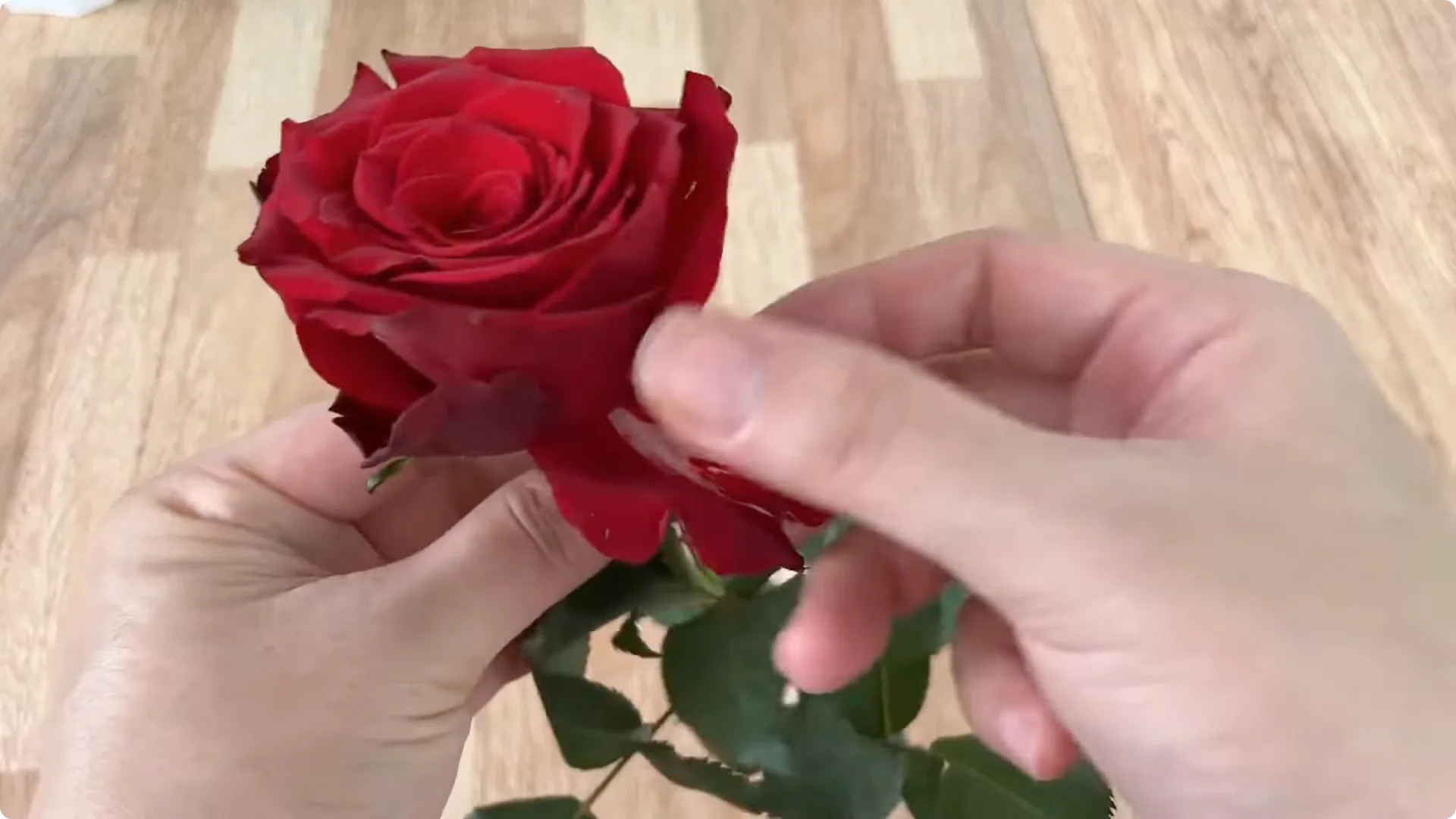
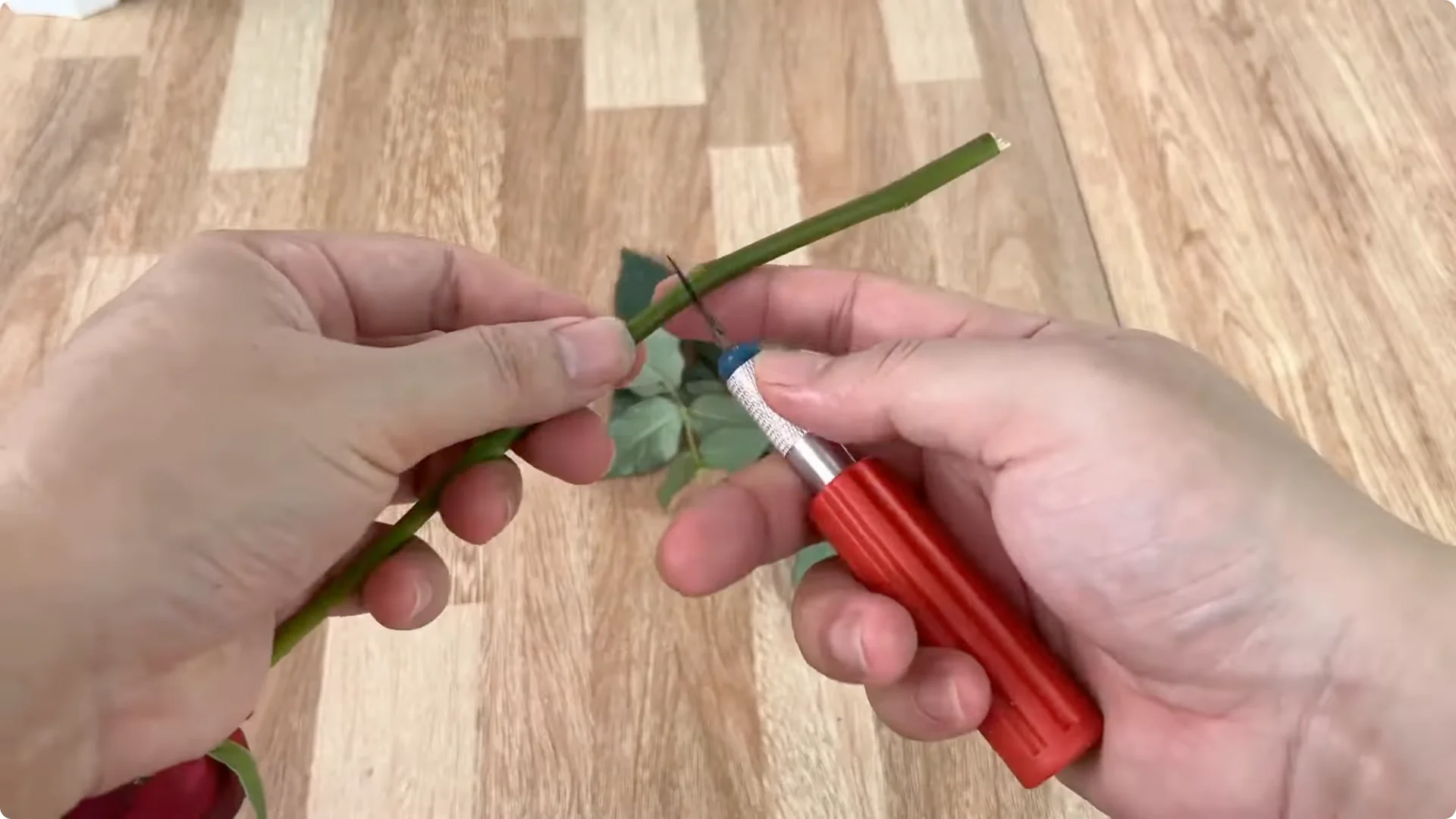
Cut the branch to about 15-20 cm, remove all leaves and sharp thorns to reduce water loss, and keep the stem clean, ready to receive nutrients. This is an important foundation step, like preparing a student to be ready to learn a new lesson. For a simple cup routine to boost young branches, see this one-cup growth method.
2. Rooting Rose Cuttings – Garlic prep
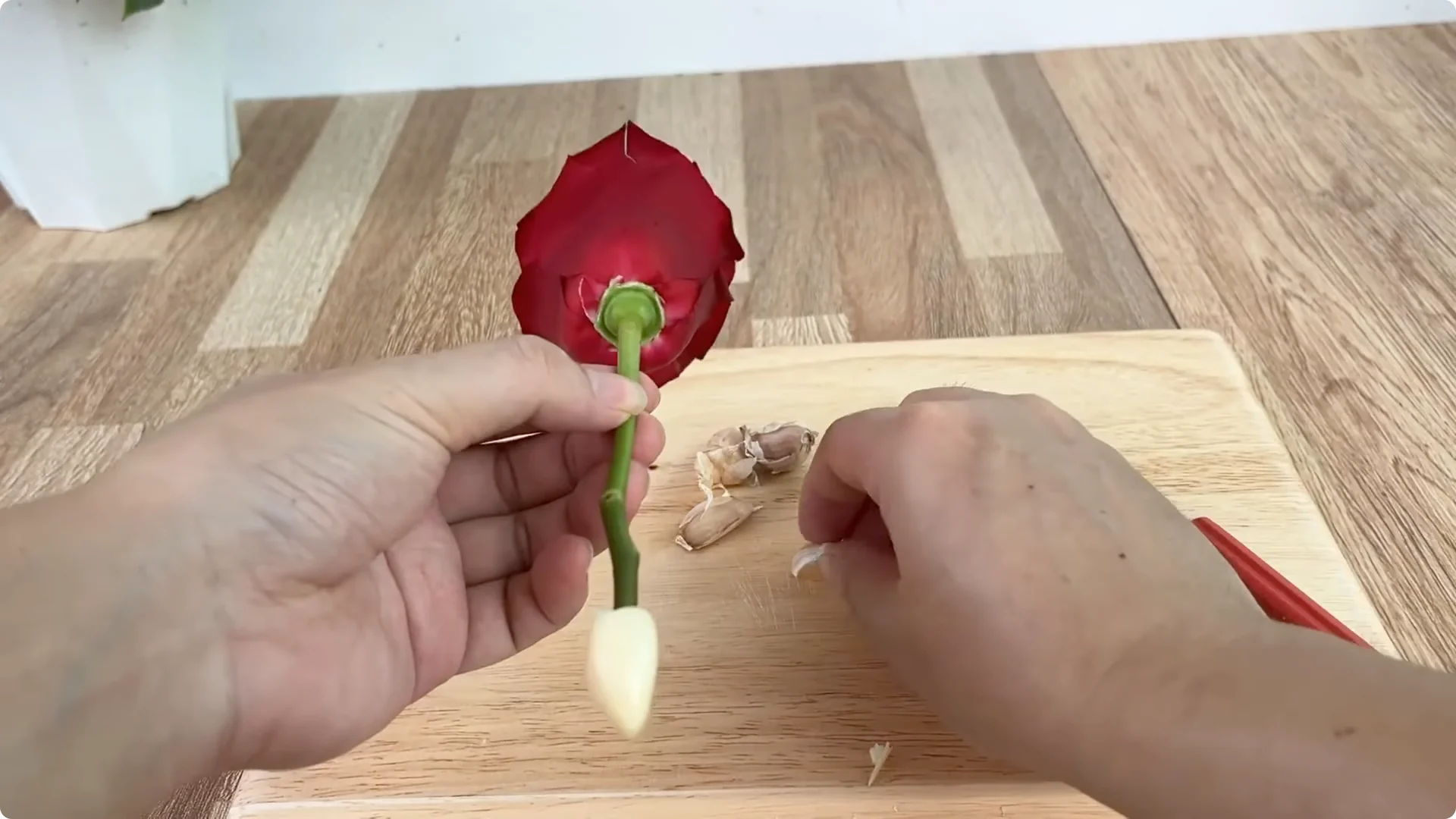
Take 4 cloves of garlic, cut 1 clove in half and peel off the skin. Use a small knife to make a hole the size of the rose branch and then insert the branch.
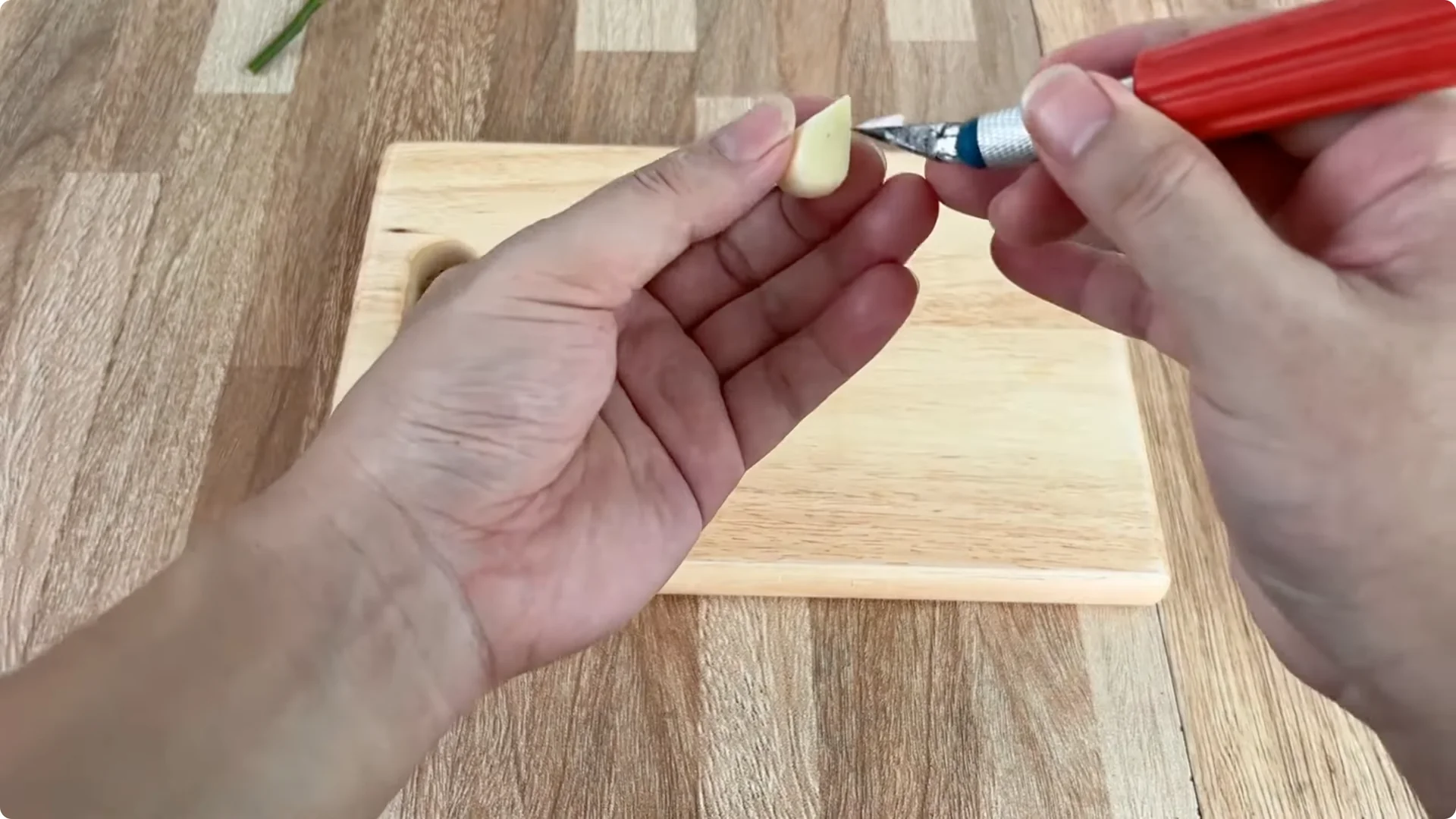
Gently rub the remaining half of the garlic clove on the stem, helping to kill bacteria, prevent mold and stimulate roots. Garlic contains allicin – a compound famous for its antibacterial properties and stimulating cell growth.
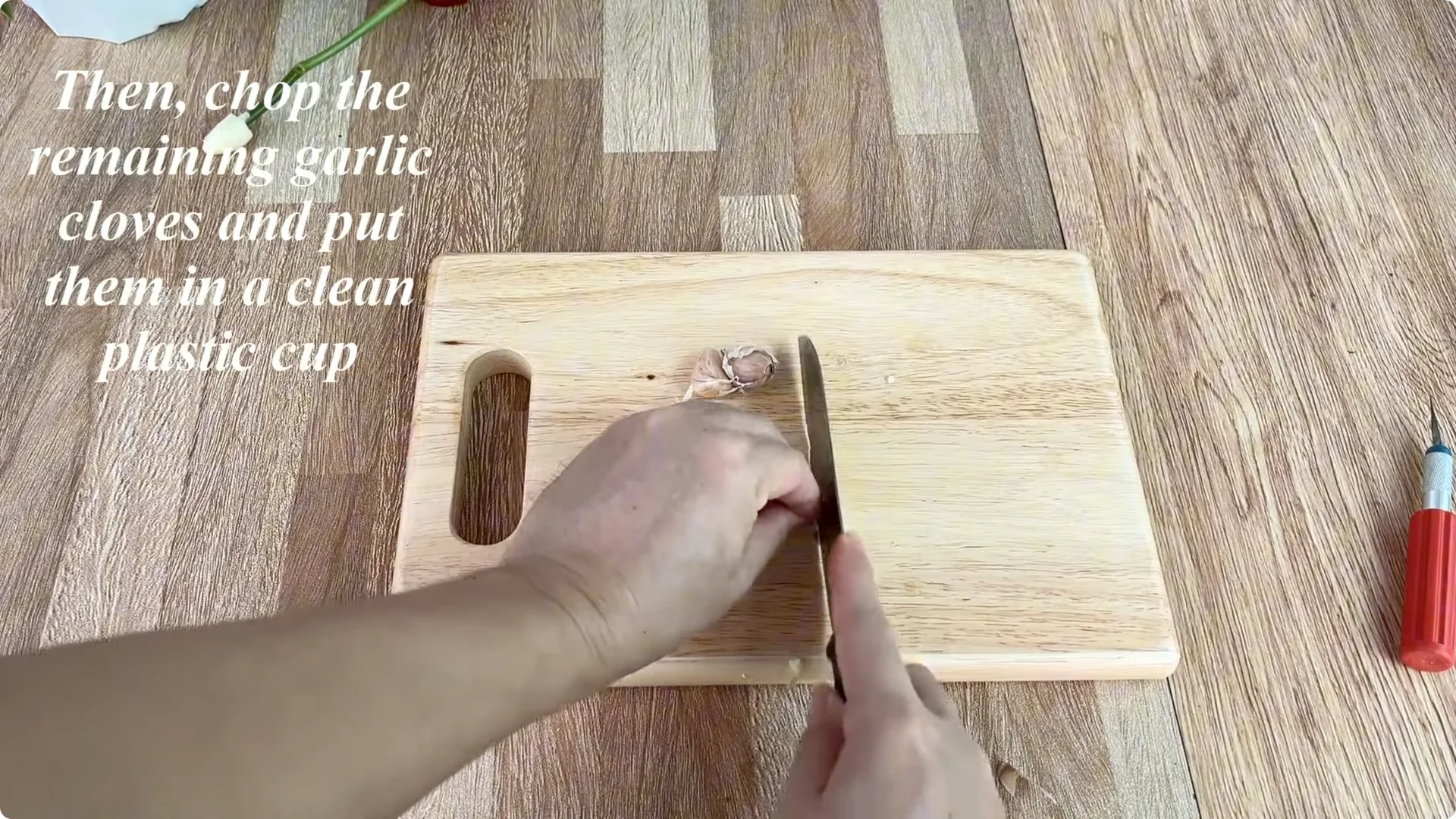
Chop the remaining garlic cloves and put them in a clean plastic cup.
3. Rooting Rose Cuttings – Bread solution
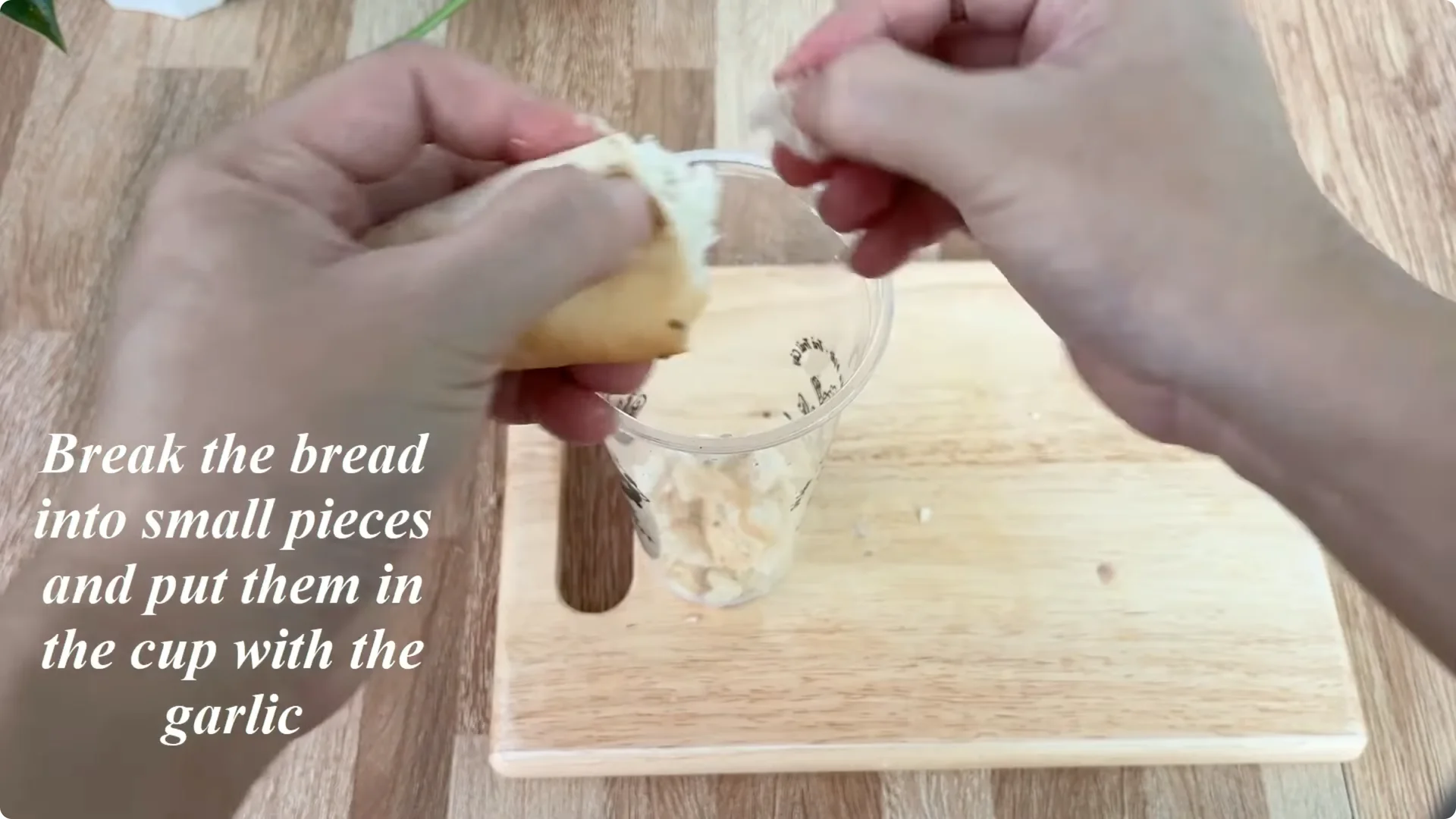
Weigh a small piece of bread. Break the bread into small pieces and put it in the cup with the garlic.
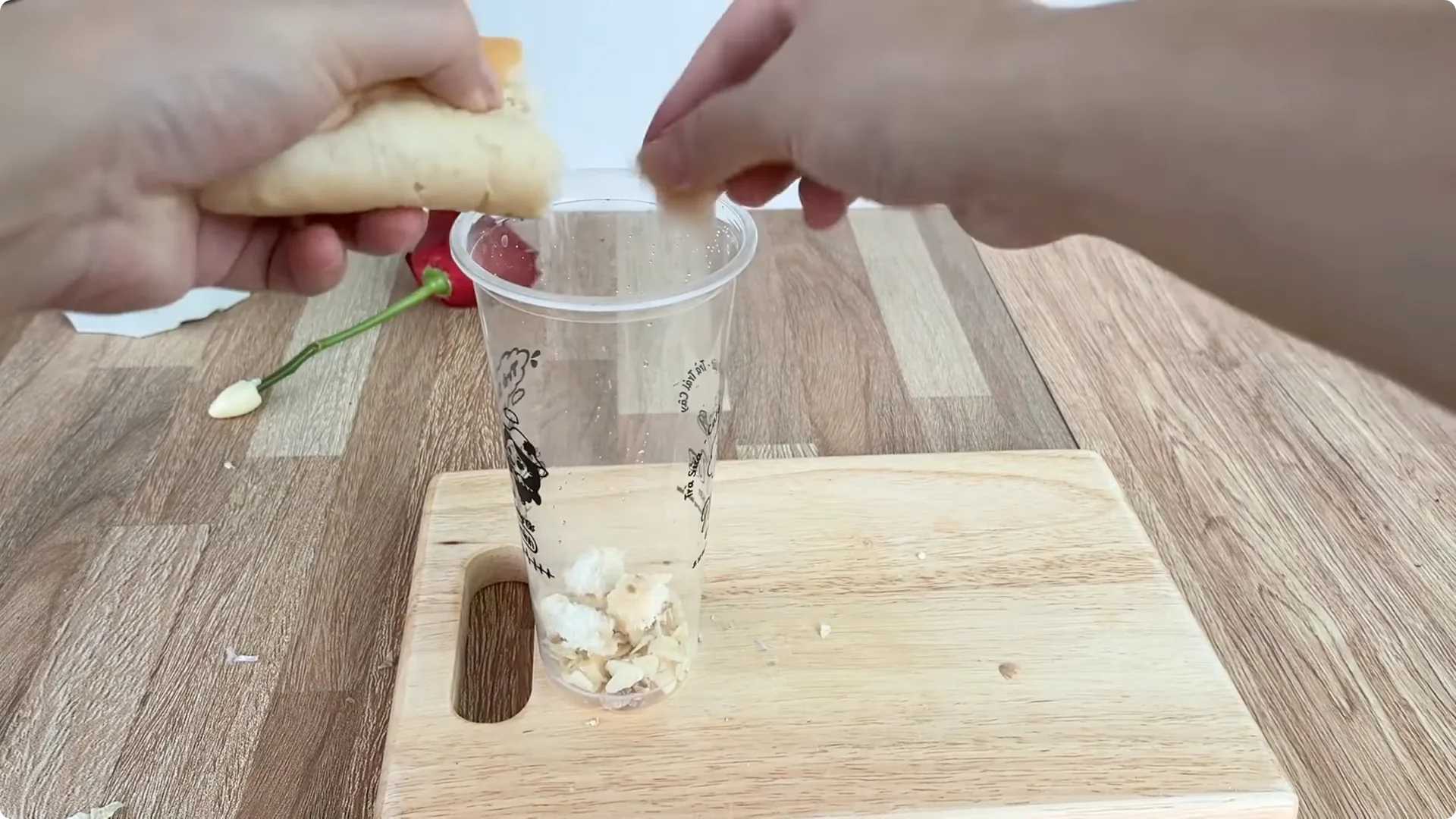
Bread contains natural yeast, starch and sugar that when mixed with water create a rich nutritional environment. This solution both protects and nourishes, creating optimal conditions for the rose roots to sprout faster.
Add 500 ml of warm water, stir well and let stand for 30 minutes. Filter out the residue, collect the clear solution and dilute it with 0.5 liters of clean water. This way, the solution has a milder concentration, enough nutrients without shocking the rose branches.
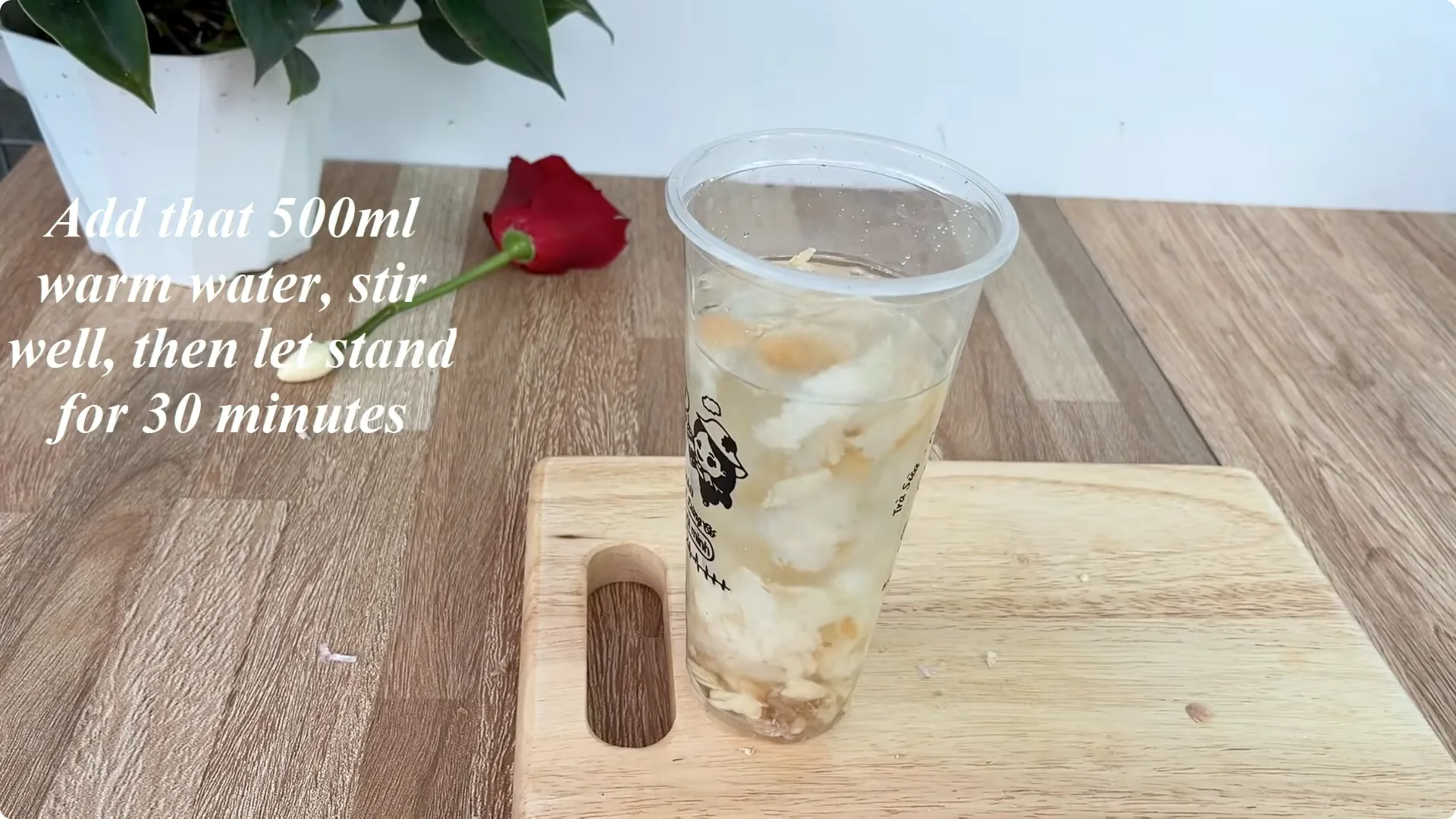
This is the water of life – a harmonious combination of antibacterial, stimulating and nourishing. For another quick-root approach, see this fast growth method.
4. Rooting Rose Cuttings – Paper wrap
Tear some soft toilet paper into small pieces, put them in a clean plastic cup, then pour the garlic – bread solution to fill the cup. Soak for about 10 minutes to absorb the water, then gently press to reduce the water, keeping the humidity moderate.
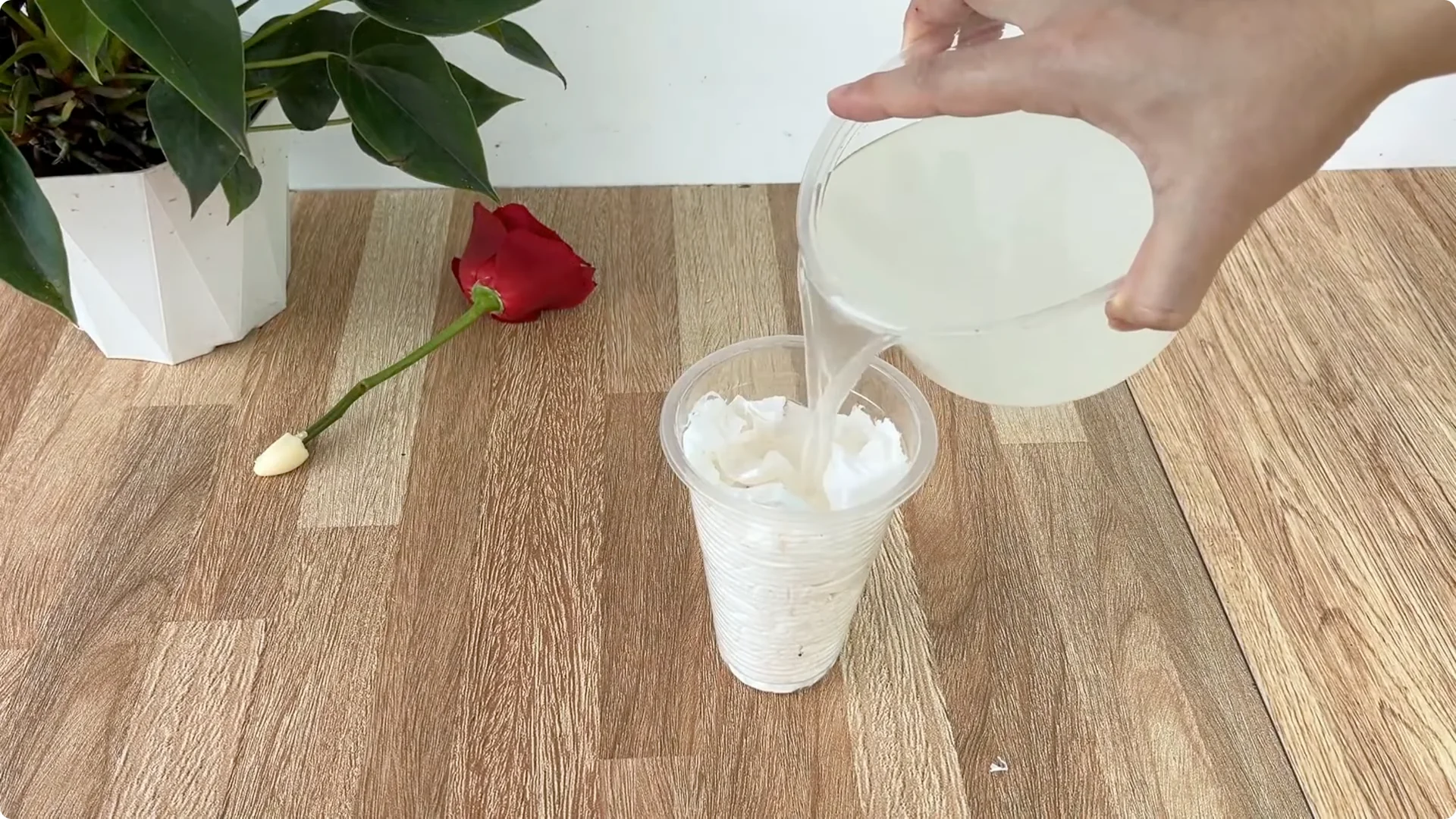
Toilet paper here acts as a special substrate: soft, retains moisture well and covers the rose stem. Use a small stick to make a hole in the middle of the paper cup.
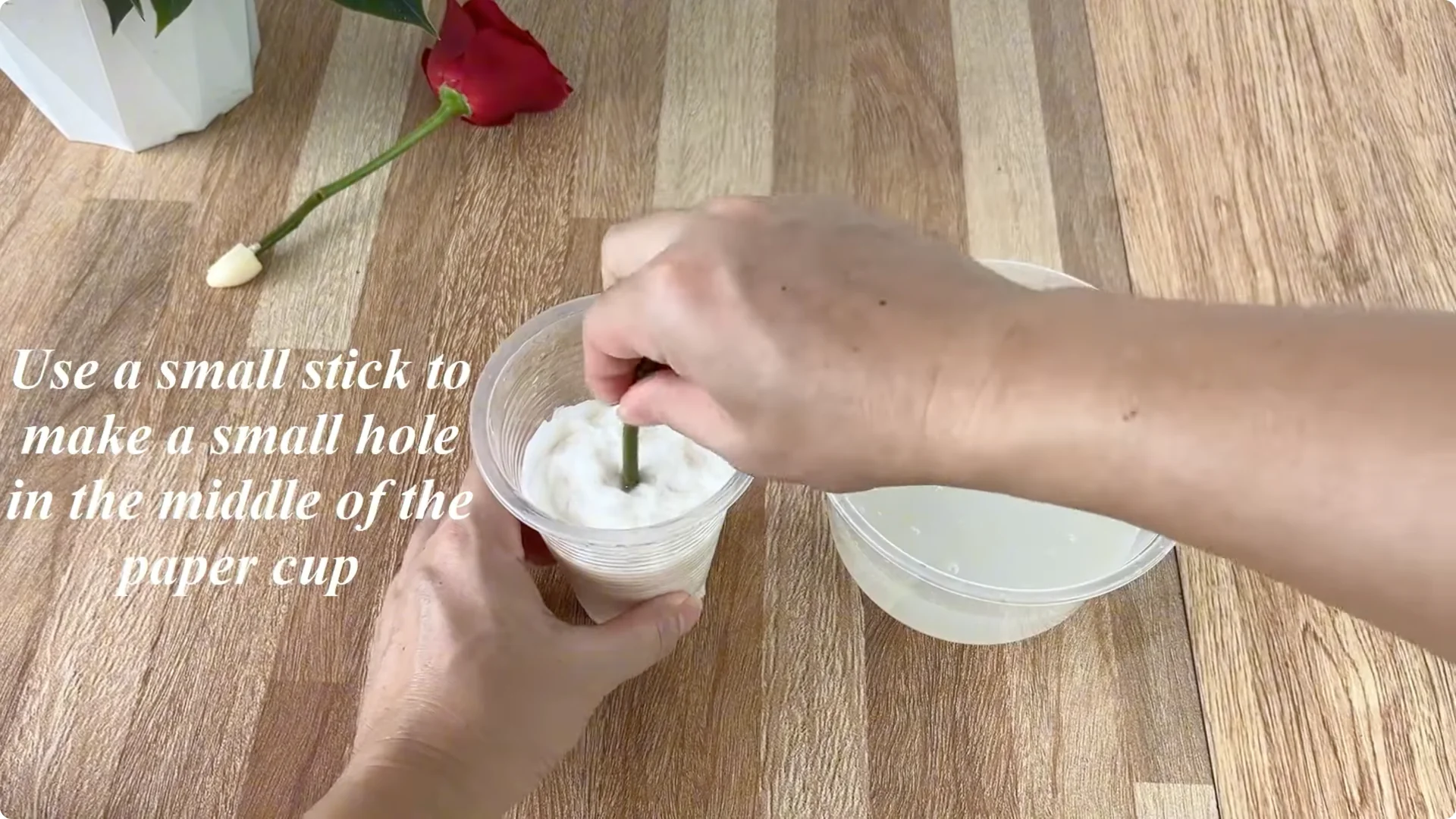
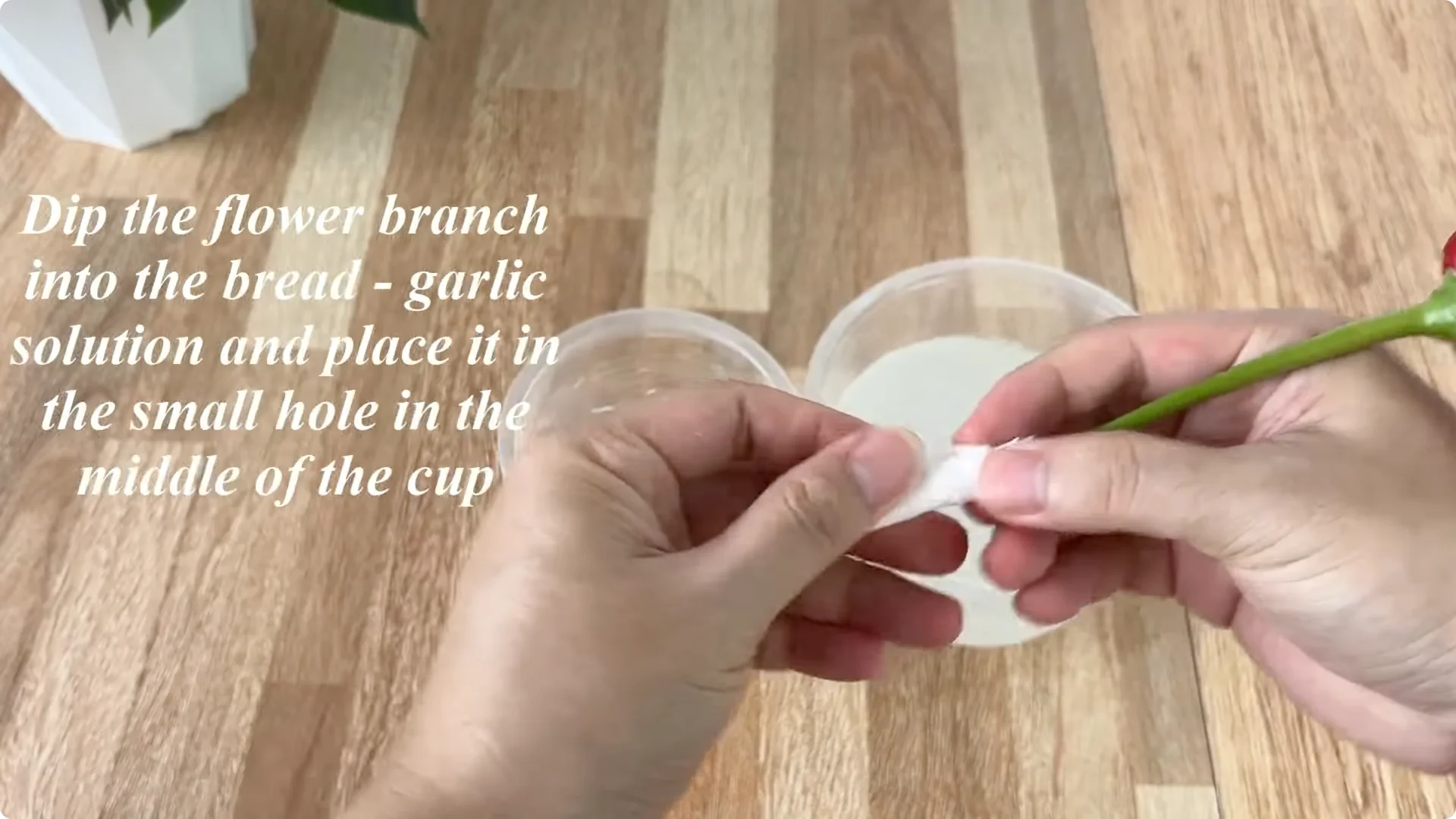
Wrap 2-3 times around the stem so the rose branch is kept at a stable humidity. Place the rose branch dipped in the solution and press lightly around it to stabilize it.
5. Rooting Rose Cuttings – Mini greenhouse
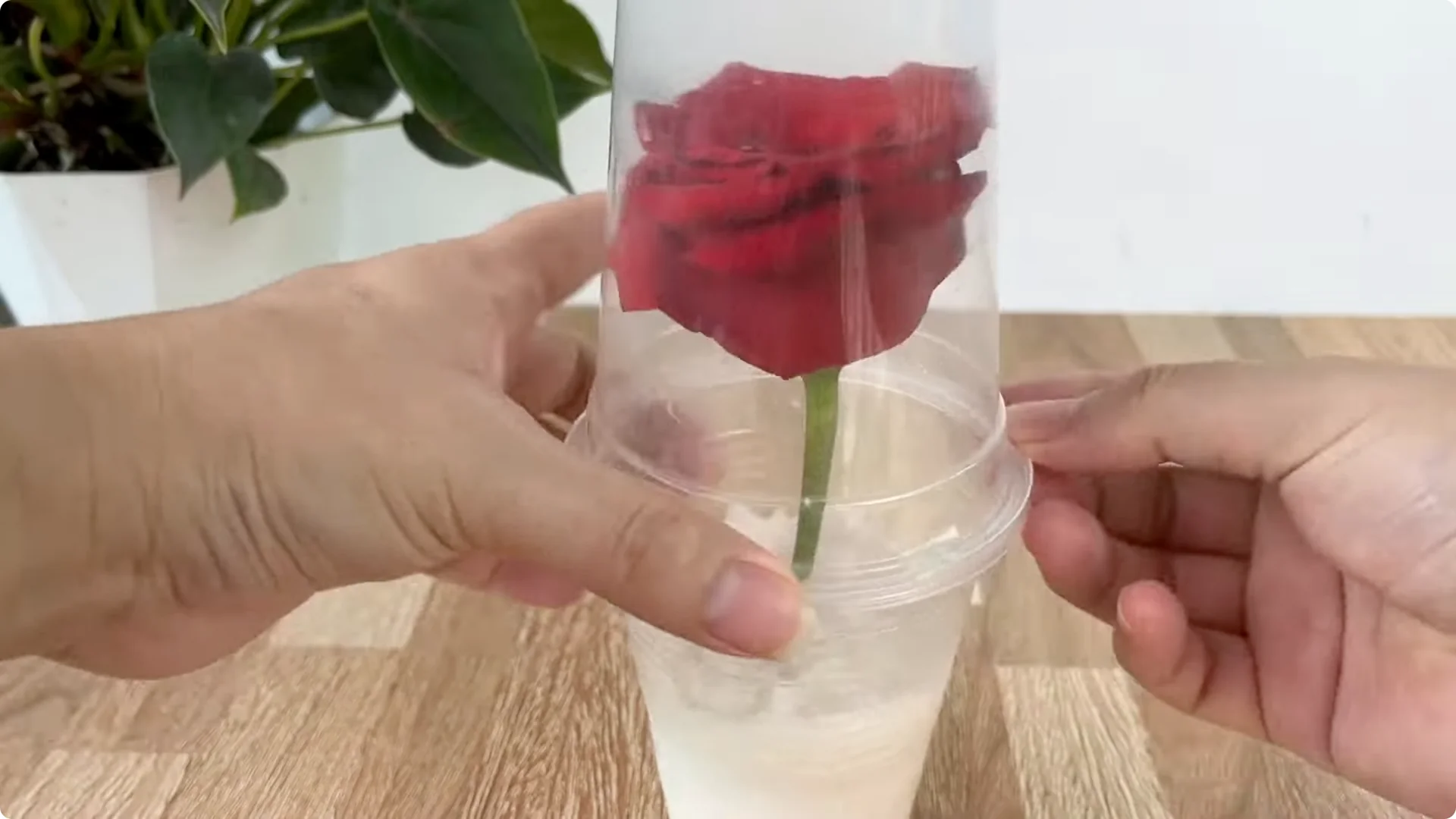
Use a plastic bag or transparent cup to cover the mouth of the cup, creating a mini greenhouse. This space helps to retain moisture, prevent evaporation and prevent harmful agents from the outside.
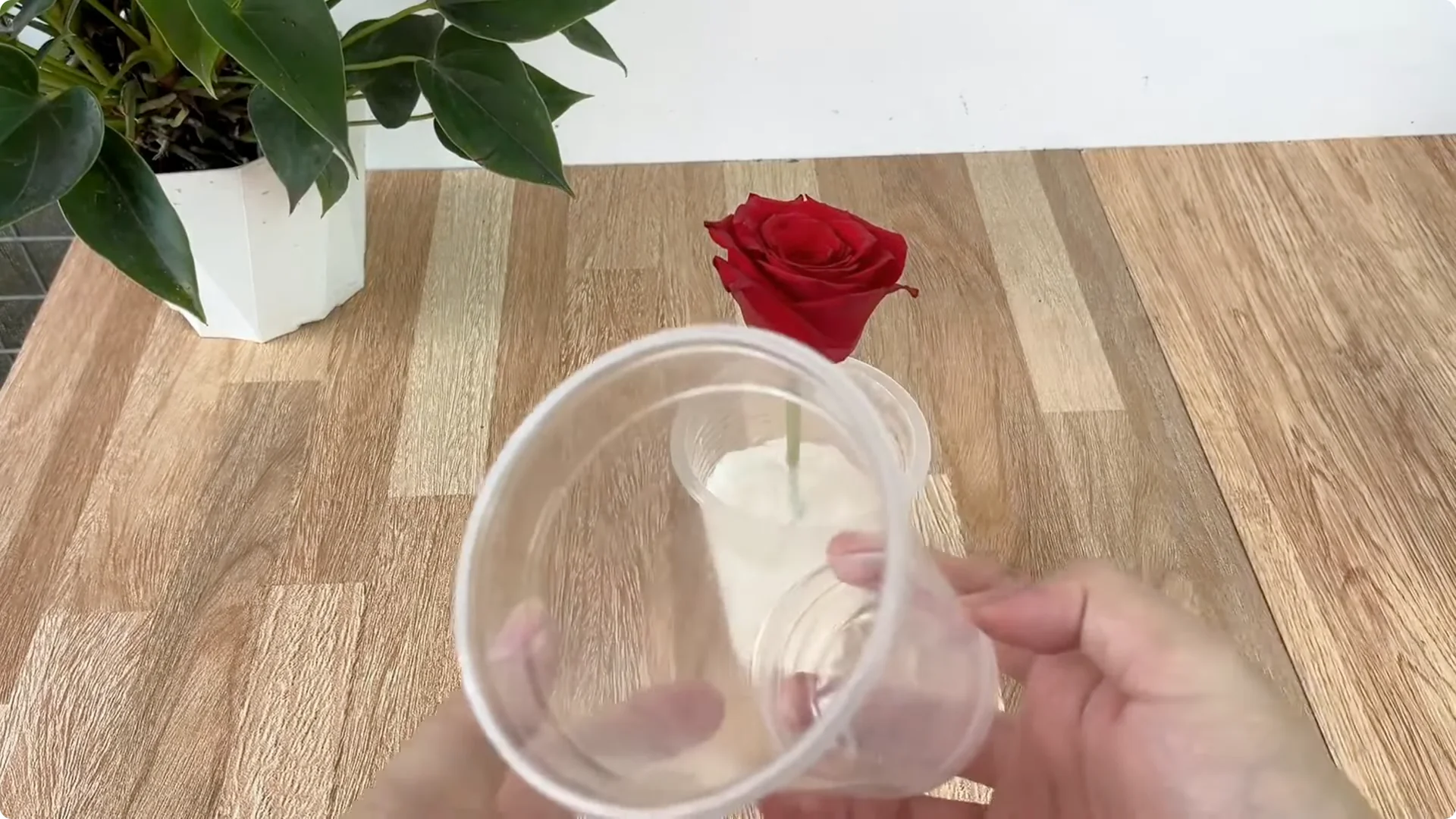
Place the cup in a cool place, away from harsh sunlight and strong winds. The rose branch will have a safe environment to revive.
Citrus can also support root activity and blooms. Learn how lemons boost root growth and flowering.
6. Rooting Rose Cuttings – What to expect and transplanting
After just one week, you will see obvious changes around the base of the rose branch. Plump, white young roots begin to grow and lush green shoots pop up full of vitality.
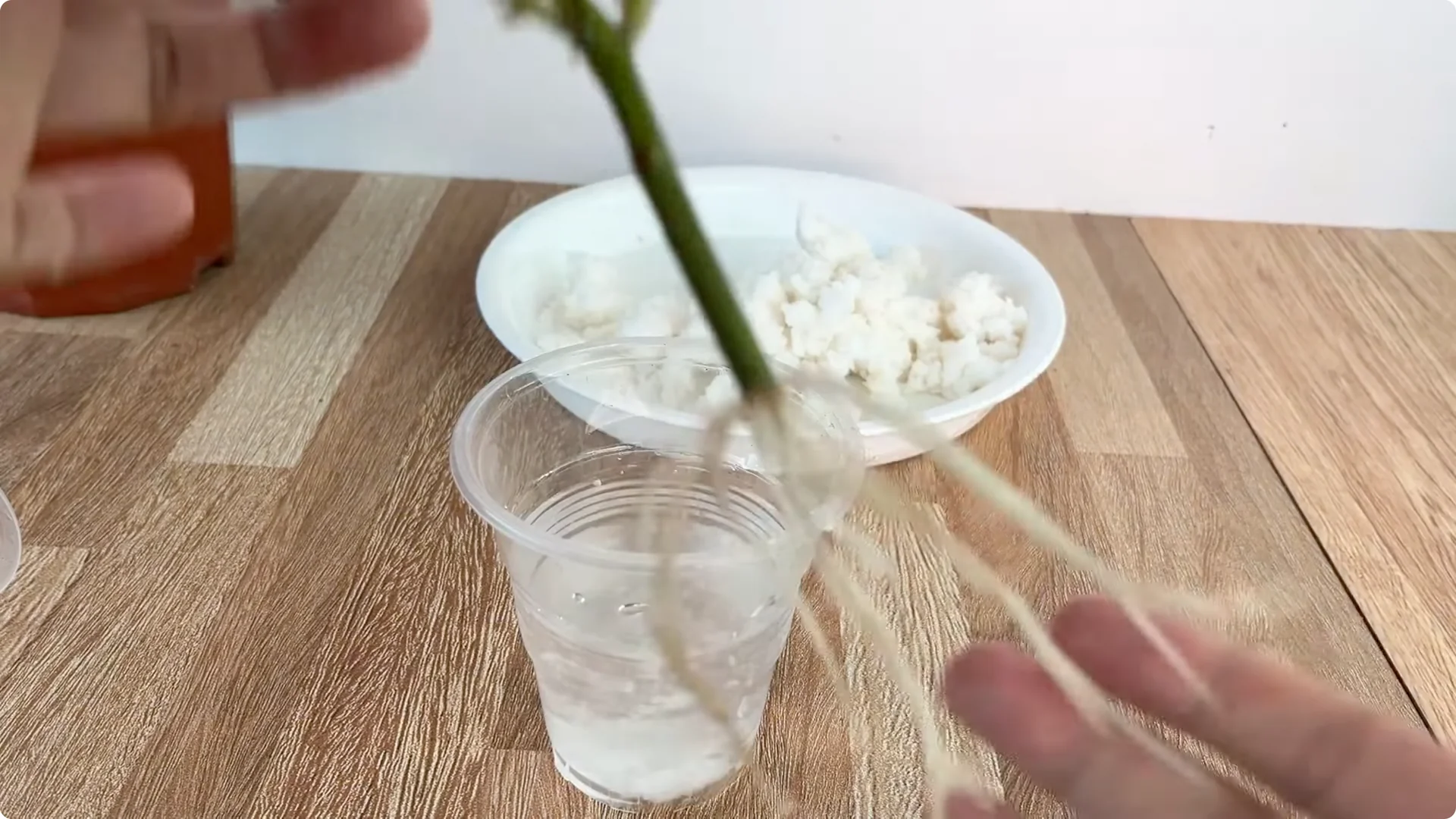
That is proof of the effectiveness of this unique combination. When the roots are strong enough, move the branch to a well-drained pot, with coconut fiber or loose soil.
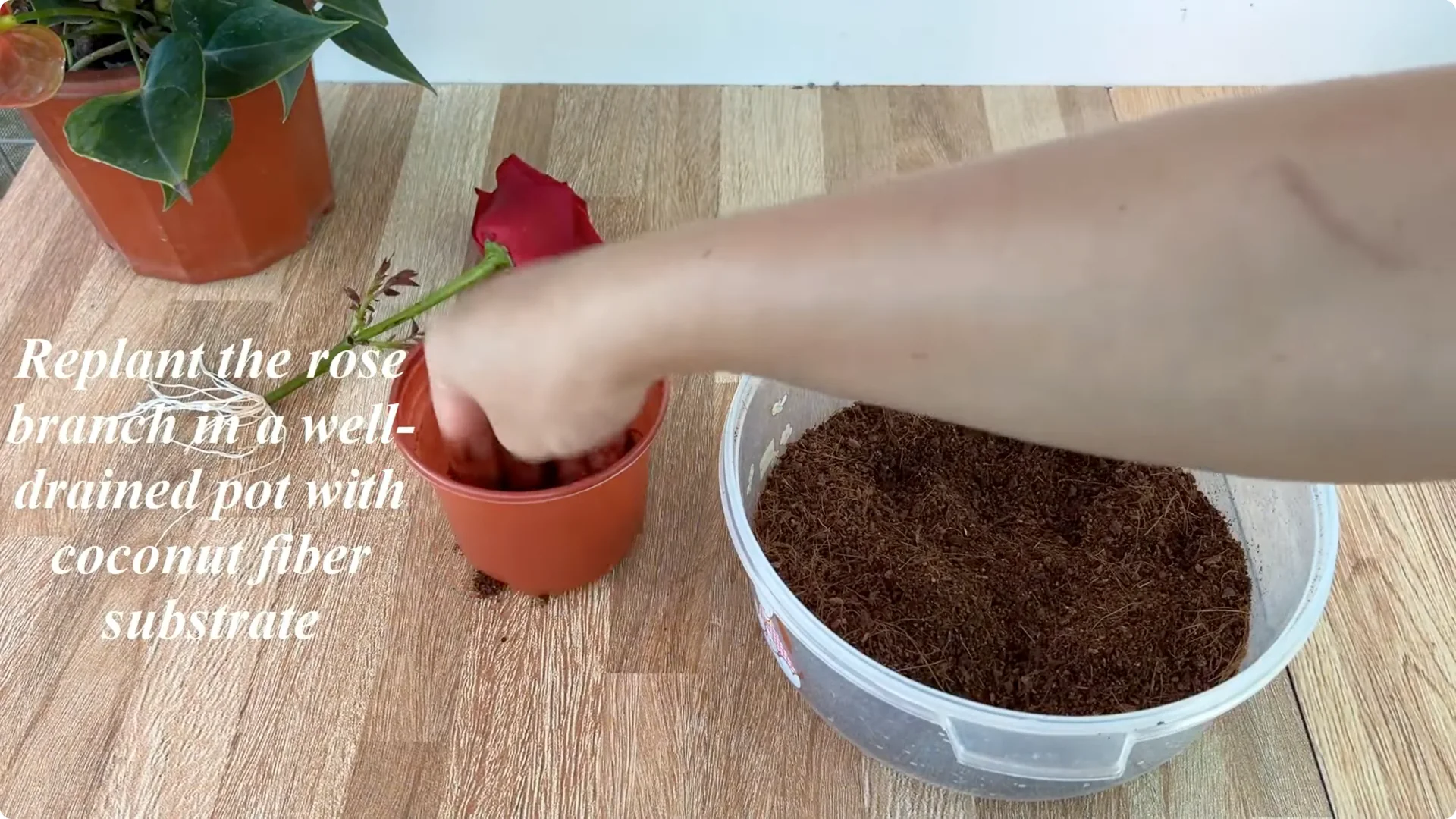
From here, the rose branch will continue to grow and bloom brilliantly. With just a few simple ingredients in the kitchen, we can create an extremely effective cutting method.
Rooting Rose Cuttings: Final Thoughts
This is not only a small tip for propagating roses, but also a way for us to feel the magic of nature in every small detail. If you love flowers, try it right away, because after just a few weeks you may have more beautiful rose pots created by your own hands. Good luck!