
If you are looking for a simple and extremely effective way to propagate roses, I will guide you step by step so that you can do it yourself at home and see the results after only 7 days.
You will be surprised by the results.
I start with a healthy rose branch with moderate age – this is a very important condition for successful cutting.
Not too young to avoid waterlogging and not too old because it is difficult to take root.
1. Garlic and Carrot Rose Propagation
Prepare the cutting
Use sharp scissors to shorten the branch, leaving only about 15-20 cm long and cut the base at a 45-degree angle.
This increases the contact area between the base of the branch and the solution, helping to absorb nutrients better and easily form callus – a prerequisite for rooting.
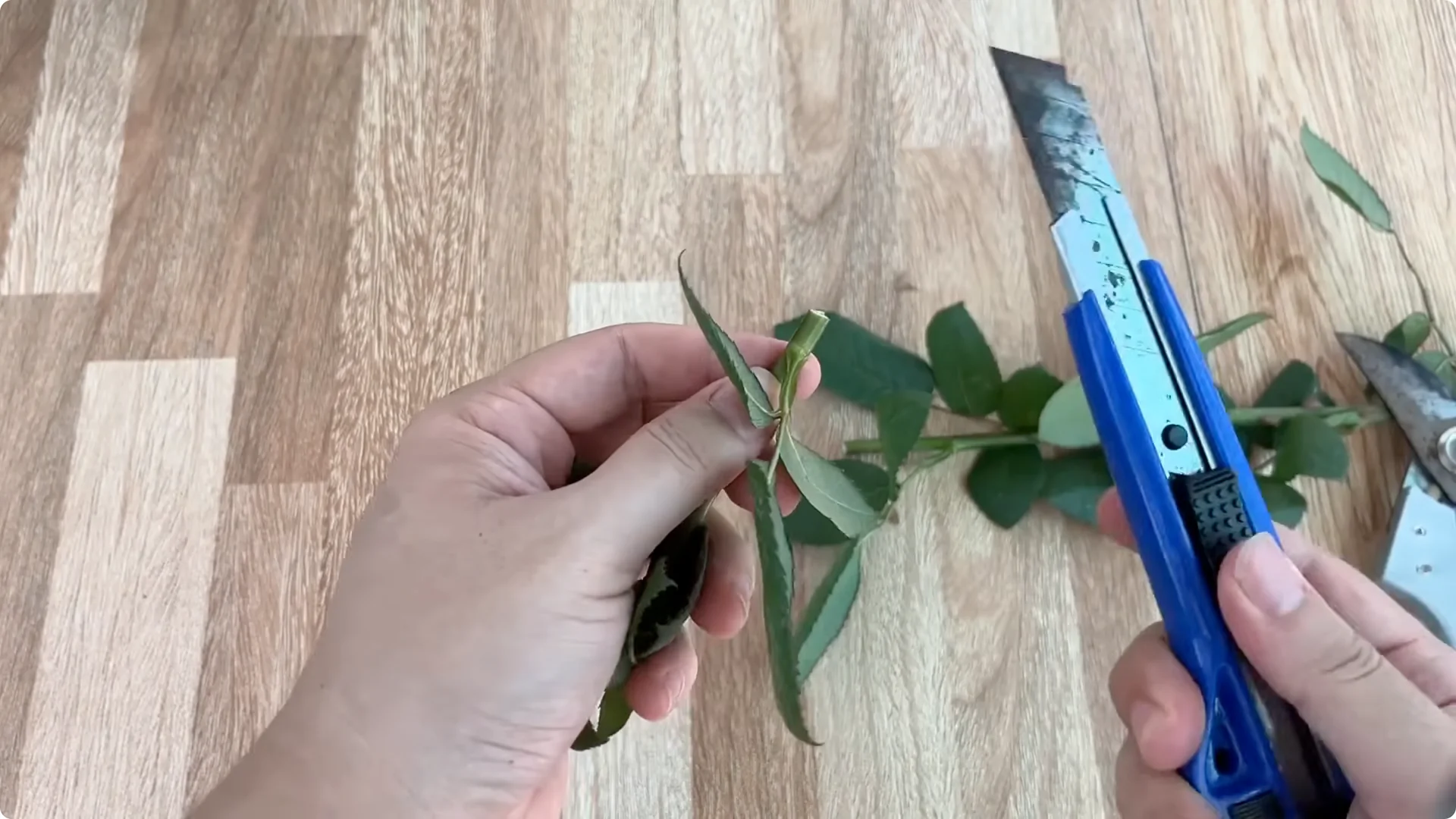
Remove all the leaves and sharp thorns, keeping only the top 2-3 leaves.
This reduces water loss, helping the branch focus its energy on forming new roots and shoots.
For a broader primer on easy tricks, see a simple trick for rose propagation.
It pairs well with the steps below.
Make the garlic-carrot solution
Prepare 3 cloves of garlic, peel and cut one clove in half, then use a sharp knife to make a small hole in the middle of the garlic clove, just the size of the base of the rose branch.
Place the rose branch in this hole and leave it for 30 minutes.
Cut or chop the remaining garlic and put it in a clean plastic cup.
Garlic contains allicin – a strong antibacterial compound, which helps prevent bacteria and mold from attacking the base of the branch.
The enzymes in garlic stimulate the activity of scar tissue, thereby promoting the formation of new roots faster.
Take about 50 grams of carrots, cut a piece about 3 cm long and use a sharp knife to make a small hole in the middle of the carrot, just the size of the base of the rose branch.
Cut the remaining carrots into small pieces and put them in a cup with the minced garlic.
Carrots are rich in beta-carotene, vitamin B, potassium and natural sugar.
These nutrients help nourish the callus at the base of the branch, stimulate the growth of young roots, and increase the plant’s resistance.
The combination of antibacterial garlic and nutritious carrots creates a solution that both protects the branch and nourishes the young roots to grow strongly.
Add 0.5 liters of warm water, stir well and let stand for about 30 minutes so that the active ingredients in the garlic and carrots dissolve into the water.
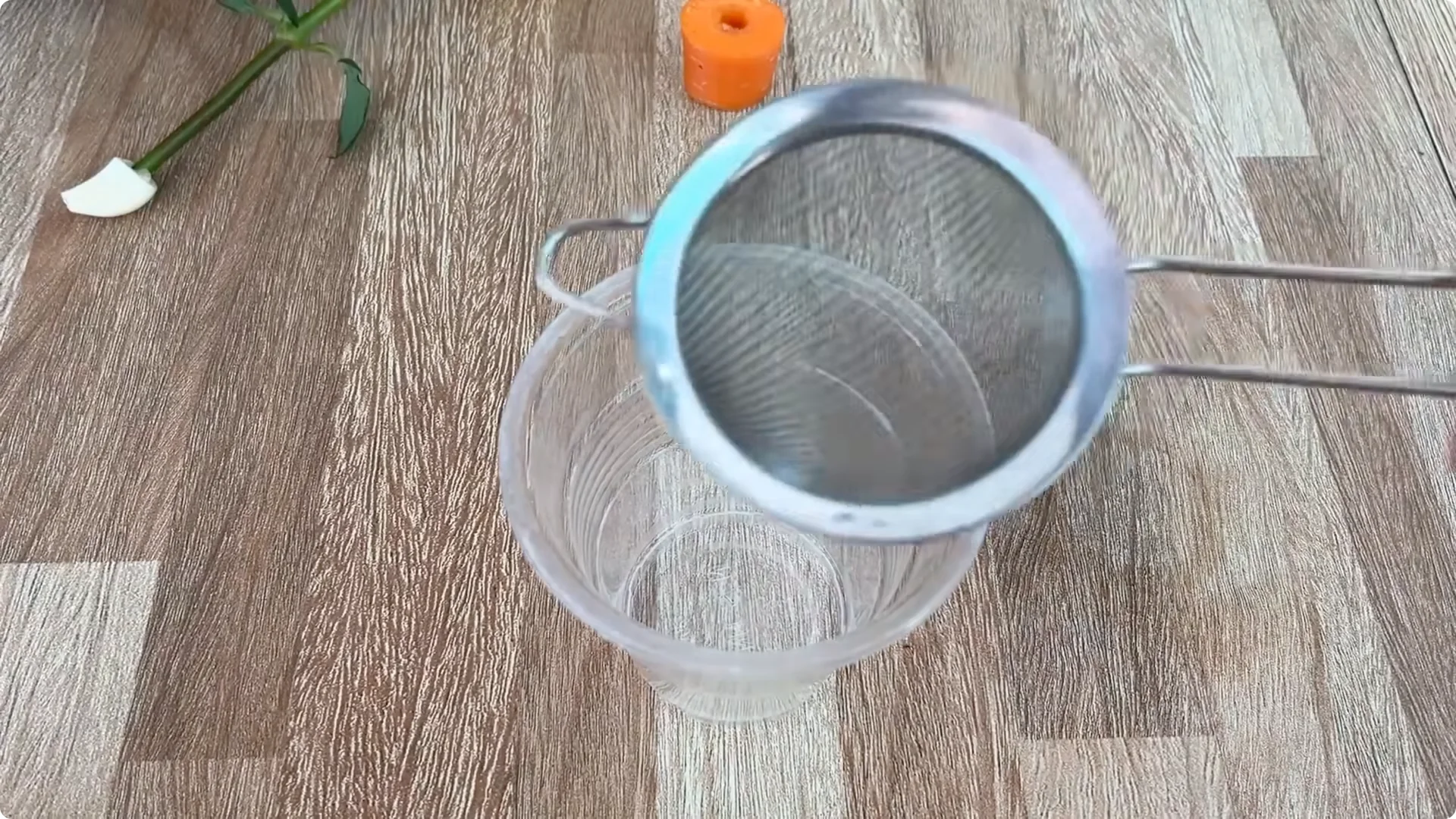
After 30 minutes, stir the mixture well and filter out the residue, obtaining a clear garlic-carrot solution, ready to use.
Plant and set up
Prepare a clean plastic cup, add about 1/4 cup of treated river sand.
Place the holed carrot in the middle of the cup.
Remove the rose branch from the garlic clove and rub the garlic all over the flower branch once more.
The carrot segment acts as a mini nutrient warehouse, continuously providing sugar and nutrients directly to the base of the branch, helping the young roots to grow faster.
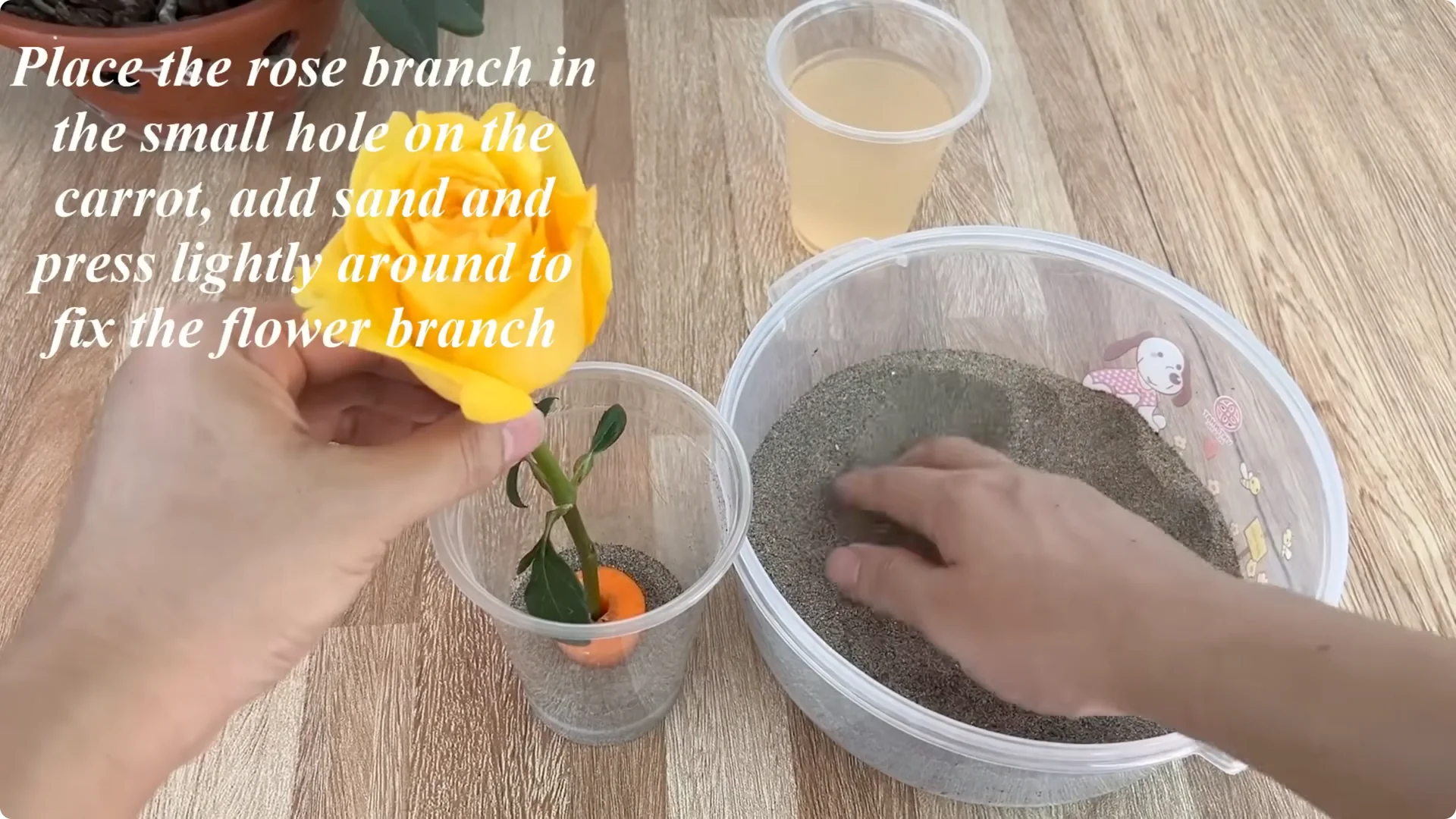
Insert the rose branch into the hole on the carrot piece.
Add sand and press lightly around the base to secure the branch.
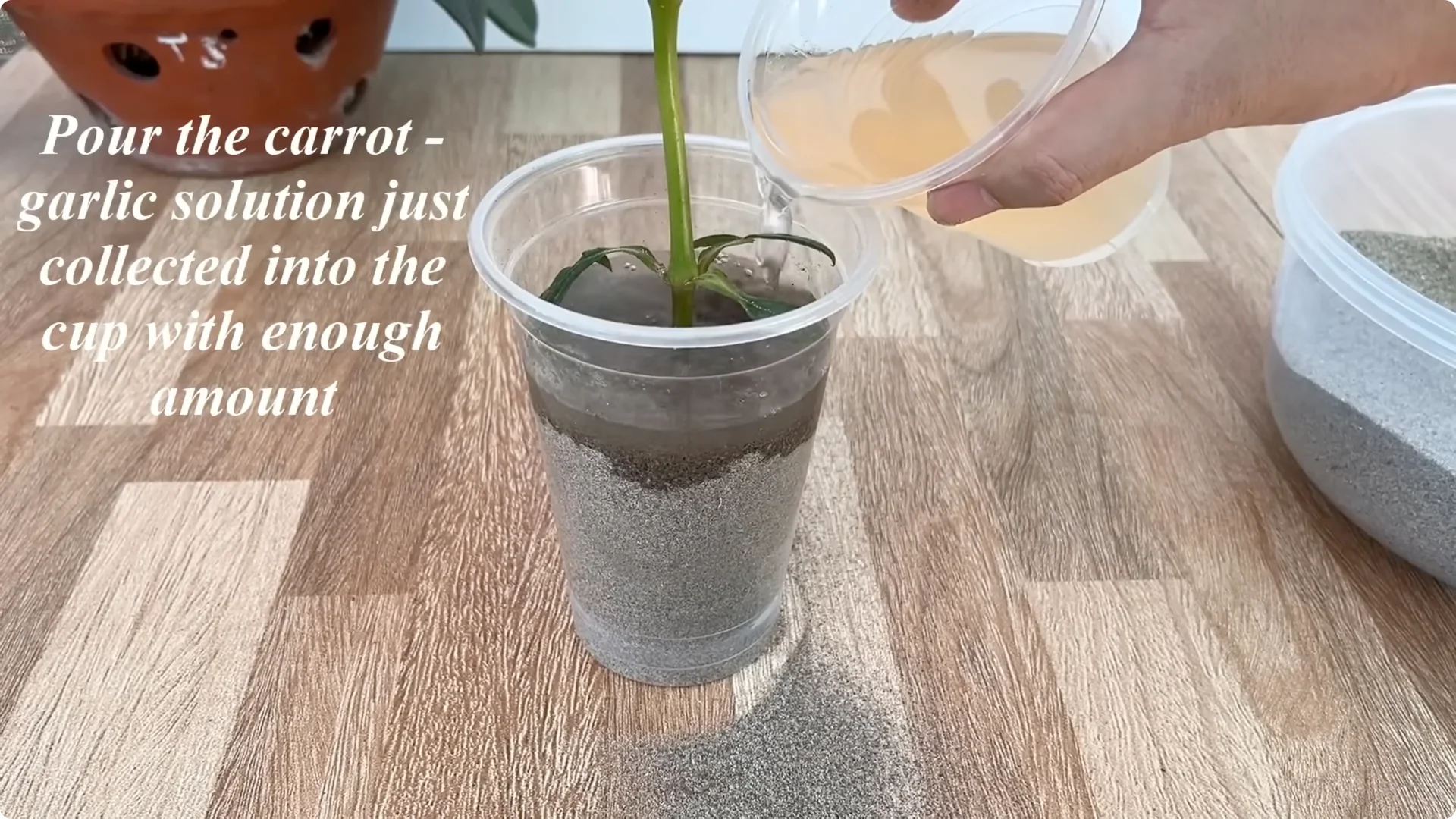
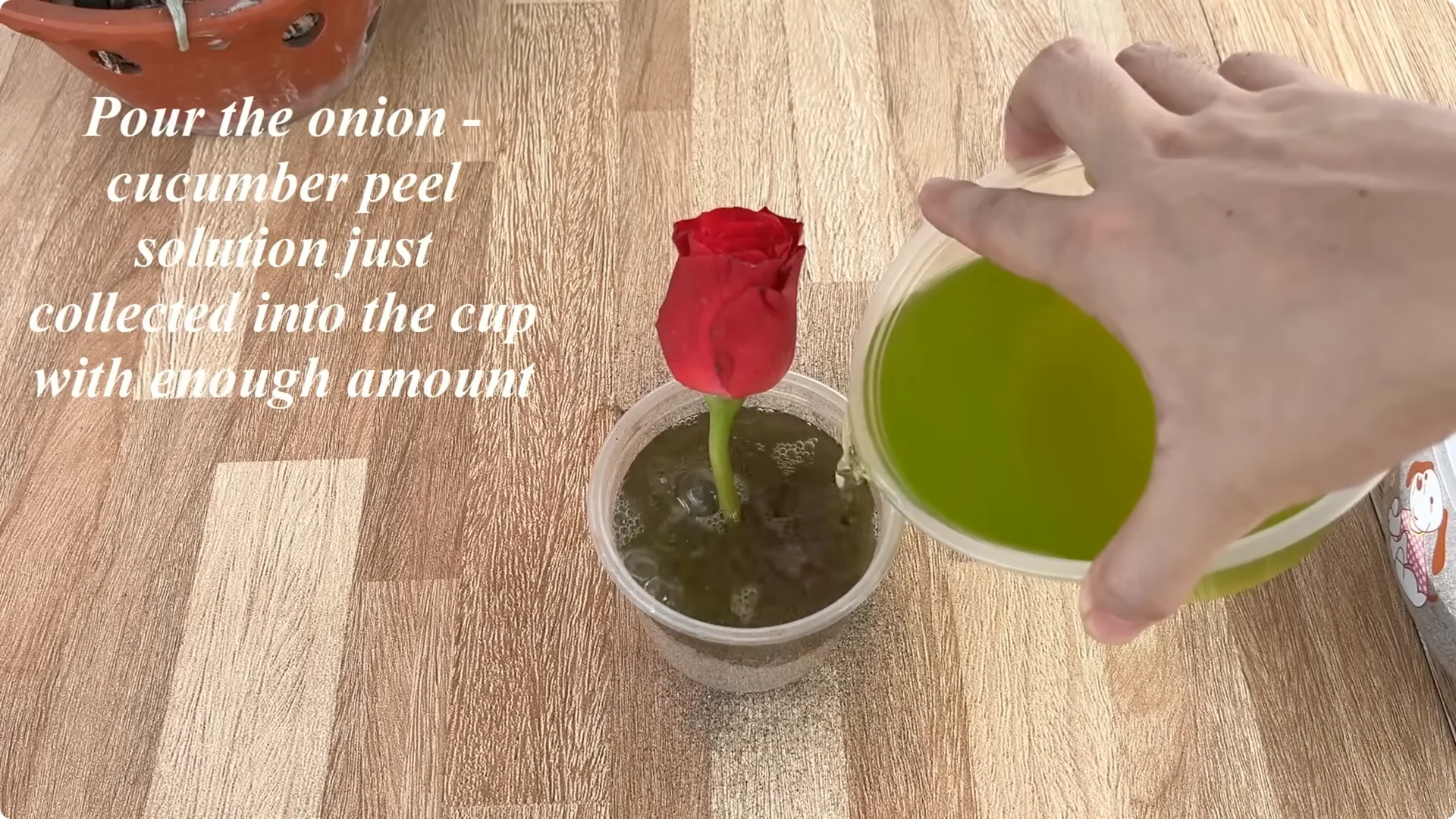
Pour the garlic-carrot solution into the cup with enough amount, so that the sand is moist enough but not soggy.
River sand retains moisture well but does not cause waterlogging, creating a clean and airy environment, and preventing the young roots from rotting.
Use a plastic bag or transparent plastic cup to cover the mouth of the cup, creating a mini greenhouse to retain moisture.
Place in a cool place, away from direct sunlight and strong winds.
Rooting timeline and transplant
After just 7 days, you’ll see lush green shoots start to sprout, and new, plump white roots appear around the base of the branch.
This is a clear sign that the rose branch has successfully taken root.
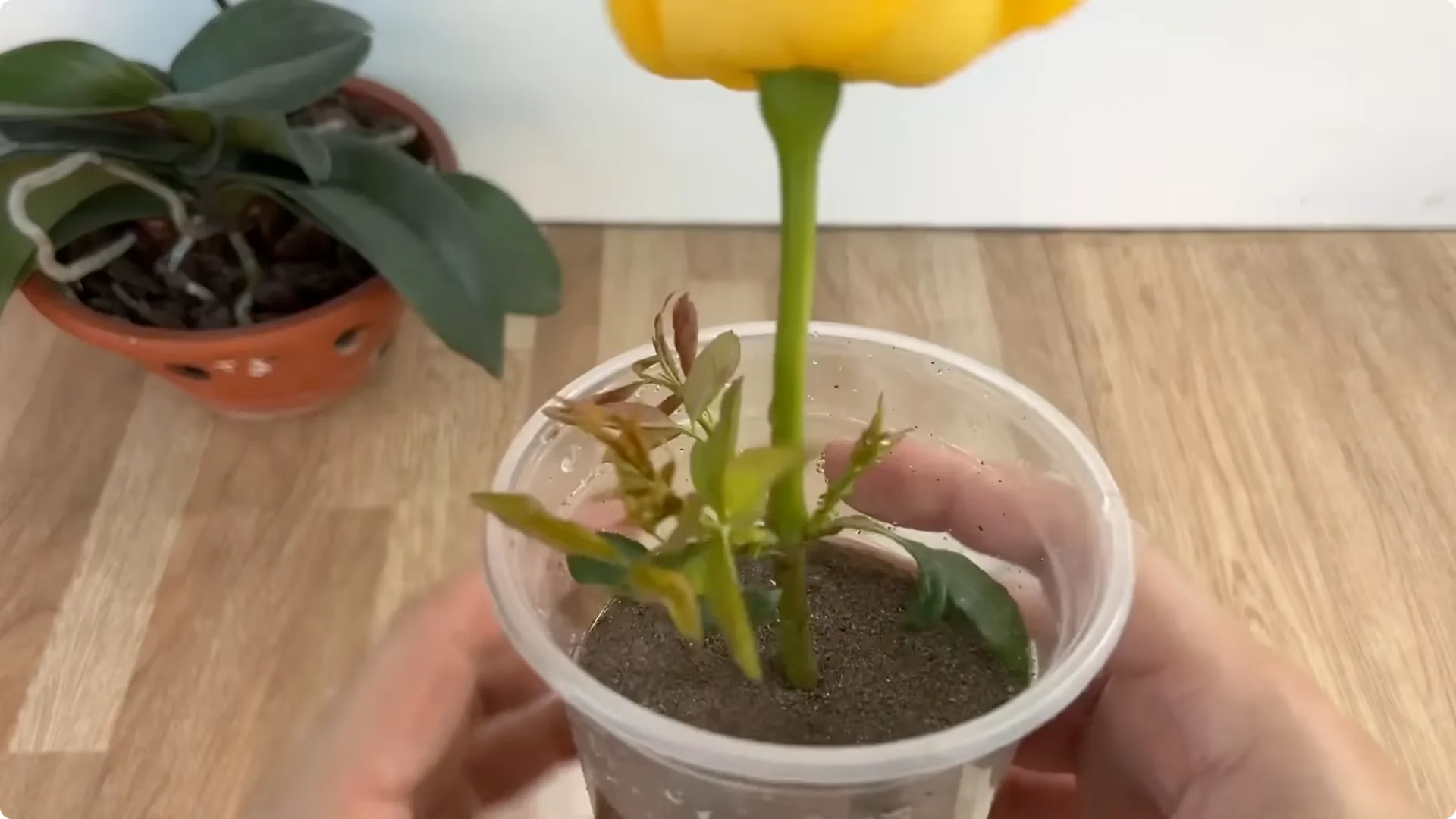
Move the branch to a larger pot, using a well-drained substrate such as coconut fiber or a mixture of coconut fiber – sand – soil.
The plant will continue to grow healthily.
2. Shallot and Cucumber Peel Propagation
Prepare the cutting
Choose a healthy rose branch with moderate age.
Remove all the leaves and sharp thorns on the branch.
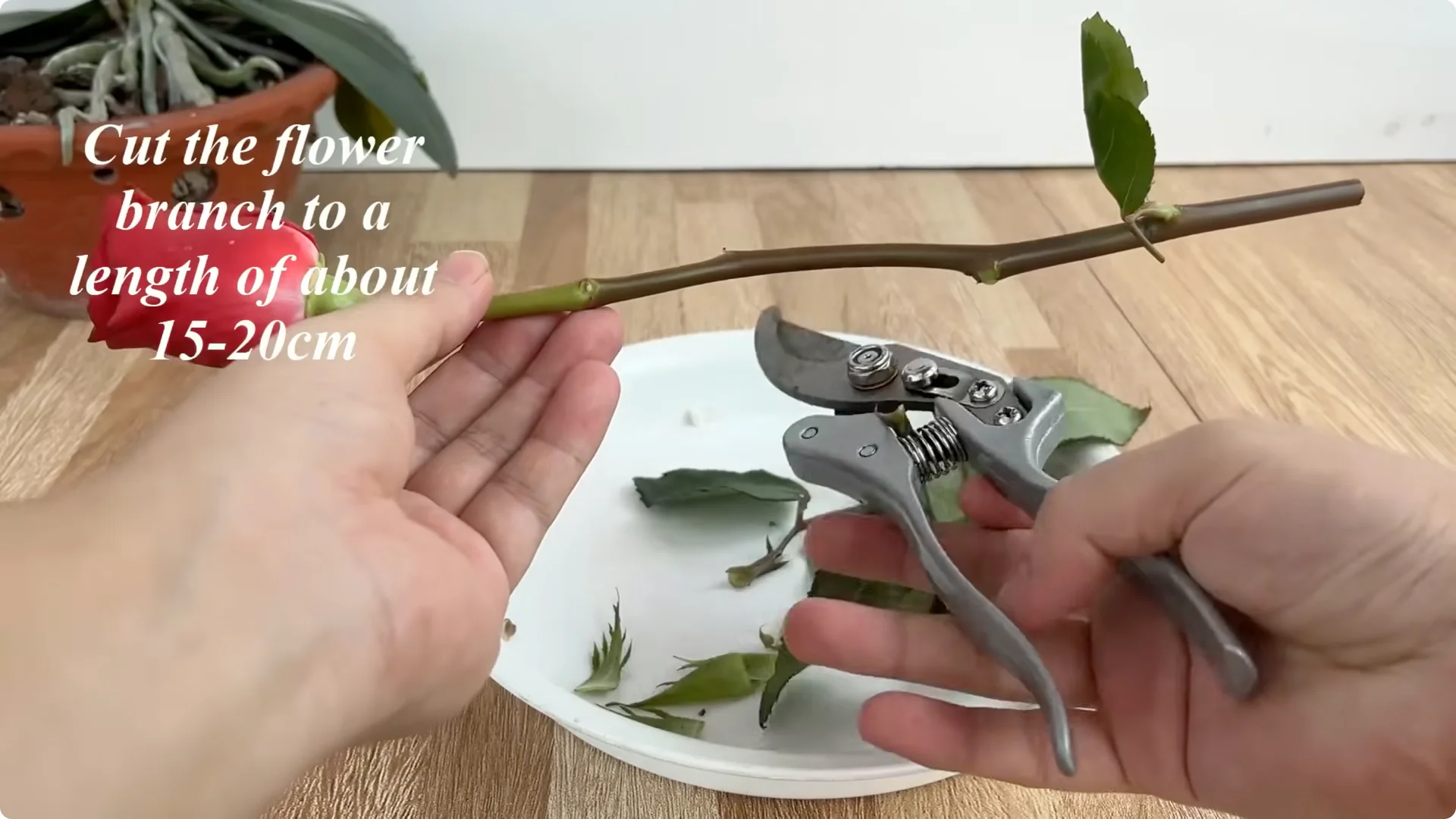
Removing the leaves and thorns helps reduce water evaporation, so the branch can focus all its energy on regenerating new roots and shoots.
It also limits mold when cutting branches.
Use sharp scissors to cut the branch short, leaving only about 15-20 cm.
For another practical walk-through, see another surprisingly simple method for propagating roses.
It complements the shallot and cucumber approach below.
Make the shallot soak
Prepare 1 onion.
Cut into thin slices and put in a clean plastic cup.
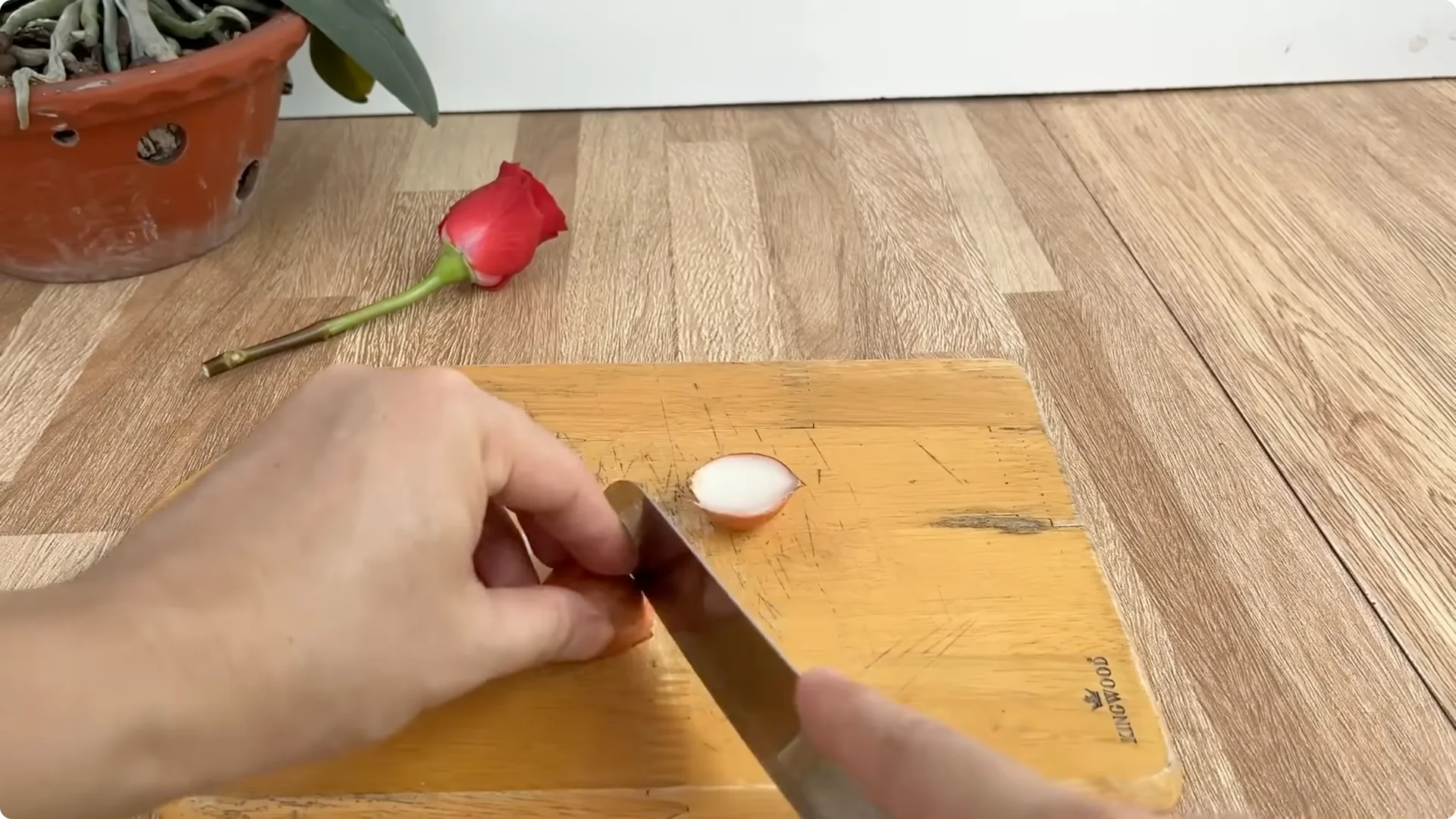
Onions contain sulfur compounds, vitamins and natural antibacterial substances.
They prevent fungi and bacteria from attacking, protecting the base of the branch in the early stages.
Sulfur also stimulates metabolism in stem cells, helping the rooting process take place faster.
Add 0.5 liters of water and stir well.
Soak the rose branch in this solution for about 30 minutes.
Make the cucumber peel solution
Take 1 cucumber, wash it and peel it, then cut the cucumber peel into small pieces and put it in a blender.
Cucumber peel contains silica, vitamin C and many trace minerals, helping increase the resistance of scar tissue at the base of the branch and promoting root formation.

The natural water and antioxidants in the cucumber peel help the plant tissue recover quickly, and the young shoots grow strong.
Add 0.5 liters of clean water, cover and blend.
Filter out the pulp and keep the solution.
After soaking the rose branches in the shallots for 30 minutes, take the branches out and filter the shallot solution.
Mix the shallot water with the cucumber peel solution to create a special nutrient mixture that is both antibacterial and provides nutrients and moisture for the formation of new roots.
Plant and set up
Prepare a clean plastic cup, add 1/2 cup of treated river sand.
Place the rose branch in the middle, then add sand and press lightly around the base to secure the branch.
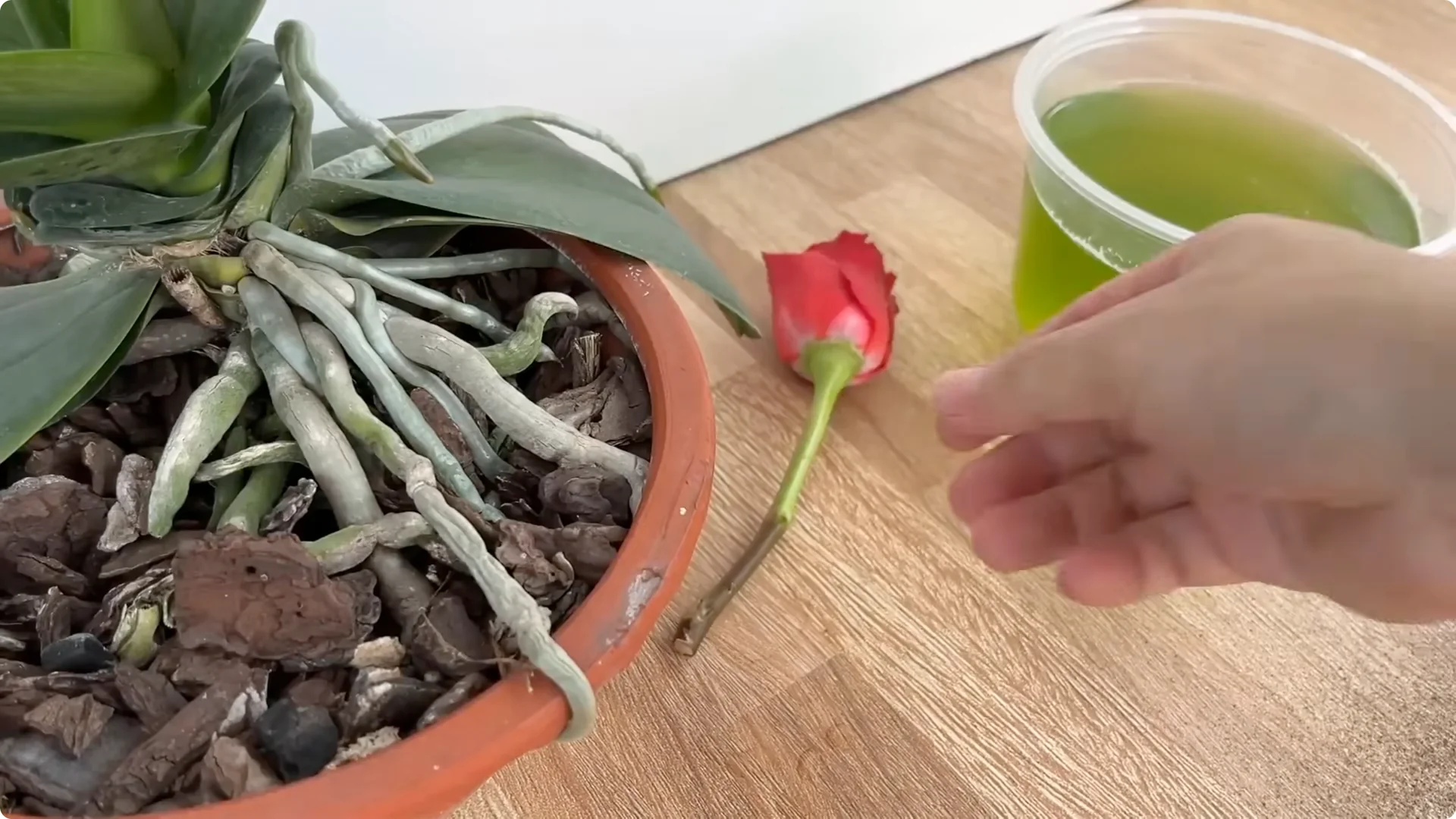
River sand has excellent ventilation and drainage, helping prevent root rot, while creating a clean, stable environment for new roots to develop.
Pour the shallot solution – cucumber peel mixture into the cup, so that the sand is moist enough but not too waterlogged.
Cover the cup with a plastic bag or a transparent plastic cup to create a mini greenhouse to keep the branches moist.
Place in a cool place, away from strong winds and direct sunlight.
Rooting timeline and transplant
After just 10 days, you’ll see new green shoots begin to grow and new, plump white roots appear around the base.
This is a clear sign that the rose branch has successfully taken root.
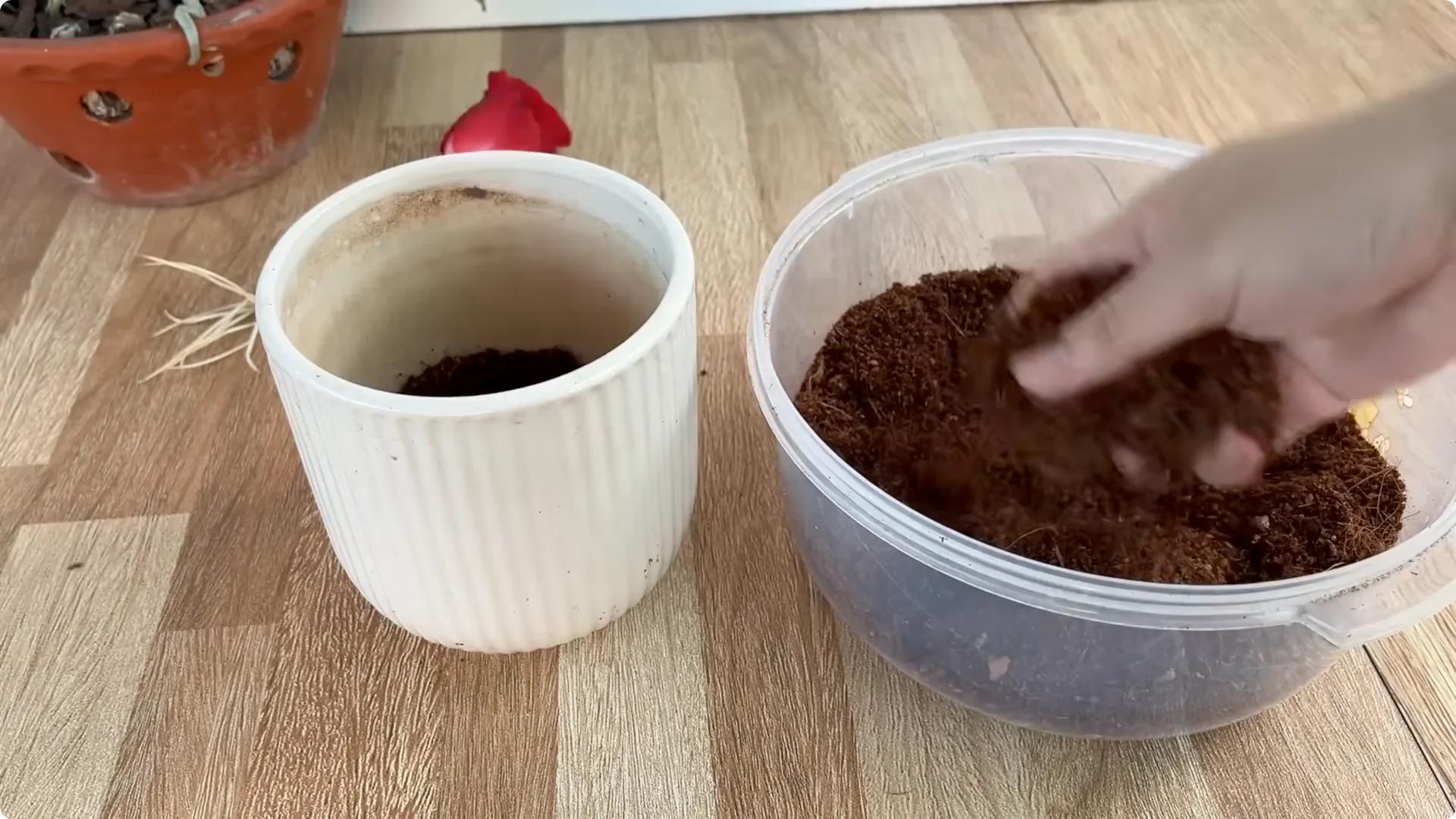
Move the branch to a larger pot, using a well-drained substrate like coconut fiber.
The plant will continue to grow strongly.
Final Thoughts
With just a little garlic and carrot or a mix of shallots and cucumber peels, you can turn a rose branch into a new plant with healthy white roots in 1 week to 10 days.
These ingredients protect the base from bacteria and fungi, stimulate rapid root growth, and nourish strong young shoots.
For more practical steps that pair with these methods, see a simple trick for rose propagation and another surprisingly simple method for propagating roses.
Read More: Simple Method Surprised Propagating Roses