Apply a highly nutritious cutting method using familiar materials to stimulate root growth, nourish young tissue, and help the cutting recover quickly. Follow each step carefully for reliable results.
1. Rose Cutting Propagation: Prepare the Cutting
Prepare a healthy rose cutting, free from pests and diseases, and of moderate age. The cutting should not be too young as it easily loses water, nor too old as root regeneration will be slower.
Cut off all leaves, thorns, and old or withered petals. This minimizes water loss, limits fungal diseases, and helps the cutting concentrate all its nutrients on the healing process and the formation of new roots.
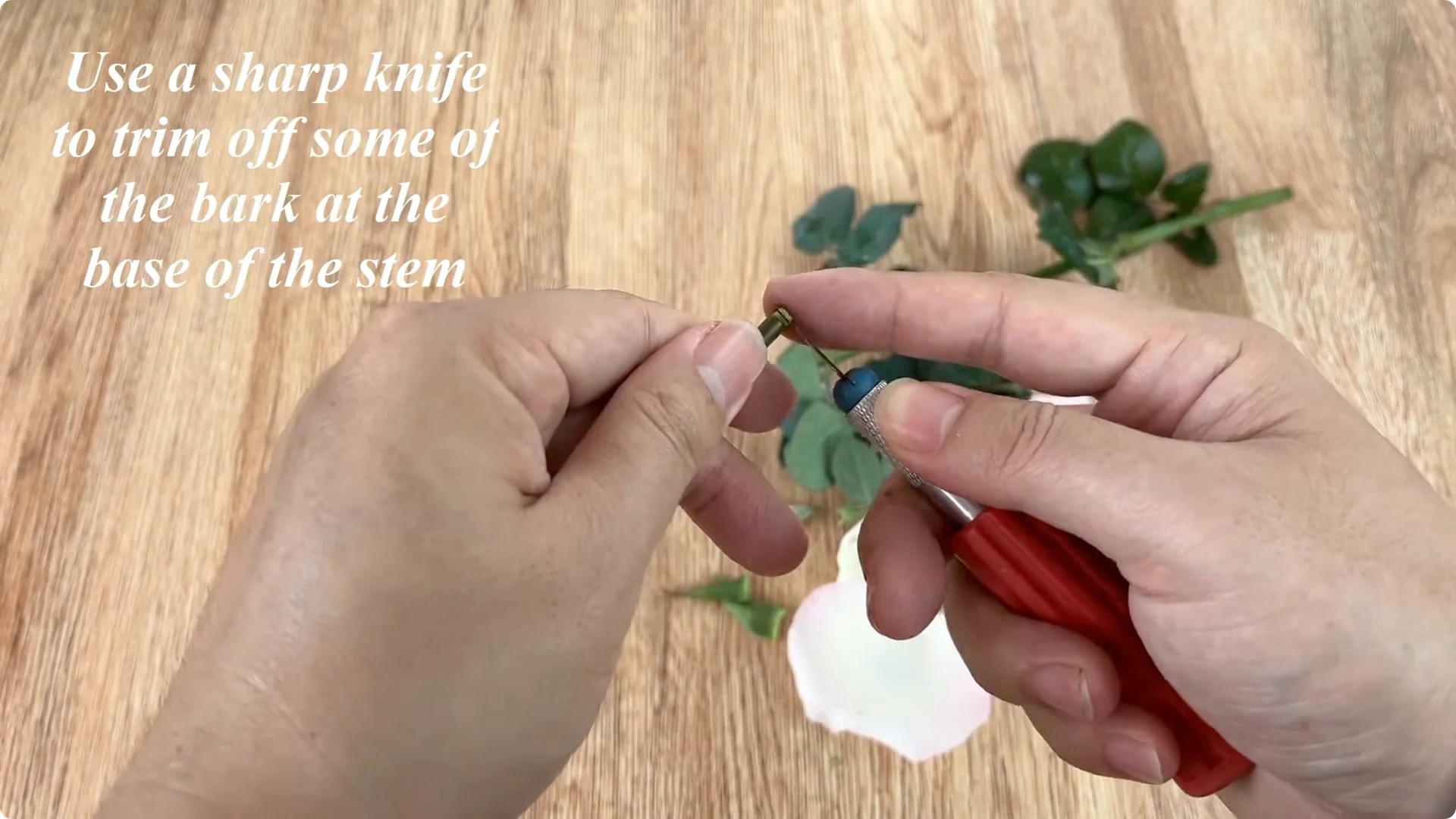
Cut the cutting short, leaving only about 20 cm in length, ensuring a clean and precise cut. Using a sharp knife, gently trim away some of the bark at the base of the branch, being careful not to crush the root tissue. This facilitates the formation and emergence of new roots.
2. Rose Cutting Propagation: Egg Yolk and Lemon Soak
Take a chicken egg, wash it thoroughly, and separate the egg white and yolk into two cups. The egg yolk is rich in protein, fat, and trace elements, providing initial energy for the branch before root development.
Prepare a fresh lemon, wash it, cut it in half, and squeeze all the juice into the cup containing the egg yolk. The natural acid in the lemon helps to mildly disinfect and clean the cut surface, while also stimulating stronger root tissue activity. Completely remove the lemon seeds.
Stir the mixture until the egg yolk and lemon juice are well combined. Gently soak the base of the rose stem in it for about 30 minutes to allow the stem to absorb the necessary nutrients.
For more egg-based ideas, see one egg.
3. Rose Cutting Propagation: Make the Support Solution
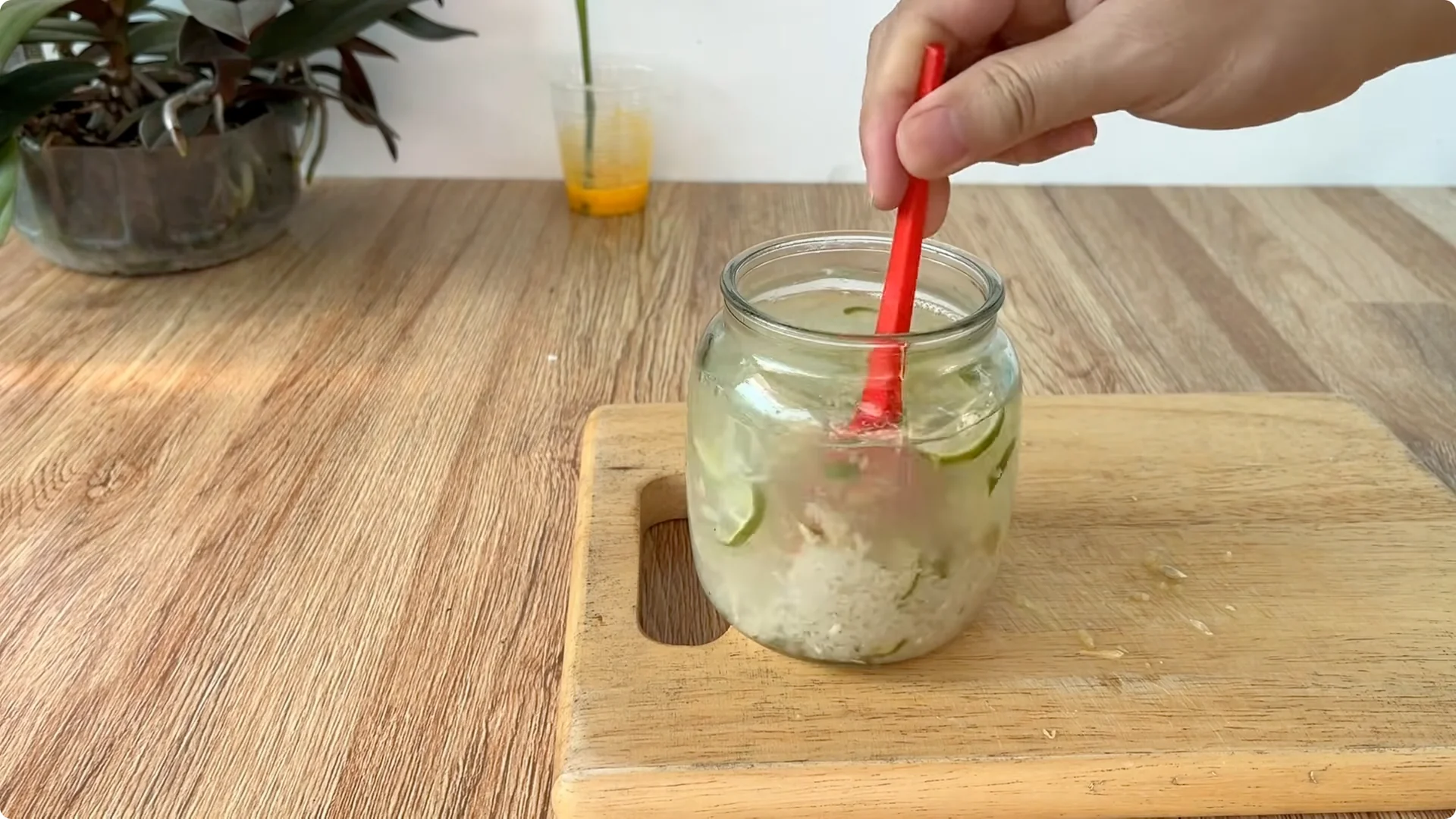
Eggshells, Ginger, Lemon Peel
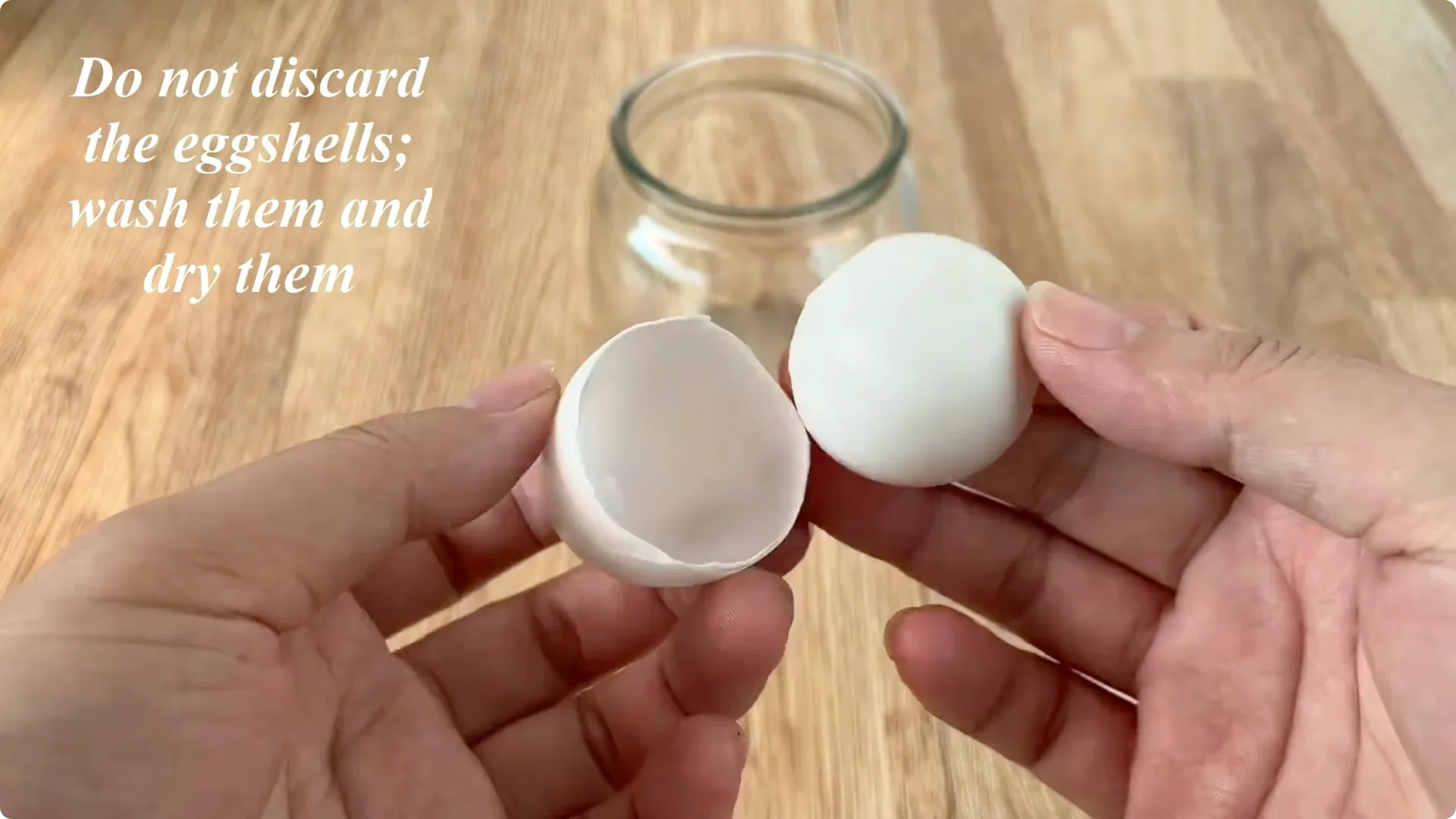
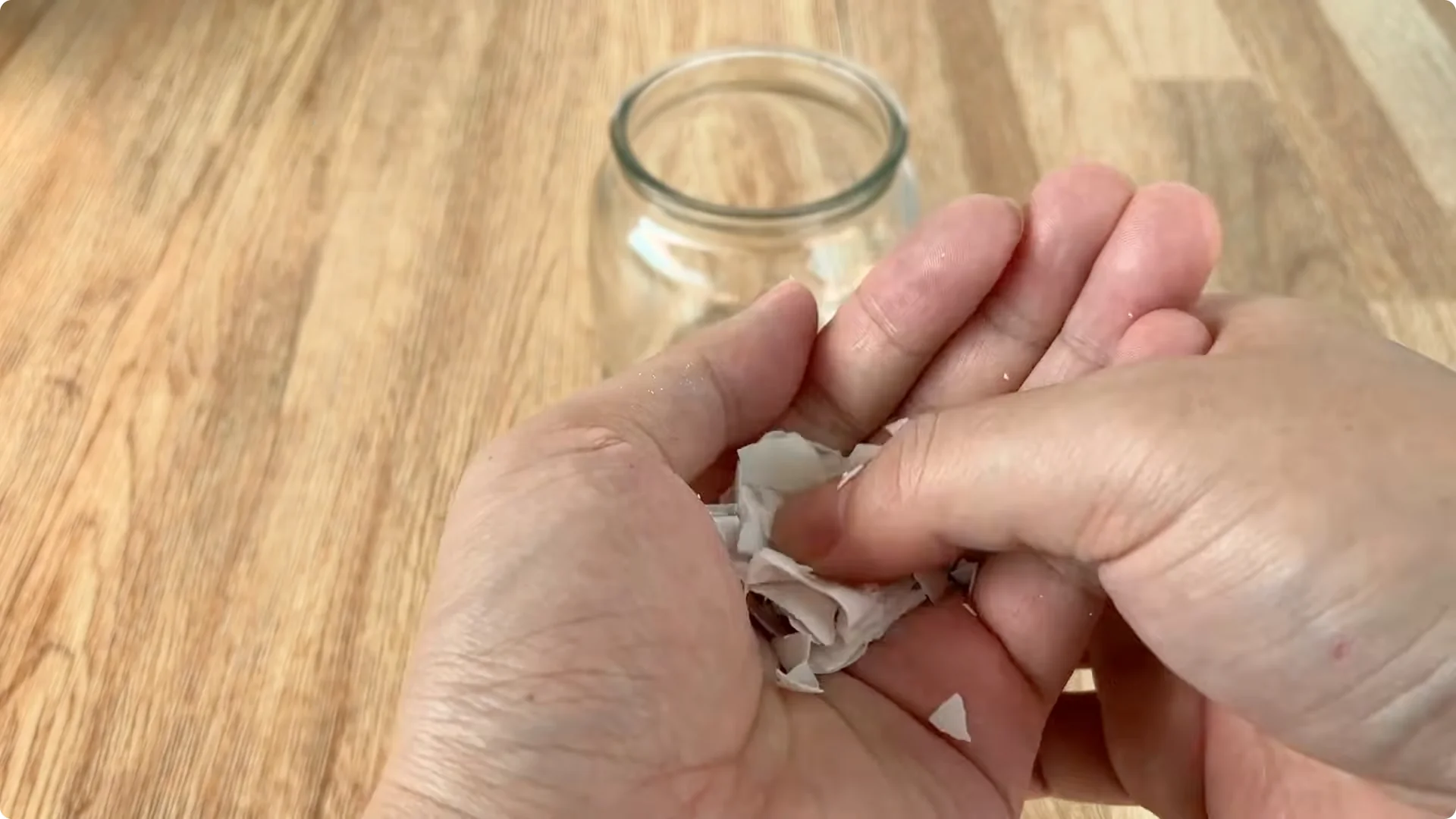
Wash eggshells thoroughly, dry them completely, then crush or grind them into a powder and put them in a clean glass jar. Eggshells are rich in calcium, which helps strengthen cell tissue and supports the sustainable development of the root system later on.
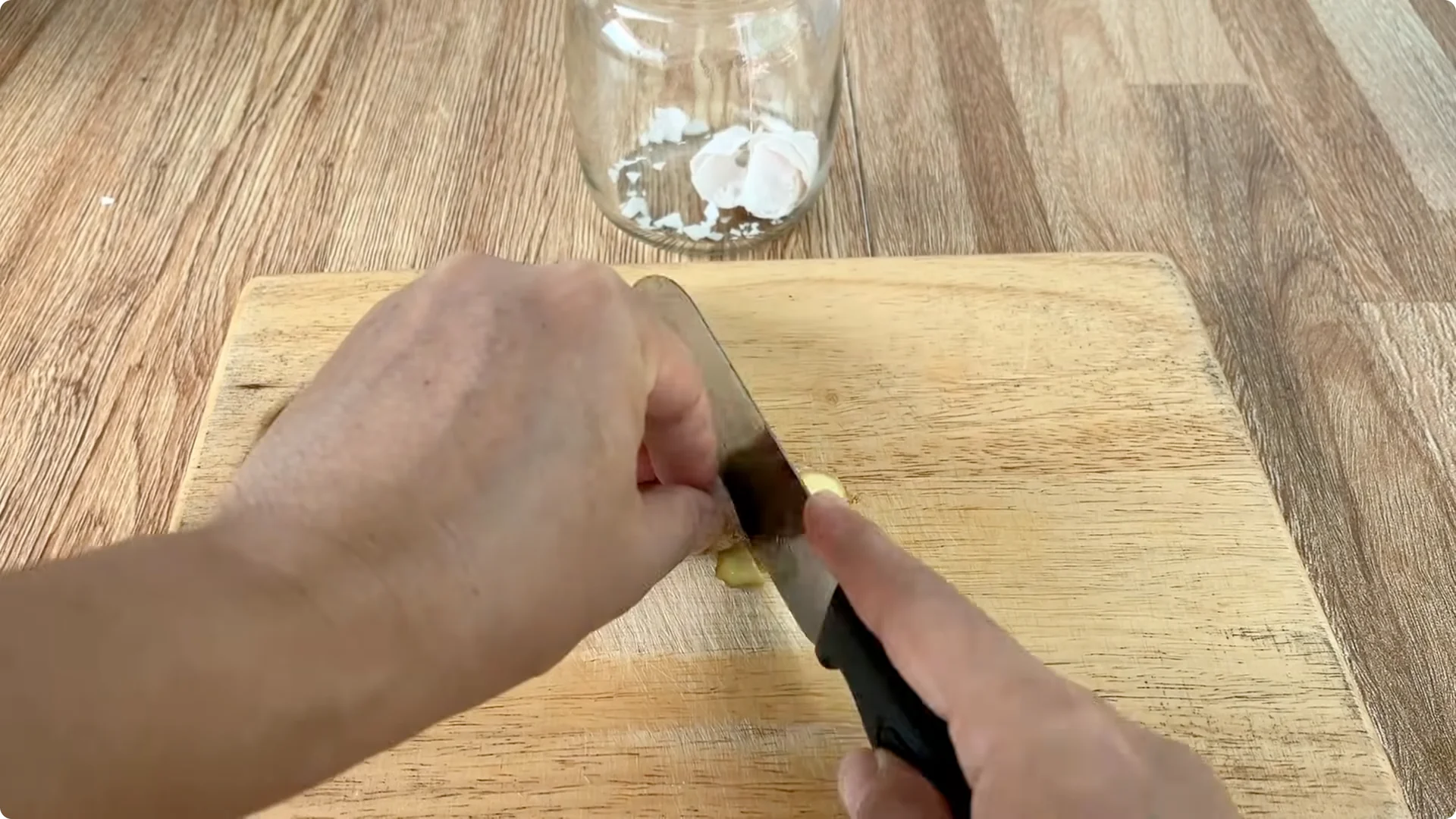
Take about 15 grams of fresh ginger, wash it, chop it finely, and add it to the jar with the eggshells. Ginger has warming properties and good antibacterial and antifungal capabilities, helping to limit harmful microorganisms in a humid environment.
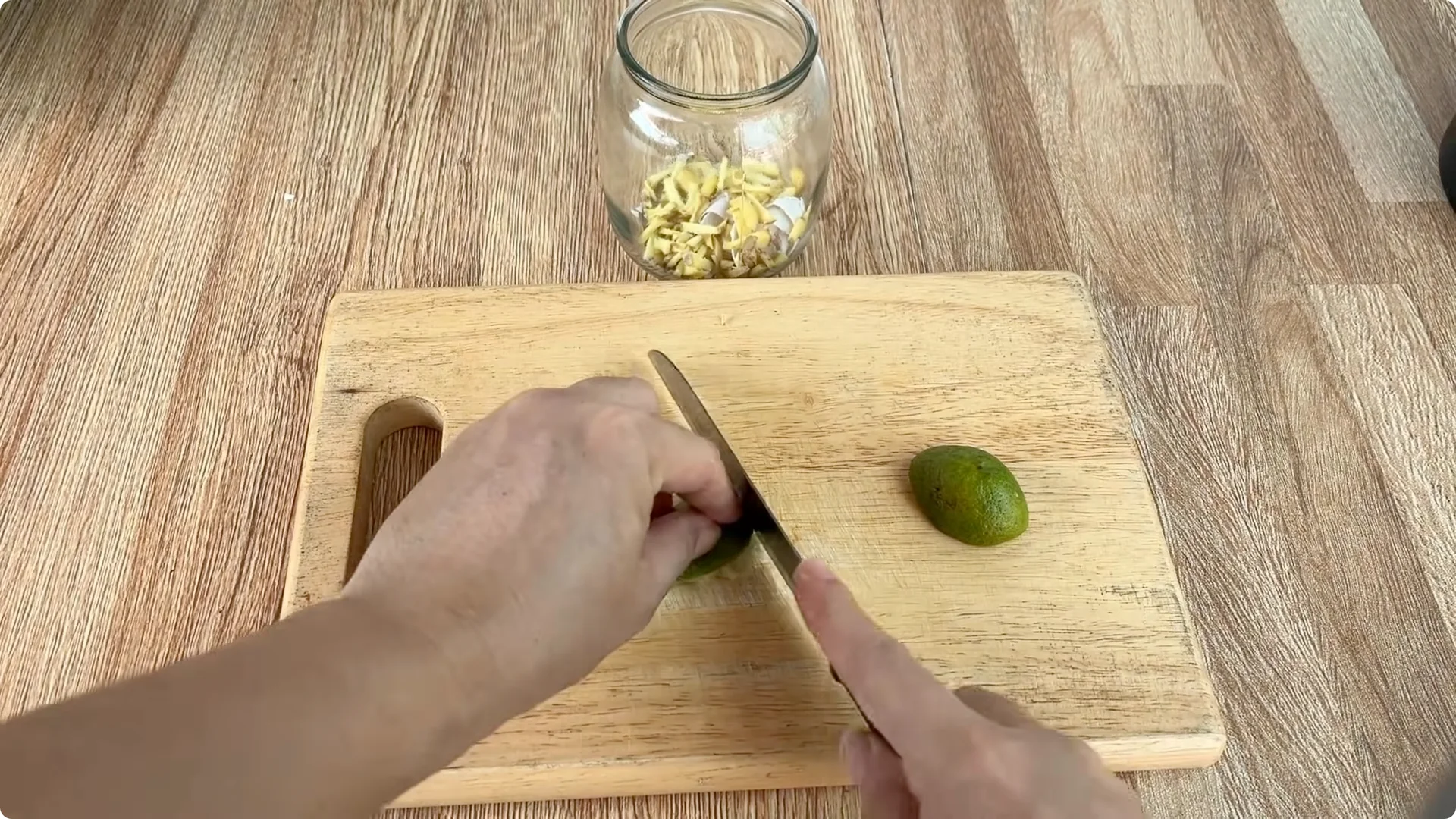
Take the remaining lemon peel, chop it finely, and add it to the jar. Lemon peel contains many essential oils and antioxidants, contributing to cleaning the solution and helping the stem resist rotting agents.
Rice Infusion and Dilution
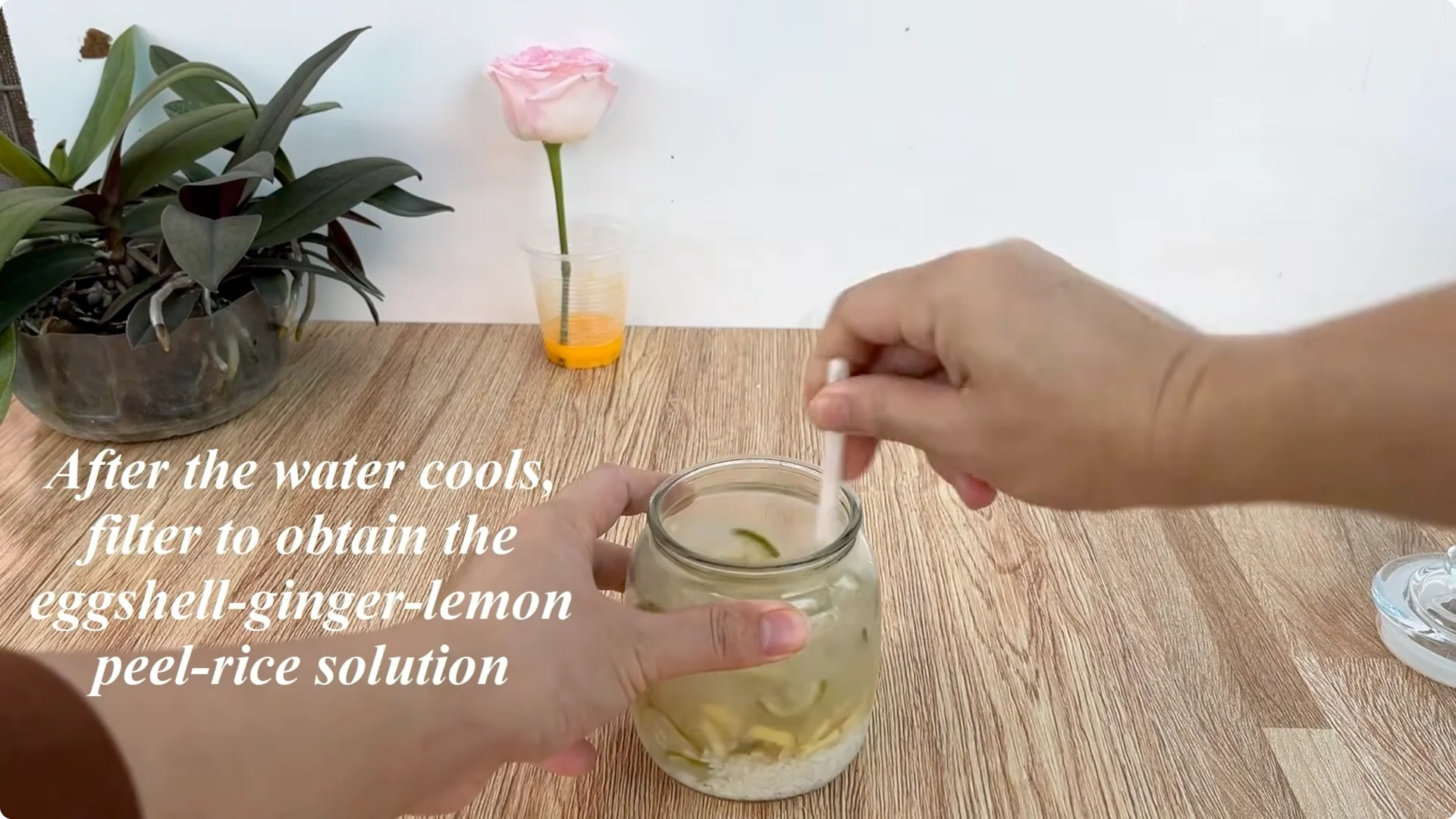
Add 5 tablespoons of rice to the jar, then pour in 500 ml of boiling water. Stir the mixture well, cover, and let it cool completely.
During this process, the starch from the rice will partially dissolve, providing a light, easily absorbed energy source for the young roots upon contact. Once the water has cooled, filter out all the solids, keeping only the egg yolk-ginger-lemon peel-rice solution.
To prevent the solution from becoming too concentrated, dilute it with about 0.5 liters of clean water, stirring well to obtain the final solution for the growing medium.
For a simple boost, try the one cup approach.
4. Rose Cutting Propagation: Set Up the Medium
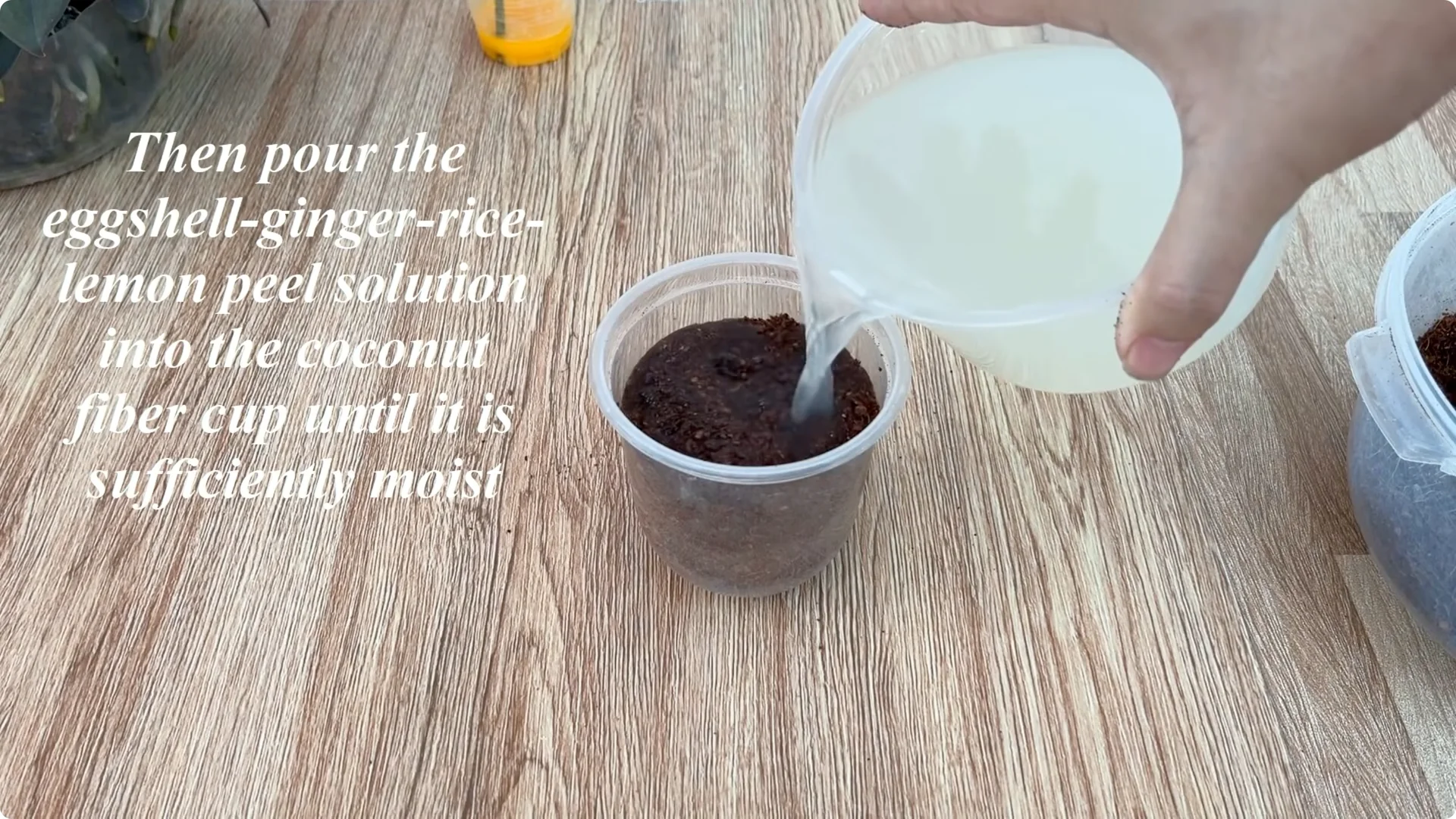
Prepare a clean plastic cup and fill it with treated coconut fiber, pressing gently to create a firm yet aerated consistency. Pour the prepared solution into the coconut fiber cup, ensuring it is moist but not waterlogged.
Use your finger to create a small hole in the center, then remove the rose stem from the egg yolk and lemon mixture and gently place the base of the stem into the hole. Gently press around the stem to secure it, ensuring it stands firmly and makes even contact with the growing medium.
5. Rose Cutting Propagation: Create Humidity and Light Conditions
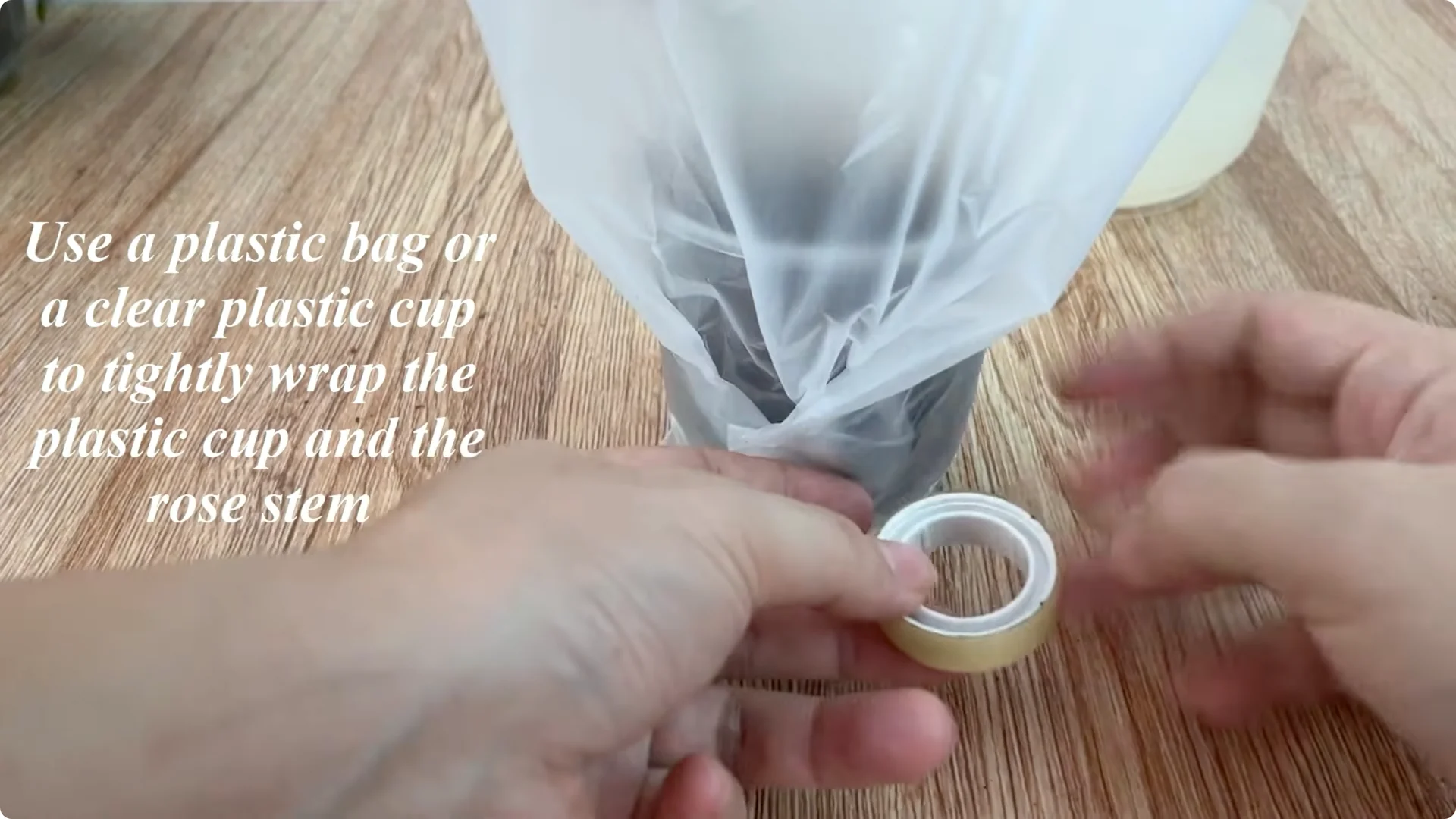
Use a clear plastic bag or cup to completely cover the plastic cup and the rose stem. This covering helps maintain stable humidity, reduces water loss, and creates a mini greenhouse-like environment, ideal for root formation.
Place the cup in a cool, airy place, away from strong winds and harsh sunlight. Soft, diffused light is most suitable during this stage.
6. Rose Cutting Propagation: Signs of Success and Transplanting
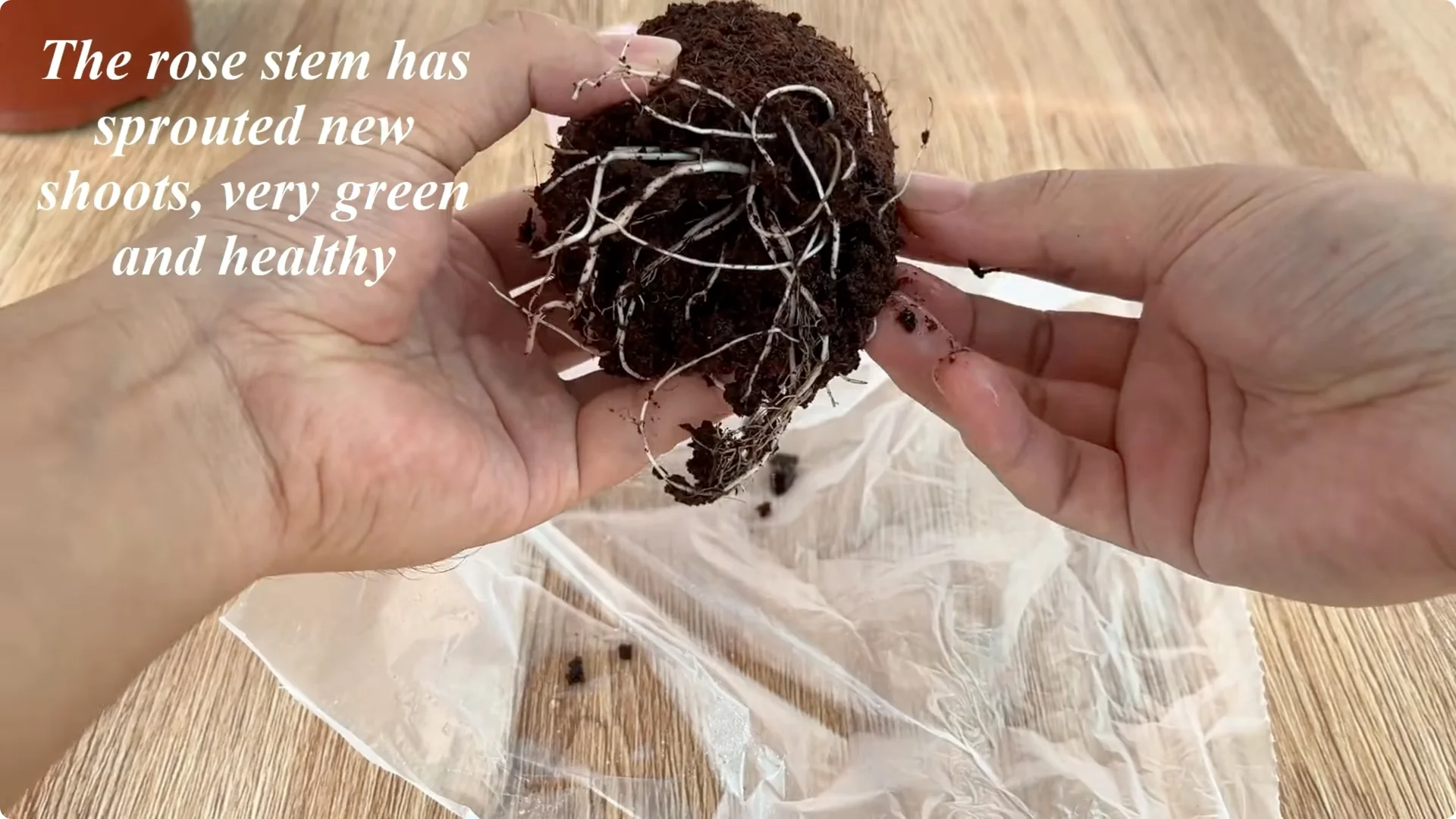
After about 10 days of proper care, you will notice very positive signs. Fresh green shoots will gradually emerge on the stem, indicating that the rose stem has adapted well and is ready to enter a new growth phase.
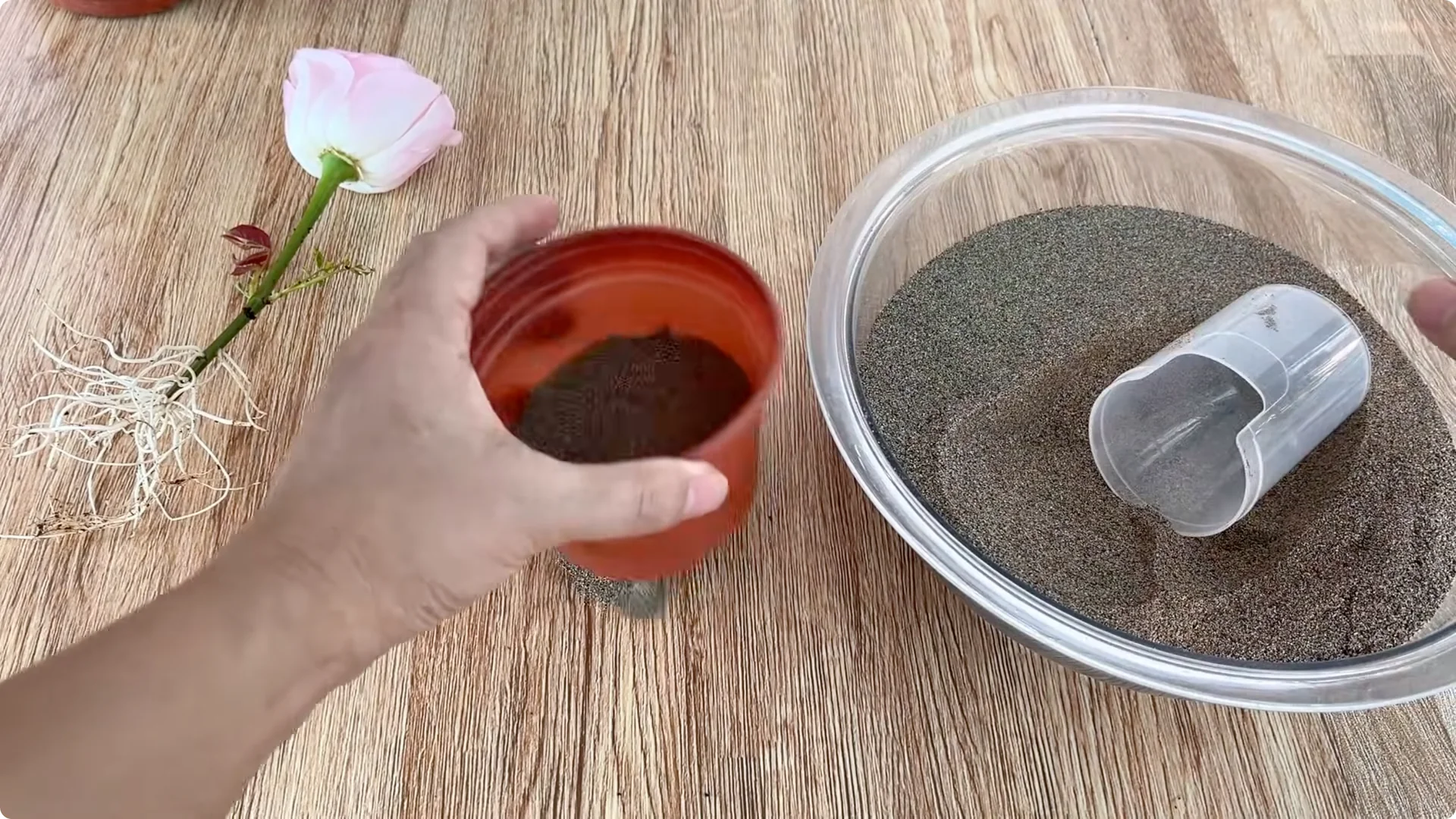
New, white, thick, and succulent roots will begin to appear at the base of the stem, firmly attaching to the coconut fiber. Once the root system is stable, transfer the rose stem to a pot with good drainage, using treated river sand as the initial growing medium.
For a small nutrient boost during this phase, try the spoonful trick.
7. Rose Cutting Propagation: Why This Natural Method Works
This method of propagation by cuttings makes full use of readily available natural materials and creates a continuous nutritional chain for the rose cutting, from disinfection and tissue healing stimulation to nourishing new roots and shoots.
Egg yolks and lemon support initial recovery, eggshells provide stable calcium, ginger and lemon peel help protect against fungal diseases, and rice provides gentle energy for long-term growth.
With patience and careful observation, you will successfully propagate a new rose cutting and feel the value of caring for plants using natural, safe, and sustainable methods.
Final Thoughts
Follow each step with care, and your rose plants will grow strong, put out regular blooms, and bring lasting joy to the garden. This simple, nutrient-rich approach supports recovery, rooting, and steady growth.