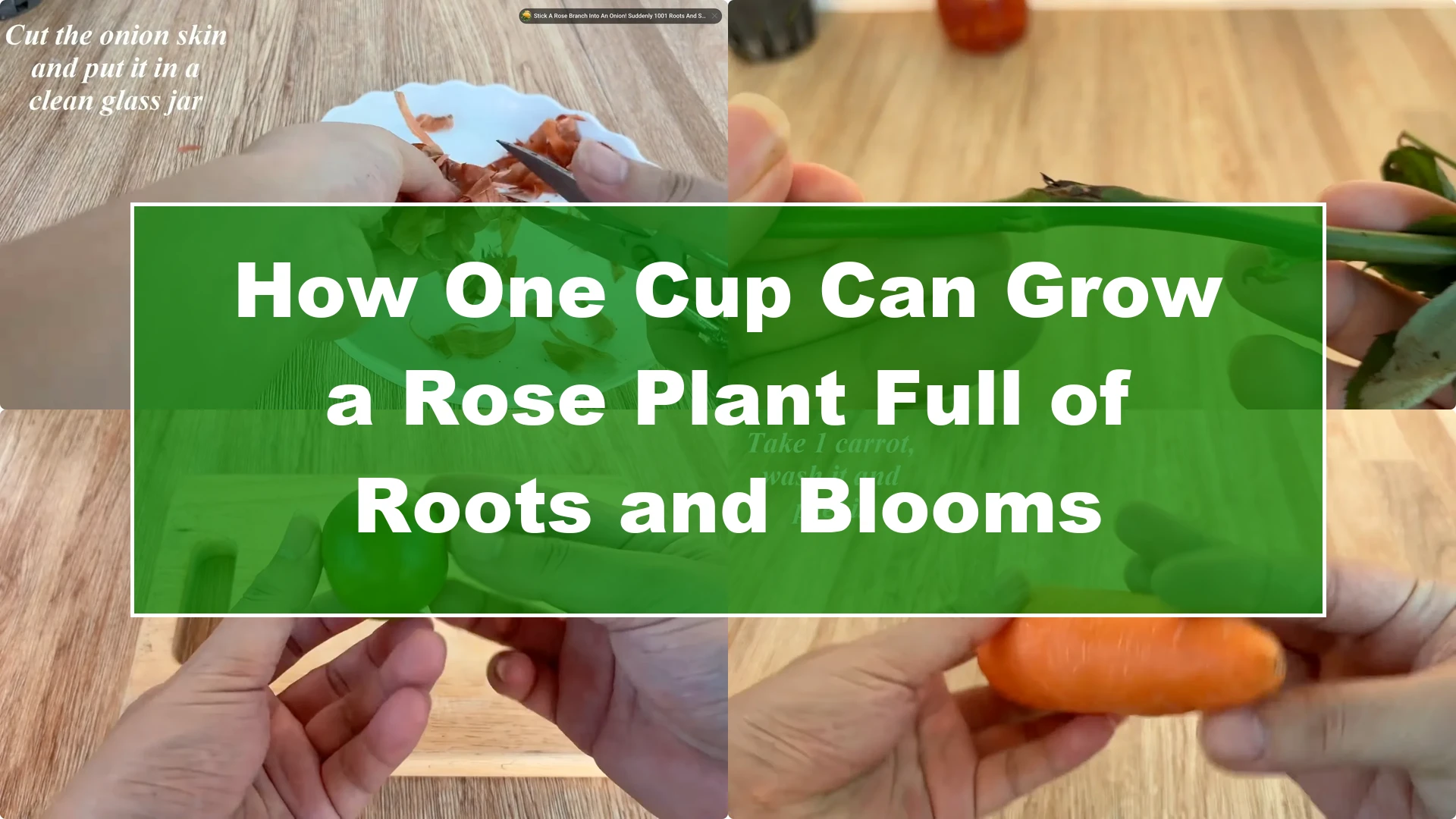
I share a rose propagation process based on familiar kitchen ingredients, including onion, lemon, and carrot. The entire process will not use synthetic chemicals, instead prioritizing natural, friendly and safe ingredients. It is economical, easy to implement, and brings significant efficiency.
Thanks to biological compounds that can stimulate root formation, enhance resistance and help rose branches recover faster in the early stages of separation from the mother plant, this method works reliably. The raw materials are simple and available inside the family. The results are quick and clear.
1. Natural Rose Cutting Propagation – Onion skin infusion
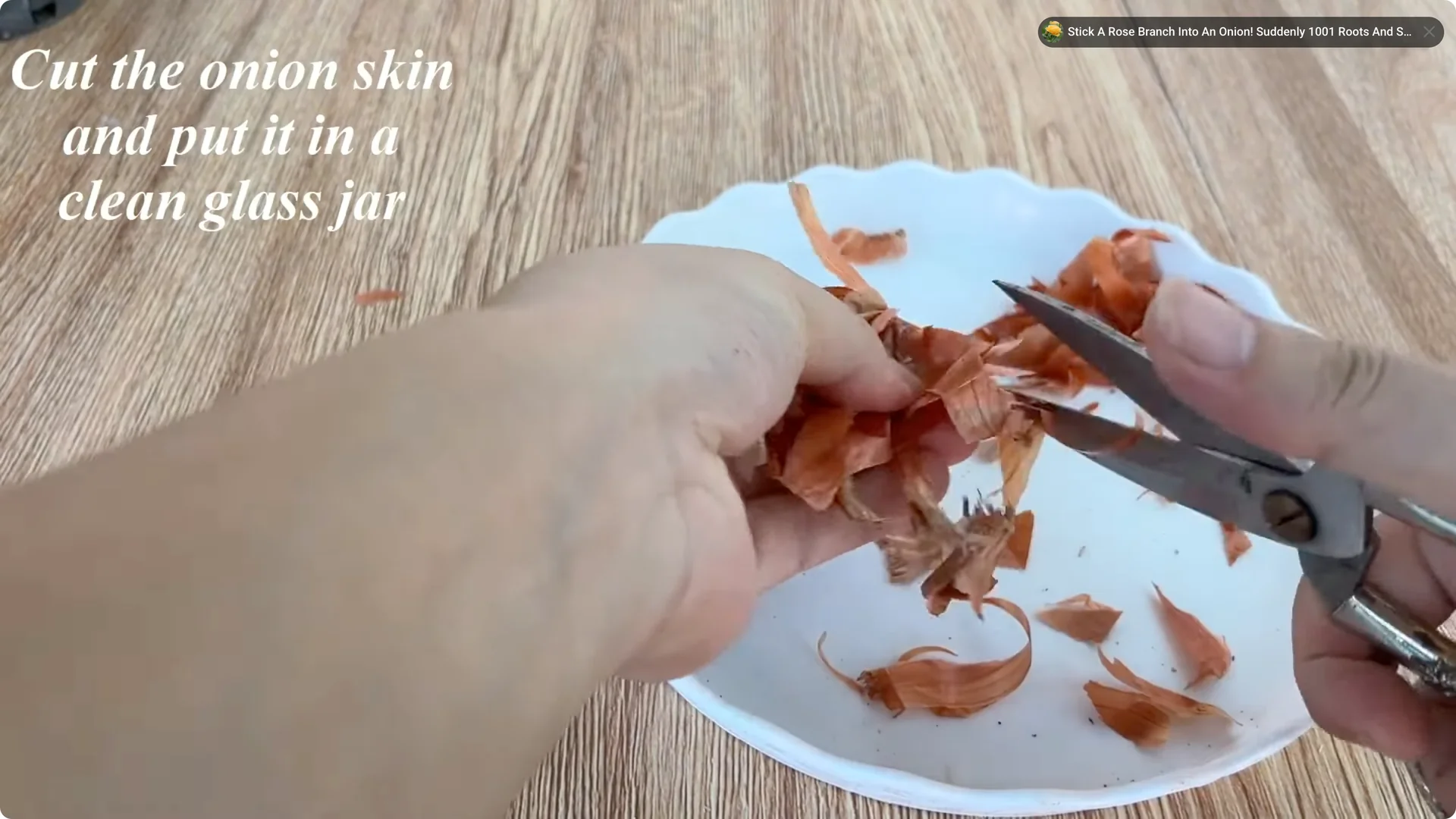
Prepare an onion, wash it and peel off the dry outer skin. What we need to use in the initial stage is the onion skin which contains many organic compounds such as quercetin, vitamin C and antioxidants. These compounds inhibit the growth of fungi and bacteria, while protecting plant tissue from damage when exposed to a new environment.
Cut the onion skin into small pieces and put it in a clean glass jar, then add 500 ml of boiling water. Using boiling water helps release biological active ingredients from the onion skin, helping to create a nutrient-rich solution. Stir well, cover and let it cool naturally.
2. Natural Rose Cutting Propagation – Select and prep the cutting
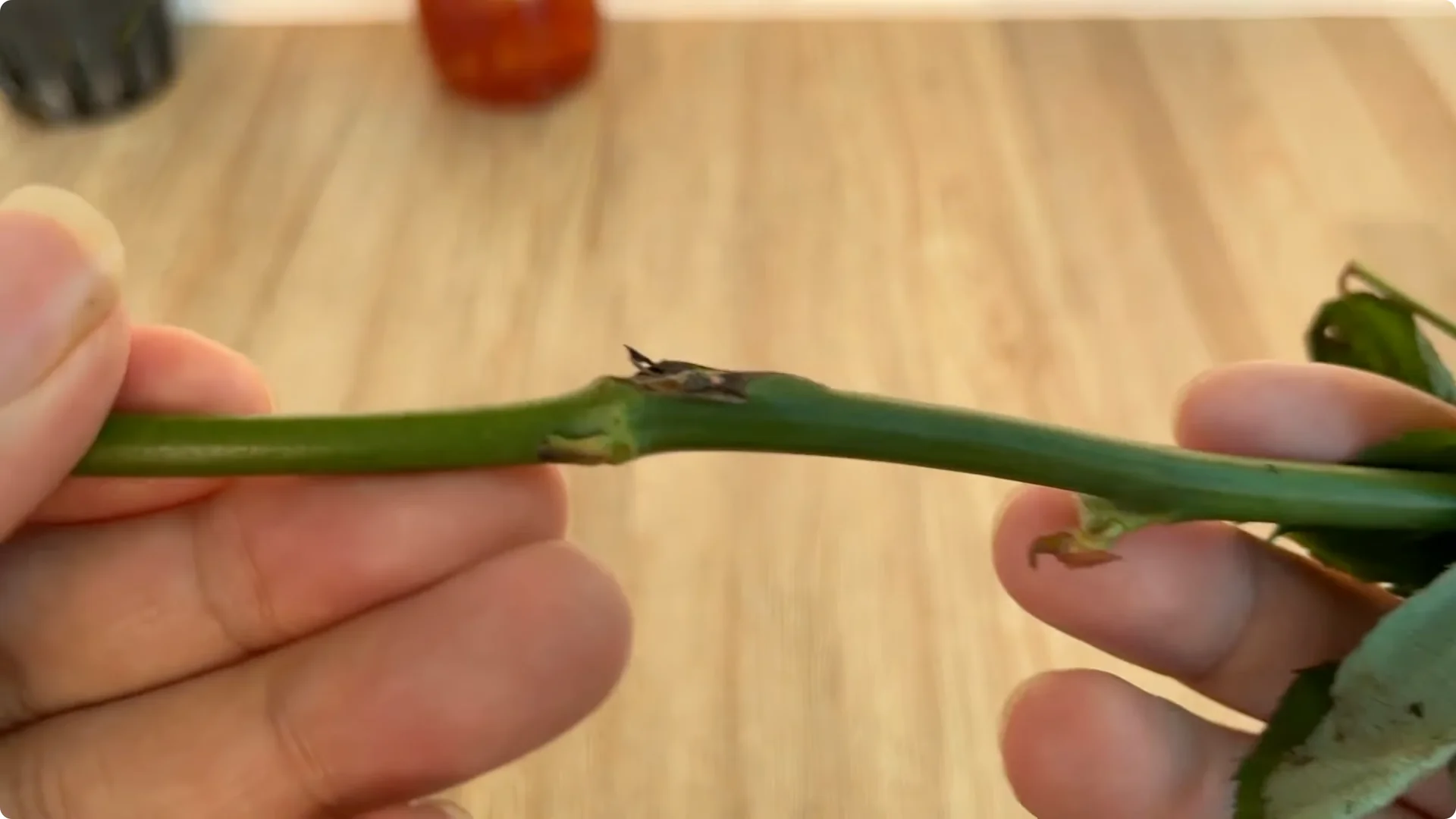
Choose a healthy rose branch with moderate age. Branches that have been lightly lignified and have clear dormant buds will easily form new roots. Remove all leaves, thorns and flowers that have wilted or show signs of reduced vitality.
This helps reduce unnecessary water loss, while limiting the invasion of bacteria and mold. Cut the branch to about 15-20 cm long, this is the ideal length when cutting branches. Keep the cut clean and fresh.
3. Natural Rose Cutting Propagation – Lemon solution
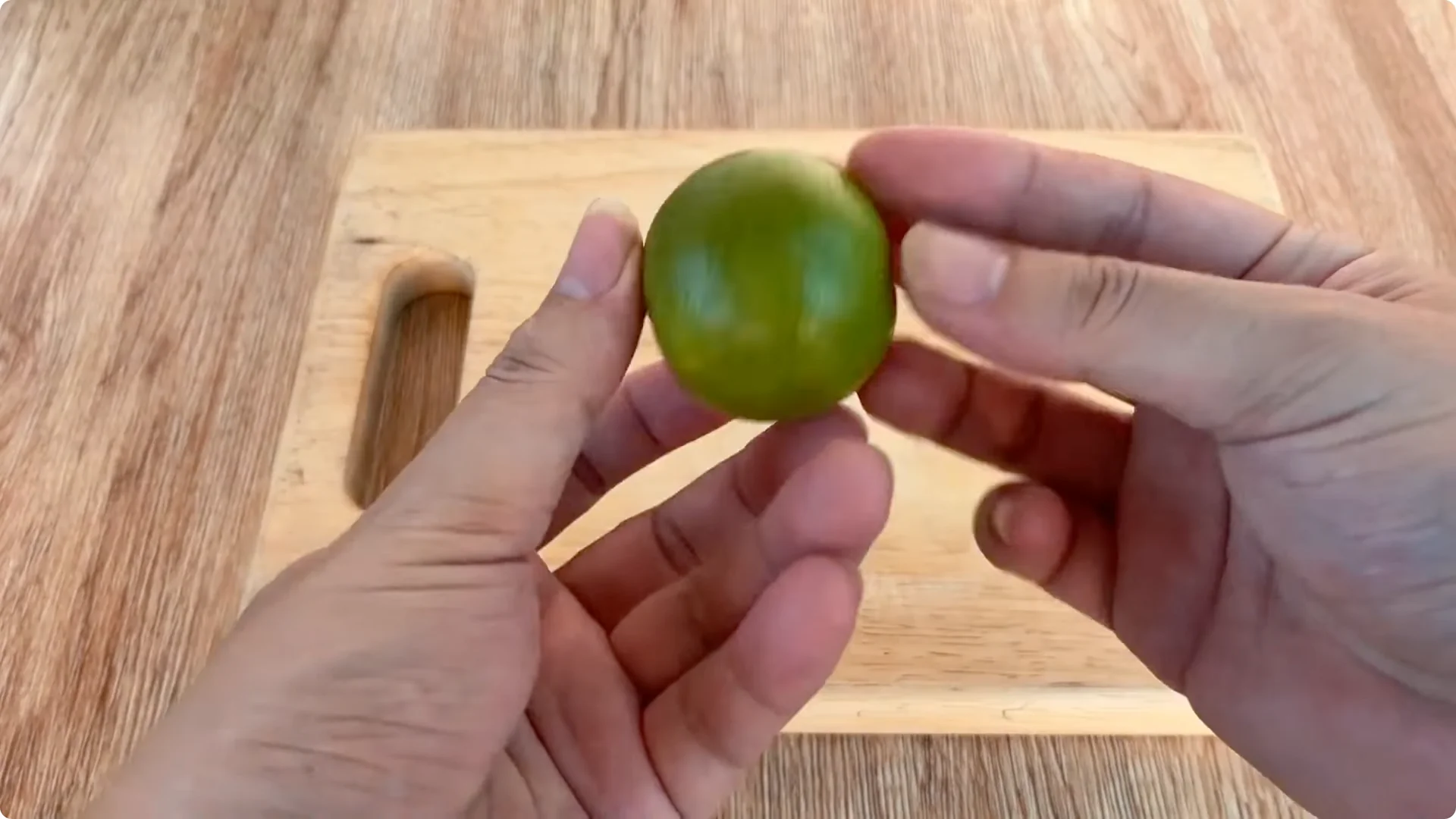
Choose a fresh lemon, wash it, cut it into small pieces and put it in a clean plastic cup. Lemon contains citric acid, vitamin C and many compounds with mild antiseptic properties which help to kill bacteria and fungi on the surface of the branch and activate the process of callus development at the cut site. Add 500 ml of water and stir well to dissolve the natural acid.
Soak the rose branch in this solution for about 15 minutes. Keep the cutting fully submerged at the base. Avoid extended soaking that could stress the tissue.
For an extra natural push on root initiation, see this egg-based root booster.
4. Natural Rose Cutting Propagation – Carrot peel boost
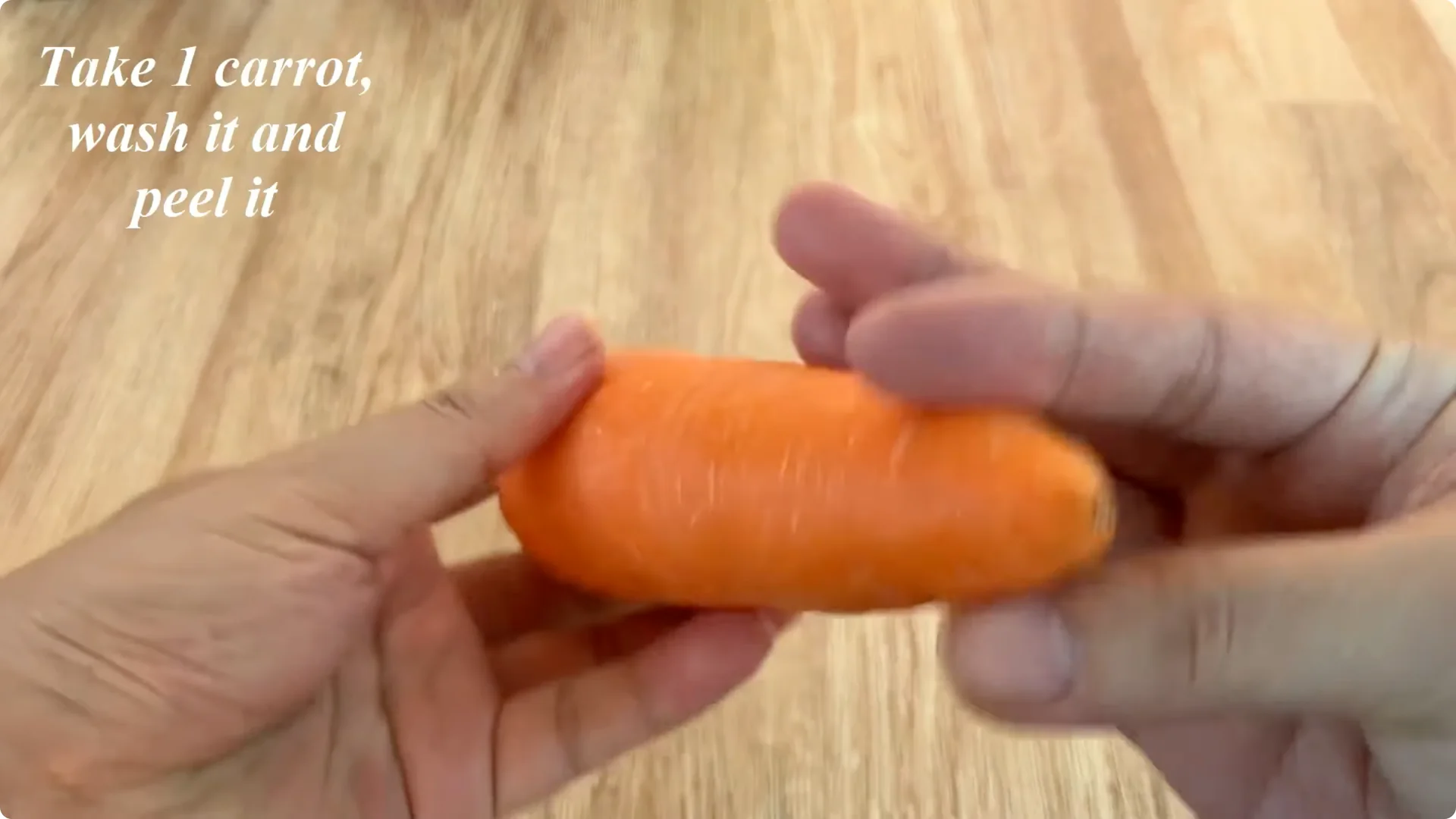
While the branch is soaking, prepare a carrot, wash it and peel it. The carrot peel not only contains vitamin A beta-carotene but also enzymes and minerals that support the rooting process. Cut the peel into small pieces and put it in the lemon solution cup.
Stir well and let it sit for 15 minutes, creating a solution mixture with a dual effect both antiseptic and supporting the nourishment of new cells. After soaking for enough time, take the rose branch out of the mixture. Stir and filter out the pulp to get the lemon-carrot peel solution.
5. Natural Rose Cutting Propagation – Combine solutions
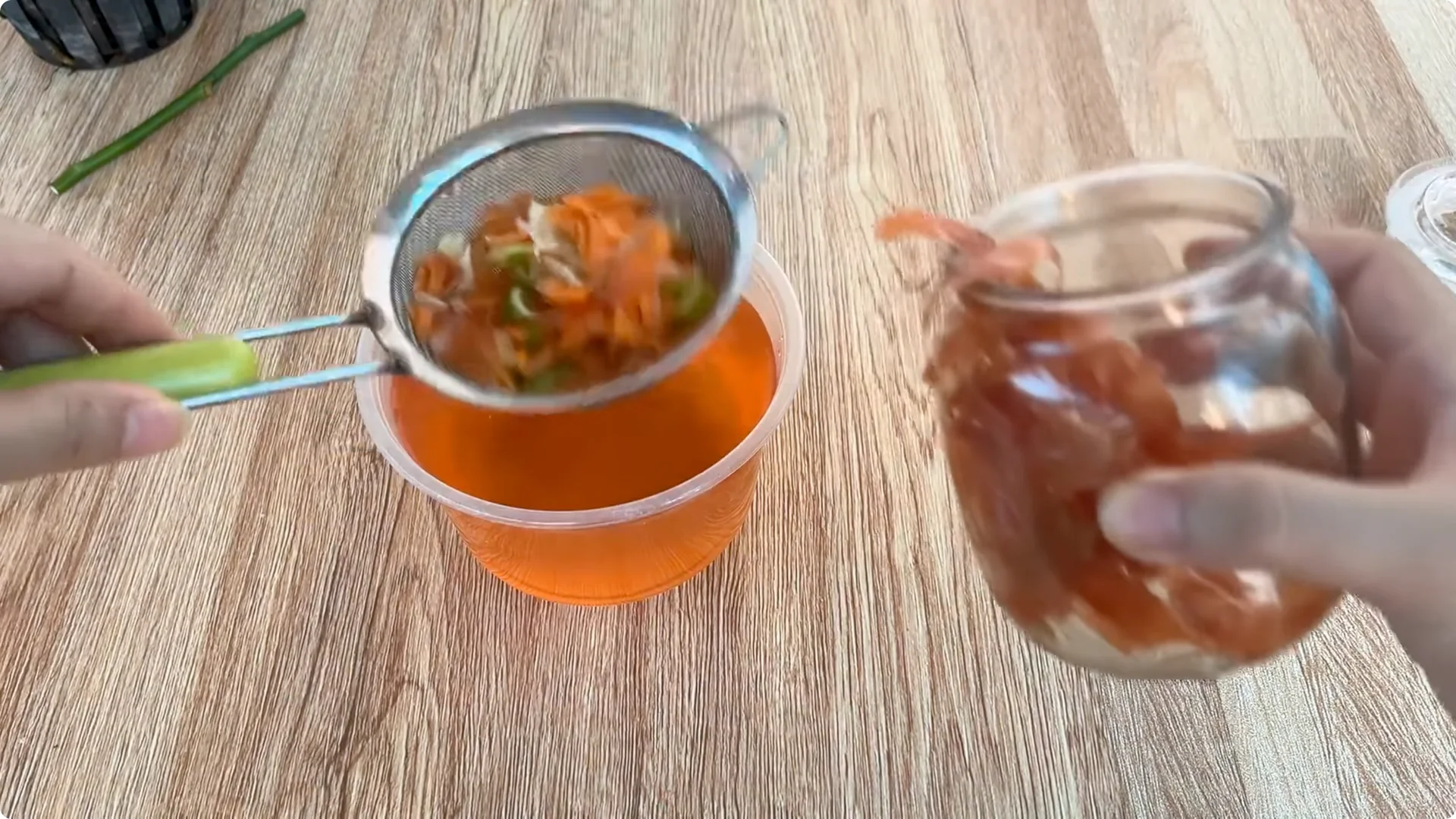
Use the previously prepared onion peel solution when the solution has completely cooled. Filter the clear water and mix it with the lemon peel – carrot peel solution. This combination helps to increase the antiseptic effect, add nutrients and create a favorable environment for the rooting process.
6. Natural Rose Cutting Propagation – Prepare the medium
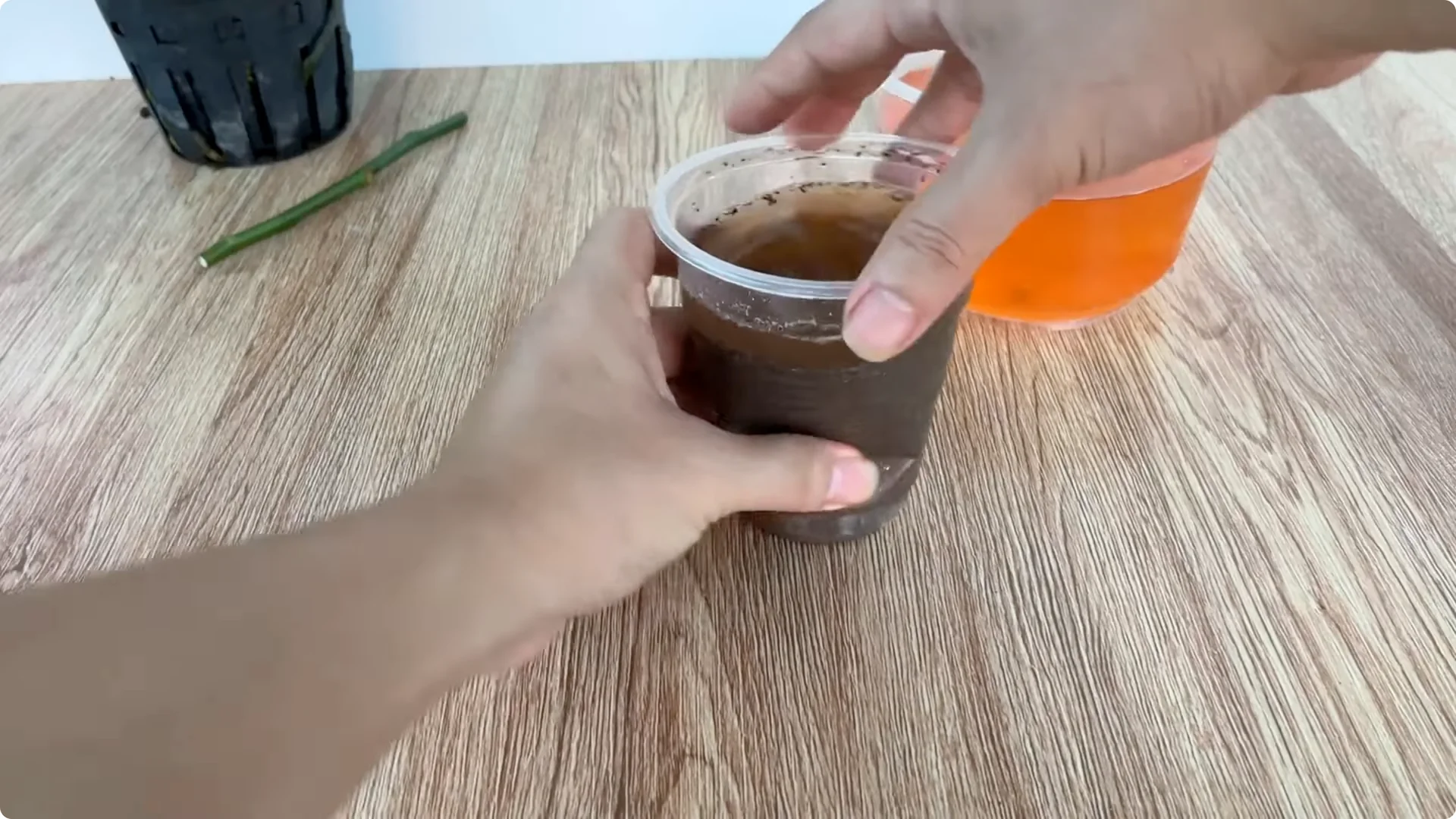
Prepare a clean plastic cup, then fill it with treated river sand to remove impurities, bacteria and ensure ventilation. Then, pour the lemon peel – carrot peel – onion peel mixture into the cup in a sufficient amount so that the growing medium environment has a stable humidity. River sand has good drainage properties, helping the base of the branch not to stagnate water – the main cause of root rot in the root stimulation stage.
To feed established cuttings using a simple cup approach for more flowers, see this cup method for growing rose flowers.
7. Natural Rose Cutting Propagation – Plant and cover
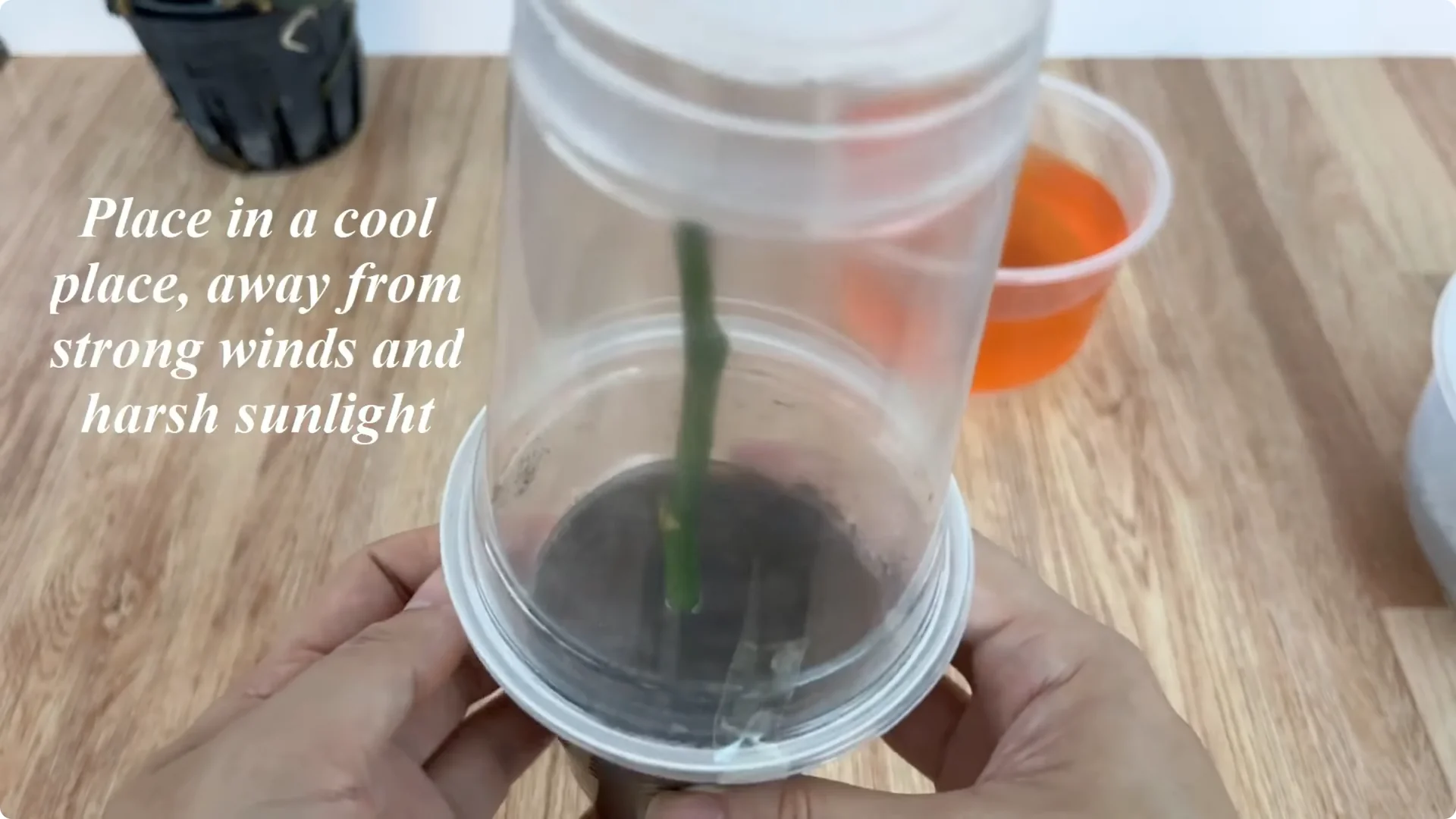
Place the rose branch in the middle of the cup, making sure the base is deep in the sand. This creates conditions for nutrients to penetrate and maintain even humidity around the base. Firm the sand gently so the cutting stands upright.
To maintain a stable environment, use a plastic bag or a transparent plastic cup to cover the mouth of the cup. This covering layer acts as a mini greenhouse, helping to retain moisture, reduce the rate of water evaporation, and protect the young shoots from the effects of wind or rapid temperature changes. Ensure some air space so condensation does not drip constantly onto the cutting.
8. Natural Rose Cutting Propagation – Placement and temperature
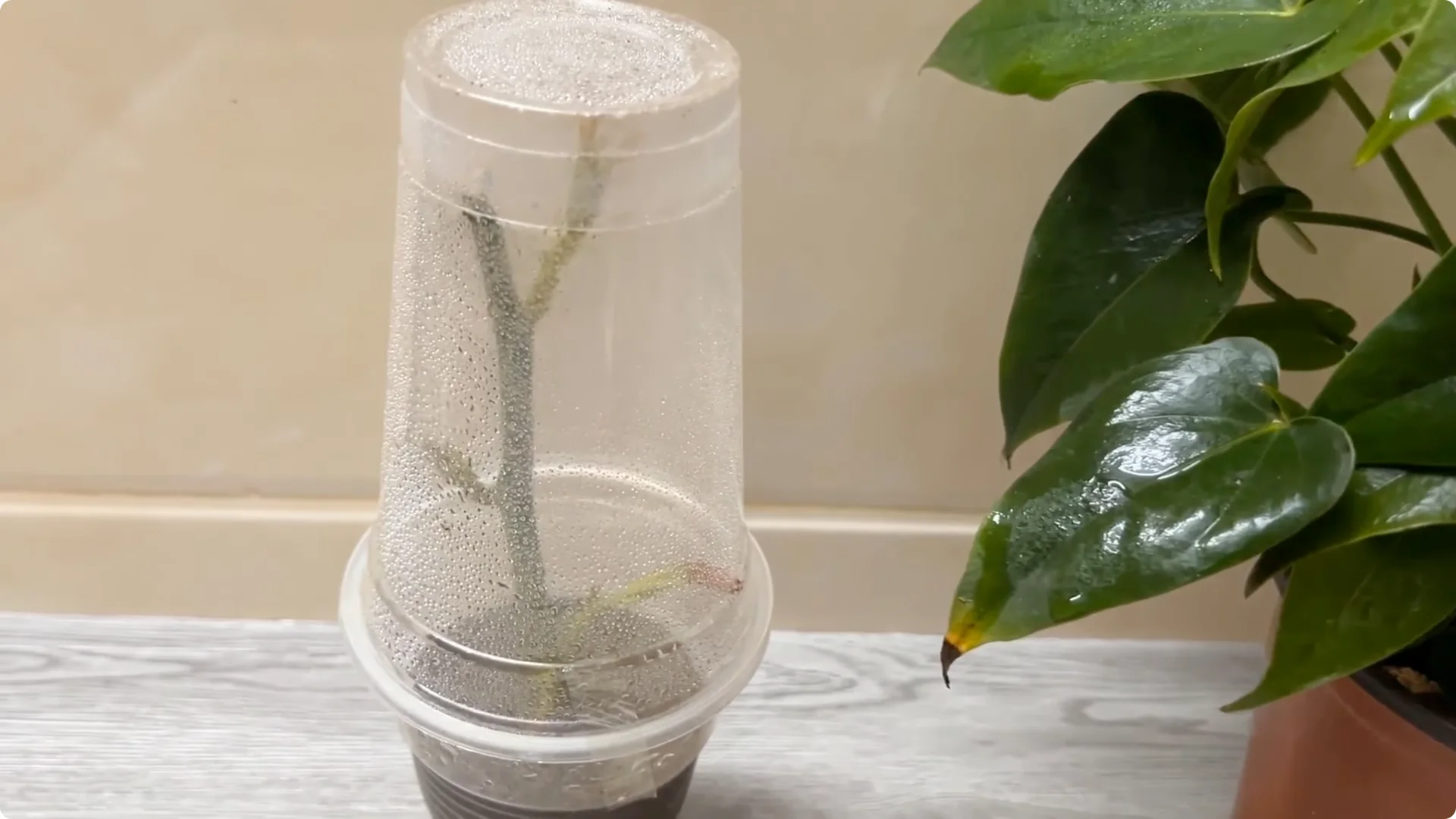
Place the cup in a cool place, away from direct sunlight. The ideal temperature for root development is between 22-30°C. This condition will help the callus tissue quickly differentiate into roots.
Within 10 days, you may not need to intervene further. Keep the cover in place and the medium evenly moist, not waterlogged. Avoid moving the cutting around.
Once your plant is settled, a single cup technique can transform growth and blooms, see this one cup bloom booster.
9. Natural Rose Cutting Propagation – Monitor rooting signs
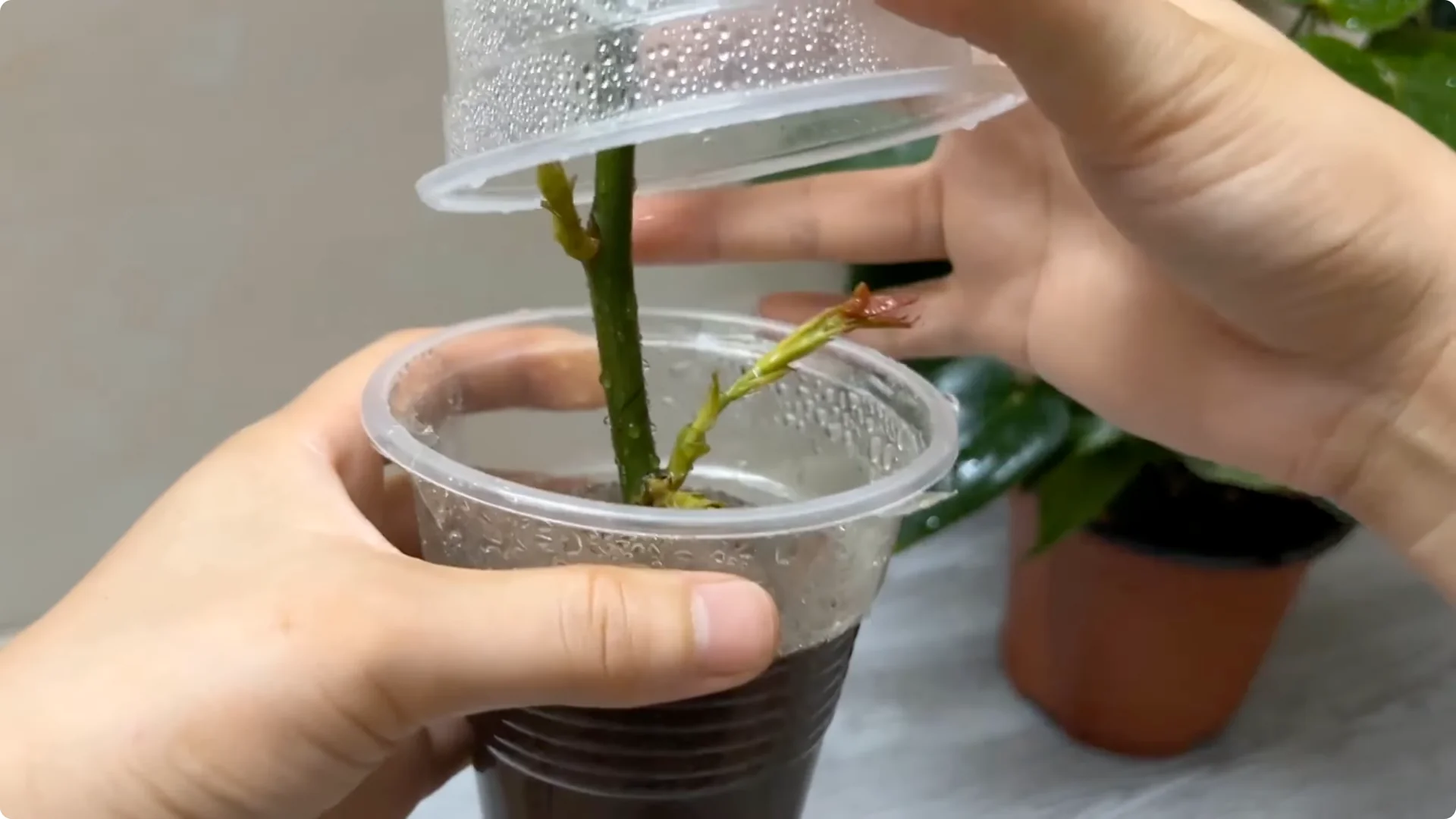
When opening the covering layer, it is easy to observe the growth of the branch. New shoots pop up, bright green, healthy. Around the base, many new roots are formed with white, succulent color – this is a clear sign that the method has worked excellently.
10. Natural Rose Cutting Propagation – Transplant and aftercare
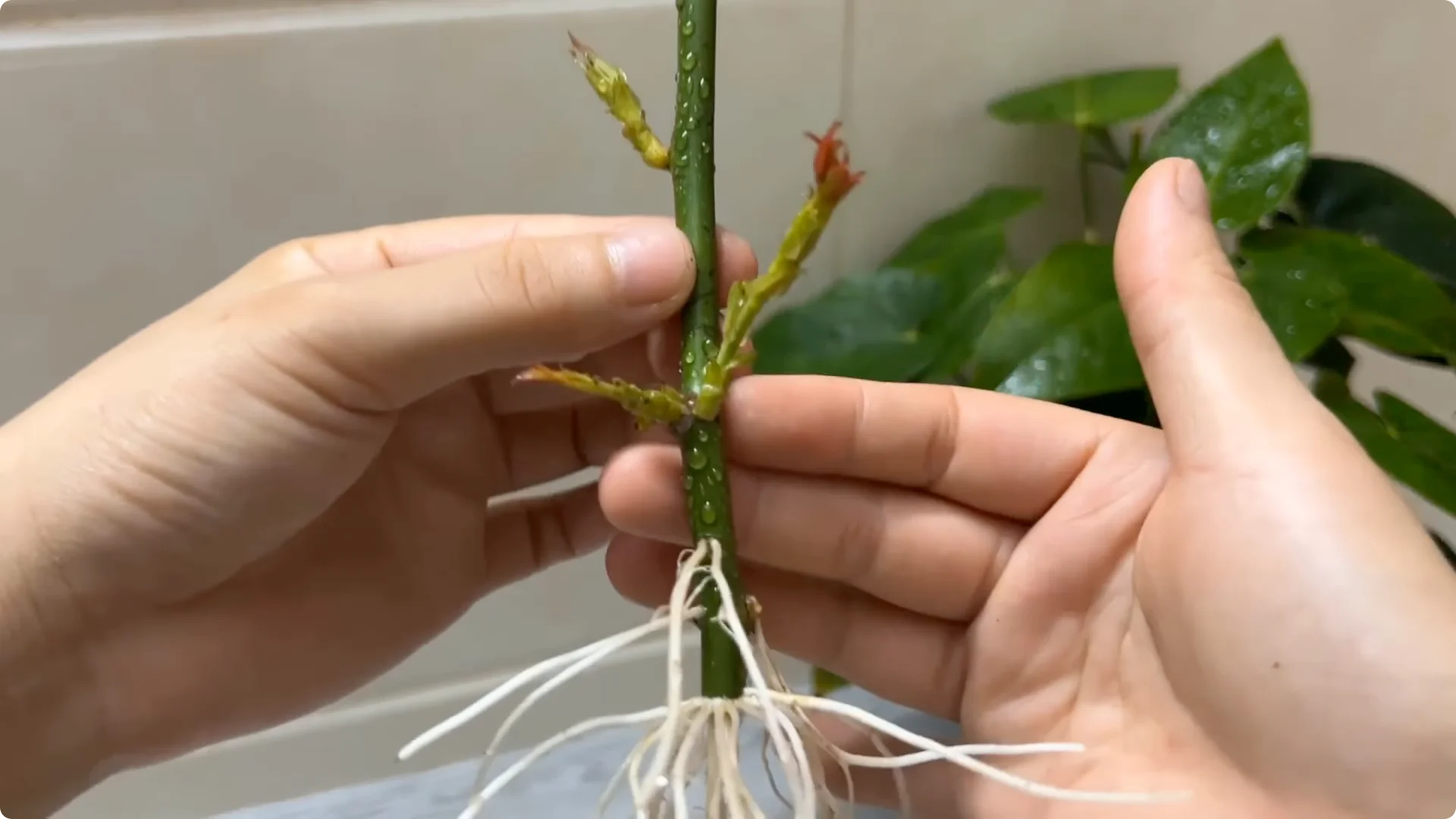
When the roots reach a certain length and strength, transfer the branch to a new pot with good drainage. Prioritize the substrate from river sand to ensure ventilation, limiting the condition of waterlogged roots. Keep light bright but indirect as the plant adapts.
This is not only an economical and easy-to-implement method, but also brings significant efficiency. Biological compounds can stimulate root formation, enhance resistance and help rose branches recover faster in the early stages of separation from the mother plant. The process remains natural, friendly and safe from start to finish.
Final thoughts
Onion skin, lemon, and carrot peels create a nutrient-rich, mildly antiseptic environment that protects tissue and triggers fast rooting. River sand and a simple cover maintain ideal moisture and temperature, encouraging bright shoots and white, healthy roots. With careful transplanting, the new rose grows quickly and stably at low cost.