
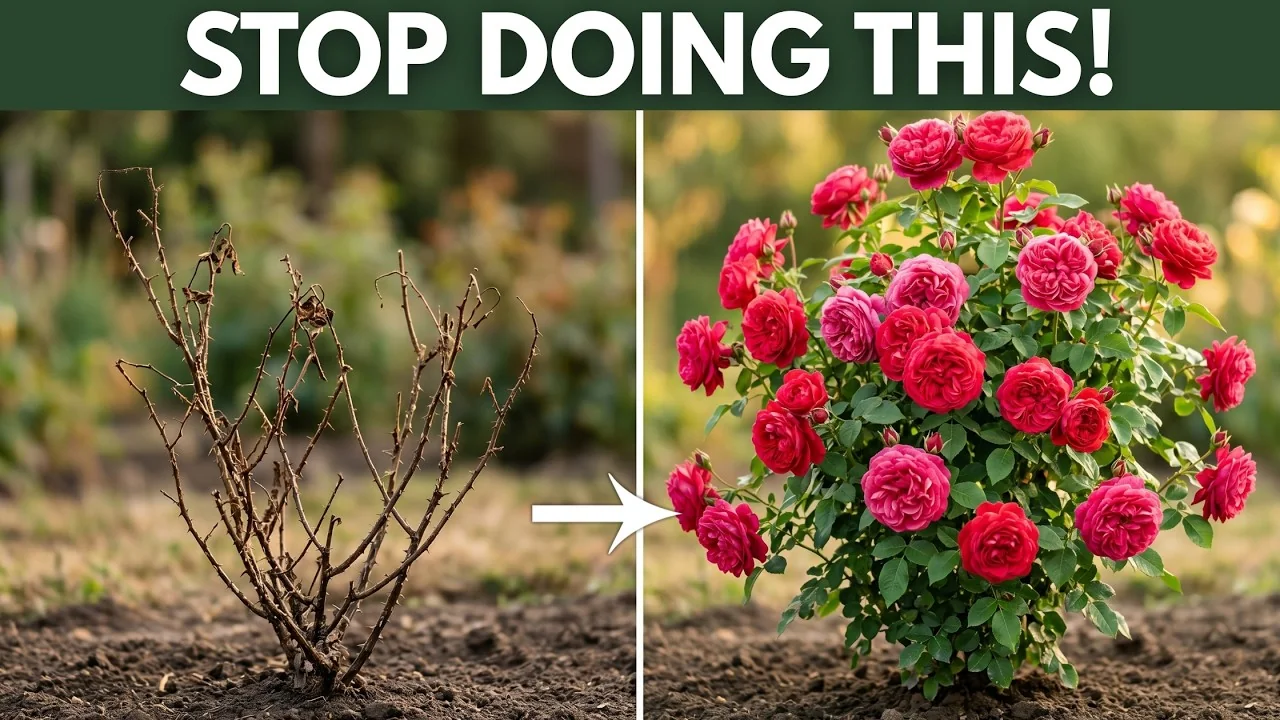
You bought a beautiful rose. You imagined it covered in blooms, the kind of plant that makes your neighbors slow down when they walk past your yard.
And instead you got a sad, leggy stick with three yellow leaves and maybe one flower that lasted about as long as a sneeze.
Your rose is dying because of something you did in the first ten minutes of planting it, long before you ever picked up a watering can. I have watched gardeners spend a fortune on premium roses, expensive fertilizers, fancy pruners, and then quietly kill the whole thing on day one with a mistake that takes thirty seconds to avoid.
I am going to walk you through the seven planting mistakes that secretly sabotage your roses. These are the specific, sneaky errors that separate a rose that struggles for years from one that explodes with blooms by its second summer. Number five is the one that even experienced gardeners get wrong, and it is the difference between a rose that survives and a rose that thrives.
1 Rose Planting Mistakes Morning sun matters
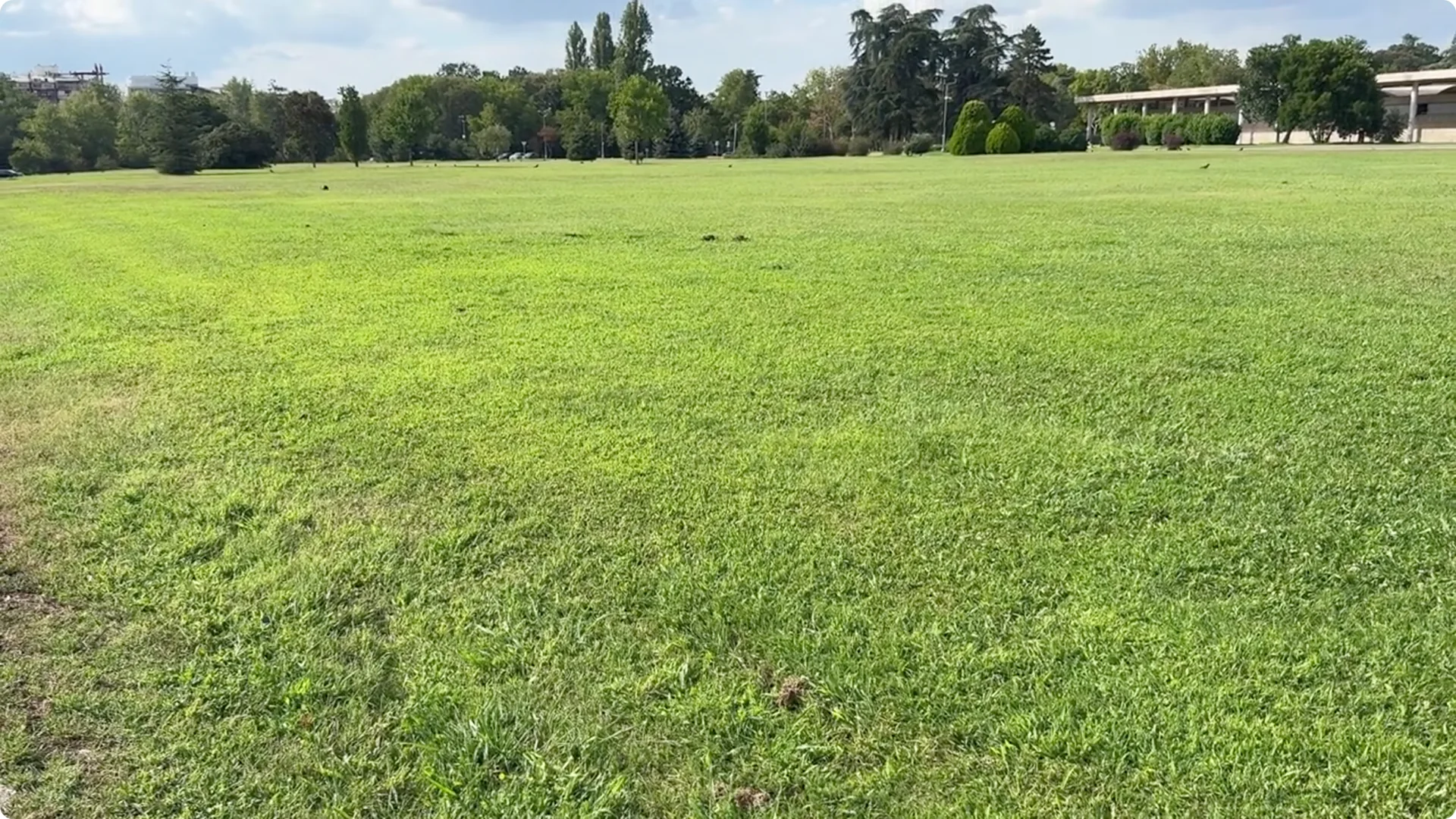
Everyone tells you roses need full sun. Six hours, they say. And so you find the brightest, hottest, most blazing corner of your yard and you plant your rose right there, feeling proud of yourself.
Not all sun is equal. The timing of the sun matters far more than the total count of hours. What your rose actually craves is morning sun.
Early light dries the dew off the leaves quickly, and dry leaves are leaves that do not get fungal disease. That afternoon baking spot you chose keeps the morning shaded, so your foliage stays damp for hours, and now you are basically running a black spot and powdery mildew breeding ground. Notice where the sun lands at eight and nine in the morning.
That east facing or southeast facing spot, the one that gets gentle early light and maybe a little relief in the brutal afternoon, is your gold mine. Especially in a hot climate, a rose that gets strong morning light and dappled afternoon shade will outperform the one roasting in full exposure every single time. Plant for when the sun hits, not just how long.
2 Rose Planting Mistakes Hole too small

You dug a hole the exact size of the pot. It feels logical, which is exactly why it is so dangerous. When you dig a hole that is just barely bigger than the root ball, you trap your rose in a tiny pocket of loose soil surrounded by hard, compacted earth.
The roots hit that wall, and instead of spreading out, they circle around inside the hole like a goldfish in a bowl. The plant gets root bound in the ground, which is a special kind of tragedy because you cannot even see it happening. Here is the fix.
Dig your hole at least twice as wide as the root ball, but keep it only about as deep as the root ball is tall. Width is where the magic happens.
Roses send most of their feeder roots out sideways, not straight down, so you want a big, loose, welcoming runway for them to spread into.
Loosen the soil on the sides of the hole with your fork so the roots do not hit a slick, hard wall. Think of it like this, you are not digging a hole, you are building a neighborhood. Give the roots room to move in and settle.
How to dig the right hole
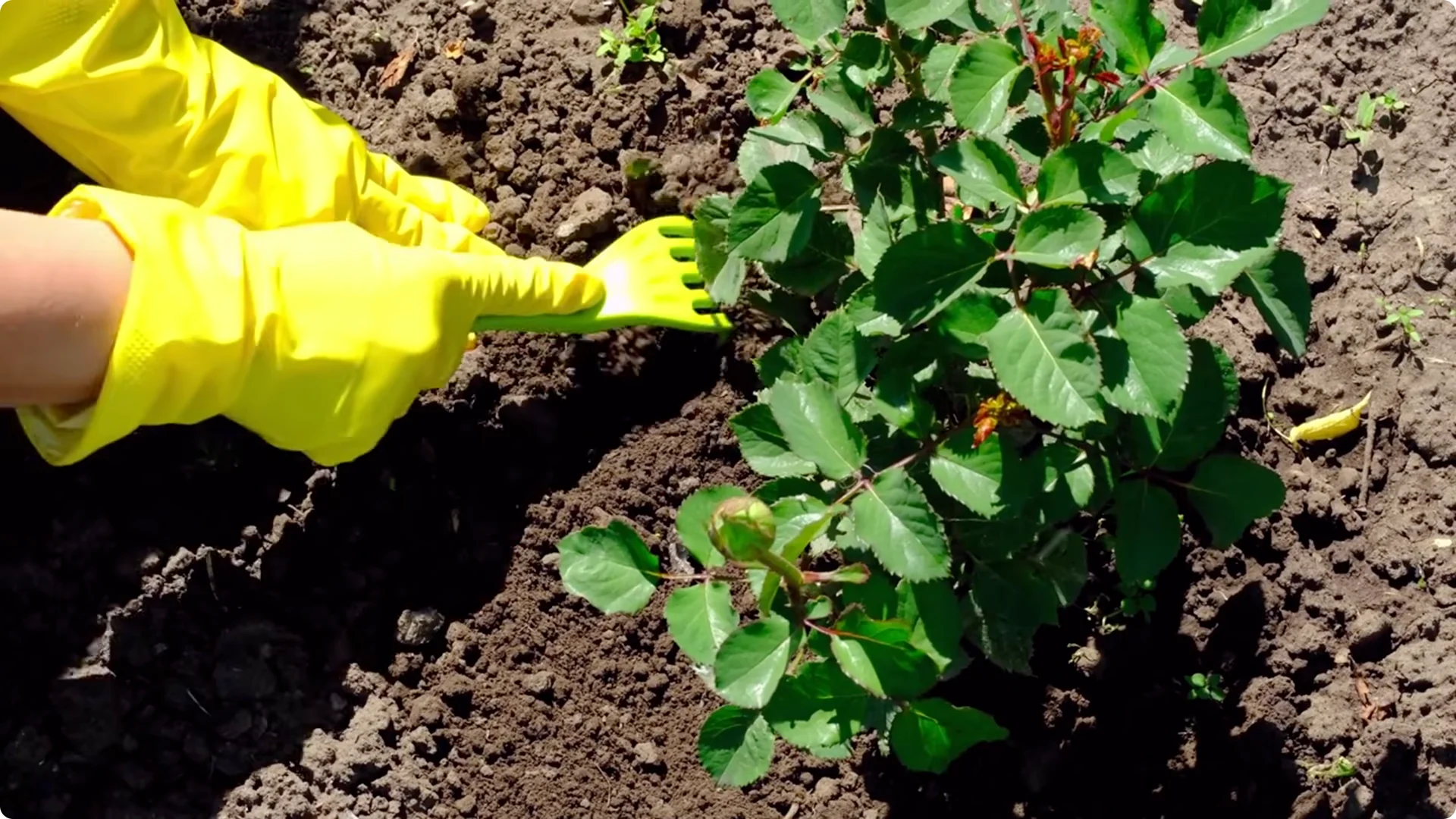
Mark a circle at least twice the root ball width. Keep the depth equal to the root ball height so the crown does not sink later. Rough up the sidewalls with a fork to break any glaze.
Set the plant, backfill lightly, then water to settle and top up with native soil as needed.
Finish with a shallow basin to catch deep soakings. Width first, depth second.
If you want to turn one strong plant into more once it is established, see this simple propagation method.
3 Rose Planting Mistakes Graft union depth
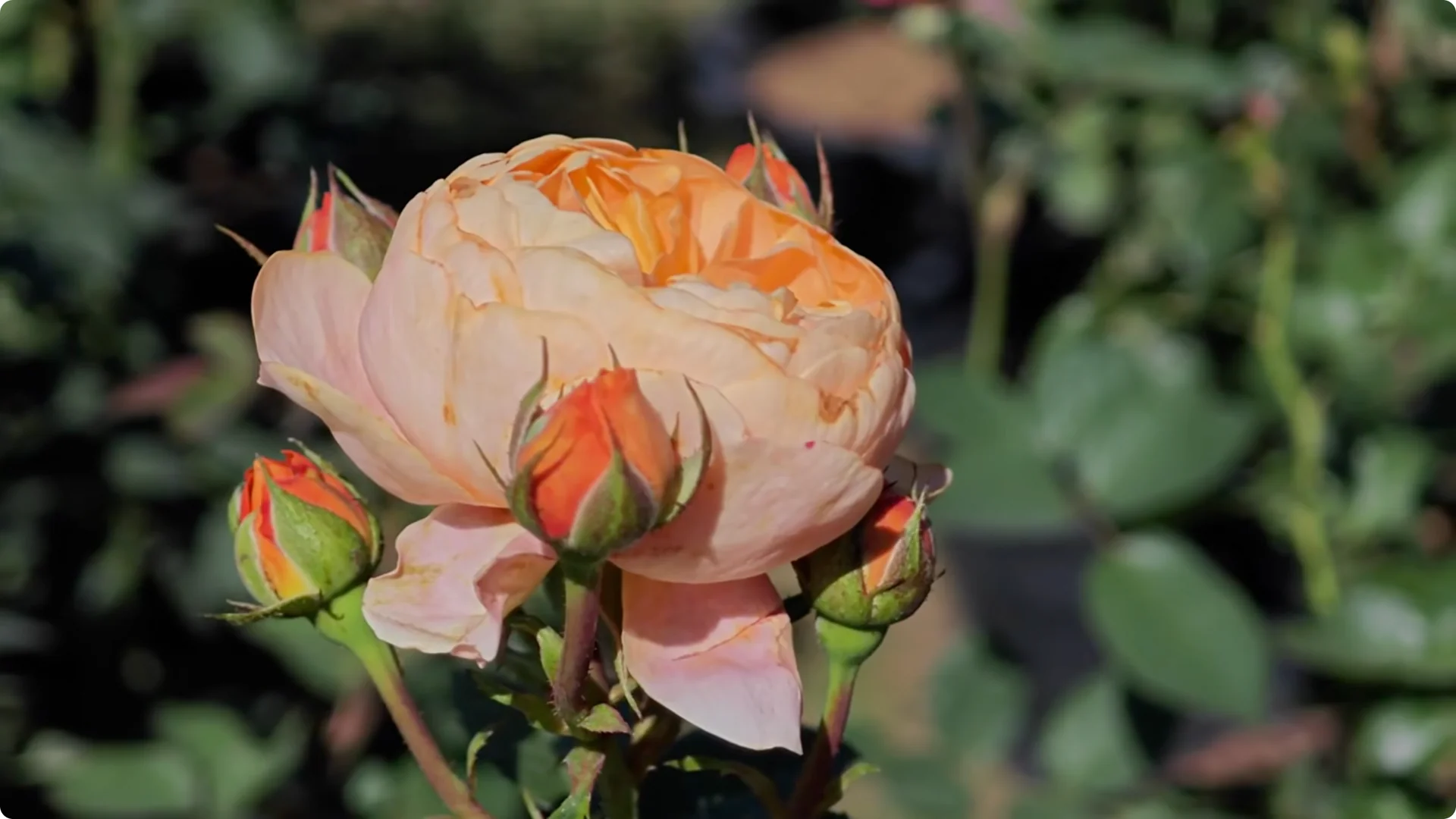
Most roses you buy, especially hybrid teas and floribundas, are grafted. There is a knobby, swollen bump near the base where the pretty top variety was joined onto a tougher rootstock.
That bump is the graft union, and how deep you plant it is a make or break decision.
Almost everyone treats every rose the same. The right depth depends entirely on your climate, and getting this backwards will quietly cost you the whole plant. Find that knobby bump, look at your winters, then plant accordingly.
Set the graft height
Cold, freezing winters call for the graft union two to three inches below the soil line. Burying it protects the most vulnerable part from frost that would kill the grafted top and leave you with only the rootstock.
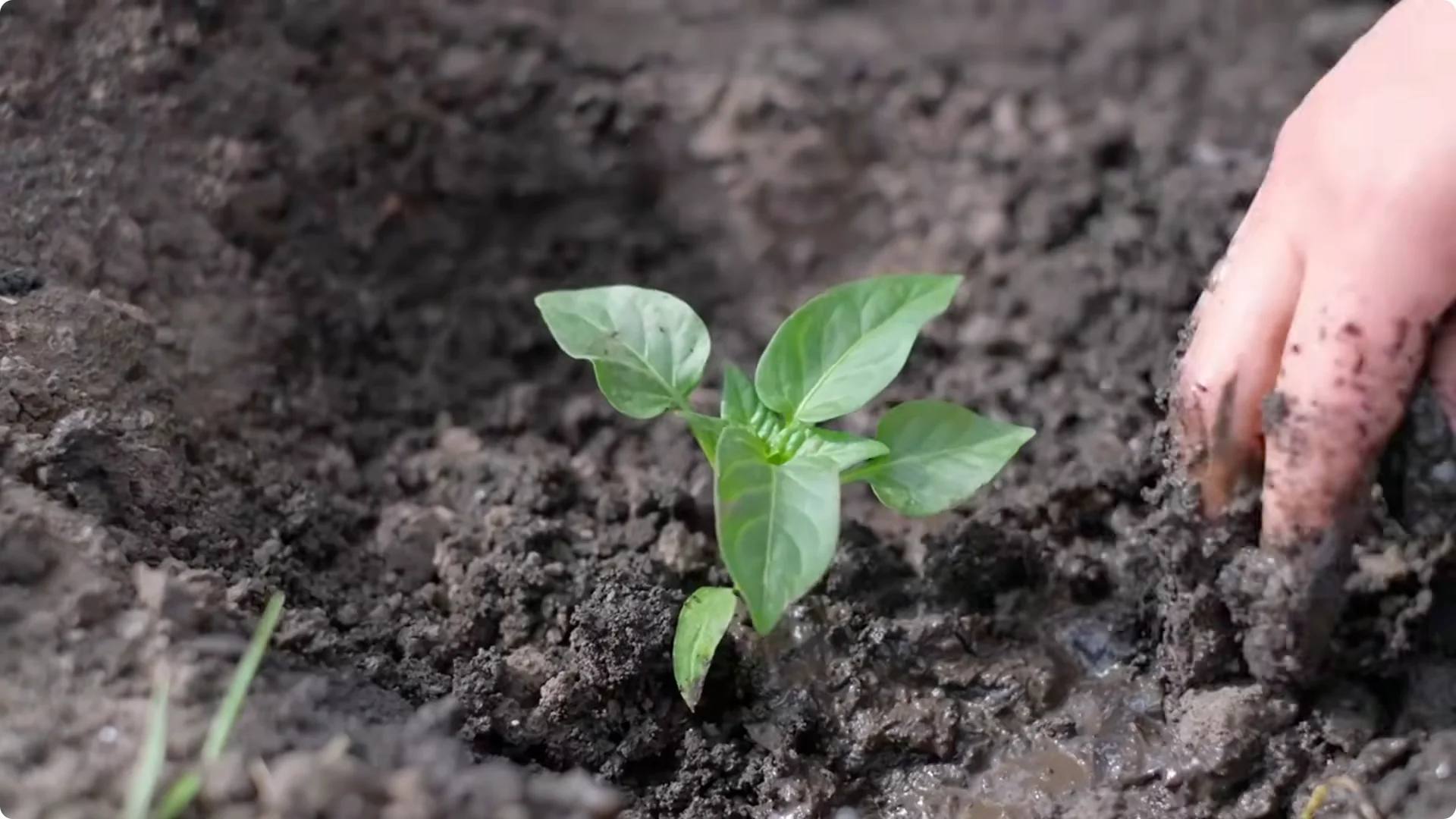
Warm climates with rare freezes call for the graft union at or slightly above the soil line.
Bury it in hot, humid conditions and you invite rot and disease right at the plant weak point.
This one detail tells me instantly if someone actually knows roses or just reads the back of the tag.
4 Rose Planting Mistakes Backfill trap
You backfilled with the good stuff. You filled the hole with rich, fluffy, store bought mix or pure compost, pampering it and treating your rose like royalty. And you just created a trap.
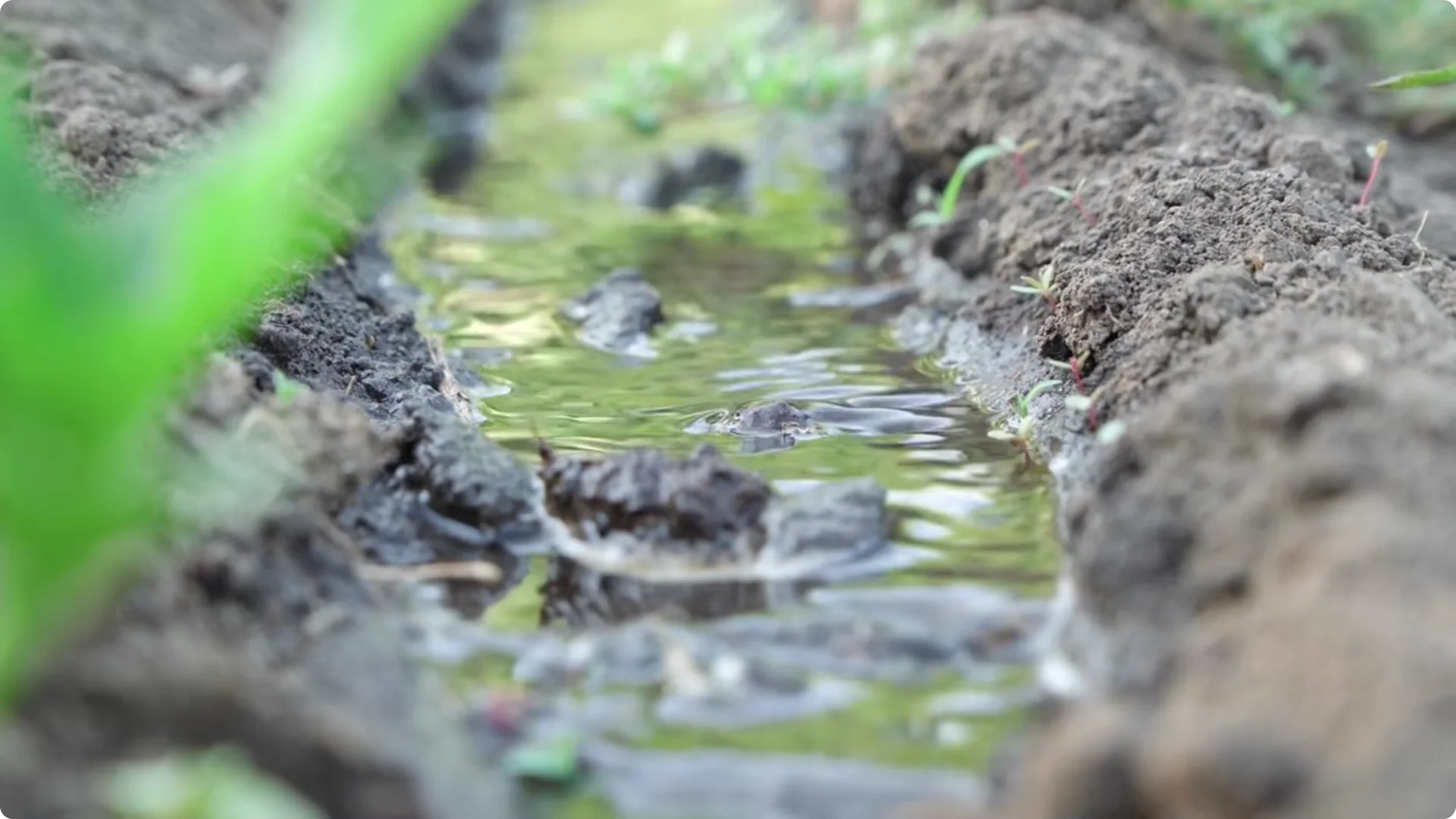
When you fill a hole with soil that is dramatically richer and fluffier than the native soil, you create a bathtub effect.
Water flows easily through the soft good stuff, hits the hard native soil at the bottom and sides, and then just sits there.
Your rose ends up in a soggy underground pool, and roses despise wet feet.
Meanwhile, those pampered roots have zero reason to venture out into the real soil, so they stay weak and dependent.
The fix is more boring and far more effective. Use your native soil as the base of your backfill, and amend it gently, mix in maybe a third compost, no more.
You want the transition between your planting hole and the surrounding earth to be gradual, not a shocking jump from luxury hotel to concrete sidewalk. Blend it.
Make the soil in the hole only slightly better than what is around it.
When you are ready to multiply your strongest plants, you can propagate roses at home with straightforward steps.
5 Rose Planting Mistakes Watering wrong
You watered the leaves and the surface, not the roots. After planting, you spray the whole plant down and walk away feeling like a good plant parent. It looks like watering and feels like watering, but it is quietly doing two harmful things at once.
Every drop you put on the leaves is an invitation for fungal disease. Wet foliage, especially heading into the evening, is how black spot and mildew spread across your rose. A light surface watering only wets the top inch of soil.
The roots sense that shallow moisture and grow upward toward it, staying near the surface where they dry out fast and get scorched. You have trained your rose to have lazy, shallow roots that cannot fend for themselves. Here is how you fix it for the entire life of the plant.
Water at the base, slowly and deeply. Aim the water at the soil, right over the root zone, and let it soak down deep. Deep watering, less frequently, is the secret.
It pulls the roots downward, building a strong, drought resistant root system that can handle a hot afternoon without you panicking with a hose. Keep that water off the leaves, and water in the early morning so any splash dries fast. Deep and at the base, never shallow and over the top.
If you plan to root pruned stems for new plants, try this surprising method to propagate roses.
6 Rose Planting Mistakes Bare soil
You left the soil bare around the base. You step back to admire that nice clean circle of fresh soil around the stem. It looks tidy and finished.
It is not finished. Exposed soil around a rose is a triple threat. It bakes in the sun and cooks the shallow roots.
It lets moisture evaporate almost as fast as you add it, so you end up watering twice as often. It leaves the door wide open for weeds to move in and steal the nutrients you wanted your rose to have.
When rain or watering hits bare dirt, it splashes soil borne fungal spores up onto your lower leaves.
Lay down a two to three inch layer of mulch around the base of your rose. Shredded bark, wood chips, straw, whatever you have works. Keep the mulch a couple of inches away from the main stem.
Do not pile it against the canes because trapped moisture against the stem invites rot. You want a doughnut, not a mountain.
That layer of mulch regulates soil temperature, locks in moisture, smothers weeds, and creates a barrier against splash up disease.
7 Rose Planting Mistakes Crowding
You planted it shoulder to shoulder with everything else. You want that magazine look, roses packed in tight, surrounded by companions, not a gap of bare earth in sight. So you crowd your new rose right up against its neighbors.
Roses are divas about airflow. When you plant them too close to other plants or too close to each other, the air goes stagnant around the foliage. Moisture lingers, leaves stay damp, and disease takes hold and spreads from plant to plant fast.
Crowded roses also fight underground, with their roots competing for the same water and nutrients. Everybody loses and nobody thrives.
Give your rose room to breathe, generally two to three feet of clearance around it, depending on the variety mature size.
When you first plant it, that spacing looks ridiculous and bare. Trust me, that rose will fill in faster than you think, and in one season you will be grateful you gave it room instead of cramming it in.
Plant for the size your rose will become, not the size it is the day you buy it, and remember airflow is free disease prevention.
Final Thoughts on Rose Planting Mistakes
Plant where the morning sun hits, not just where it is brightest. Dig wide, not deep, and set the graft union at the right height for your climate. Backfill with mostly native soil so you do not build a soggy bathtub.
Water deeply at the base, mulch in a doughnut, and give your rose room to breathe. Get these seven right, and here is the truth, roses are not the fussy, dramatic plants everyone makes them out to be. They are tough, they are forgiving, and they want to grow for you.
You just have to stop fighting them in the first ten minutes. If you want even more blooms down the road, learn how to propagate roses the simple way and start new plants at home once your technique is dialed.