
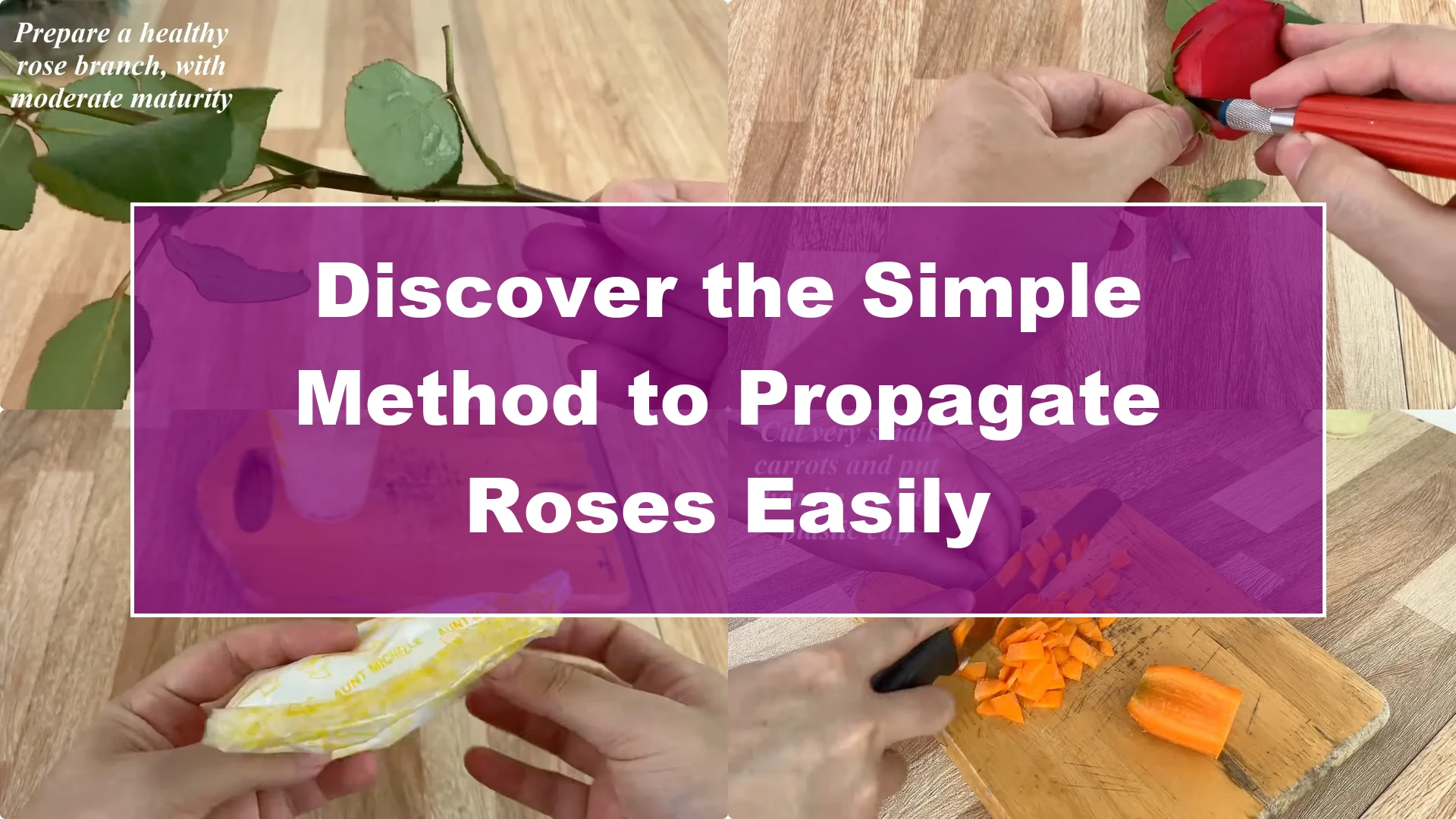
If you are a rose lover, you must have wanted to propagate your own healthy and vibrant rose plants. I will share with you a method that is both natural and effective, and does not require too much effort. The ingredients are extremely easy to find, helping rose branches to quickly root and sprout strong new buds.
For another easy approach, see a simple method for propagating roses.
1. Rooting Rose Cuttings: Choose and prepare the branch
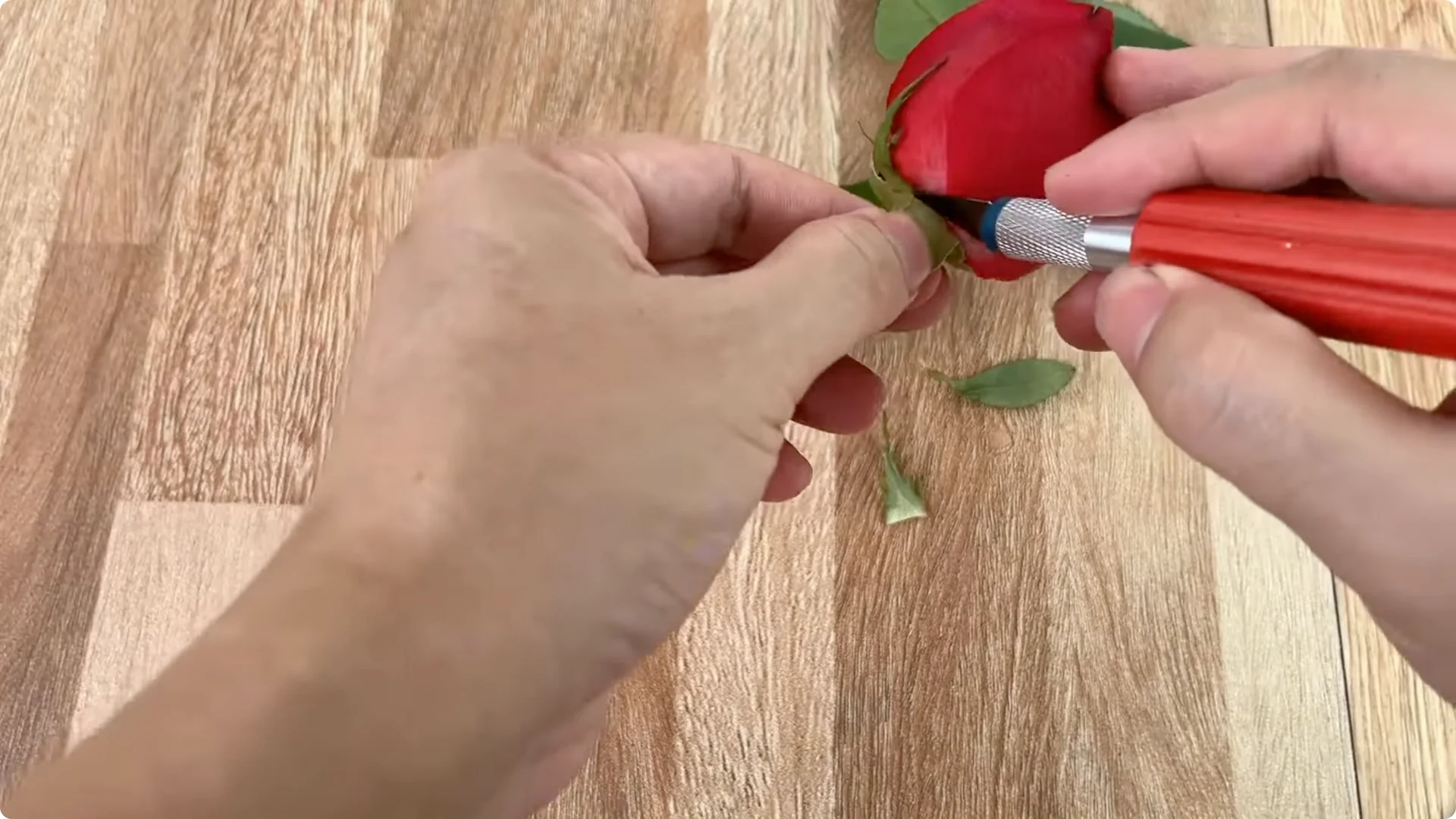
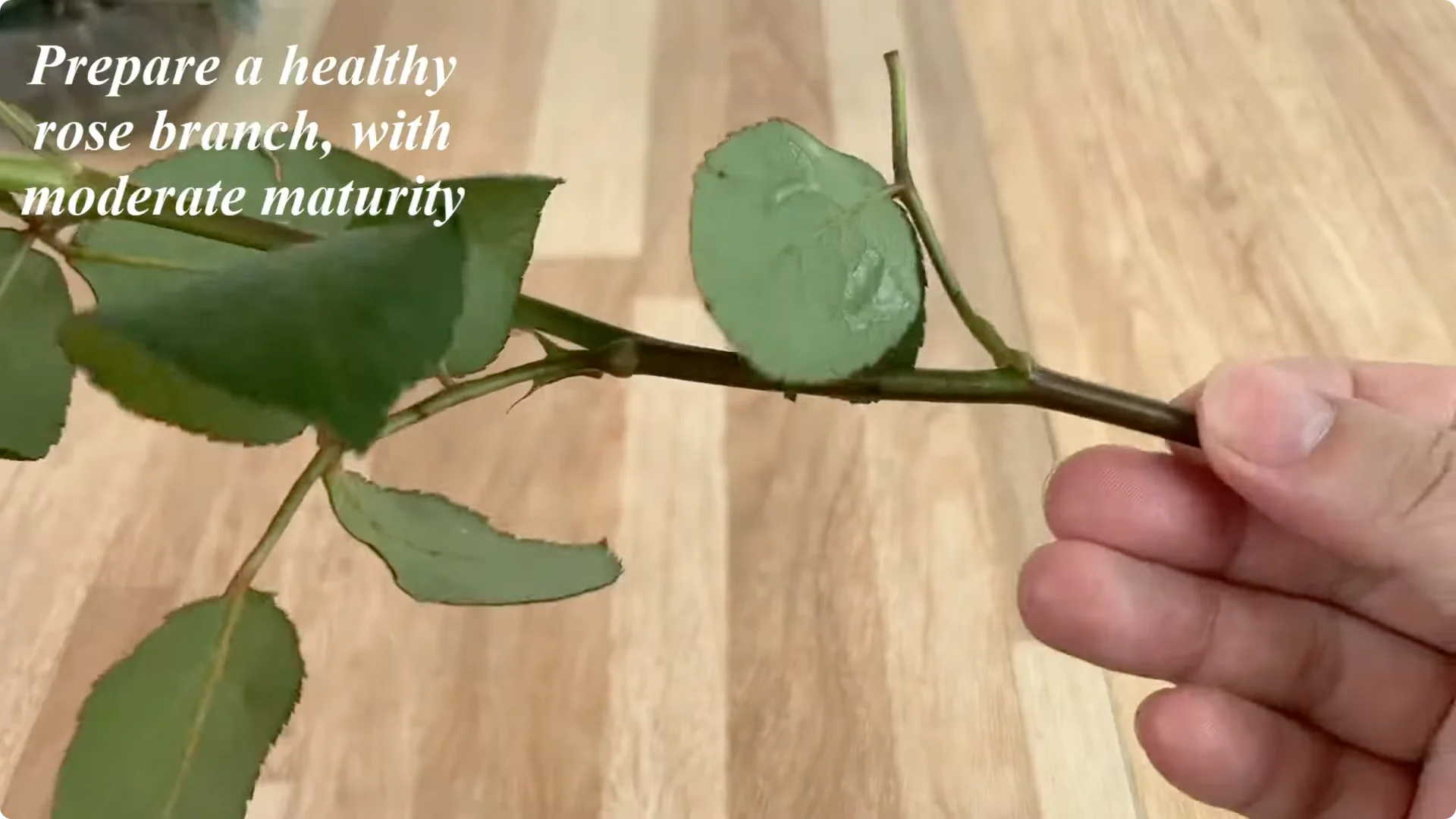
Choose a healthy rose branch with moderate age, meaning the stem is not too young to be easily waterlogged, but not too old to make it difficult to root. Cut off all the leaves and sharp thorns on the branch to reduce water loss and avoid creating conditions for fungi.
Cut the branch to about 15-20 cm, helping the plant focus its nutrients on forming new roots instead of nourishing the long stem.
2. Rooting Rose Cuttings: Onion and baking soda soak
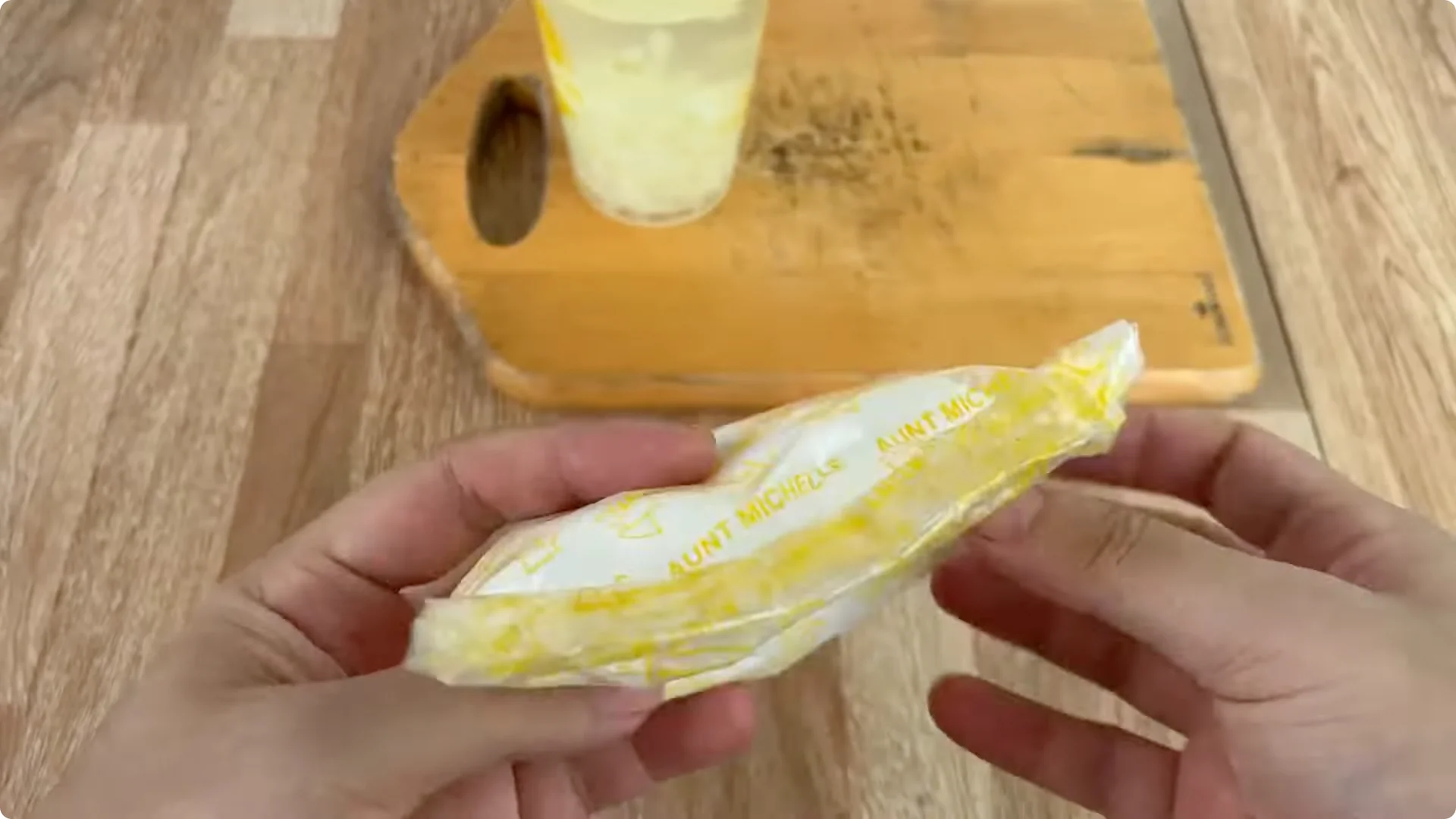
Onions contain sulfur compounds and powerful antioxidants, which have antibacterial and antifungal effects, and also stimulate plant tissue to recover quickly. Prepare about 30 g of onion, cut into small pieces so that the active ingredients can easily dissolve in water.
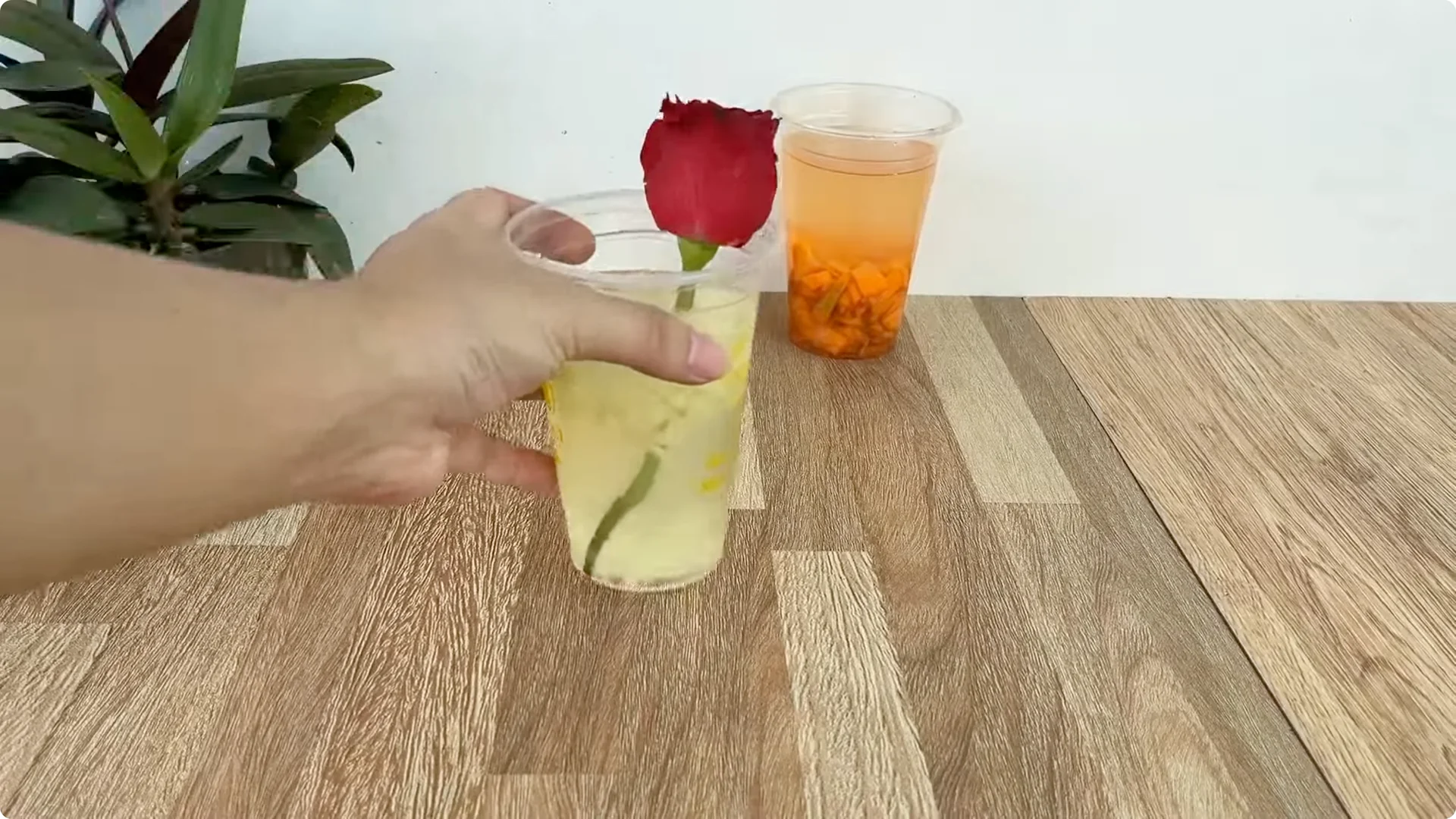
Put the onion in a clean plastic cup and add 500 ml of water. Add 1/2 teaspoon of baking soda to the cup with the onion. Baking soda can adjust pH, limit harmful microorganisms, and help the environment where the rose branches are soaked stay cleaner.
Soak the rose branches in this solution for about 30 minutes so the branches can absorb nutrients, while being cleaned and stimulating the formation of root tissue. You can also review another simple method to propagate roses for comparison.
3. Rooting Rose Cuttings: Carrot nutrient boost
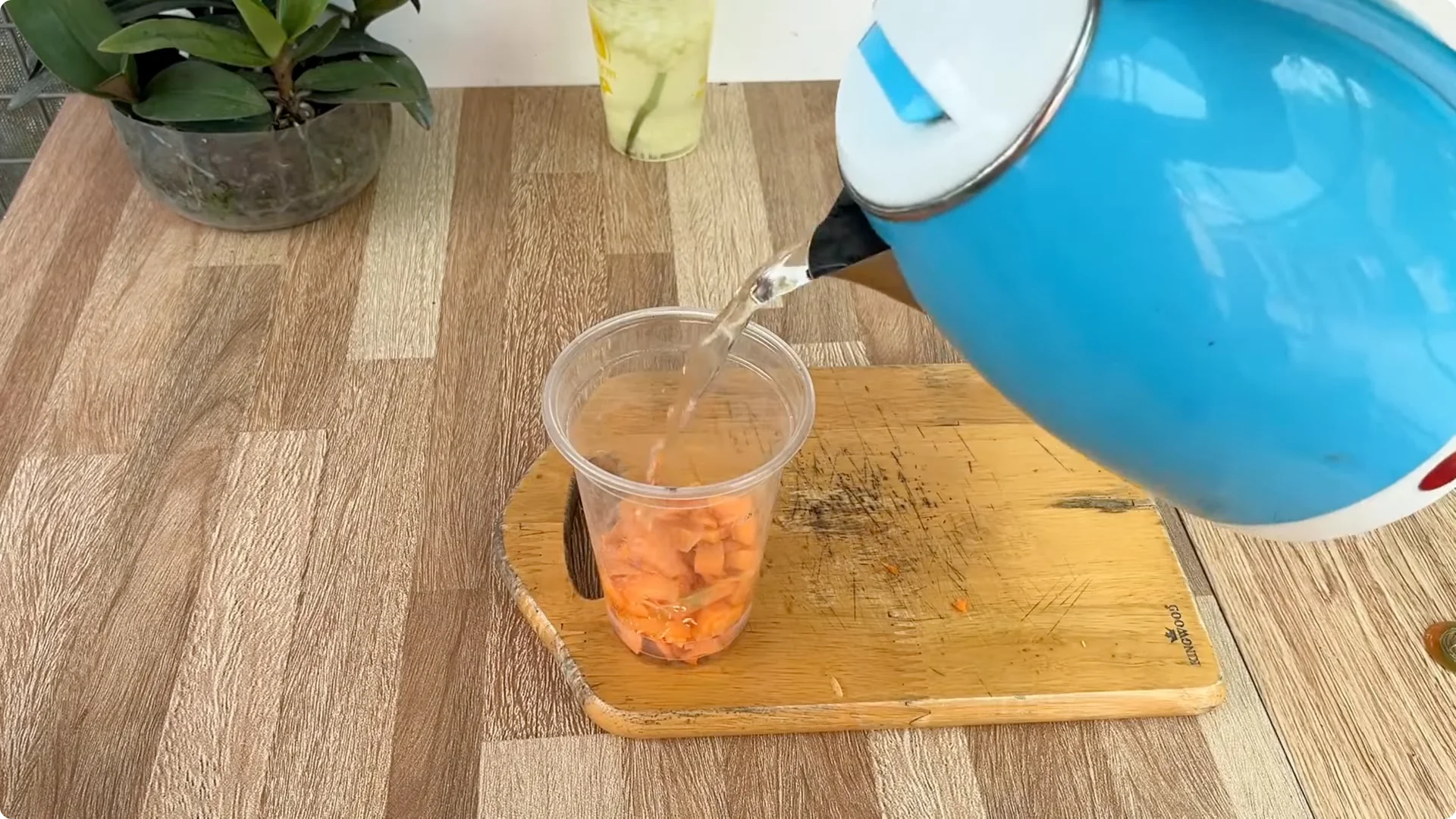
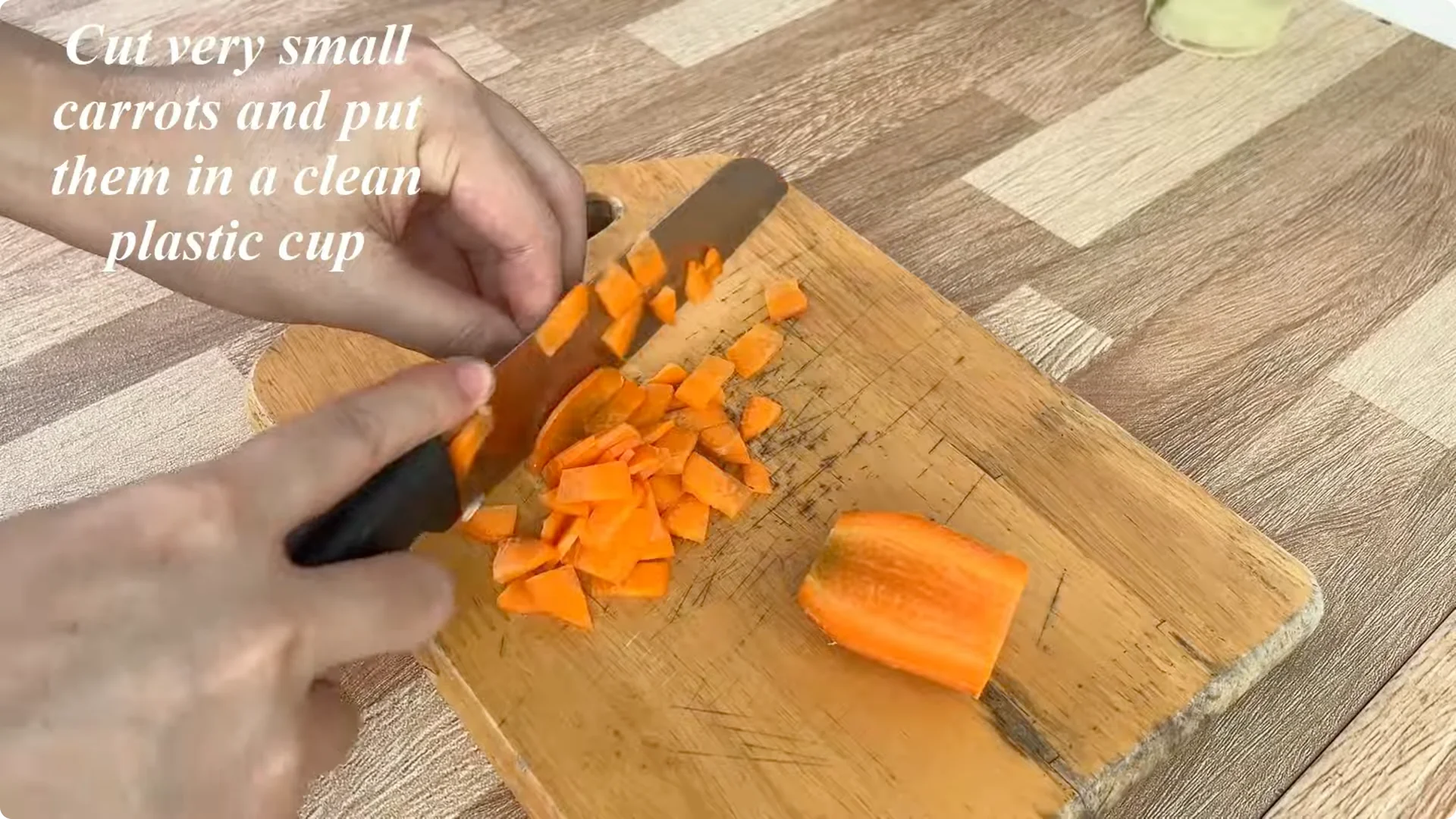
Carrots are not only good for human health but also a great source of vitamin A, potassium, and natural sugar for plants. These nutrients act as fuel to help new root cells quickly form and grow healthily.
Prepare a piece of carrot about 30 g, cut into small pieces, and put it in a clean plastic cup. Add 0.5 liters of warm water (about 40°C) to help the substances in the carrots dissolve faster. Stir well and let stand for 30 minutes to fully release the nutrients.
4. Rooting Rose Cuttings: Assembly and rooting setup
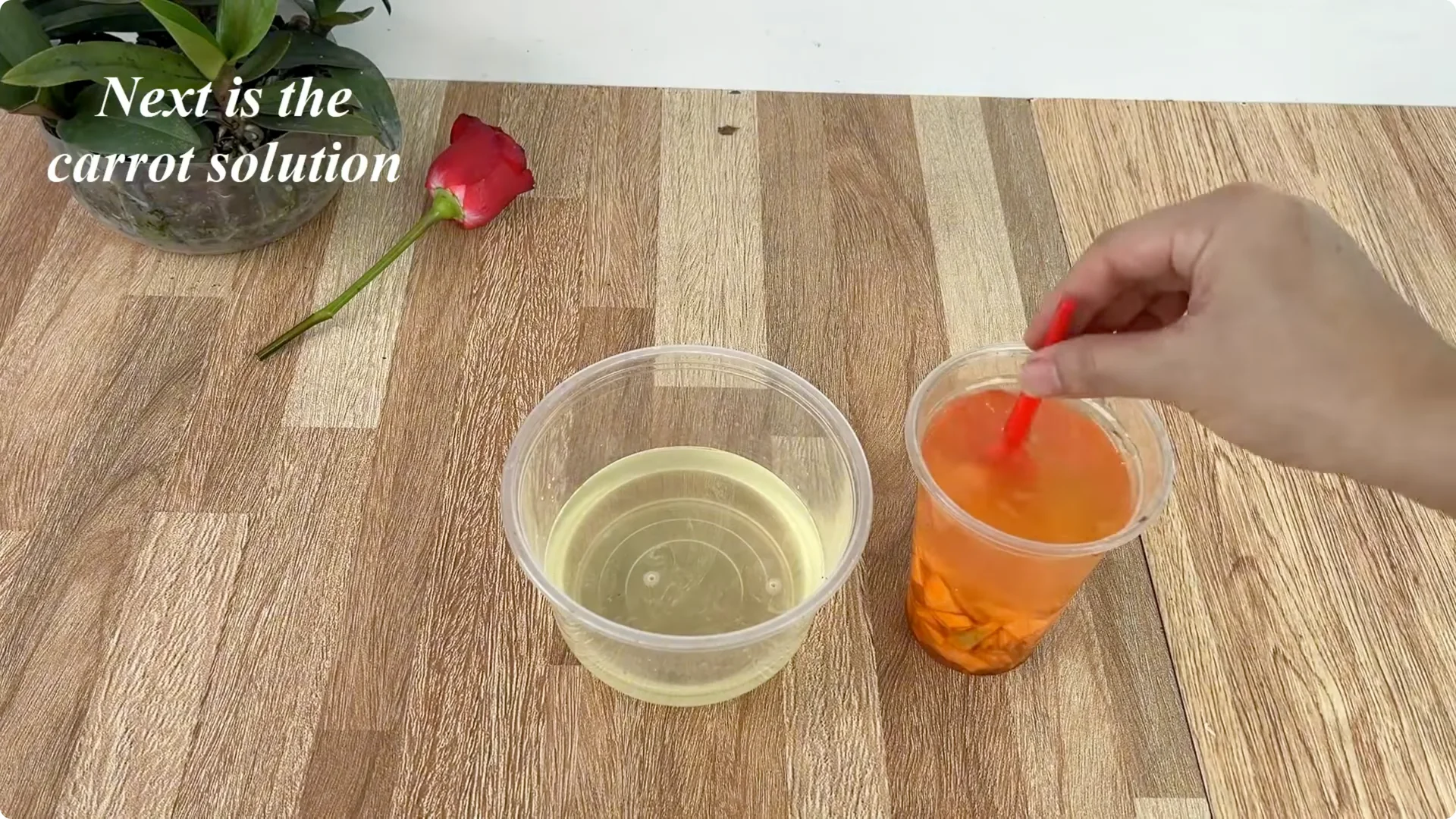
Prepare the cup and foam
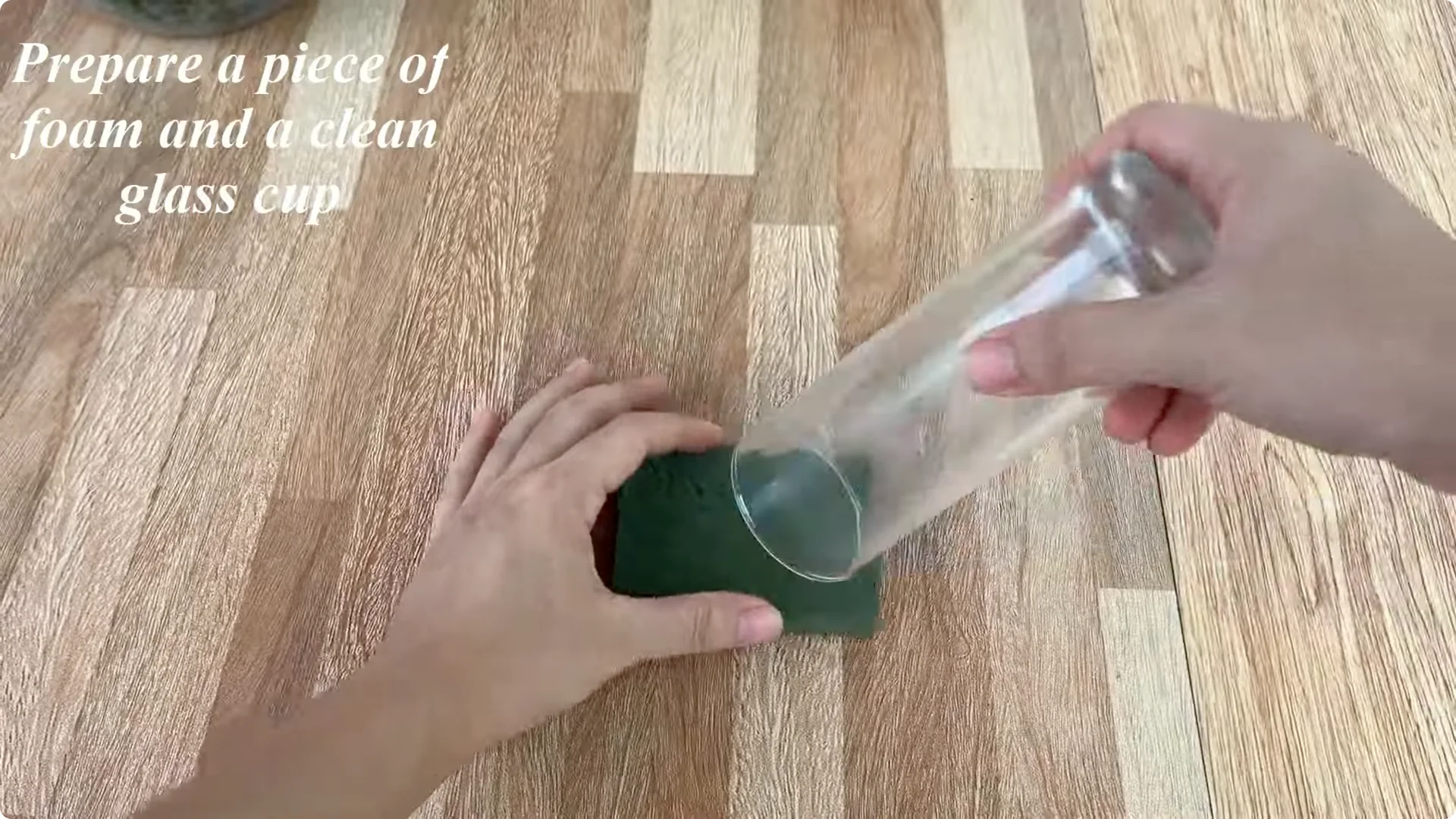
Prepare a piece of foam that fits snugly into the mouth of a clean glass cup. Use a small stick to make a hole in the middle of the foam, the diameter of the rose branch.
Combine and position the cutting
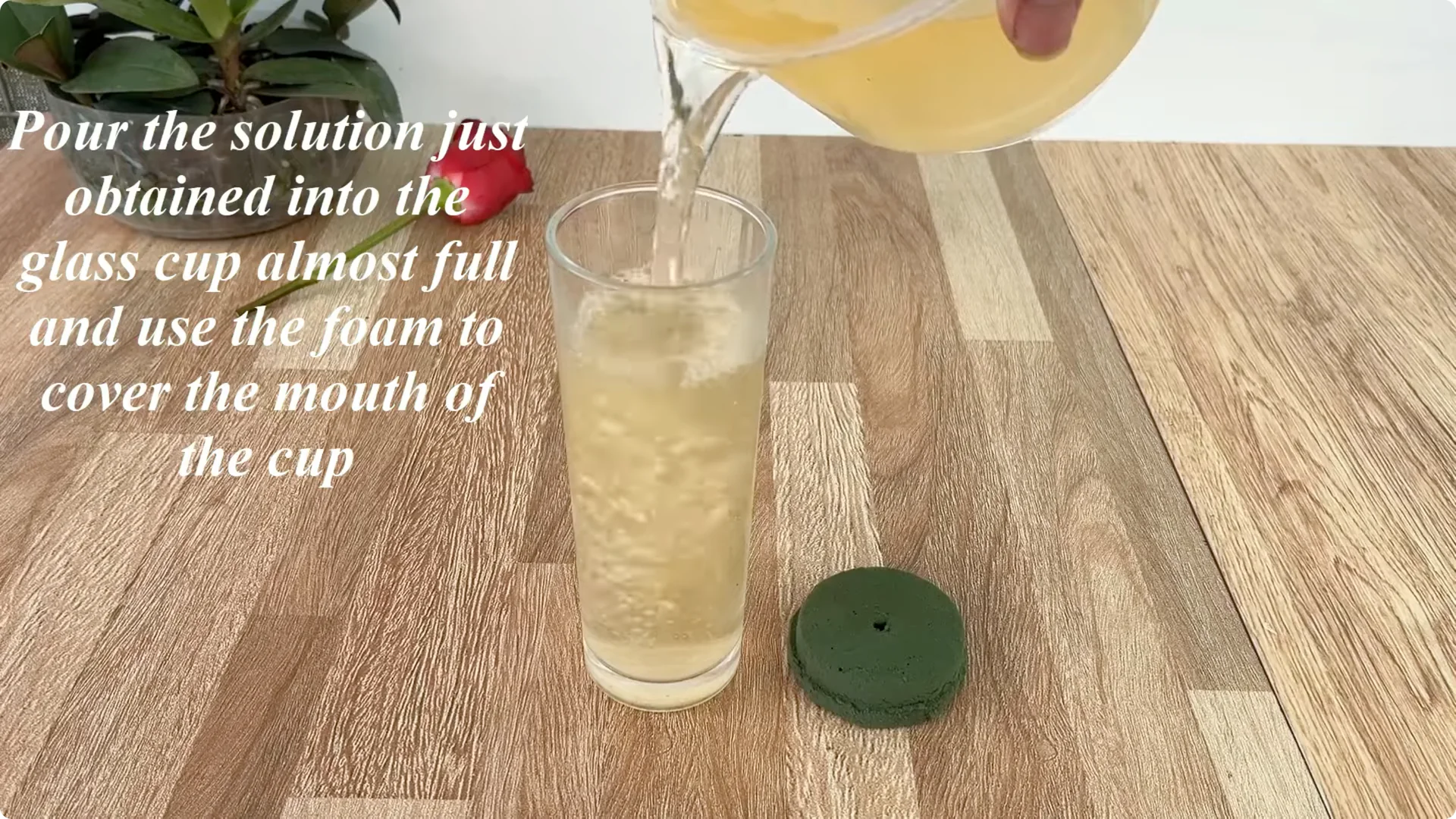
After 30 minutes of soaking the rose branches in the onion – baking soda solution, take the branches out. Stir the onion solution again and filter out the residue.
Filter the carrot solution and mix it with the onion solution obtained. This combination is both antiseptic and energizing, helping new roots grow faster and stronger than using just one type. Pour the mixture into the cup almost full, place the foam on top, and then fix the flower branch with a light tie.
The stem needs to be submerged deep in the solution so that the roots can develop from the root tissue. For a simple and effective approach, see this guide to propagating roses.
Create a humid cover and placement
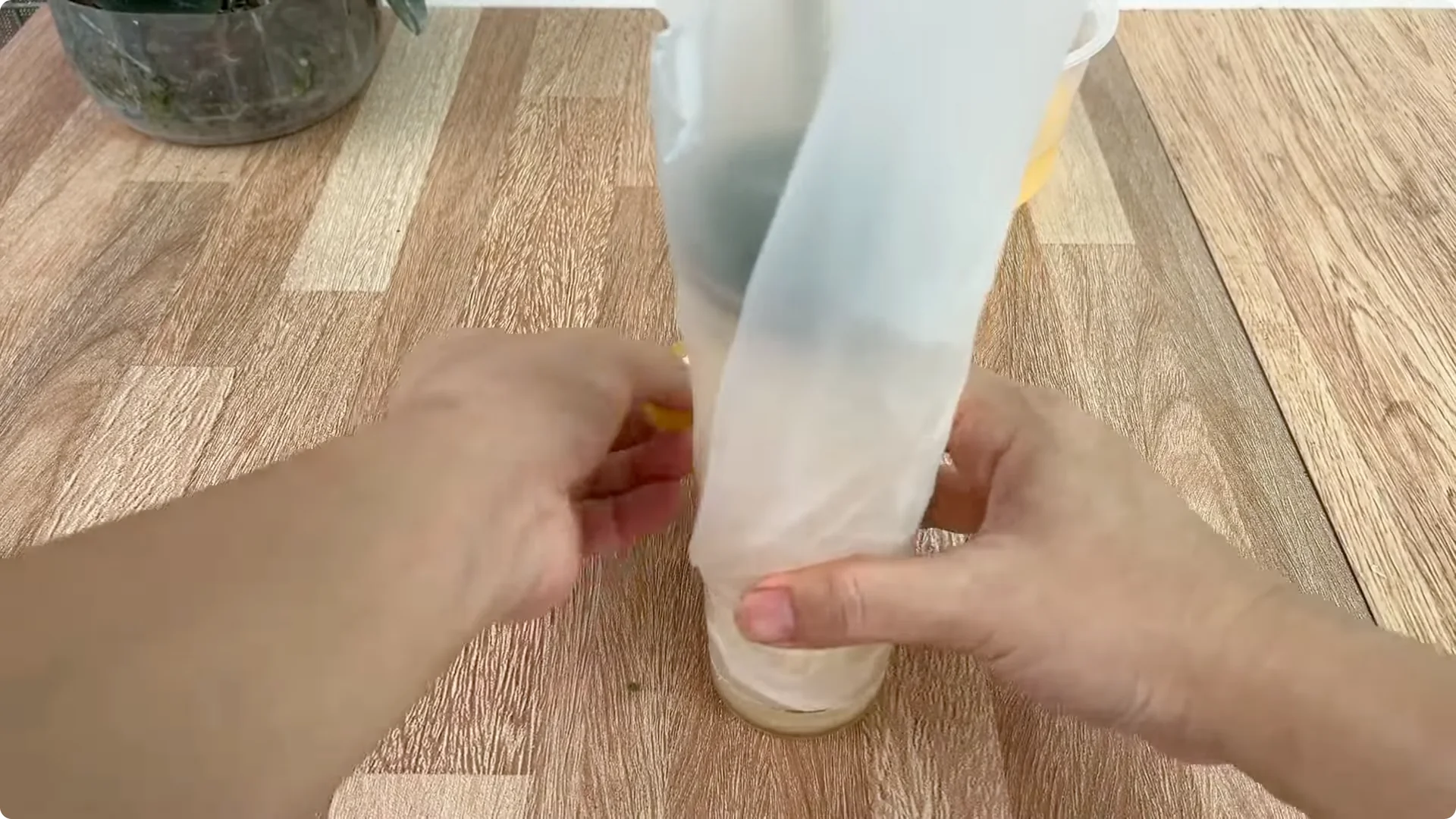
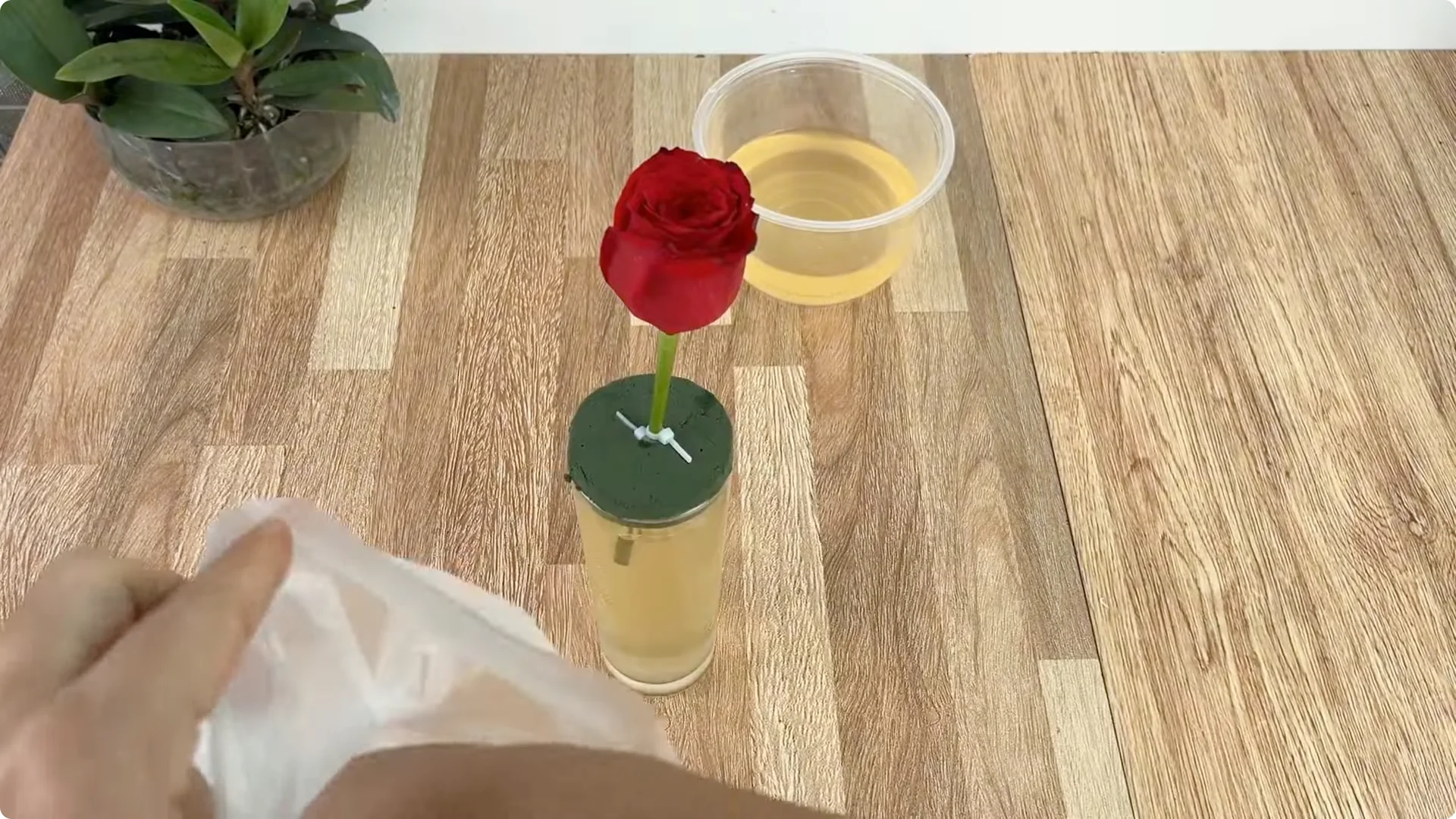
To prevent the branch from losing water and create ideal conditions for young roots to form, use a plastic bag or a transparent plastic cup to cover the mouth of the cup. Place the cup in a cool place, away from strong winds and direct sunlight.
Strong sunlight will cause the temperature in the bag to increase, causing the branch to wilt quickly.
5. Rooting Rose Cuttings: Rooting progress and potting
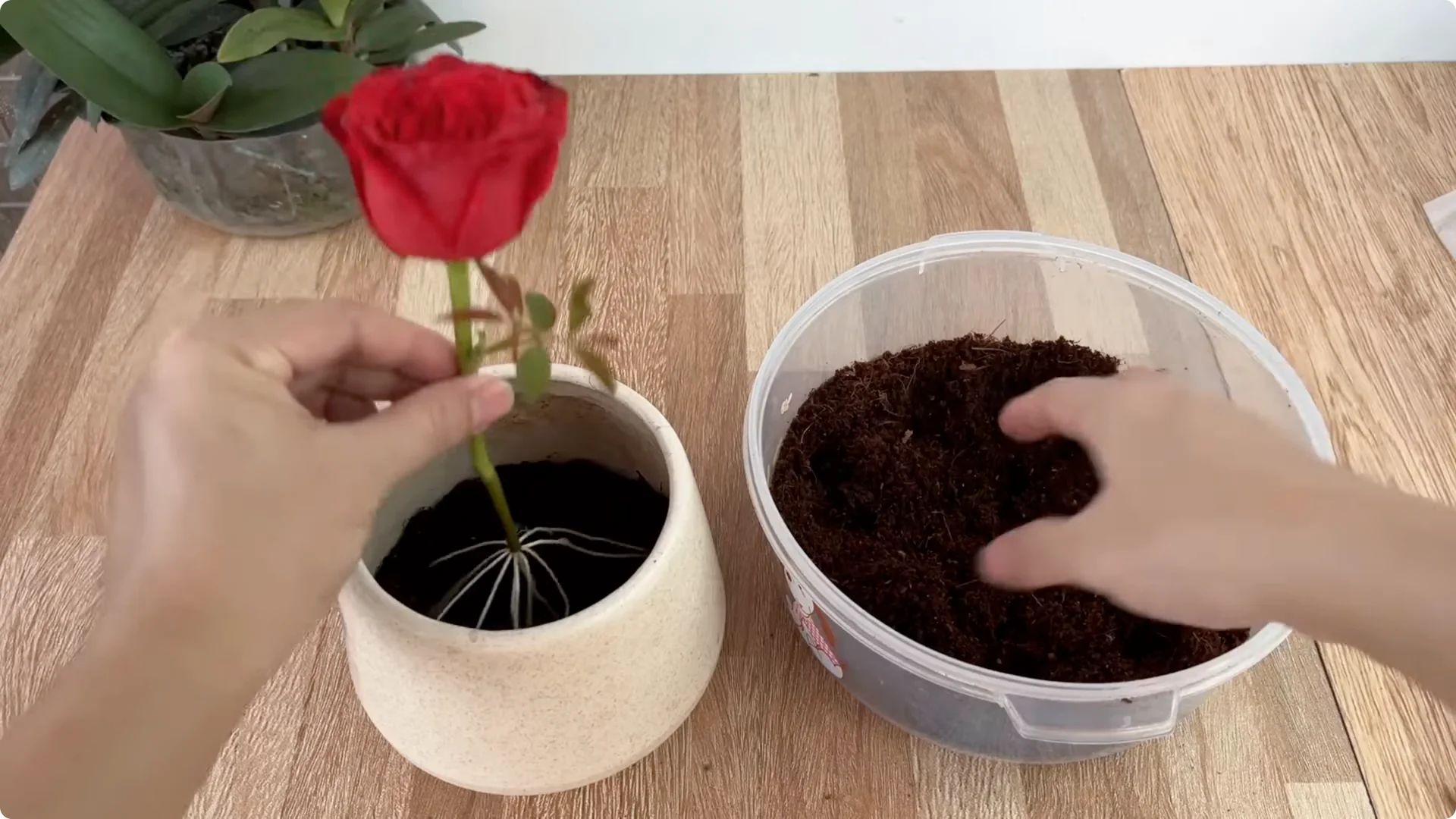
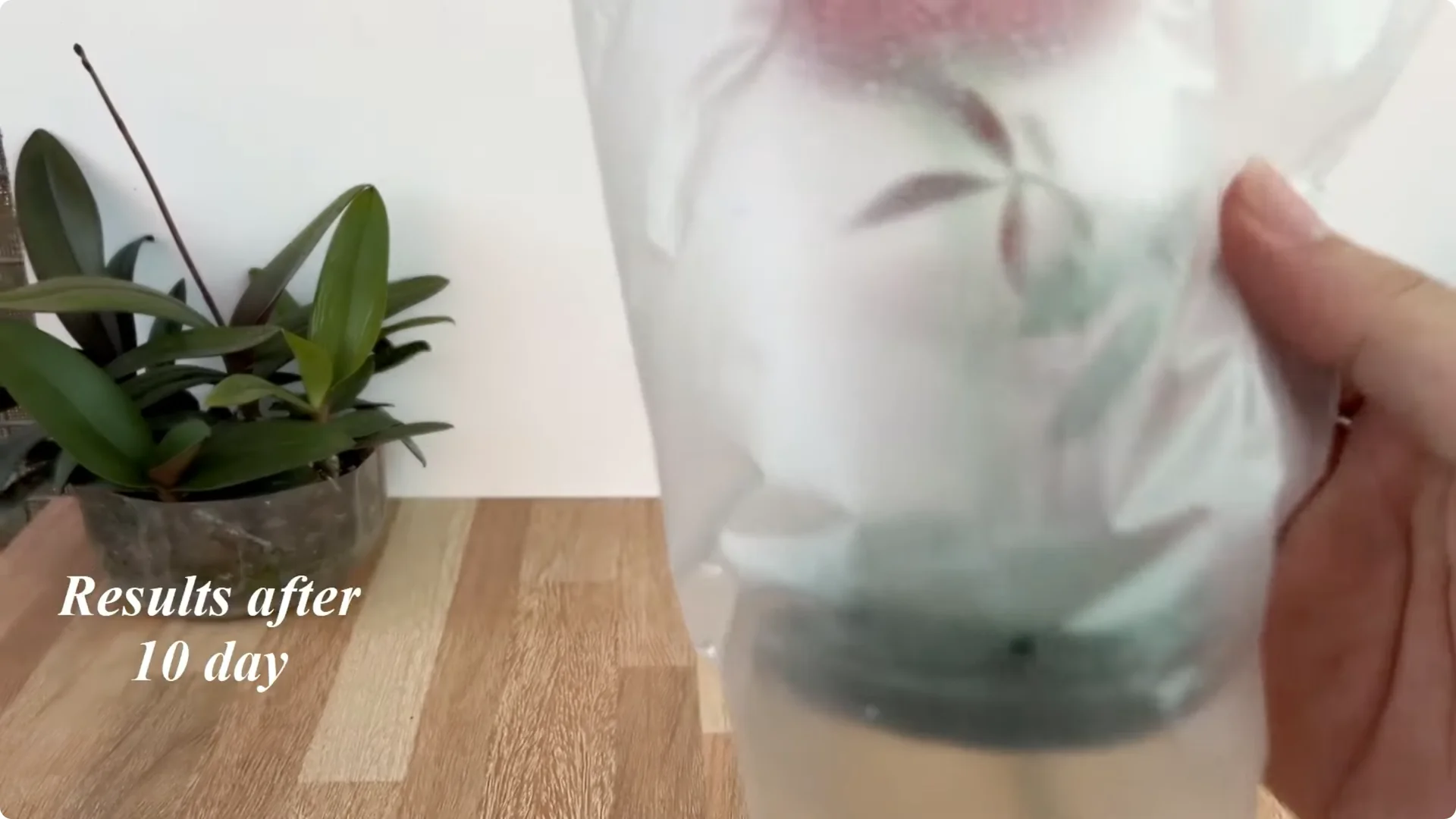
After only about 10 days you will see miracles: white, plump roots begin to grow around the base, proving that the method has worked. The top also sprouts green, full of life.
At this time, gently plant the rooted branch in a pot with a well-drained substrate, ideally treated coconut fiber or mixed with river sand. Care for it like a young rose plant, ensuring enough moisture but not waterlogging.
Final Thoughts
The method of propagating roses with onions, baking soda, and carrots takes advantage of easy-to-find ingredients and is safe, economical, and extremely effective. This is proof that what we have available in the kitchen, if combined, will become a “miracle drug” for the garden. Why don’t you try it today to own more brilliant rose roots created by your own hands?