

I share a unique method of propagating roses using familiar materials that bring strong root stimulation and antibacterial effects. This guide is detailed and scientific, helping you apply it easily and get stable results.
Choose a rose branch that you love and make sure it is not infected with pests. Pick a young branch that is not too young and not too old, with stable wood tissue, rich in sap, and easy to root.
The Beginner’s Rose Propagation Starter Kit 🌹
A simple printable PDF guide to help you root rose cuttings successfully.
Get The Guide →1. Choose the cutting – Garlic-Assisted Rose Propagation
After choosing a suitable branch, remove all the leaves and sharp thorns on the stem to reduce water loss and limit fungal diseases. Cut the branch to 15-20 cm to concentrate nutrients on the base.
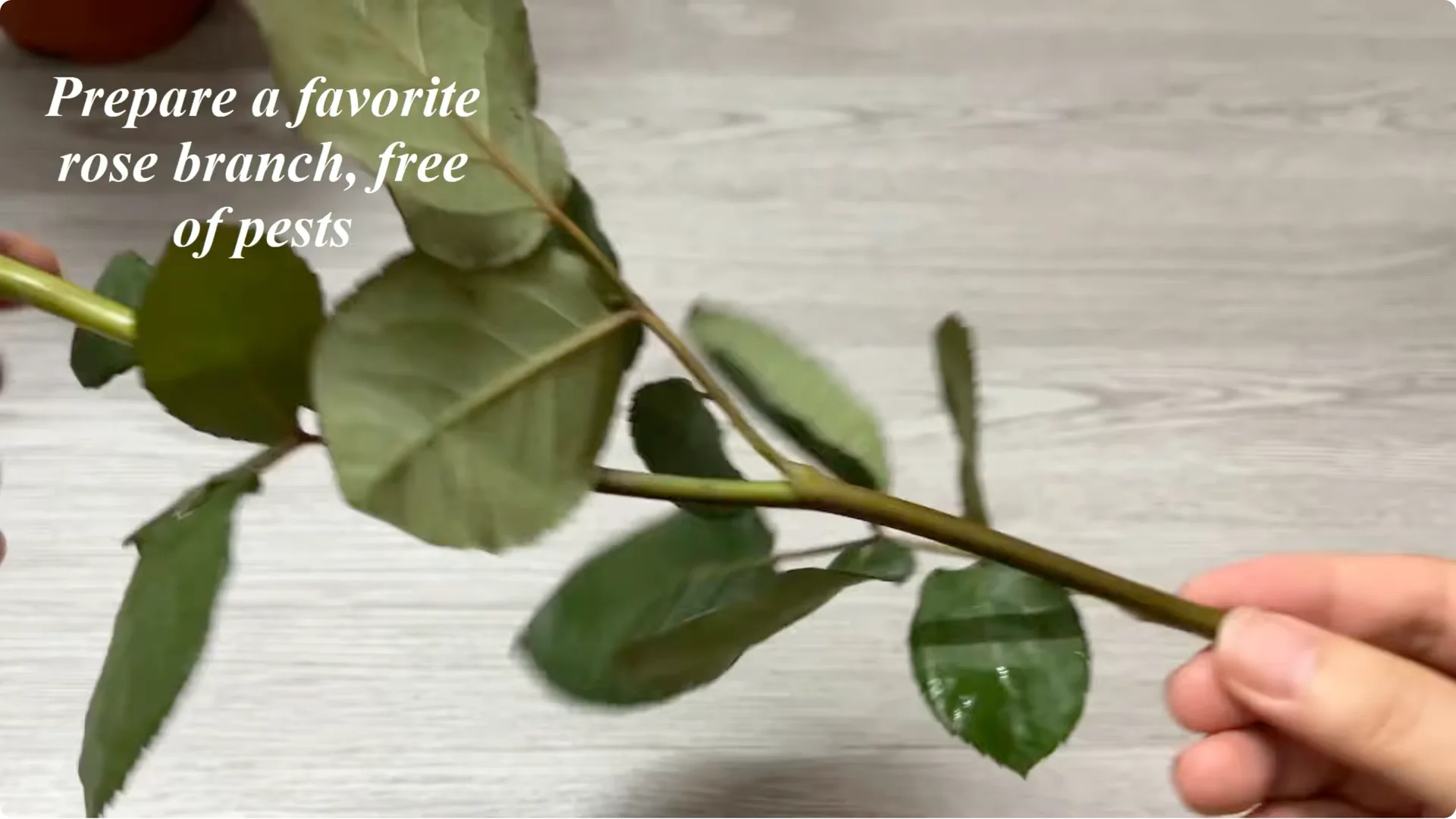
Trim a section of bark at the base of the branch, about 0.5-1 cm long. This exposes the cambium tissue that divides strongly, helping the rooting process take place faster and more effectively.
Read More: Onion Rose Branch Grows Roots Blooms
2. Garlic prep – Garlic-Assisted Rose Propagation
Garlic contains allicin, a strong antibacterial compound that helps eliminate fungi and bacteria that cause root rot. Take 1 clove of garlic, peel it thoroughly, and cut it in half.
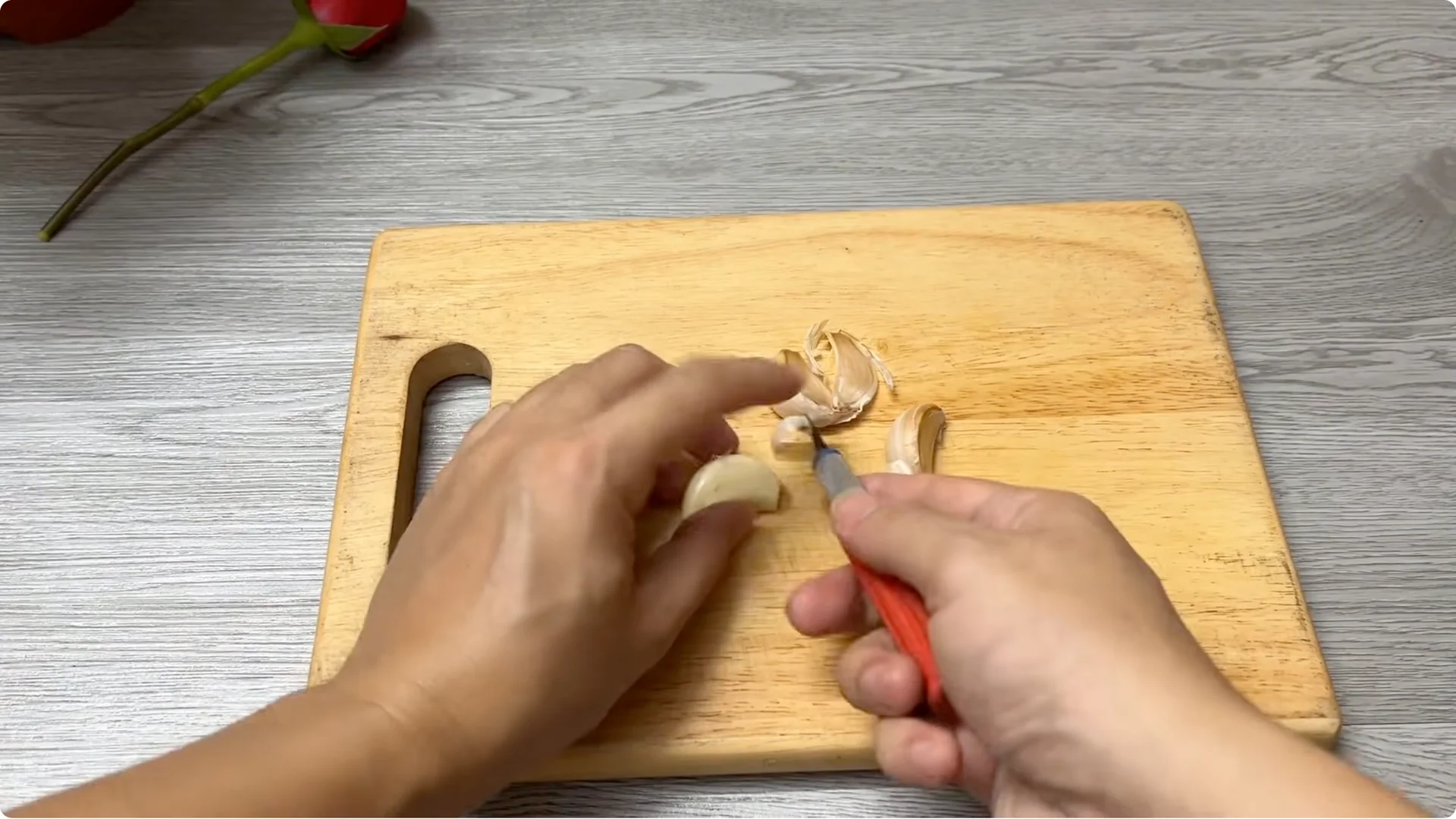
Use a sharp knife to make a small hole in the middle of the garlic clove, matching the diameter of the rose branch. Insert the base of the branch into the garlic so the active ingredient can penetrate directly into the trimmed part.
Use the remaining garlic to rub evenly over the entire branch. This creates a natural protective layer and helps clean the tissue system of the branch before planting.
Leave the branch for about 30 minutes for the active ingredient to penetrate to the maximum.
3. Make the solution – Garlic-Assisted Rose Propagation
Peel the remaining garlic cloves, chop them, and put them in a clean plastic cup. When soaked in water, garlic releases antibacterial compounds and micronutrients that support root formation.

Cut a 2×2 cm piece of potato, then make a small hole in the middle just the size of the rose branch. Potatoes are rich in starch, vitamin B6, and natural enzymes that help retain moisture, stabilize nutrients, and keep the branch tissue from drying out.
Chop the remaining potatoes and put them in the cup containing garlic. Pour in 500 ml of warm water, stir well, and let it stand for 30 minutes so the active ingredients dissolve.
Stir the garlic-potato mixture again until homogeneous, then filter the clear liquid into a clean cup. This antibacterial solution provides basic nutrients and helps the base avoid waterlogging and rot.
Pour 100 ml of beer into the cup. Beer contains vitamin B, malt sugar, and a small amount of fermented yeast that stimulates plant tissue growth, supporting early budding and rooting.
Mix the beer with the garlic-potato solution, then dilute it completely with 500 ml of clean water. This creates a balanced solution that is not too concentrated and will not shock the branches.
Read More: 1 Cup Grow Rose Plant Flowers
4. Medium and setup – Garlic-Assisted Rose Propagation
Use a clean plastic cup and pour in about 1/4 cup of treated coconut fiber. Press lightly to create stability while keeping porosity.
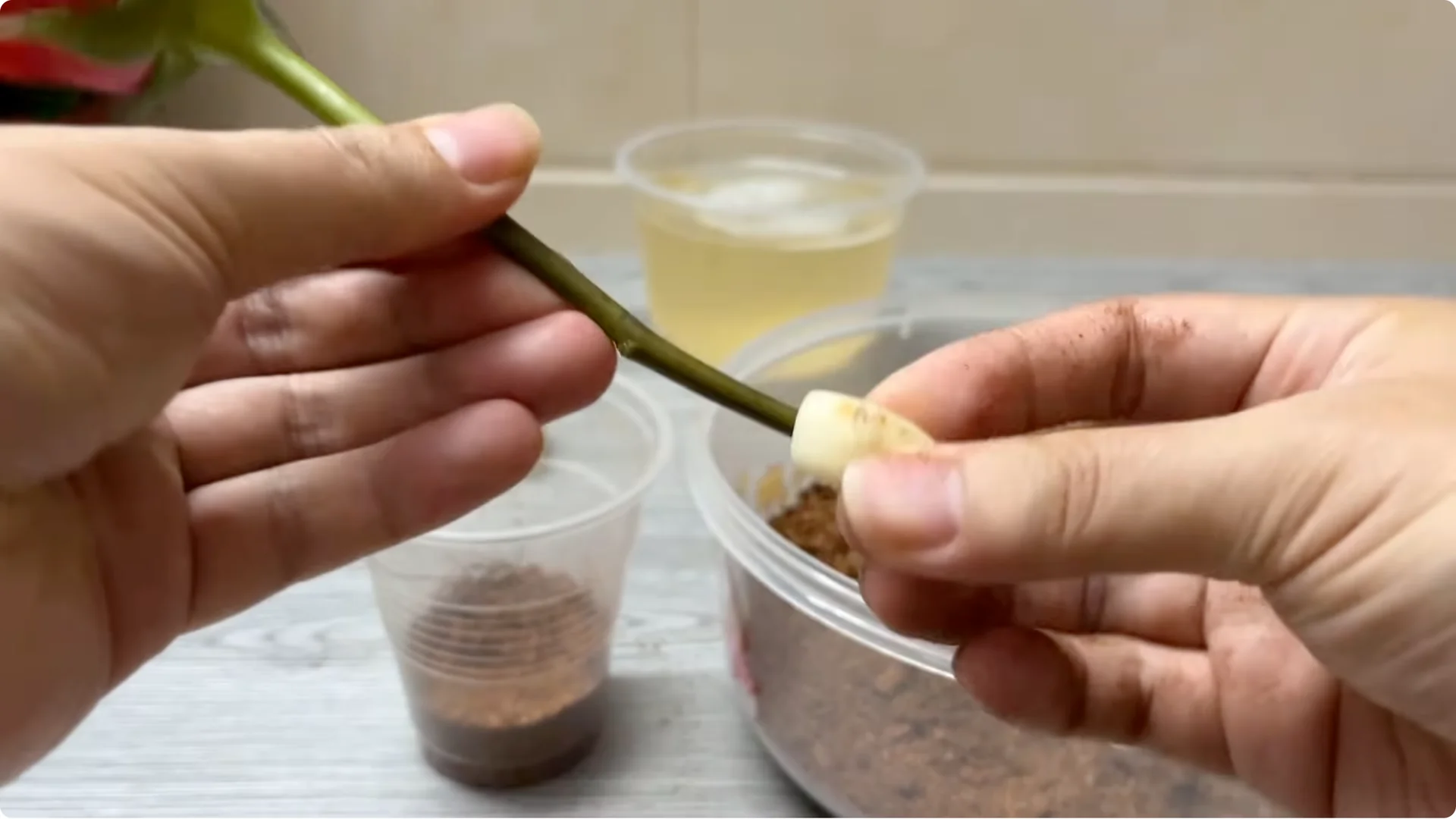
Take the branch from the garlic clove and insert it into the small hole in the middle of the 2×2 cm potato piece. Place the entire potato piece in the middle of the coconut fiber layer.
Add coconut fiber to fill the cup and press lightly to fix the branch while keeping the necessary porosity. Pour the garlic – potato – beer solution into the cup with enough amount to moisten the substrate, avoiding excess water.
5. Humidity and placement – Garlic-Assisted Rose Propagation
Cover the mouth of the cup with a plastic bag or place a transparent plastic cup on top. This helps retain moisture, reduce evaporation, and maintain a stable environment.
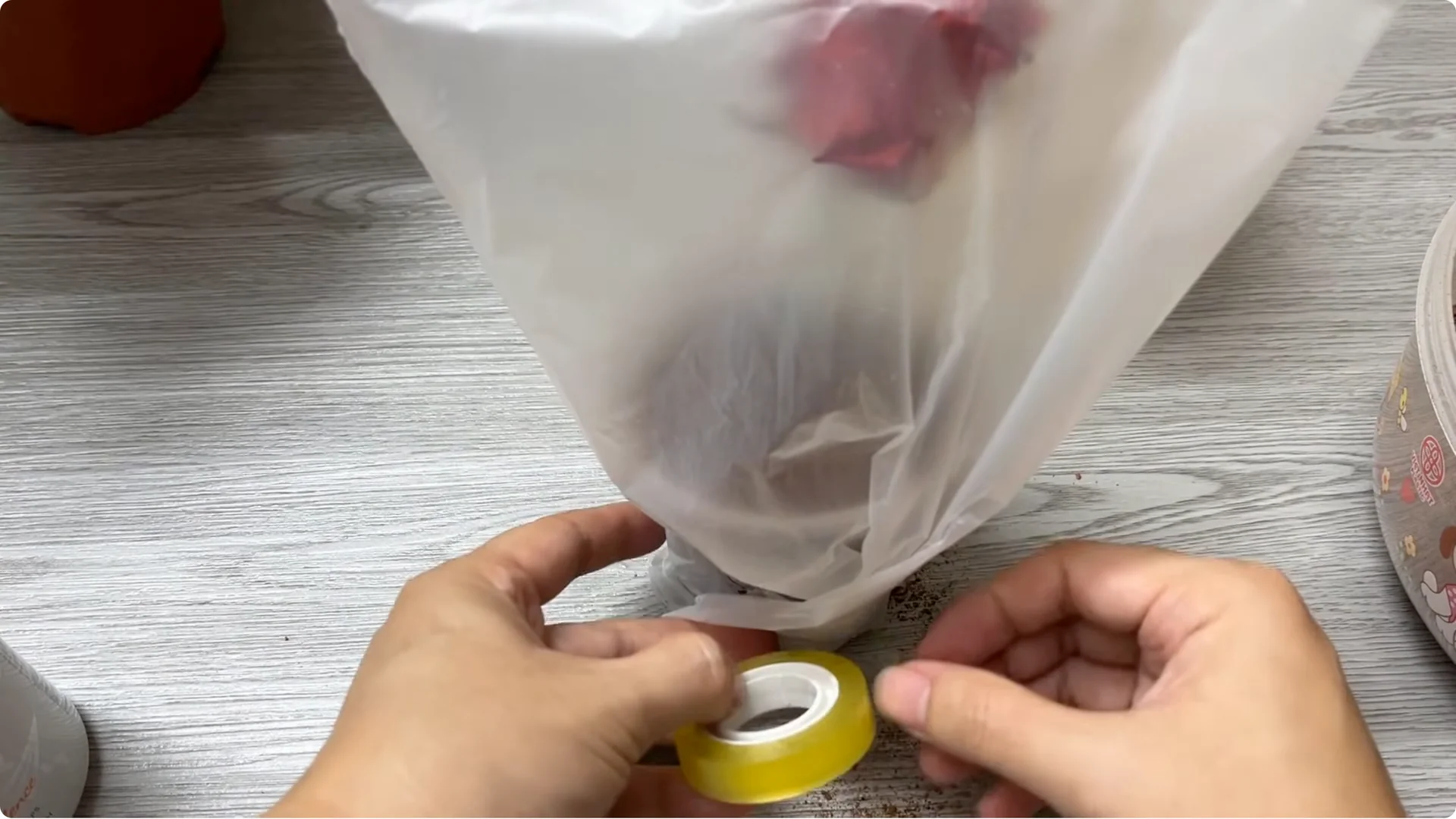
Place the cup in a cool place, avoid strong winds, and do not expose it to direct sunlight.
6. Rooting progress – Garlic-Assisted Rose Propagation
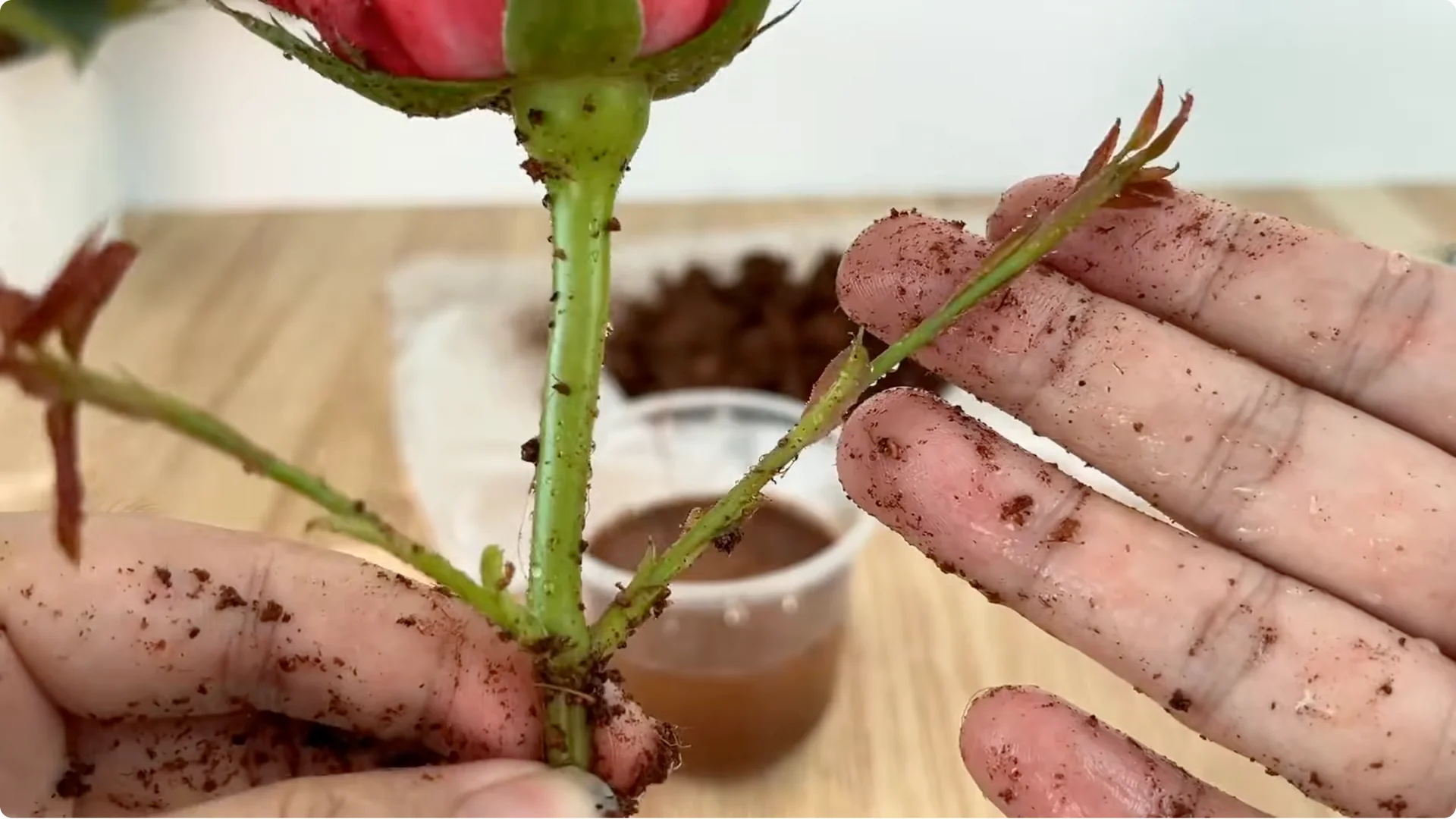
If you follow the process correctly, after about 10 days you will see positive signals. The flower branch sprouts new buds that are green and healthy.
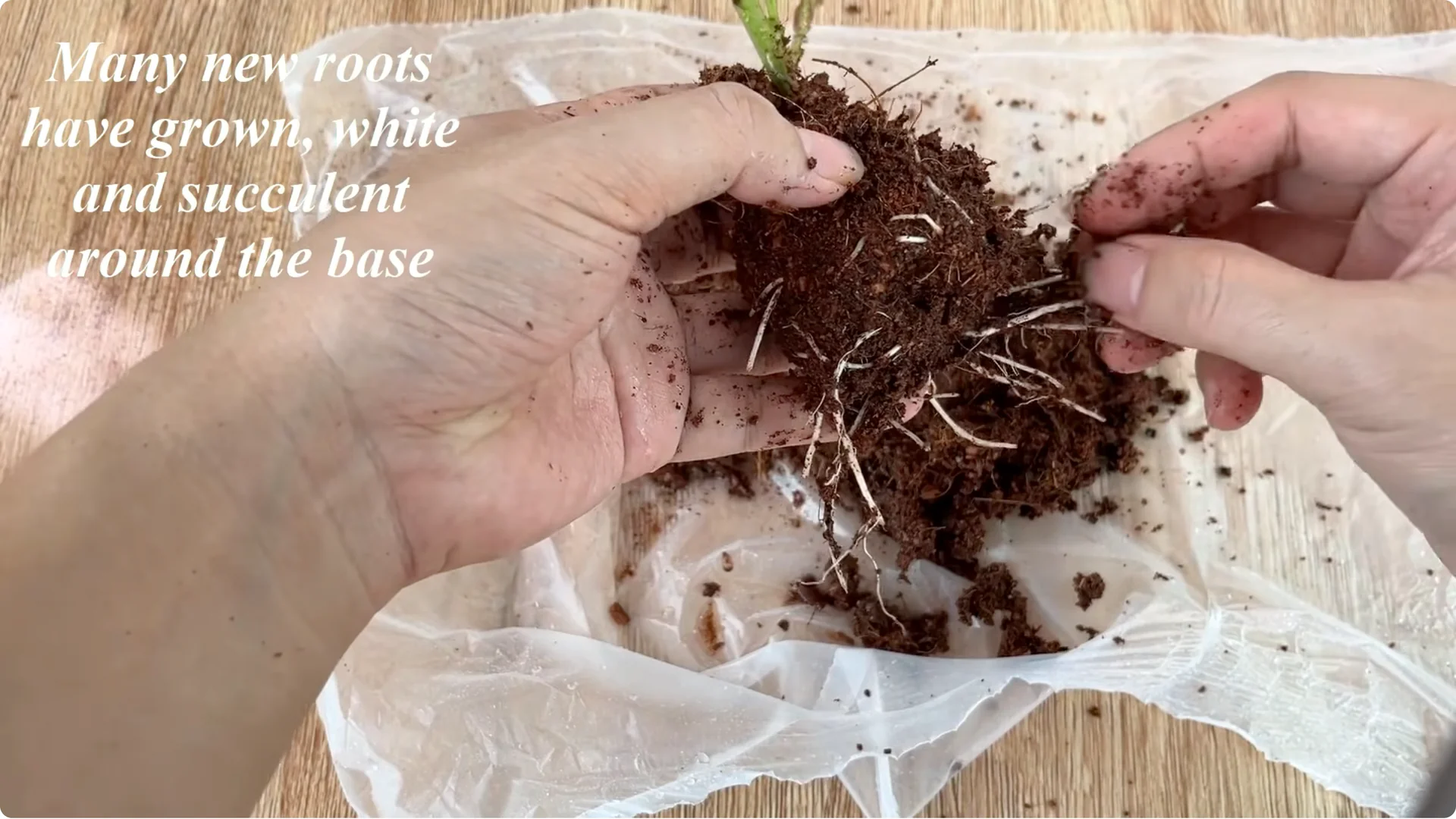
Around the base, many white, plump, and succulent roots appear. This is a clear sign the branch has adapted completely.
7. Transplanting – Garlic-Assisted Rose Propagation
Once the roots have fully developed, plant the cuttings in a pot with good drainage. Use river sand as a substrate to help the roots breathe and grow strongly.
Read More: Eggshells Grow Strong Rose Roots
Final thoughts – Garlic-Assisted Rose Propagation
This detailed guide gives you an effective, easy, and safe method of propagating roses. Follow the steps carefully, keep conditions stable, and enjoy strong rooting and healthy growth. Wishing you success and a garden full of colors and fragrance.
About The Author

The Beginner’s Rose Propagation Starter Kit 🌹
A simple printable PDF guide to help you root rose cuttings successfully.
Get The Guide →