

I will share a simple but extremely effective method of root stimulation and rose branch recovery using three familiar ingredients. This formula suits weak flower branches, signs of mold, or slow growth.
For a quick primer on a very easy approach, see this simple way to propagate roses.
Rose Cutting Propagation: Why This Works
Ginger contains many antioxidants and essential oils with strong antibacterial properties. It helps clean wood tissue, limit fungus, and promote wound healing. Warm water helps the essential oils and nutrients in ginger dissolve more easily.
Honey contains simple sugars, enzymes, and natural antifungal compounds that plants can easily absorb. Coca-Cola adds sugar, mild acid, trace minerals, and dissolved CO₂. Combined, this creates a nutritional environment that activates plant tissue metabolism, helping roots grow faster and stronger.

Rose Cutting Propagation: Step-by-Step
1) Prepare the ginger infusion
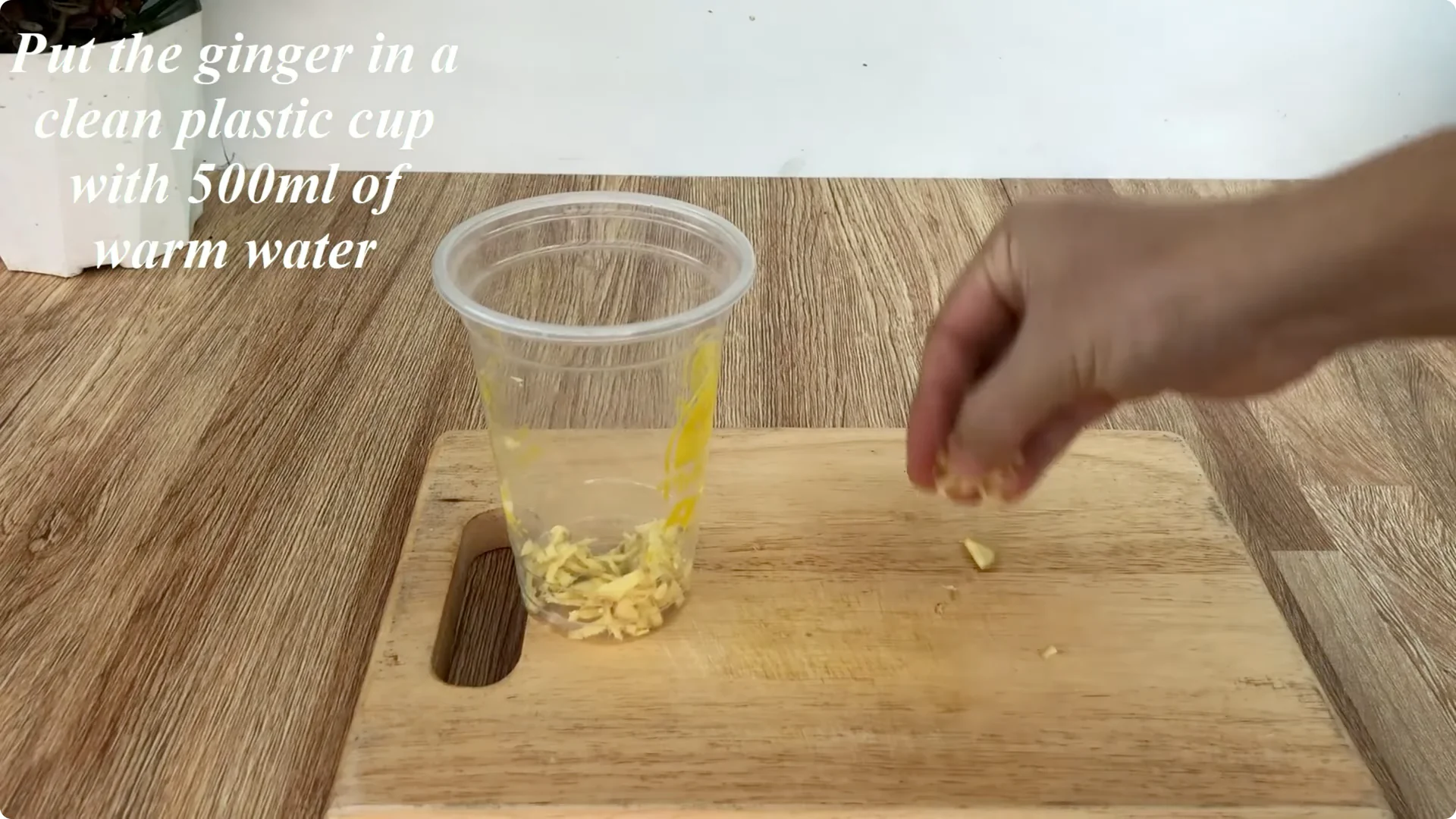
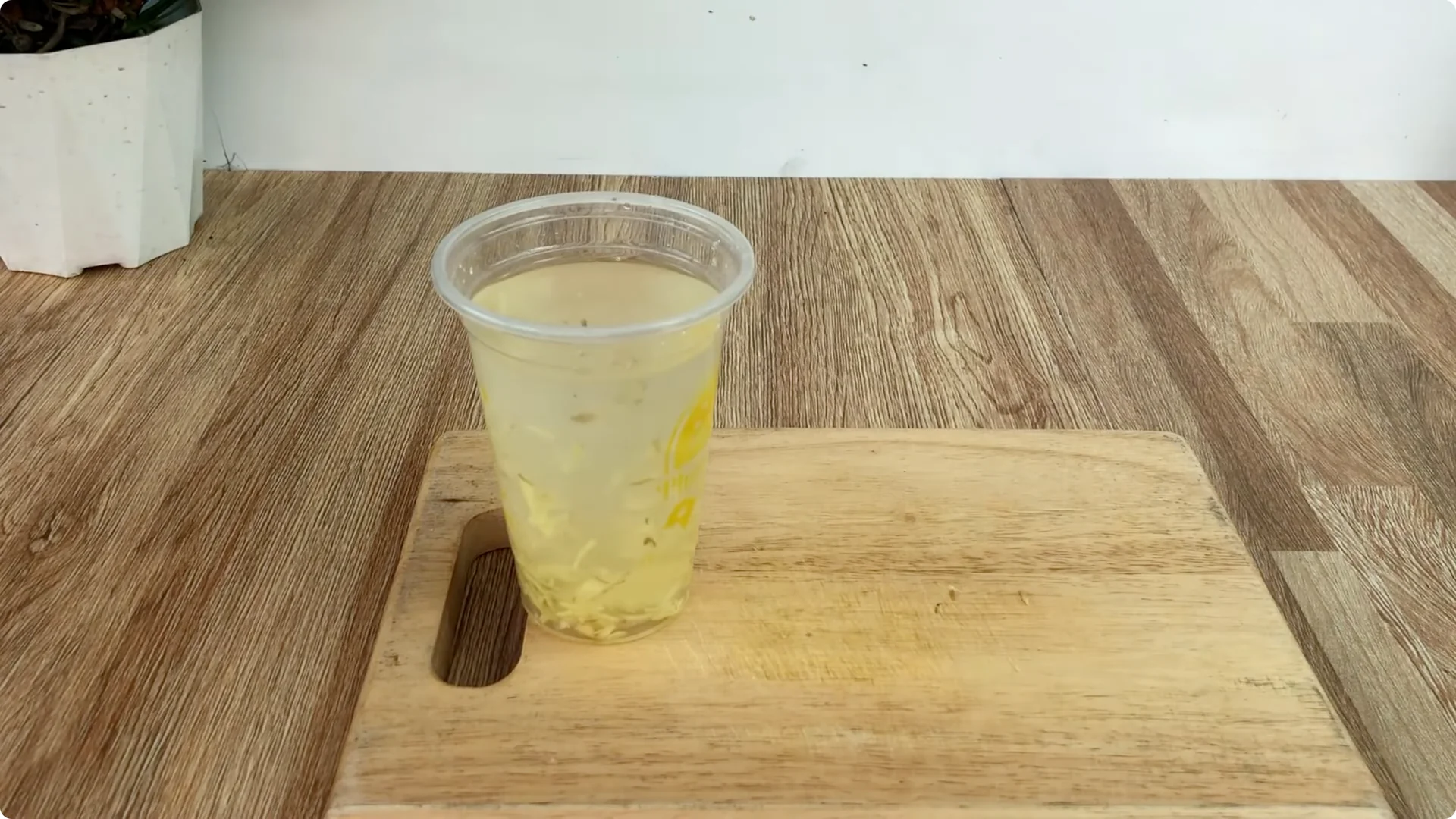
Take about 10 grams of fresh ginger, wash it thoroughly, then chop it. Put the sliced ginger in a clean plastic cup, add 500 ml of warm water, and stir gently. Let the mixture sit for 15 minutes so the active ingredients can penetrate the water.
2) Select and prepare the cutting
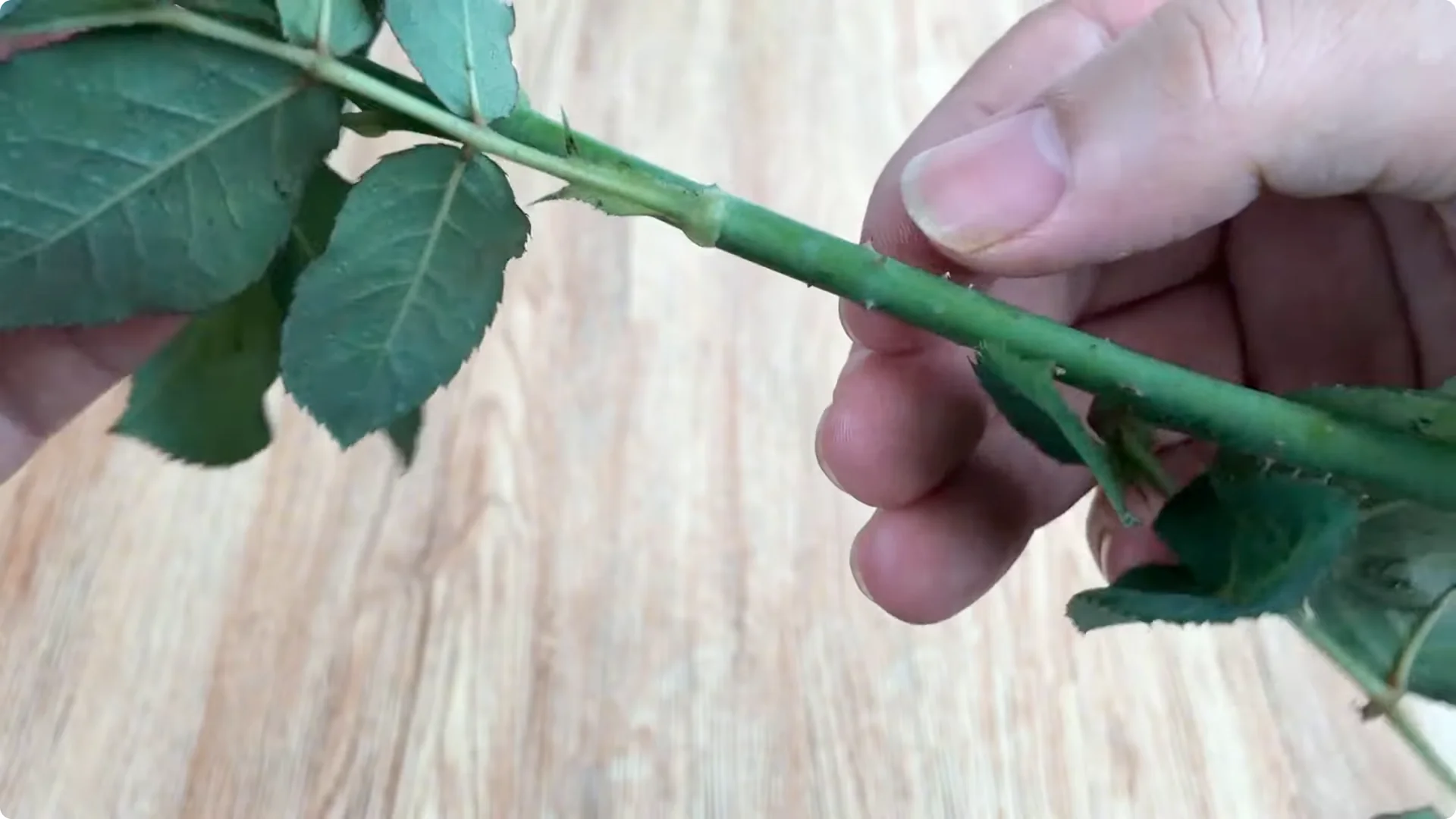
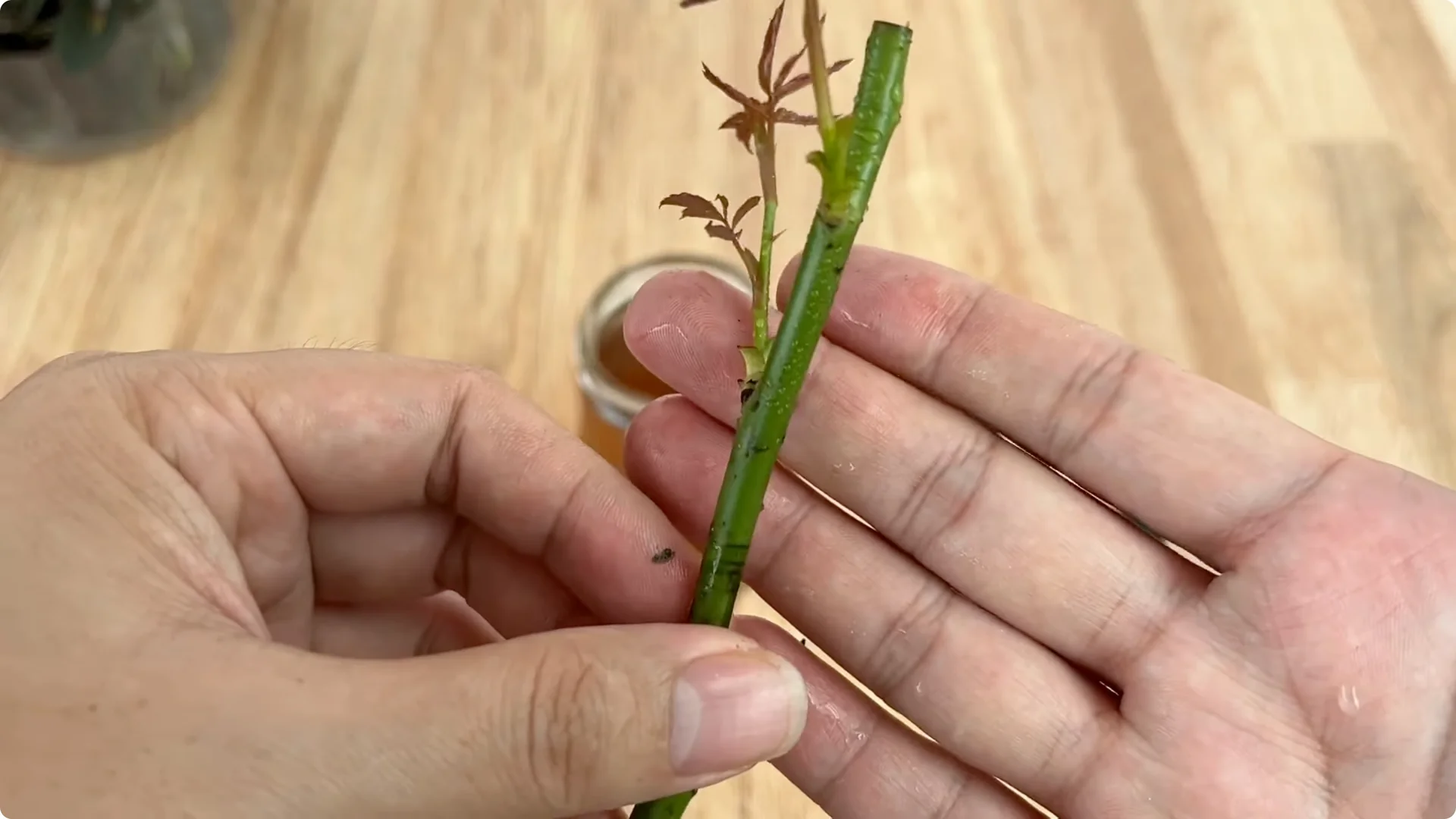
Choose a rose branch of moderate age, not too young and not too old. Such a branch contains a stable amount of sap, most suitable for propagation. Cut off all leaves and sharp thorns on the branch to limit water loss.
If the flower shows signs of mold, cut it off completely. Keeping the flower on the branch only consumes nutrients and increases the risk of root rot. Re-cut the branch to a length of about 15-20 cm, just enough to nourish the root stimulation stage.
Trim a thin layer of bark at the base to expose the cambium tissue, the meristematic tissue area with strong rooting ability. After preparation, put the flower branch in the cup of ginger water. For a compact single-container approach, see this one-cup rapid growth method for rose branches.
3) Soak with honey
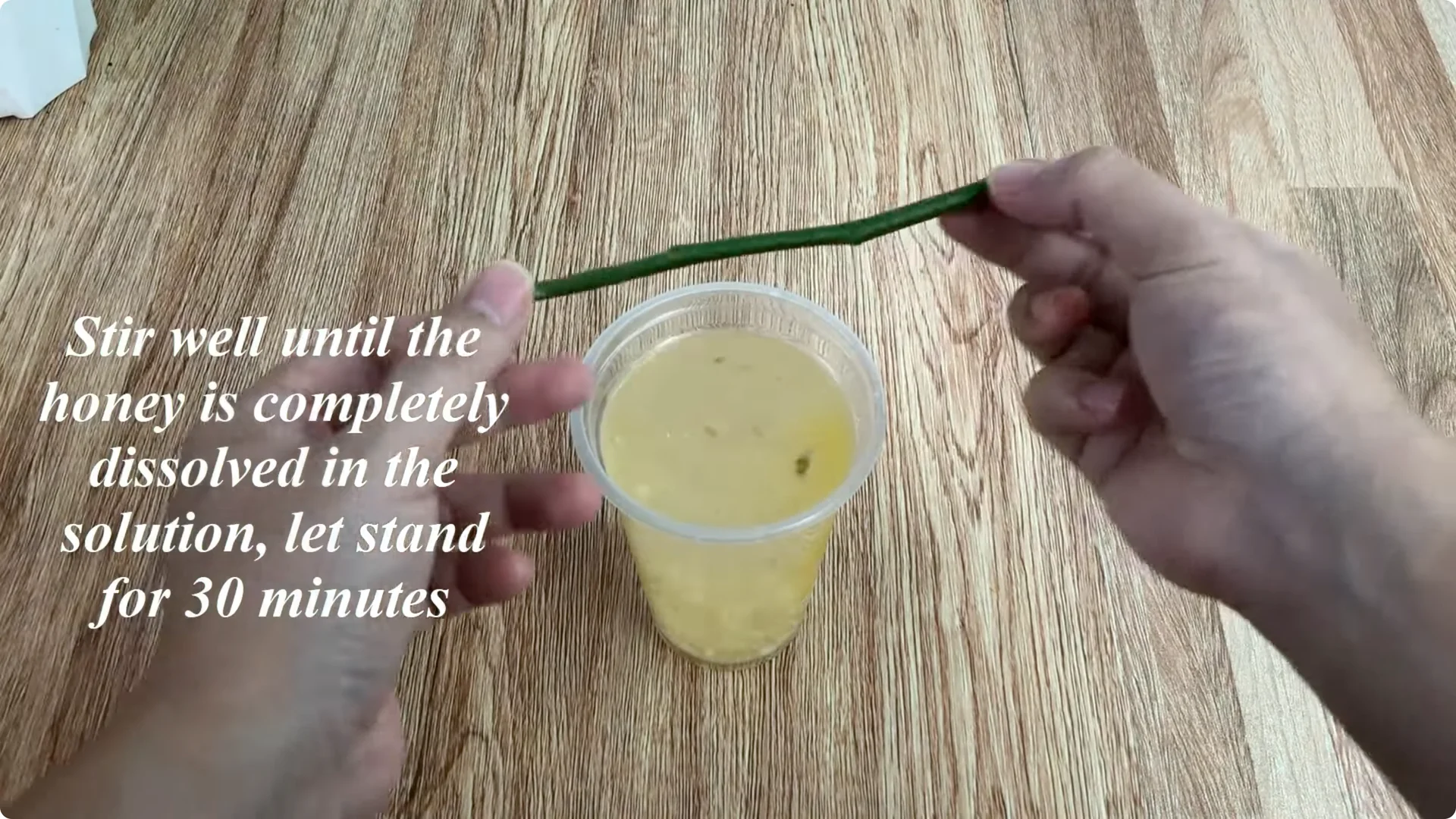
Add 1 spoon of honey to the cup of ginger water. Stir well to completely dissolve the honey in the solution. Place the branch in the cup and leave it for 30 minutes so the mixture penetrates the pruned tissue at the base and stimulates the cells to start working strongly.
4) Filter and fortify with Coca-Cola
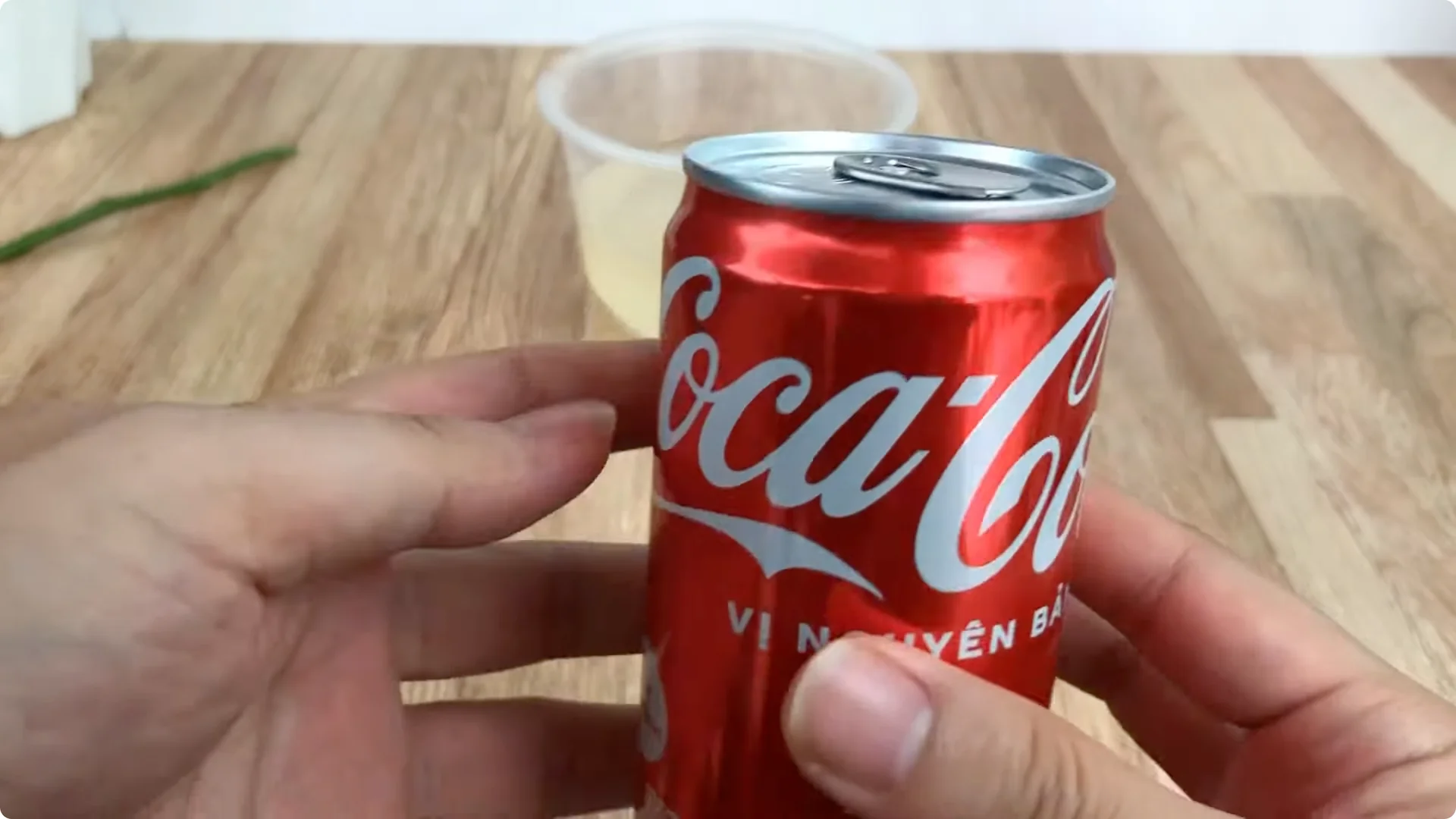
After soaking for enough time, remove the rose branch from the solution. Continue stirring the ginger-honey mixture, then filter to get clear water and remove residue. Pour 100 ml of Coca-Cola into the filtered solution.
Mix well and dilute with 0.5 liters of clean water to achieve the right balance for rose branches. Prepare a clean glass jar for the next step. Keep the solution ready.
5) Set up the rooting jar
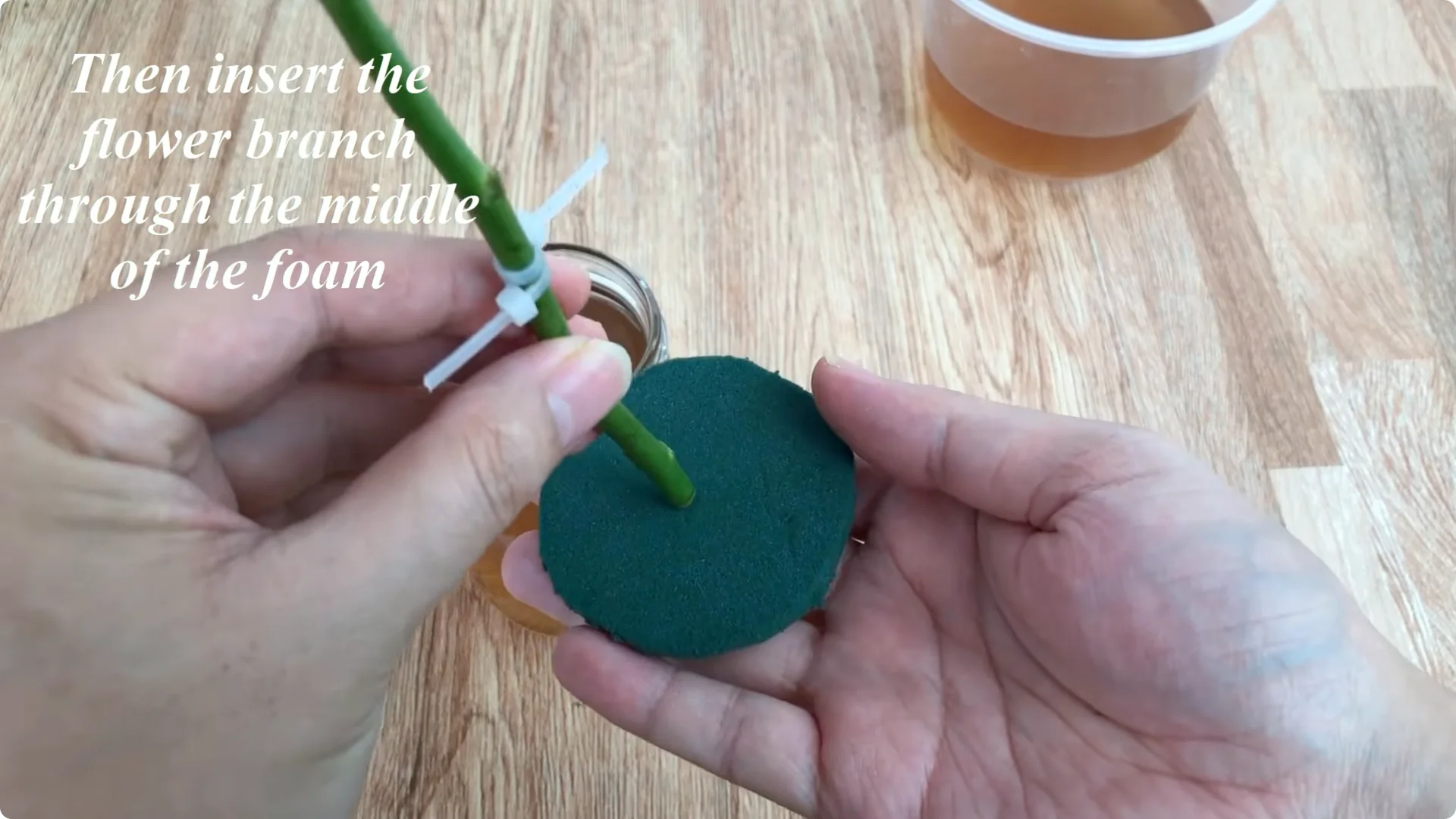
Cut a piece of foam to the exact size of the jar mouth. Fill the jar with the Coca-Cola-ginger-honey solution you just mixed. Use a small cable tie to tie it lightly to the stem of the flower branch to help fix the position when inserting through the foam.
Pierce the flower branch through the middle of the foam so the base is completely submerged in the solution. The foam fixes the branch upright, prevents air from entering and causing oxidation of the root, and keeps humidity stable by limiting evaporation. Make sure the base stays under the solution at all times.
6) Create humidity and choose placement
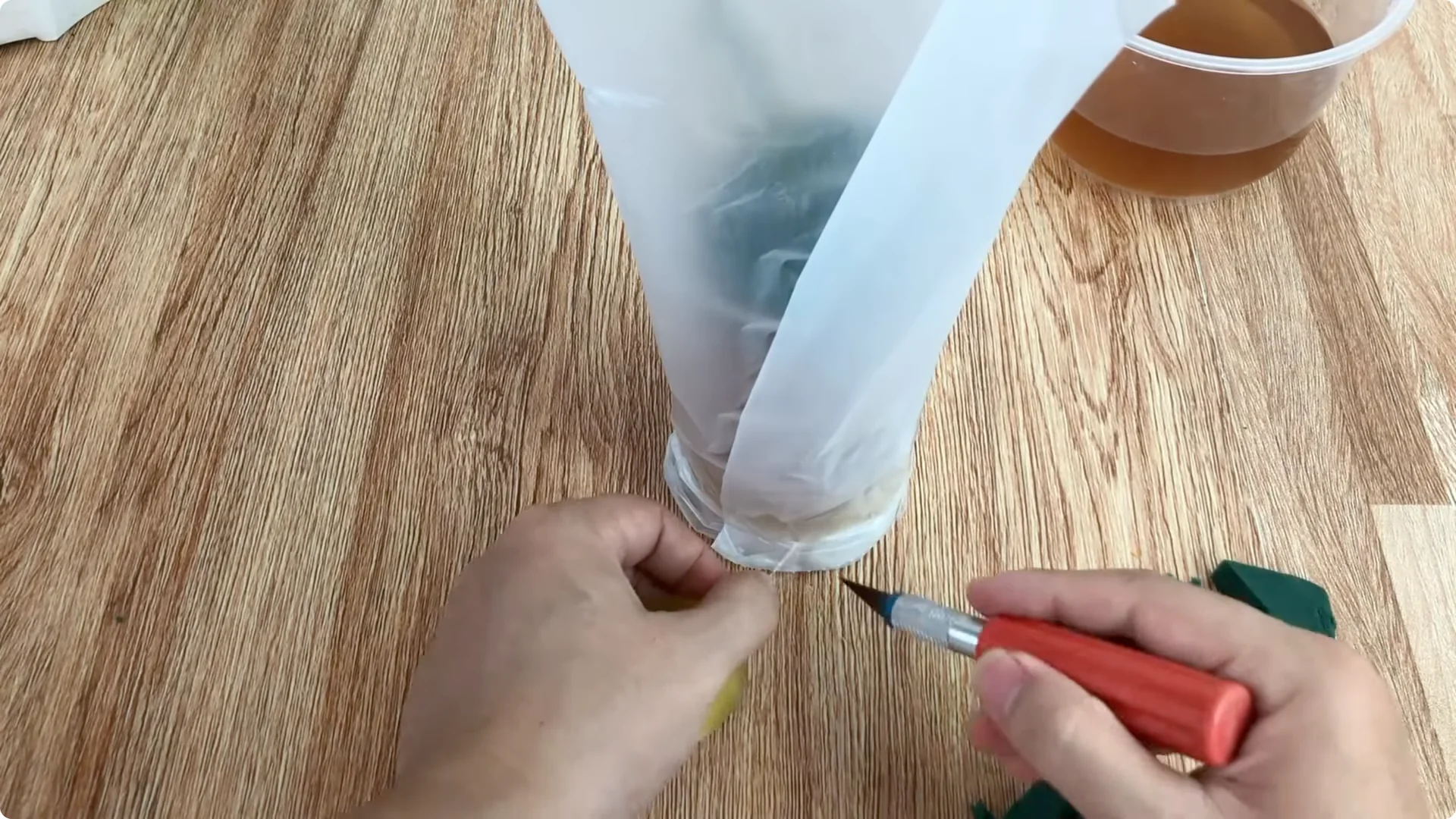
Cover the entire mouth of the jar with a plastic bag or a transparent plastic cup to create a closed space. This maintains high humidity, reduces water evaporation, and protects the branch from sudden temperatures or strong winds. Place the jar in a cool spot with soft light, and do not let the sun shine on it because high temperatures cause water vapor to condense and lead to root rot.
Rose Cutting Propagation: Rooting and Aftercare
If you follow the steps correctly, after only 10 days you will see new roots grow around the base, pure white, succulent, and very healthy. The branch begins to bud or sprout new shoots, showing that the tissue system has adapted completely. This is your cue to move on.
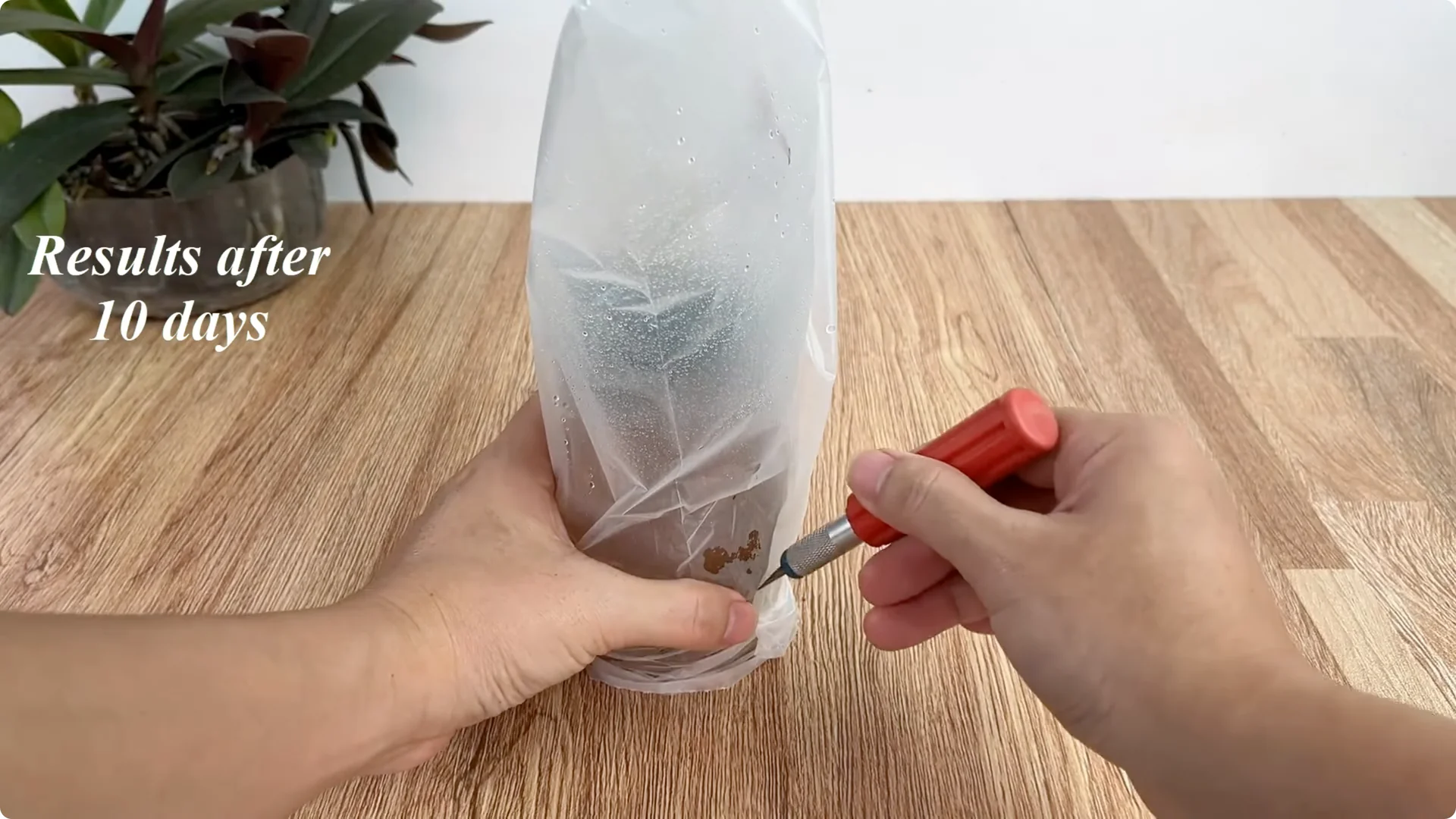
Plant the rooted branch in a new pot using river sand as a substrate. River sand is very airy, helping the roots grow quickly and not be waterlogged. For another simple trick that supports strong results, see this easy rose propagation trick.
Final Thoughts
This ginger-honey-Coca-Cola method is simple, gentle on plant tissue, and highly applicable for weak or slow rose branches. Keep the environment humid, avoid direct sun, and transplant to airy river sand once the roots are ready. Enjoy steady progress and the satisfaction of propagating many rose plants successfully.