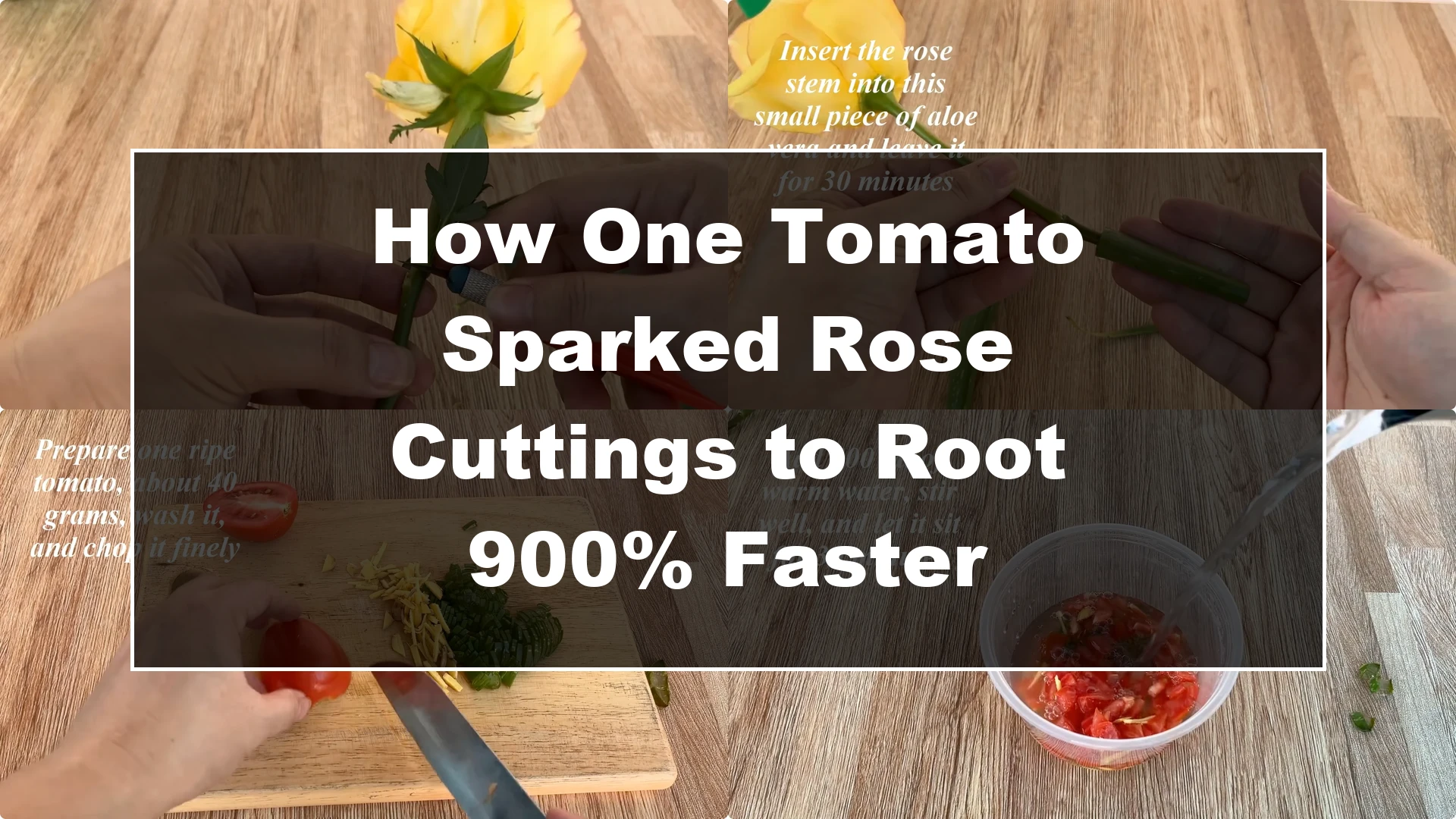
A unique and effective method of propagating roses by cuttings is especially suitable for those who love growing flowers naturally, simply, and easily at home. It still ensures a high rooting rate and stable plant growth from the very beginning.
This guide shows how to root rose cuttings using aloe vera, ginger, and tomatoes with proper moisture control. Each step creates a favorable environment for the cutting to revive and grow.
1. Rose Cutting Propagation: Prepare the Cutting
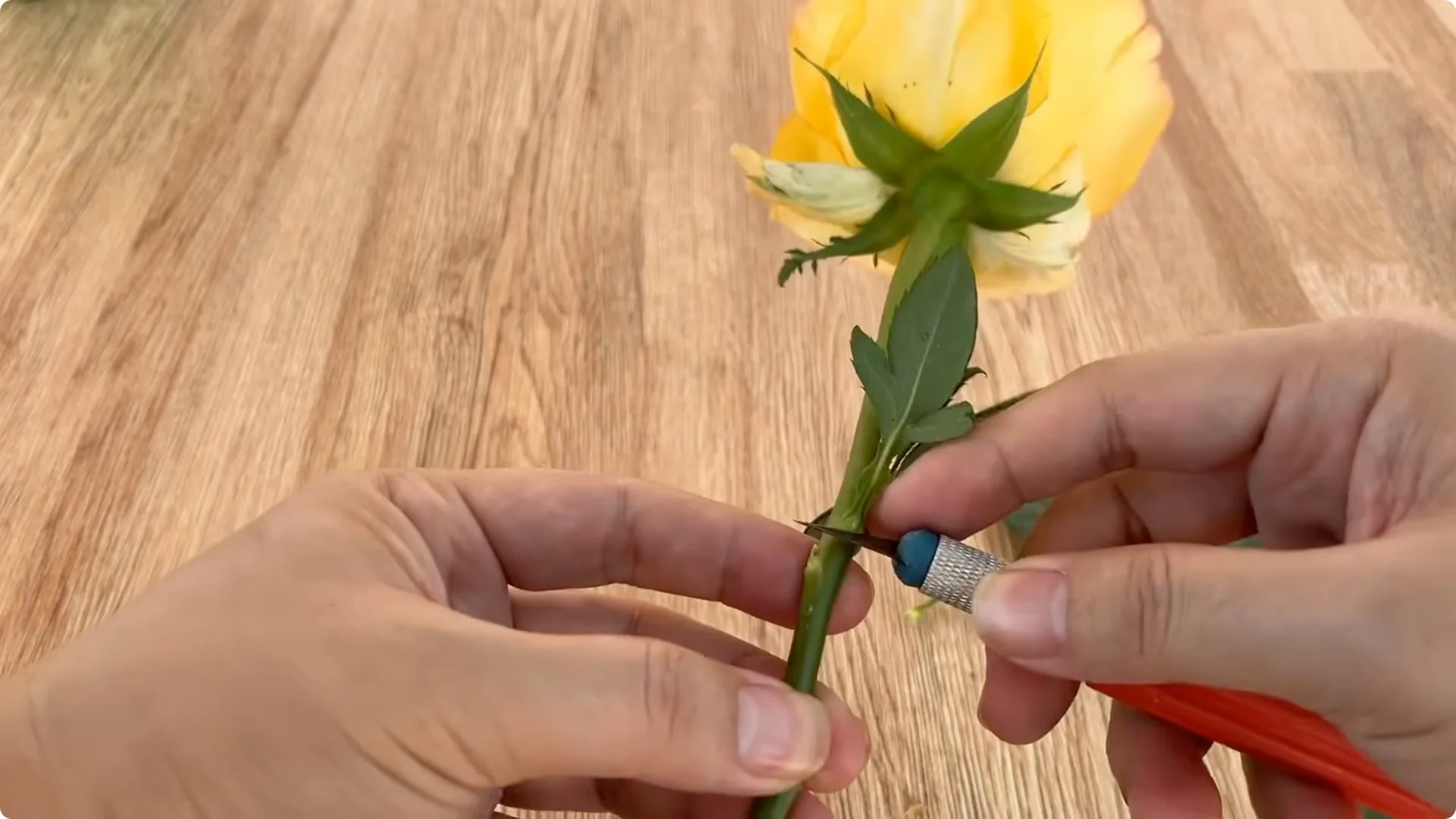
First, you need to prepare a healthy rose cutting that is neither too young nor too old. A standard cutting will be greenish-brown, sturdy, and free from pests and diseases.
After selecting a suitable cutting, remove all leaves, thorns, and old, damaged petals to minimize water loss and prevent bacterial infection. Next, trim the cutting, leaving it about 20 cm long. This is the ideal length to help the cutting adapt and concentrate nutrients for new root formation.
2. Rose Cutting Propagation: Prime With Aloe Vera
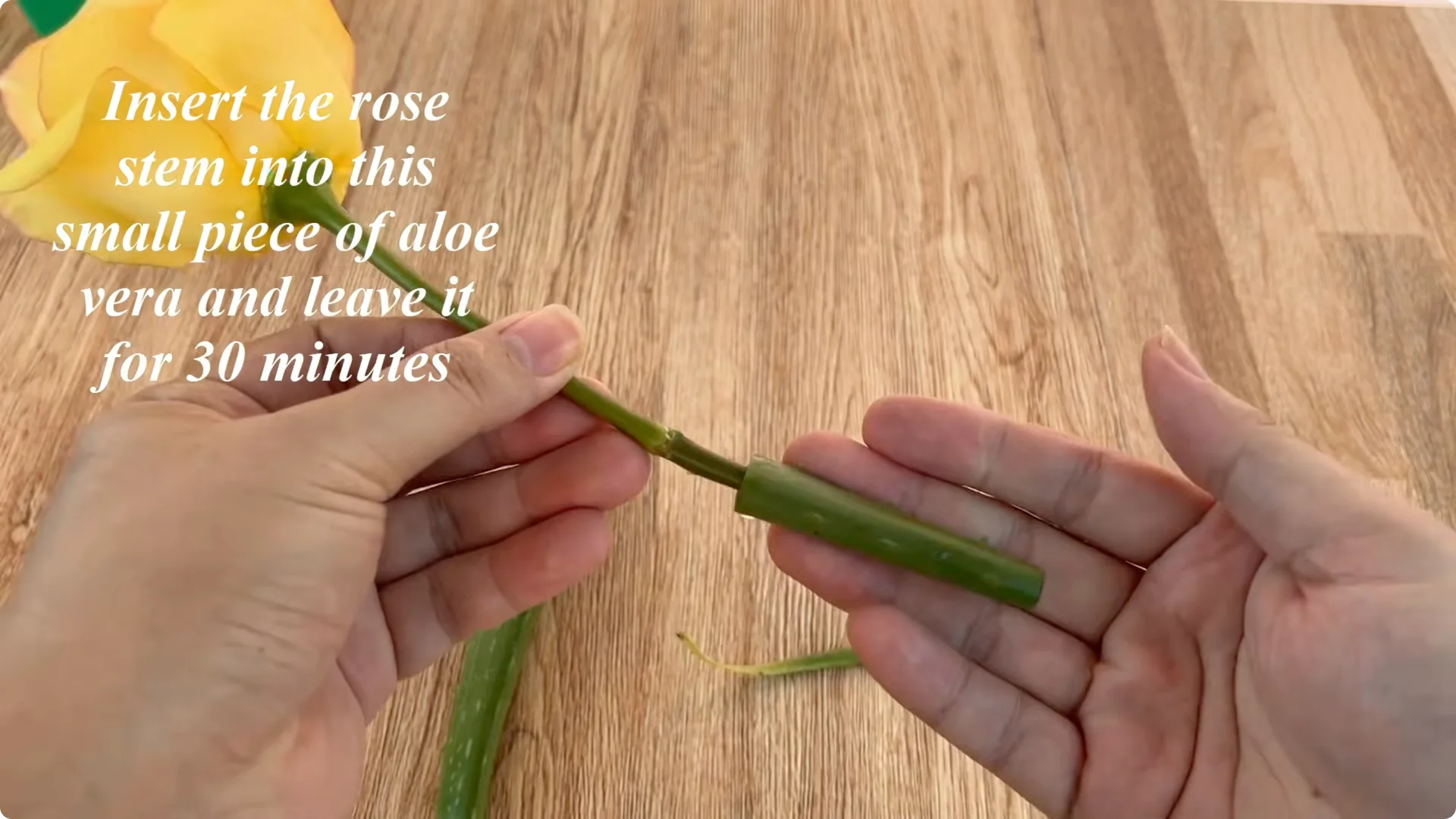
After preparing the cutting, prepare a fresh aloe vera leaf. Choose aloe vera leaves that are thick, juicy, and undamaged. Wash the aloe vera thoroughly and cut off a small section about 6-8 cm long.
Use this section to directly insert the base of the rose stem deep into the aloe vera gel and leave it for about 30 minutes. During this time, the aloe vera gel will coat and soothe the cut, while providing natural moisture, enzymes, and growth stimulants, helping the stem tissue recover quickly and prepare for root growth. Cut the remaining aloe vera into small pieces.
3. Rose Cutting Propagation: Boost With Ginger and Tomato
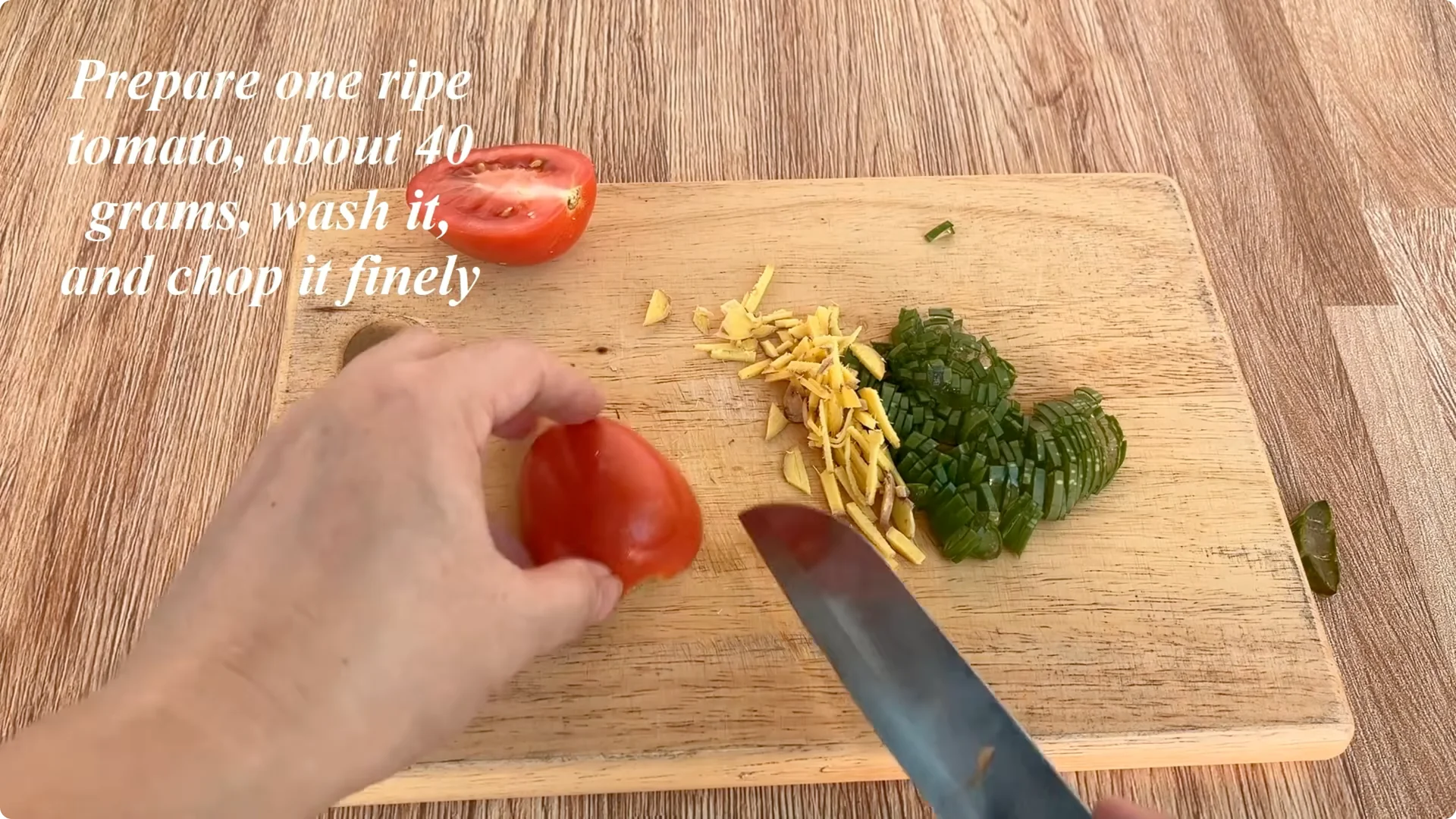
Next, take about 10 grams of fresh ginger, wash it, and chop it finely. Ginger has warming properties and strong antibacterial effects, helping to limit fungal diseases and stimulate sap circulation.
Then, prepare a ripe tomato, weighing about 40 grams, wash it, and chop it finely. Tomatoes contain many vitamins, organic acids, and minerals, which help nourish young roots and promote cell division.
4. Rose Cutting Propagation: Make the Nutrient Solution
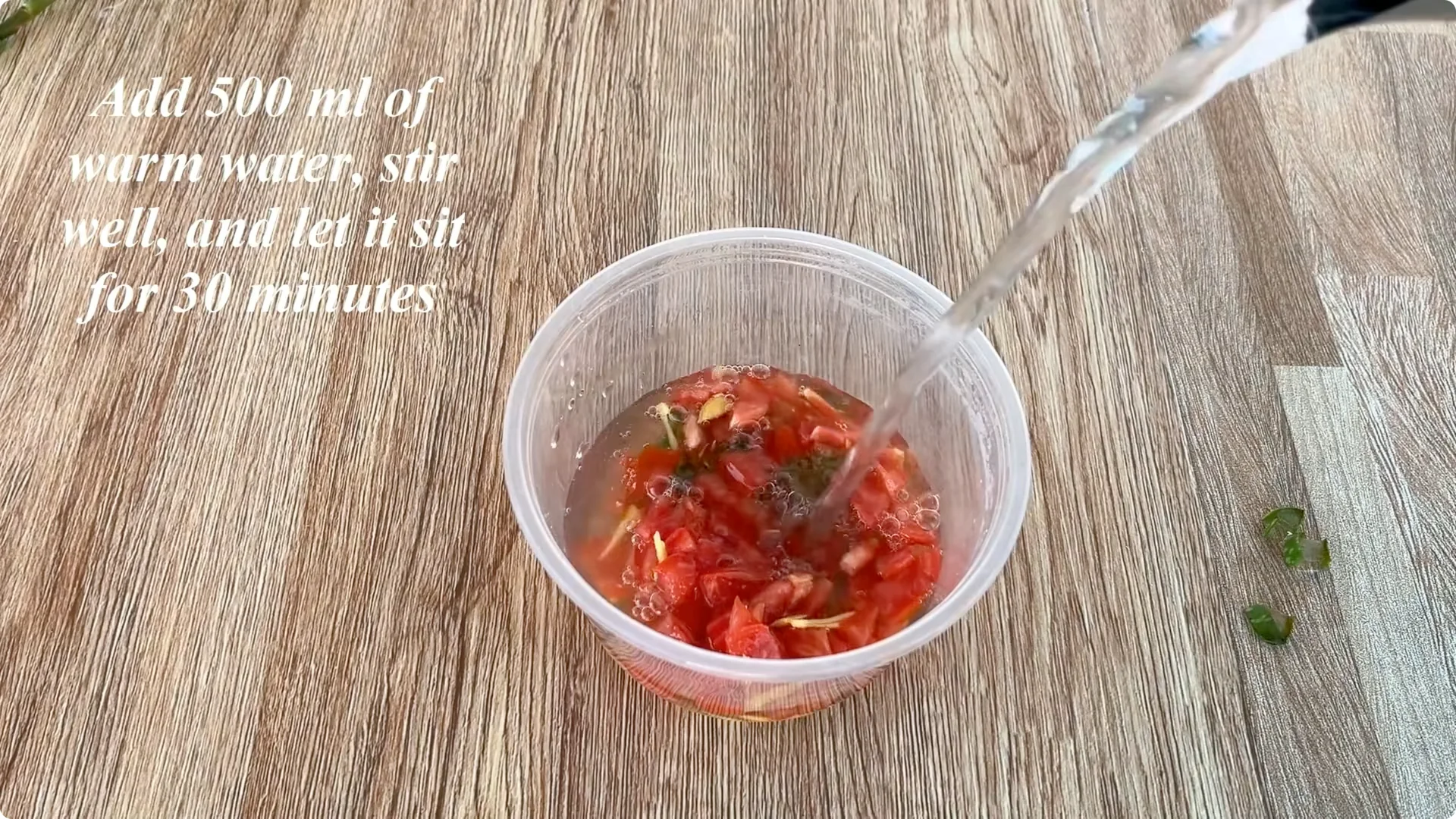
Combine the aloe vera, ginger, and tomato in a clean plastic cup. Add about 500 ml of warm water, stir well, and let it sit for 30 minutes to allow the nutrients to dissolve.
This aloe vera-ginger-tomato solution will support early rooting. Keep it clean to limit contamination.
5. Rose Cutting Propagation: Prepare the Temporary Rooting Medium
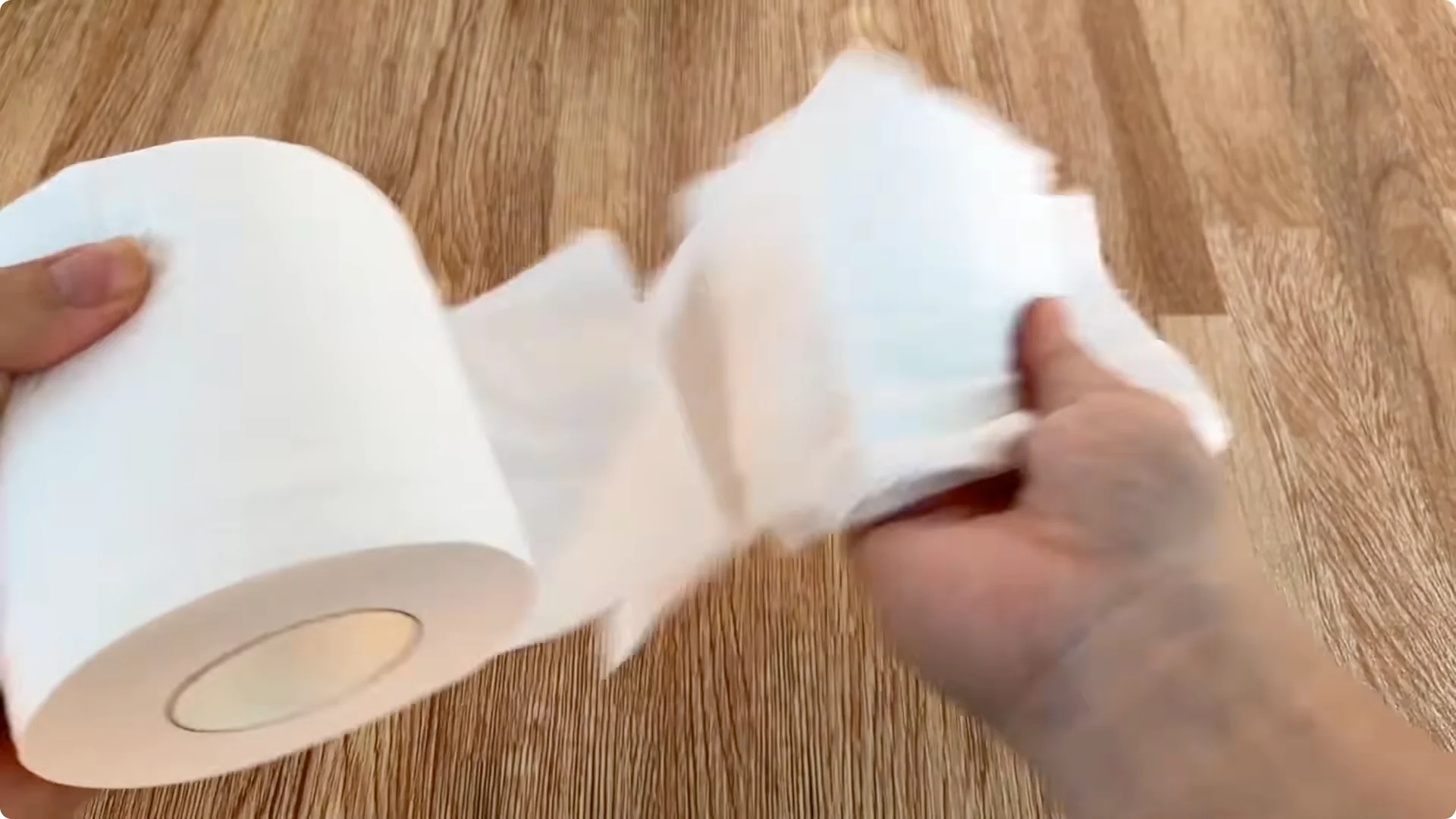
While waiting for the solution to soak, prepare another clean plastic cup and some soft, clean toilet paper. Tear the toilet paper into small pieces and place them in the cup.
Toilet paper retains moisture well, is breathable, and is very suitable as a temporary substrate for the initial rooting stage.
6. Rose Cutting Propagation: Soak and Set the Medium
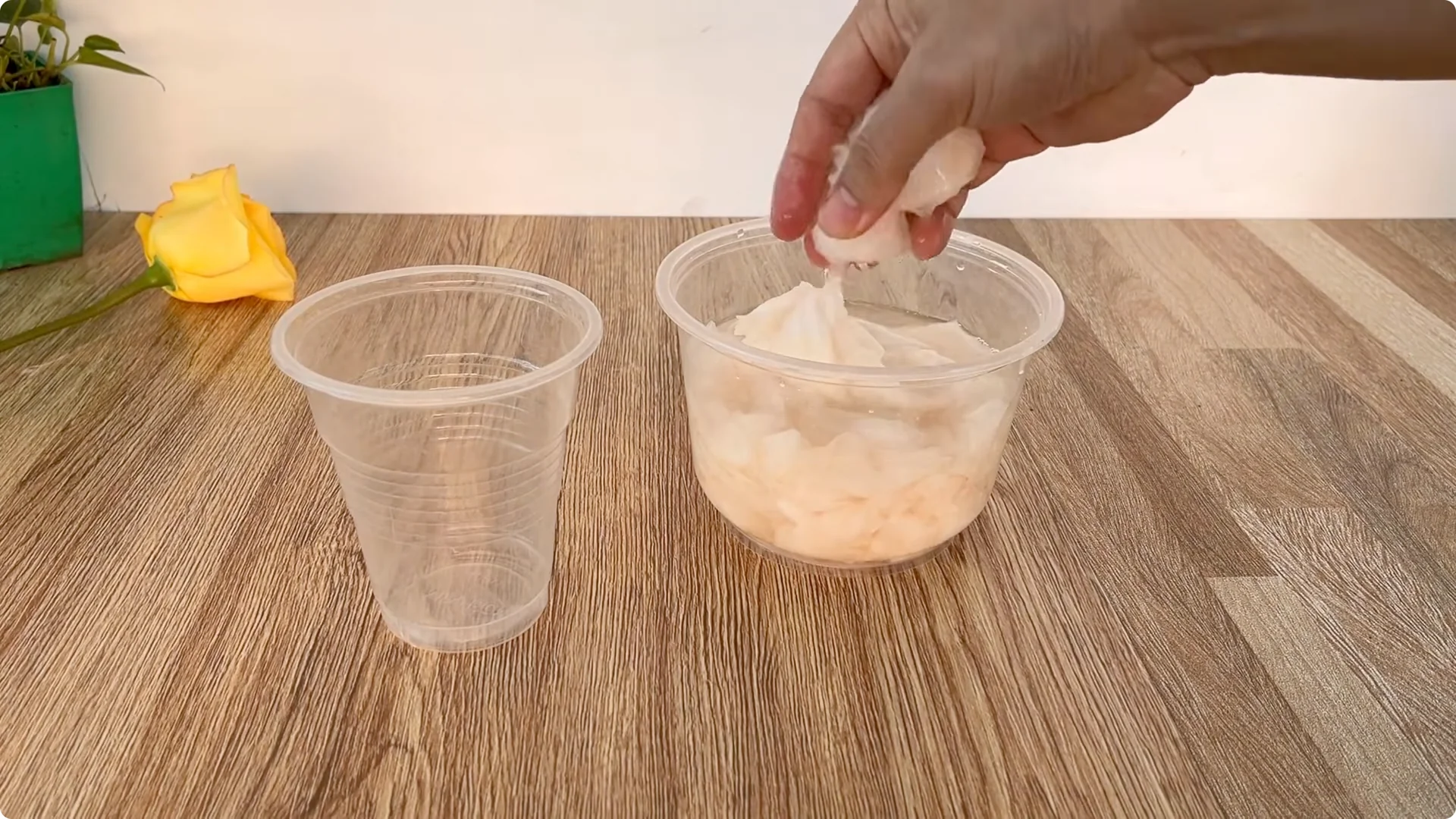
After the aloe vera-ginger-tomato solution has soaked for the required time, filter out the solids, keeping only the liquid. Pour this liquid into the cup containing the toilet paper and let it soak for about 10 minutes to absorb the nutrients evenly.
Then, squeeze out the excess water from the paper, maintaining a moderate moisture level, and gently press the paper to create stability. Use your hand to create a small hole in the center of the paper cup.
7. Rose Cutting Propagation: Insert and Secure the Cutting
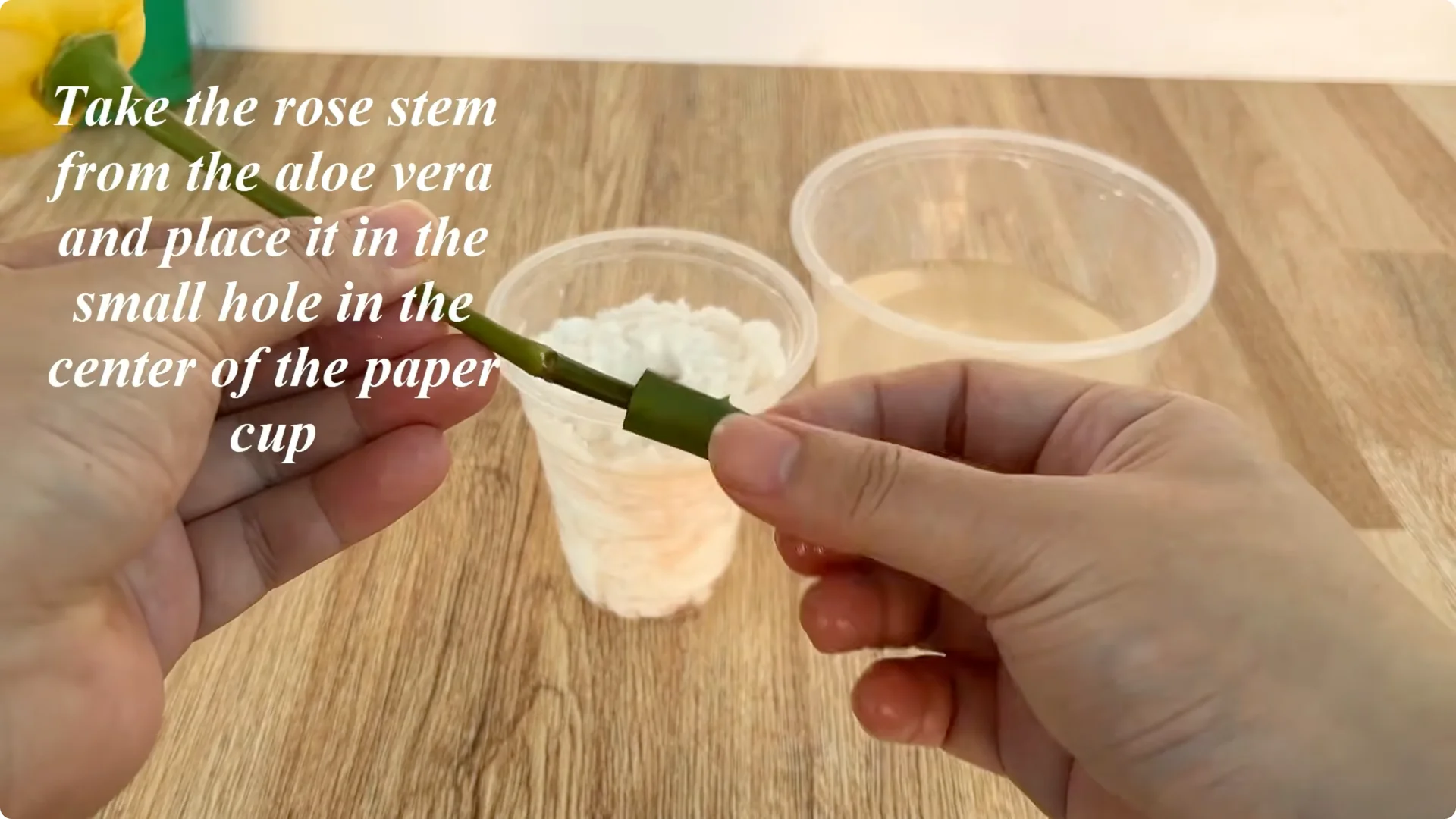
Remove the rose stem from the initial aloe vera piece and gently place it into the small hole in the center of the paper cup. Adjust the stem so that the base is in good contact with the damp paper, then gently press around it to secure the stem and prevent it from shaking.
8. Rose Cutting Propagation: Maintain Humidity and Light
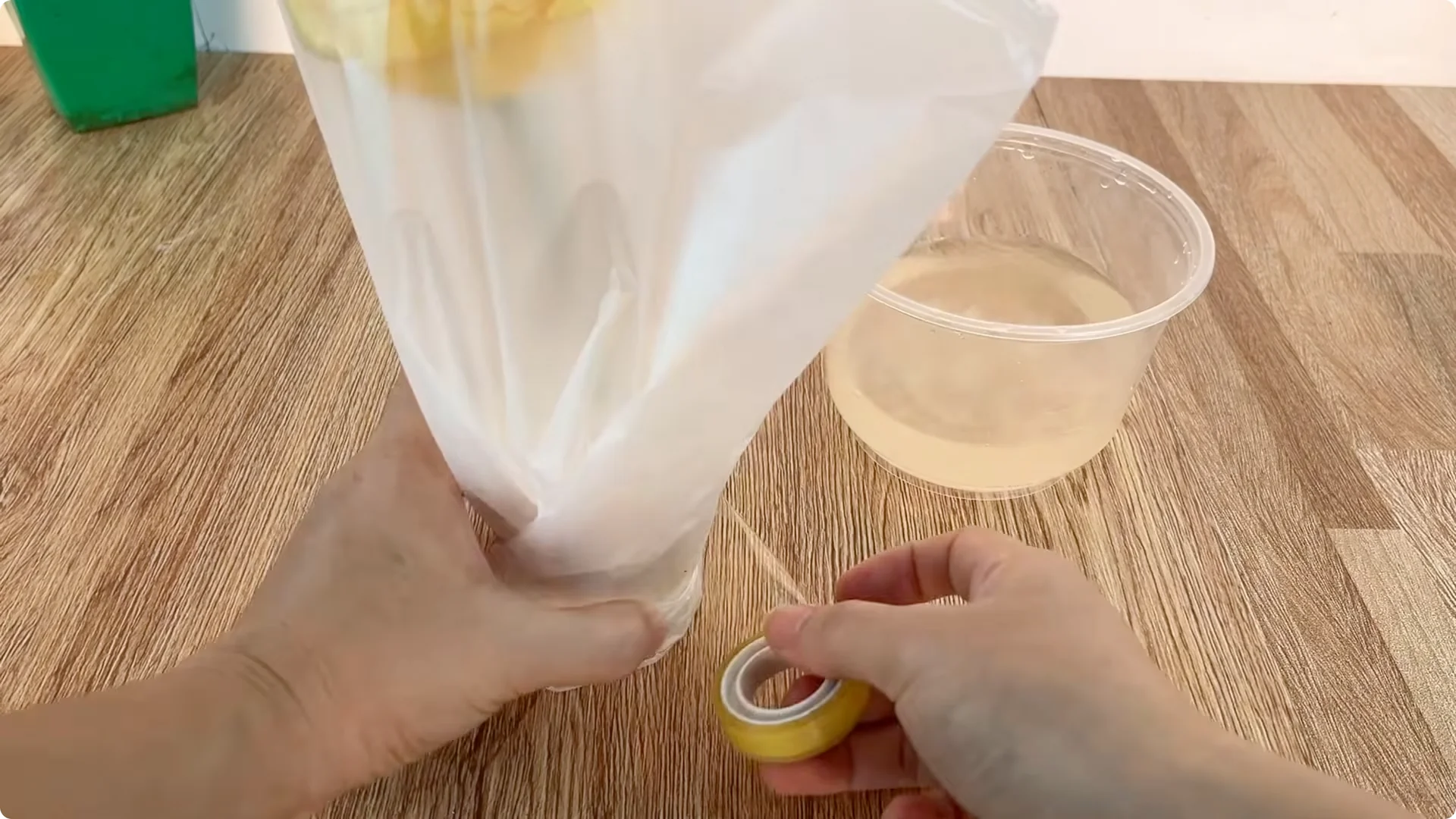
To maintain humidity and create a mini greenhouse-like environment, use a plastic bag or clear plastic cup to tightly wrap the cup and the rose stem. Place the cup in a cool, airy place, away from strong winds and direct sunlight.
Gentle diffused light and stable temperature will help the stem adapt quickly and activate the rooting process.
9. Rose Cutting Propagation: Track Rooting Progress
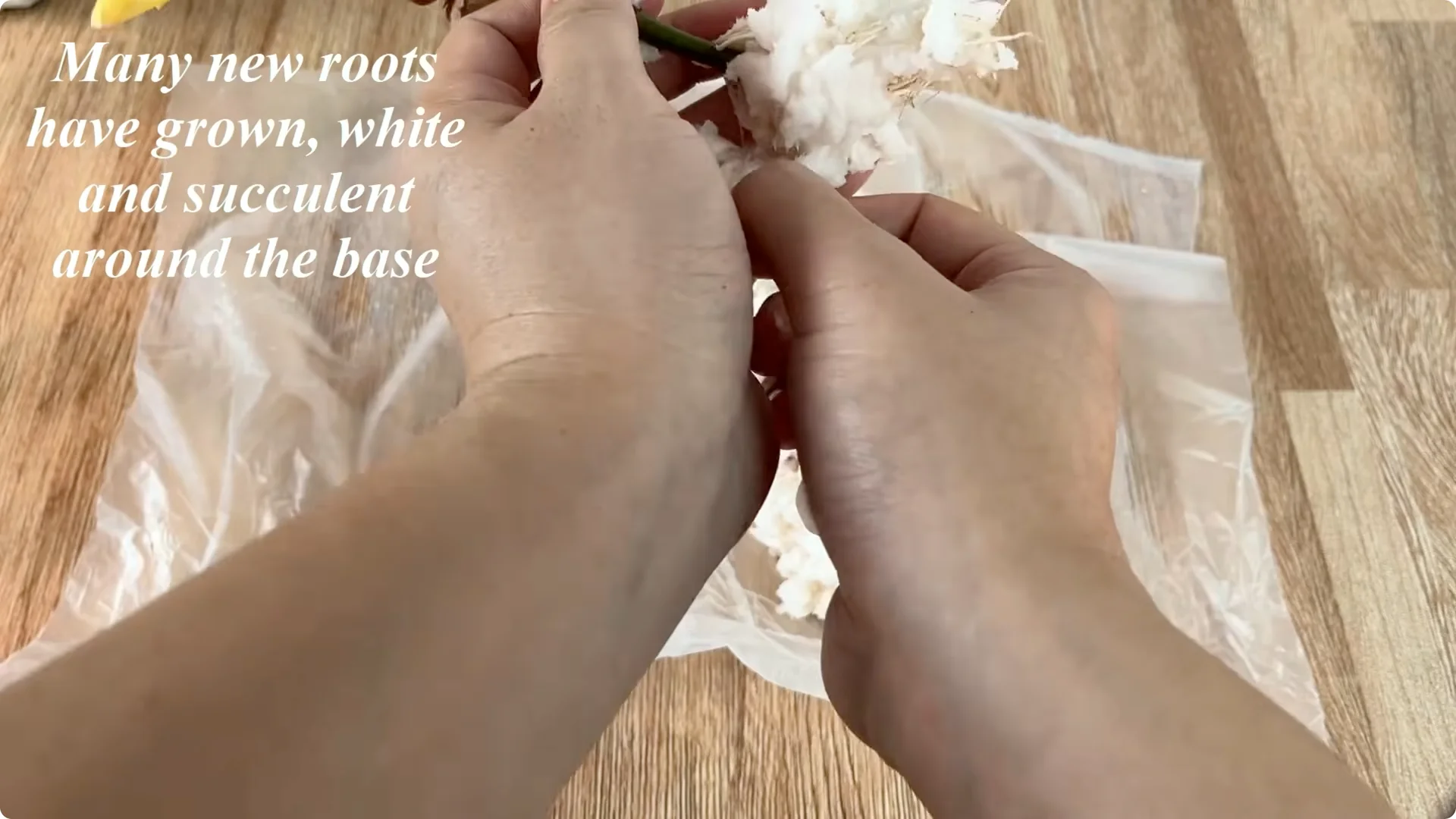
After about 10 days of proper care, you will see very encouraging results. On the stem, fresh, healthy green shoots will sprout, indicating that the stem has successfully rooted and is entering a new growth phase.
From the base of the stem, many new, plump, white roots will begin to appear, spreading gradually through the damp paper.
10. Rose Cutting Propagation: Transplant to a Pot
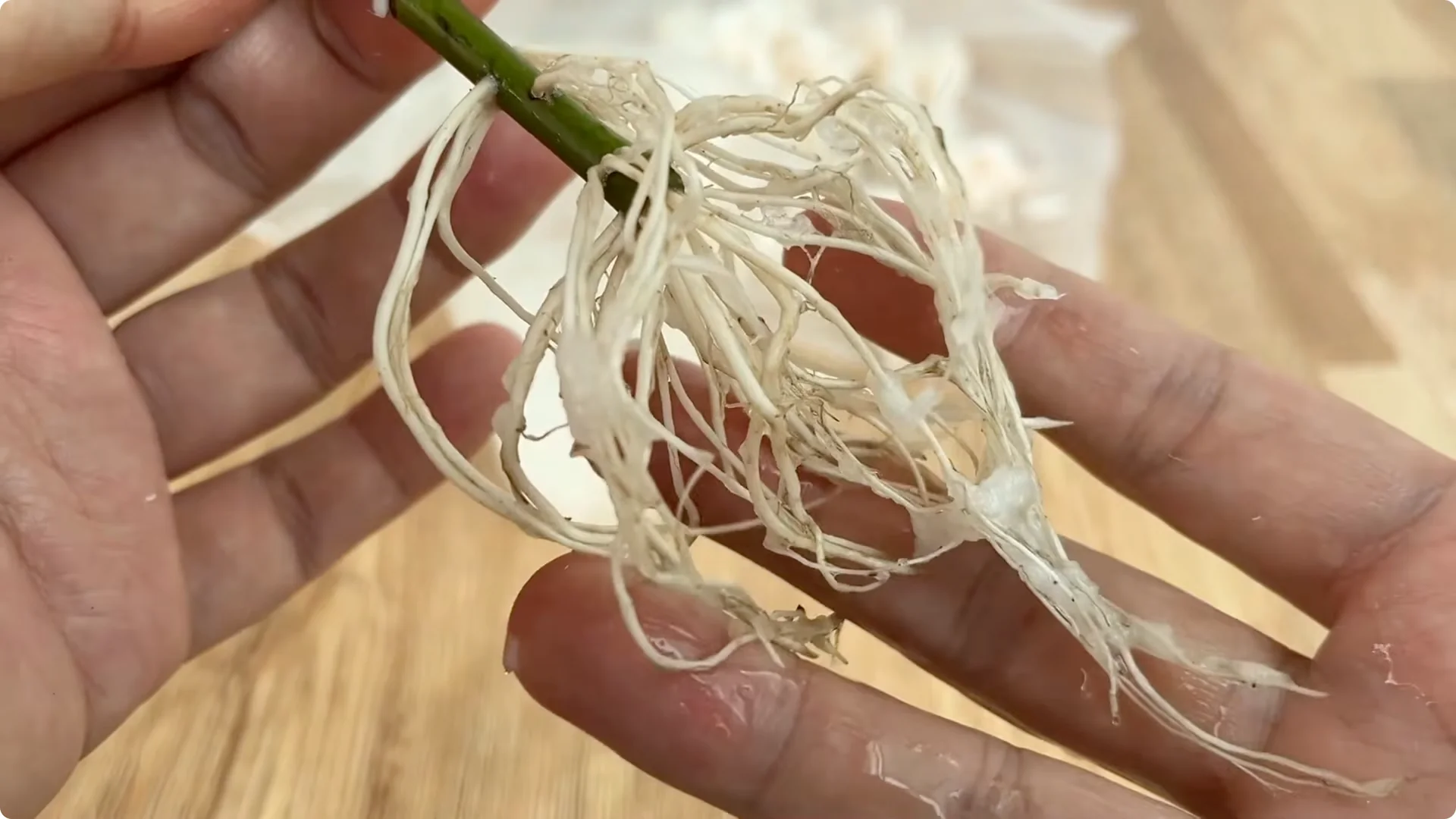
Once the root system is strong enough, you can gently transfer the rose stem to a pot with good drainage, using clean river sand as the initial growing medium to ensure safe and stable root development.
Final Thoughts on Rose Cutting Propagation
The method of propagating rose cuttings using aloe vera, ginger, and tomatoes is not only simple and easy to do, but also shows remarkable effectiveness when the right combination of ingredients and proper moisture control are used. Each step in this process contributes to creating a favorable environment for the cutting to revive and grow.
When you witness the first white roots appearing and the strong shoots emerging, it’s not just the result of the technique, but also a unique joy for the gardener. Patience, meticulousness, and love for plants will transform a small cutting into a vibrant rose bush ready to bloom in your garden in the future.