Today, we will experience a completely natural rose propagation method suitable for both beginners and those looking for a sustainable propagation solution. This method is simple and makes good use of natural resources around us.
Aloe vera helps moisturize and protect tissue, cucumber and orange peels provide nutrients and antibacterial properties. All combined to create the ideal environment for root formation.
1. Aloe Vera Rose Propagation: Select and Prepare the Cutting
Start by choosing a healthy rose branch. Prioritize branches that are free of pests and diseases, have a sturdy outer shell and clear dormant buds.
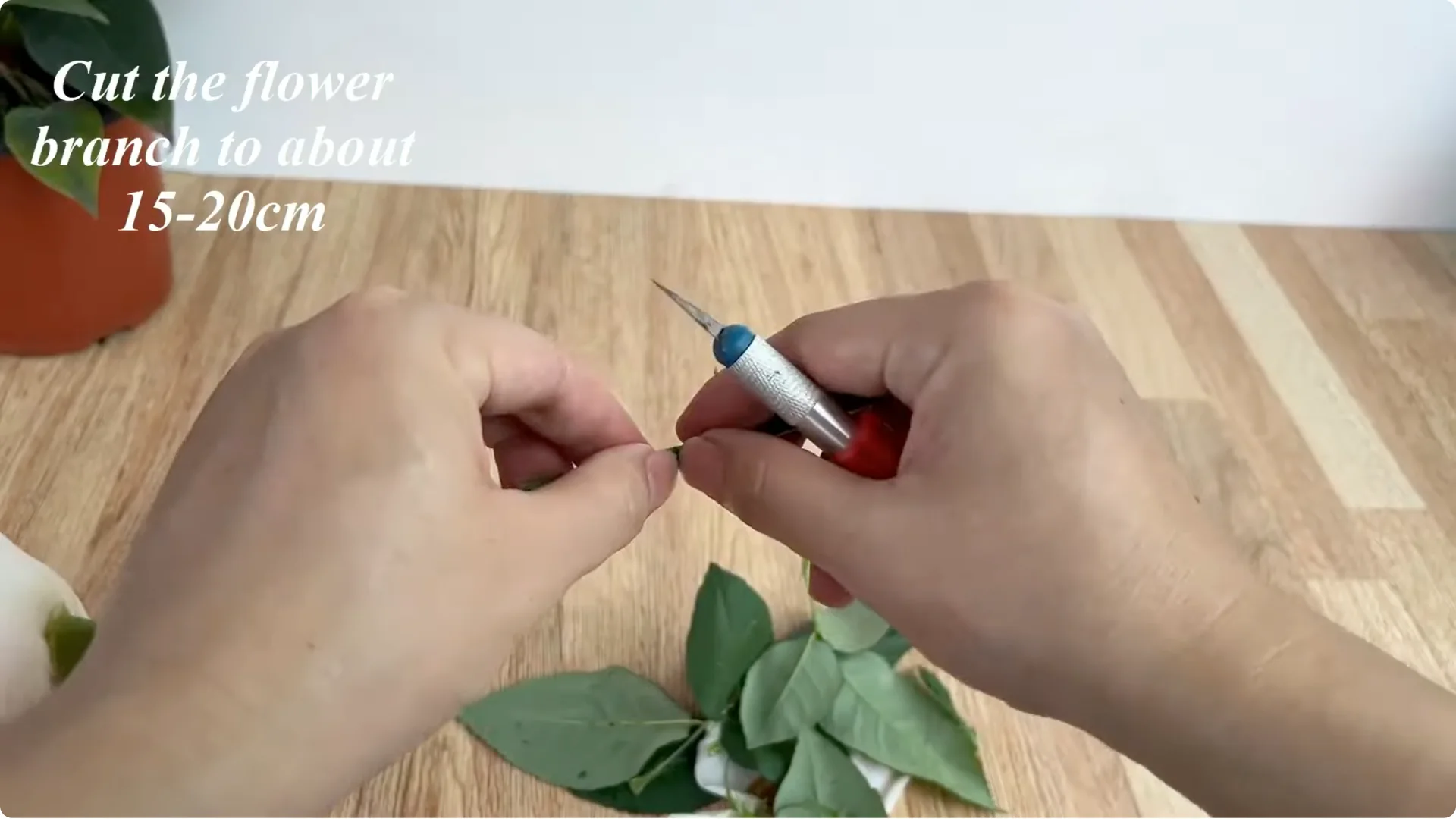
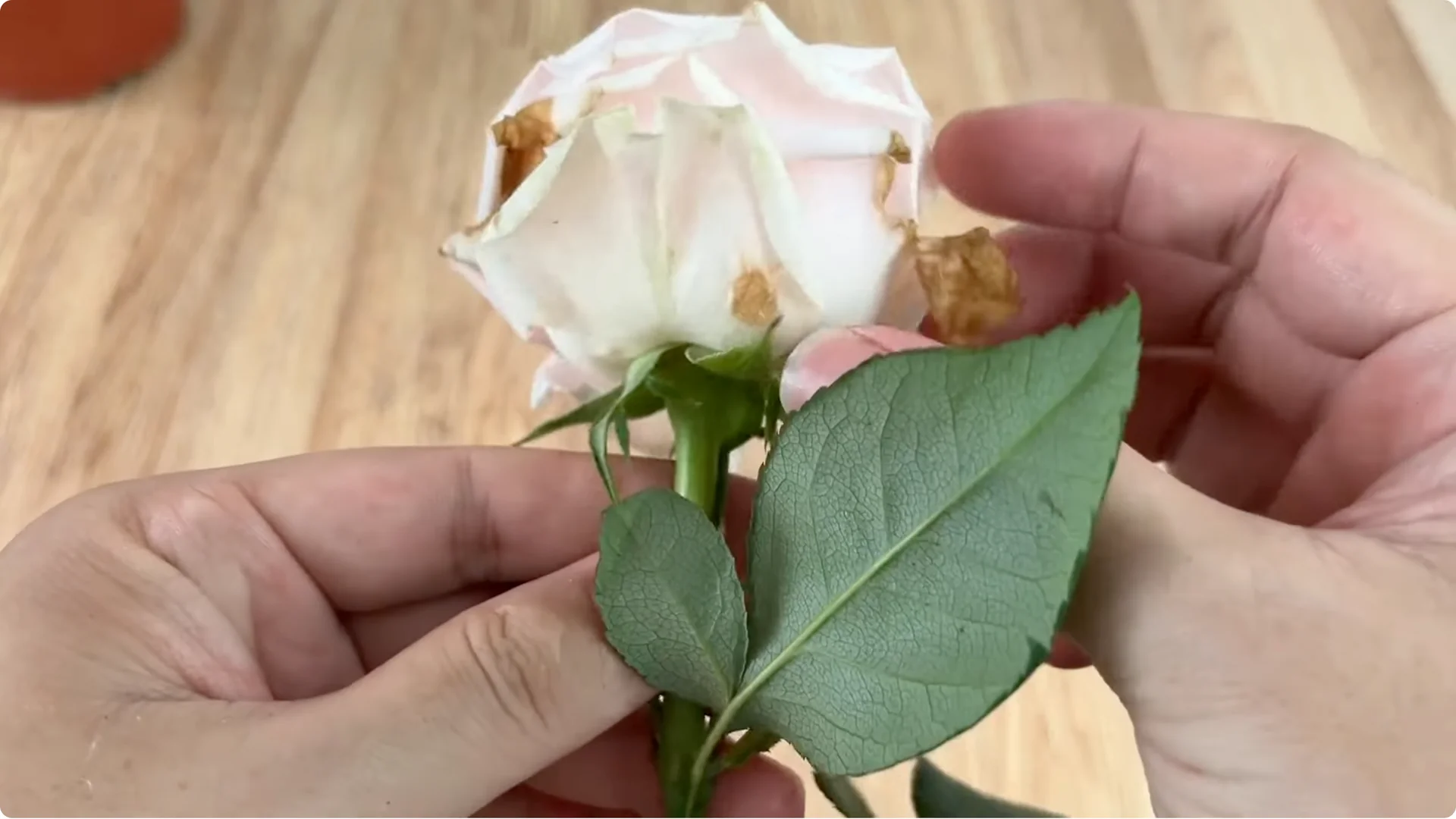
After selecting, remove all leaves and thorns on the stem. Old leaves, young leaves or sharp thorns all have the risk of losing moisture and creating an environment for fungi to invade. If there are any wilted petals left on the branch, they should be cut off to avoid weakening the branch.
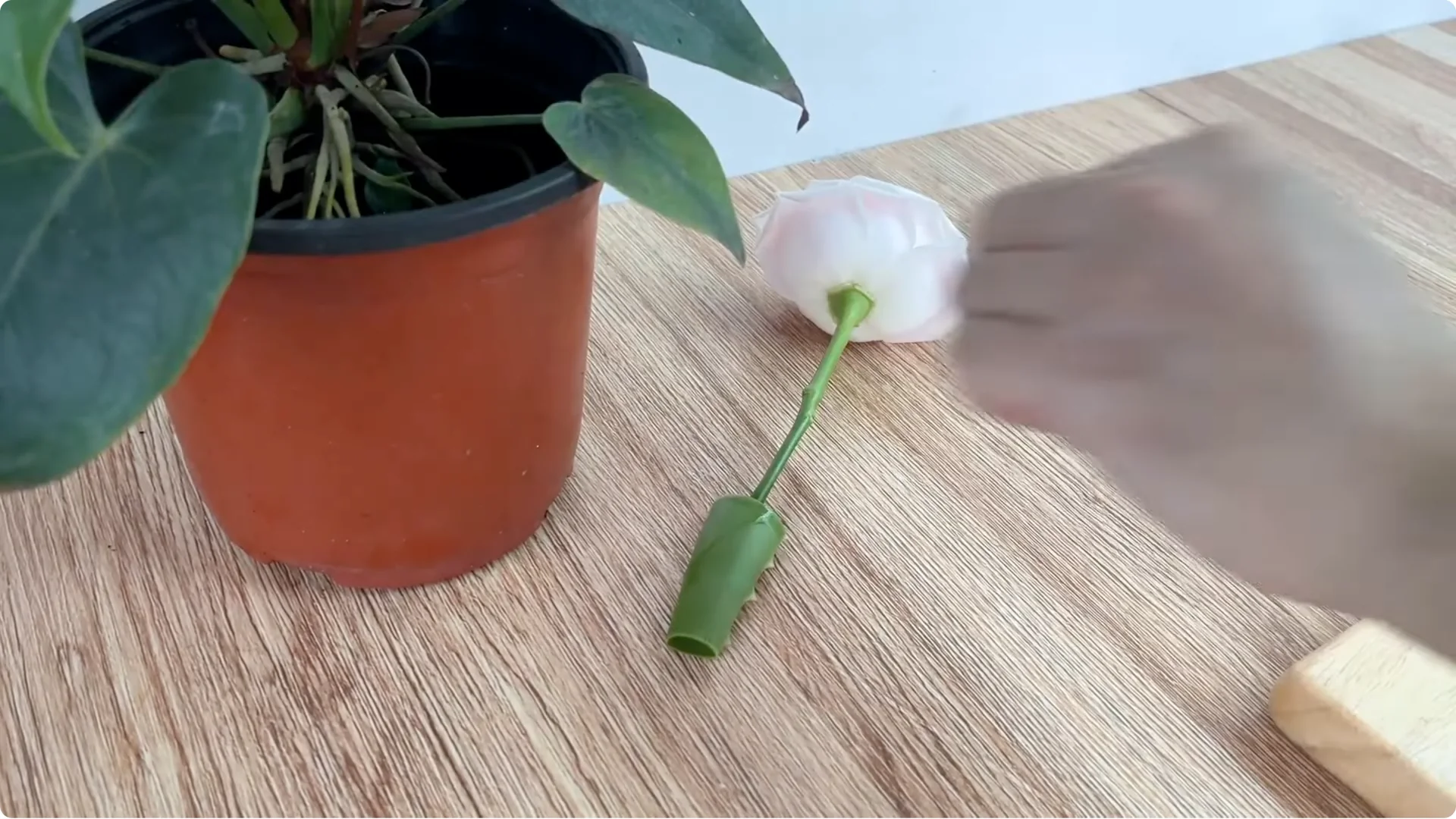
Continue to trim the branch to a length of about 15-20 cm. Cut the base of the flower branch at a 45-degree angle.
Cutting at an angle helps increase the contact area with the nutritional environment, creating conditions for the branch to easily absorb nutrients and water during the root formation stage.
For another simple approach to encourage rooting, see this simple trick to grow rose stems roots.
2. Aloe Vera Rose Propagation: Prepare and Pre-treat With Aloe Vera
Choose a fresh aloe vera branch, wash it and cut two pieces: one 8-10 cm long and one 5-6 cm long. The small piece will be used to insert the base of the rose branch.
Insert the rose branch into the small aloe vera section and leave it for about 15 minutes.
For the remaining aloe vera section, remove the green skin and keep the transparent flesh inside. Cut this flesh into small pieces and put it in a clean plastic cup.
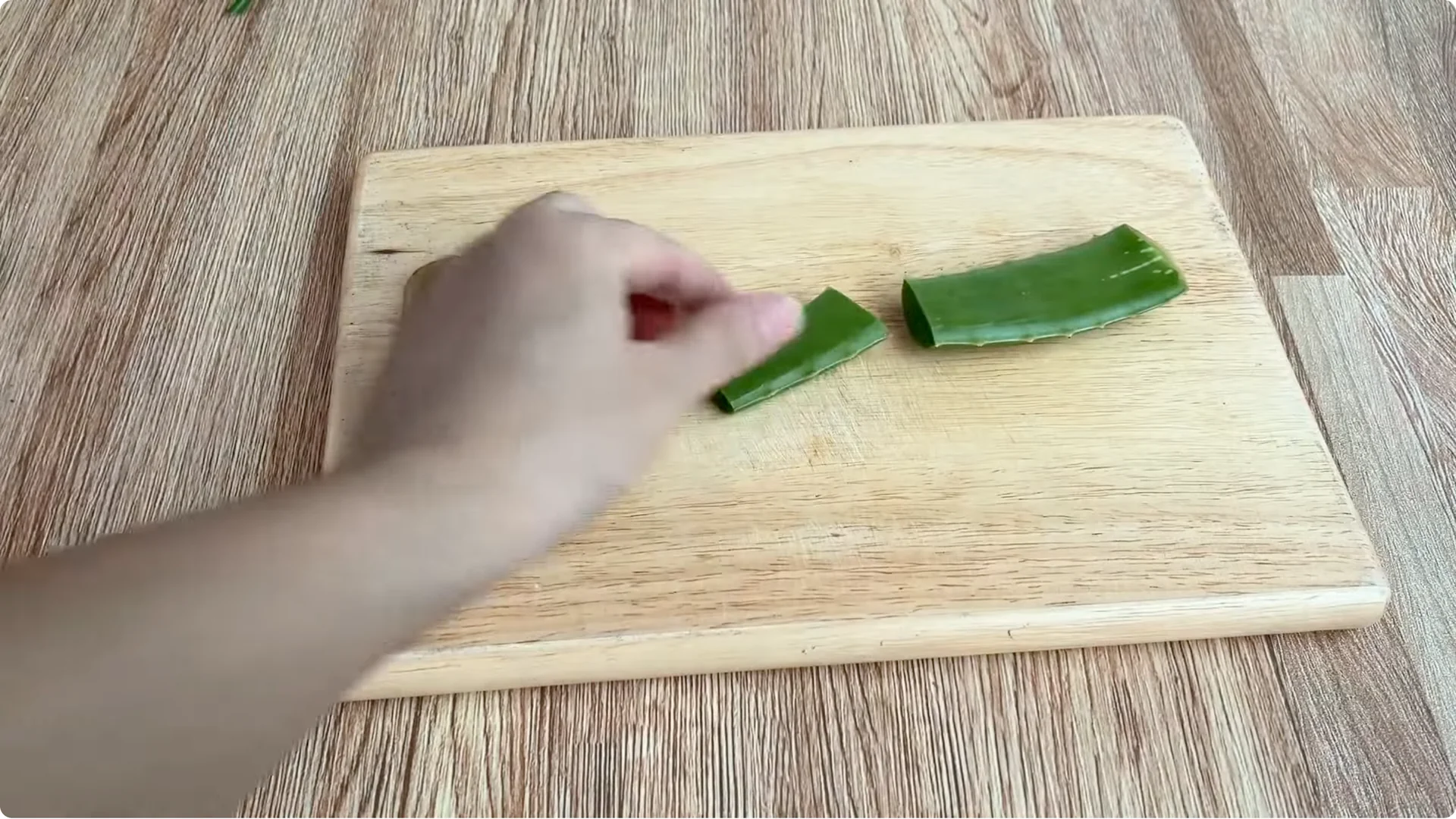
Direct contact with the aloe vera gel layer allows nutrients such as polysaccharides, amino acids and vitamins to gradually penetrate the root tissue.
These active ingredients not only help to disinfect and reduce stress but also nourish new cells. This gentle pre-treatment supports the formative stage. It also prepares the cutting for the nutrient solution.
Add Cucumber Peel
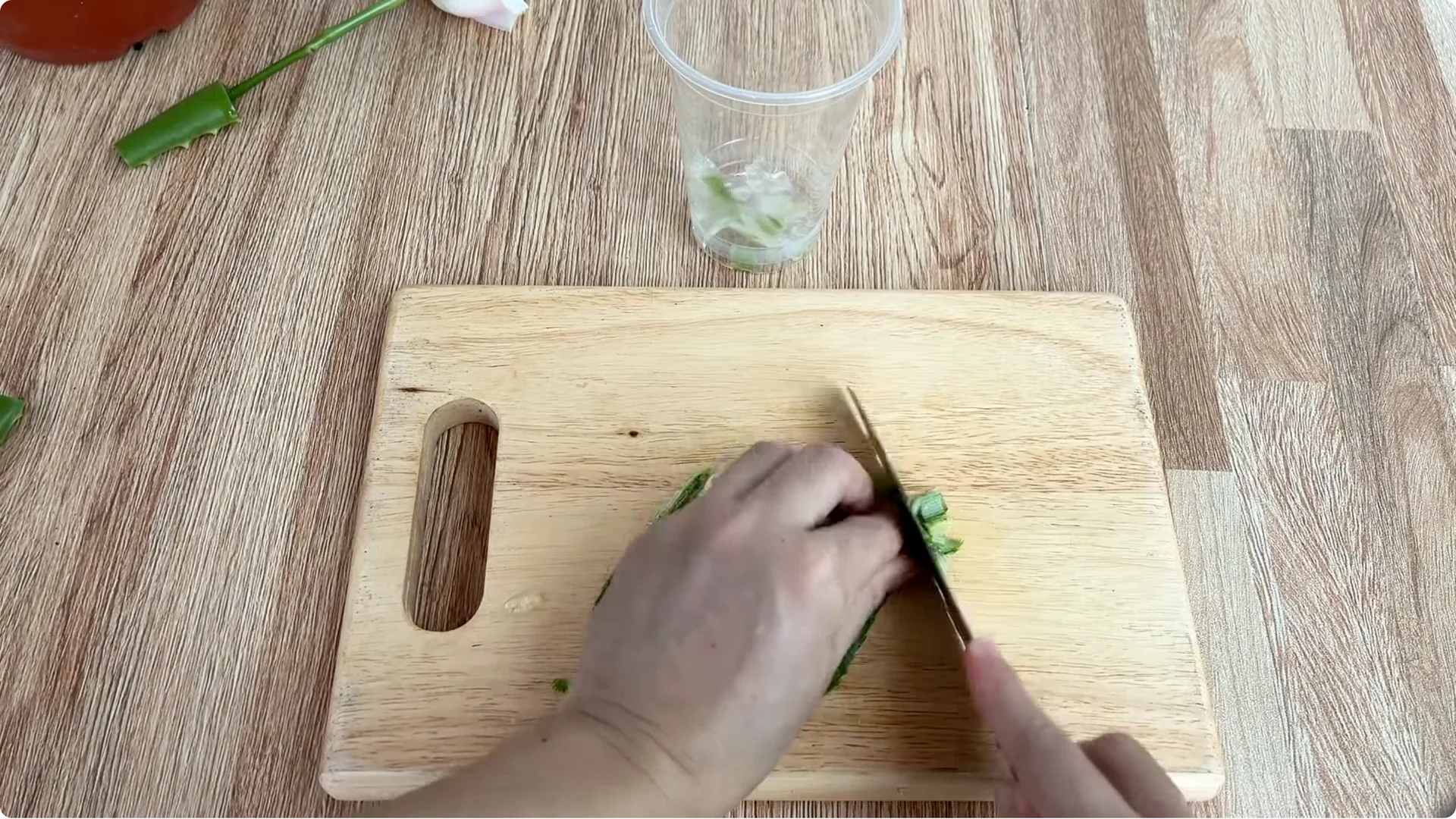
Take a cucumber, wash it and peel off the outer skin. The cucumber peel is rich in vitamins and antioxidants, and when exposed to warm water it will release compounds that are beneficial for the development of root tissue. Cut the peel into small pieces and add it to the aloe vera gel.
Add Orange Peel
Choose a fresh orange, wash it and peel it. The outer surface of the orange peel contains many essential oils that have antibacterial properties and promote cell regeneration. The amount of orange essential oil and vitamin C in the orange peel, when dissolved in a warm environment, will support the formation of scar tissue and stimulate root growth.
Cut the orange peel into small pieces and mix them in a cup containing the cucumber peel and aloe vera. Stir gently so the ingredients combine well. Keep the mixture clean and free from contaminants.
For extra speed on rooting and flowering, see these ways to make rose cuttings root and bloom fast.
3. Aloe Vera Rose Propagation: Brew the Rooting Solution
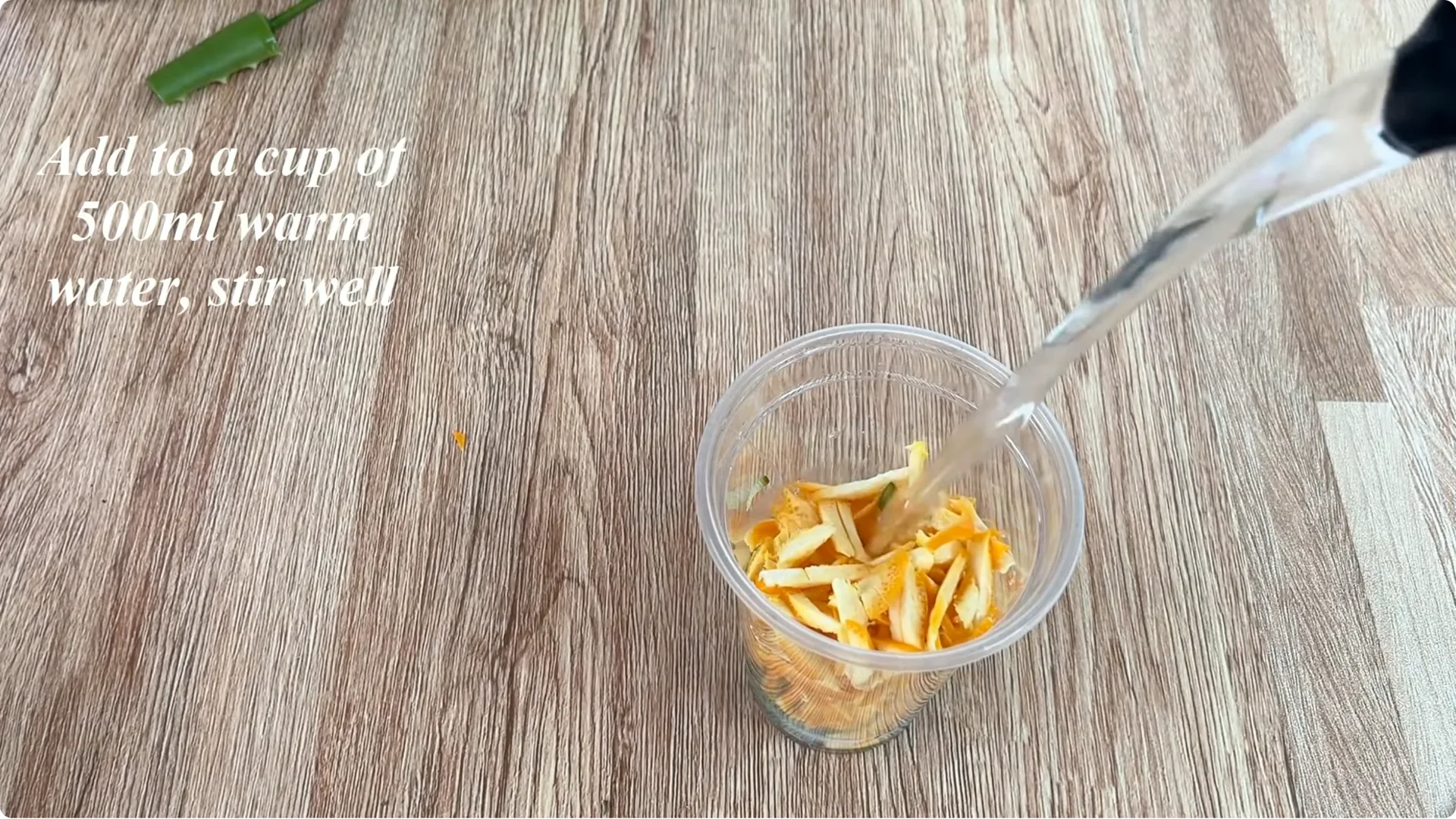
Add 500 ml of warm water to the cup and stir well to release the active ingredients in the mixture. Let the mixture sit for about 30 minutes. This time is enough for the water to dissolve the nutrients – creating a balanced environment between antibacterial, moisturizing and growth stimulating abilities.
Prepare a foam and a clean glass jar. Cut the foam so that it fits snugly into the mouth of the glass jar. The foam will act as a lid, both fixing the branch and limiting water loss.
Filter, Dilute, and Fill
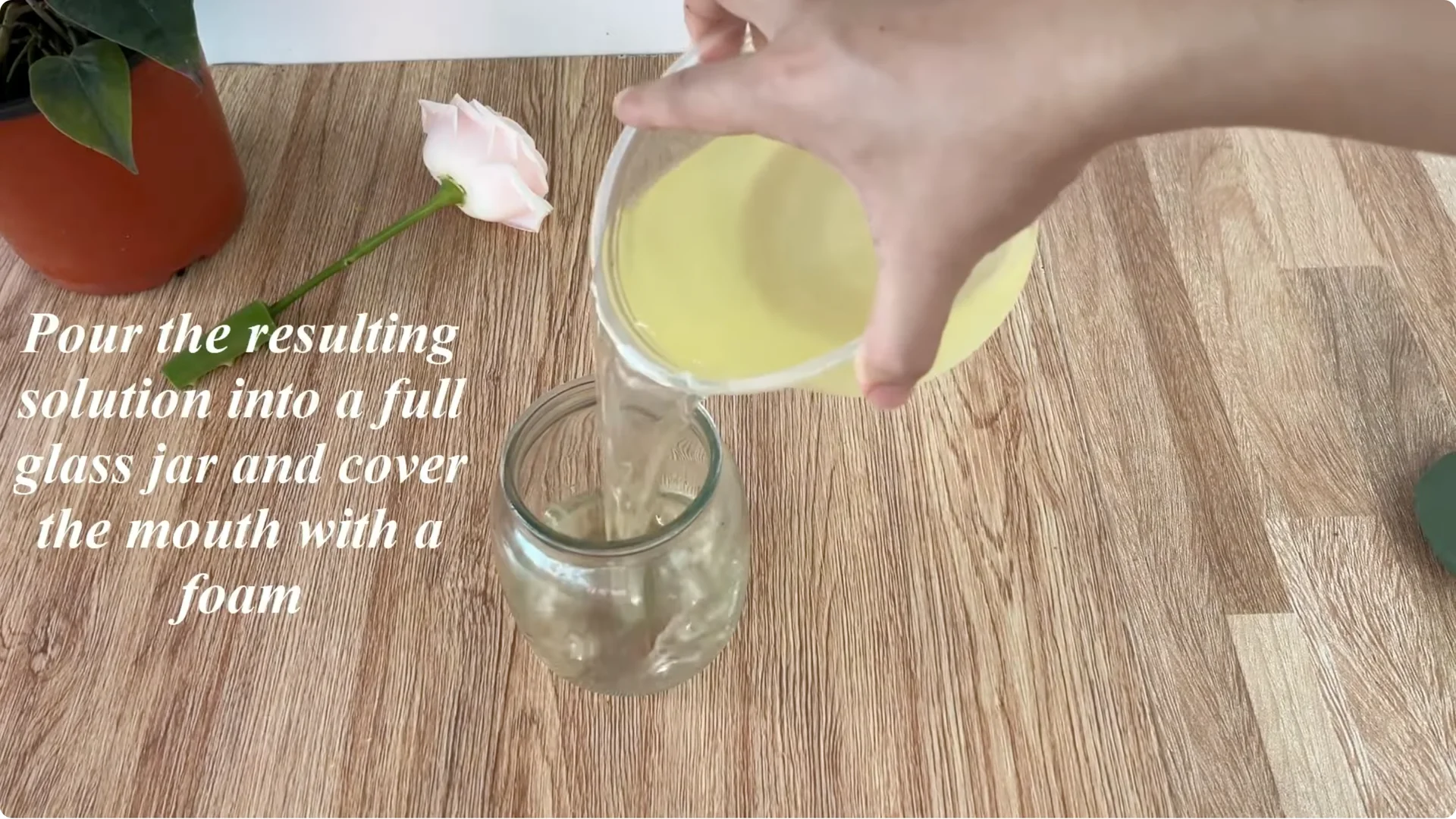
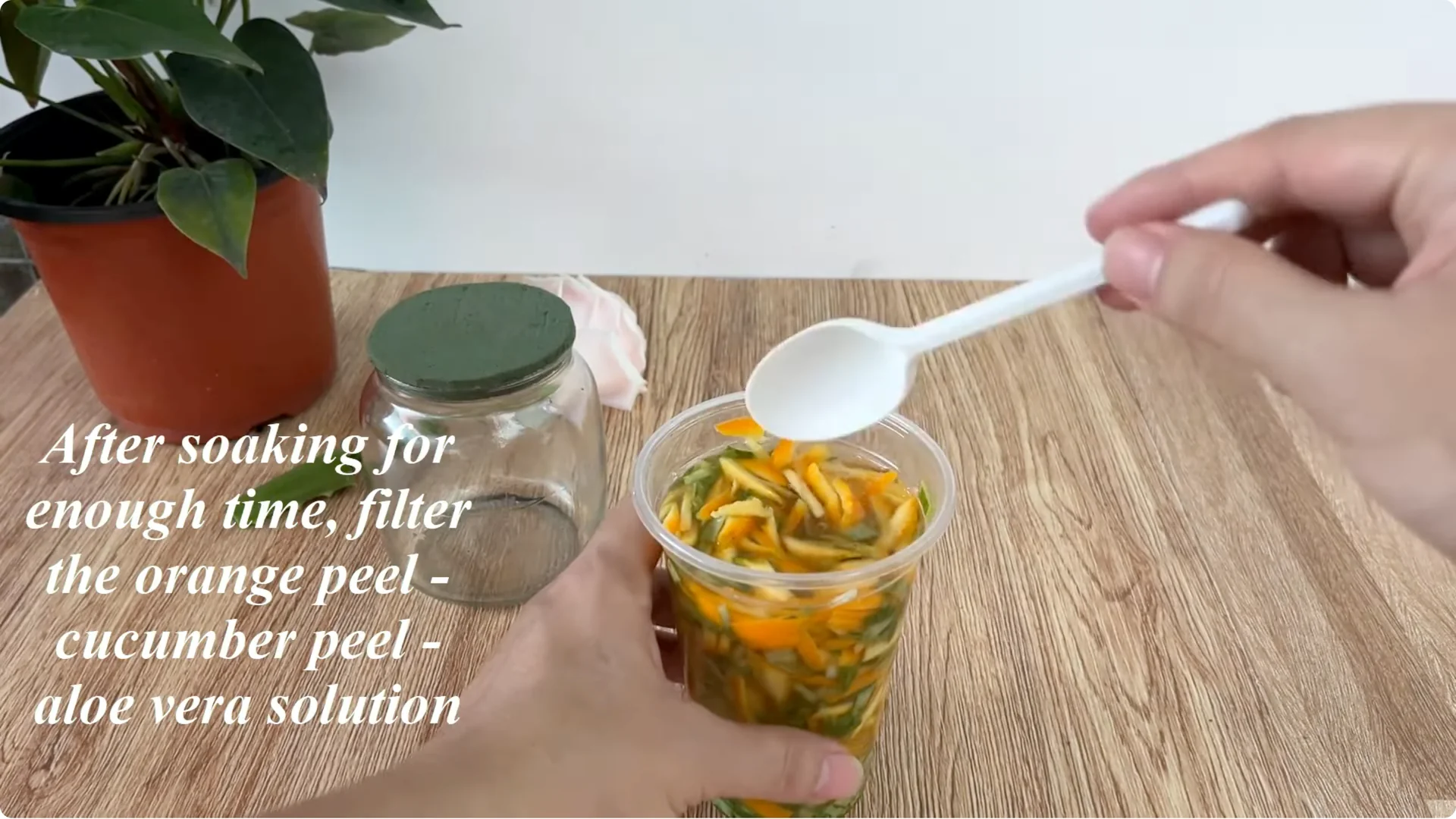
When the mixture has soaked for enough time, filter the orange peel – cucumber peel – aloe vera solution. The filtered solution has a light clear color and a mild scent.
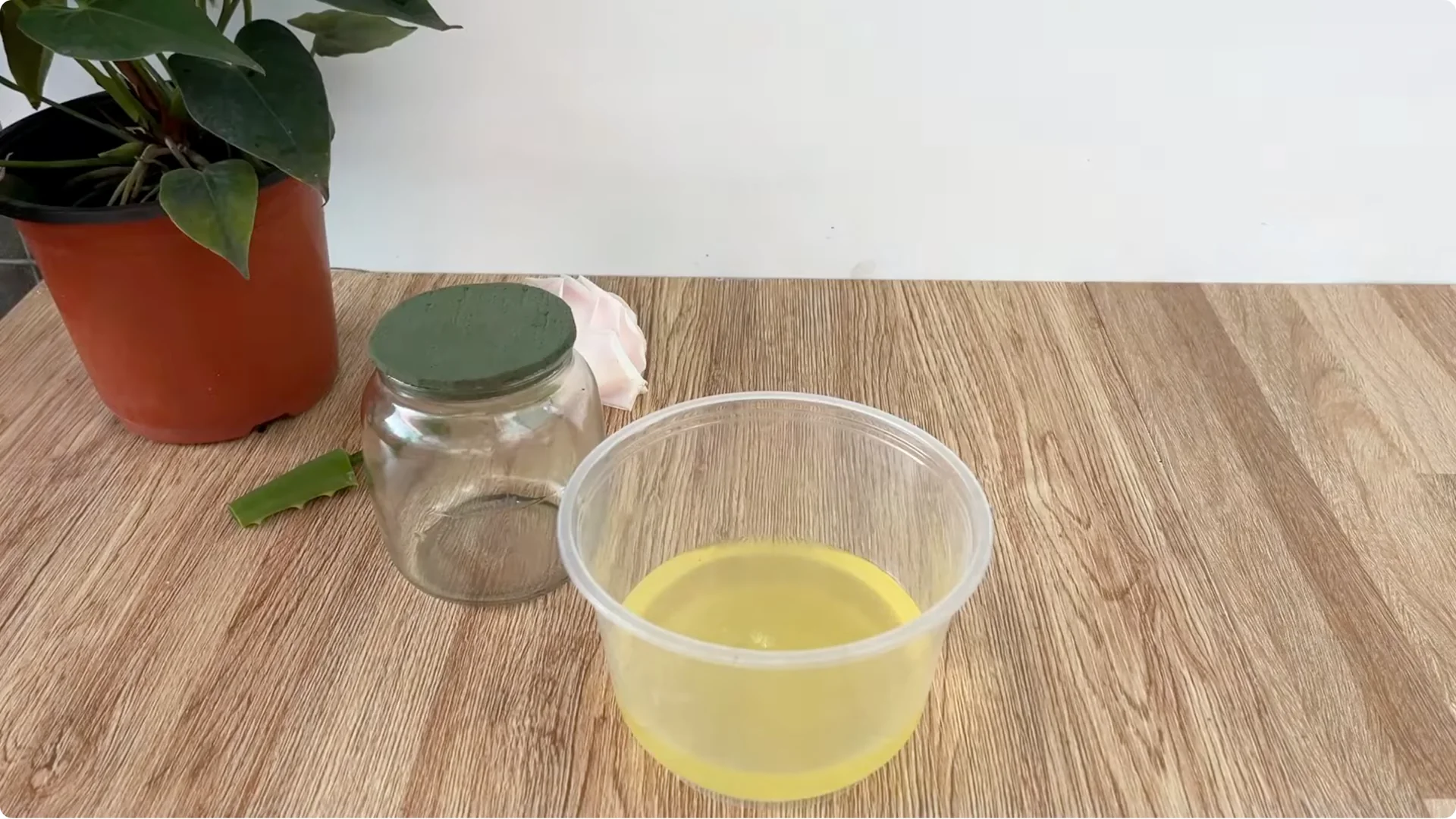
Dilute the mixture with 0.5 liters of clean water to create a gentle environment, avoiding damaging the young tissue at the base of the branch.
Pour the solution into the glass jar until it is full. Cover it tightly with the prepared foam. Ensure the setup is stable and clean.
4. Aloe Vera Rose Propagation: Insert the Cutting and Create a Mini Greenhouse
At this point, the rose branch has been pre-treated in the original aloe vera gel.
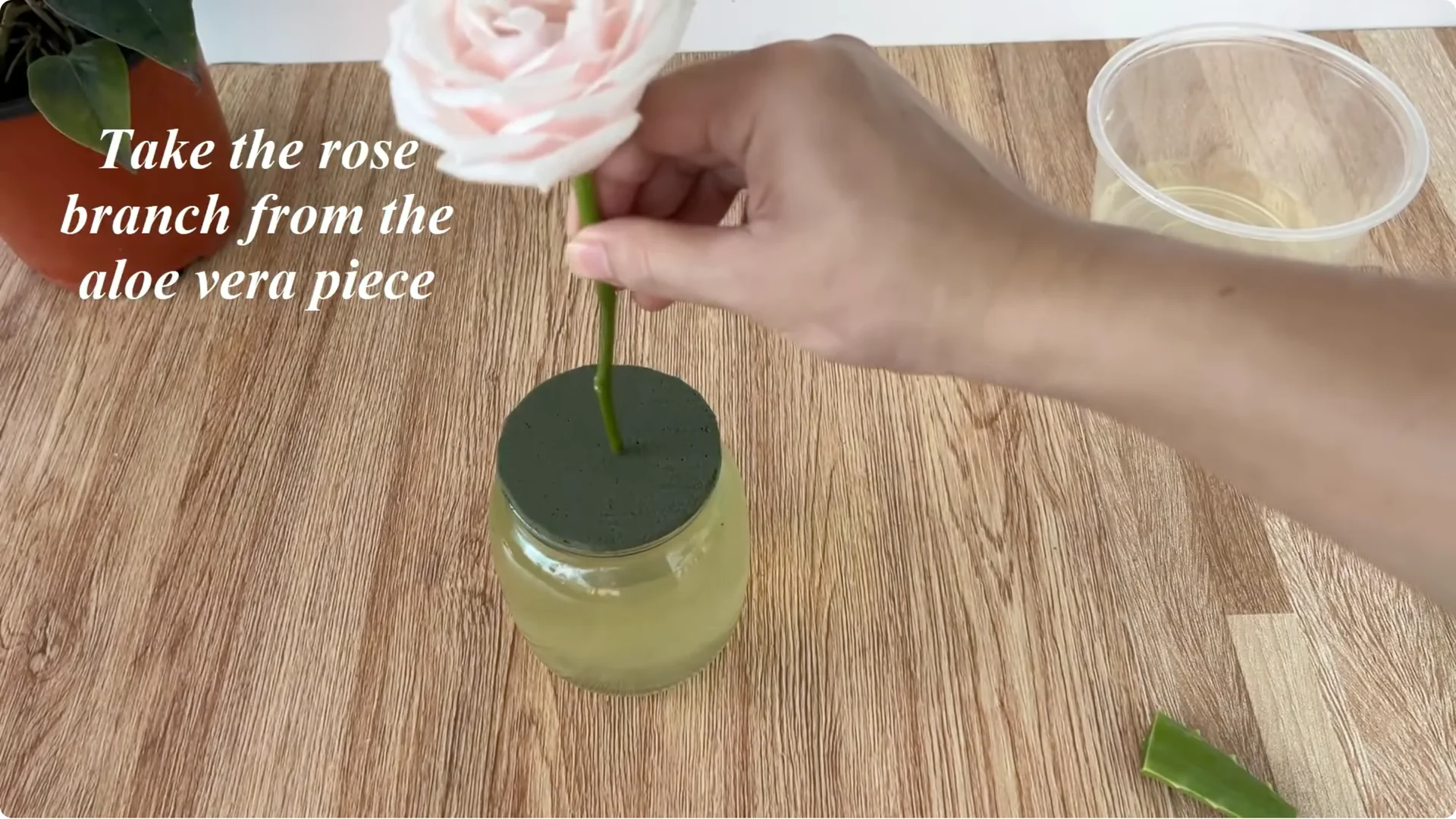
Take the flower branch out of the small aloe vera piece, then insert it through the sponge so that the base of the branch is deeply immersed in the solution. Make sure the contact is secure and the base stays submerged.
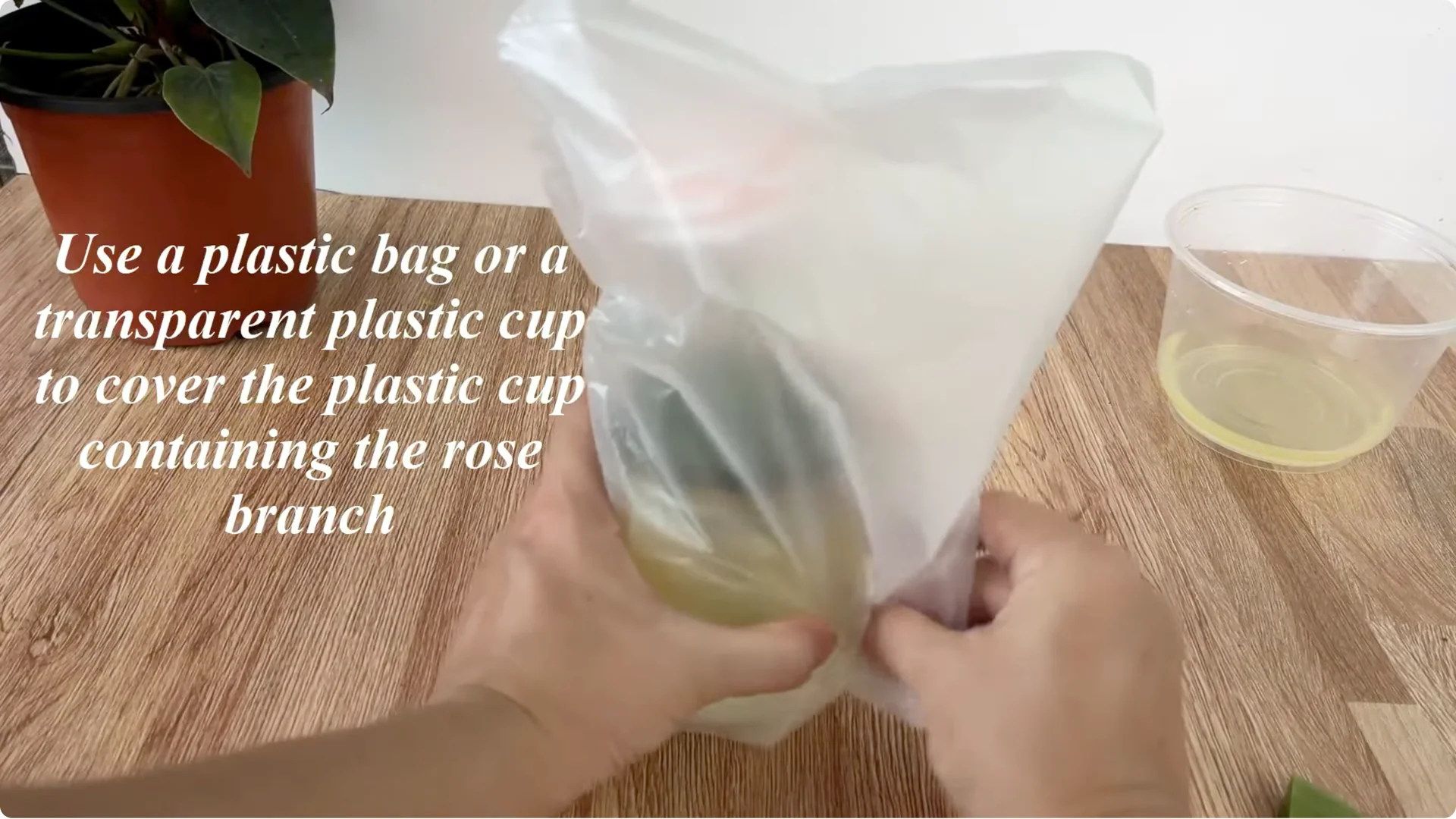
To protect the moist environment around the cutting, use a plastic bag or a transparent plastic cup to cover the mouth of the jar.
This simple covering will create a mini greenhouse, reducing water loss, stabilizing the temperature and preventing external factors such as strong winds from drying out the cutting. Keep the cover clear so you can observe.
Placement and Early Care
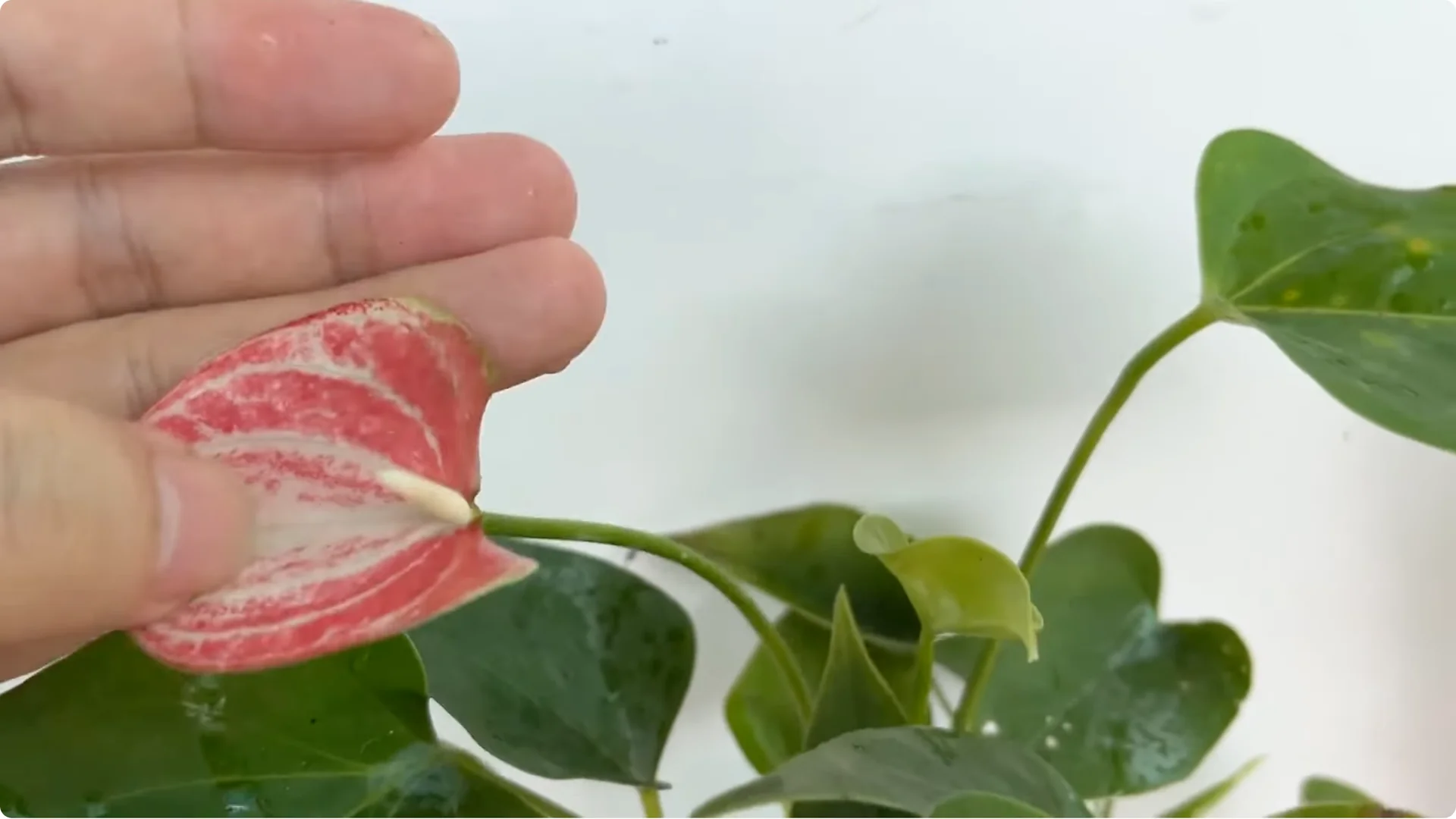
Place the glass jar in a cool place, away from direct sunlight. Strong sunlight can increase the temperature in the plastic bag, damaging the young tissue and causing water to evaporate too quickly. In the next 10 days or so, the entire root stimulation process will take place naturally.
You don’t need to intervene too much, just observe the humidity of the environment. Keep the setup clean and stable. Avoid moving the jar unnecessarily.
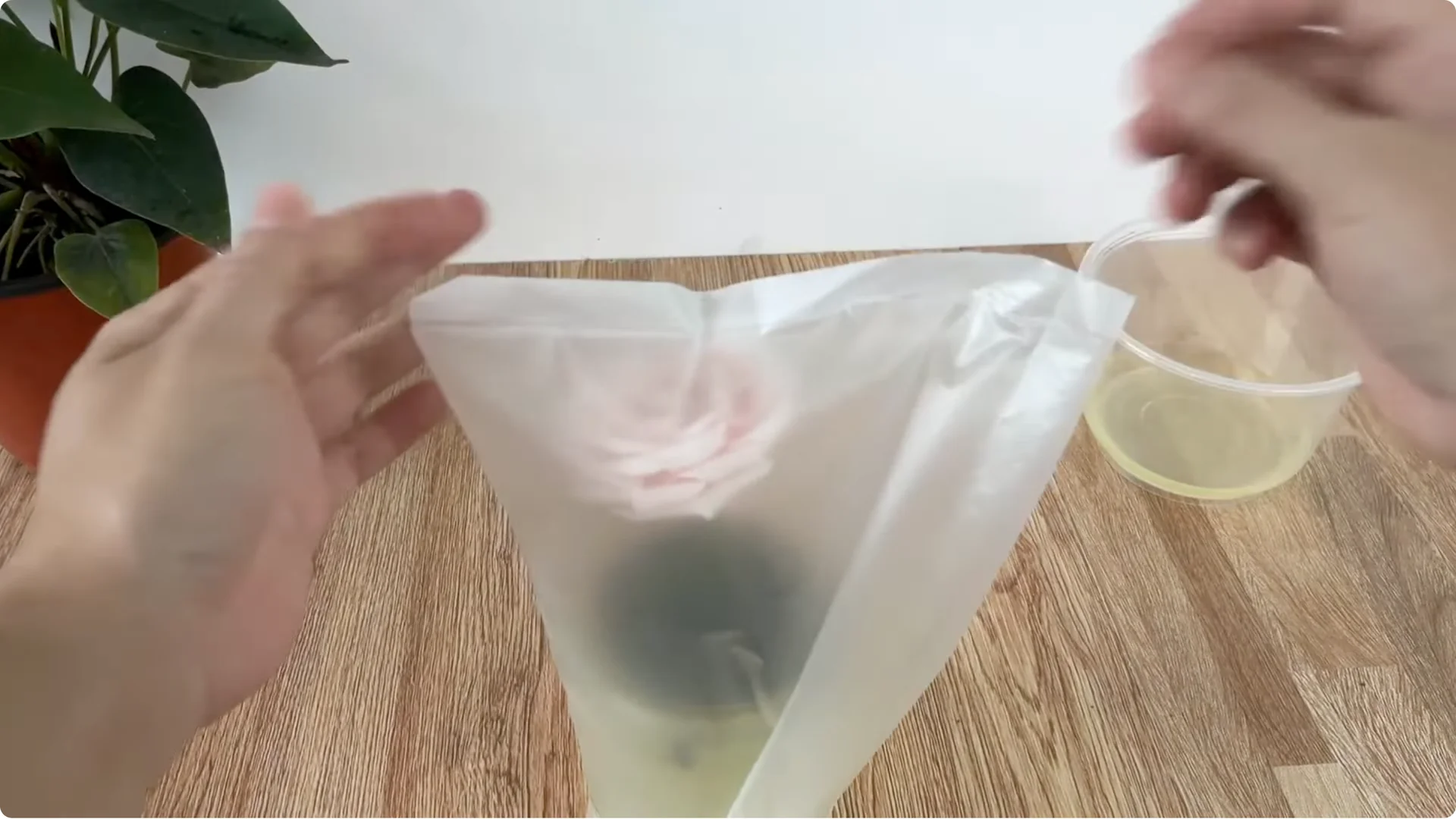
If you want another natural method that supports rooting and blooming, try a simple trick that helps cuttings root and bloom.
5. Aloe Vera Rose Propagation: Signs of Rooting and Transplanting
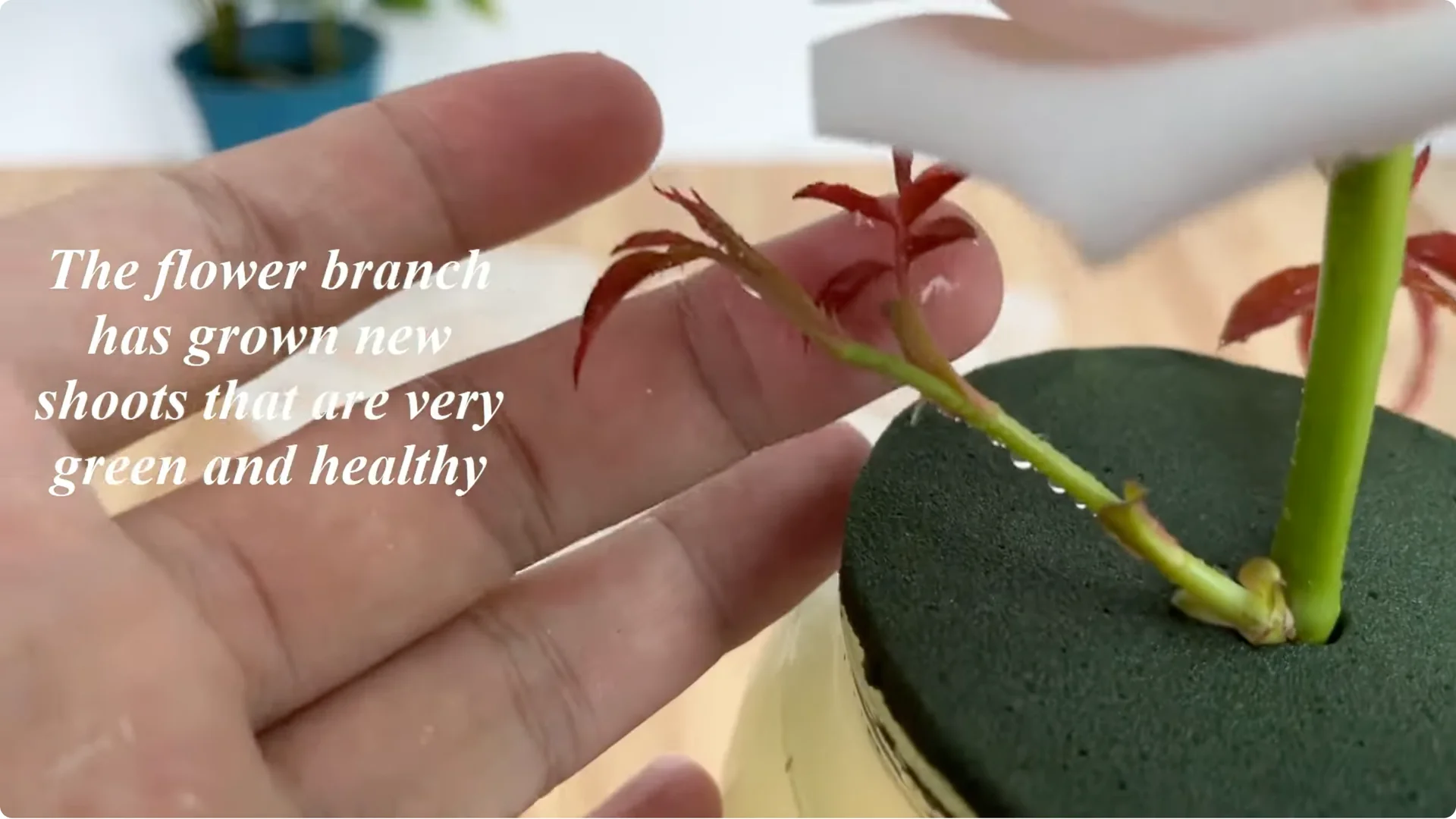
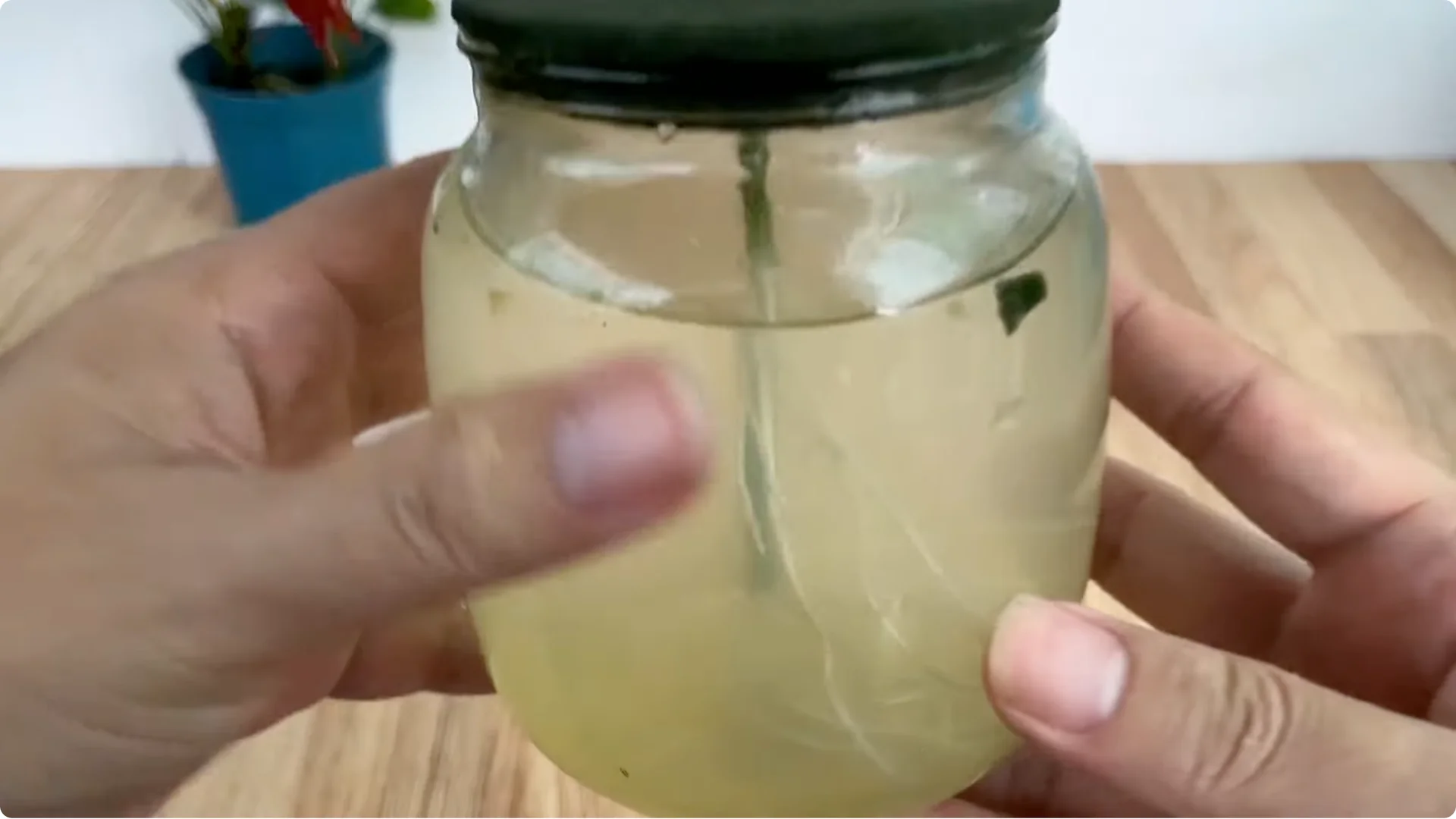
After a waiting period, many new roots will usually appear at the base of the branch. These roots are white, succulent and concentrated around the base. This is a clear sign that the branch is ready to move to a new substrate.
At the same time, the branch also begins to sprout. The young shoots are green and healthy – a positive sign of adaptation. Proceed to transplant when roots are stable.
Transplant and Ongoing Care
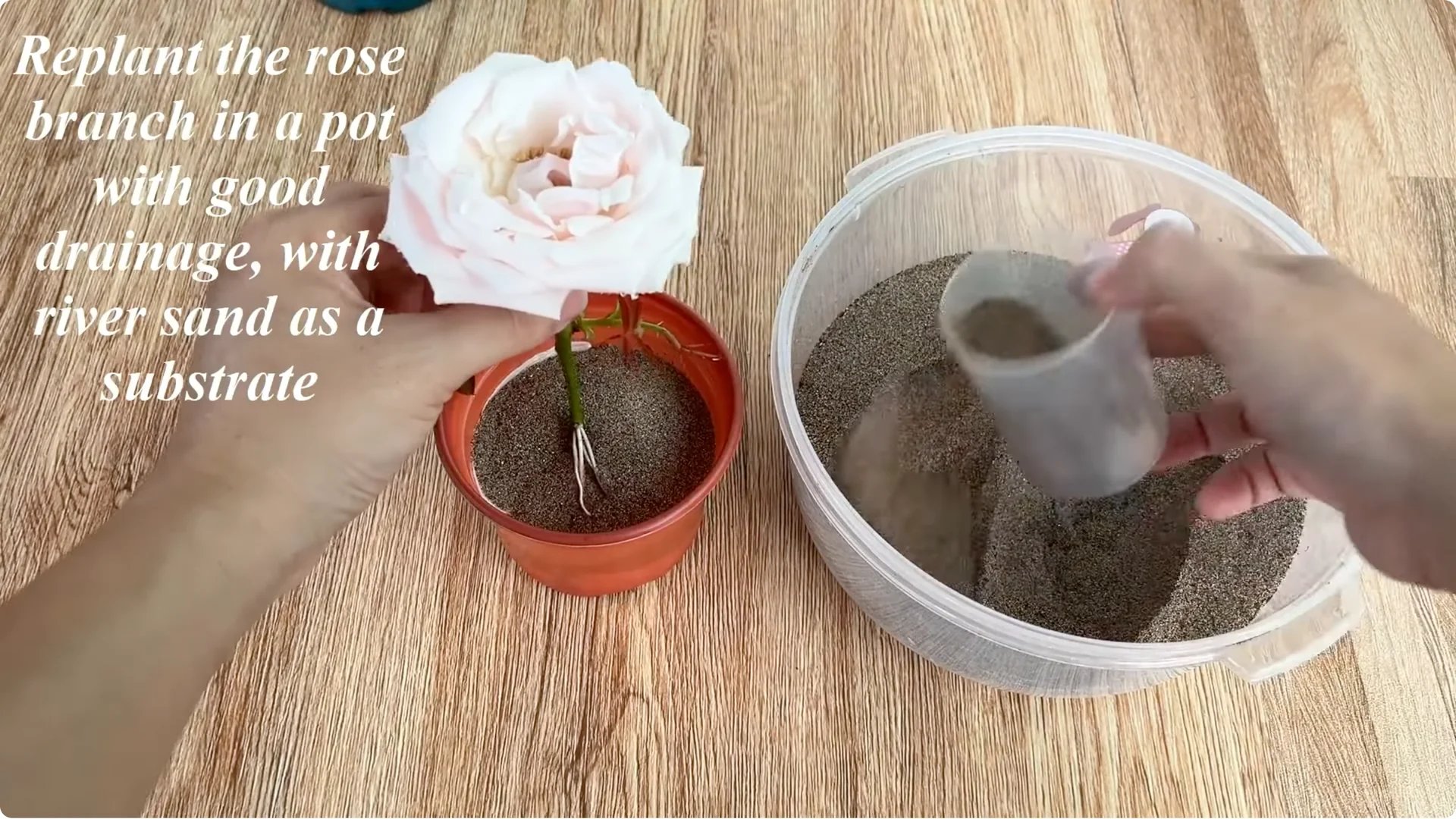
Move the branch to a new growing environment, prioritizing river sand substrate, which has good drainage. River sand helps limit water stagnation, creating conditions for the roots to breathe better, thereby developing sustainably.
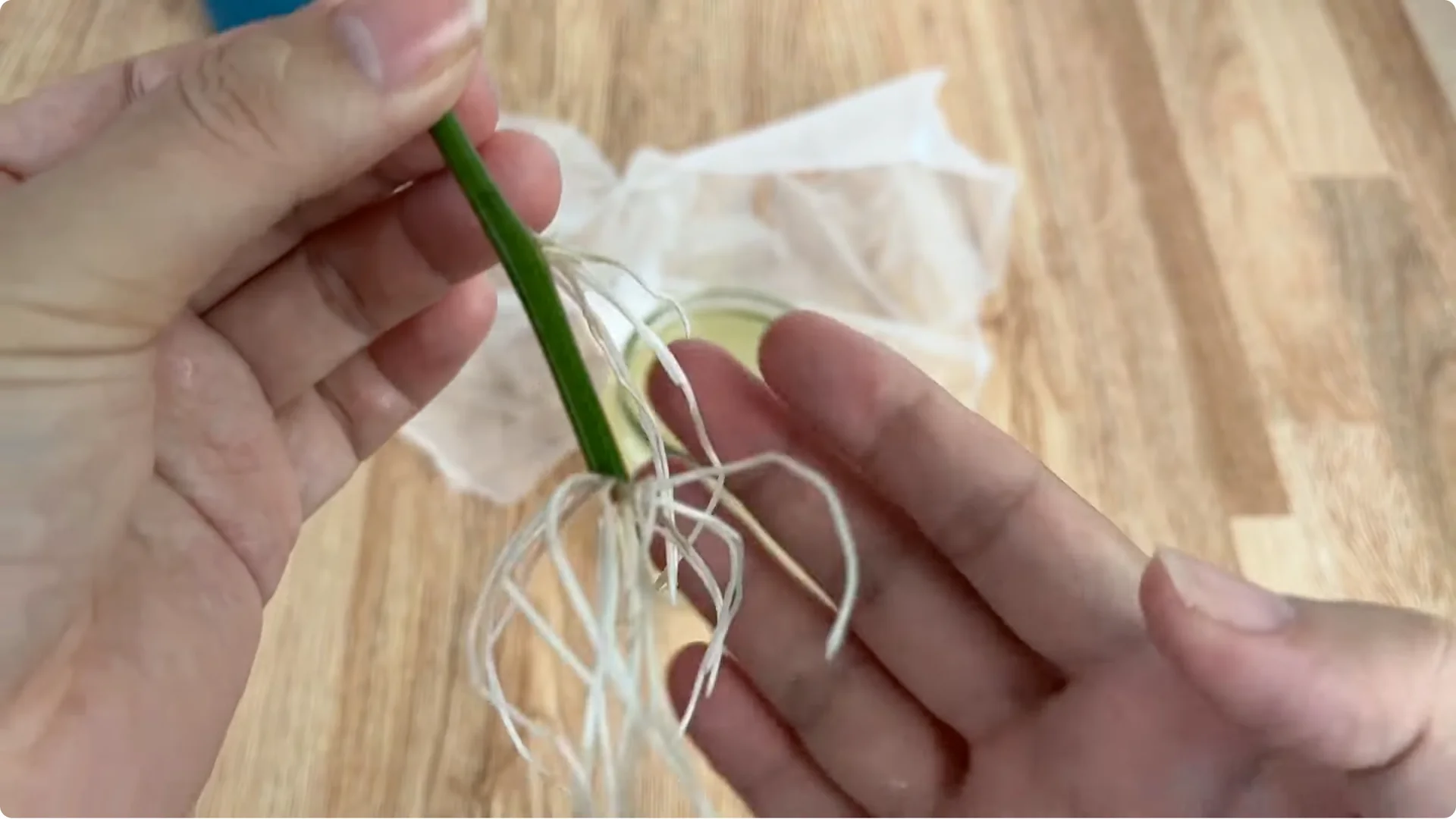
Water gently, place the tree in a bright place and continue to care for it like other mature rose trees.
Maintain consistent moisture without waterlogging. Keep the plant protected from harsh midday sun until it is established. Continue routine rose care as growth strengthens.
Final Thoughts
This natural setup pairs aloe vera’s moisturizing and protective qualities with the nutrient and antibacterial support from cucumber and orange peels. It creates a gentle, balanced rooting environment for healthy, vigorous development. Wishing you success and beautiful, healthy new rose branches in your garden!