
We will perform a simple but impressively effective method of rose cuttings using natural ingredients rich in biological active ingredients.
They help inhibit fungal diseases, stimulate the formation of callus tissue, and initiate strong new roots. Please follow the detailed steps below.
1. Rose Cutting Propagation: Materials and Preparation
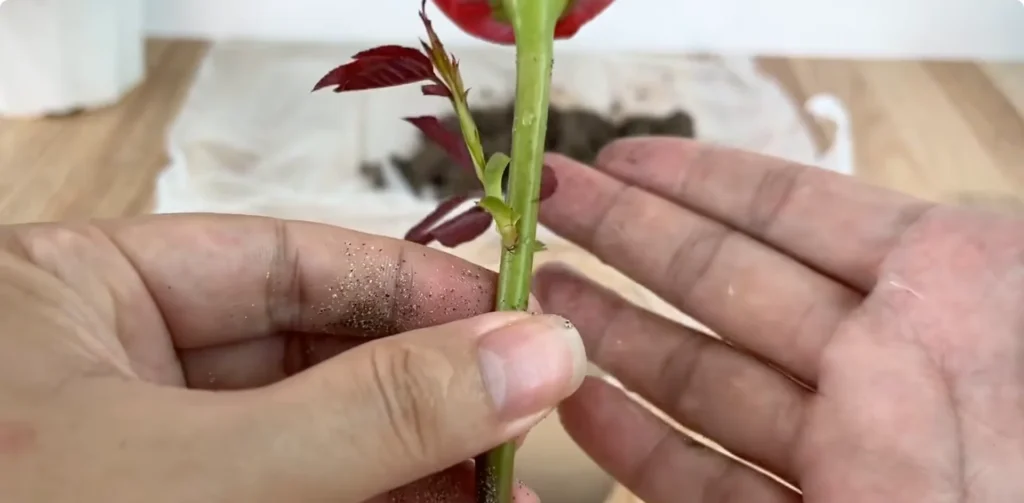
Young branches – that is, not too young, not too old – will give a higher rooting rate. Completely remove the leaves, sharp thorns, and wilted petals on the branch.
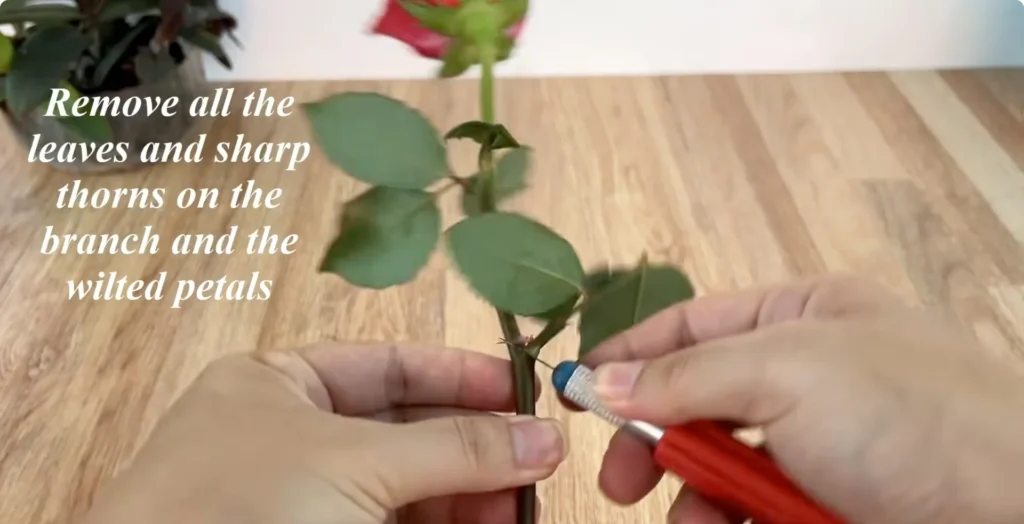
This helps limit the process of water evaporation, while avoiding creating an environment for fungal diseases to arise.
Cut the branch to about 15-20 cm to optimize the ability to nourish the tissue and stimulate the regeneration of new shoots and roots.
2. Rose Cutting Propagation: Ginger Solution
Prepare 10g of fresh ginger. Ginger contains gingerol, shogaol, and many natural antibacterial compounds which help to limit fungi and bacteria, while stimulating the regeneration of scar tissue at the cut site of the rose branch.
After washing, cut the ginger into small pieces and put it in a clean plastic cup. Add 500ml of clean water and stir well.
Use a soft cloth dipped in the ginger solution and wipe it evenly over the entire branch, especially the base. This step helps the branch surface to be covered with biological active ingredients. Then, soak the rose branch in a cup of ginger water for 15 minutes.
3. Rose Cutting Propagation: Cucumber and Honey Additions
Prepare a cucumber. Wash it, peel it, and put the skin back in the cup of ginger solution. Cucumbers contain many vitamins, amino acids, and minerals that help to retain moisture, supporting plant tissue to recover quickly.
Add a small spoon of honey and stir well. Honey has a mild antibacterial effect, adding nutrients to help the cuttings reduce physiological stress. Let the mixture rest for 15 minutes so that the nutrients dissolve evenly.
At the same time, cut a separate piece of cucumber about 3 cm long. This piece of cucumber will act as a biological cushion, providing moisture and micro-minerals right at the point of contact with the rose branch, helping to stimulate better root formation.
4. Rose Cutting Propagation: Prepare the Substrate and Plant
After soaking, take out the rose branch. Stir the mixture well and filter the water. Continue to dilute the solution with 0.5 liters of clean water to create a suitable gentleness for the cuttings, avoiding tissue shock due to the concentration of active ingredients being too strong.
Prepare a clean plastic cup. Pour about 1/3 of the treated river sand into the cup.
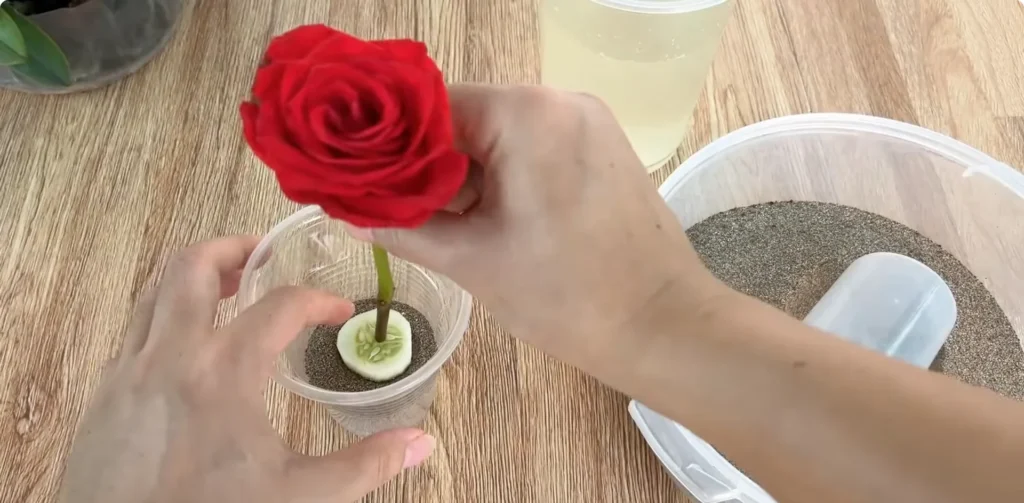
Place the cucumber piece in the middle of the sand layer, then insert the rose branch through the cucumber piece.
This method creates conditions to provide moisture and nutrients right at the point where the roots need to grow.
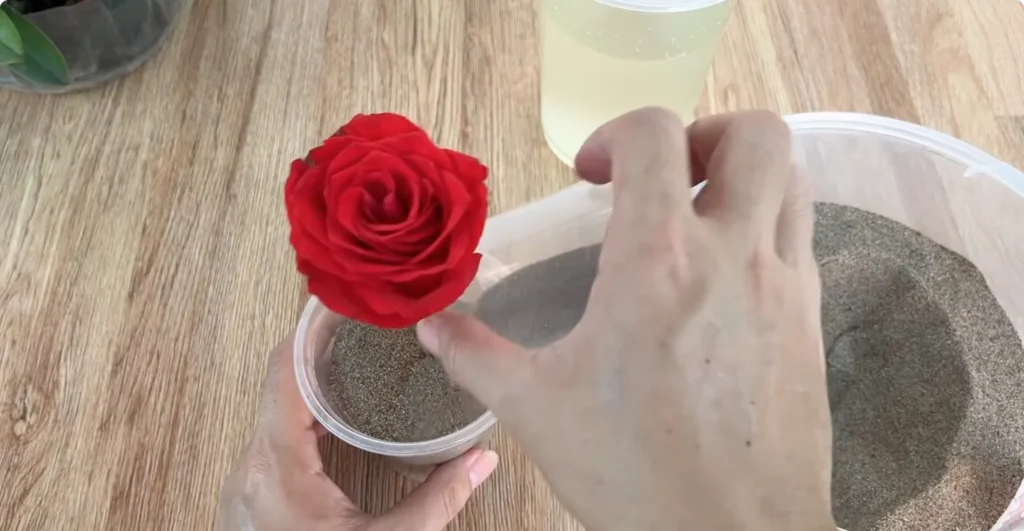
Add river sand until the cup is full to secure the branch. Pour the resulting solution into the cup just enough to moisten the substrate.
This is a mixture rich in natural nutrients, helping to stimulate young roots to grow and limit harmful agents.
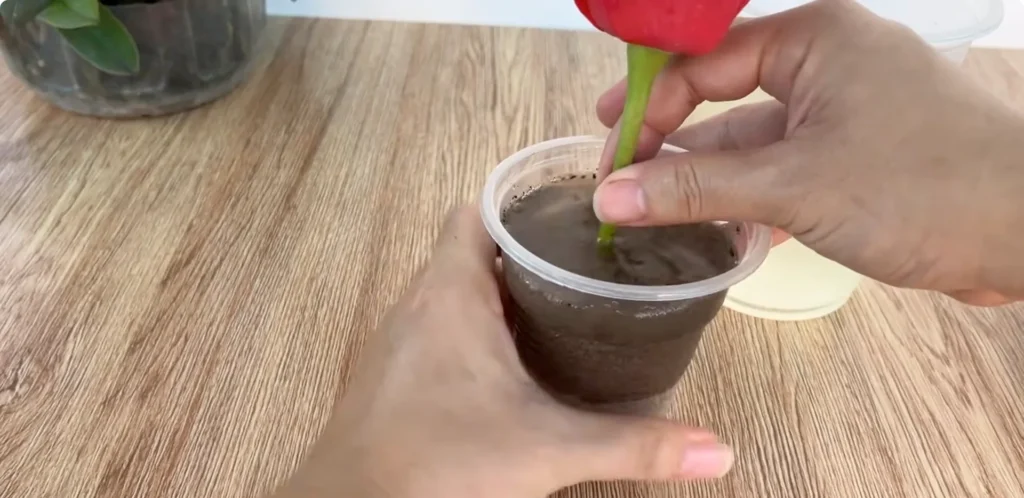
River sand is a substrate with an airy texture, helping new roots to easily grow, while avoiding waterlogging due to its good drainage ability.
5. Rose Cutting Propagation: Humidity and Placement
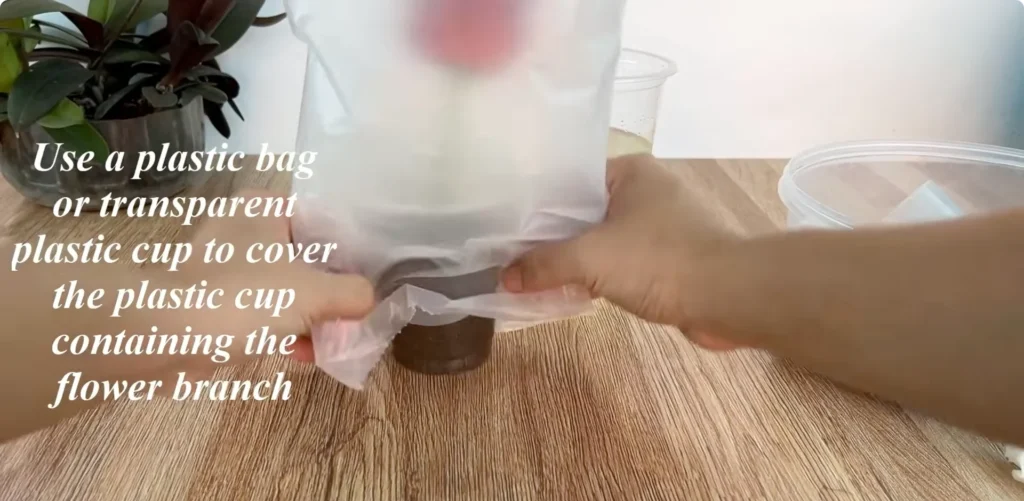
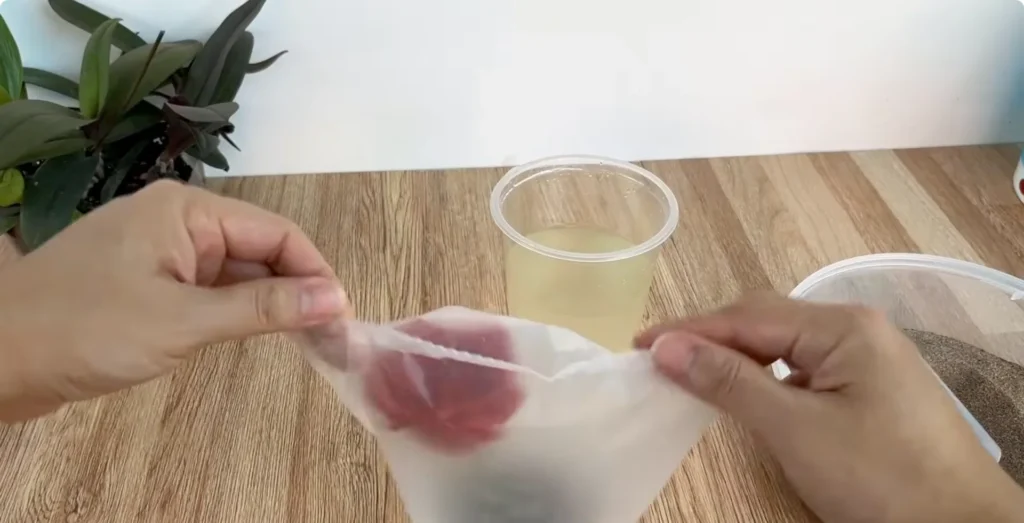
Use a plastic bag or transparent plastic cup to cover the mouth of the cup to create a sealed environment similar to a miniature greenhouse – to help maintain high humidity, limit evaporation.
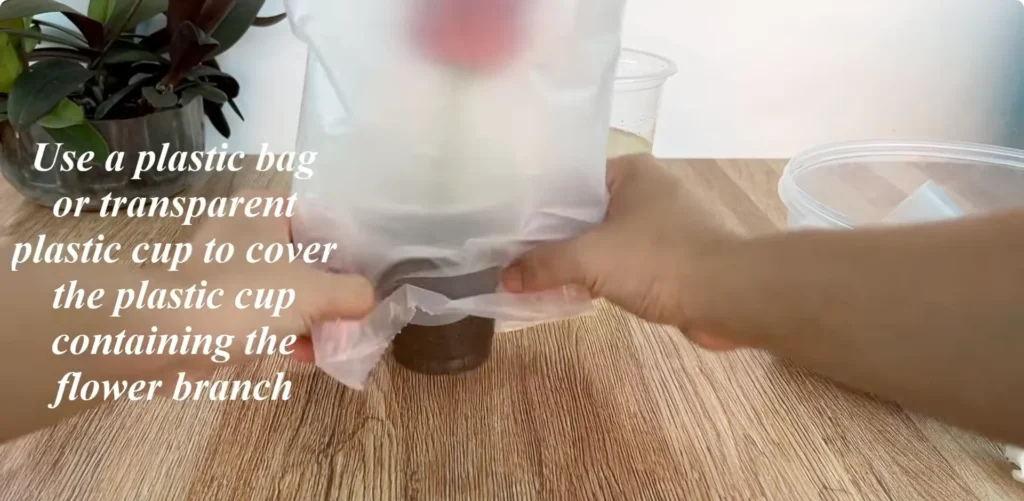
Place the cup in a cool place, away from strong sunlight and strong winds. Stable conditions will help the cuttings lose less water, facilitating the formation of callus and new roots.
6. Rose Cutting Propagation: Checking and Transplanting
After about 10 days, when checking, you will see encouraging signs. The flower branch has fresh green shoots, growing up along the stem.
At the same time, the base of the branch shows strong new roots, bright white and plump, spreading around the area in contact with the sand.
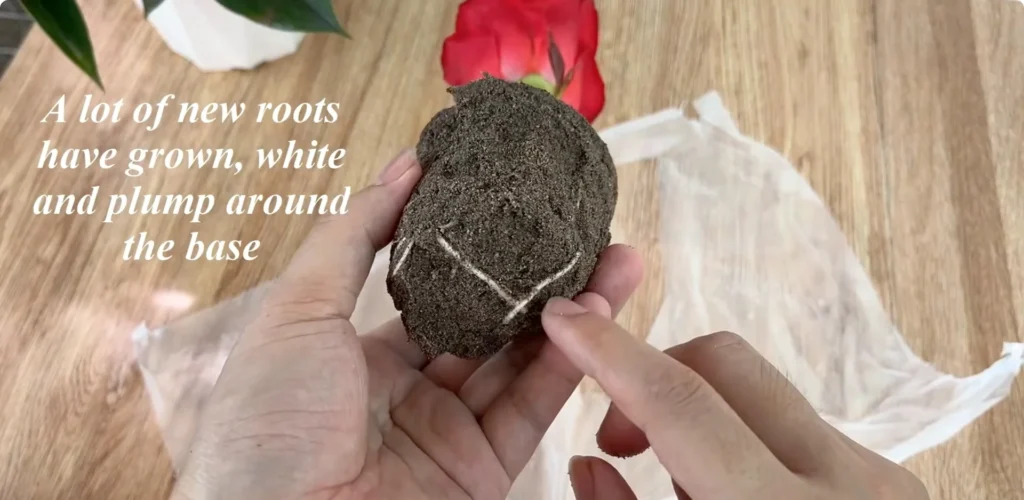
When the root system is stable, you can move the branch to a separate pot with a loose substrate, preferably coconut fiber – and good drainage so that the roots continue to grow healthily.
7. Final Thoughts on Rose Cutting Propagation
With only simple ingredients including ginger, cucumber, and honey, we have created a natural mixture solution that effectively supports cuttings. This method has the advantage of being safe, easy to implement, and suitable for a variety of rose varieties.
Wish you success in applying it and soon own healthy, vibrant rose plants! If you want, you can try adding other substrate materials to optimize the results in your own conditions.