
There is probably no flower lover who has never tried to take rose cuttings. It is not only a gardening job, but also a small journey – where people can touch the magic of life. Today, I will tell you a simple but effective formula, carrying within it a surprising power of regeneration.
1. Choose the seedling – Rose Cutting Propagation
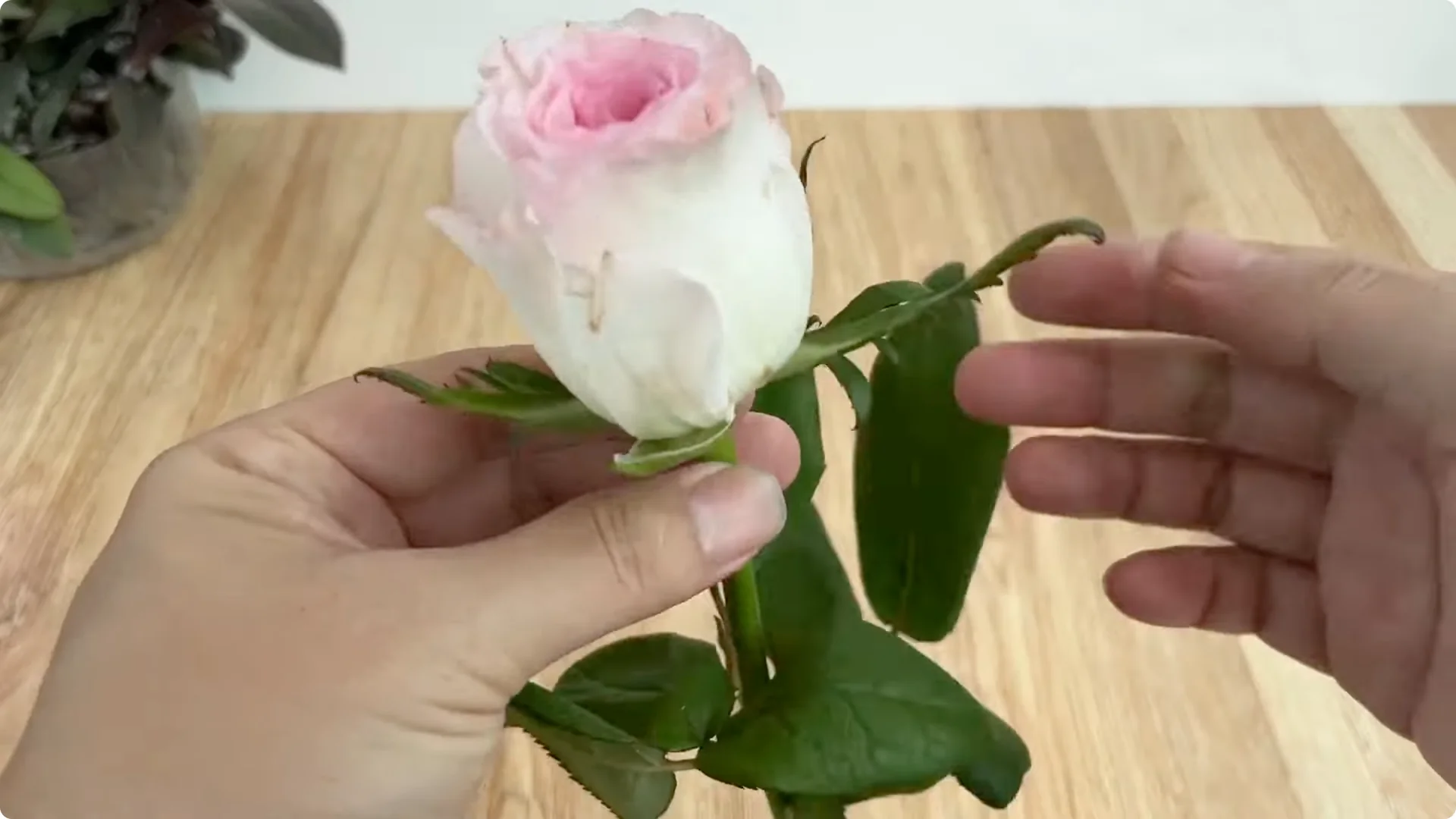
The chosen rose branch must be very strong, of moderate age. Young branches are weak, easily waterlogged; branches that are too old are hard, difficult to root.
Before starting, we need to cut off all the leaves, thorns and wilted petals because any excess parts are a burden that makes the branch lose water faster. A stem length of about 15-20 cm is most reasonable. This is a small preparation step but largely determines success.
2. Lemon cleaning – Rose Cutting Propagation
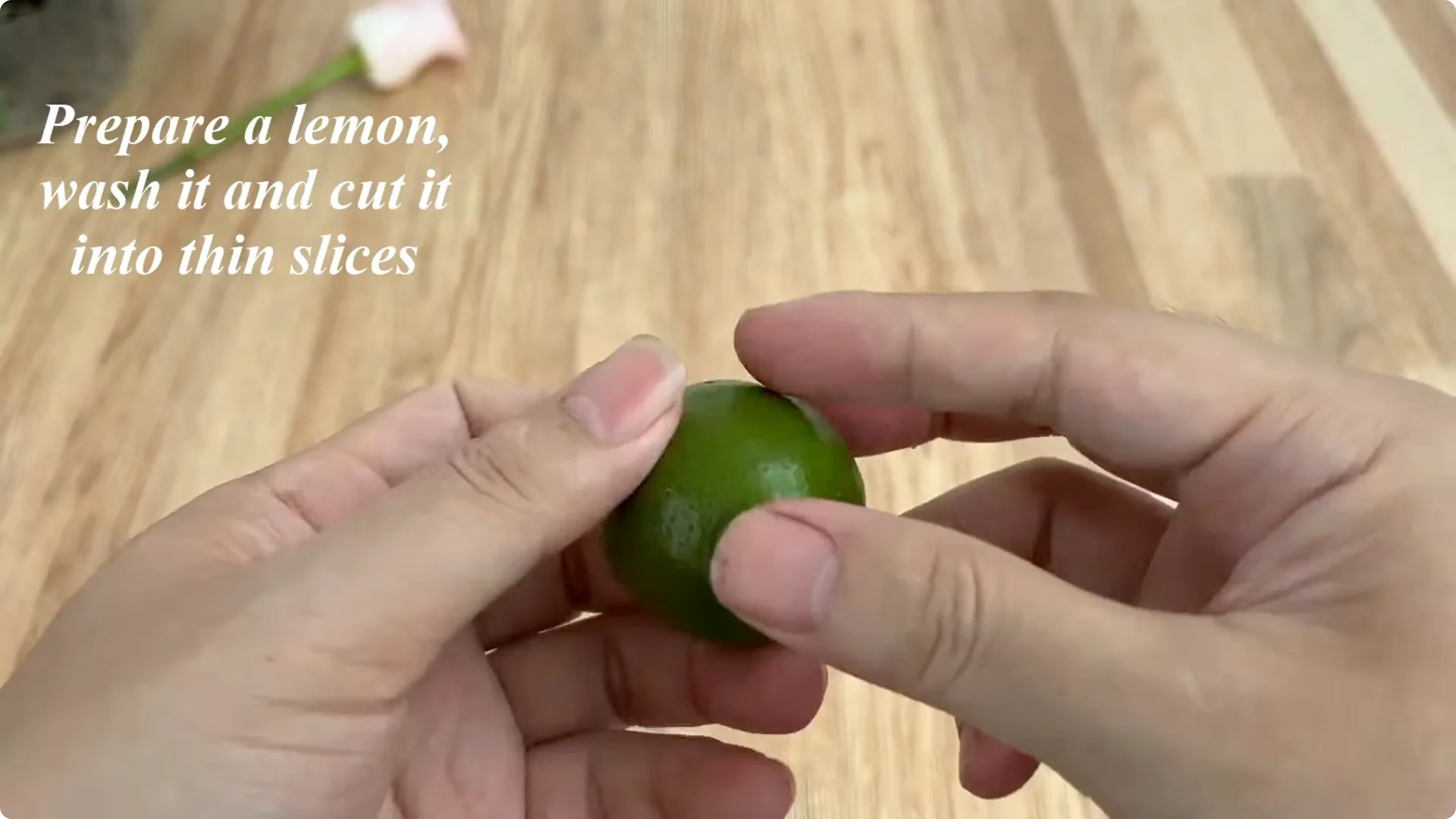
In a small lemon is a storehouse of citric acid, a mild organic acid that has the ability to clean, disinfect and stimulate the recovery of plant tissue. When we cut the lemon into thin slices, drop it into 500 ml of clean water and stir well, the solution becomes a biological detergent that is safe for the plant.
Take a soft cloth dipped in lemon juice, gently wipe along the stem, especially the cut – the place most susceptible to infection. This helps remove microorganisms, dirt and the thin epidermis that prevents metabolism. After cleaning, soak the entire branch in the solution for 30 minutes to awaken the cells at the base, preparing for the next stage of nutrient absorption.
Read More: Rose Branch Grows More Roots Rice
3. Apple and baking soda solution – Rose Cutting Propagation
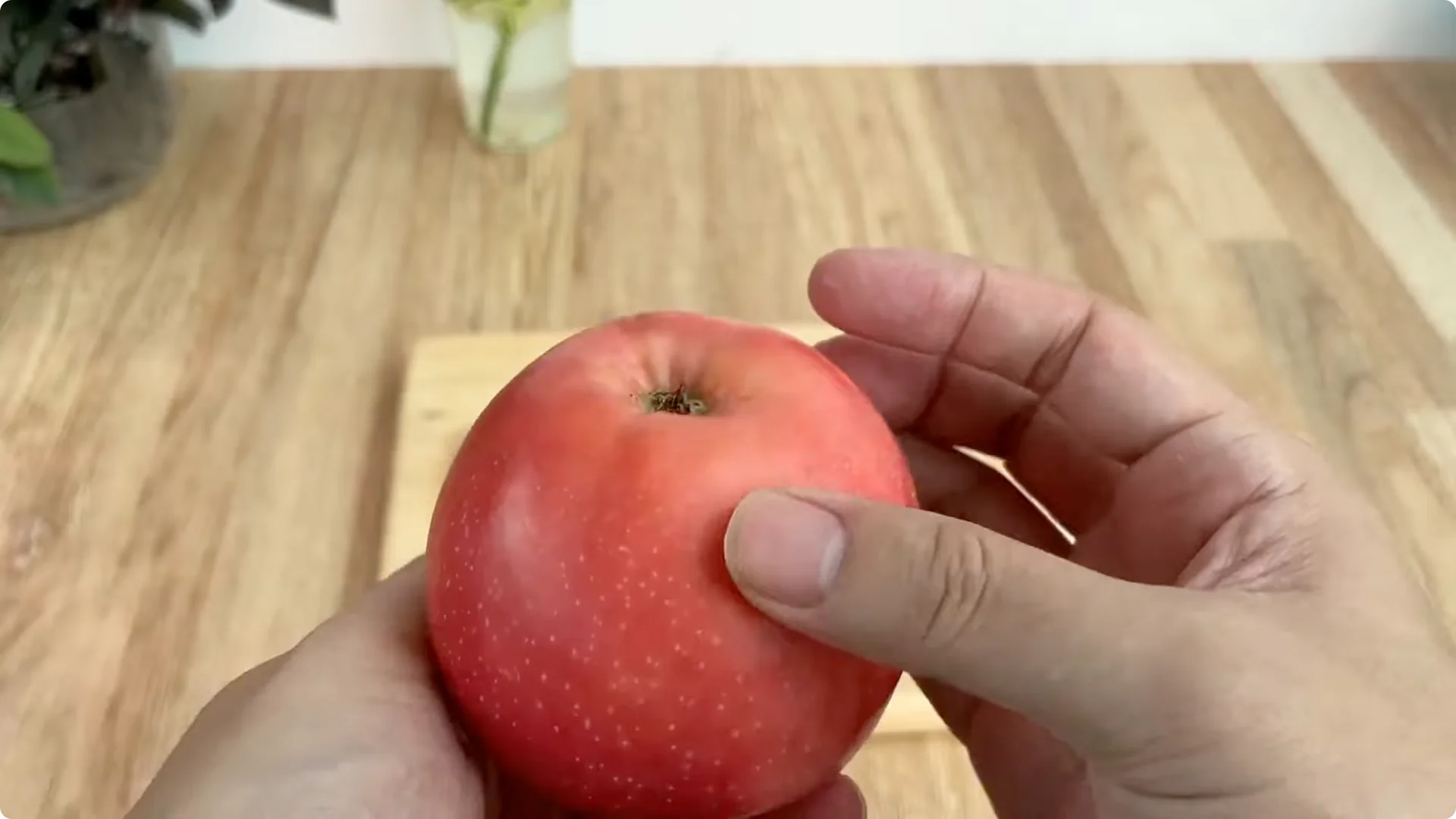
Apples are a natural source of energy, rich in sugars and enzymes that stimulate the growth of root tissue. Take about 30 grams of apples, cut them into small pieces and put them in a clean plastic cup.
If lemon is acidic, baking soda is a balancing factor, helping the solution have a neutral environment – suitable for young plant cells. Add a spoonful of baking soda with 500 ml of warm water, stir well, then let it sit for 30 minutes.
During this time, the natural reactions that occur between the acid in the apple and the alkalinity of baking soda will release carbon dioxide and some mineral ions. These ions, when absorbed into the plant tissue, will help stimulate cellular respiration, promoting division at the base – a prerequisite for the formation of new roots.
4. Paper as a moist substrate – Rose Cutting Propagation
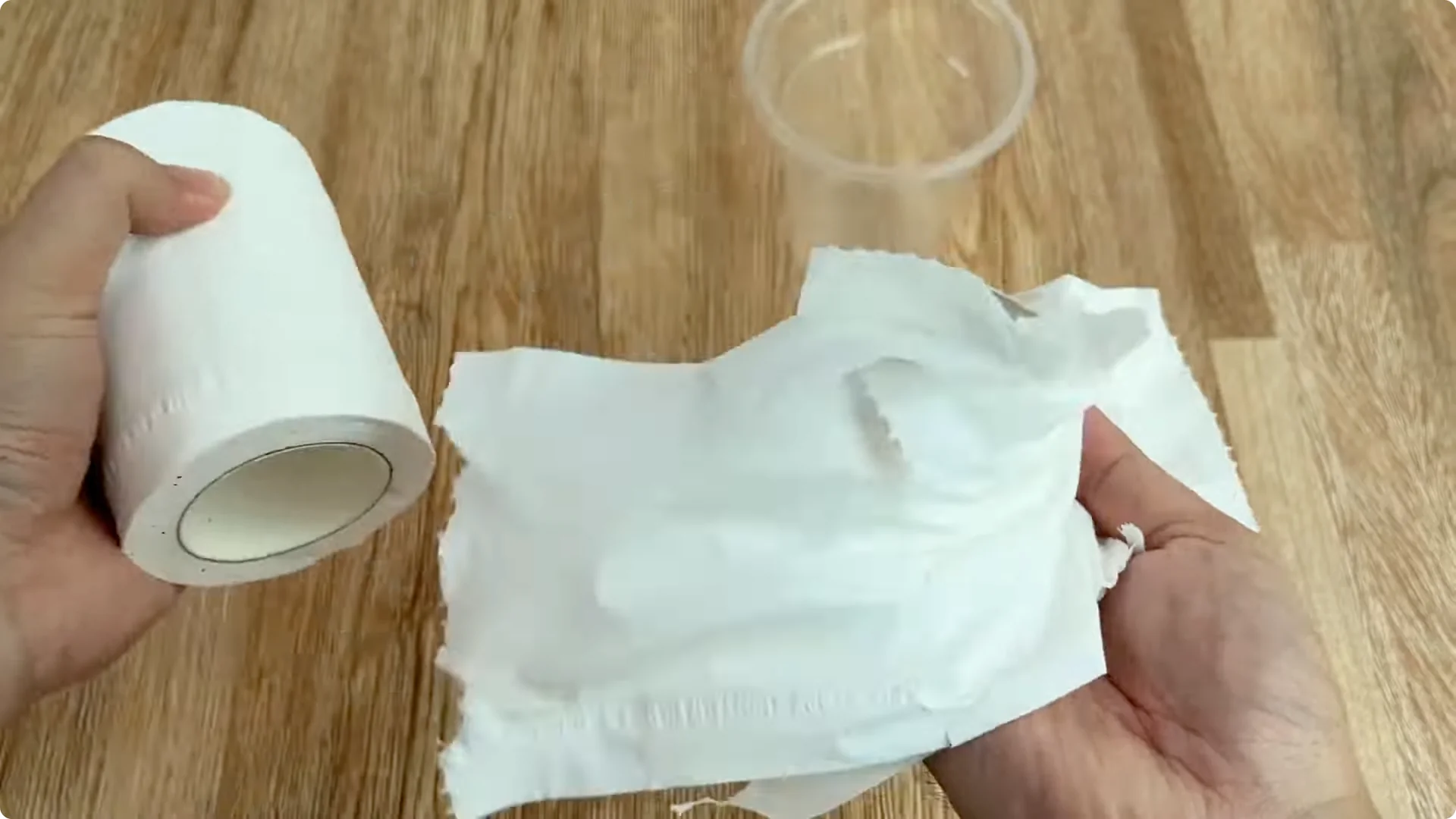
Instead of sand or coconut fiber, in this recipe we use soft toilet paper – a material that has good water retention and is sterile. Tear the paper into small pieces and put it in a clean plastic cup.
Read More: Rose Branch Grows Roots Blooms Beer Glass
5. Combine solutions – Rose Cutting Propagation
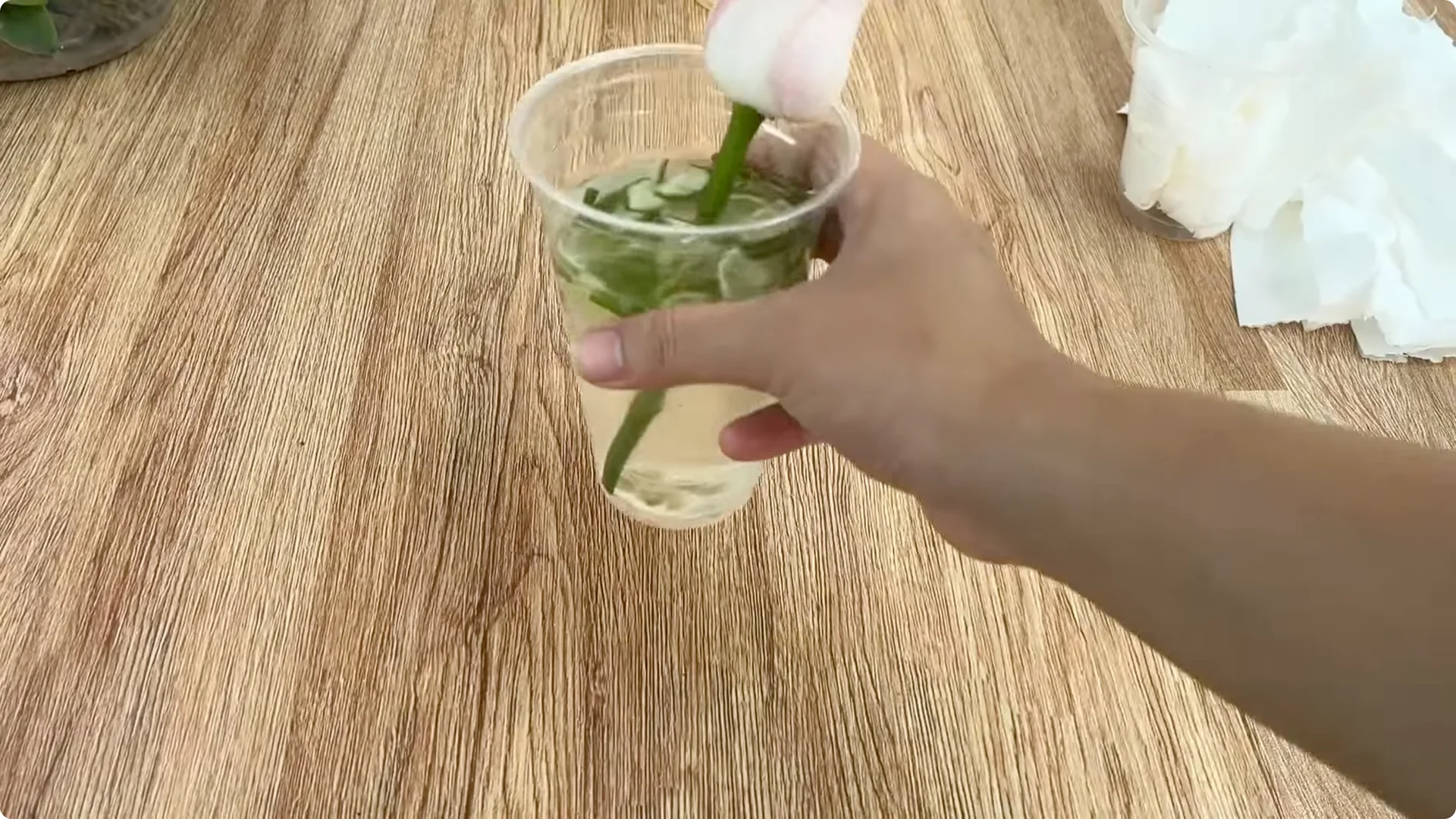
Mix and prepare – Rose Cutting Propagation
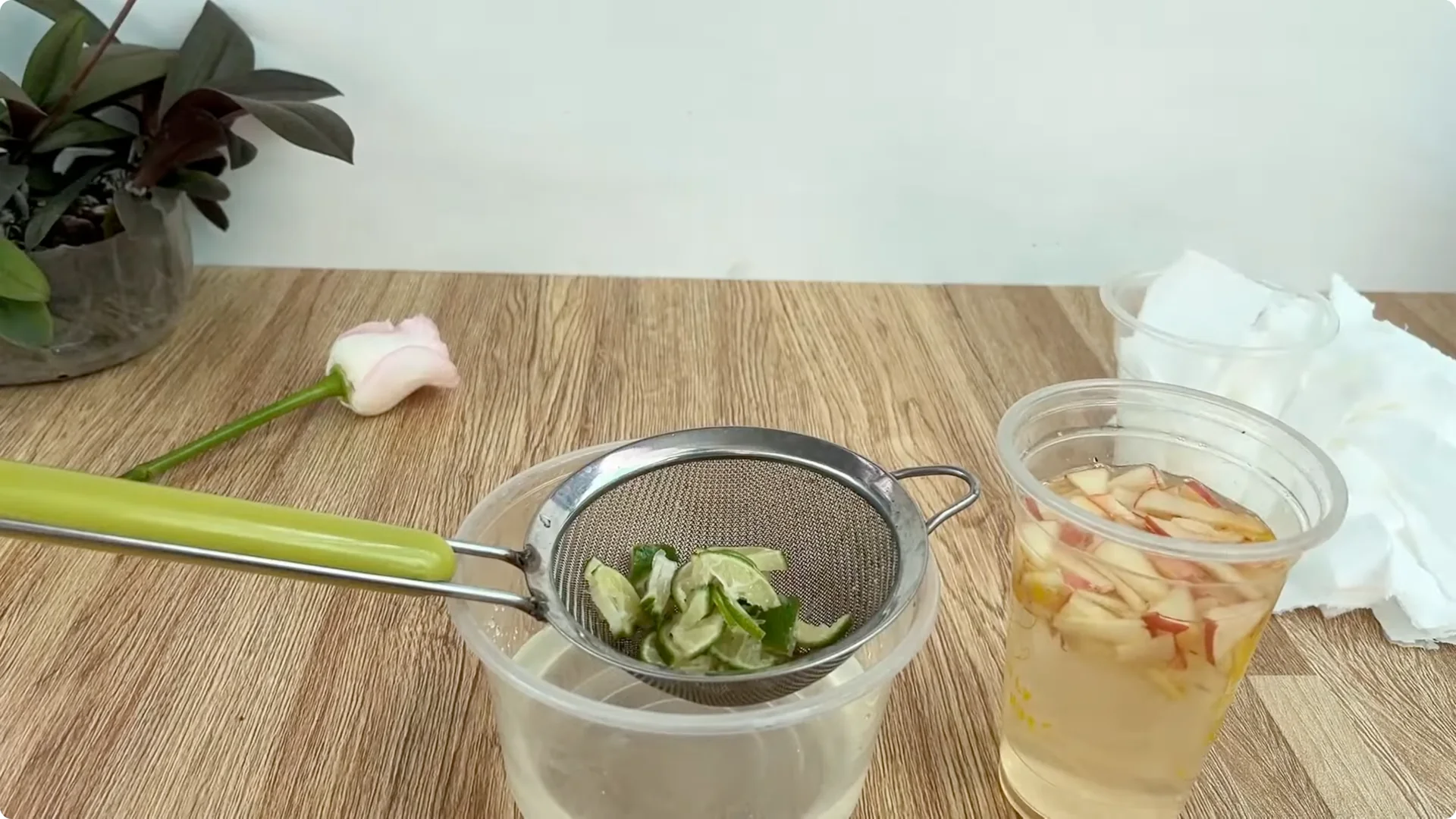
After the lemon solution and the apple-soda solution are ready, we filter out the residue, keeping only the clear water. When mixing the two solutions, we create a balanced mixture of mild acid and alkaline minerals – both cleaning, nourishing, and stimulating growth.
That is the golden solution that helps the rose branches not only survive, but also sprout healthy buds. Fill the cup with the apple-lemon-soda solution, soak for 10 minutes so that the paper absorbs the nutrients evenly.
Insert the cutting – Rose Cutting Propagation
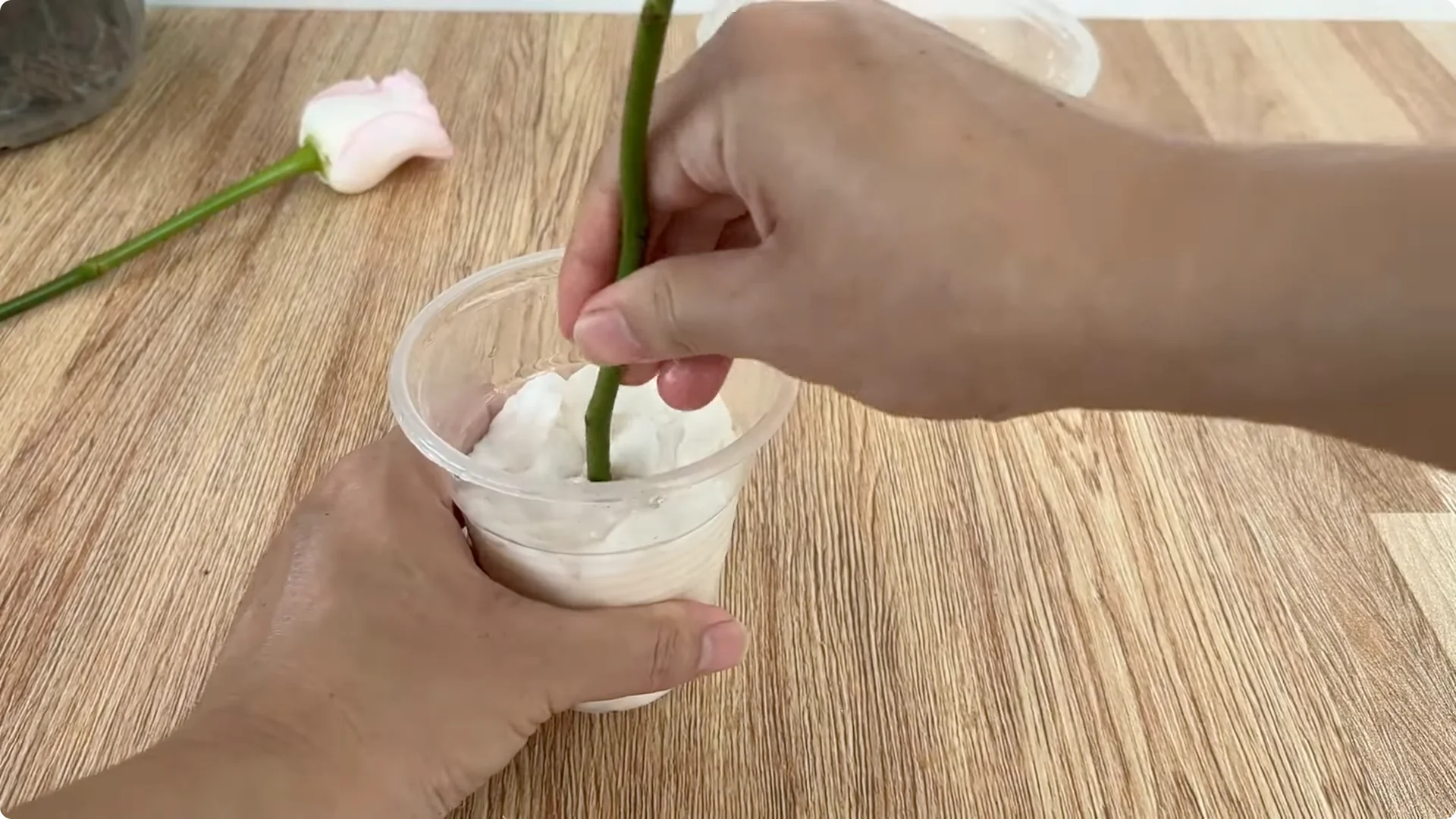
Gently press the paper to keep it just moist, avoiding waterlogging. Use a small stick to punch a hole in the middle of the paper, insert the rose branch, and press lightly around it to fix the position.
The solution in the paper will provide enough moisture and minerals needed for roots to form, while the porous structure of the paper allows oxygen to easily penetrate – ideal conditions for young roots to develop.
6. Keep moist and wait – Rose Cutting Propagation
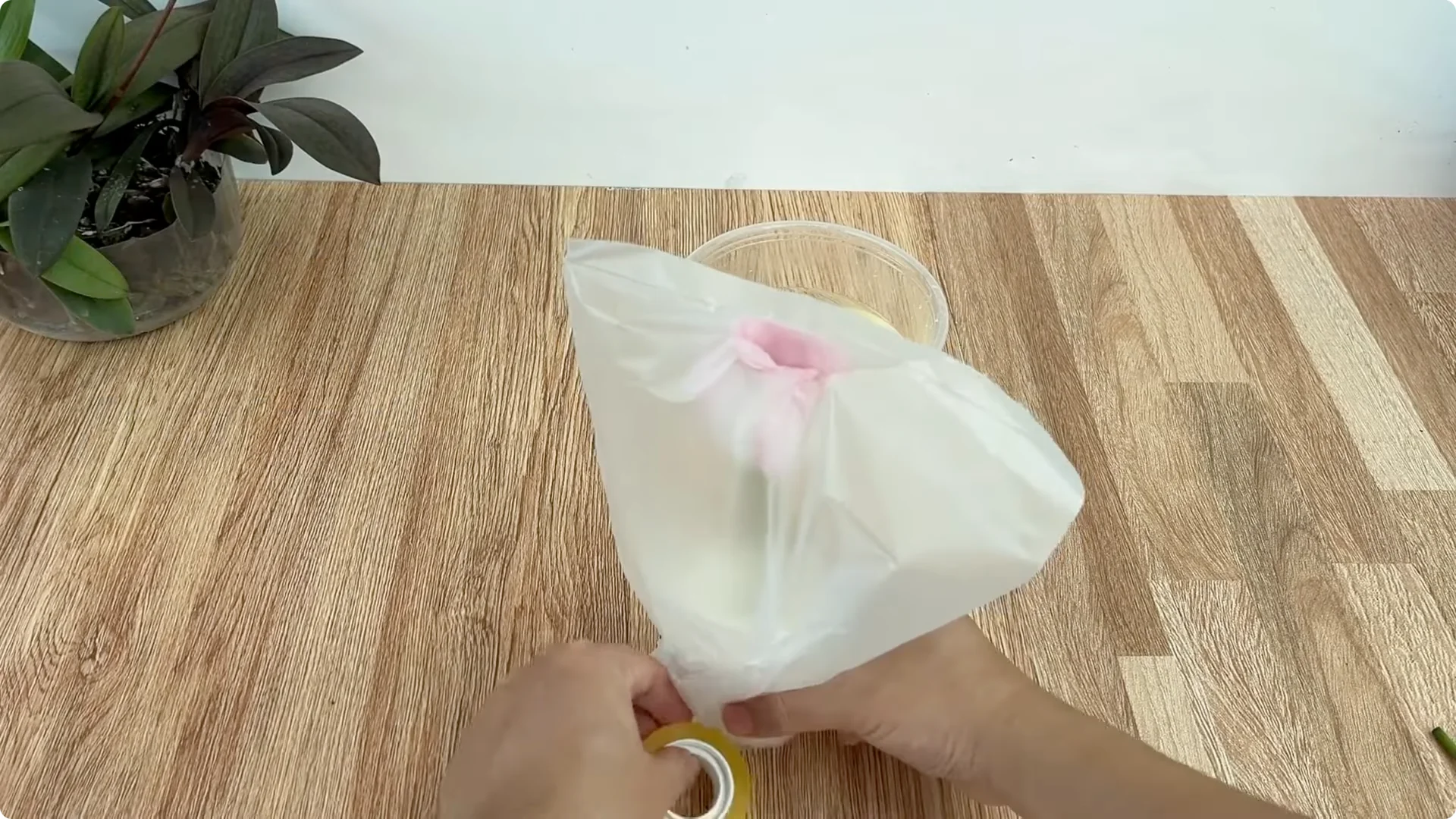
The cup is covered with a plastic bag or transparent plastic cup to create a stable microclimate – moist but still airy. Place the cup in a cool place, away from wind and strong sunlight.
In that environment, the rose branch does not lose water, but still receives enough diffused light to maintain metabolism.
7. Signs of success – Rose Cutting Propagation
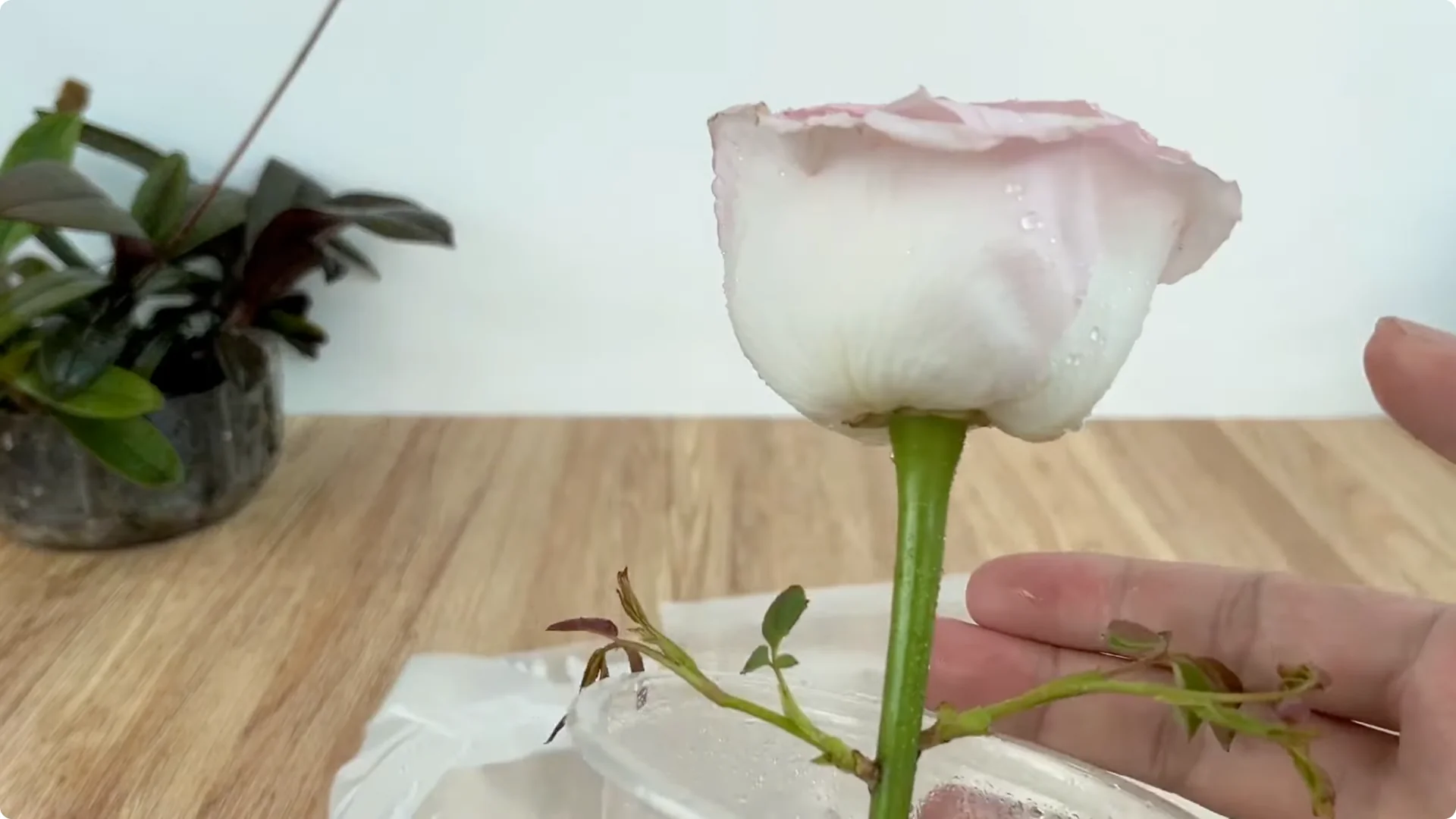
About 10 days later, you will see the miracle. From the dormant buds, new buds open and grow as if signaling new life.
The base of the rose branch begins to appear white, plump roots that cling around the stem. Everything happens slowly but surely – proving that nature always has a way to regenerate if we know how to listen and support it properly.
Read More: Rose Branch Grow Roots Flowers 2
8. Transplanting – Rose Cutting Propagation
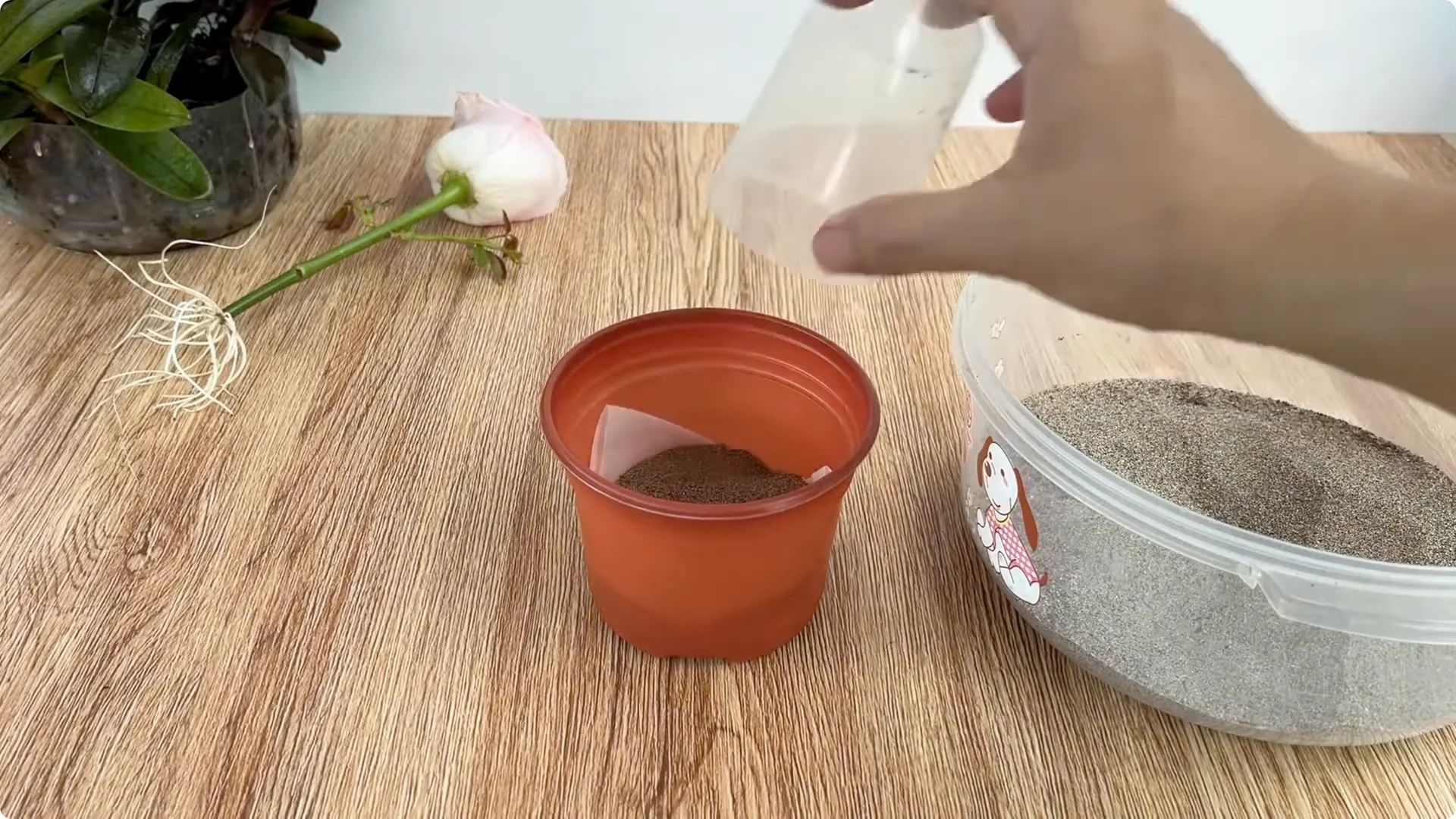
When the roots are strong, the rose branch can be transferred to a new pot. At this time, use river sand to ensure good ventilation and drainage.
Sand does not retain water for too long, helping the roots not to rot but still absorb moisture evenly. After a few weeks, the plant will take root completely and begin to grow new leaves – a sign of complete recovery.
Final thoughts – Rose Cutting Propagation
When you hold the first rooted rose branch in your hand, you will clearly feel the simple joy of a gardener. It is the joy of seeing life revived from your own efforts.
From a slice of lemon, a small piece of apple, a few sheets of white paper, we have created a green miracle.