We will continue exploring a completely natural method of propagating roses. This method is simple yet highly effective, helping cuttings root quickly, grow strong, and sprout new shoots if done correctly and with careful care.
It’s clear that propagating roses doesn’t necessarily rely on chemical rooting hormones. With only natural, readily available, and safe ingredients, we can still create an ideal environment for rose cuttings to root quickly, healthily, and sustainably.
1. Selecting and Preparing Cuttings for Rooting Rose Cuttings
First, choose a rose cutting that you like, prioritizing those that are free from pests and diseases, undamaged, and of the right age. Cuttings that are too young are prone to root rot, while those that are too old are difficult to root.
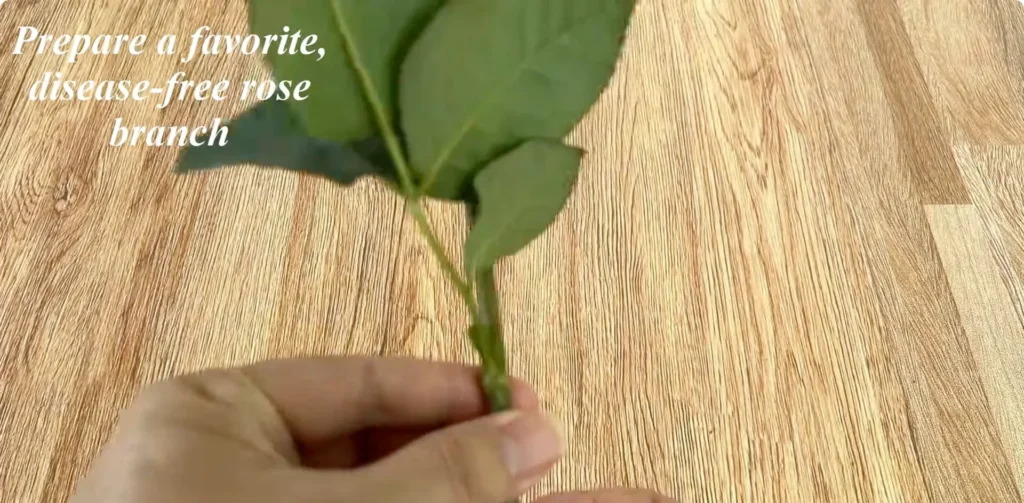
After selecting a suitable cutting, remove all leaves, thorns, and any old or damaged petals. This helps reduce water loss and minimizes the risk of fungal and bacterial infections during the rooting process.
Next, trim the rose stems to about 20 cm in length. At the base of the stem, use a clean knife to gently remove a thin layer of bark, being careful not to damage the underlying tissue. Trimming the bark will stimulate callus formation and create favorable conditions for new root development later.
2. Preparing the Ginger Solution for Rooting Rose Cuttings
Take about 10 grams of fresh ginger, wash it thoroughly to remove dirt and sand, then chop or crush it to allow the essence to dissolve easily. Ginger has strong natural antibacterial and antifungal properties, helping to clean the cut surface, prevent root rot, and stimulate healthier stems in the early stages.
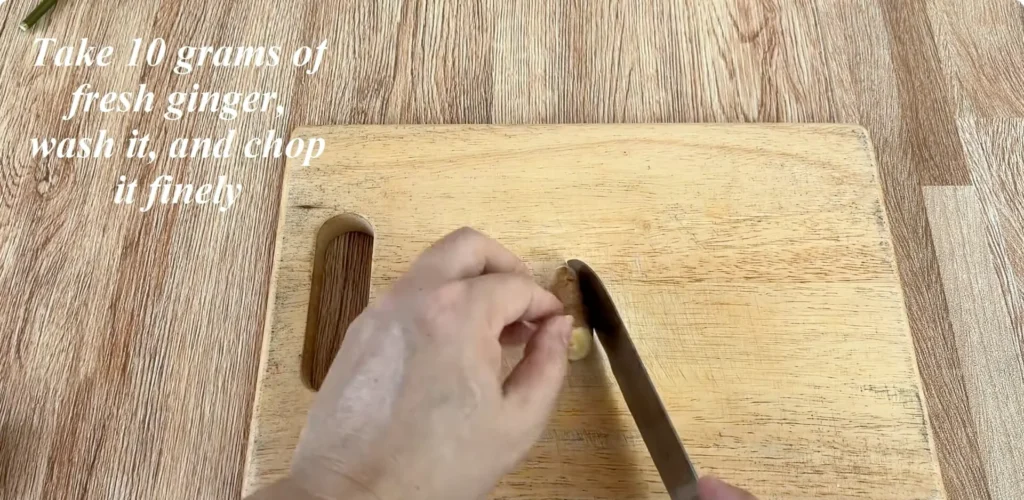
Put the ginger into a clean plastic cup with 500 ml of water, stir well, and soak the rose stems in this solution for about 30 minutes.
3. Making the Potato and Apple Peel Nutrient Solution for Rooting Rose Cuttings
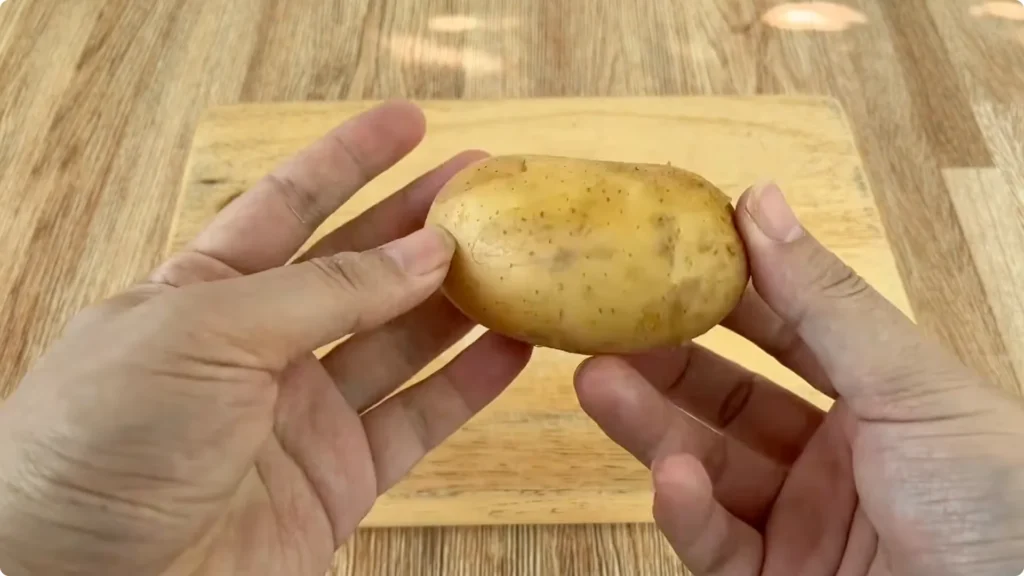
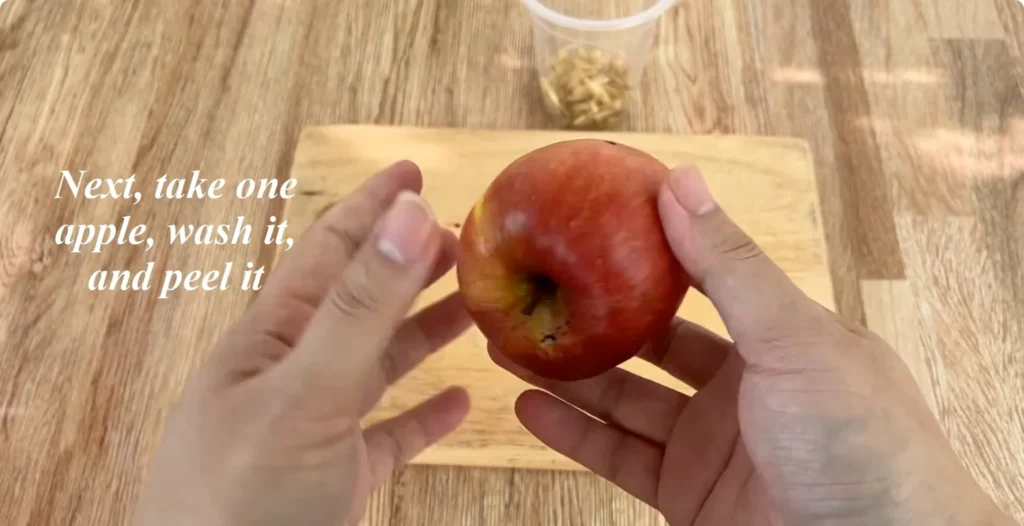
4. Combining Solutions to Support Rooting Rose Cuttings
At the same time, remove the rose stem from the ginger water and filter the ginger solution separately. Then, mix the two solutions together.
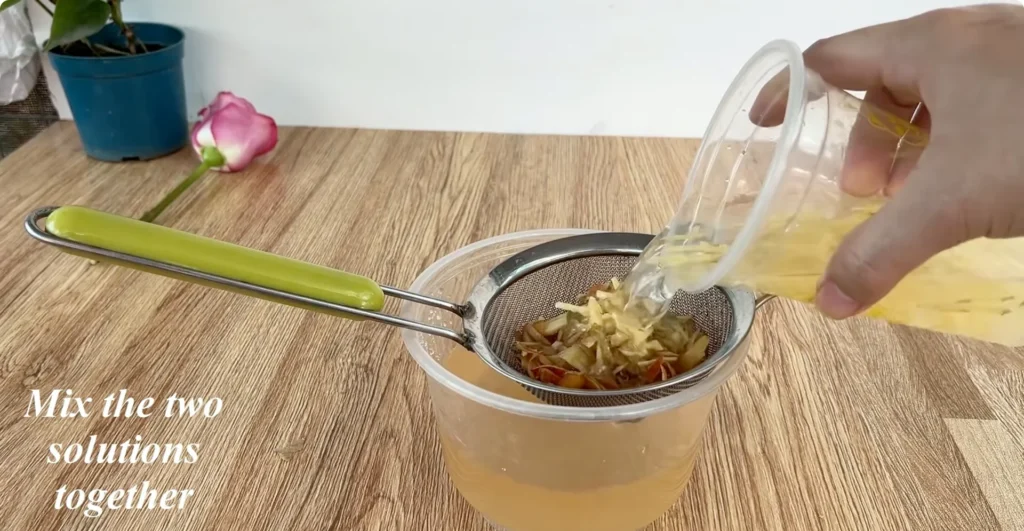
The resulting mixture has both strong antibacterial properties from ginger and provides natural nutrients to help young roots form quickly and healthily.
5. Preparing the Growing Medium for Rooting Rose Cuttings
Take a clean plastic cup and fill it with treated river sand. Clean river sand has the advantage of good drainage, preventing root rot and creating a well-ventilated environment for root development.
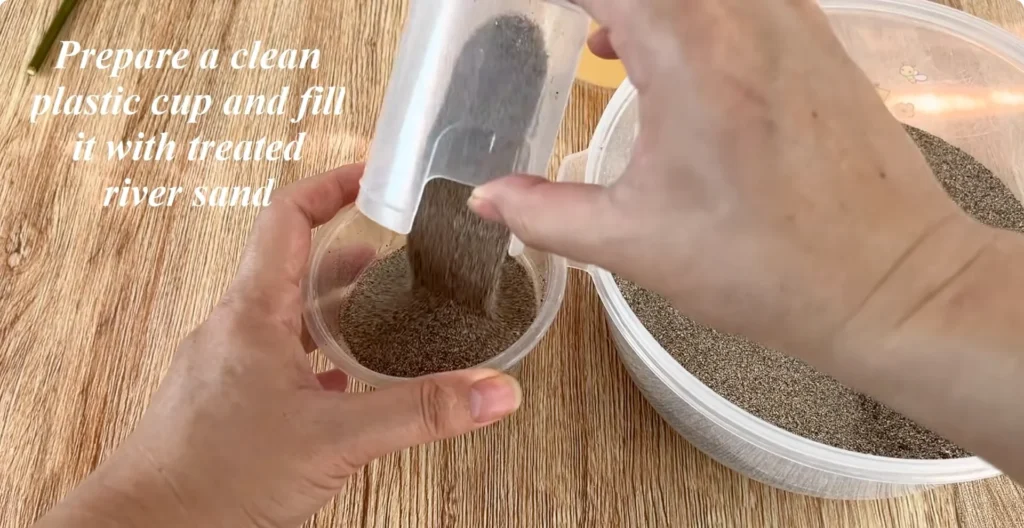
Slowly pour the apple peel-potato peel-ginger solution into the cup of sand, ensuring the sand is evenly moist but not waterlogged. Then, insert the rose cutting into the center of the cup, ensuring the root is buried deep and securely fixed in the sand.
To create a stable humid environment, use a plastic bag or clear plastic cup to tightly cover the cup and the rose cutting. This covering helps retain moisture, prevent water loss, and create a suitable microclimate for rooting.
6. Placement, Light, and Care for Rooting Rose Cuttings
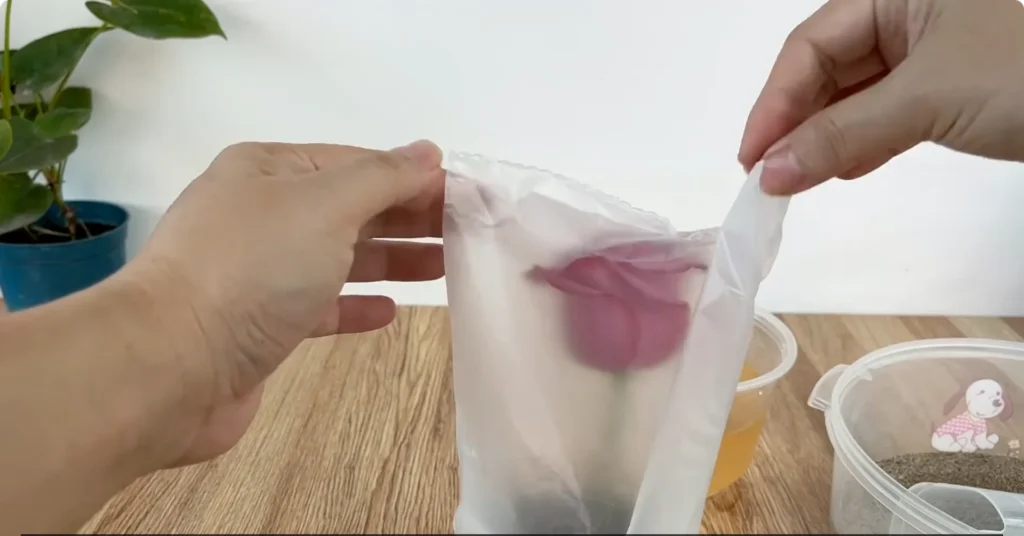
Place the cutting in a cool, airy place, avoiding strong winds and direct sunlight.
Gentle diffused light is ideal for the cutting to survive and stimulate new shoot growth.
7. What to Expect After 10 Days When Rooting Rose Cuttings
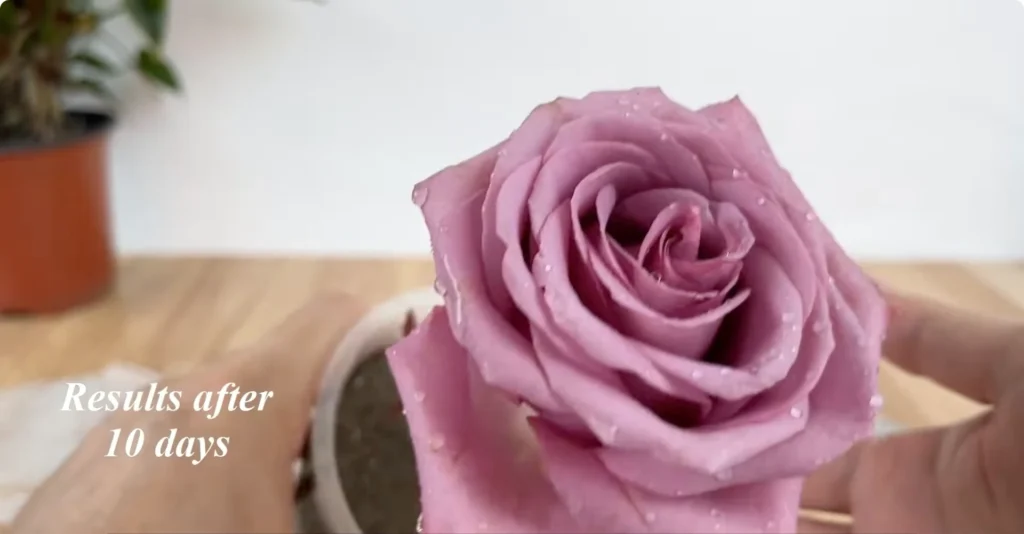
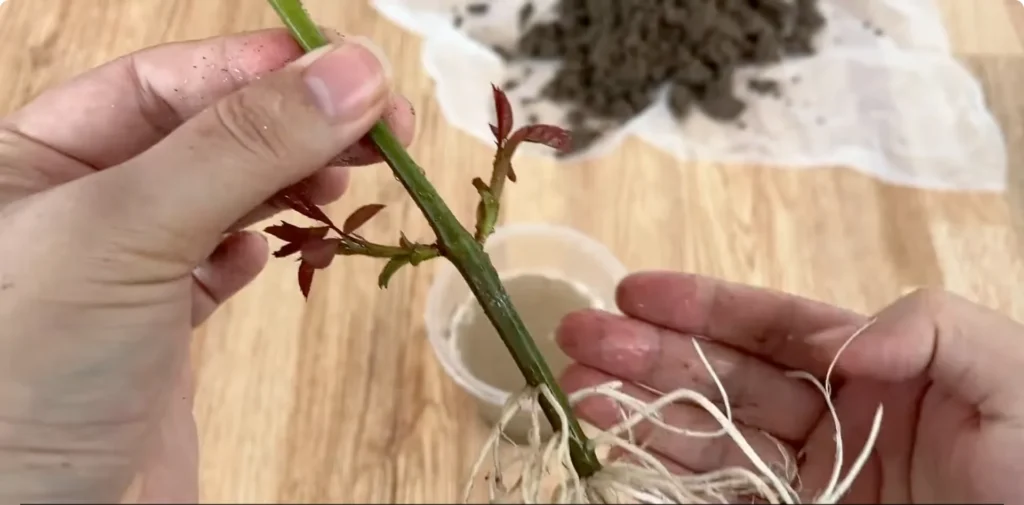
After about 10 days of proper care, you will observe very positive signs.
The rose cutting will begin to sprout new shoots, with fresh green leaves, indicating that the cutting has adapted well to the new environment.
At the base, many thick, succulent white roots appear, indicating that rooting is progressing well.
8. Transplanting Rooted Rose Cuttings
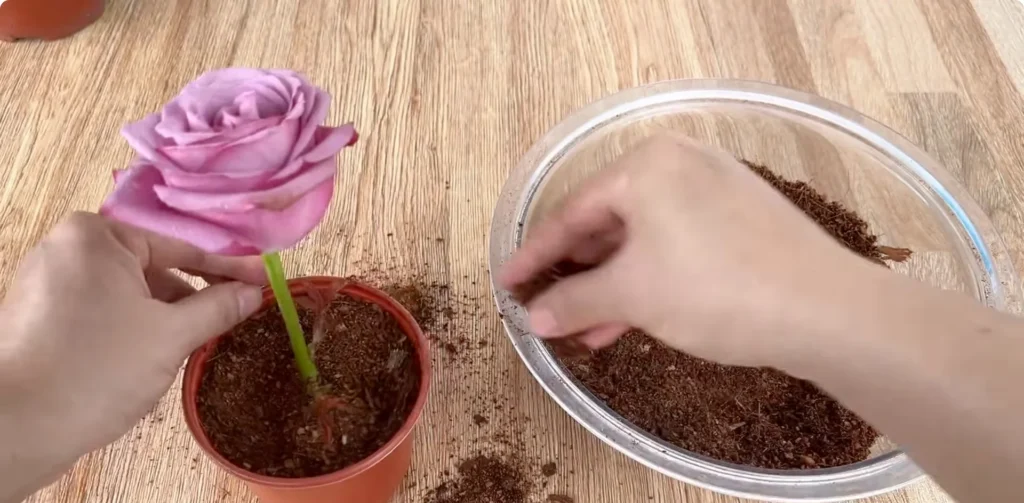
Once the roots have developed stably, you can gently replant the rose cutting in a well-draining pot using coconut fiber as a growing medium to continue nourishing the plant during its next growth phase.
9. Natural Approach and Mindset for Rooting Rose Cuttings
The most important thing is not just the formula, but also the patience, meticulousness, and love you dedicate to each small cutting.
When you care for the plant with careful observation and understanding its needs, the rose will respond with vibrant new shoots and brilliant blooms in the future.
Final Thoughts on Rooting Rose Cuttings
This natural method supports quick, healthy rooting with simple ingredients like ginger, potato peels, and apple peels, combined with clean river sand and steady humidity. Hopefully, the methods in this article will help you feel more confident on your journey of natural gardening, so that every little corner of your living space is filled with greenery and joy.