
In the world of rose growers, finding a natural, safe and effective rooting method is always a top concern. There are ingredients that seem very ordinary in the kitchen but contain magical abilities to help rose branches take root quickly, grow strong and resist fungi. Here is a method to stimulate rooting of rose branches, bringing both natural and sustainable results.
1. Prepare the Cinnamon Solution for Natural Rose Cutting Propagation
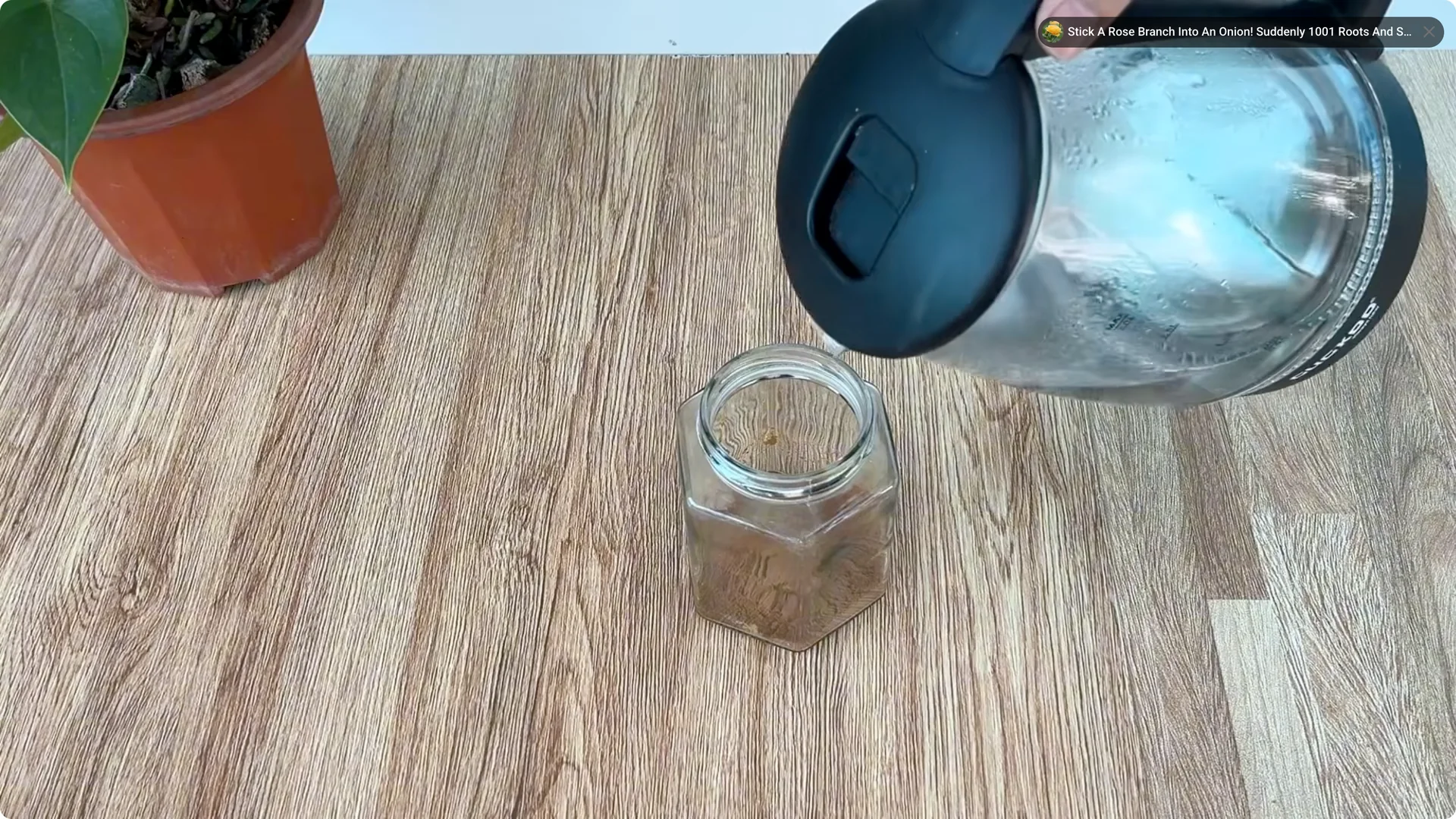
Start by preparing a cinnamon solution – the main ingredient that helps kill bacteria and protect young root tissue. Take 1 spoon of cinnamon powder and put it in a clean glass jar, then add 500ml of boiling water. Use a spoon to stir well to dissolve the cinnamon essence into the water, then cover and let it cool completely.
Cinnamon powder contains high levels of antifungal compounds such as cinnamaldehyde and eugenol. These help prevent bacteria and mold from growing in the cut area – which is the most susceptible to infection during the cutting process.
2. Select and Prepare the Cutting for Natural Rose Cutting Propagation
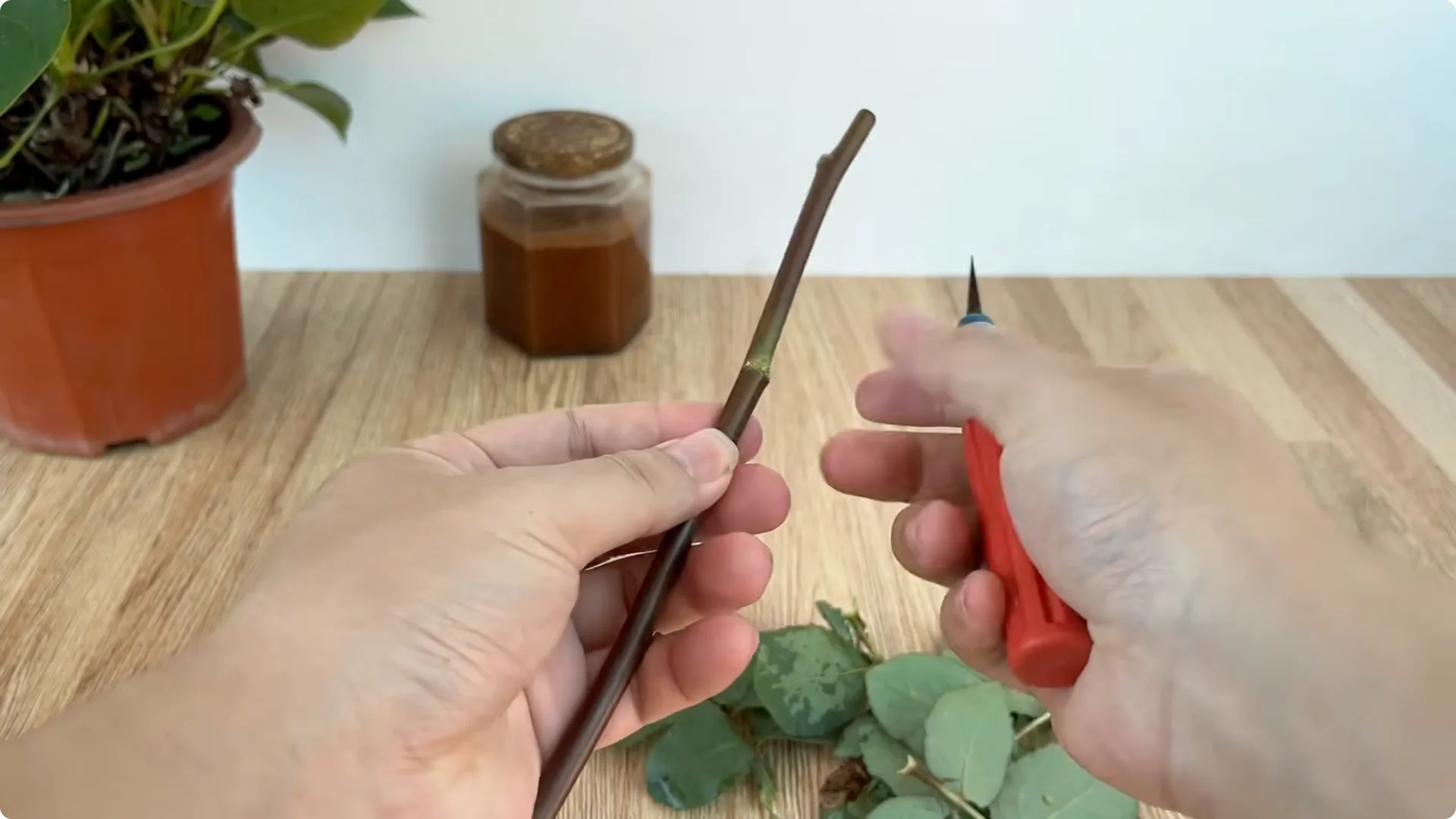
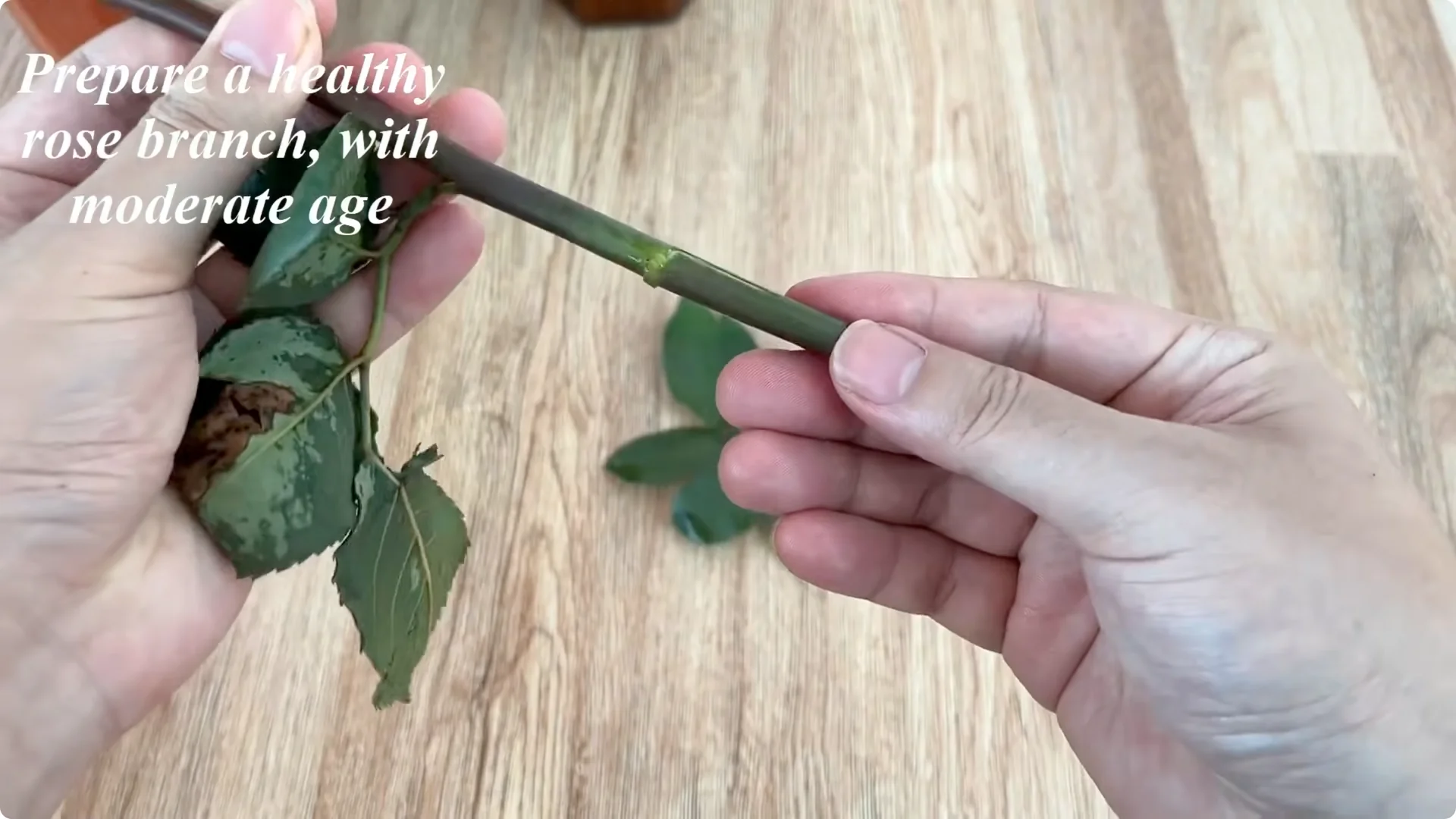
Choose a healthy rose branch of moderate age – not too young to avoid waterlogging, nor too old to make root stimulation difficult. Use sharp pruning scissors to remove all leaves, thorns and wilted petals, keeping only the stem about 15-20cm long. The remaining leaves can dehydrate quickly, weakening the branch, so they need to be cleaned thoroughly.
Use a little dry cinnamon powder to dab on the cut area. This is an important step to help disinfect and stimulate scar tissue at the base – where new roots will grow. After applying cinnamon, let the flower branches dry naturally for about 10-15 minutes, avoiding direct sunlight.
3. Prepare the Oatmeal Solution for Natural Rose Cutting Propagation
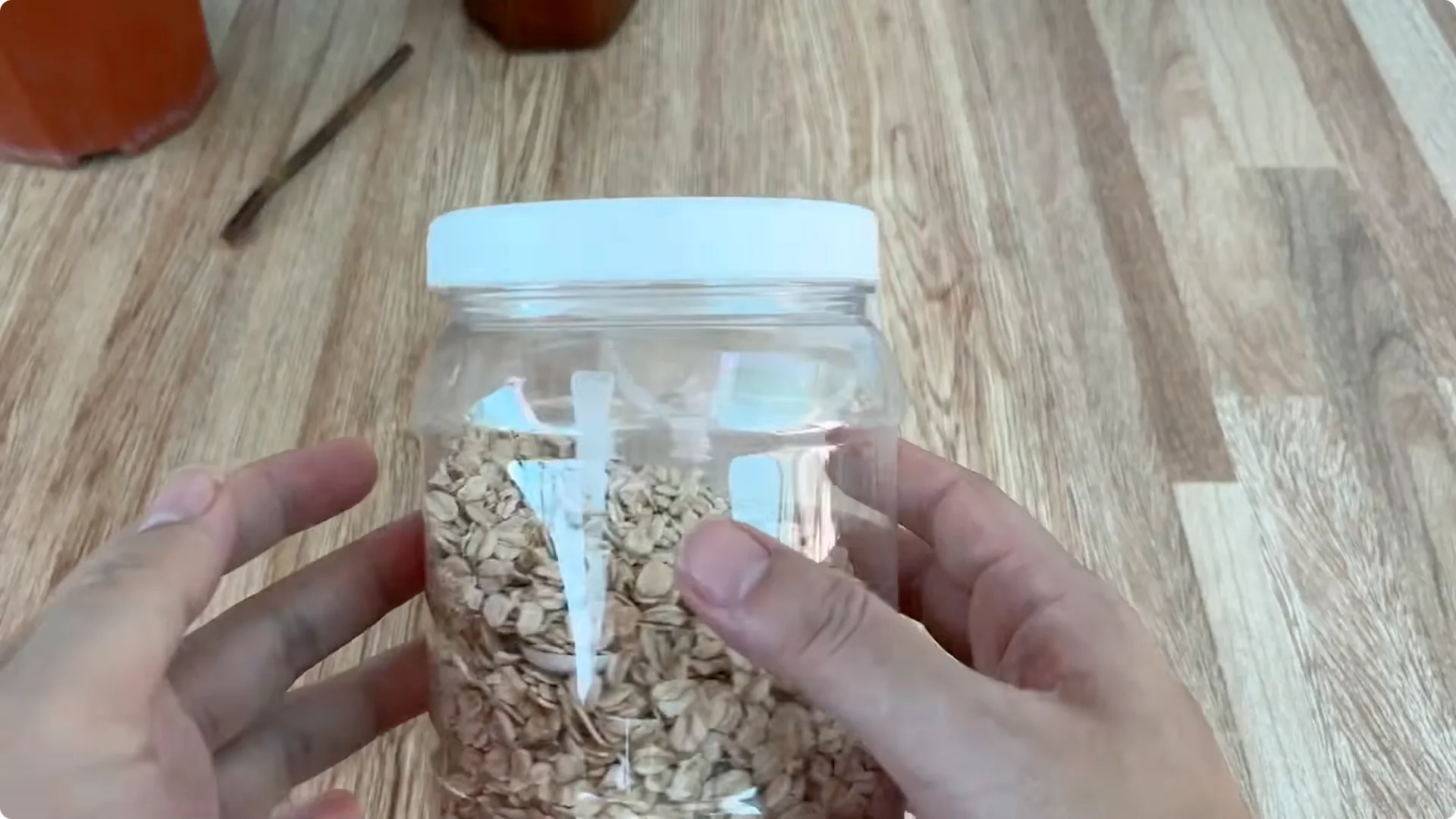
Prepare the oatmeal solution, a source of nutrients that helps the roots grow quickly. Take 5 small spoons of oatmeal, put them in a clean plastic cup, add 500ml of clean water and stir well. Oatmeal contains B vitamins, vegetable protein, and the antioxidant avenanthramide which helps increase metabolism and stimulate cell division at the root tip.
In particular, the natural compounds in oatmeal also help retain moisture very well, creating a stable environment for the flower branches. After the oatmeal solution has been dissolved, soak the rose branches in the cup for 30 minutes. During this time, the nutrients begin to penetrate through the cut tissue, soften the cells and prepare for the formation of young roots.
4. Combine Solutions to Create the Root Stimulant
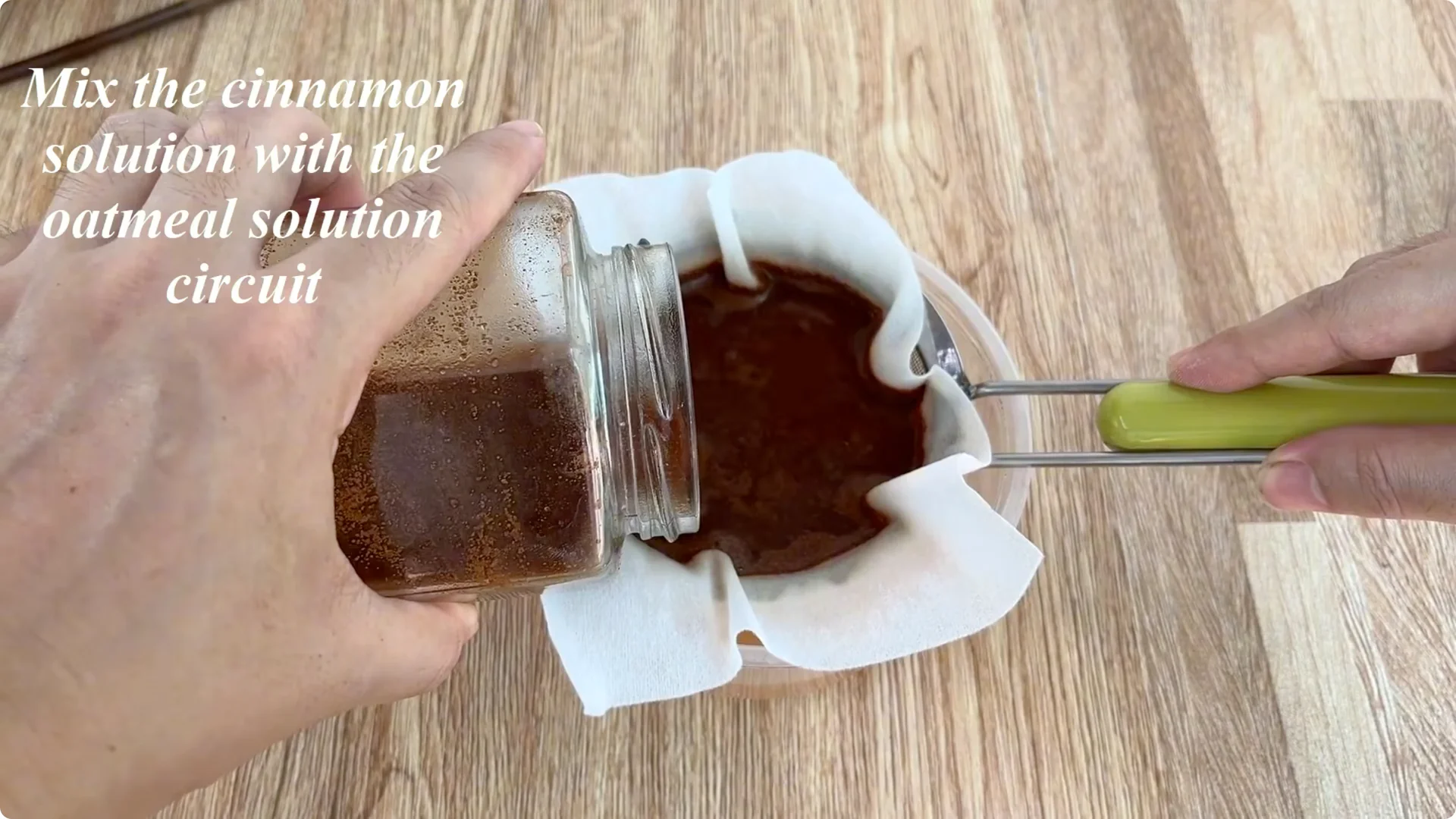
When enough time has passed, take the flower branches out, stir the mixture again and filter out the residue, collecting the clear water. At the same time, filter the cooled cinnamon solution through a thin layer of cloth to remove the residue. Mix the two cinnamon and oatmeal solutions together – this is the complete root stimulant mixture.
5. Prepare the Medium for Natural Rose Cutting Propagation
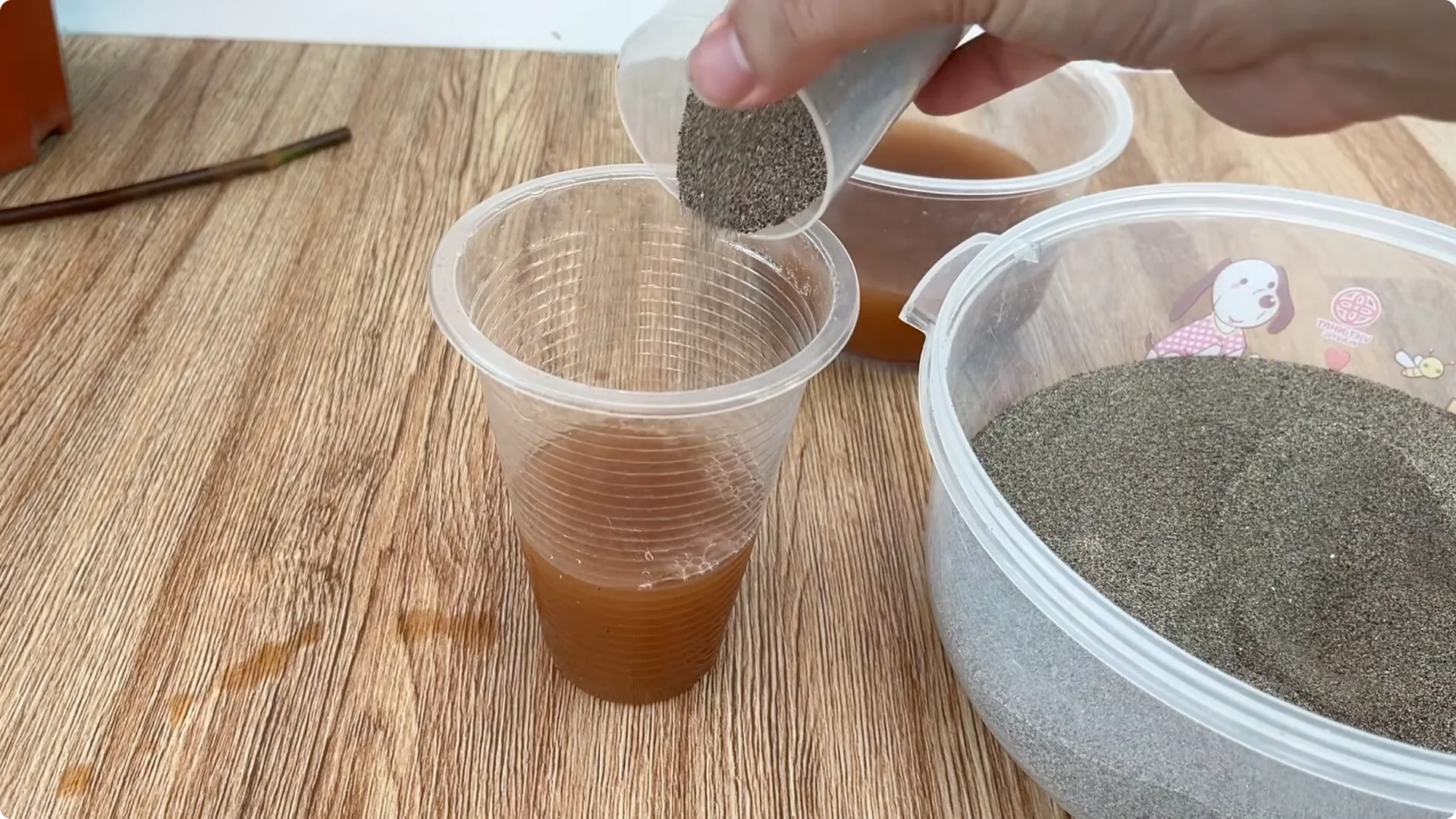
Prepare a clean plastic cup and pour the cinnamon – oatmeal mixture into about 1/3 of the cup. Add the sterilized river sand until it reaches a moderate humidity, not too dry but not waterlogged. River sand is the ideal substrate for this stage because it is airy, drains well, and limits root rot.
6. Insert the Cutting and Create a Humid Microclimate

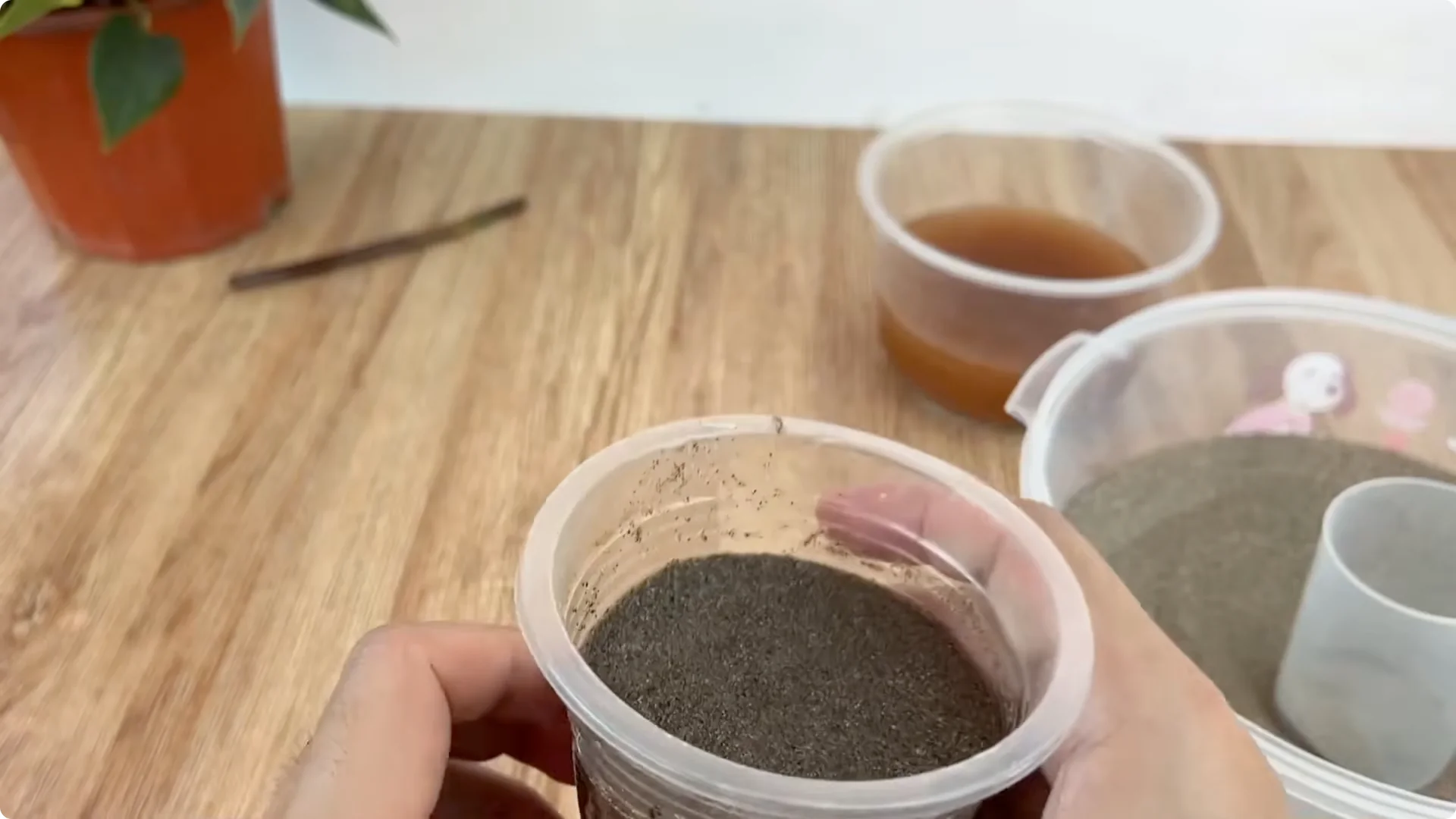
Insert the rose branch into the middle of the cup, so that the base is deeply immersed in the moist sand layer. Use your hand to gently press around to fix the branch, helping the branch stand upright and stable. Cover the mouth of the cup with a plastic bag or a transparent plastic cup to create a highly humid microclimate, similar to a “mini greenhouse”.
Place the cup containing the flower branch in a cool place with gentle diffused light. Keep it away from strong winds and harsh sunlight. Maintain this stable environment for steady root formation.
7. Rooting Timeline and Signs in Natural Rose Cutting Propagation
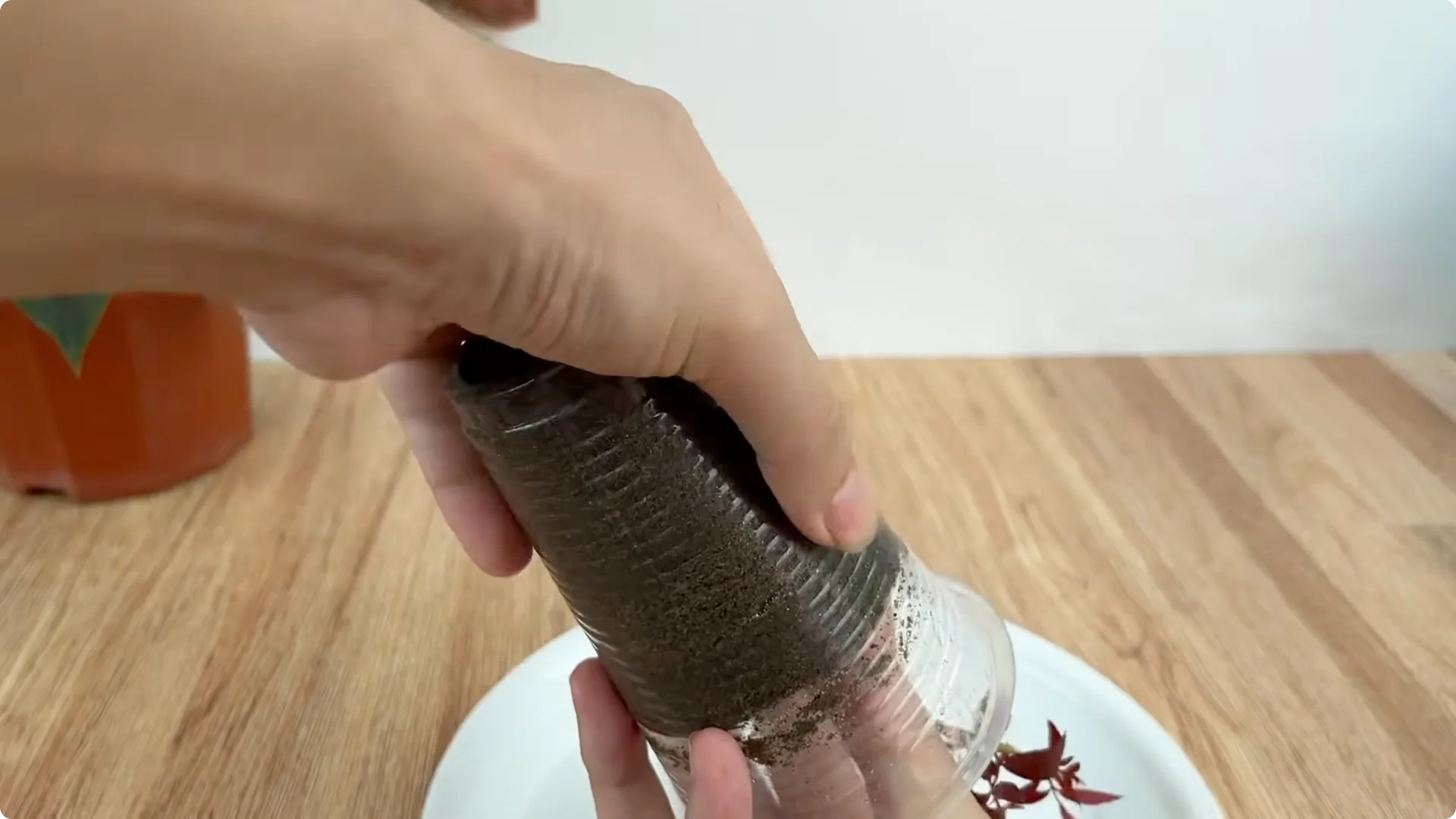
After about 10 days, the miracle will gradually appear. The rose branch begins to sprout green shoots, and the base appears with countless new, white, plump and healthy roots. This is a sign that the branch has adapted and is ready to grow independently.
8. Transplanting and Early Care in Natural Rose Cutting Propagation
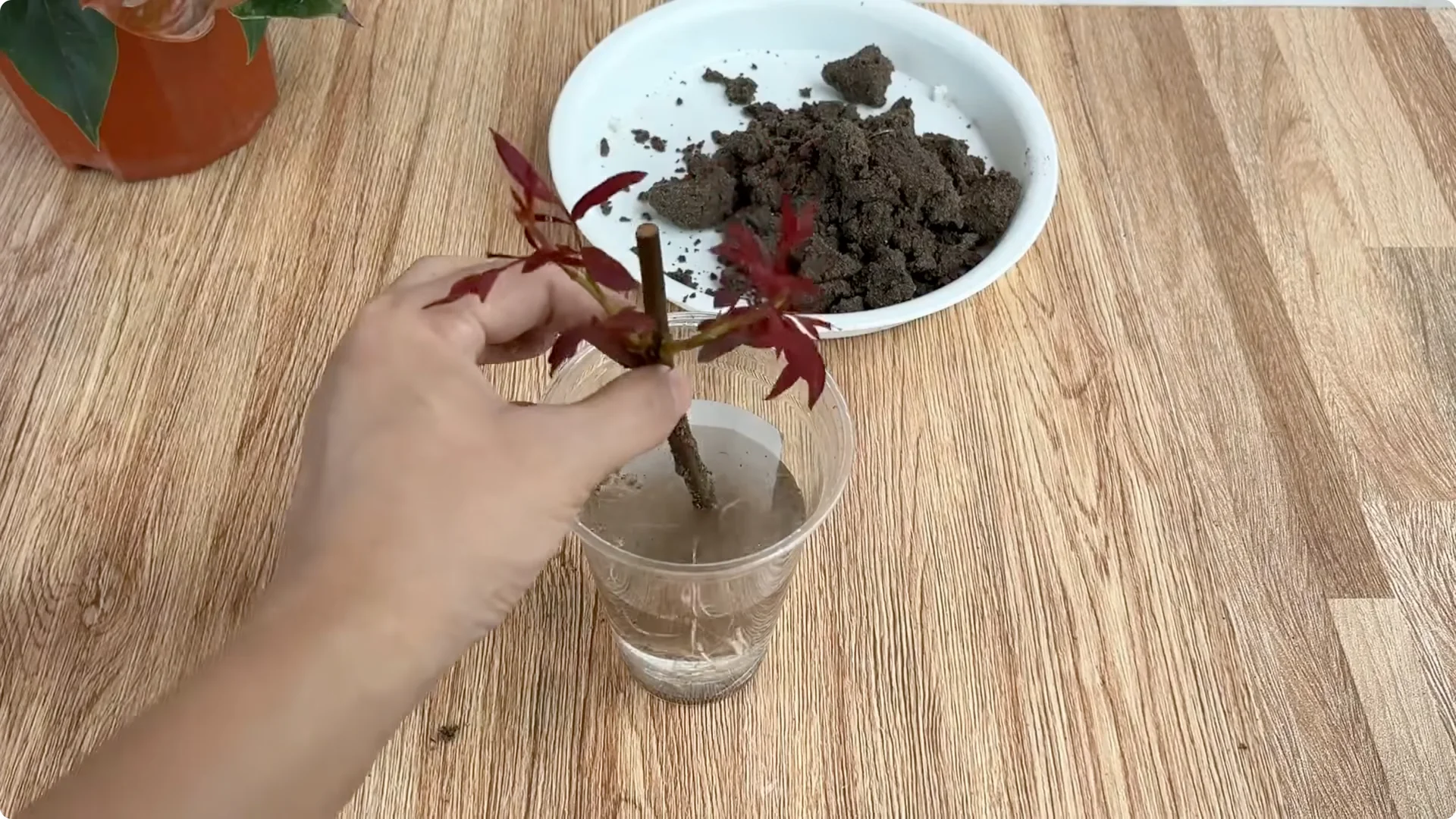
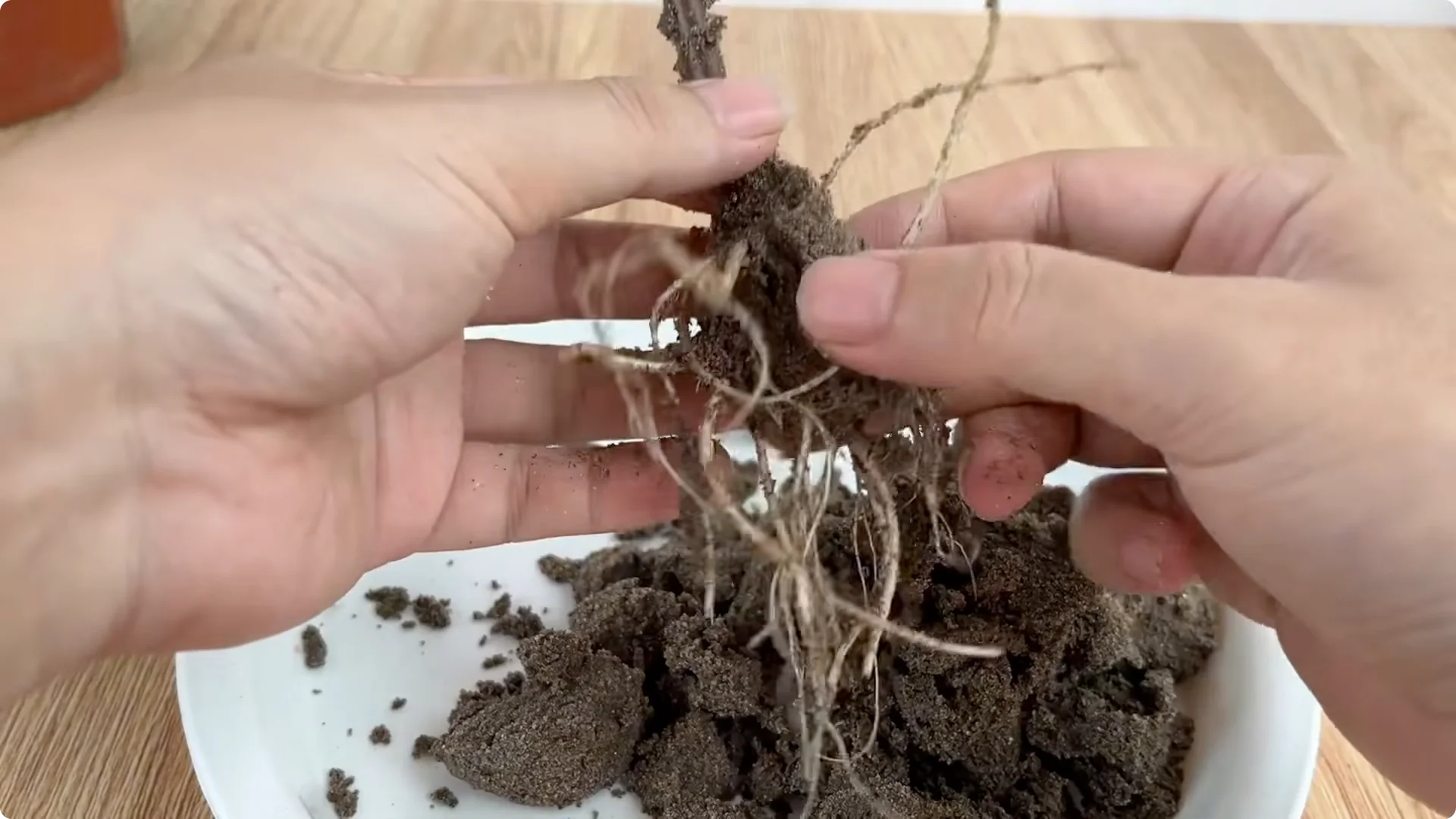
When the roots reach a length of about 2-3cm, transfer the rose branch to a permanent pot. Use coconut fiber substrate mixed with rice husk ash and river sand to increase ventilation and maintain stable humidity. During this period, continue to maintain moderate humidity and avoid direct sunlight so that the young roots can develop firmly.
Final Thoughts on Natural Rose Cutting Propagation
With the method of using cinnamon powder and oats, it not only helps the rose roots grow quickly but also protects them from agents that cause root rot and fungi – something that chemical root stimulants cannot guarantee. This is a natural, friendly and sustainable recipe, suitable for those who love safe gardening, taking advantage of available ingredients in the kitchen. With just a little meticulousness and patience, you will receive pots of roses full of vitality with healthy roots, firmly attached to the substrate, ready to bloom in a short time.
That is the greatest joy of a gardener – witnessing life revive from dedicated care.