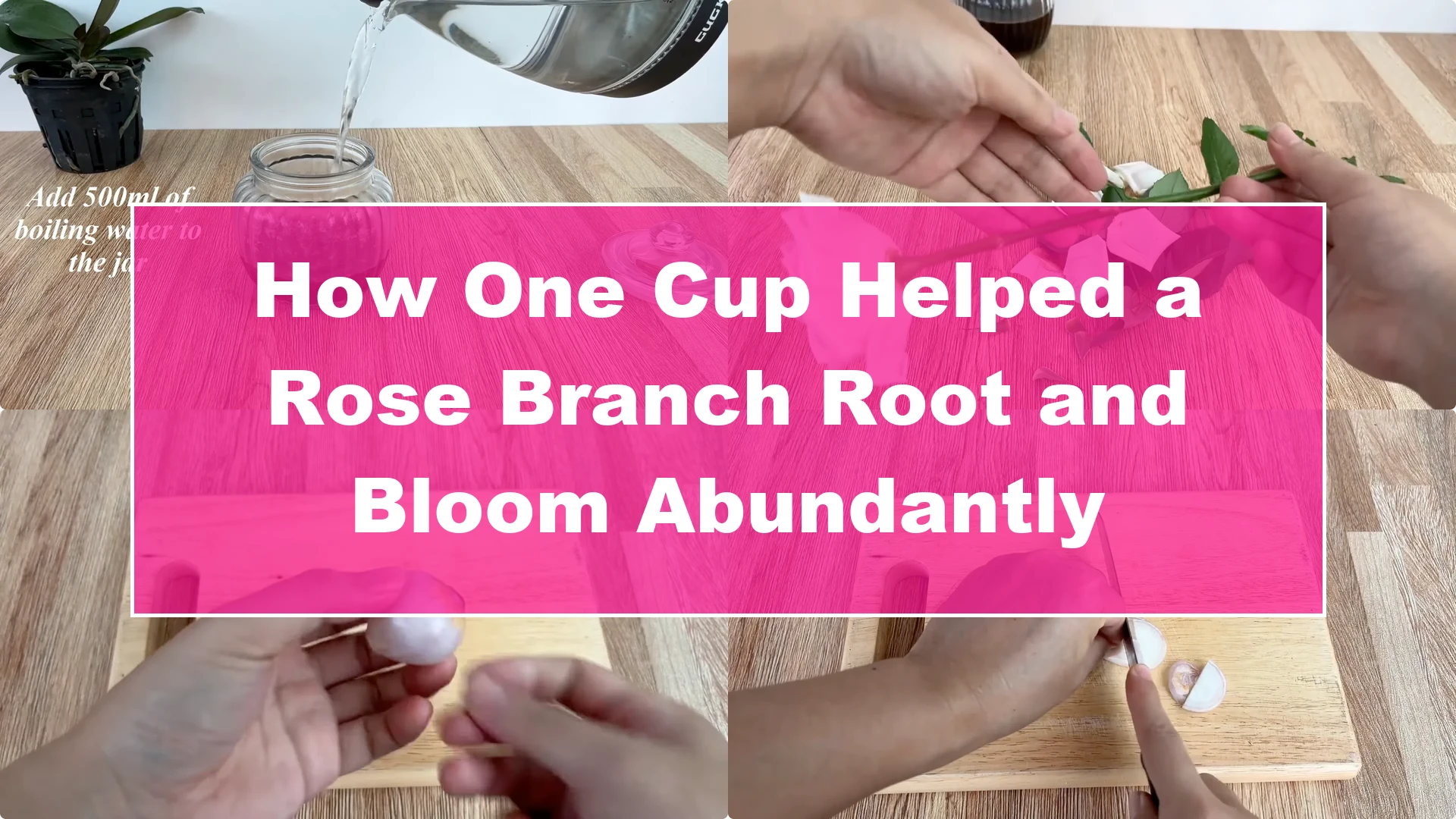
Here is a natural, safe way to propagate roses using three simple but highly effective ingredients. Thanks to the harmonious combination of natural antibacterial properties, vitamin supplements, and growth stimulants, rose branches quickly take root and produce healthy new shoots after only a short time of care.
1. Why this works – Rooting Rose Cuttings
Coffee activates scar tissue cells and increases metabolism. Onion is antibacterial and protects cuts. Tomato supplements vitamins, minerals, and organic acids, creating an ideal environment for strong, white, plump roots.
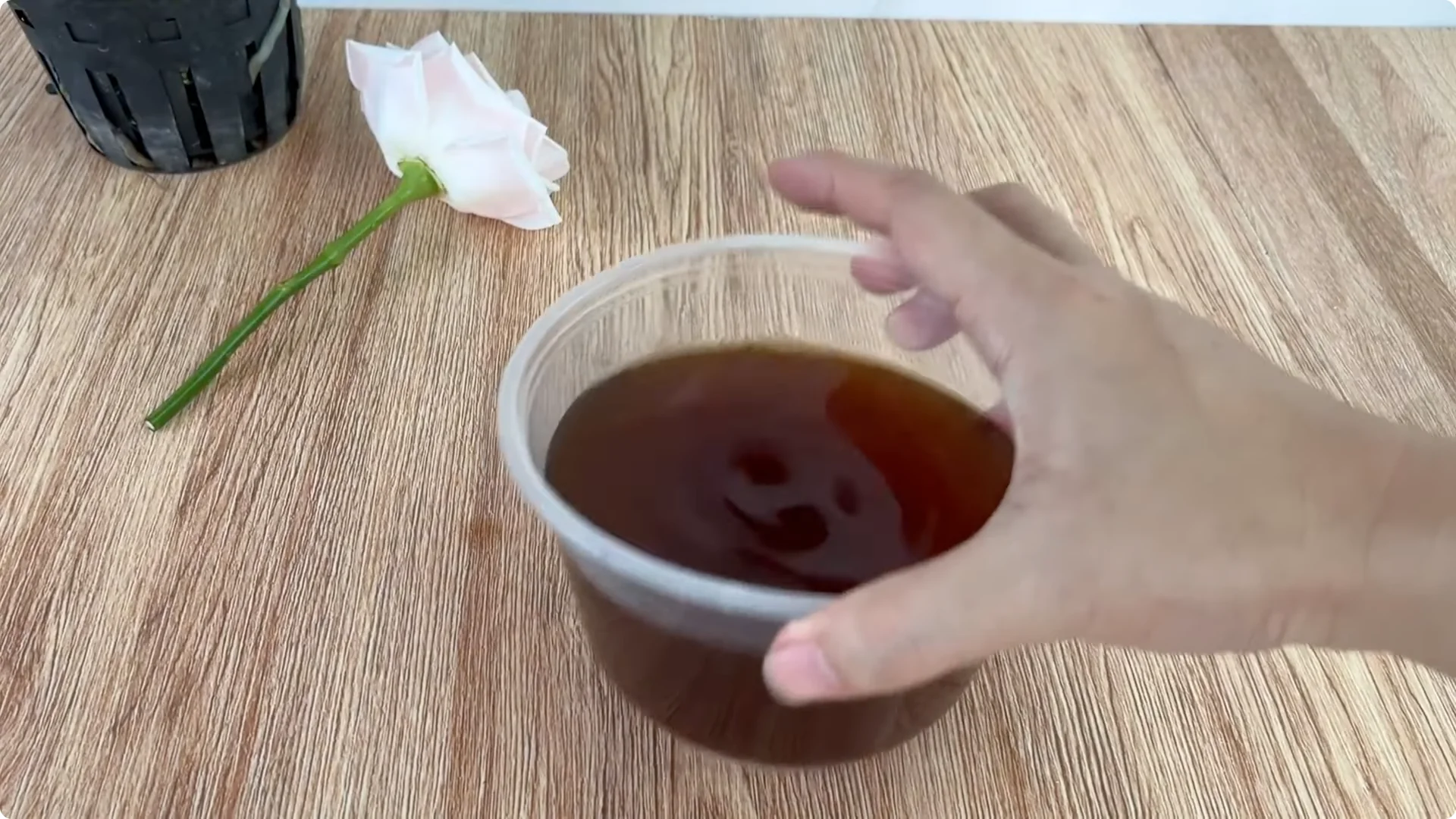
For another simple cup-based approach to boost rooting and blooming, see this method.
2. Prepare the coffee solution – Rooting Rose Cuttings
Take 1 teaspoon of coffee powder and put it in a clean glass jar, then add 500 ml of boiling water. Stir well to help the active ingredients in the coffee dissolve completely into the water. Close the lid and let the solution cool naturally.

3. Select and prepare the branches – Rooting Rose Cuttings
Choose a healthy rose branch, free of pests and diseases, of moderate age. Branches that are too young will easily become waterlogged, while branches that are too old will be difficult to stimulate roots and dry easily. Use sharp scissors to cut off all leaves, thorns, and wilted petals to limit water loss and prevent fungal growth.
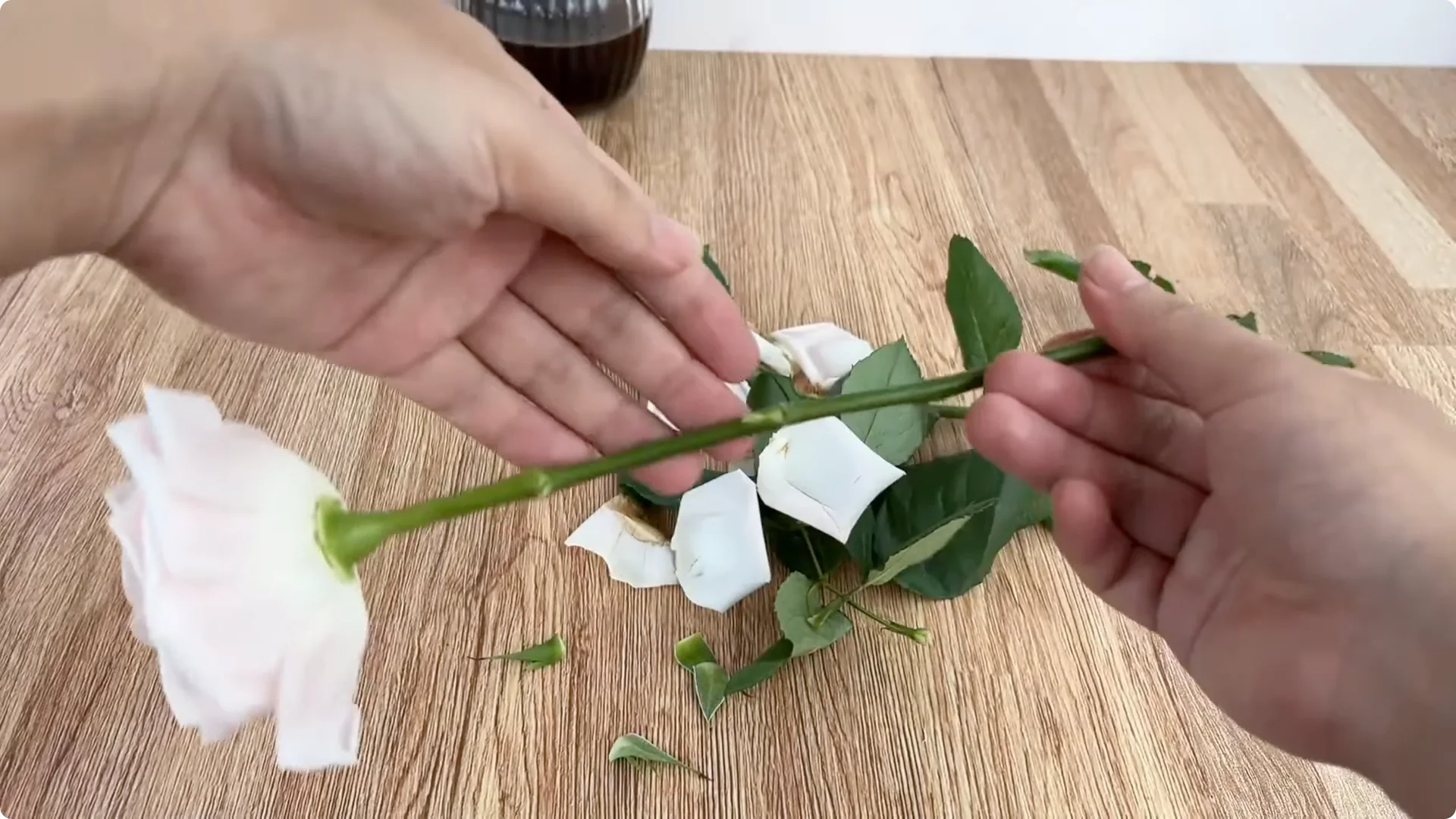
Then cut the branch to about 15-20 cm. The base is where the roots form, so it needs to be cleaned and the tissue structure kept intact to easily absorb nutrients from the root stimulant solution.
4. Make the onion and tomato soak – Rooting Rose Cuttings
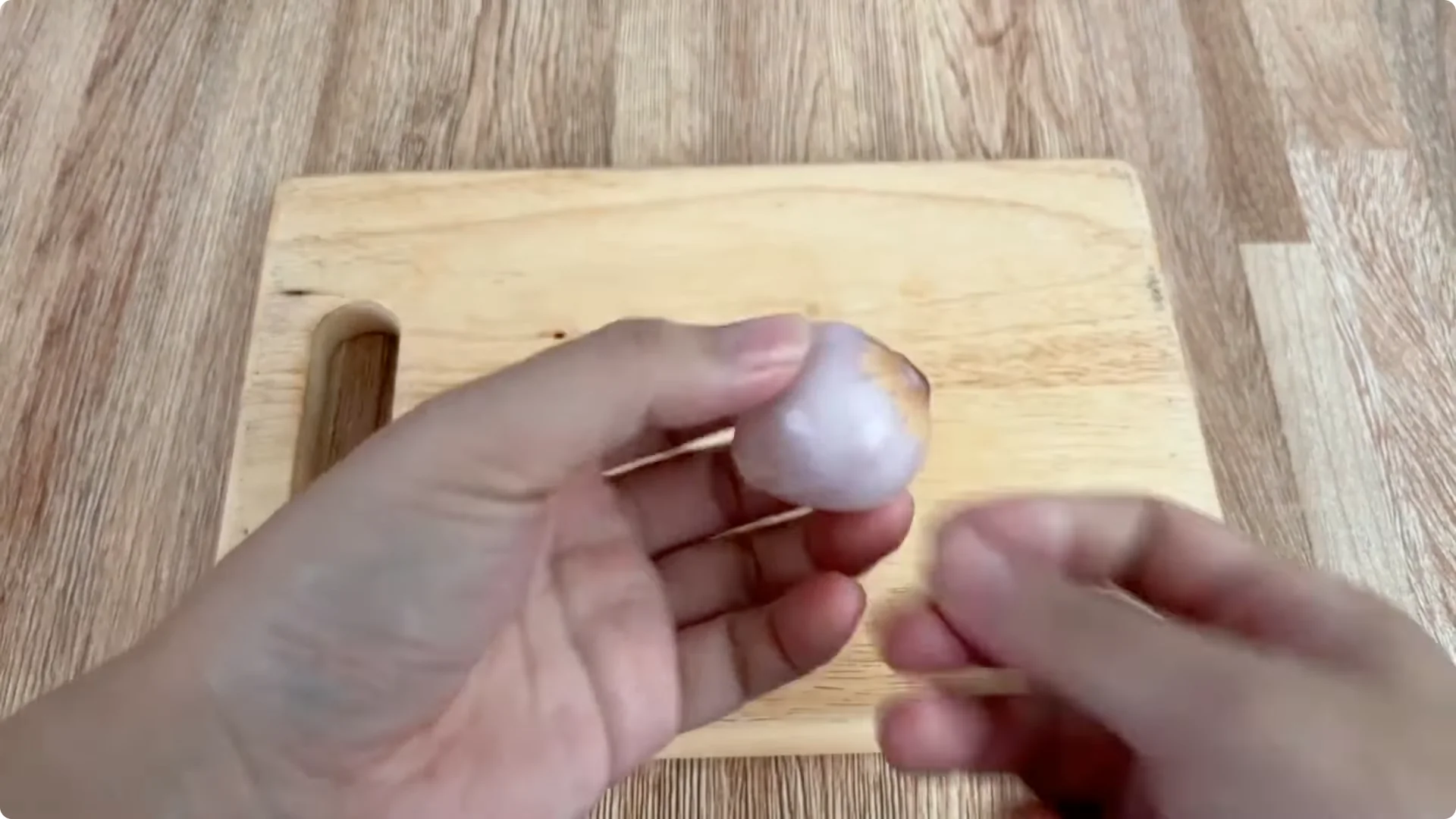
Prepare the onion – Rooting Rose Cuttings
Take 1 onion, peel it, wash it, and chop it. Onions contain many natural sulfur compounds and strong antibacterial substances which help protect the cut tissue from bacteria, while stimulating the formation of scar tissue – a prerequisite for new root growth.
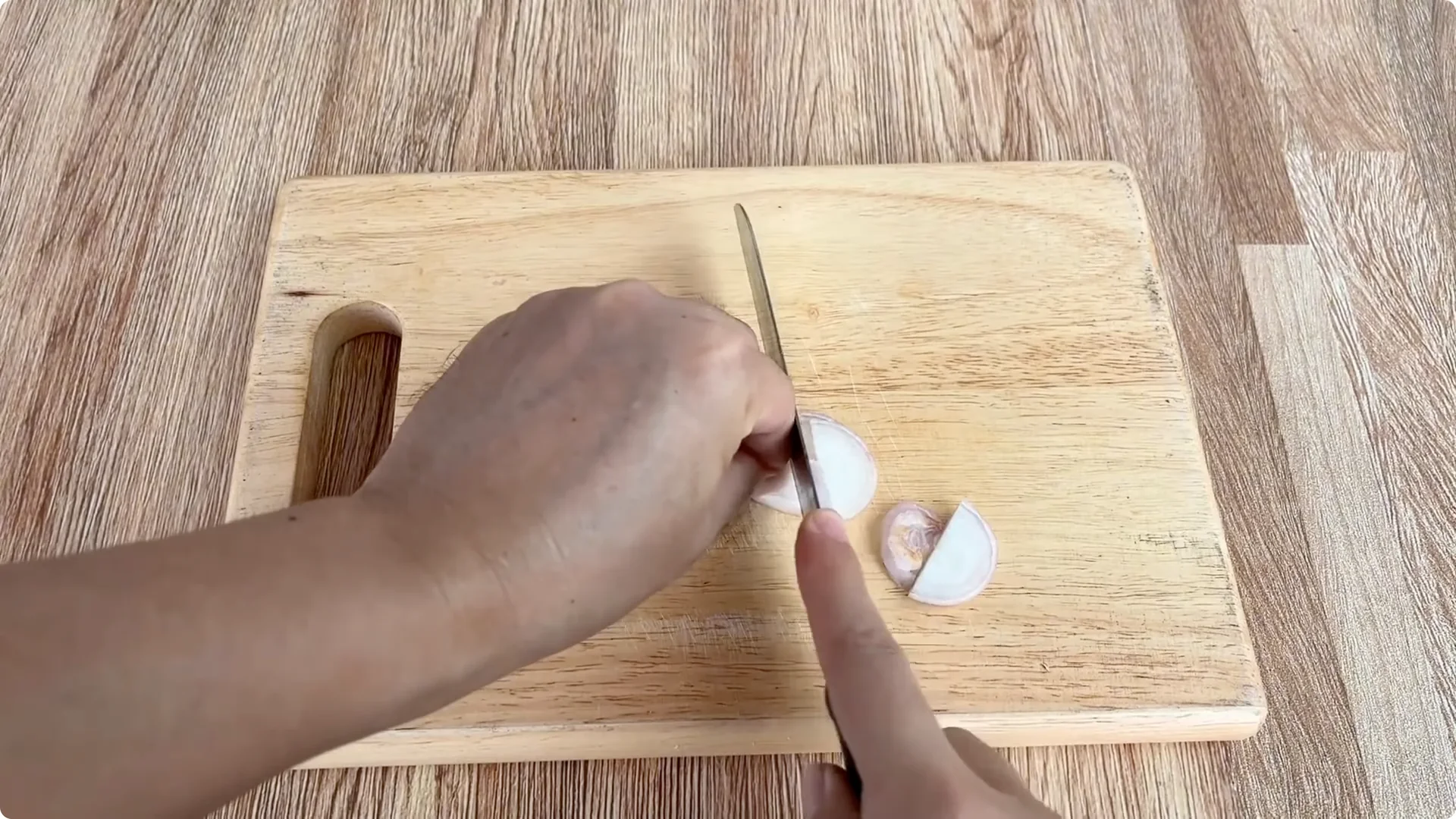
Add the tomato – Rooting Rose Cuttings
Next, take 1 small ripe tomato about 30 g, wash it, and chop it. Tomatoes are rich in vitamins A and C, minerals, and malic acid, which help increase metabolism and promote the growth of root tissue.
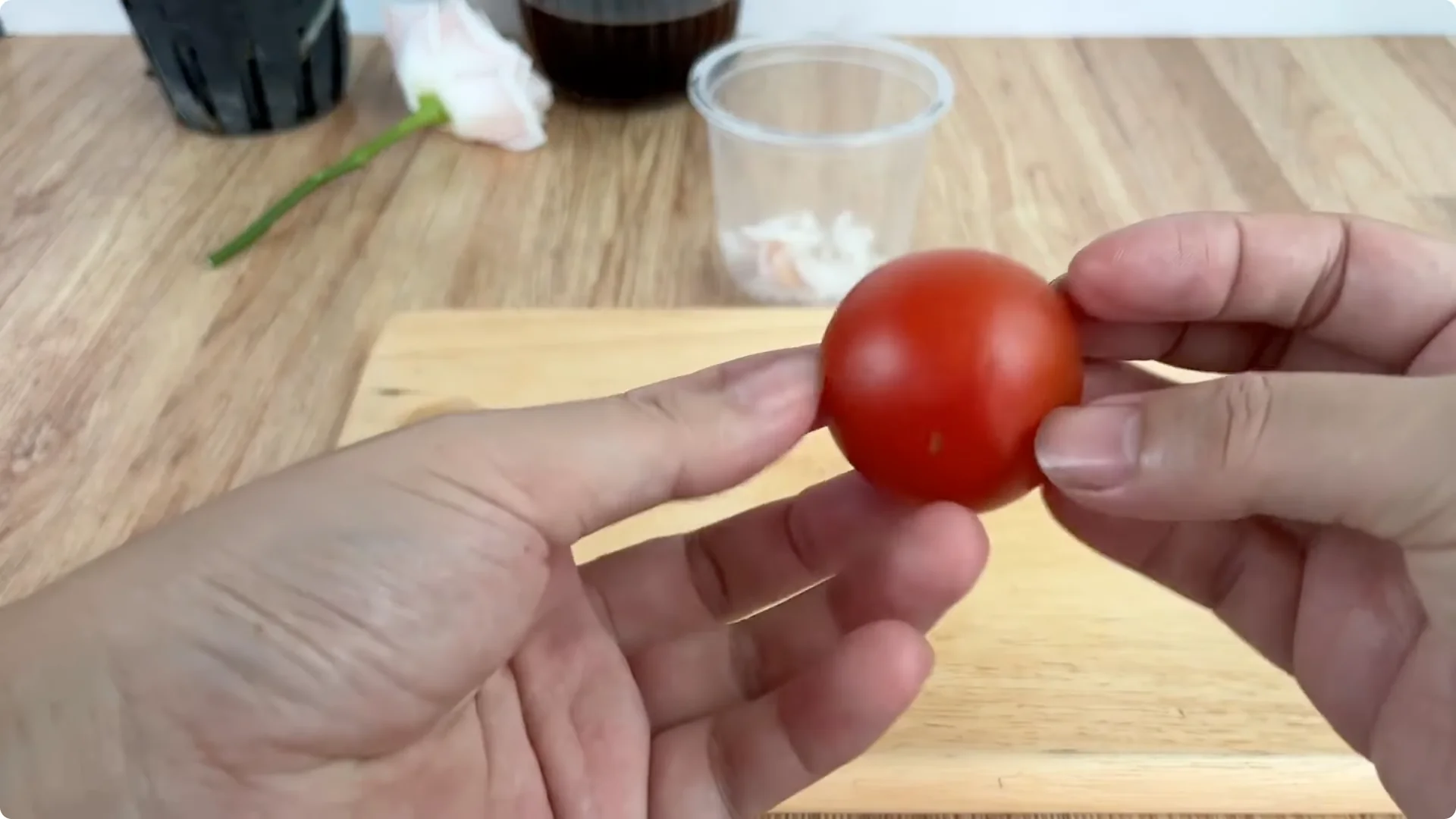
Soak the cutting – Rooting Rose Cuttings
Put the cut onion and tomato into a clean plastic cup, add 500 ml of water, and stir well to dissolve the nutrients in the water. Place the rose branch in the cup and soak for 30 minutes. This is the stage when the essences from the onion and tomato gradually penetrate the root tissue, supporting sterilization, nourishing the cut tissue, and helping new roots to form easily.
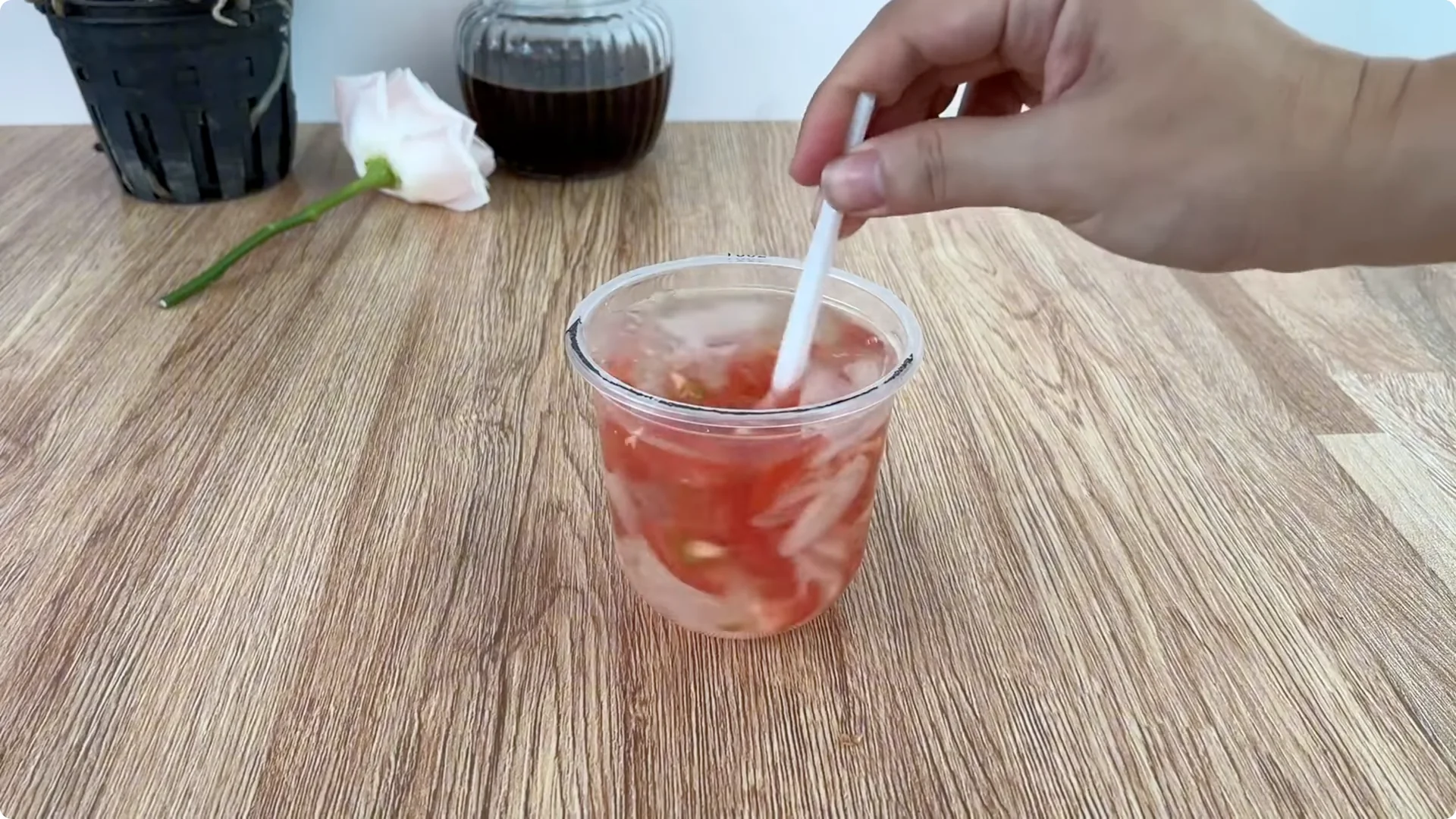
5. Combine the solutions – Rooting Rose Cuttings
When the soaking time is up, take the flower branch out of the mixture. Use a spoon to stir well so that the essence in the cup is completely dissolved, then filter out the residue and collect the clear solution.
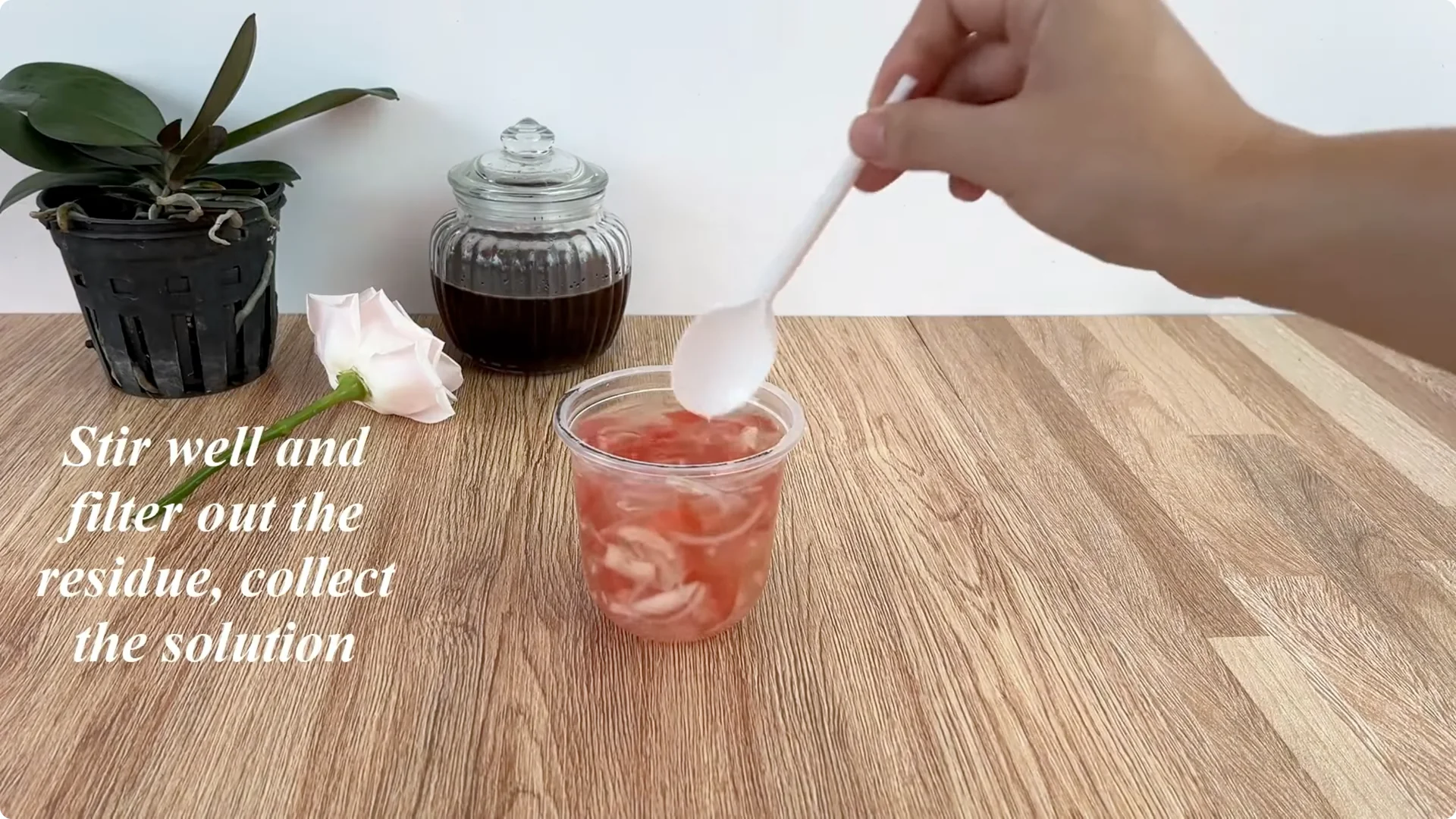
When the coffee solution has cooled, filter out the residue, then mix the coffee solution with the onion – tomato solution. This combination creates a solution rich in biological nutrients, helping the roots grow faster.
Coffee activates scar tissue cells and increases metabolism. Onion is antibacterial and protects cuts. Tomato supplements vitamins, minerals, and organic acids.
You can also try a 1 cup trick that helps rose branches root and bloom fast.
6. Prepare the sand medium – Rooting Rose Cuttings
Prepare a clean plastic cup, fill it with treated river sand wash, filter out impurities, dry. Pour the coffee – onion – tomato solution into the cup with enough amount to moisten the sand evenly but not completely submerge it. River sand has the advantage of good drainage, avoiding waterlogging and creating conditions for new roots to grow quickly without rotting.
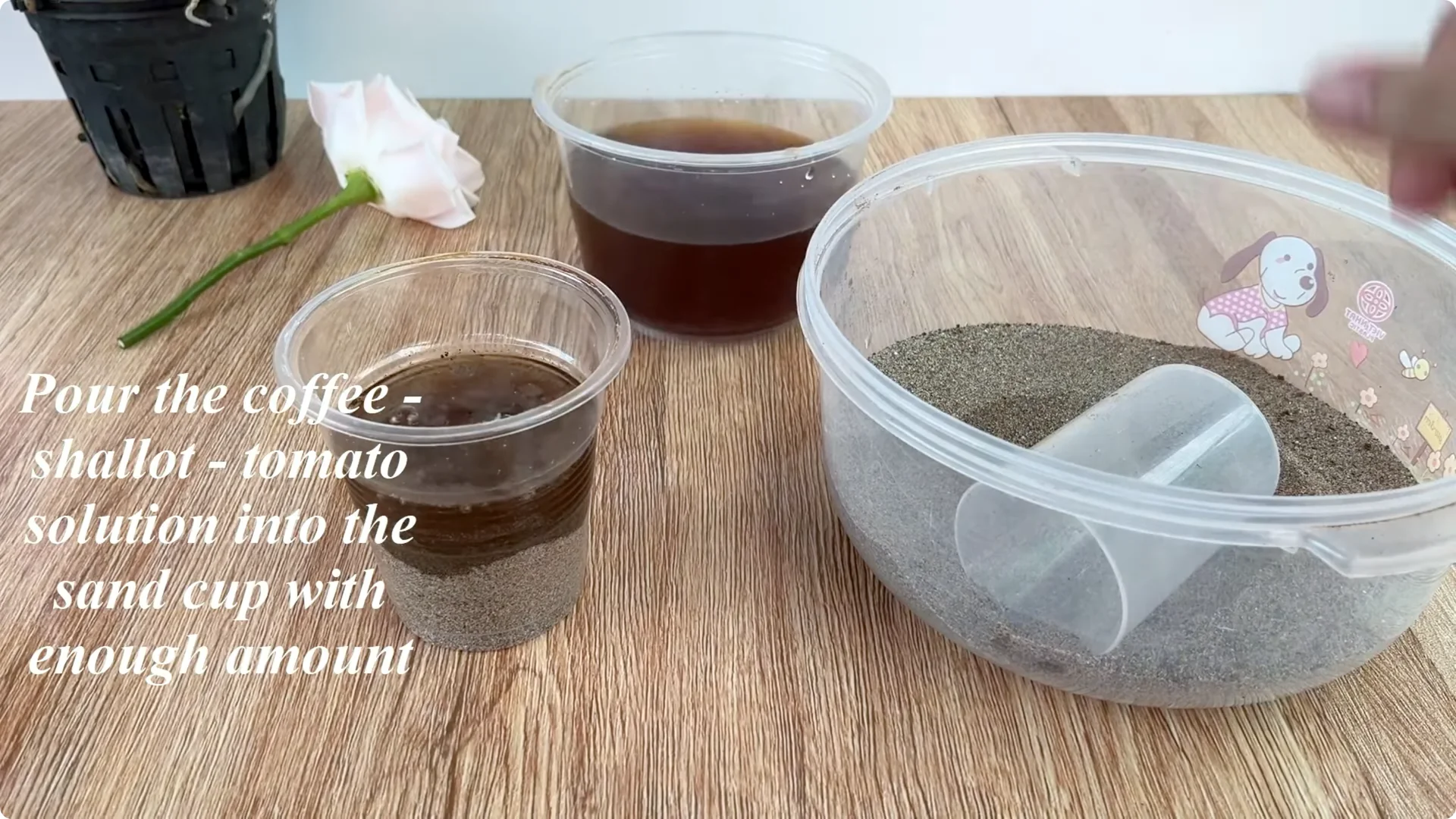
Insert the rose branch into the middle of the cup, so that the base is deeply submerged in the sand layer for easy access to the nutrient solution. To keep good moisture and stabilize the microclimate around the branch, use a plastic bag or a transparent plastic cup to cover the mouth of the cup.
Place the cup in a cool place with lots of light but avoid strong winds and direct sunlight. Stable environmental conditions are the key factor to help roots and shoots grow strongly in the early stages.
7. Rooting timeline and signs – Rooting Rose Cuttings
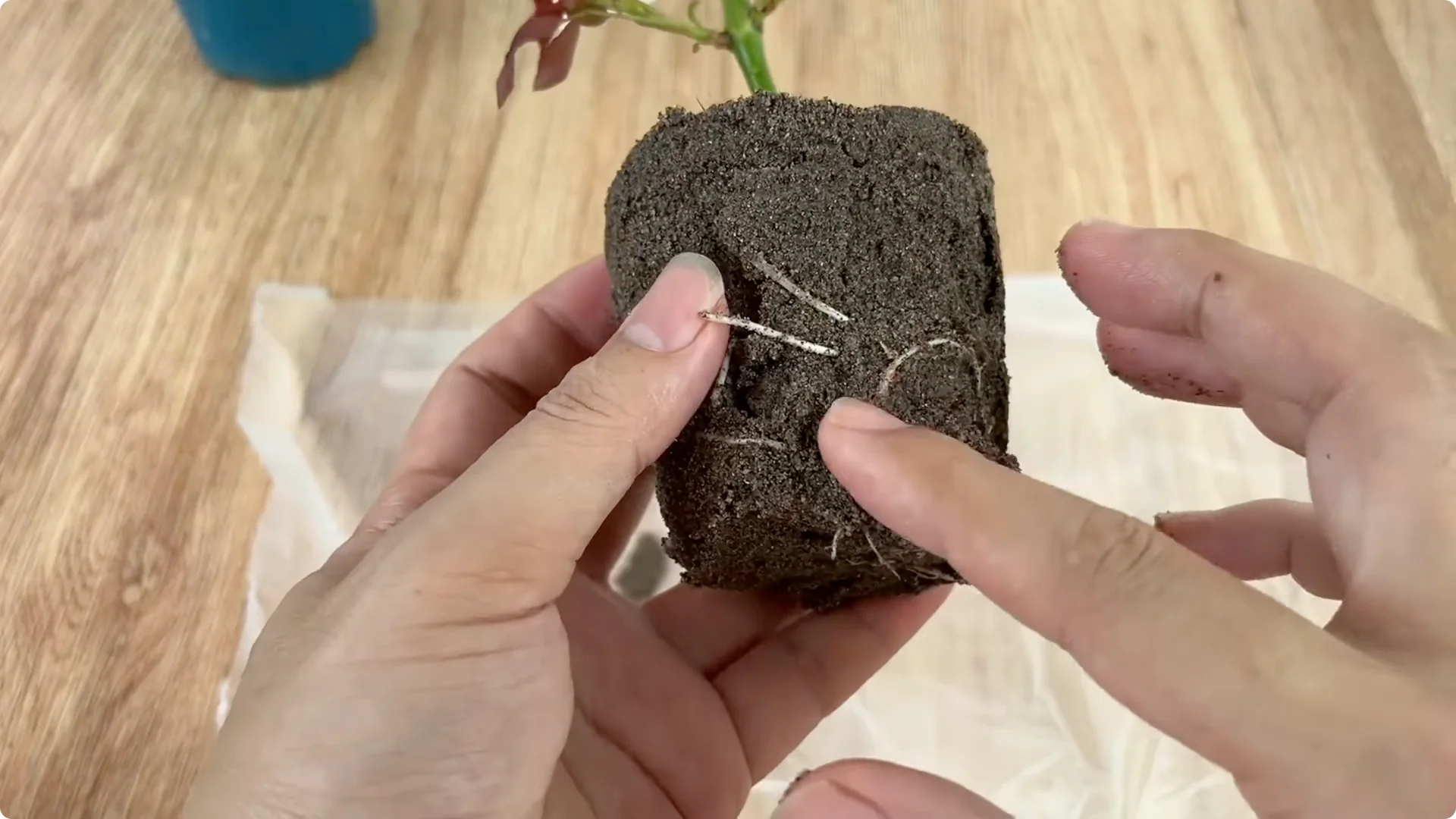
After about 10 days, fresh green shoots begin to emerge from the dormant buds on the stem, proving that the plant has adapted well. Many new, white, plump, and healthy roots appear at the base, distributed around the cutting tissue.
8. Potting up – Rooting Rose Cuttings
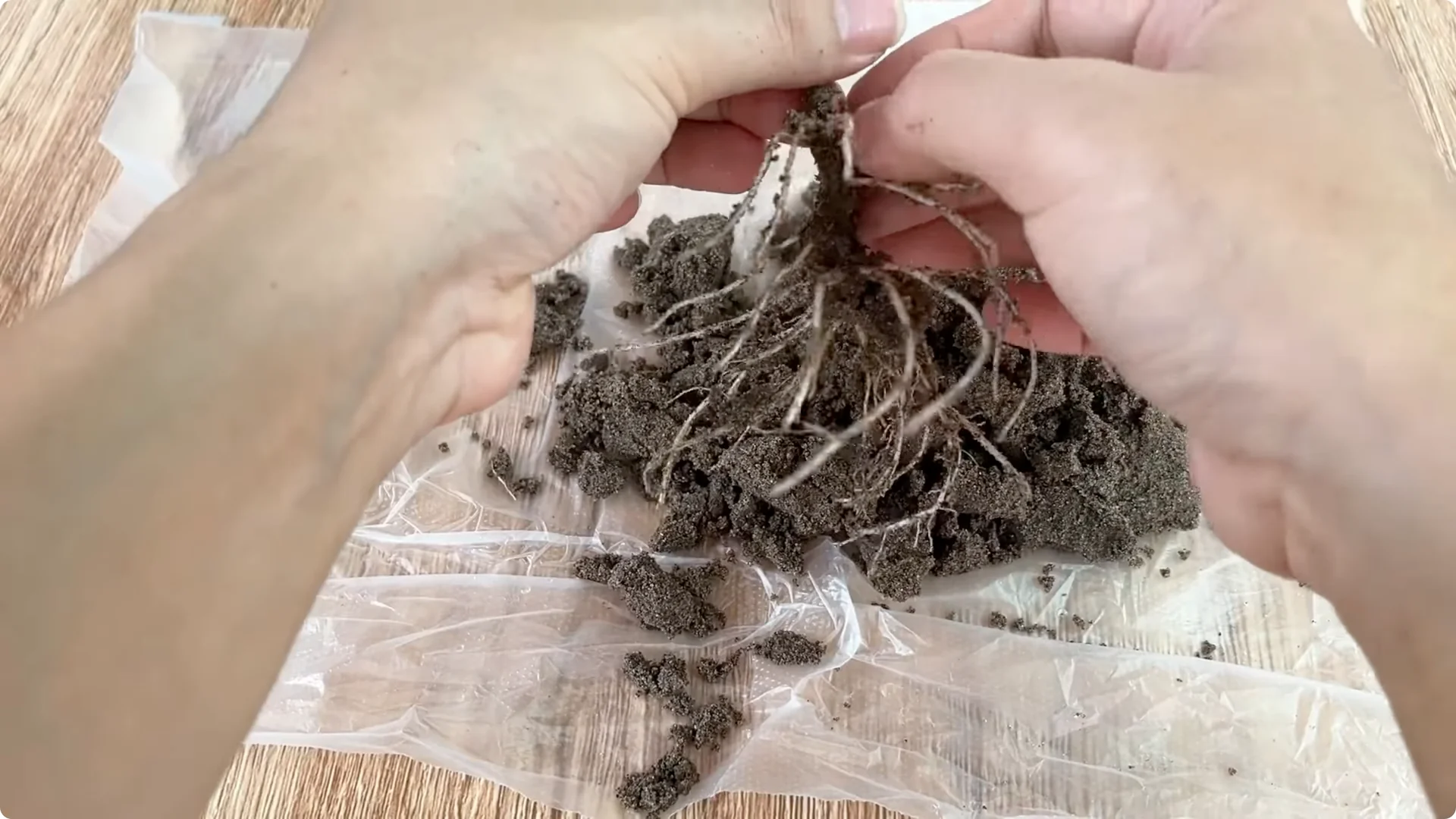
When the roots have grown long and strong enough about 2-3 cm or more, you can transfer the branch to a pot. Choose a treated coconut fiber substrate or a well-drained mixture for the young roots to grow stronger. Continue to cover lightly in the sun for the first few days before moving it to a normal environment.
For tips on encouraging blooms after rooting, explore this bloom-boosting cup method.
9. Final thoughts – Rooting Rose Cuttings
The method of propagating roses using coffee, purple onion, and tomato is a natural, safe solution that does not require chemical hormones but still brings amazing results. Coffee stimulates growth and protects root tissue. Purple onion has strong antibacterial properties, preventing root rot.
Tomatoes add vitamins, helping roots grow strong. The harmonious combination of these three ingredients creates a perfect environment for rose branches to quickly take root, grow strong, and develop sustainably.
If done correctly and carefully cared for, after only 10 days you will have a new rose branch ready to be planted in a pot to continue the growth journey. Wishing you success and soon own brilliant rose bushes in your own garden! 🌹
For a complementary cup-based approach to help branches root and bloom, see this helpful guide: how one cup helps a rose branch root and bloom.