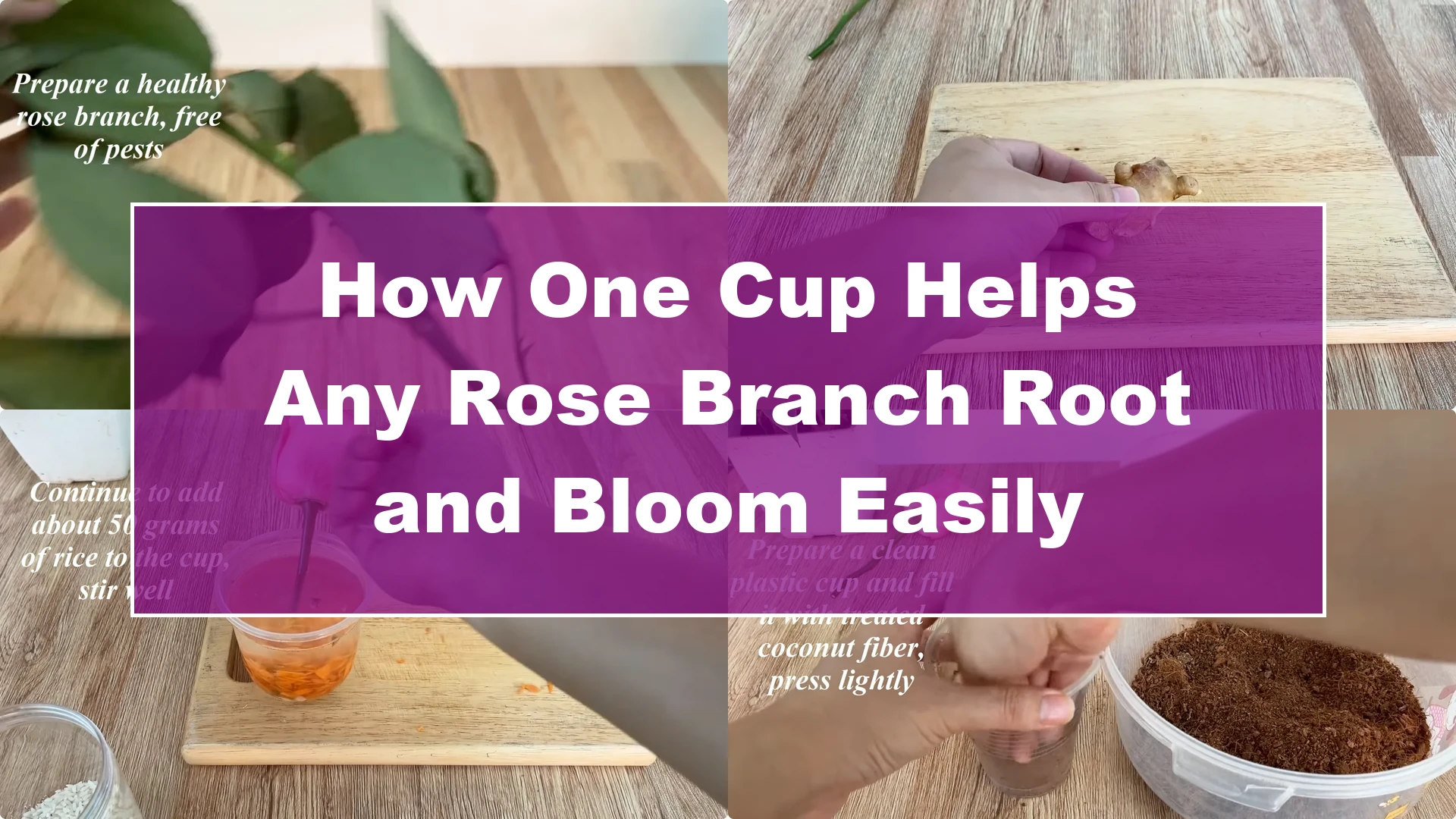
We continue with a method of root stimulation and rose propagation using three familiar natural ingredients. This technique is applied by many rose growers because of its safety, high efficiency and the ability to promote strong shoot and root development in a short time.
Follow the steps below to prepare the cutting, make the natural solution and encourage fast rooting. The process is simple and uses ingredients from the kitchen.
1. Rooting Rose Cuttings: Choose the branch
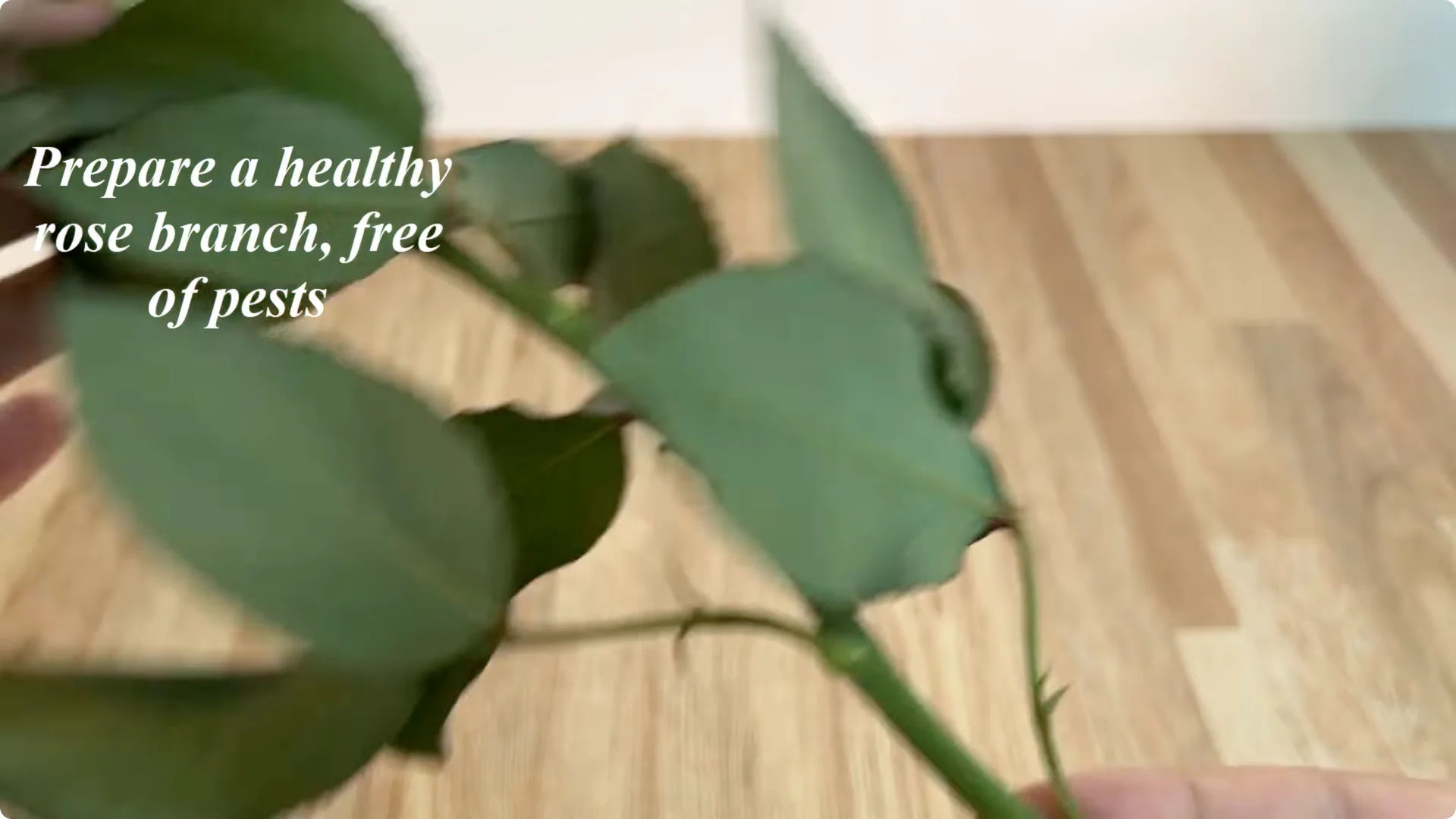
Choose a healthy rose branch, free of pests, mold or black rot. A standard branch will have a sturdy stem, slightly dark green, not too soft like a young branch but not completely woody.
Cut off all the leaves, sharp thorns and old or wilted petals. This helps reduce water evaporation, preventing the branch from losing strength before it has time to sprout.
Cut the flower branches to a length of about 15-20 cm. This is the ideal size to ensure a balance between the ability to nourish the tissue and the speed of new root formation.
If you want extra-speed techniques for initiating roots, see these root sprout overnight tips.
2. Rooting Rose Cuttings: Prepare the ginger solution
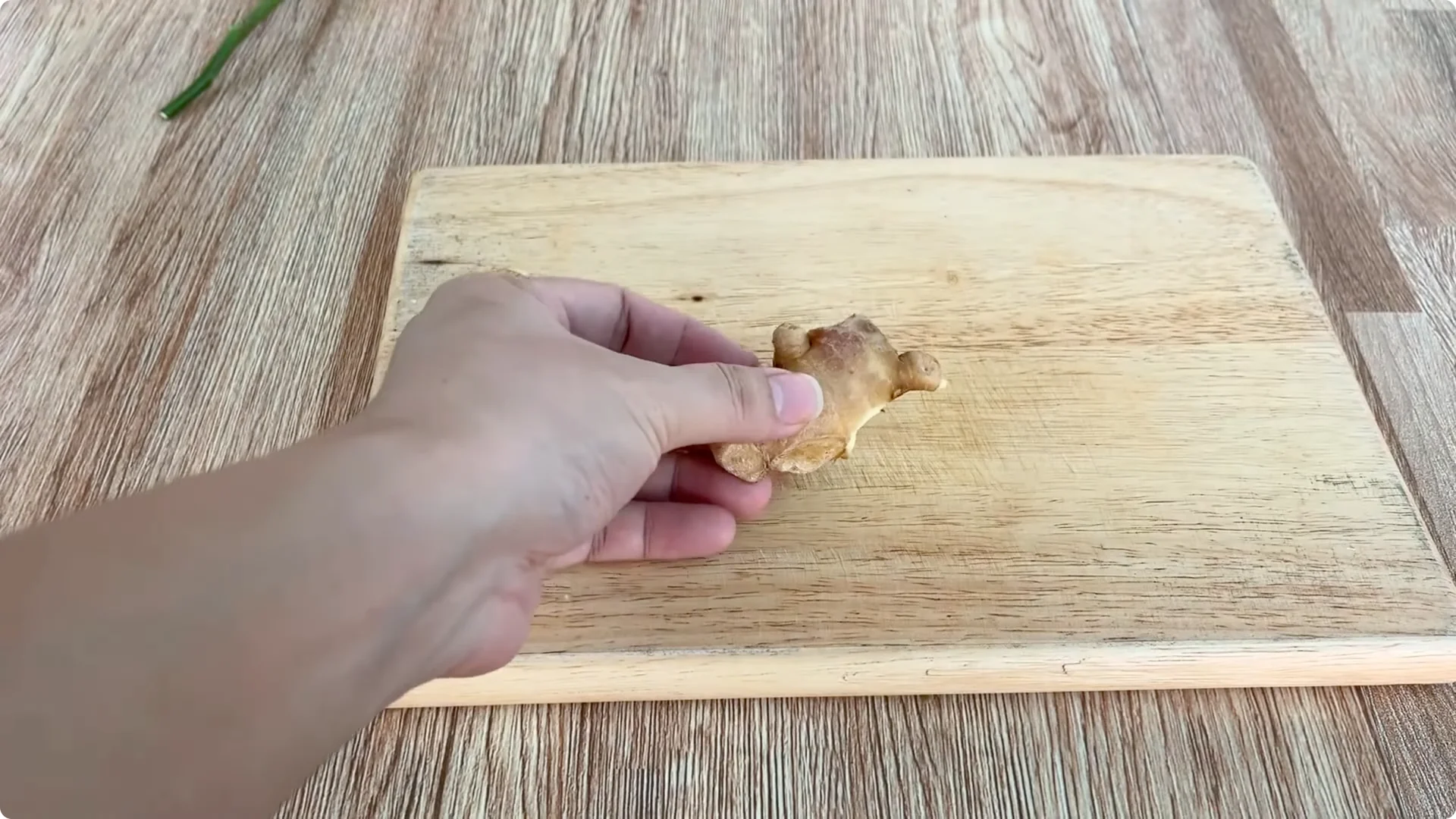
Prepare 10 grams of fresh ginger, wash it and chop it. Ginger contains many biological active ingredients such as gingerol and shogaol, which have natural antibacterial properties helping to clean the surface of the branches and protect young tissue from fungal attacks.
Put the ginger in a clean plastic cup with 500 ml of water and stir well so that the ginger releases nutrients into the water. Use a soft, clean cloth dipped in ginger water and wipe the entire flower branch, especially the cut areas where plant tissue is vulnerable.
Put the flower branches in the cup of ginger water and soak for 15 minutes. This is a pre-treatment step to help disinfect and stimulate the activity of the cambium layer at the bottom of the branch.
3. Rooting Rose Cuttings: Add carrot peels and rice
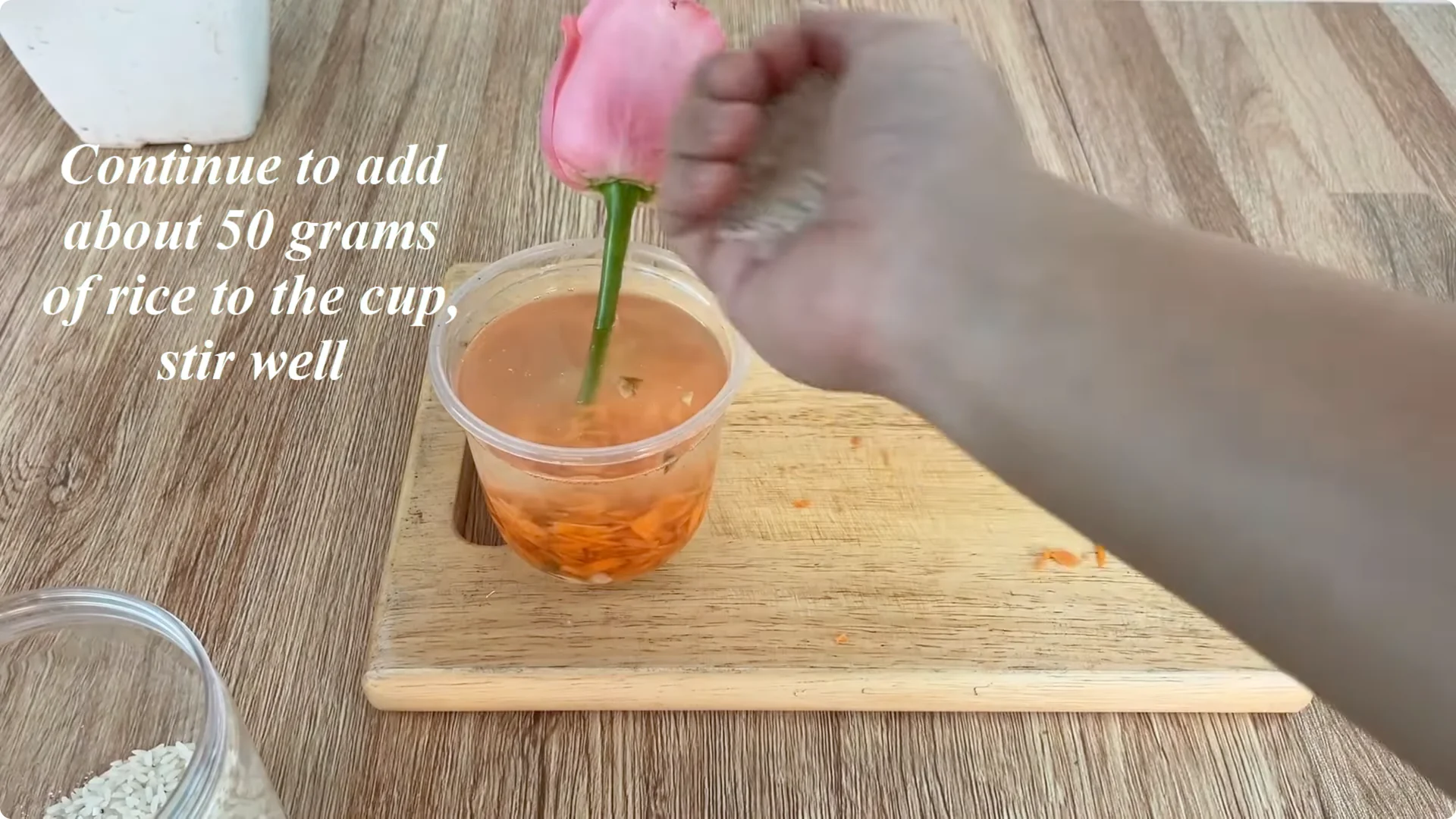
Prepare a carrot, wash it, peel it and cut it into small pieces. Carrot peels contain beta-carotene, vitamins and minerals that help stimulate cell division in the callus where roots form.
Put the entire carrot peel into the cup of ginger water. Add about 50 grams of rice to the mixture and stir well.
Rice has a high starch content and contains natural enzymes. When soaked in water it will create a nutrient-rich environment that helps stimulate root growth and increase the vitality of the branch tissue.
Let the mixture sit for 15 minutes to let the ingredients dissolve into the water.
For a simple one cup approach focused on rapid growth, see the one cup rapid growth method.
4. Rooting Rose Cuttings: Prepare the medium
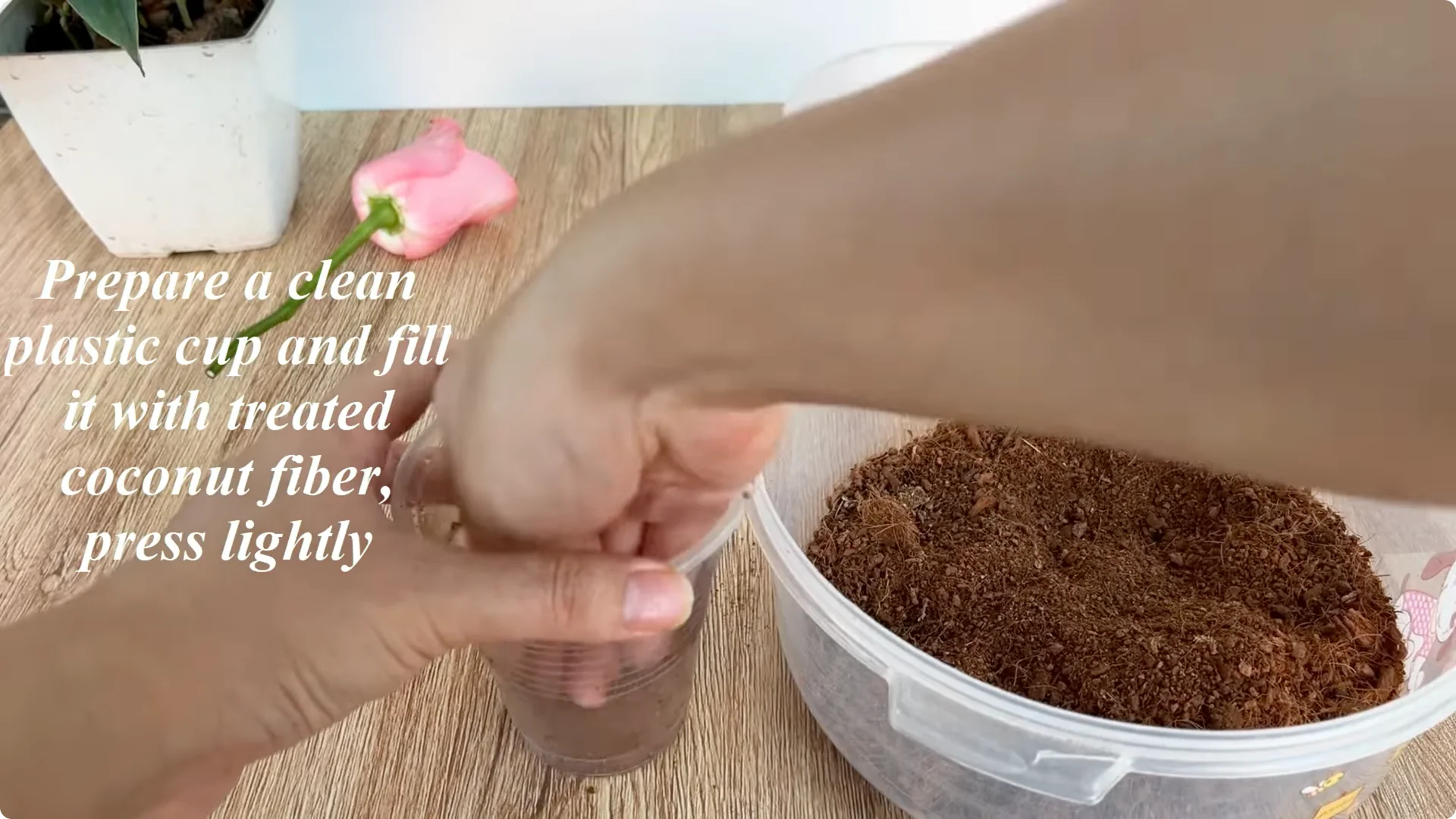
Gently remove the rose branch from the mixture. At this point, the base of the branch has been cleaned, absorbed nutrients and is ready to enter the strong root stimulation stage.
Stir the remaining mixture well and filter the clear water – which is the rice – ginger – carrot peel solution. Dilute the solution with 0.5 liters of clean water to achieve the right concentration, helping the young roots not to be “shocked” by the nutrients when they start to form.
Prepare a clean plastic cup and fill it with treated coconut fiber. Coconut fiber needs to be carefully processed to remove astringent and tannin – substances that can darken and inhibit root growth.
Lightly compress the coconut fiber to create stability but still ensure the necessary porosity. Pour the rice – ginger – carrot solution into the coconut fiber cup with enough amount, so that the coconut fiber is evenly moist but not waterlogged.
5. Rooting Rose Cuttings: Plant and cover
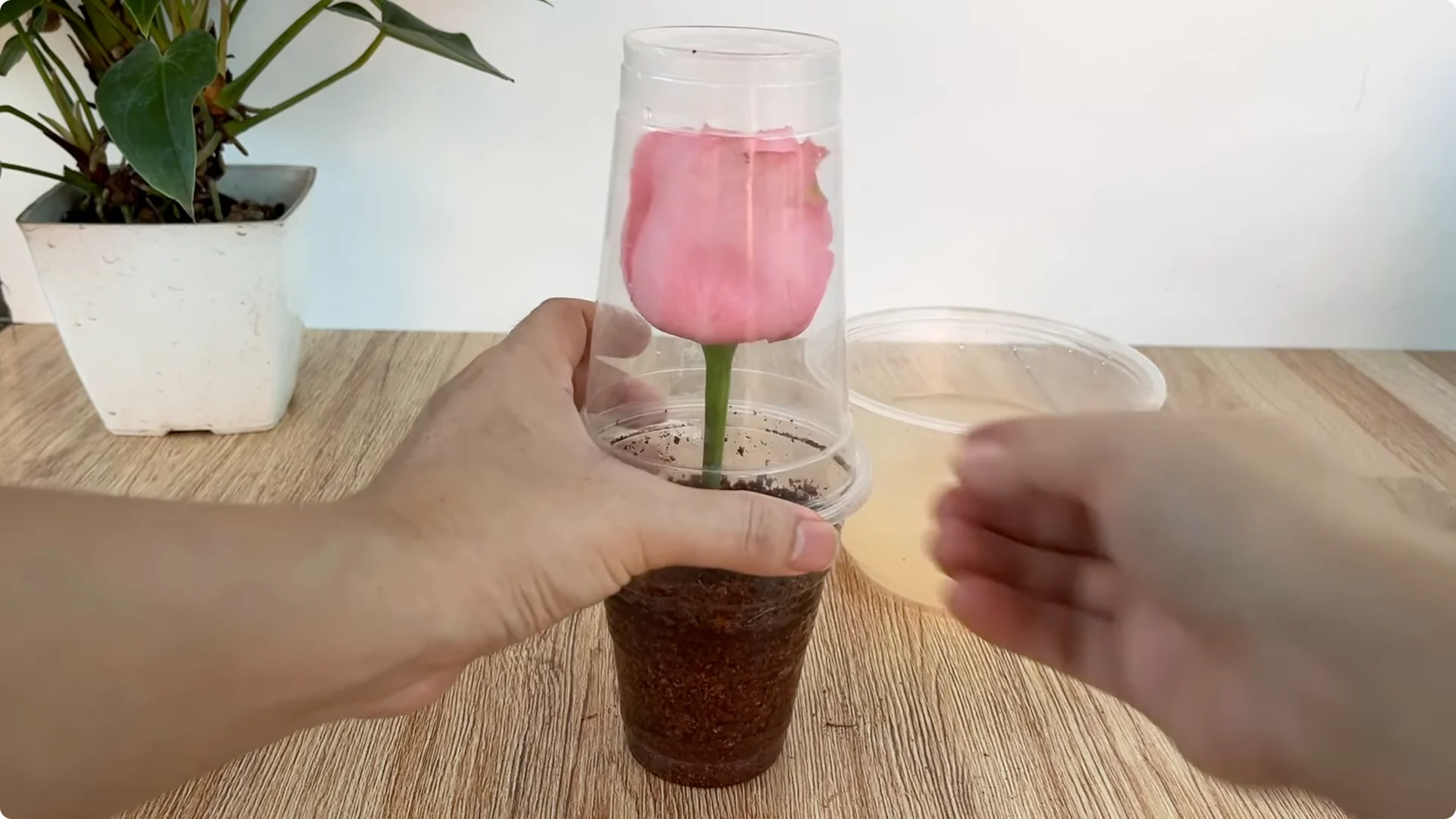
Use your finger to make a small hole in the middle of the cup and then place the rose branch in it. Lightly compress around to fix the stem of the branch, help the branch stand upright, less wobbly and create optimal conditions for new roots to develop.
Use a plastic bag or a transparent plastic cup to cover the mouth of the cup to create a humid environment like a mini greenhouse. This cover helps keep the temperature stable and reduces water loss.
Place the cup in a cool place, away from strong winds and direct sunlight, because these factors can dry out the branches, reducing the ability to form roots.
For a simple one cup setup that later encourages blooming, see this one cup bloom approach.
6. Rooting Rose Cuttings: What to expect
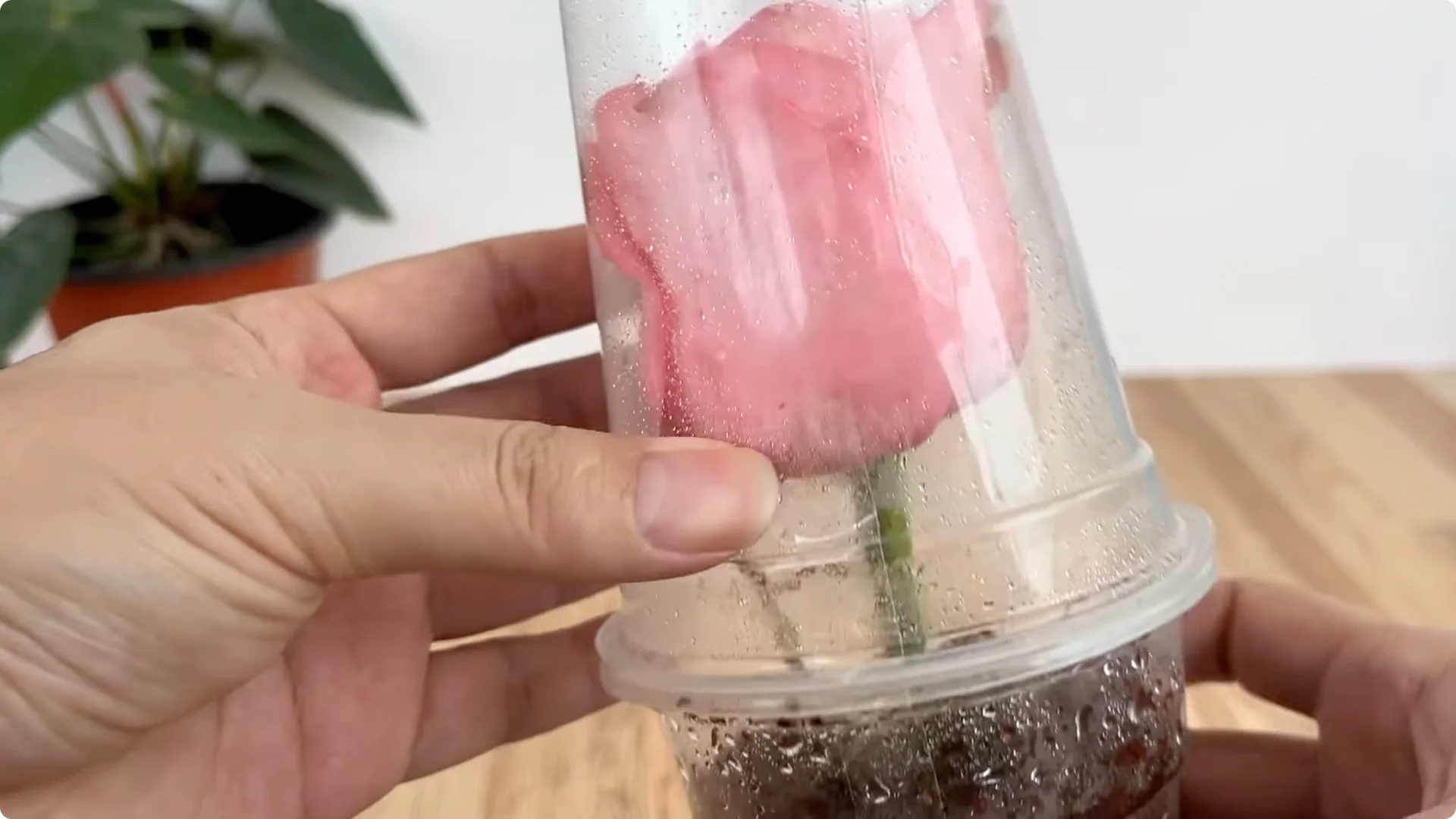
After 10 days, you will see extremely positive signs. At the base of the branch, many white roots grow, plump and water-filled, proving that the branch has adapted well and is fully supplied with nutrients.
The branch also begins to sprout new buds, the young leaves are green and healthy. This is a sign that the root tissue and stem tissue are both active.
7. Rooting Rose Cuttings: Potting up
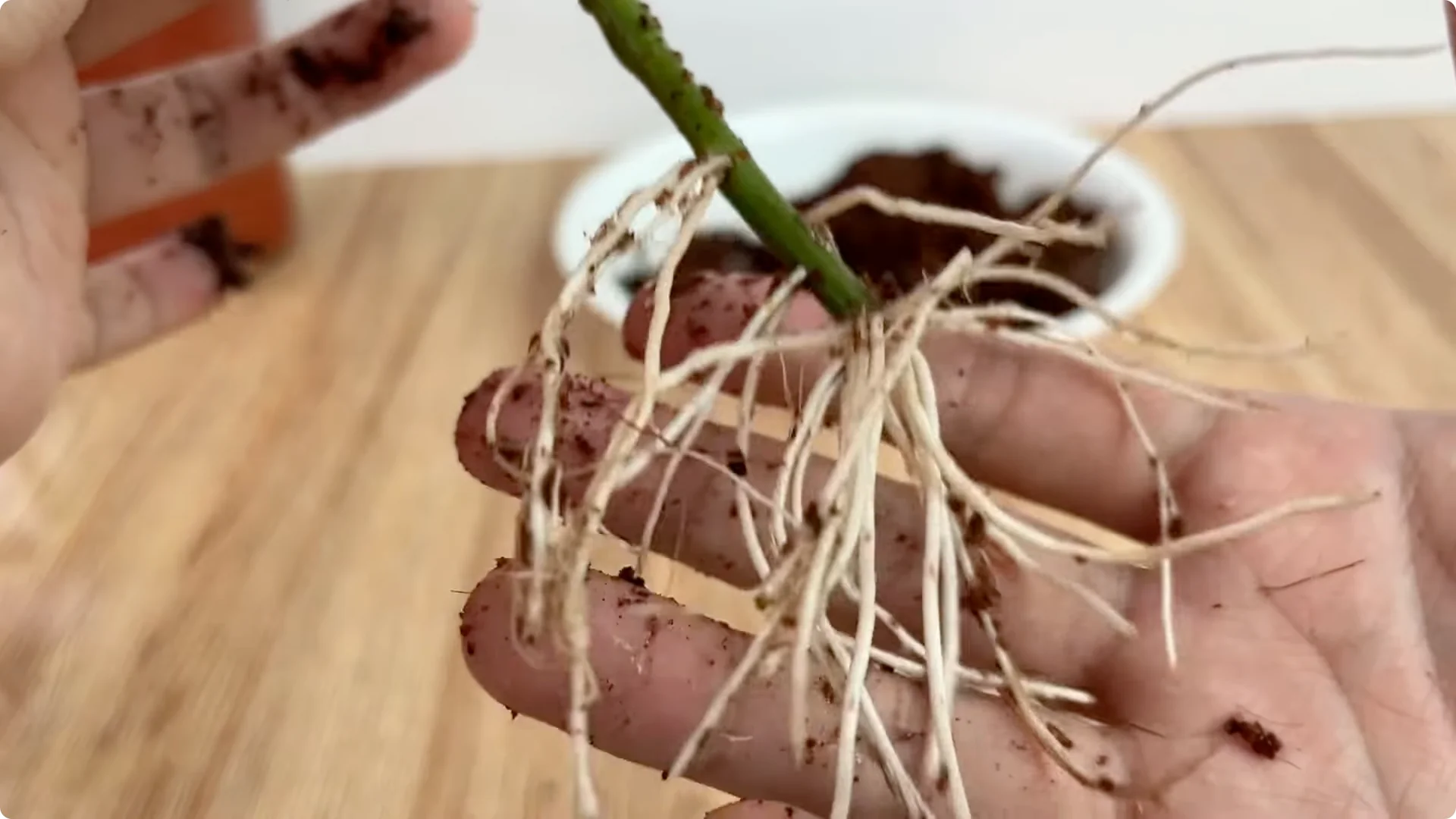
Transfer the branch to the official planting pot. Use a pot with a good drainage system and use river sand as a substrate.
River sand is airy, clean and helps the roots to breathe effectively in the early stages.
Final thoughts on Rooting Rose Cuttings
This method is simple and takes advantage of natural ingredients available in the kitchen while also being highly and quickly effective in stimulating roots. I wish you success in propagating many healthy and beautiful rose plants for your garden.