
Here is an interesting way to propagate roses by cuttings. This method is easy to do, low-cost, yet delivers noticeable results. It suits rose lovers who want to propagate roses at home naturally, safely, and sustainably.
1. Ginger and Rice Rose Propagation – Ginger prep
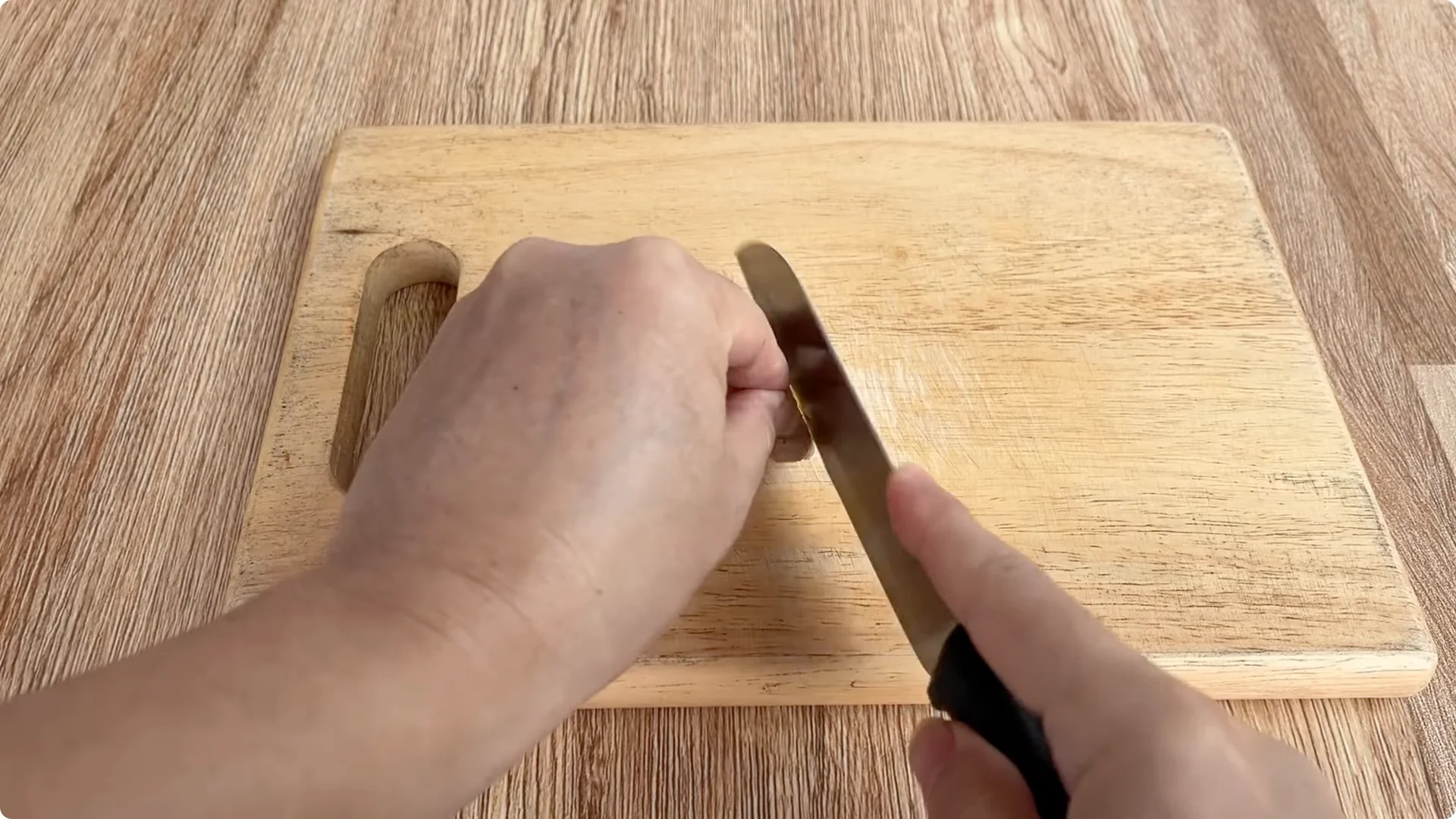
Prepare about 15 grams of fresh ginger. Choose mature, fresh ginger that is not bruised or rotten.
After washing, cut the ginger into thin slices or chop it finely so that the essence dissolves easily. Put all the ginger into a clean plastic cup, add 500 ml of warm water, and stir well.
Let the mixture sit for about 15 minutes. During this time, the natural active ingredients in the ginger will gradually release into the water, creating a solution with mild antibacterial properties.
This helps clean and protect the rose cuttings from fungal diseases right from the start.
2. Ginger and Rice Rose Propagation – Choose the cutting
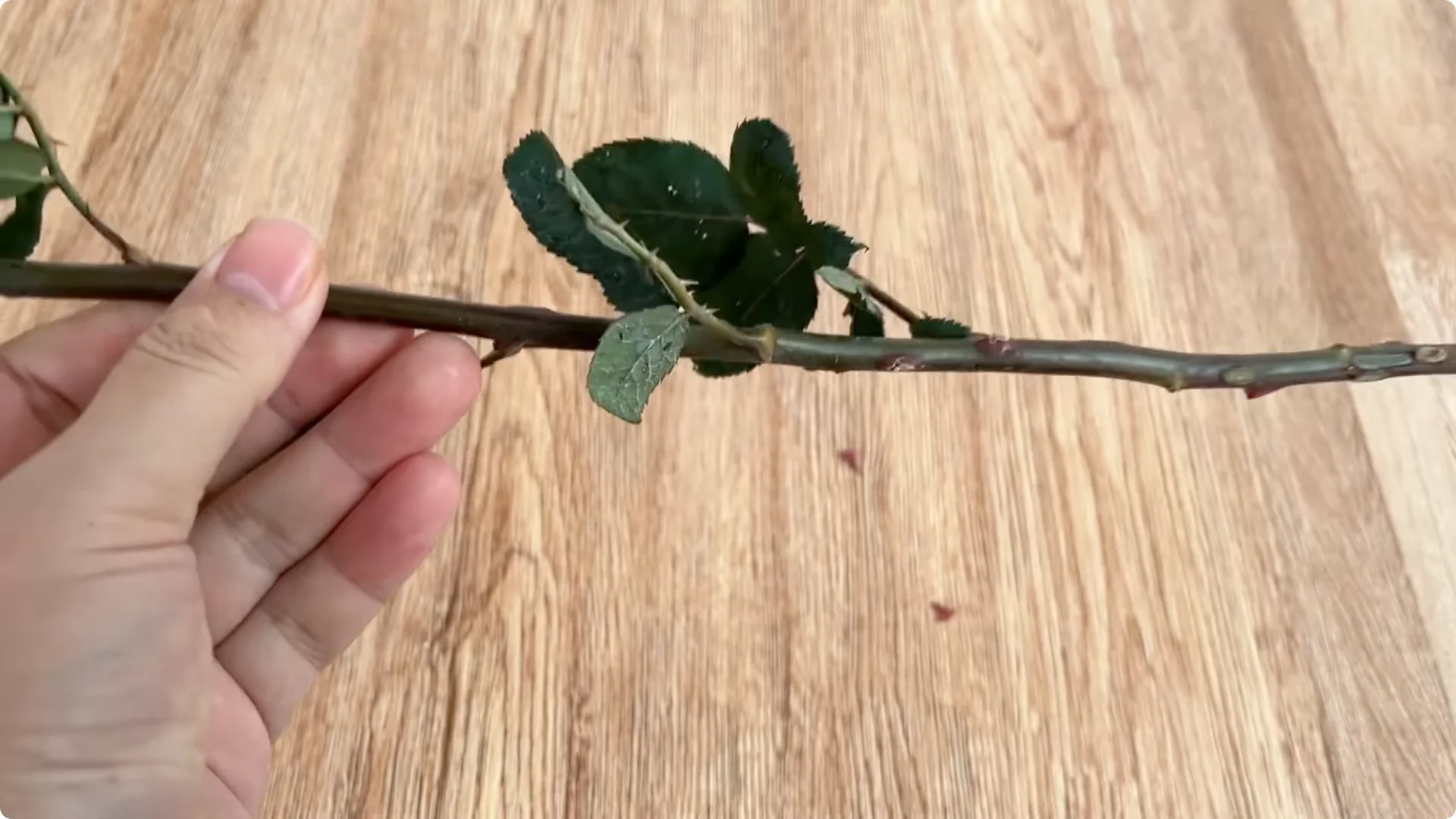
Choose a favorite rose branch, ensuring it’s free from pests, diseases, rot, or black spots. The branch should be of moderate age, sturdy, but still have room for growth.
Remove all leaves and thorns to minimize water loss and prevent injury during handling. Cut the branch short, leaving it about 20 cm long.
3. Ginger and Rice Rose Propagation – Ginger and rice soak
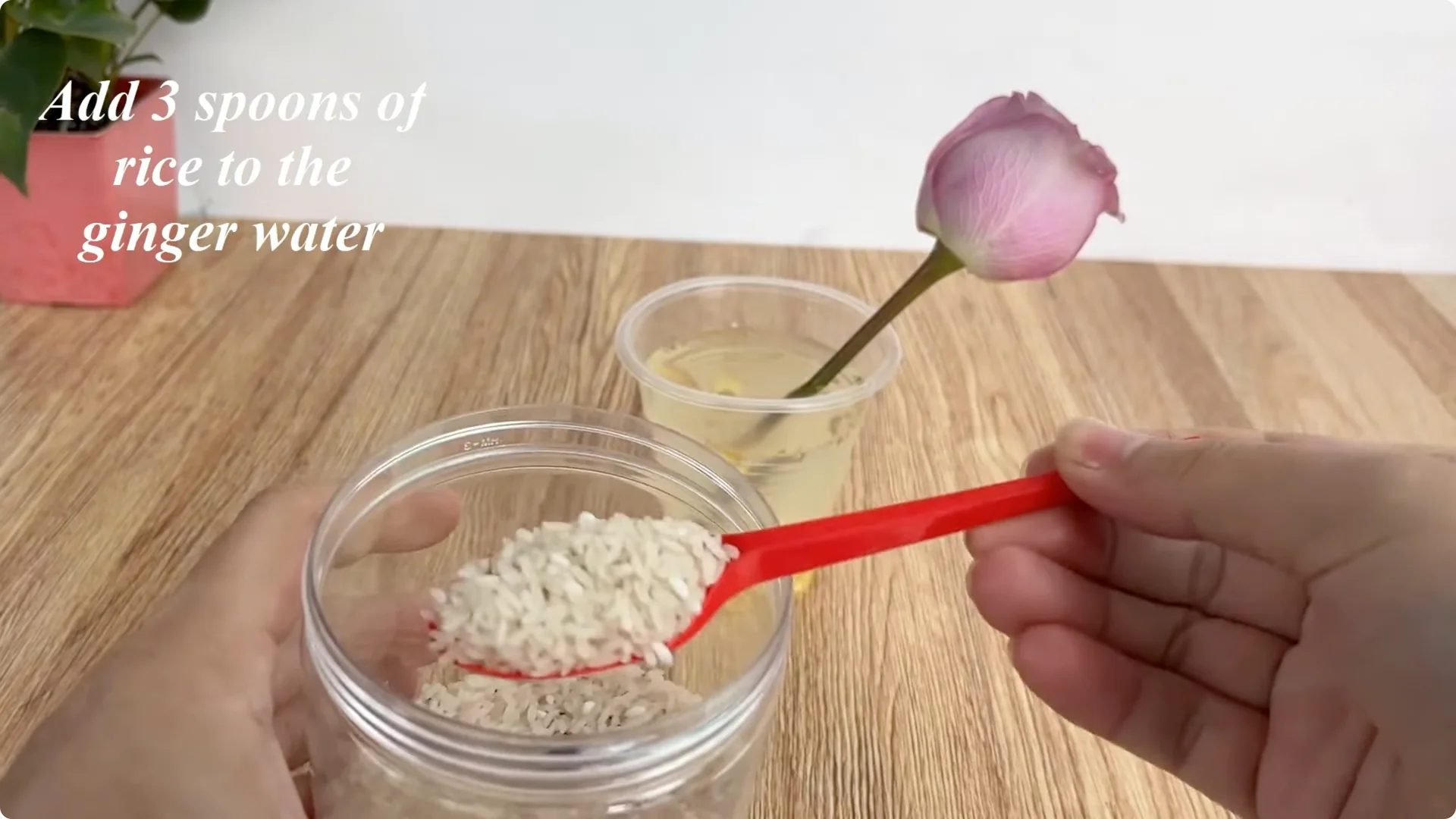
Gently soak the rose branch in the prepared ginger water for 15 minutes. This soaking helps disinfect the surface of the branch and stimulates the tissues at the base, preparing it for root growth.
Add 3 tablespoons of rice to the same ginger water. Stir the mixture well and soak for another 15 minutes.
Soaking the rice in water releases starch, B vitamins, and trace minerals, creating a mild nutrient environment ideal for root development. The combination of ginger and rice helps protect the rose cuttings from harmful microorganisms while providing initial energy for root cell division.
4. Ginger and Rice Rose Propagation – Make the rooting solution
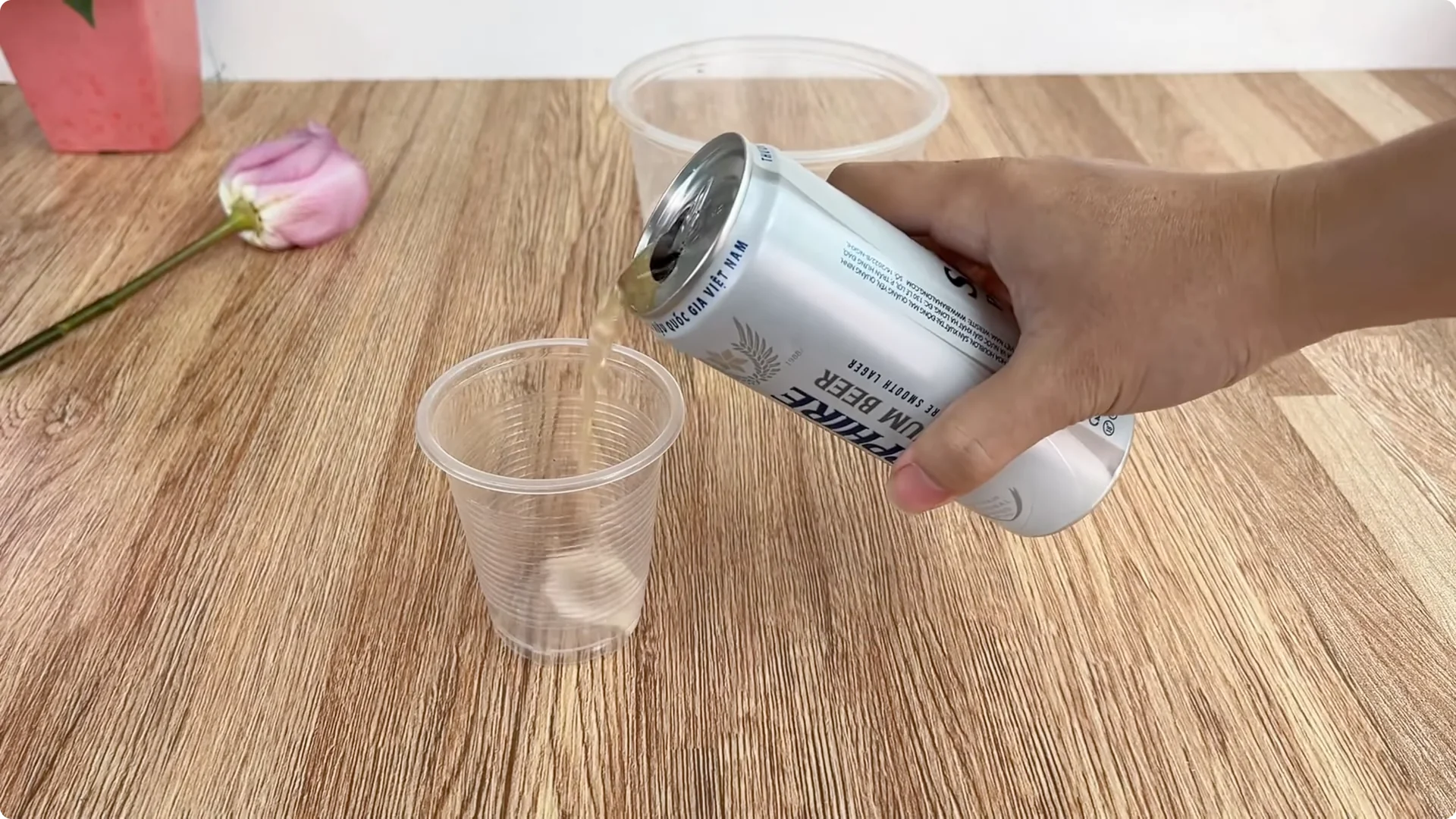
Gently remove the rose cuttings from the mixture. Filter out all the ginger and rice residue, keeping only the clear ginger-rice solution.
Add about 100 ml of beer to the ginger-rice solution. Beer contains natural yeast, vitamins, and a small amount of minerals, which stimulate root and shoot growth.
Dilute the mixture with 0.5 liters of clean water, stirring well to create a mild solution that won’t shock the cuttings.
5. Ginger and Rice Rose Propagation – Prepare the medium
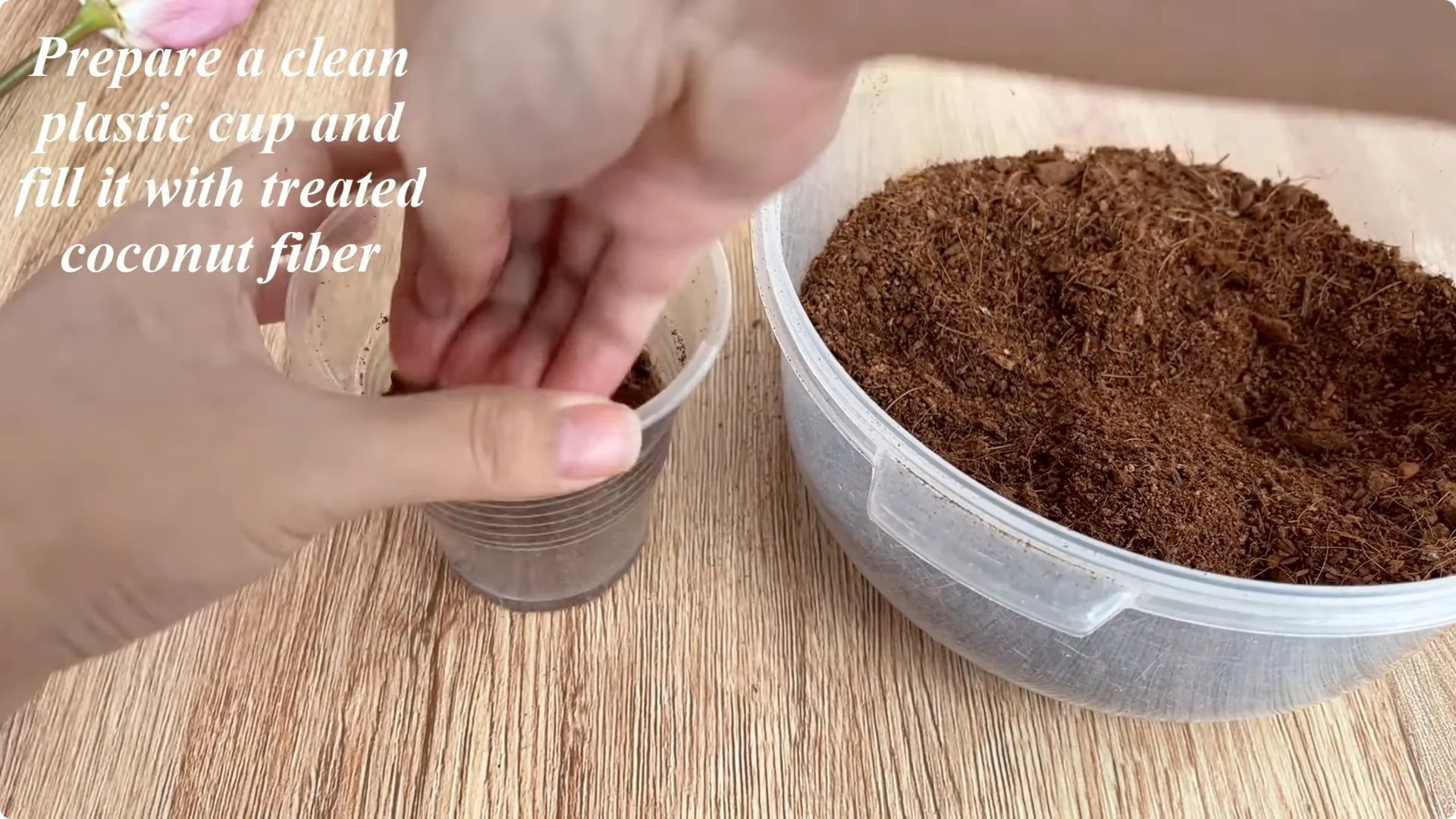
Prepare a clean plastic cup and fill it with treated coconut fiber. The coconut fiber needs to be free of tannins and salts to ensure safety for the young roots.
Pour the ginger-rice-beer solution into the coconut fiber cup, enough to evenly moisten the substrate, but not too wet.
6. Ginger and Rice Rose Propagation – Plant and secure
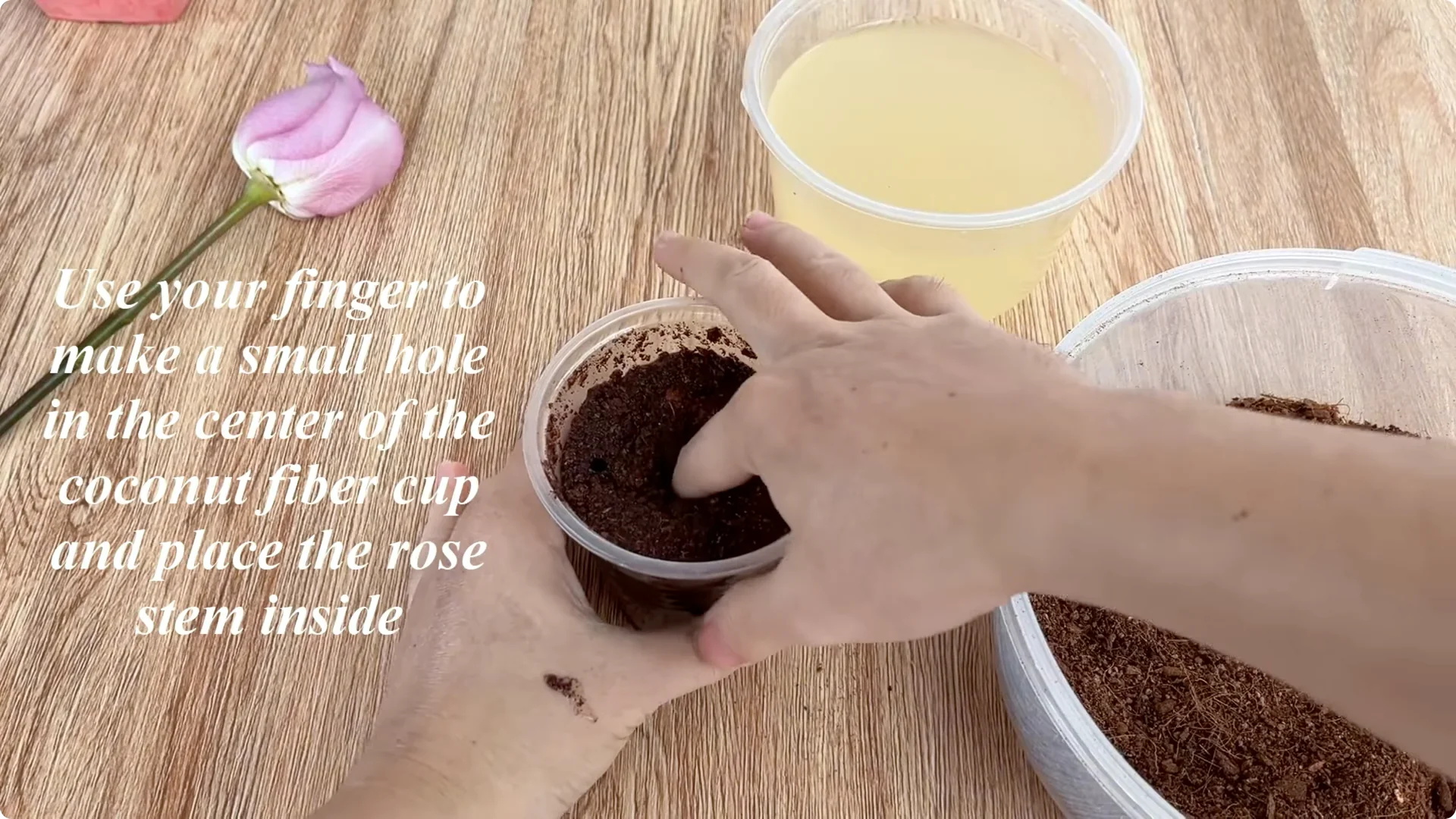
Use your finger to create a small hole in the center of the coconut fiber cup and place the rose stem in it. Gently press around it to secure the stem, ensuring it stands firmly and makes good contact with the substrate.
Cover the cup and the rose stem with a clear plastic bag or cup. This covering will create a stable humid environment, limiting water loss, like a mini greenhouse.
7. Ginger and Rice Rose Propagation – Placement and care
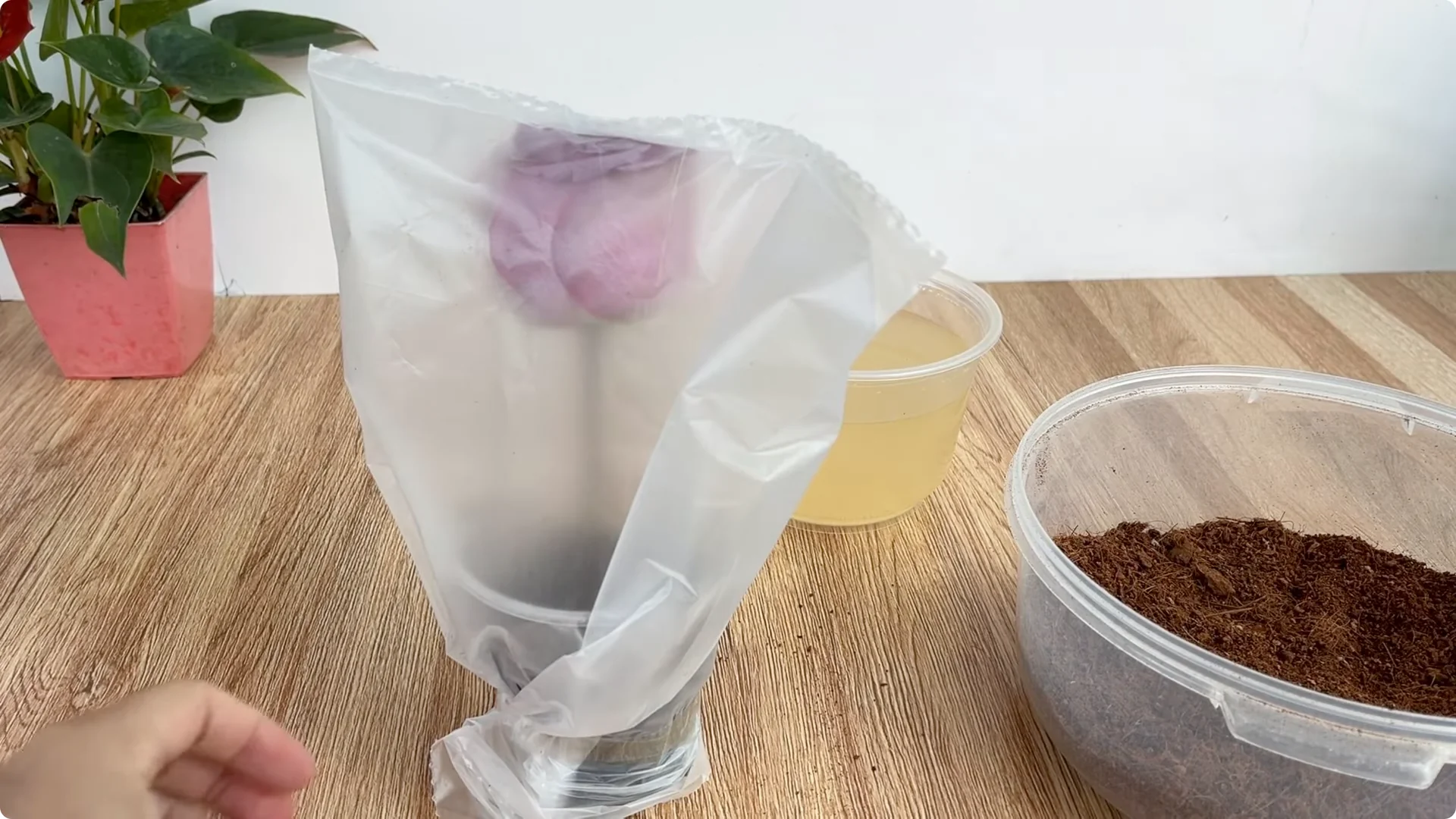
Place the cup in a cool, airy place, away from strong winds and harsh sunlight, to provide the ideal conditions for root formation.
8. Ginger and Rice Rose Propagation – Signs of success
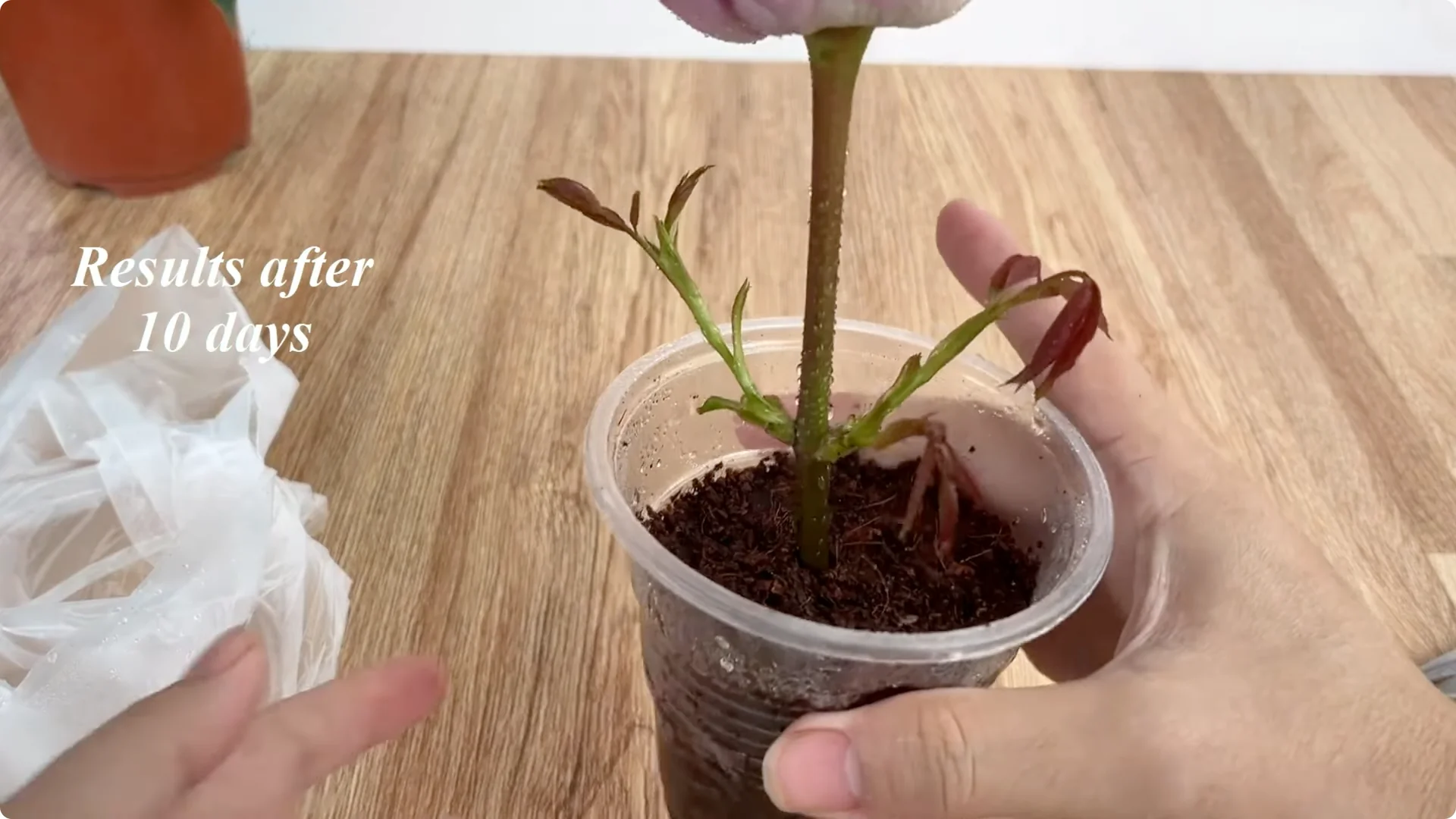
After about 10 days of proper care, you will begin to observe very encouraging signs. New shoots will emerge on the stem, appearing fresh, plump, and full of vitality.
At the base, many new, white, succulent roots will gradually appear, firmly attaching to the coconut fiber, indicating that the rose stem has successfully rooted.
9. Ginger and Rice Rose Propagation – Transplanting
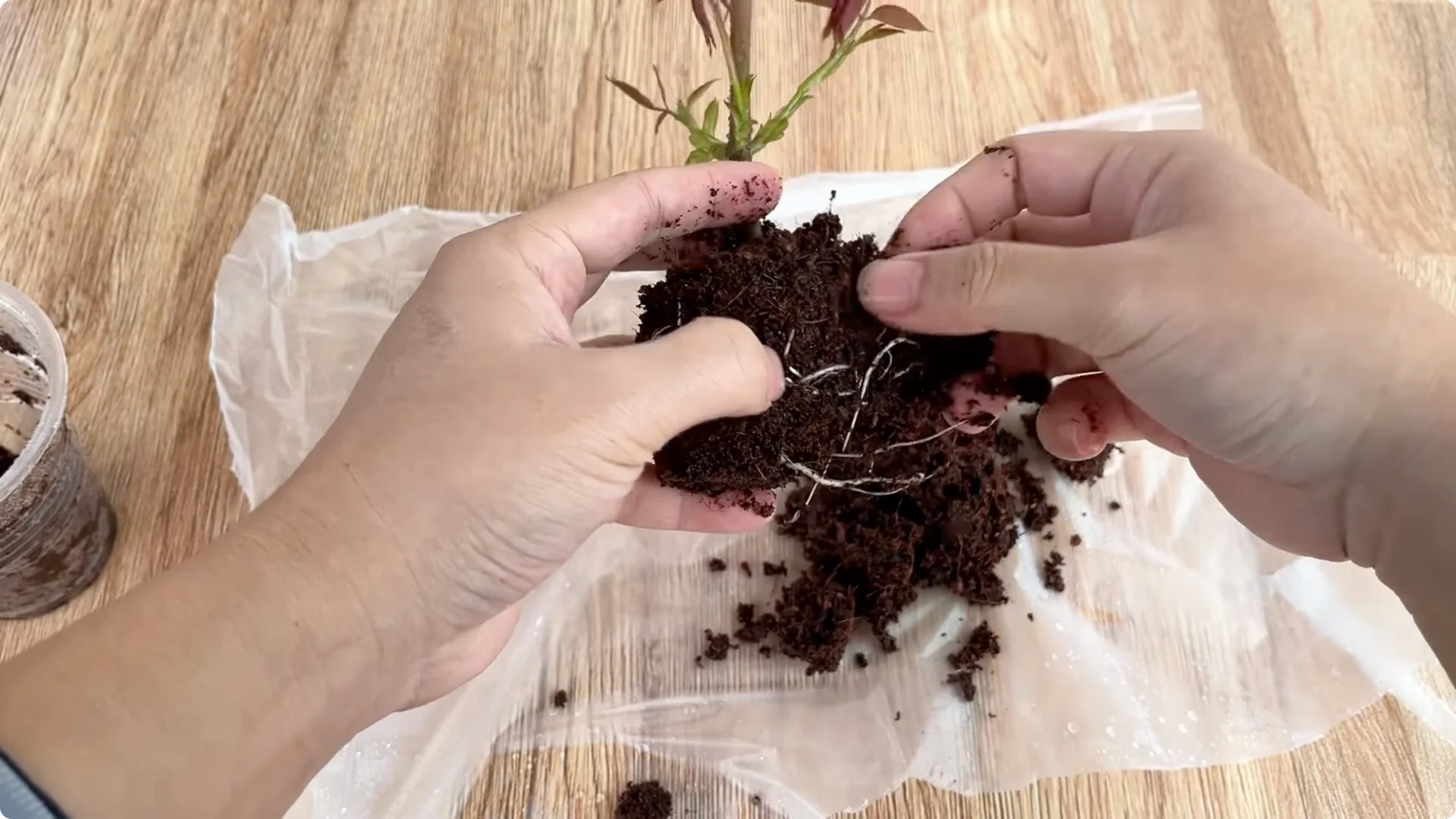
Once the root system has developed and stabilized, replant the rose cutting in a well-draining pot using river sand as a growing medium. This will allow the roots to continue to grow healthily and aerated.
Final thoughts on Ginger and Rice Rose Propagation
The method of propagating rose cuttings using ginger, rice, and beer shows that sometimes the most effective solutions come from very familiar ingredients. No chemicals or complex preparations are needed; with the right understanding and a little patience you can create new, healthy rose plants, bearing the mark of your own care.
Each successful cutting is not just a new plant, but also a quiet joy, a feeling of connection with nature through each meticulous step of care. When the young shoots grow strong, you will realize that the journey of growing flowers is not just about waiting for results but about enjoying every moment of nurturing life, so that your little garden becomes more vibrant and full of life.