

I will guide you through simple and extremely effective ways to propagate rose branches at home using completely natural ingredients with surprising results. Each method focuses on clean preparation, gentle antibacterials, and a moist, stable environment.
For more ideas that boost rooting success, see this unexpected method for rose propagation.
1. Potato-Assisted Rose Propagation
Select and prepare cuttings
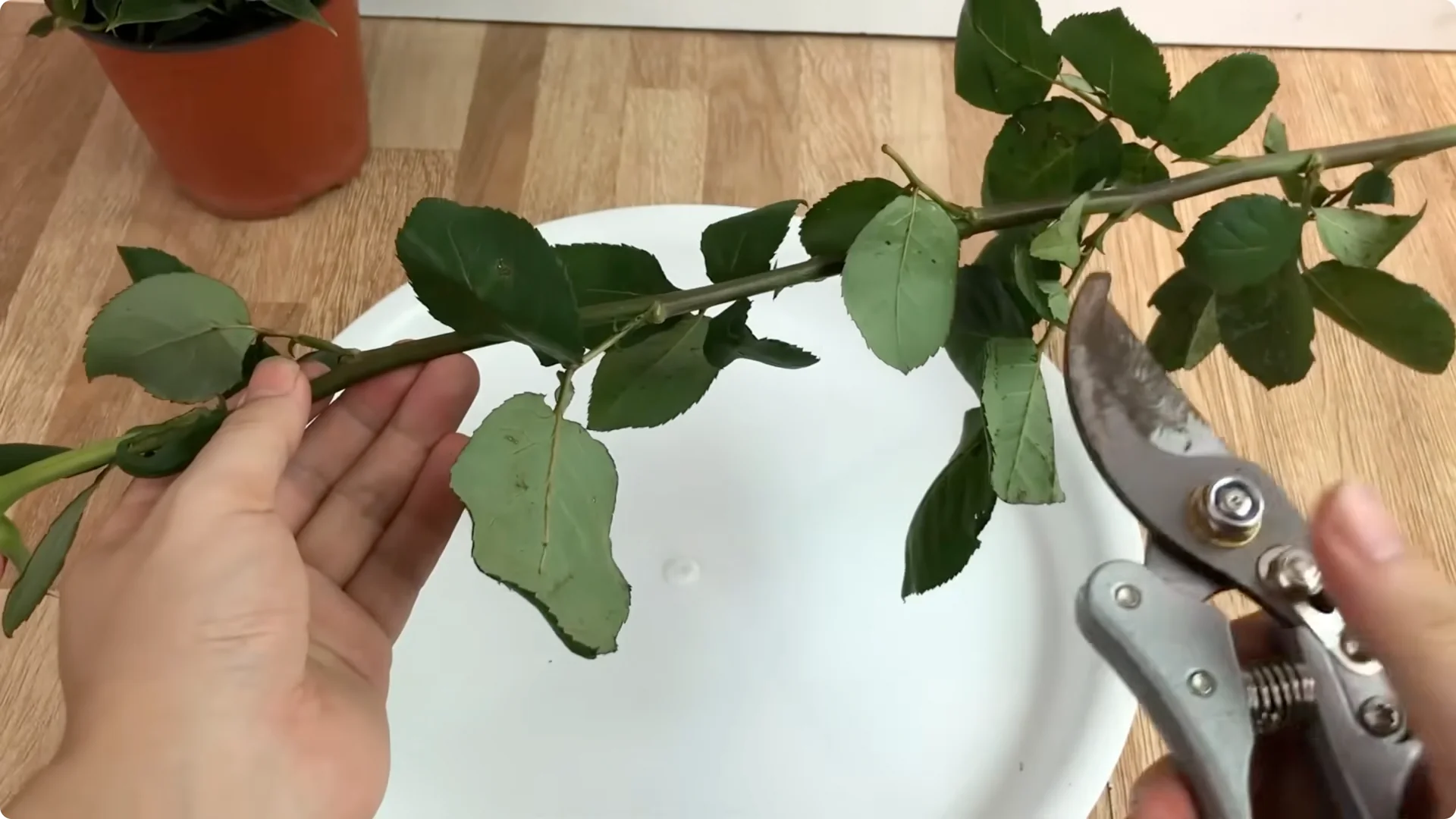
Choose a healthy rose branch, free of pests and diseases, with a fresh stem and an even green color. Cut the branch, keeping only the stem about 15 to 20 cm long, which is ideal for rooting. Remove all the leaves to avoid dehydration and help the branch focus on developing roots.
Make the baking soda soak
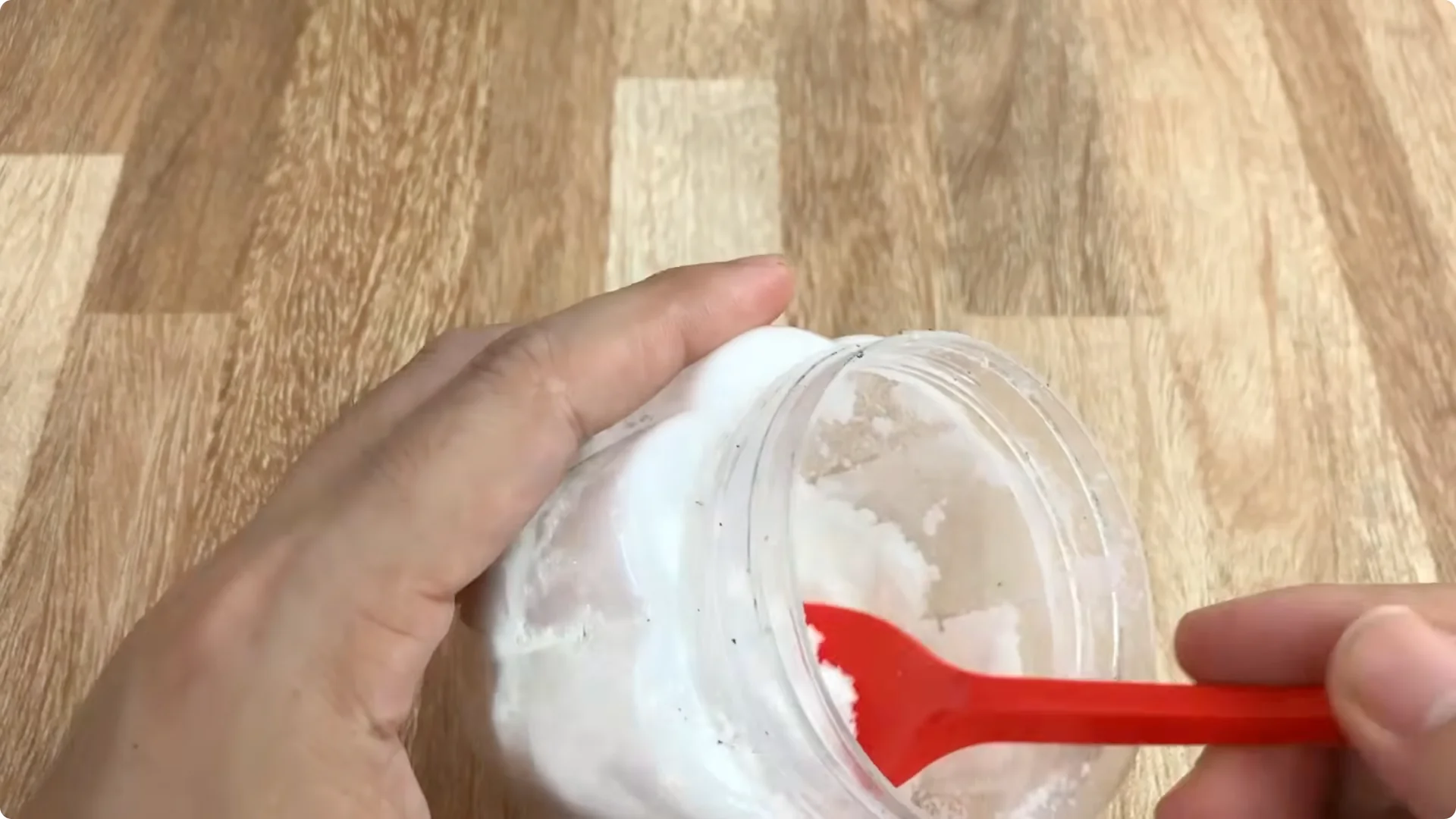
Prepare a clean plastic cup and pour 0.5 liters of water into the cup. Add 1/2 teaspoon of baking soda and stir well until it dissolves. Baking soda is slightly alkaline, helps fight bacteria and fungi, and prevents root rot or fungal infections in the cut; soak the rose branch for 15 to 20 minutes.
Prepare the potato solution
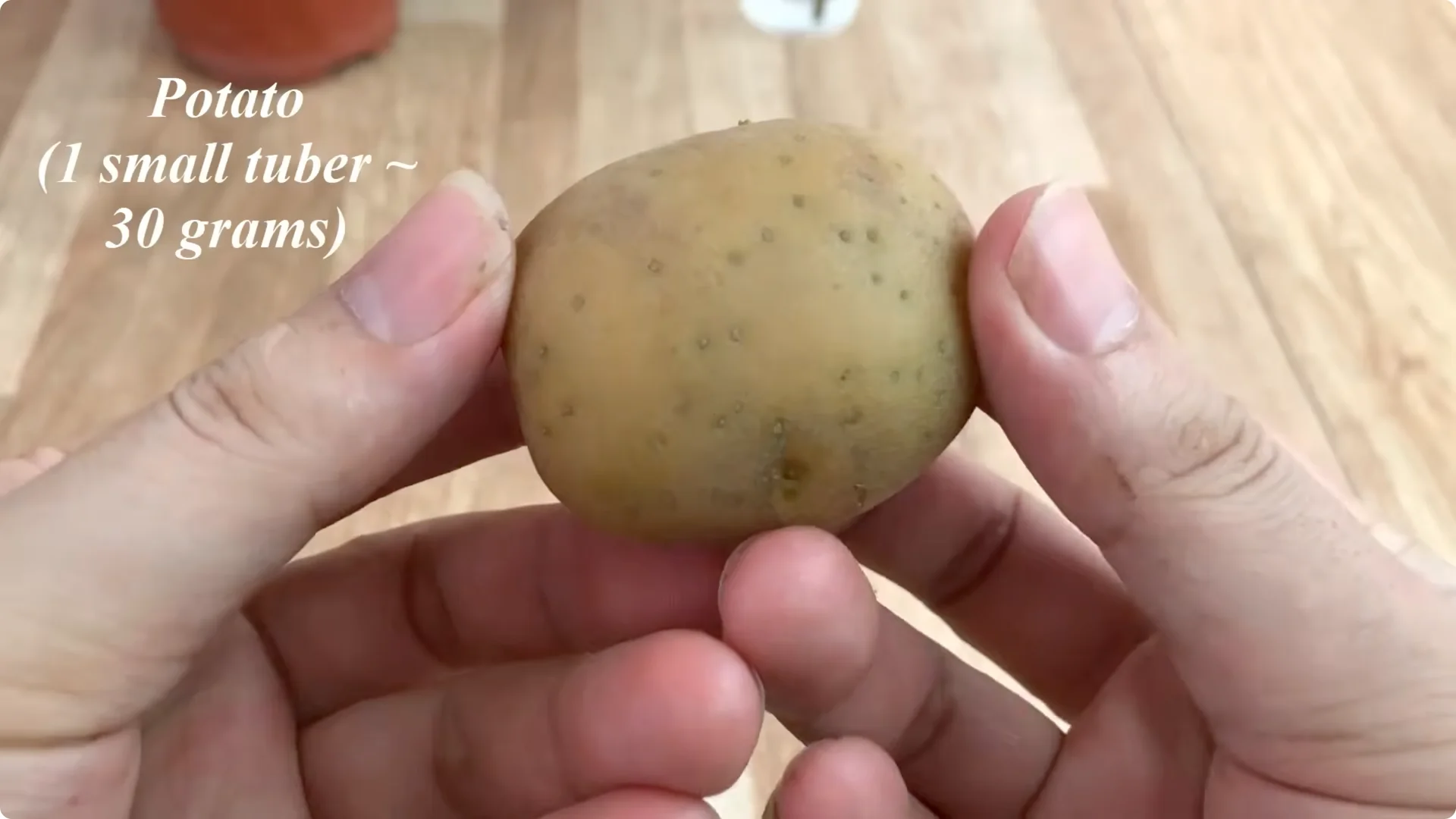
Prepare about 30 grams of potatoes. Sprouted potatoes are even better because they contain high levels of biologically active ingredients that strongly stimulate rooting. Wash the potatoes, cut them into small pieces, put them in a blender, and puree.
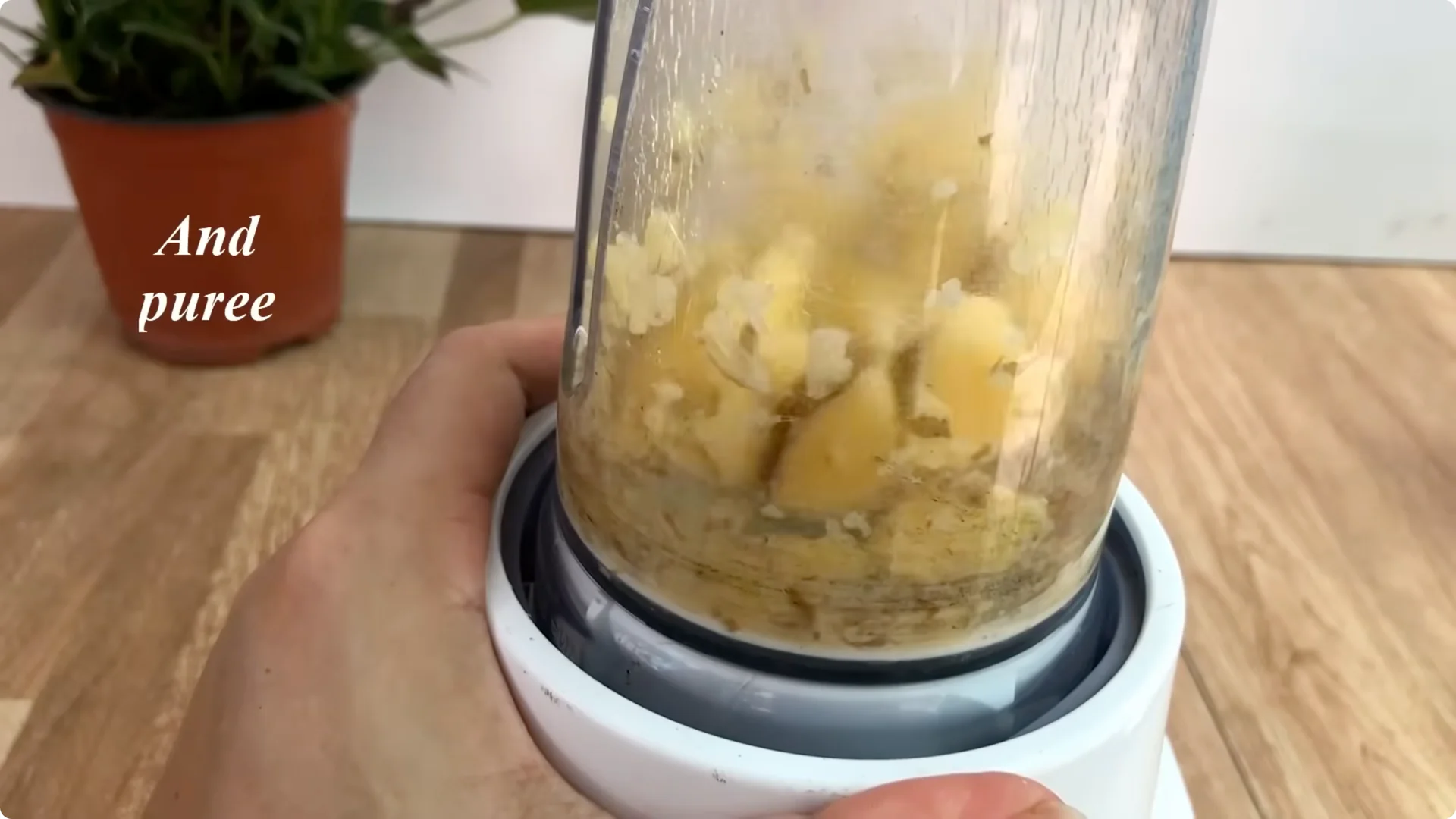
Sprouted potatoes provide many enzymes and natural root hormones, while also adding nutrients to help the plant grow comprehensively. Add 0.5 liters of clean water and stir well to dissolve the nutrients. Filter through a sieve or thin cloth and keep only the water, which is the nutritious potato solution.
Pot up in river sand
After soaking, take out the cutting and mix the baking soda solution with the potato solution. Prepare a clean plastic cup and washed river sand. River sand is a breathable substrate, retains moisture well, and does not get waterlogged.
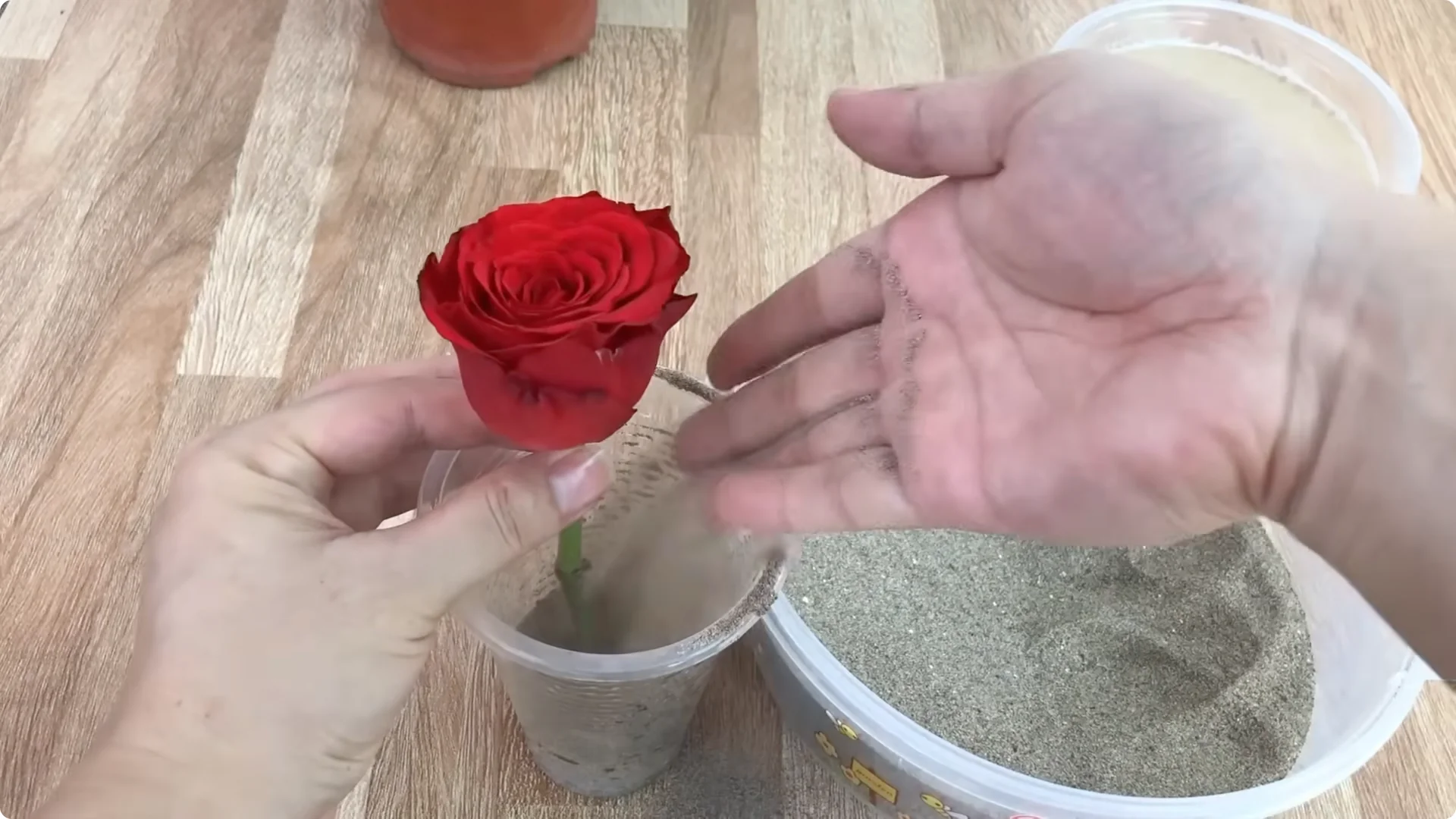
Place the rose branch in the middle of the cup. Fill the cup with sand almost full, then pour in the mixed solution just enough to moisten the sand. Cover the cup with a plastic bag or a transparent plastic cup to keep moisture and stabilize temperature.
Place the cup in a cool place with gentle light and avoid direct sunlight so the branch does not get thermal shock. After only 7 days, you will see the branch start to grow new shoots, a sign that it received good nutrients. The base forms many healthy white roots, ready to be planted in the ground or transferred to a pot.
Replant in a pot with a substrate of coconut fiber or clean soil. Continue to care for the plant so it grows quickly and blooms soon. For another straightforward walkthrough, see this simple method for rose propagation.
2. Onion and Rice Water Propagation
Prepare the onion soak
Prepare about 30 grams of onions. Cut the onions into small pieces so the active ingredients can easily dissolve in water. Onions contain many sulfur compounds and natural antioxidants that fight bacteria, stimulate root tissue growth, and protect cuttings from rot and mold in the early stages.
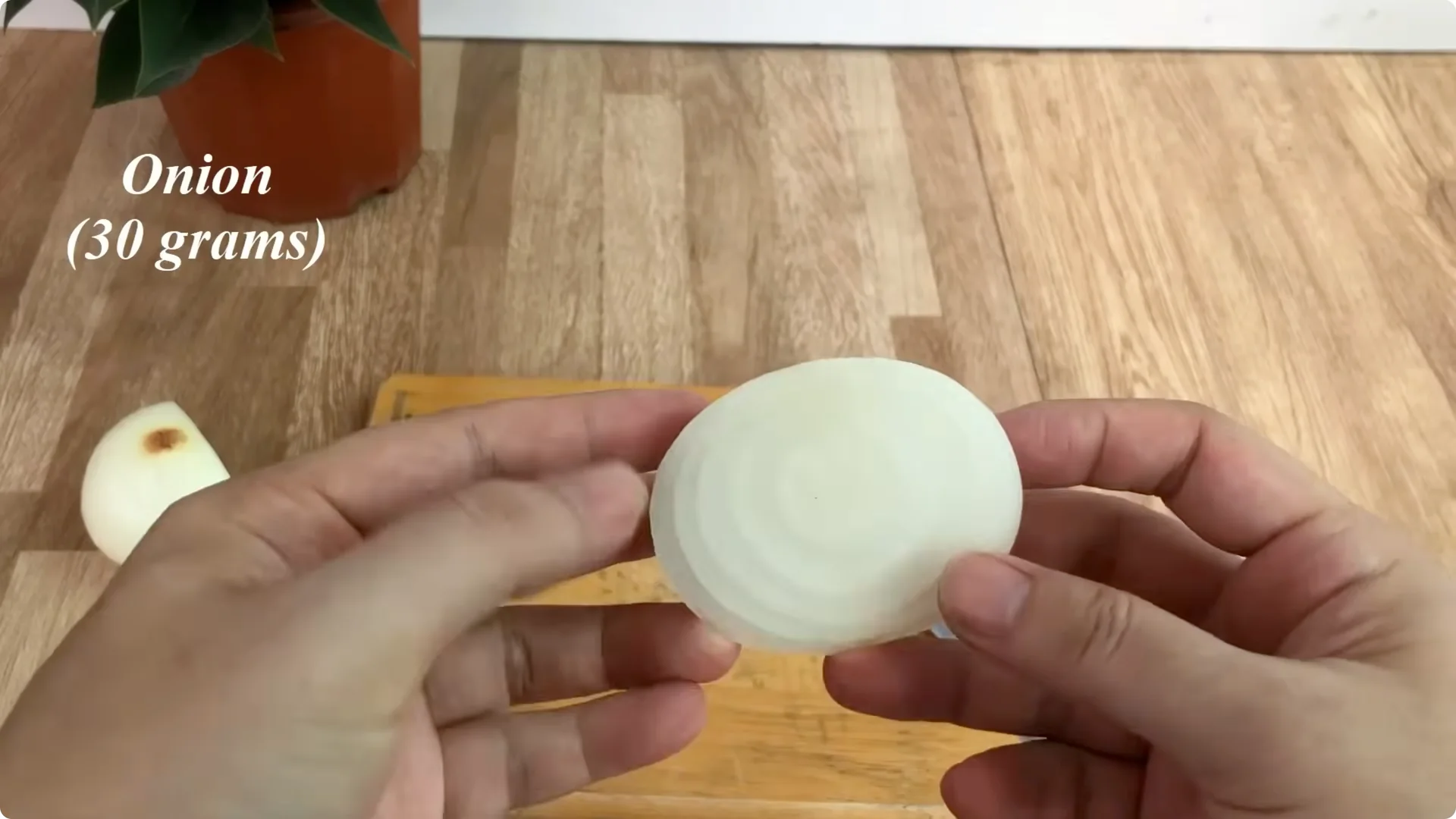
Put the chopped onions in a clean glass jar and pour in 0.5 liters of warm water. Cover tightly and leave for 1 hour to allow the nutrients to penetrate the water. Open the jar, stir well, then filter to get the clear onion water.
Ready the cutting
Choose a healthy rose branch that is free of pests and diseases. Cut the branch, keeping only the part about 15 to 20 cm long. Remove all the leaves so nutrients concentrate on roots and new shoots.
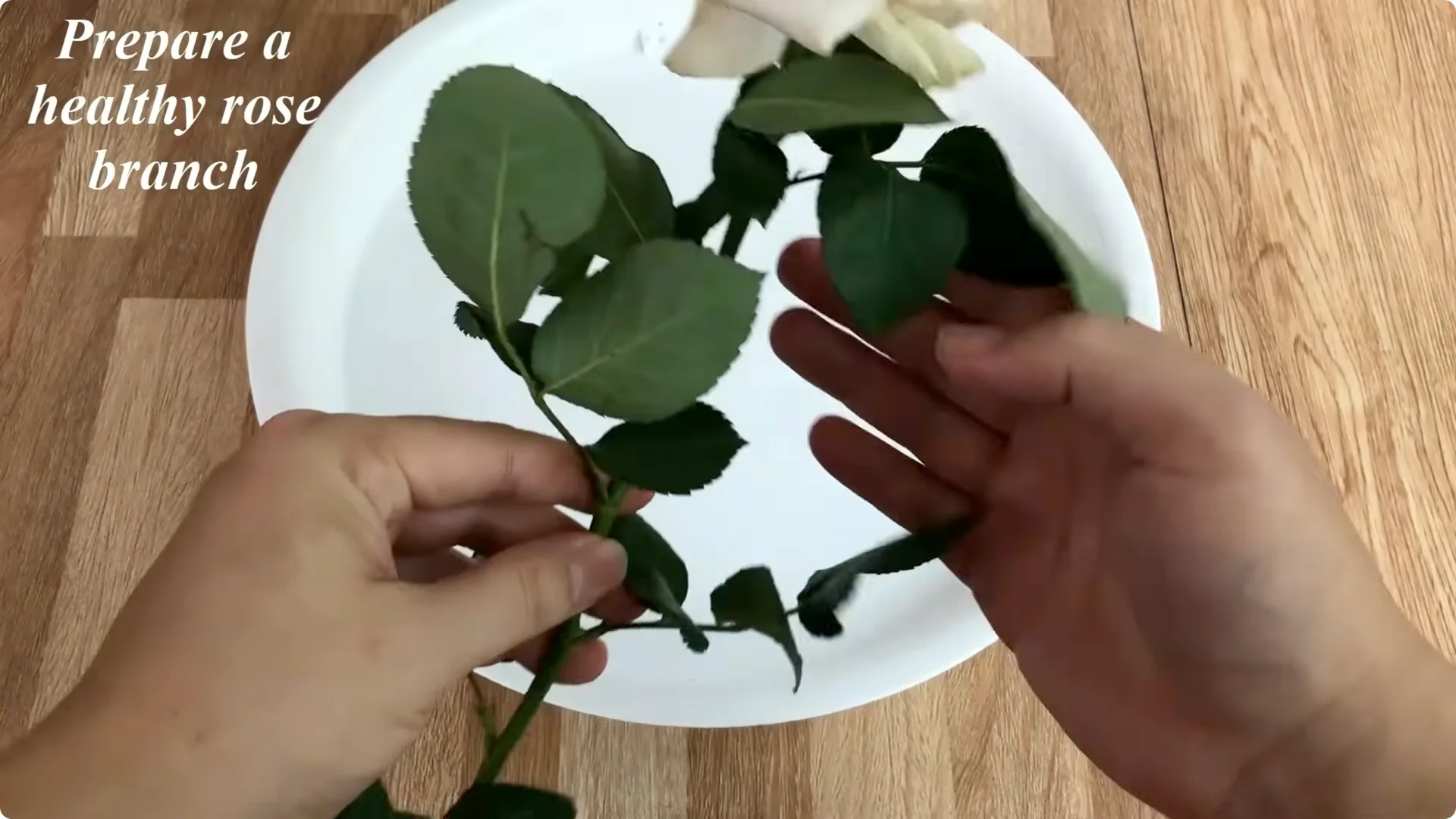
Soak the rose branch in the onion solution for about 15 minutes to let it absorb antibacterial nutrients and stimulate the roots. Take the branch out and set it aside for the next step.
Make concentrated rice water
Put 2 tablespoons of rice in a clean plastic cup and pour in about 0.2 liters of clean water. Wash the rice thoroughly so nutrients such as starch, vitamin B, and minerals dissolve into the water, then filter the first portion and keep it. Repeat with another 0.2 liters of water, and mix the two portions to get a more concentrated solution.
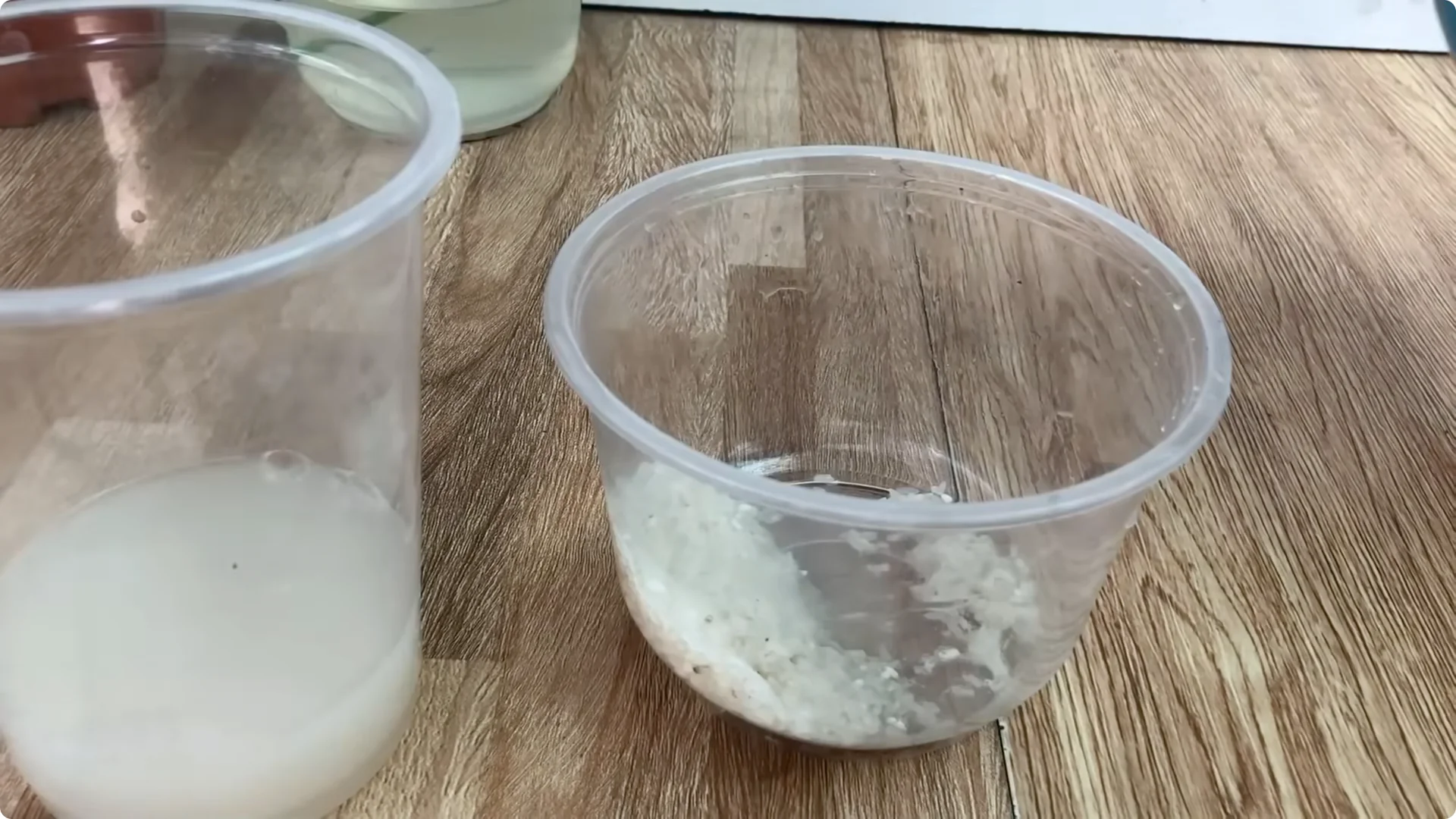
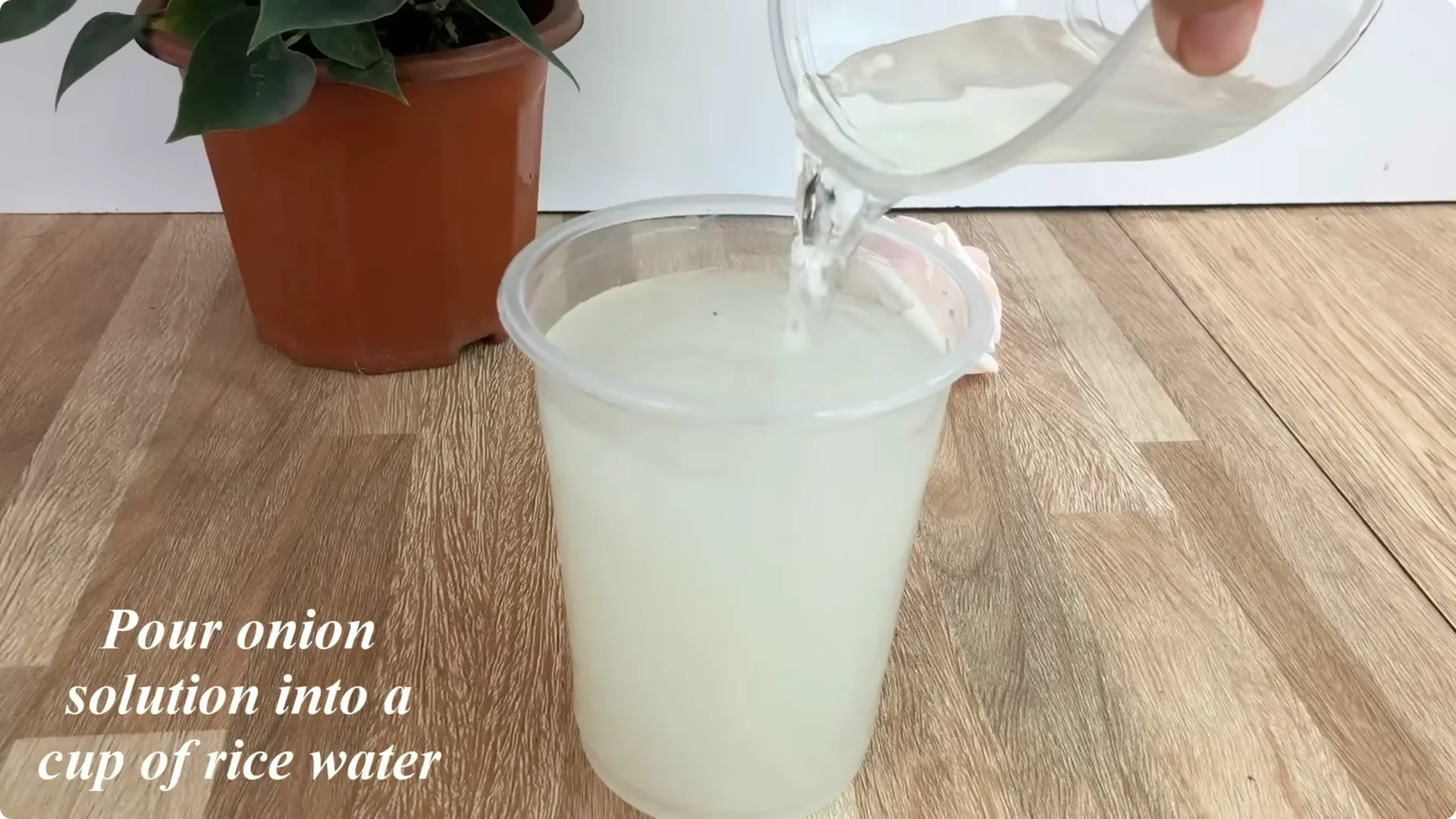
Rice water is a very good source of natural nutrients for plants, helping promote cell development, increase resistance, and support faster root growth. Mix the filtered onion water with the rice water to create a very nutrient rich solution. Use a clean cotton ball or soft cloth, dip it in the solution, then gently wipe the entire stem to help it absorb more nutrients and to lightly disinfect.
Pot up in coconut fiber
Prepare a clean plastic cup and cleaned coconut fiber. Fill the cup with coconut fiber almost to the top and press it firmly for stability. Make a small hole in the middle of the cup and place the rose branch in the center.
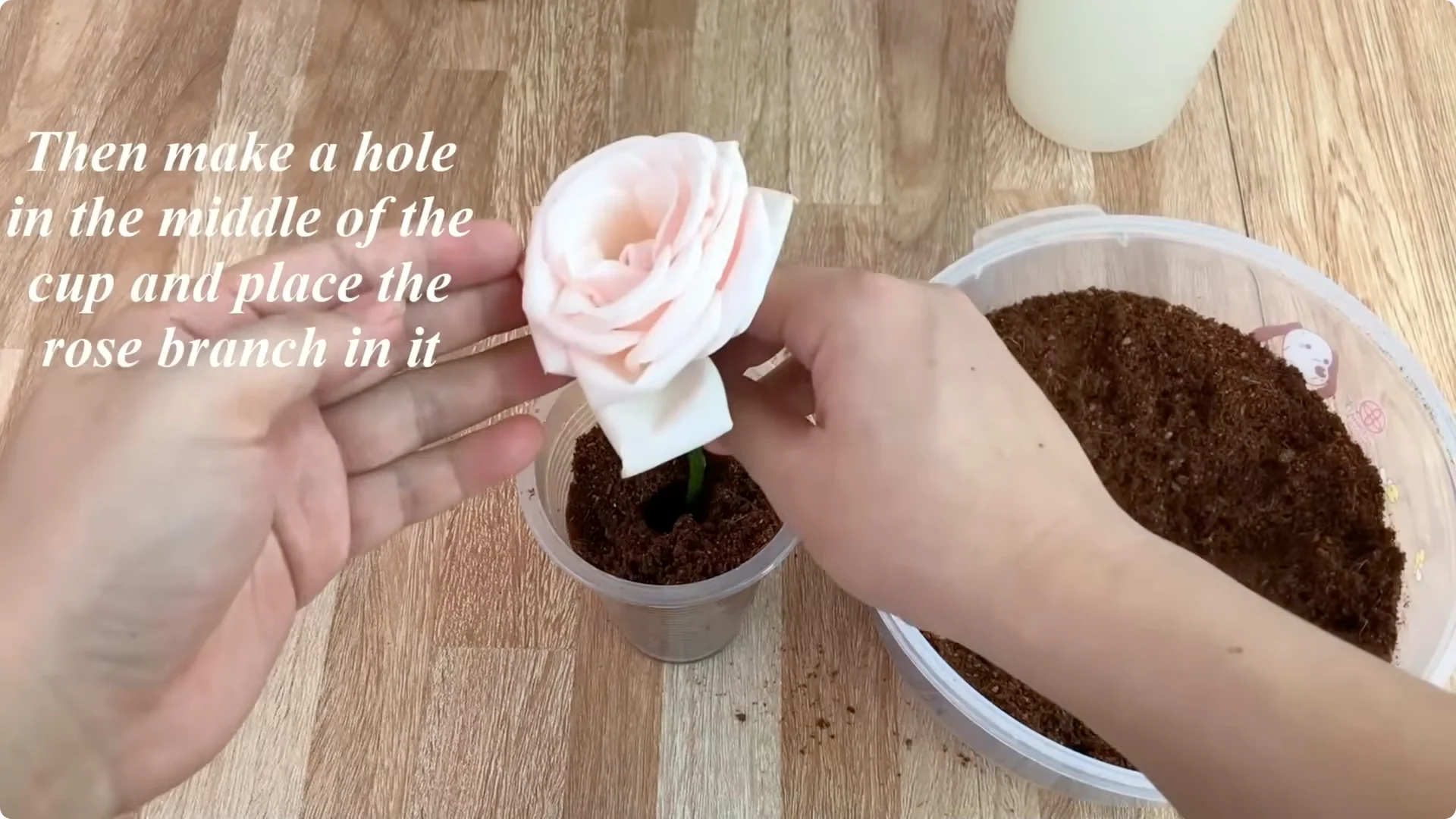
Pour the rice onion solution into the cup, just enough to moisten the coconut fiber. This solution provides both nutrients and antibacterial properties to the cutting environment. It helps new roots grow quickly, strong, and are less susceptible to fungal rot.
Create a humid chamber
Cover the cup with a plastic bag or a transparent plastic cup to keep it moist and create a sealed incubation environment. Place the cup in a cool place and away from direct sunlight. After only 5 days, the branch begins to grow many fresh green shoots and strong, healthy new roots.

At this point, you can plant the branch in a new pot with a loose, well drained substrate such as clean river sand mixed with rice husks or light organic soil. For a comparable approach with clear steps, see this rose propagation simple method. With simple ingredients like onions and rice, you can propagate rose branches successfully at home without chemical root stimulants.
Final thoughts
Both methods rely on gentle disinfection, moderate moisture, and stable humidity to trigger quick rooting. Keep solutions mild, substrates airy, and light indirect to protect tender tissues. If you want a simple, inexpensive, and chemical free path to new roses, these natural approaches deliver fast, healthy results.