

I share tips on how to care for and propagate roses effectively. If you want a simple home method to help rose branches root quickly and sprout healthy buds, this guide is for you. We will use easy kitchen ingredients to create a natural rooting solution.
With baking soda, glucose, and tomatoes, you can support fast root formation. The process is straightforward and friendly for beginners. Follow each step carefully for the best results.
1. Rose Cutting Propagation essentials
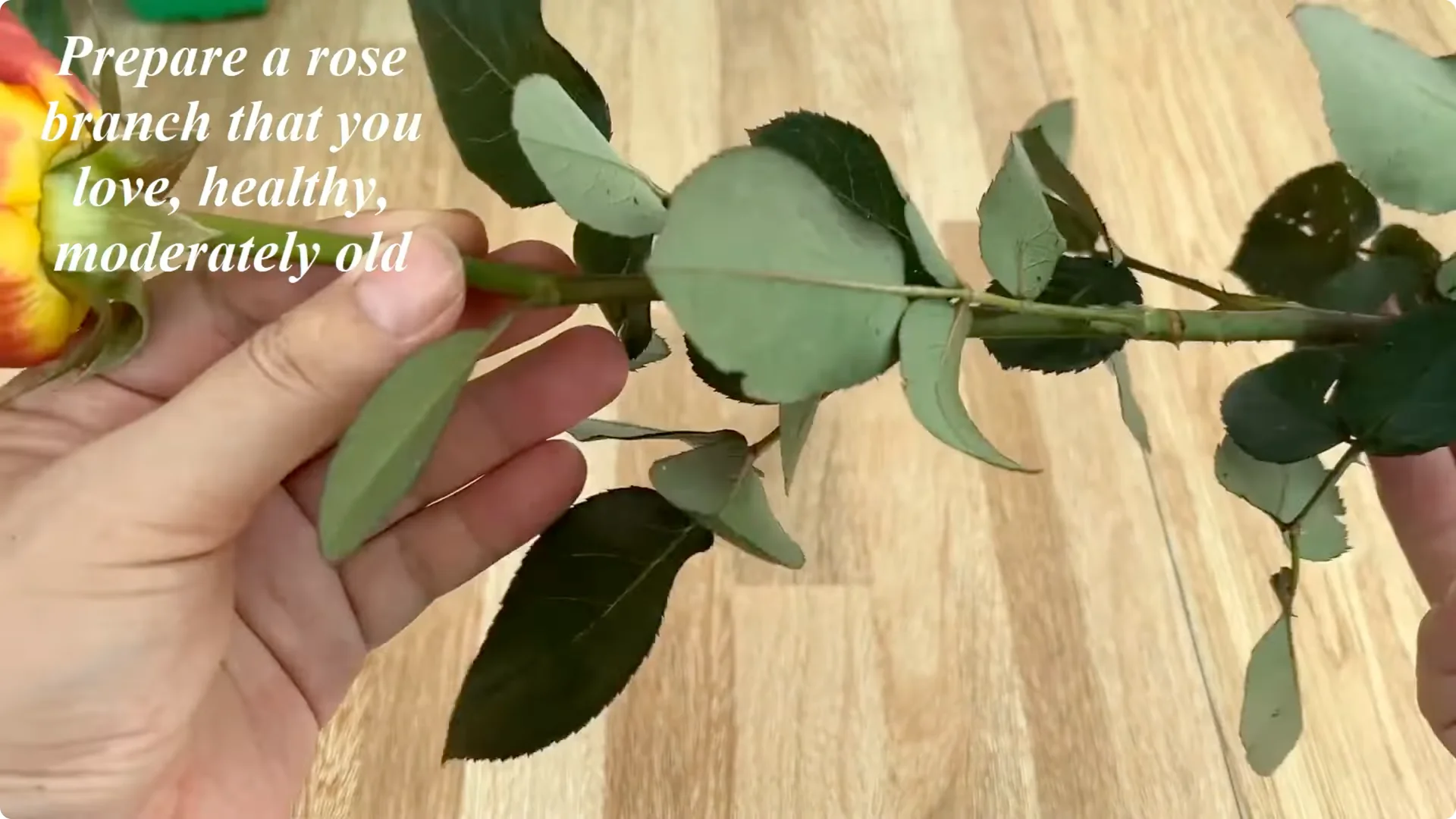
Choose a healthy rose branch of moderate age. This is an important factor that determines the success of cutting branches. Branches that are too young root poorly, and branches that are too old dry out and root slowly.
Cut each branch to about 15 to 20 cm. This length helps the branch stand firmly and helps the plant focus its energy on forming new roots and shoots. Keep cuts clean and neat.
Choose and prepare the cutting
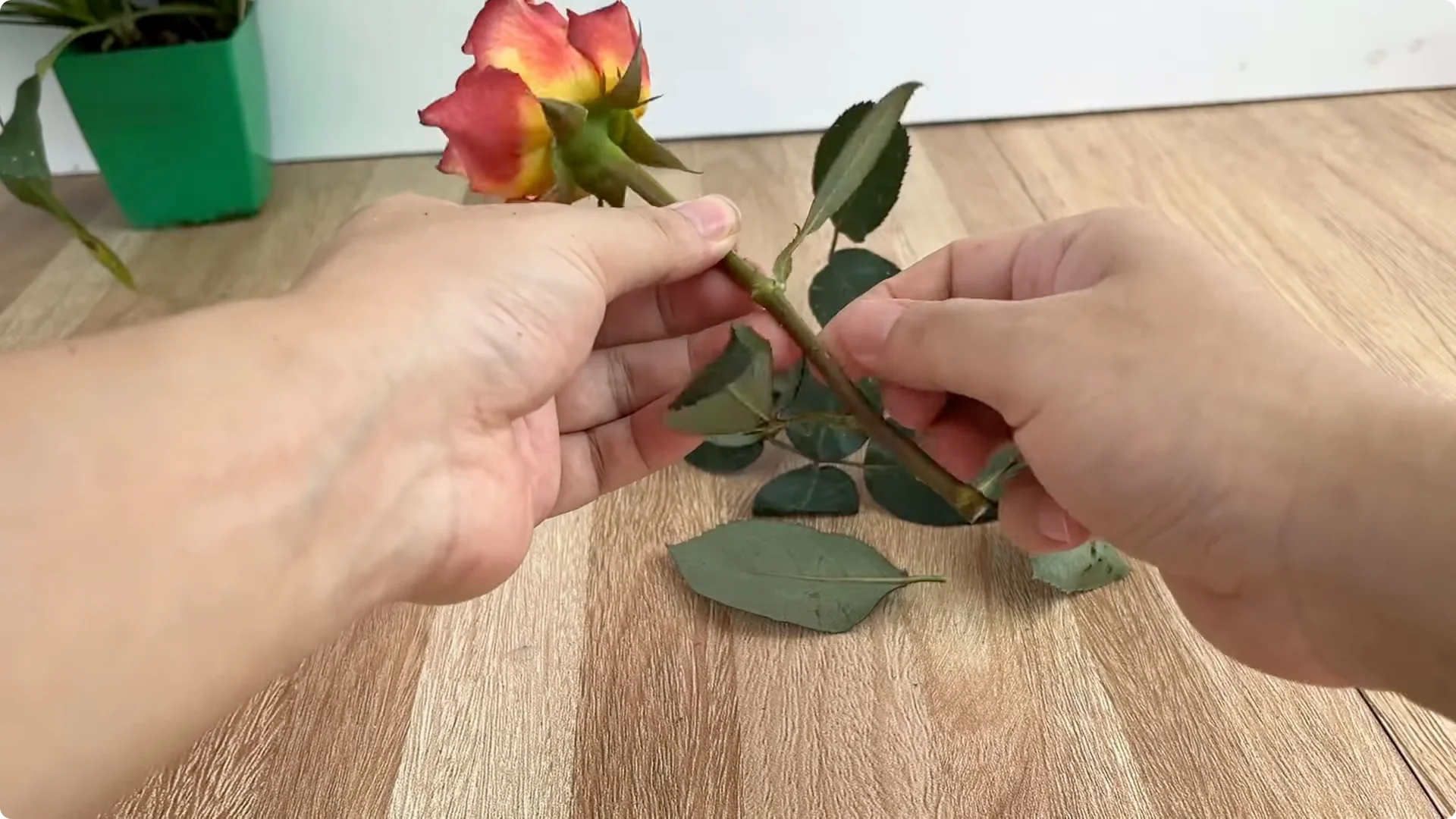
Cut off all the thorns and the leaves below. Keep only about 2 to 3 leaves on top. This minimizes water loss while maintaining photosynthesis in the early stages.
For another simple kitchen boost for roses, see how a spoon of rice can spark growth.
2. Rose Cutting Propagation root stimulant
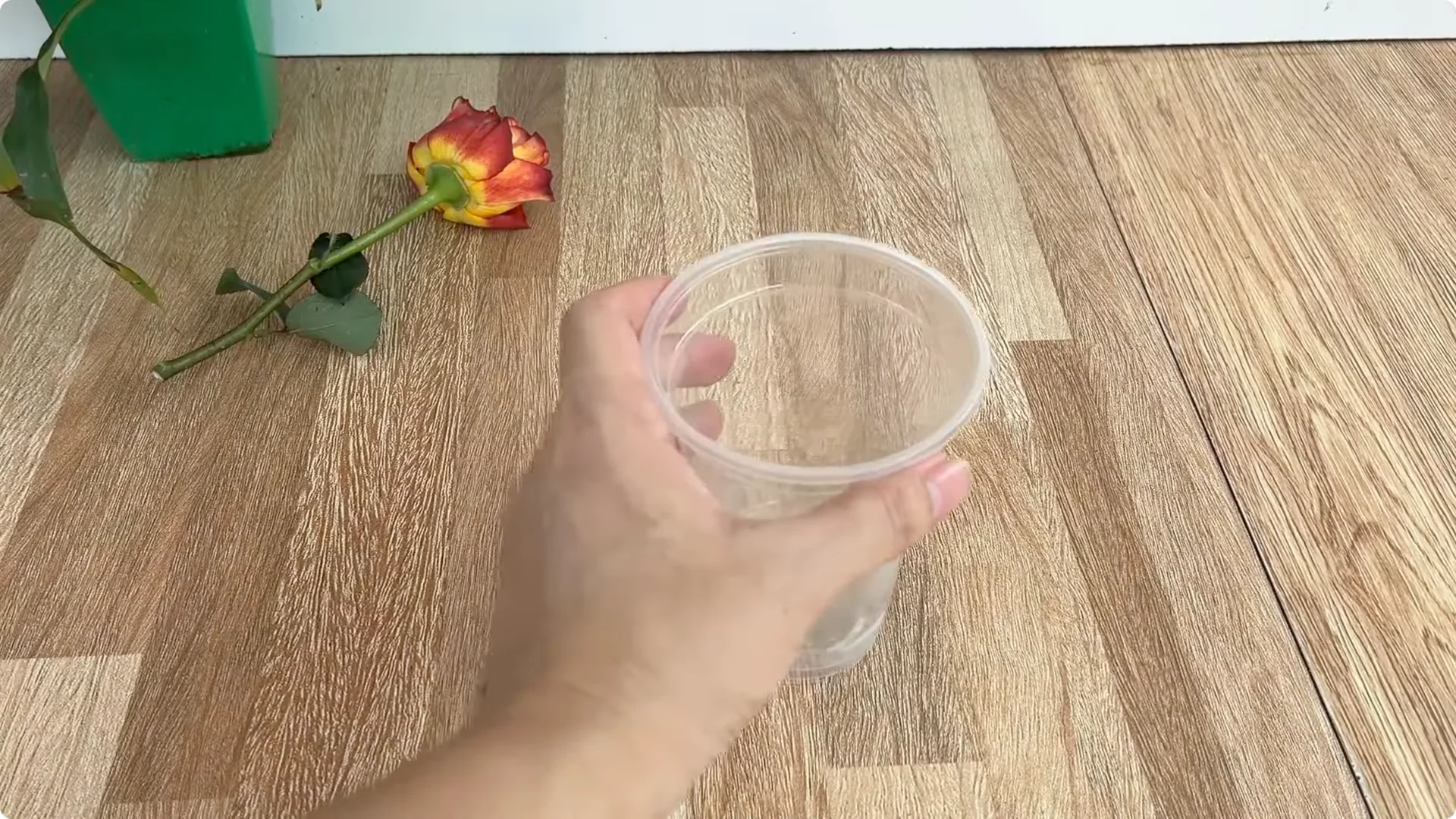
Start by pouring 500 ml of clean water into a plastic cup. This will be your base solution. Keep containers clean to protect tender tissues.
Baking soda and glucose solution
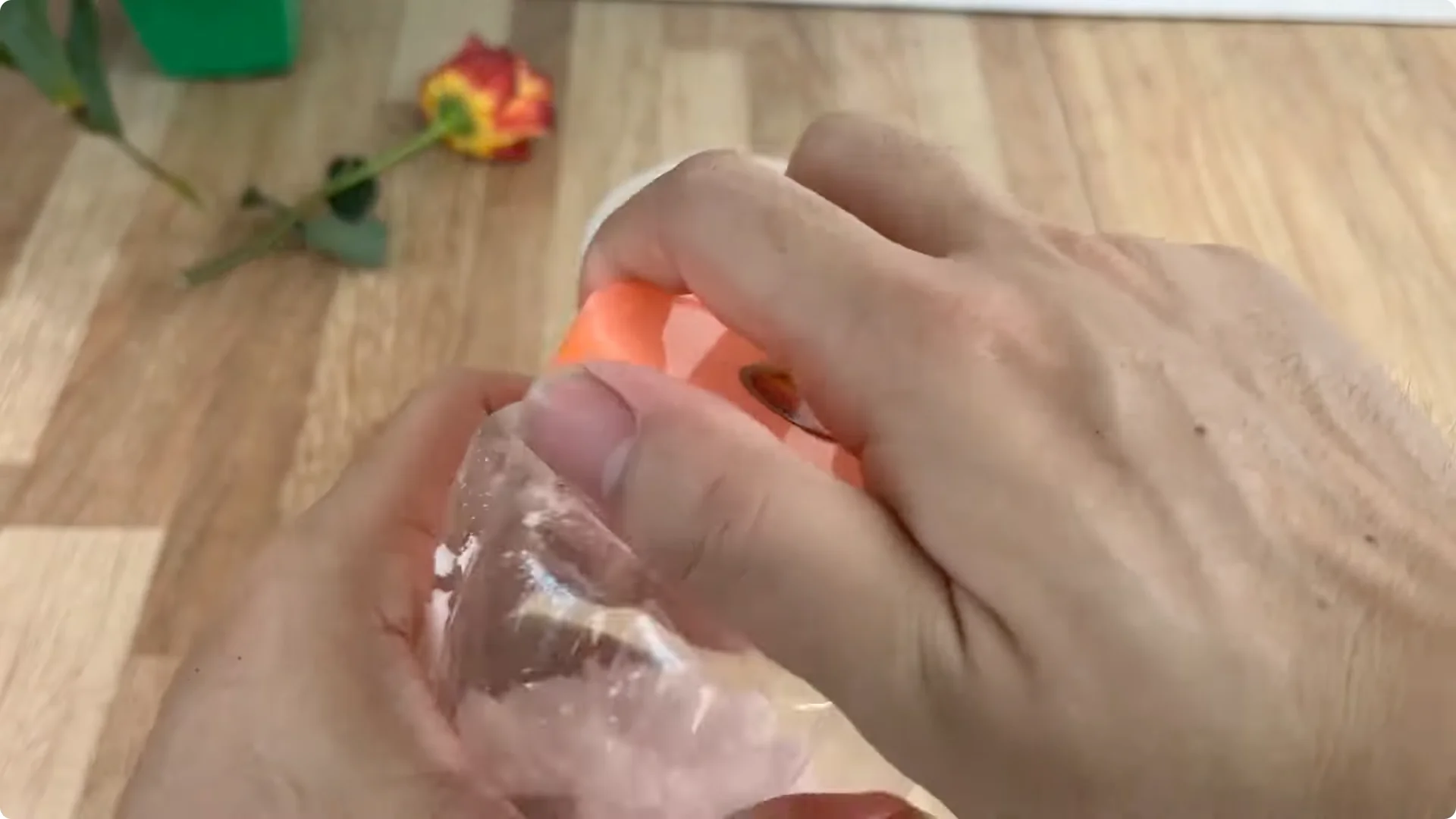
Baking soda, also called sodium bicarbonate, mildly disinfects and balances pH around the cuttings. When pH is stable, root tissue develops easily and the risk of mold drops. Add one half teaspoon of baking soda to the cup.
Add one half teaspoon of glucose to the same cup. This is a quick source of energy in the early stage when there are no roots to absorb nutrients. Glucose helps callus cells at the base divide quickly, so new roots form stronger.
Soak the rose branches in this solution for about 30 minutes. Make sure the cut base is submerged. Keep the cup in a clean, shaded spot.
Tomato solution
Prepare a small tomato about 30 grams. Cut it into small pieces, put it in a blender, and add 0.5 liter of water. Blend until smooth.
Tomatoes contain vitamin A, vitamin C, natural organic acids, and auxin, an important plant hormone that stimulates root formation. The natural sugars and minerals also help young shoots grow healthily. Filter out the pulp and keep the liquid.
Combine and use
After the 30 minute soak, take the branch out. Mix the baking soda and glucose liquid with the tomato solution you just prepared. This acts as a natural growth water for cuttings.
For another single spoon method, see this one spoon trick for stronger rose growth.
3. Rose Cutting Propagation planting and setup
Prepare the medium
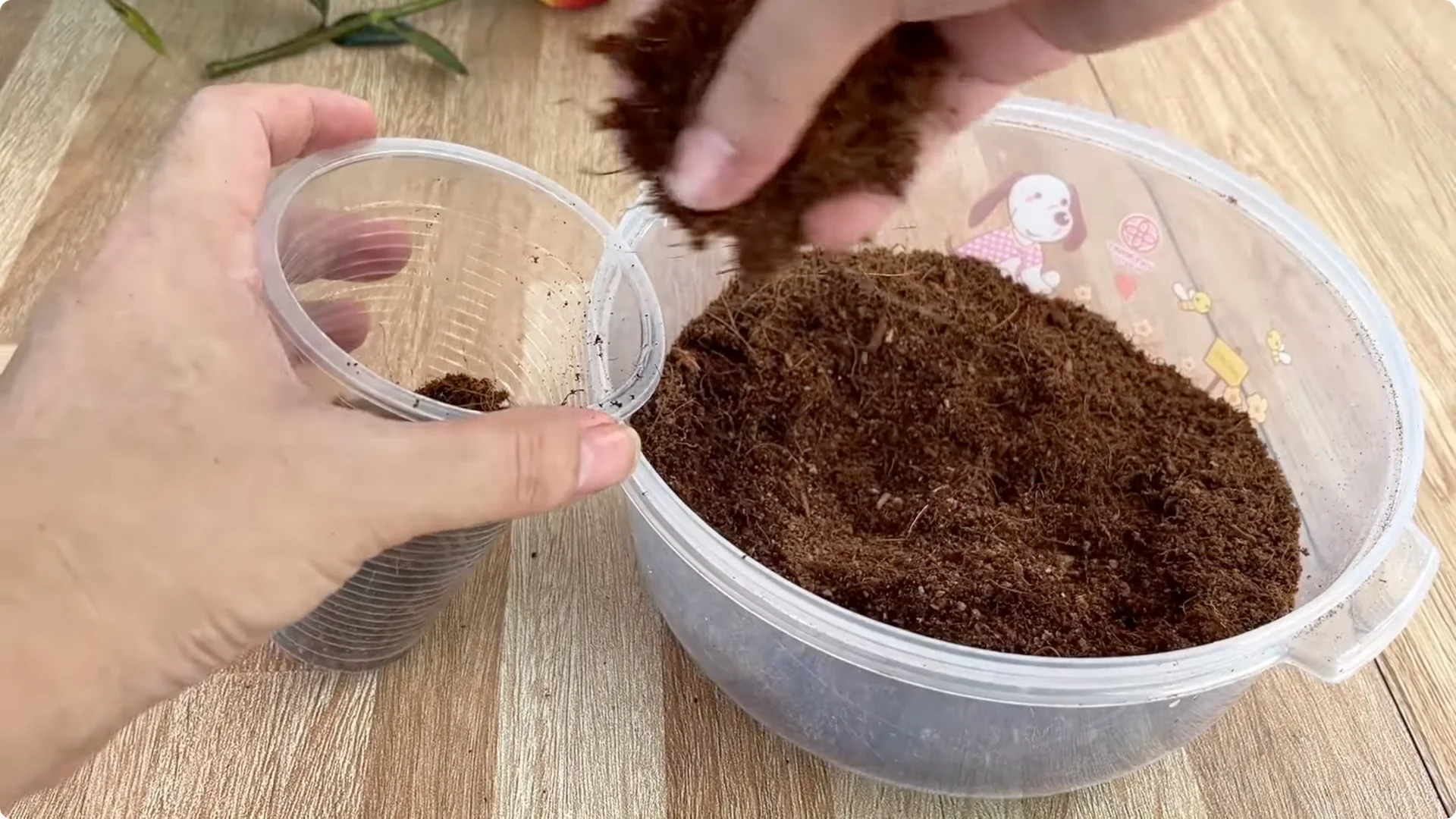
Prepare a clean plastic cup. Fill it with processed coconut fiber and press it gently. Coconut fiber retains moisture yet stays airy, helping young roots develop without waterlogging.
Plant the cutting
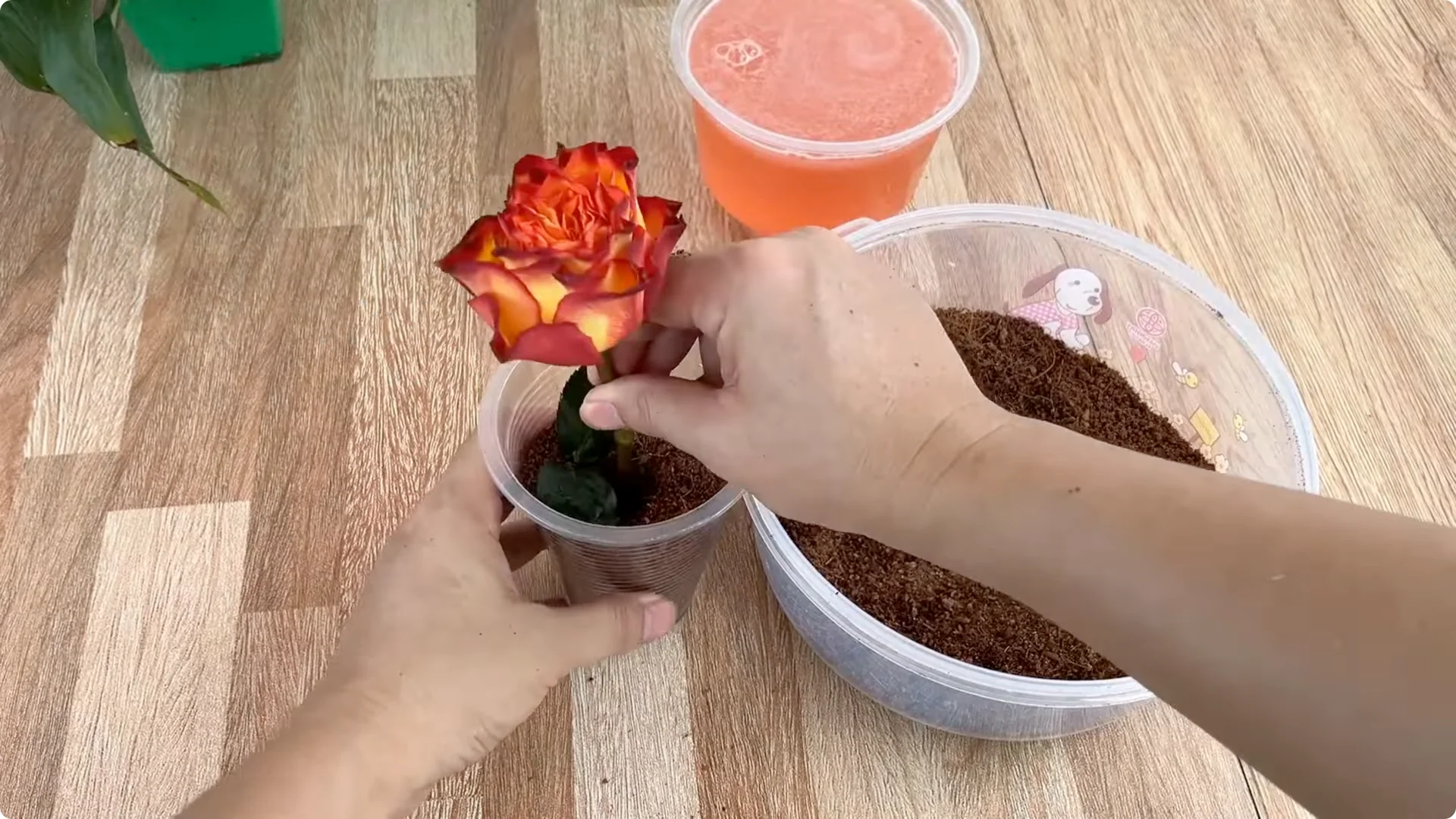
Use your hand to make a small hole in the middle. Place the rose branch in the hole, add coconut fiber around it, and firm to fix the branch. Pour in enough of the tomato baking soda glucose solution to keep the fiber moist but not soaked.
Create humidity
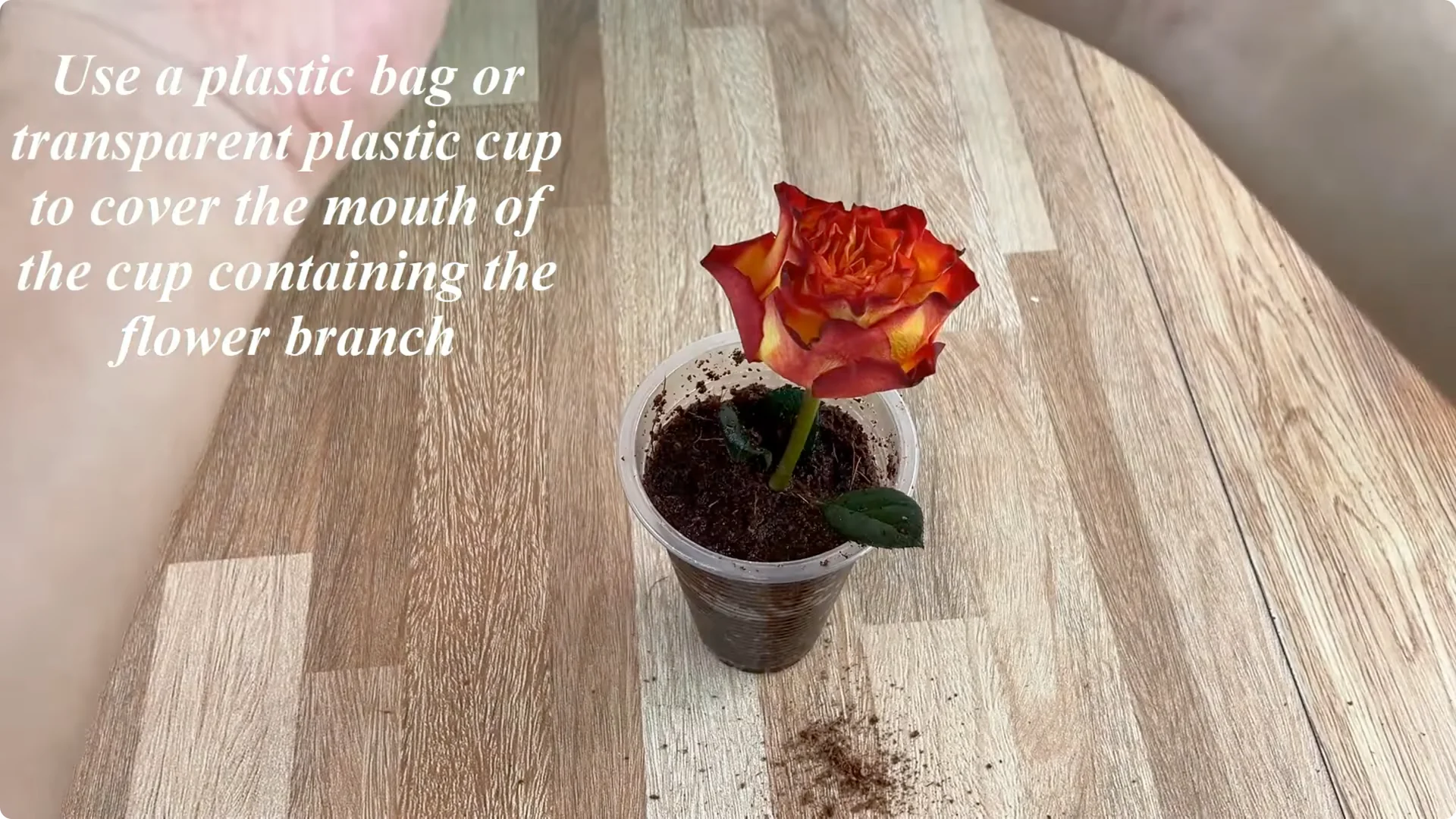
Cover the mouth of the cup with a plastic bag or a transparent plastic cup to create a humid environment like a mini greenhouse. Place the cup in a cool place, away from strong wind and harsh sunlight. Stable humidity helps reduce stress and speeds rooting.
If you want a different rooting approach, see how to root a rose branch and even bloom in a glass of beer.
4. Rose Cutting Propagation growth and transplant
What to expect
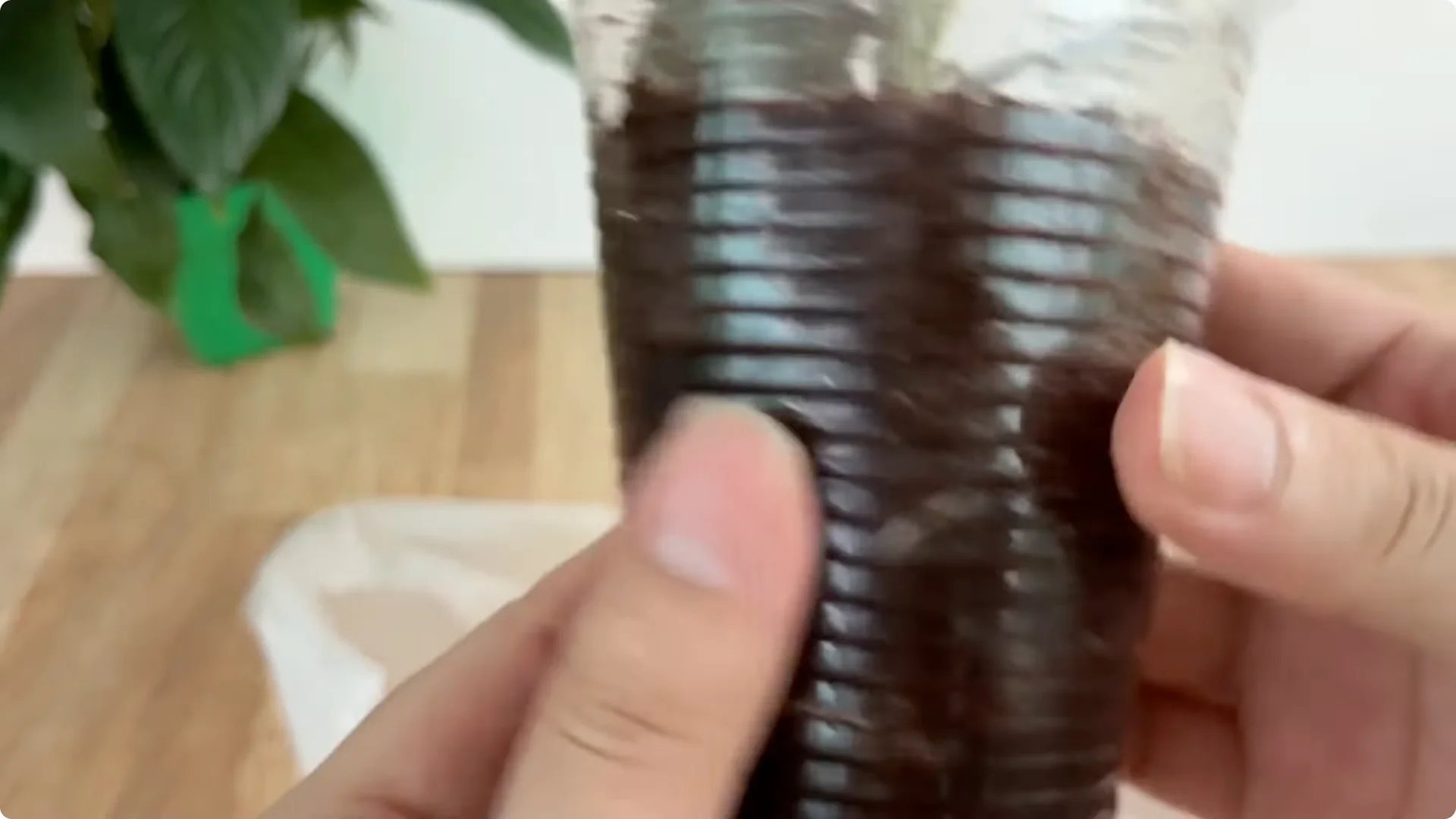
After about 10 days you will see healthy green shoots. Many plump, white roots appear around the base. This is a clear sign the method has worked.
Transplant to a larger pot
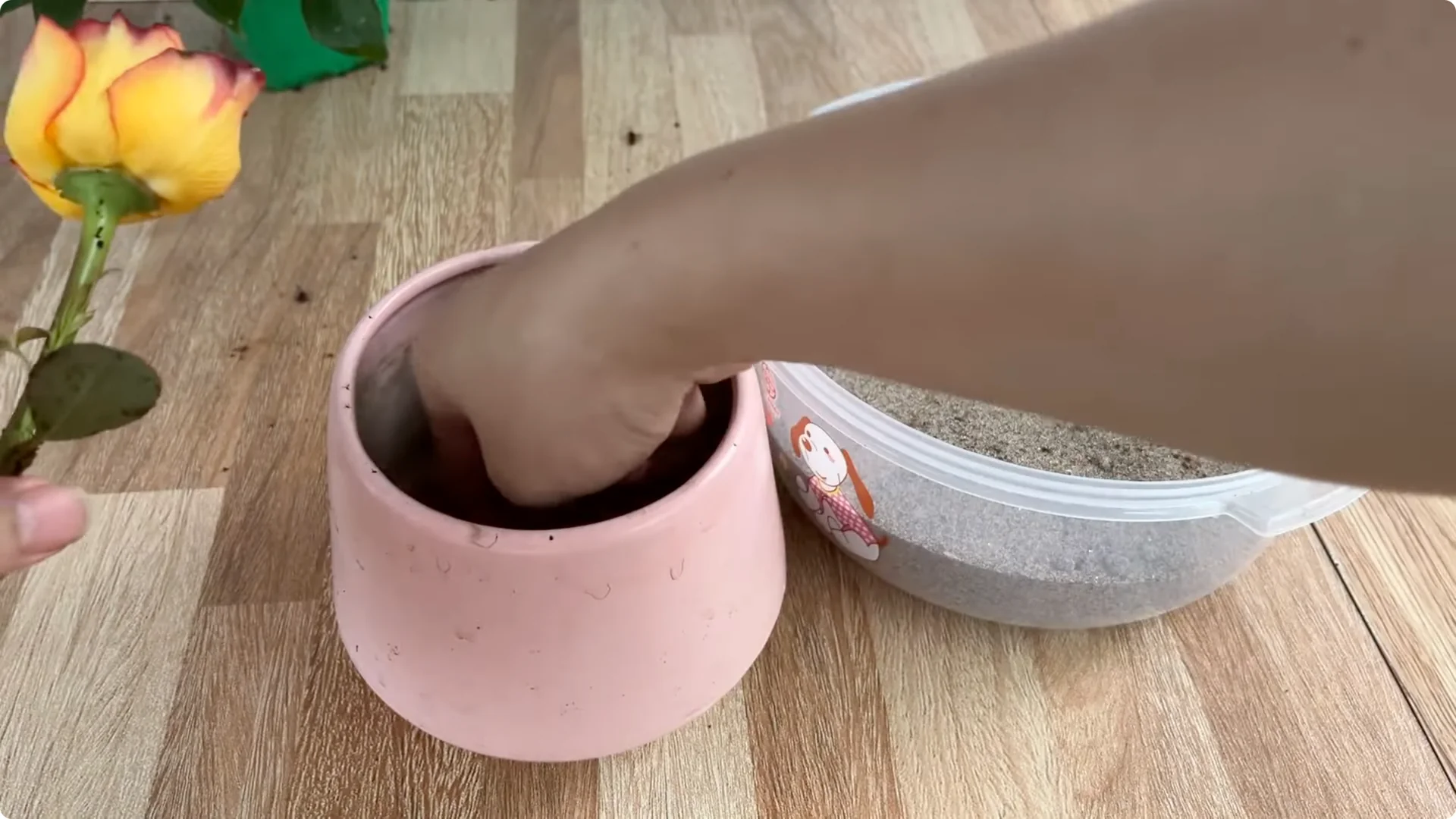
Transfer the branch to a larger pot with a well draining substrate such as river sand. This allows the roots to grow strongly. The plant adapts quickly to the new environment.
Final thoughts
With baking soda, glucose, and tomatoes from the kitchen, you can create a natural cutting solution that helps rose branches root fast and sprout strongly. Follow each step and keep conditions humid, shaded, and clean. I wish you successful cutting and a rose garden full of blooms all year.