

I will share a new and very effective method for rose cuttings. You will be surprised by the results.
1. Rose Cutting Propagation basics
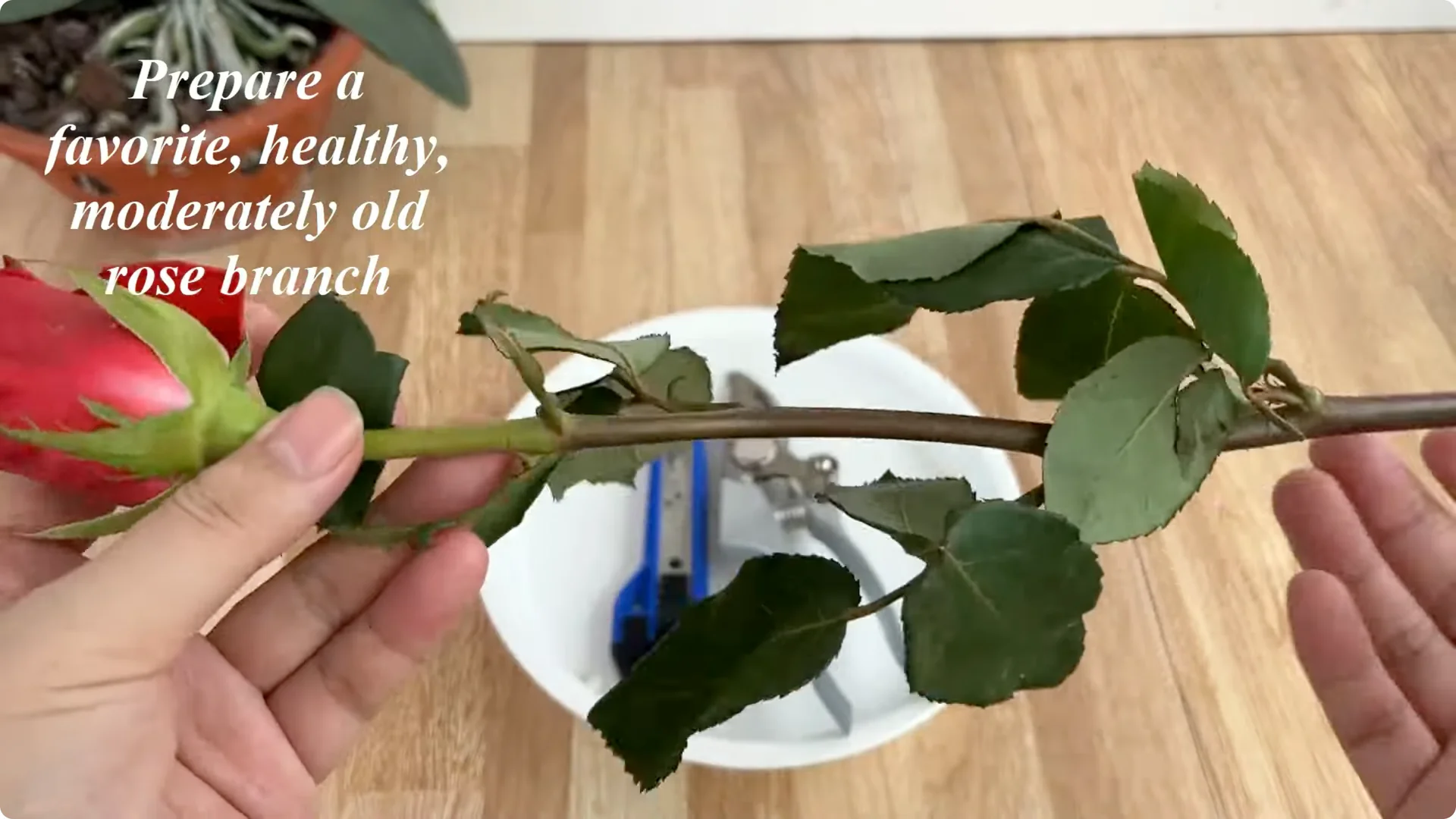
Choose a healthy rose branch of moderate age. It should not be too young to avoid waterlogging and not too old because it is difficult to take root.
Remove all the leaves and sharp thorns on the branch. Removing leaves and thorns reduces water evaporation, helps the branch focus energy on regenerating new roots and shoots, and limits mold when cutting branches.
Use sharp scissors to cut the branch short, leaving only about 15 to 20 cm. Keep the cut clean and straight.
For more ways to encourage quick rooting and early blooms, see these tips to help branches root and bloom fast.
2. Rose Cutting Propagation with onion soak
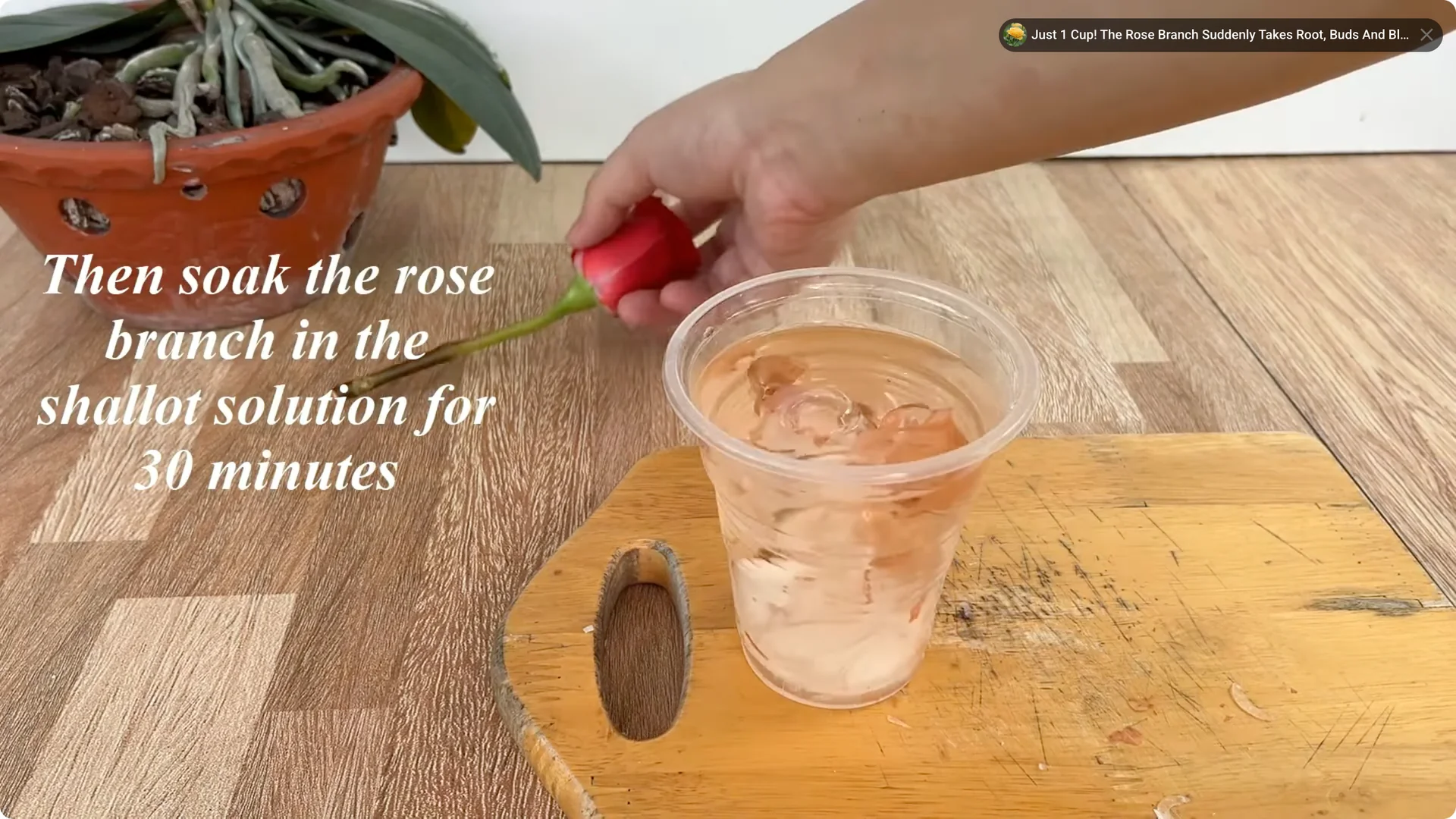
Prepare 1 onion. Cut it into thin slices and put the slices in a clean plastic cup.
Onions contain sulfur compounds, vitamins, and natural antibacterial substances. They help prevent fungi and bacteria from attacking, protecting the base of the branch in the early stages.
Sulfur also stimulates metabolism in stem cells, helping the rooting process take place faster. Add 0.5 liters of water to the cup and stir well.
Soak the rose branch in this onion solution for about 30 minutes. Keep the branch fully submerged at the base.
3. Rose Cutting Propagation with cucumber peel
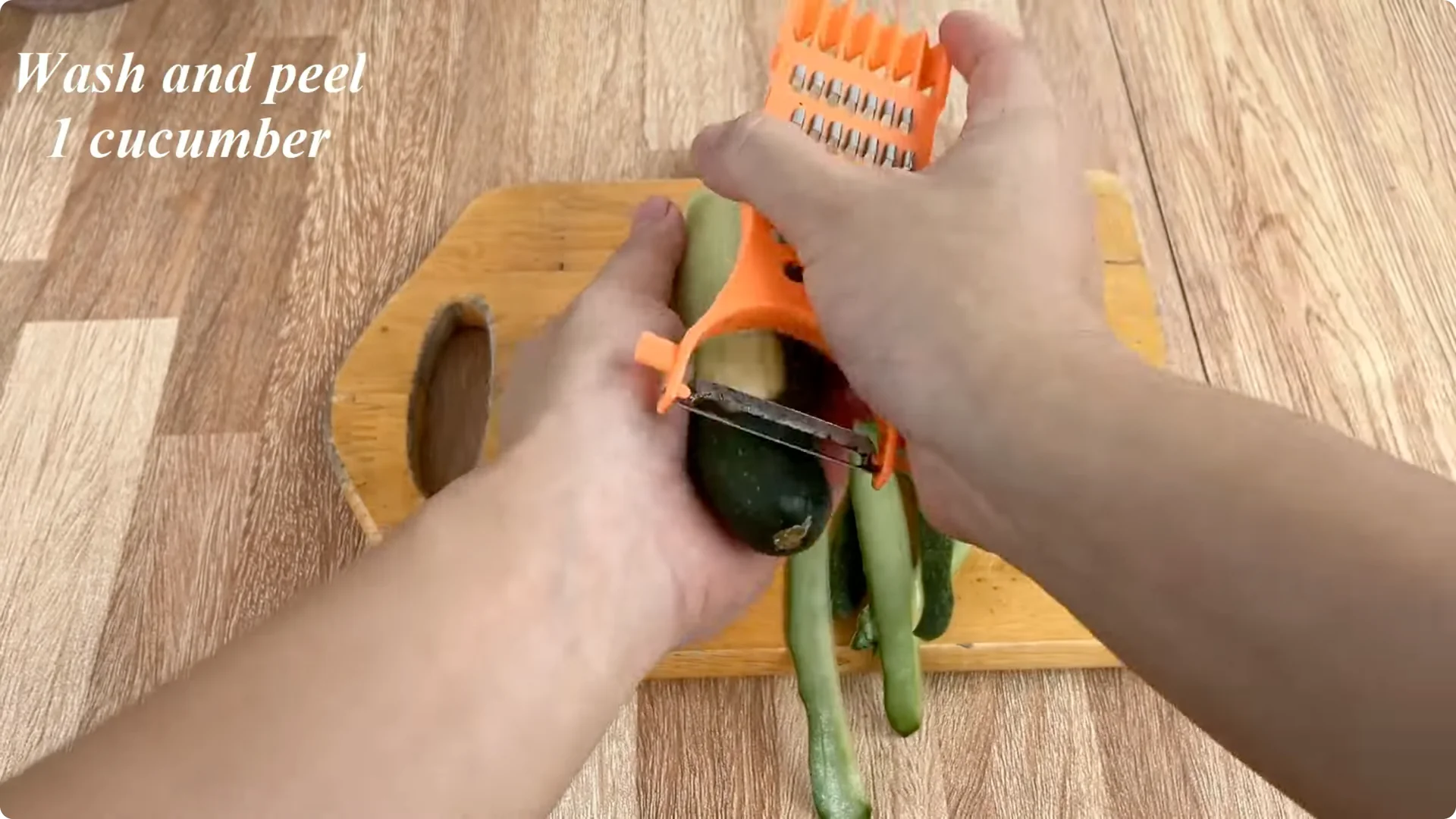
While the branch soaks, prepare another solution. Take 1 cucumber, wash it, and peel it.
Cut the cucumber peel into small pieces and put them in a blender. Cucumber peel contains silica, vitamin C, and many trace minerals.
These help increase the resistance of scar tissue at the base and promote root formation. The natural water and antioxidants in the peel help tissue recover quickly and young shoots grow strong.
Add 0.5 liters of clean water, cover, and blend. Next, filter out the pulp and keep the liquid solution.
4. Rose Cutting Propagation nutrient mix and planting
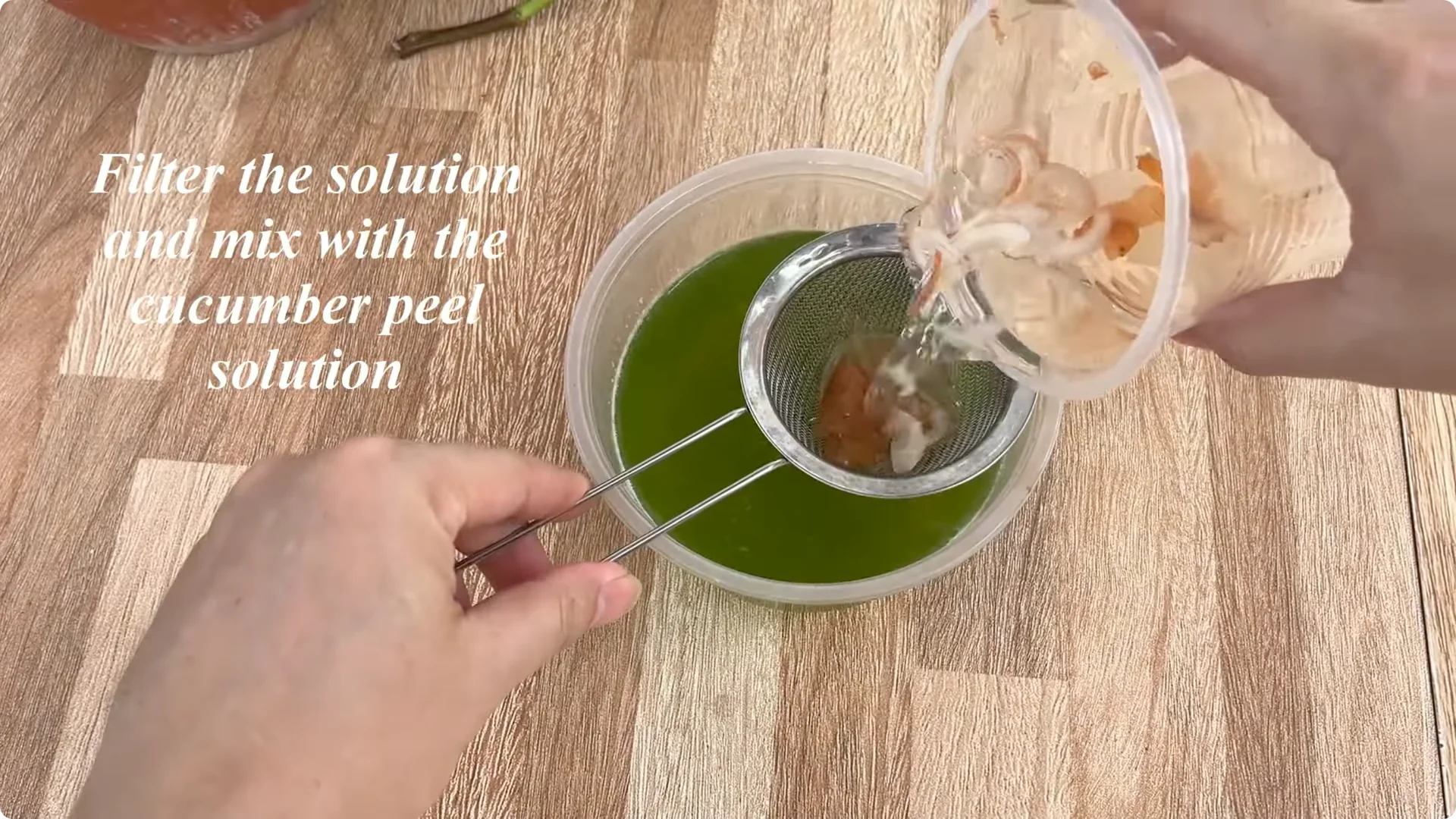
After soaking the rose branch for 30 minutes, take it out. Filter the onion solution to remove any solids.
Mix the onion water with the cucumber peel solution. This creates a special nutrient mixture that is both antibacterial and nourishing for new roots.
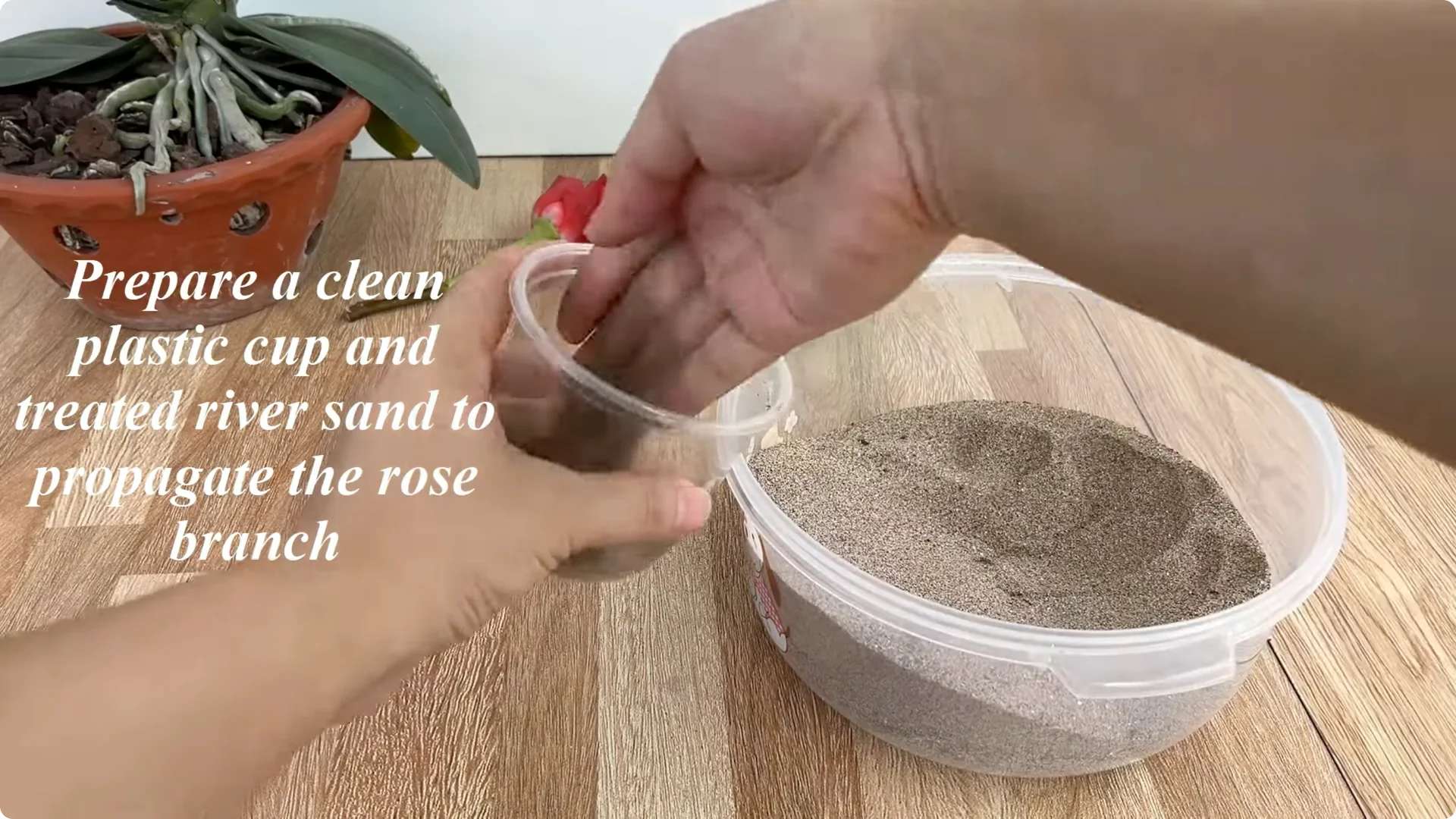
Prepare a clean plastic cup. Add half a cup of treated river sand.
Place the rose branch in the middle. Add more sand and press lightly around the base to secure it.
River sand provides excellent ventilation and drainage. It helps prevent root rot and creates a clean, stable environment for new roots.
If you like cup based setups, explore this simple one cup method for rooting and blooming.
5. Rose Cutting Propagation moisture and cover
Pour the onion and cucumber mixture into the cup. Keep the sand moist enough but not waterlogged.
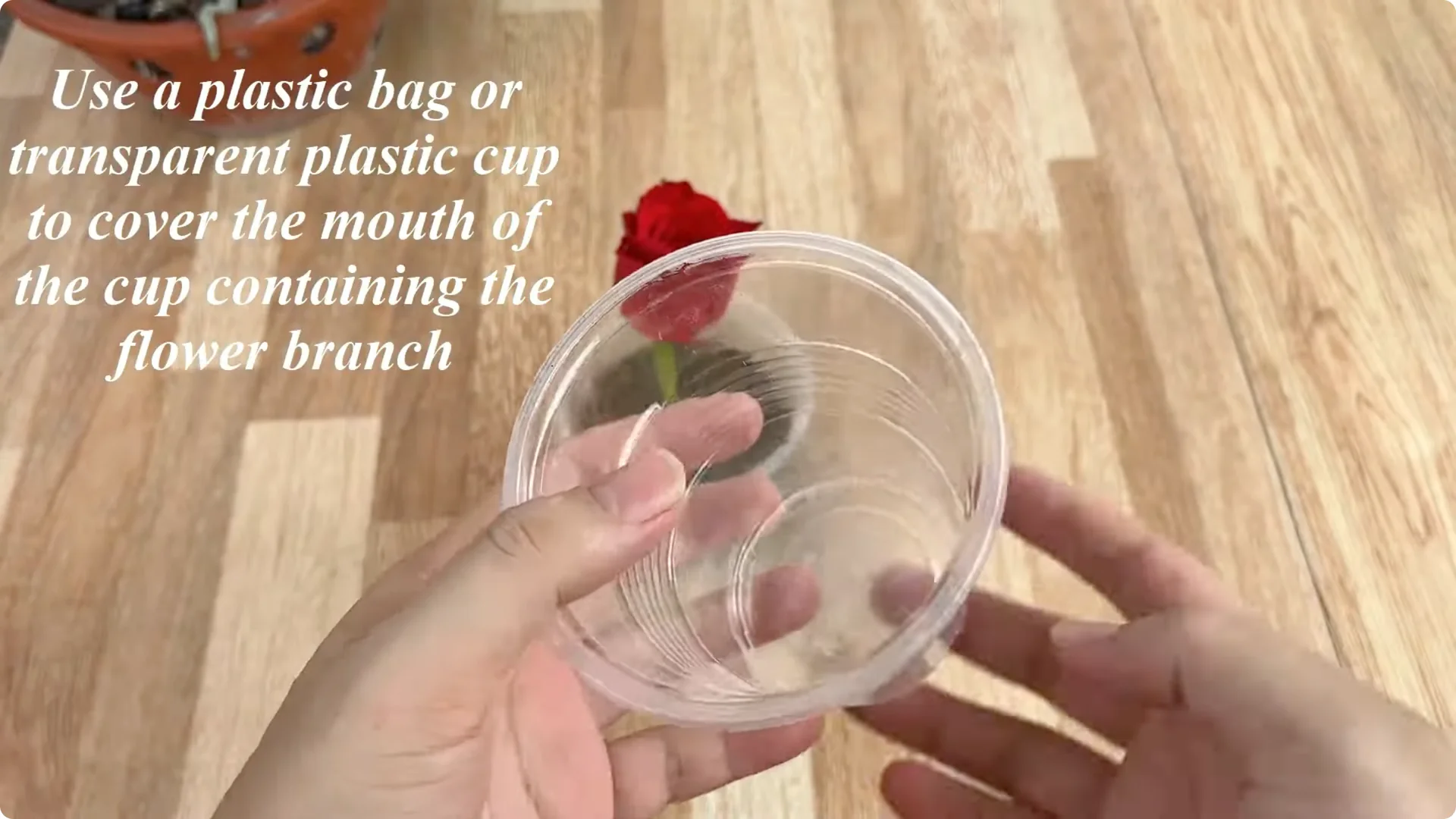
Cover the cup with a plastic bag or a transparent plastic cup to create a mini greenhouse. Place it in a cool spot, away from strong winds and direct sunlight.
6. Rose Cutting Propagation results and potting up
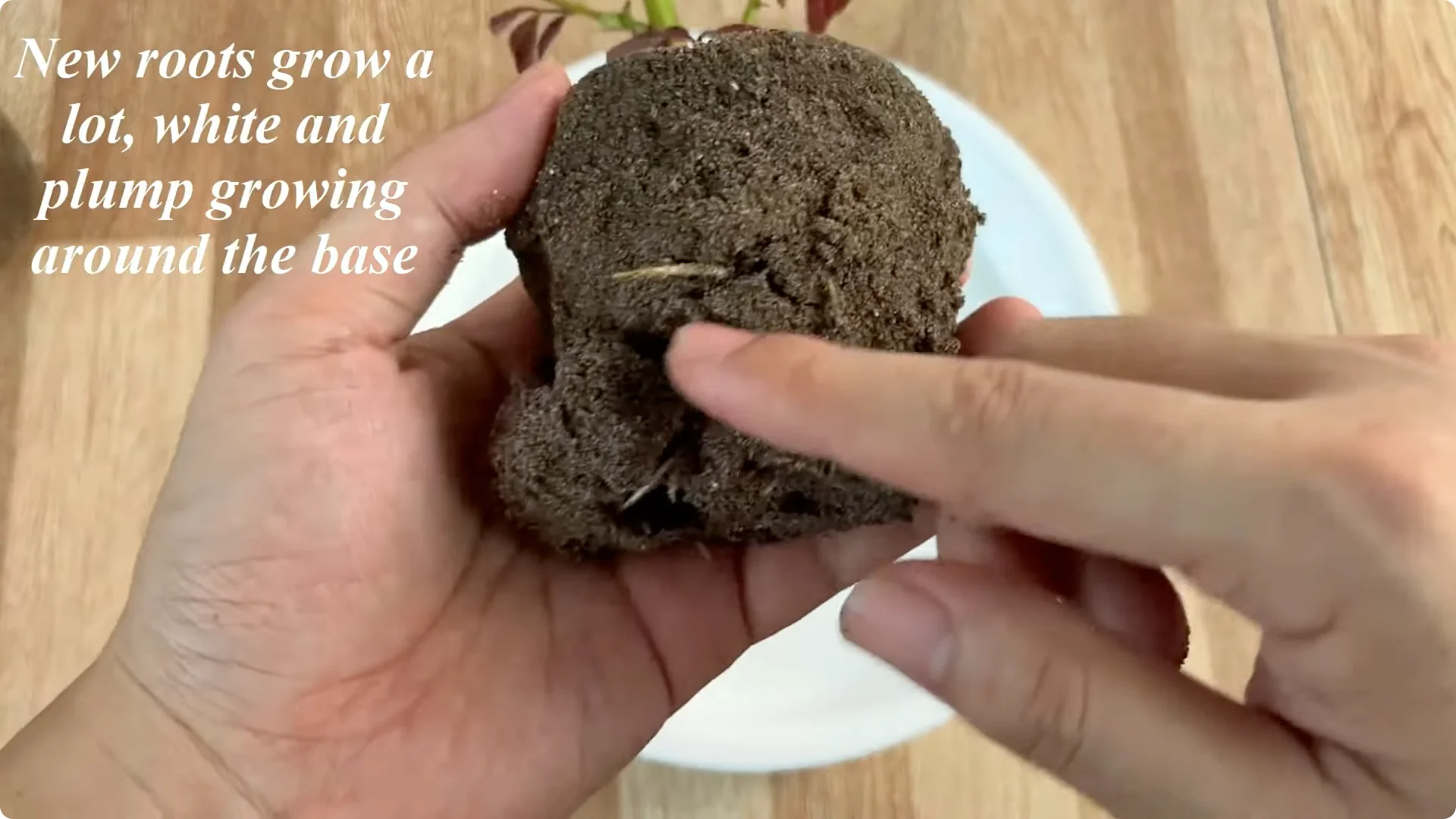
After just 10 days you will see new green shoots and plump white roots around the base. This is a clear sign that the rose branch has successfully taken root.
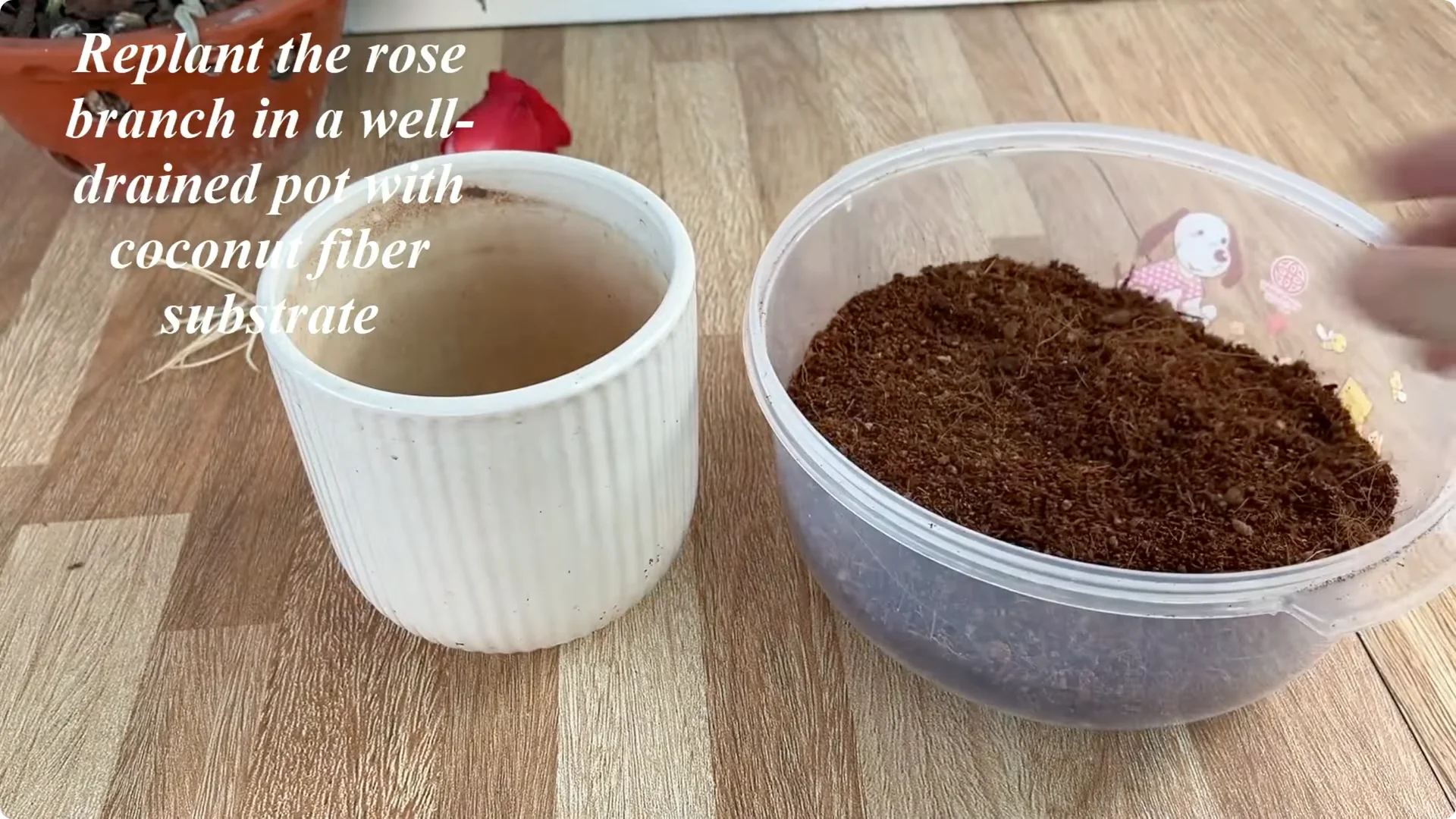
Move the branch to a larger pot. Use a well drained substrate like coconut fiber so the plant continues to grow strongly.
For a simple way to support rooting and blooming in small setups, see how a single cup can support rooting and blooming.
7. Rose Cutting Propagation benefits
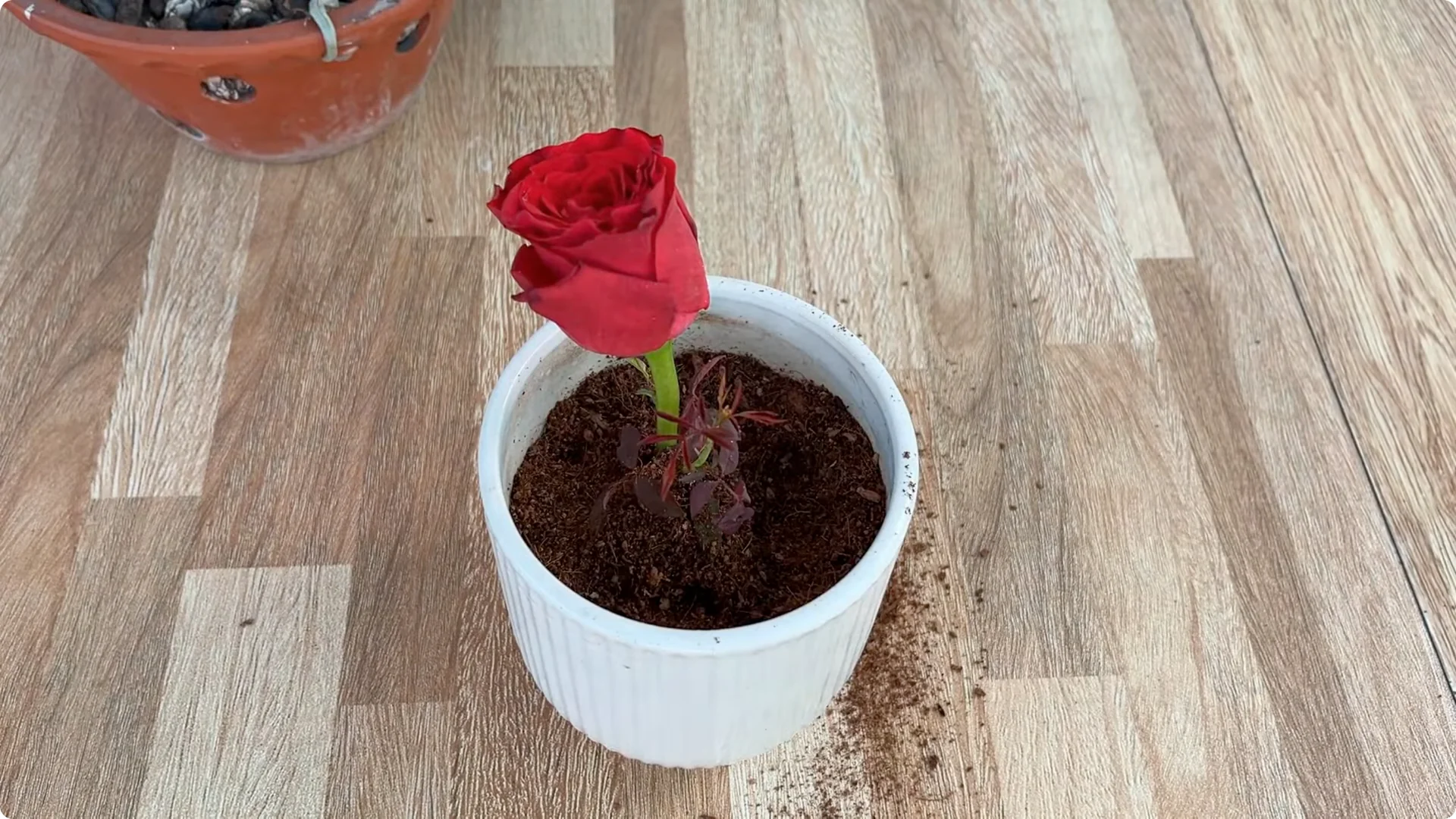
With just onions and cucumber peels, you get a cheap and easy method for cuttings. It helps prevent fungal diseases, stimulates rapid root growth, and nourishes healthy young shoots.
This formula supports both protection and nutrition at the crucial early stage. It keeps moisture balanced and encourages strong development.
Final thoughts on Rose Cutting Propagation
This method focuses the branch’s energy on root and shoot regeneration. The onion and cucumber blend protects, feeds, and speeds up rooting.
Keep the medium airy, the moisture balanced, and the light gentle. You will soon have strong, transplant ready rose cuttings.