

I will guide you through an extremely easy way to propagate rose branches using familiar ingredients from the kitchen such as aloe vera and rice. I also share a unique second method using shallots, bread and glucose. Both methods are simple, natural and highly effective.
Roses are known as the queen of flowers and have long been an immortal symbol of love, passion and elegant beauty. In the art of growing flowers, roses are also an interesting challenge. To have a healthy rose tree, blooming evenly and beautifully, the grower needs to be patient, meticulous and have a lot of love for the tree.
From pruning techniques, fertilizing, watering to pest prevention, all are art. I keep everything natural, safe and friendly. These methods help branches take root quickly, grow sustainably, have fewer pests and stay green all year round.
Read more practical steps here: at home propagation guide
Rose Cutting Propagation Overview
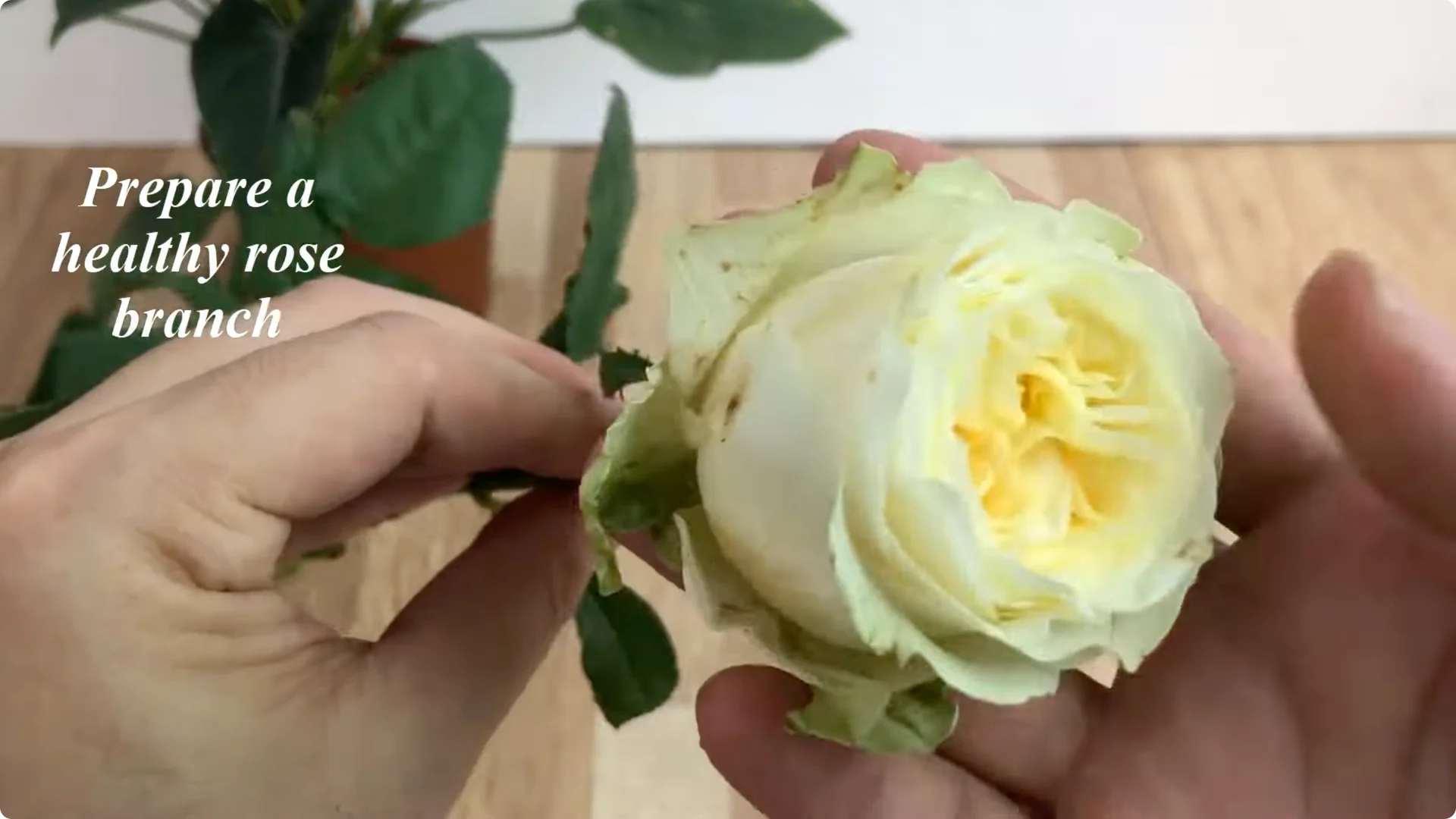
First, choose a healthy rose branch that is not damaged by pests or crushed. Cut the branch so the remaining length is about 15 to 20 cm. Remove all the leaves to limit water evaporation and help the plant focus on root formation.
I place the prepared cutting into a nutrient solution, then into a gentle medium with steady moisture. I keep the setup in a cool place away from direct sunlight. After 7 days, you will start to see miracles.
1. Rose Cutting Propagation With Aloe Vera and Rice
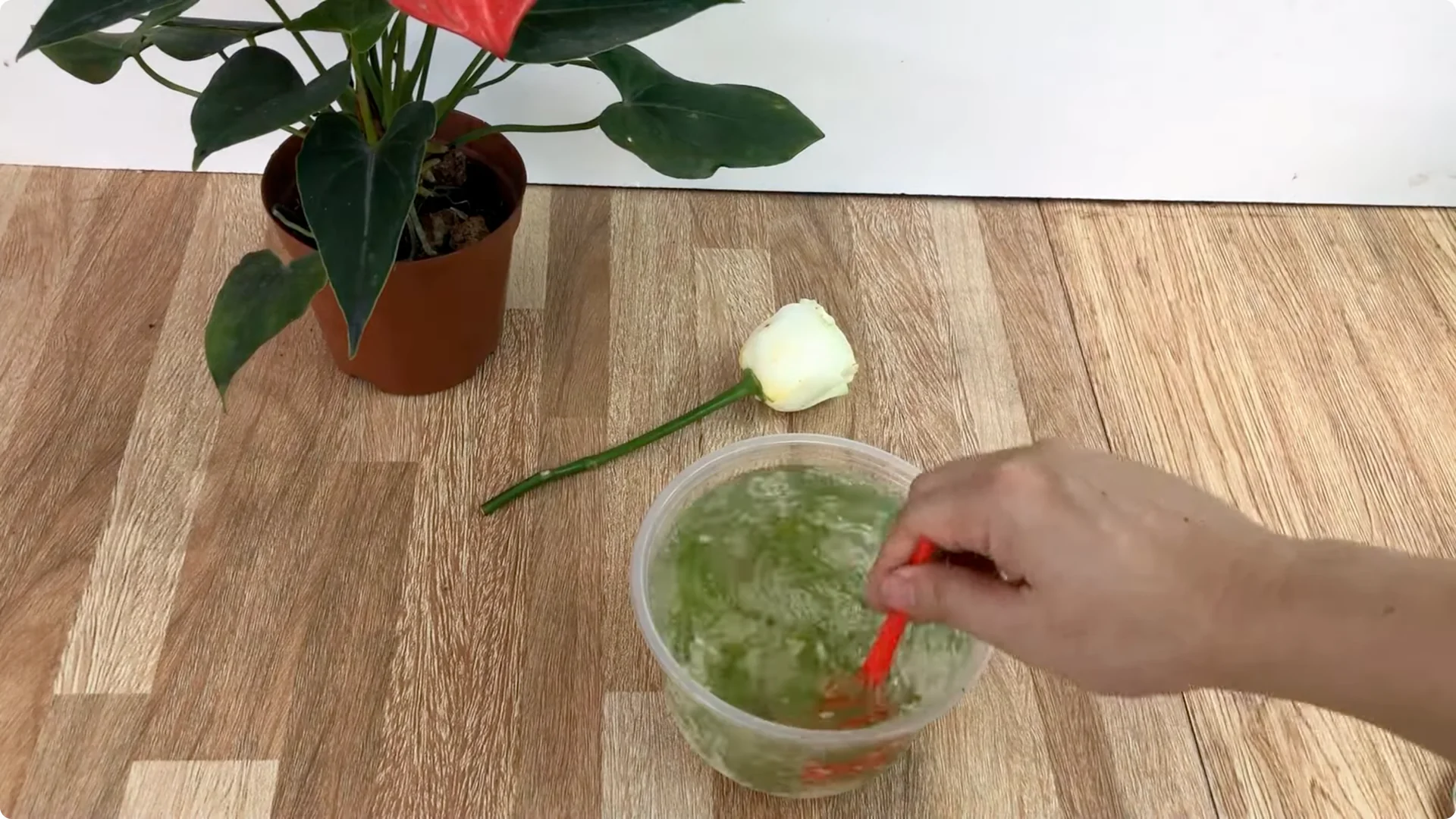
Prepare the cutting
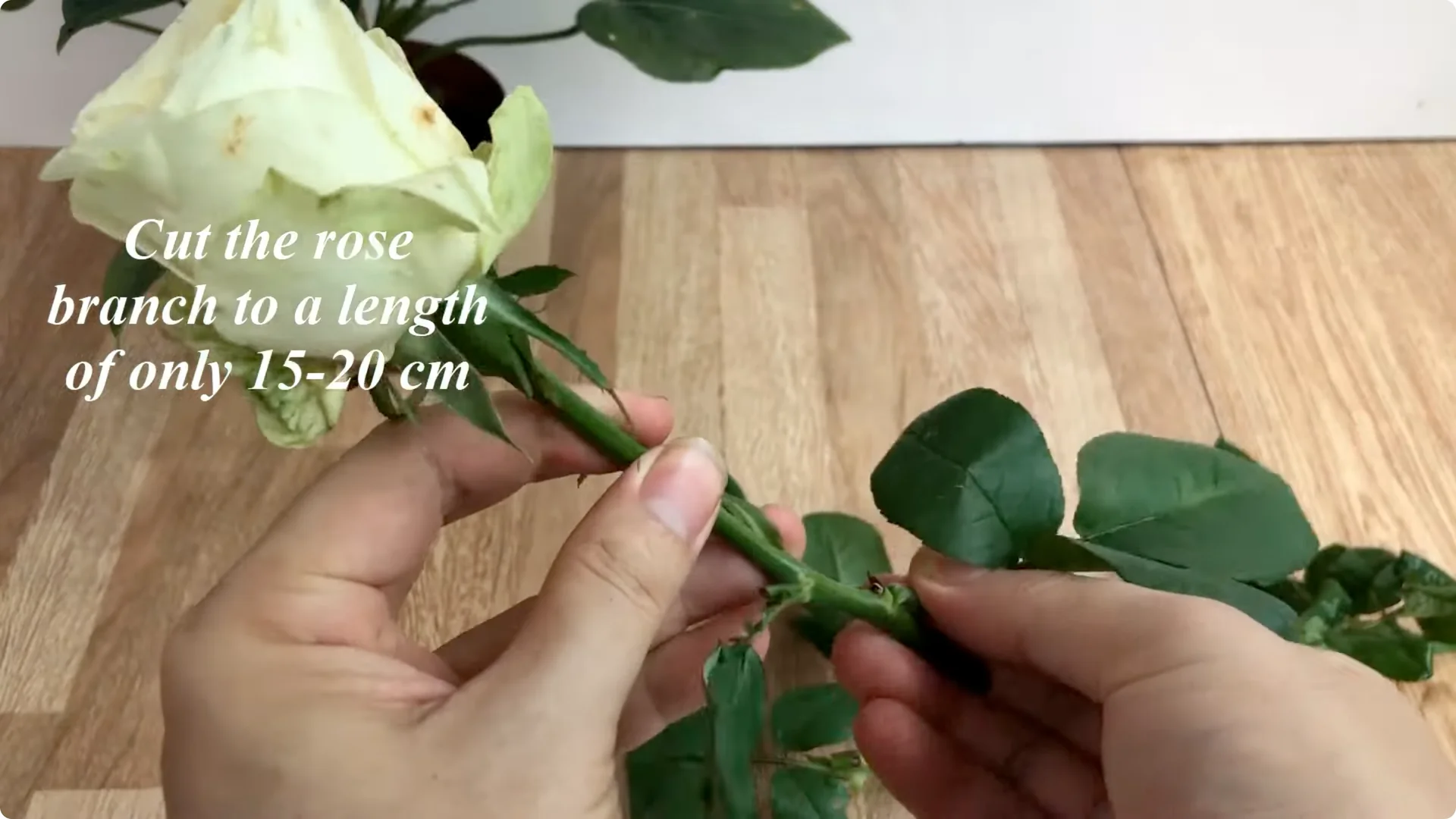
Choose a healthy, pest free branch. Trim to 15 to 20 cm and remove all leaves. Keep the cut clean and fresh.
Make the aloe rice solution
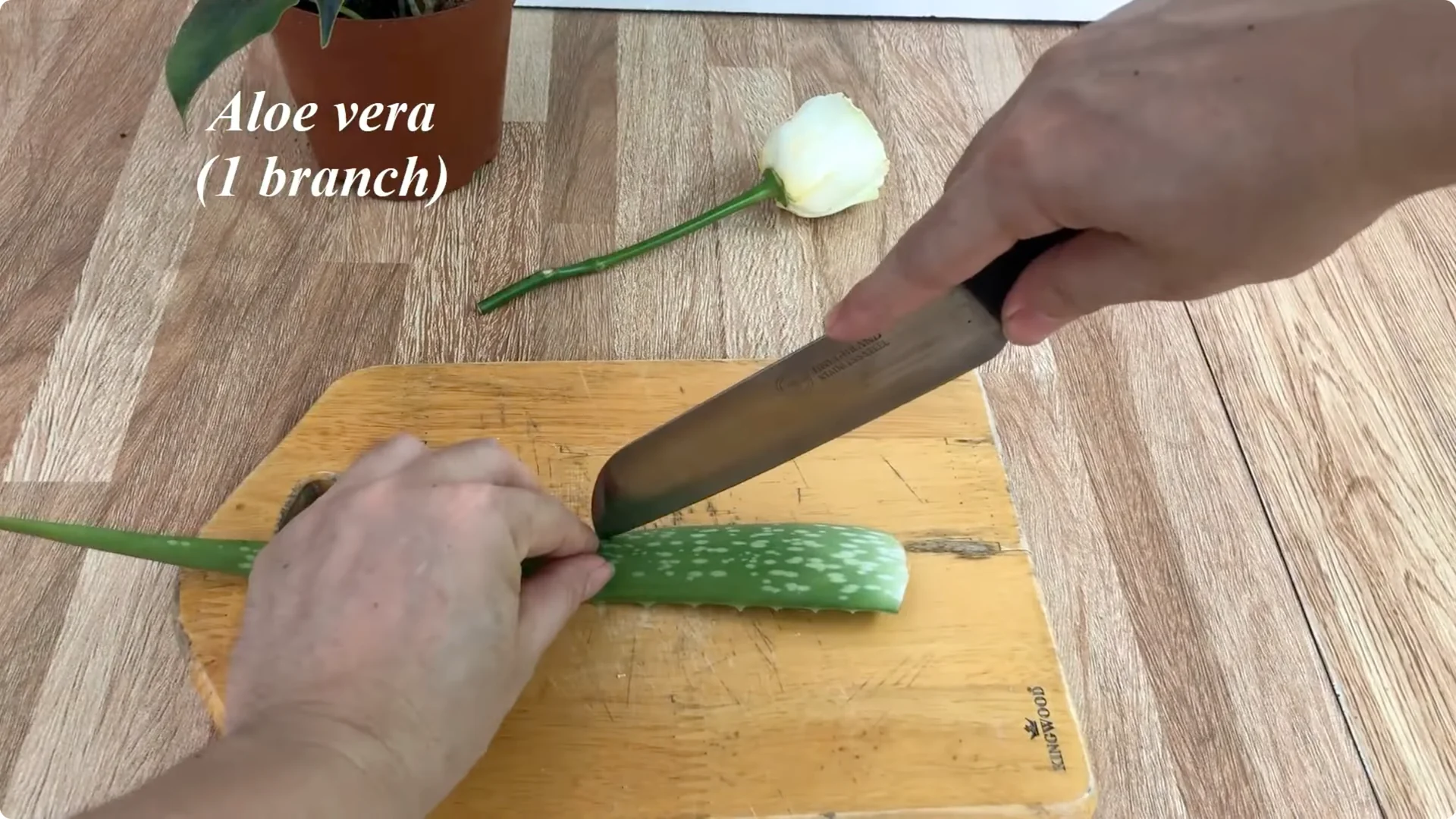
Prepare 1 aloe vera branch. Wash, cut into thin slices and put in a clean plastic cup.
Add 2 tablespoons of rice into the same cup containing aloe vera. Rice contains B vitamins, starch, protein and minerals that provide energy for quick recovery.
Pour 0.5 liters of warm water into the cup and stir well to dissolve the nutrients. Insert the rose branch into this mixture and leave it for about 30 minutes to let the nutrients penetrate the root tissue.
After enough time, take out the branch and stir the mixture again. Filter out the residue and keep the aloe vera rice juice to use as a watering solution. This helps moisturize the root tissue and protects cuts with natural antibacterial properties.
Set the moss medium
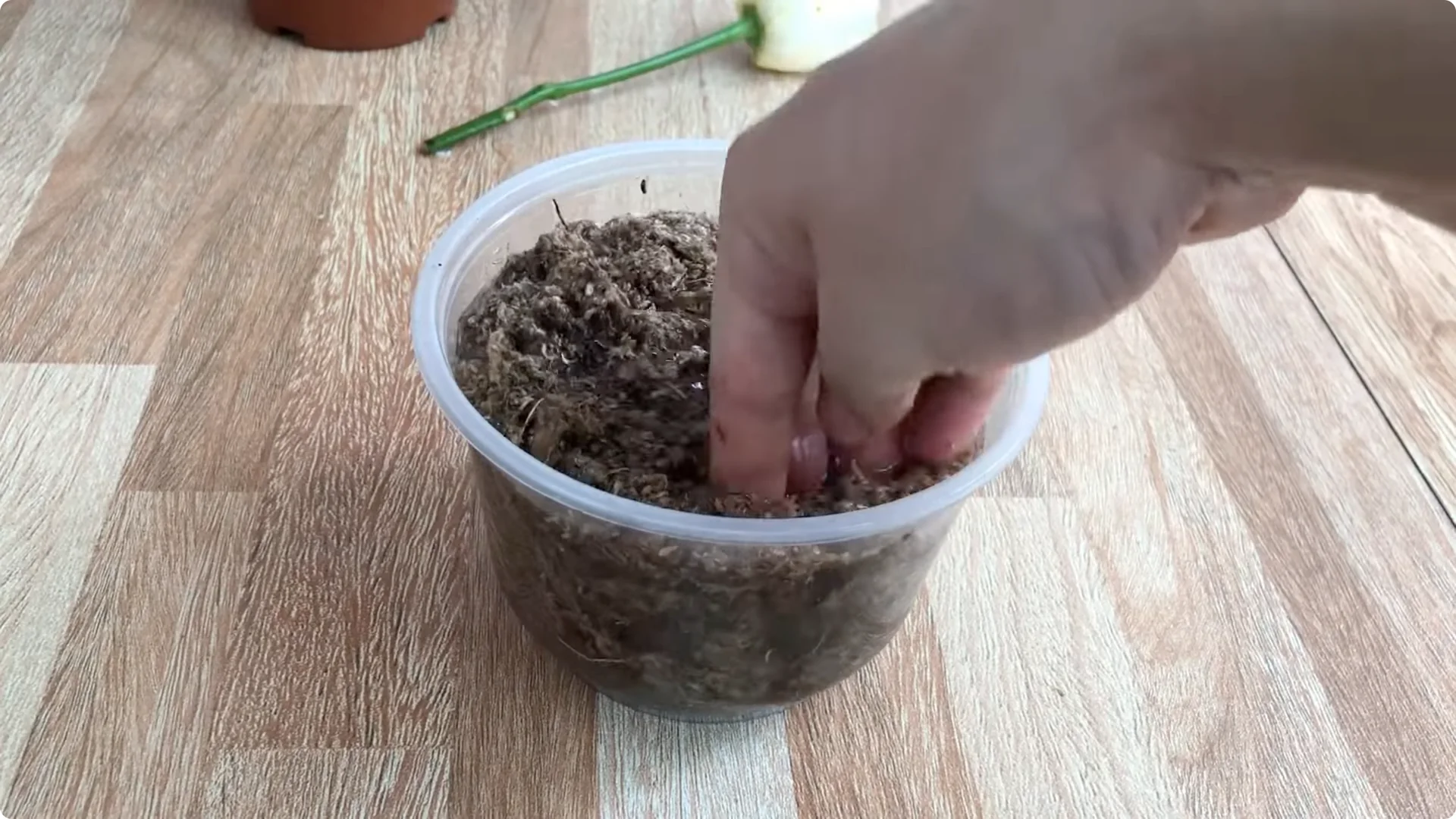
I use moss as a substrate because moss retains moisture very well and is airy. Young roots develop easily with this structure.
Pour the entire aloe vera rice solution into a cup of moss so the moss is completely submerged. Soak for about 15 minutes to let the moss absorb all the nutrients.
Squeeze the moss gently to drain excess water. Put it in a clean plastic cup and hold it tightly to stabilize the substrate. Make a small hole in the middle of the cup and place the rose branch in it, then press lightly to keep the branch fixed.
Rooting and care
Cover the mouth of the cup with a plastic bag or transparent plastic cup to keep it moist. Place the cup in a cool place, away from direct sunlight. Keep conditions stable and evenly moist.
After 7 days, strong green shoots will appear. New roots form around the base, white and plump, growing very healthy. The aloe vera rice solution provides nutrients directly to the roots, helping young roots form strong and even.
Moss retains moisture well and maintains a cool, stable humid environment. This is ideal for cutting branches. The entire process is natural, does not require artificial stimulants, and is extremely safe and friendly.
For more easy at home techniques, see these simple propagation steps
2. Rose Cutting Propagation With Shallot Bread and Glucose
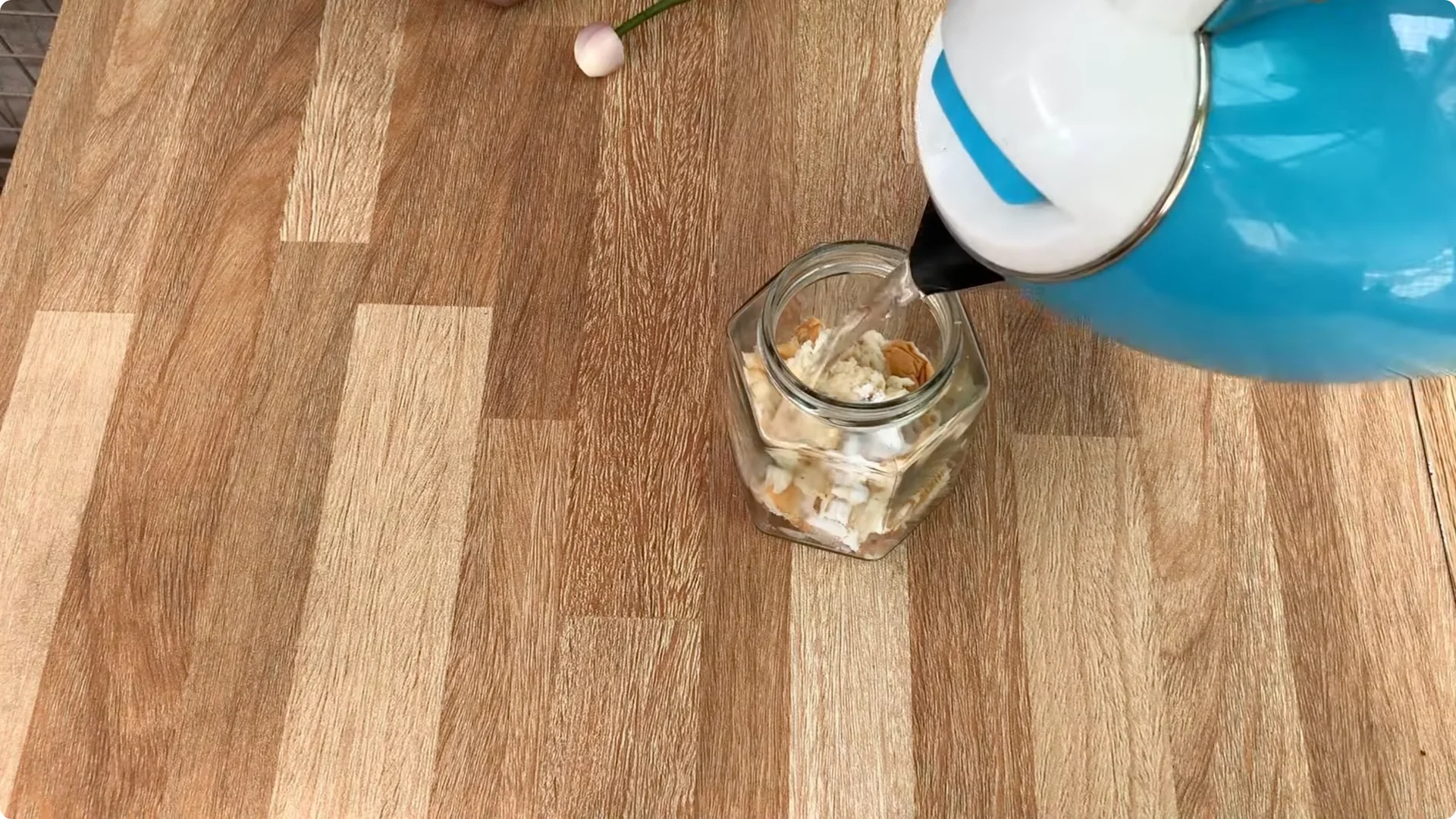
Prepare the cutting with shallot contact
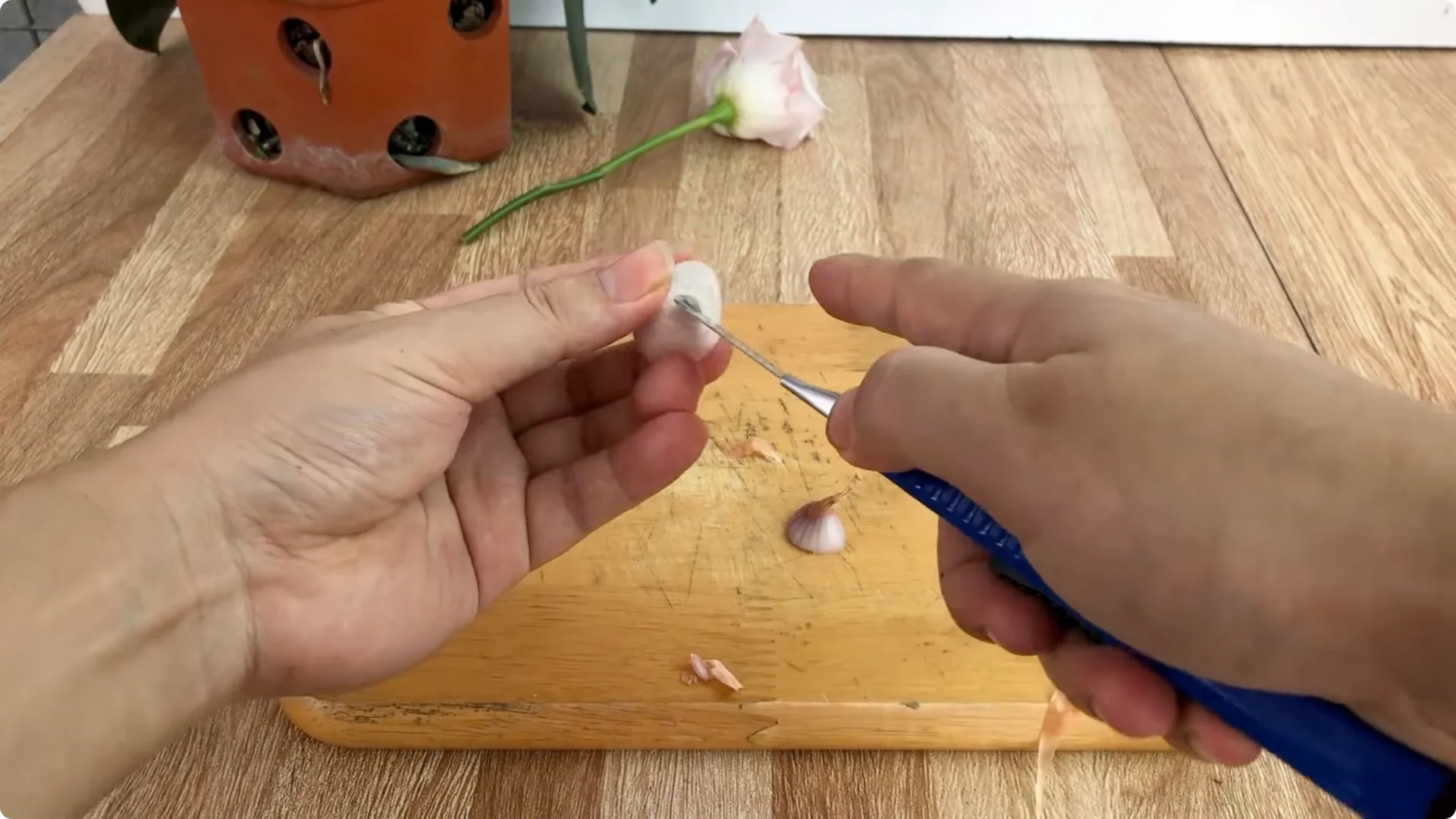
Choose a healthy, pest free rose branch. Cut it to 15 to 20 cm and remove all the leaves. Prepare 1 shallot.
Peel and cut the shallot in half, then make a small hole in the middle, just the right diameter of the rose branch. Gently insert the rose branch into the middle so the shallot contacts the base of the branch. Use the cut side of the onion to gently rub the remaining part of the stem so the active compounds penetrate deep into the wood tissue, and leave it for about 30 minutes.
Build the biological solution
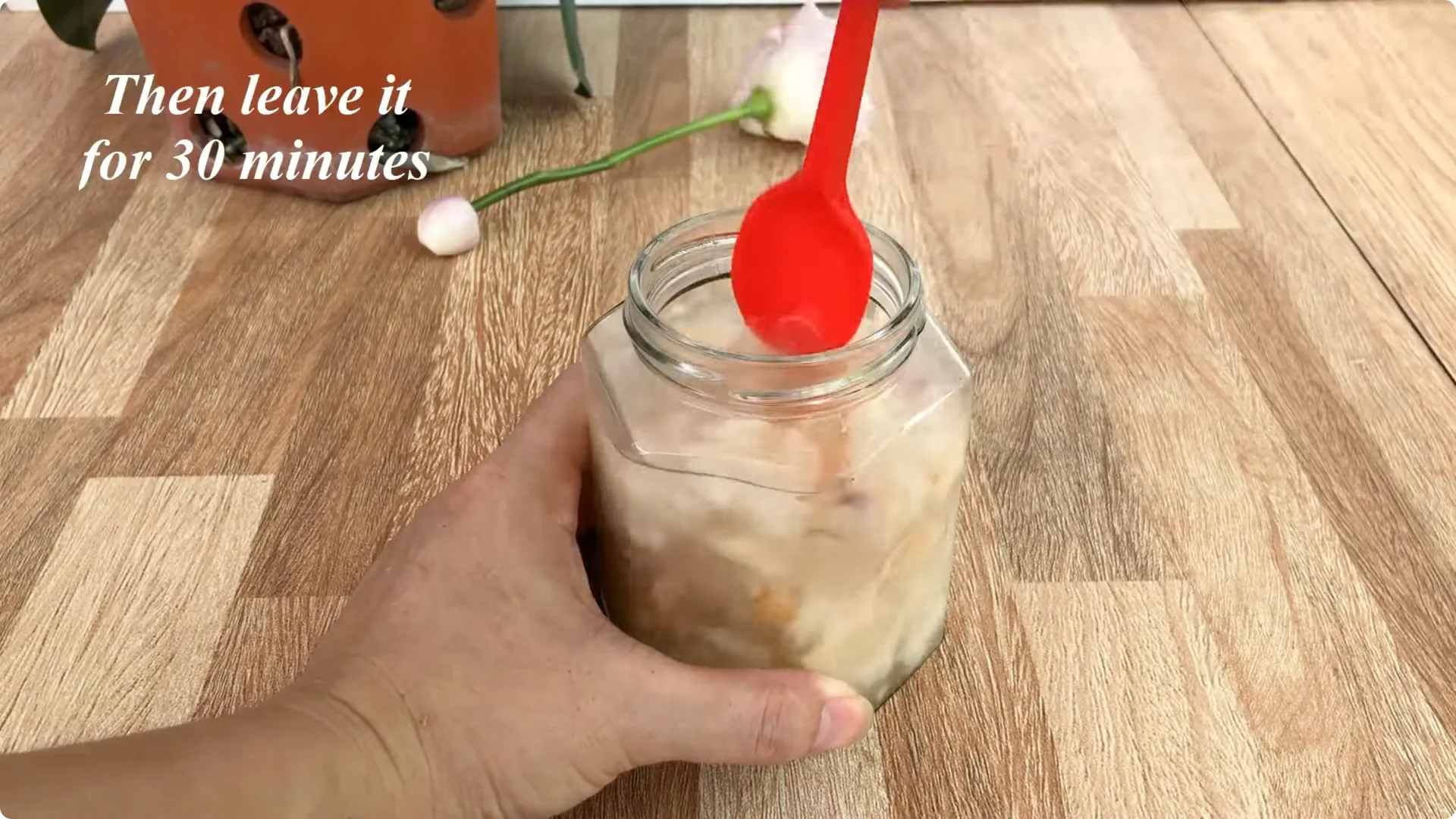
Cut the remaining onion into thin slices to easily release nutrients. Put the onion in a clean glass jar.
Break some bread or breadcrumbs into small pieces and put them in the jar with the shallots. Bread contains beneficial microbes and provides natural carbohydrates that support metabolism at the base of the branch.
Add 1/2 teaspoon of glucose to the jar. Pour in 0.5 liters of warm water and stir well to completely dissolve the glucose. Cover and let stand for 30 minutes to let the ingredients blend and activate biological activity.
After 30 minutes, stir the mixture again and filter out the residue, keeping the juice. Dilute with 0.5 liters of clean water to obtain 1 liter of cutting solution. This creates a healthy microbial environment in the growing medium.
Set the coconut fiber medium
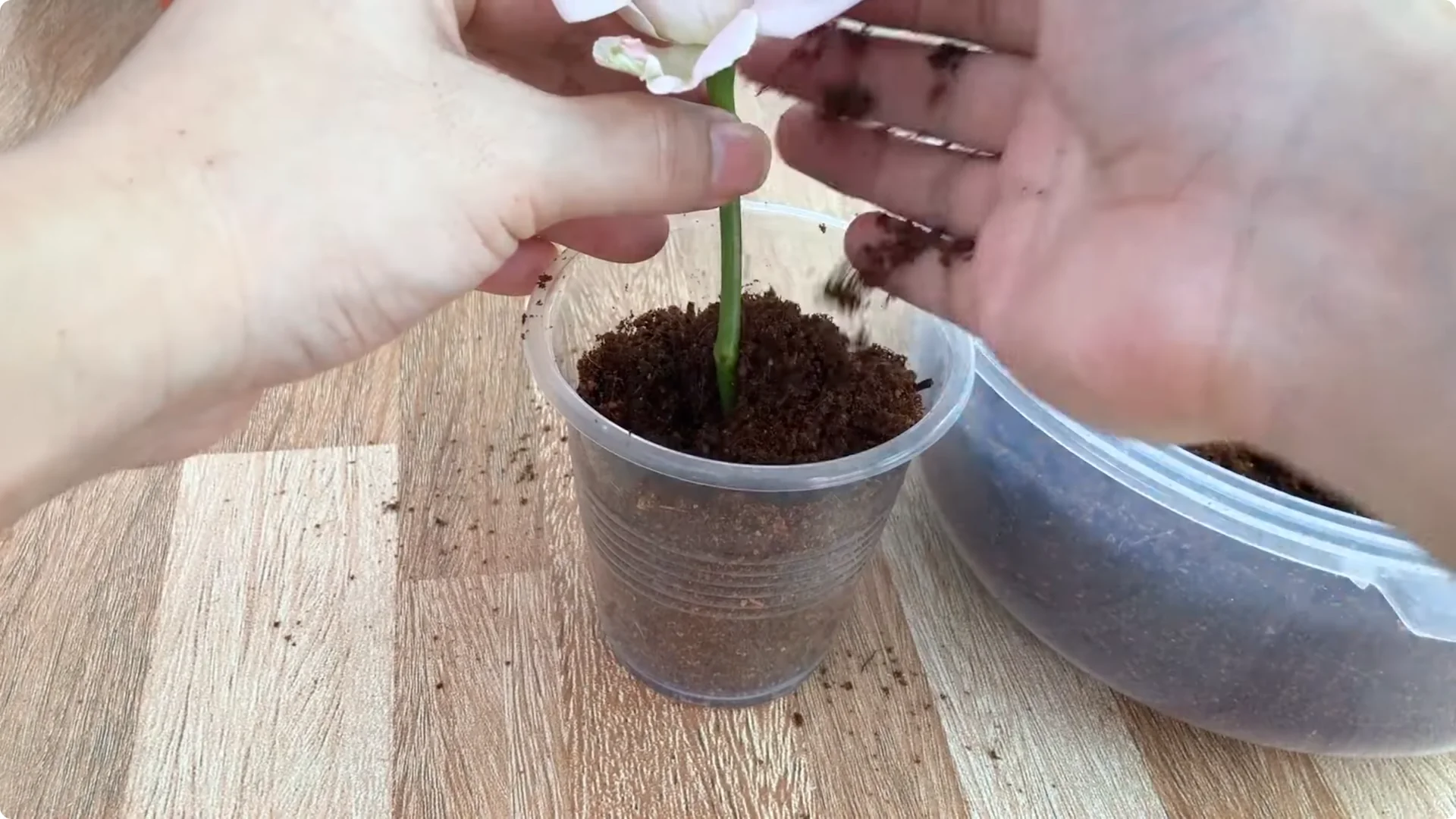
I use coconut fiber as a growing medium for cutting rose branches. Prepare a clean plastic cup and put a layer of treated coconut fiber at the bottom.
Place the rose branch in the center of the cup. Add more coconut fiber and press lightly to keep the branch fixed.
Pour the shallot bread glucose solution into the cup with enough amount so that the base is well moistened but not waterlogged. Cover the mouth of the cup with a plastic bag or transparent plastic cup to keep it moist, and place it in a cool place away from direct sunlight.
Results and reasons it works
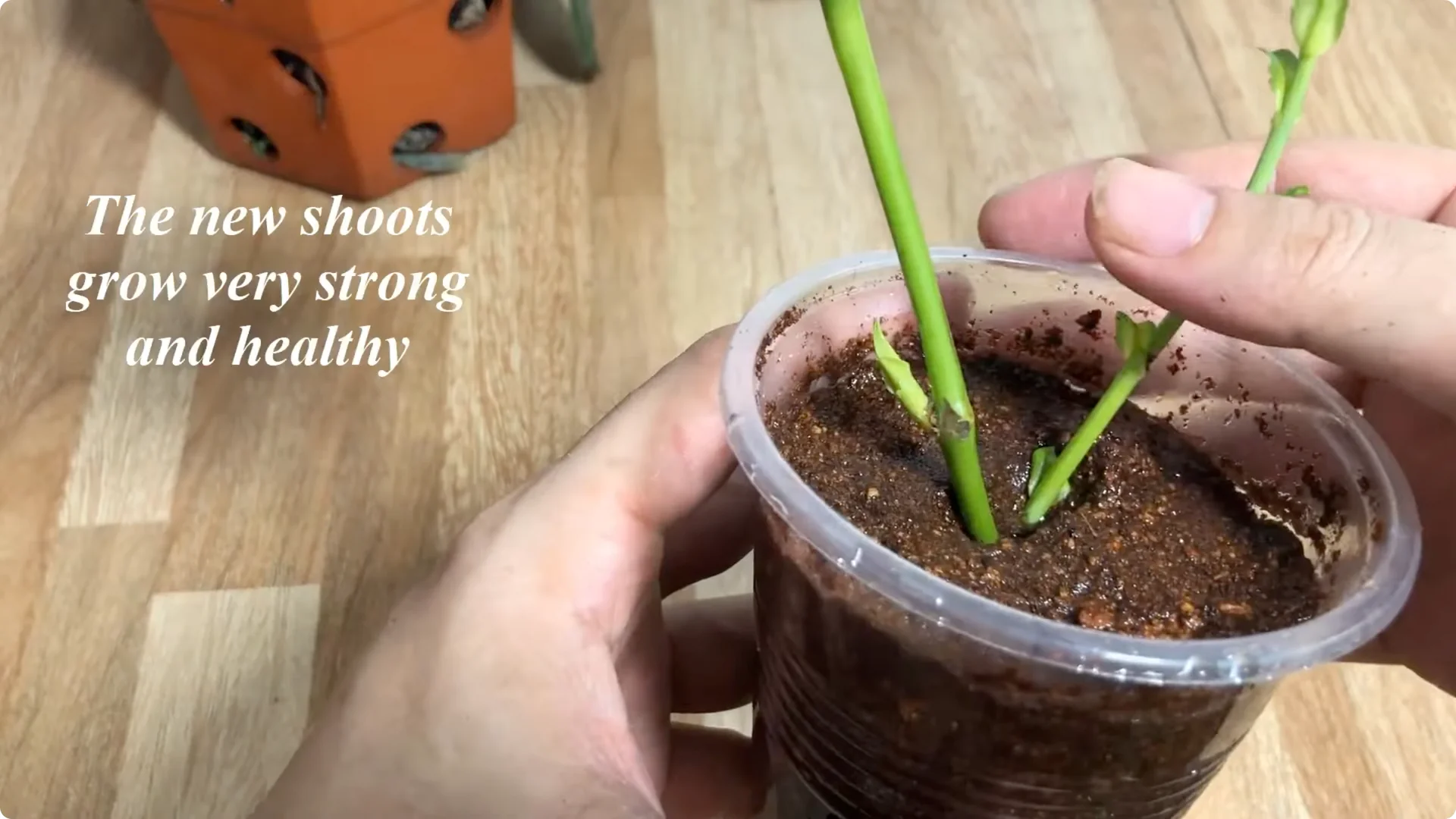
After only 7 days, you will see healthy young shoots sprouting. Plump white roots grow around the base, which is a sign of great success. Glucose is a fast source of energy that supports tissue regeneration, root development and shoot germination.
When combined with shallots and bread, this mixture promotes rapid and natural rooting. It helps the roots grow evenly, white and healthy. Young shoots grow strong and resistant, and the plant does not become soft and mushy like some chemical cutting methods.
Explore another straightforward method here: simple method for rose cuttings
Transplanting and Early Care After Rooting
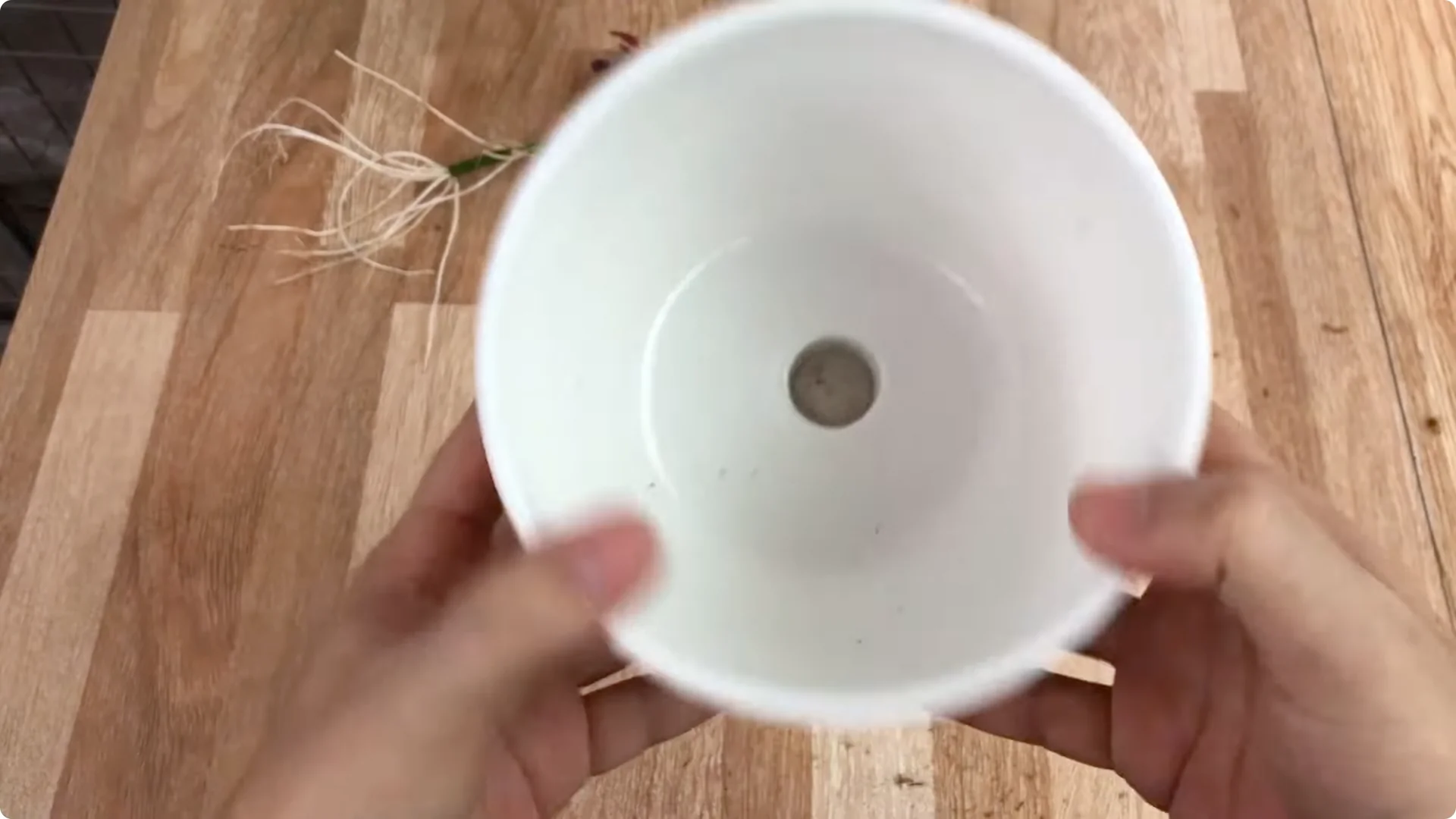
This is the time to transfer the plant to a larger pot. For the first method, plant the rose cuttings in a pot with a well drained substrate. You can use treated coconut fiber, soil mixed with rice husks, or add rice husk ash to increase porosity.
Keep the pot in a place with soft light in the early stages after replanting. Water just enough to keep it moist and avoid strong sunlight. Stability helps the new root system expand safely.
For the second method, move the plant to a larger pot when roots are active. Use a substrate of washed river sand combined with pumice, rice husk ash or organic fertilizer. This supports stable and long term growth.
Final Thoughts
With aloe vera, rice and a little moss, you can propagate roses successfully at home using a completely natural method without chemicals. With shallots, bread and glucose, you create a natural biological environment that stimulates quick rooting and strong shoots.
Both methods are easy, safe and economical. After 7 days, you should see vigorous shoots and healthy white roots, which is the clearest sign your Rose Cutting Propagation worked. Keep the medium airy, the moisture steady and the light gentle for the best results.