

If you love roses and want to propagate a rose plant yourself, this simple, natural method makes it easy. From a healthy cutting to a nutrient rich soak, each step builds a safe environment for new roots. I guide you through what to prepare, how to set up the cutting, and when to pot up.
1. Rose Cutting Propagation Basics
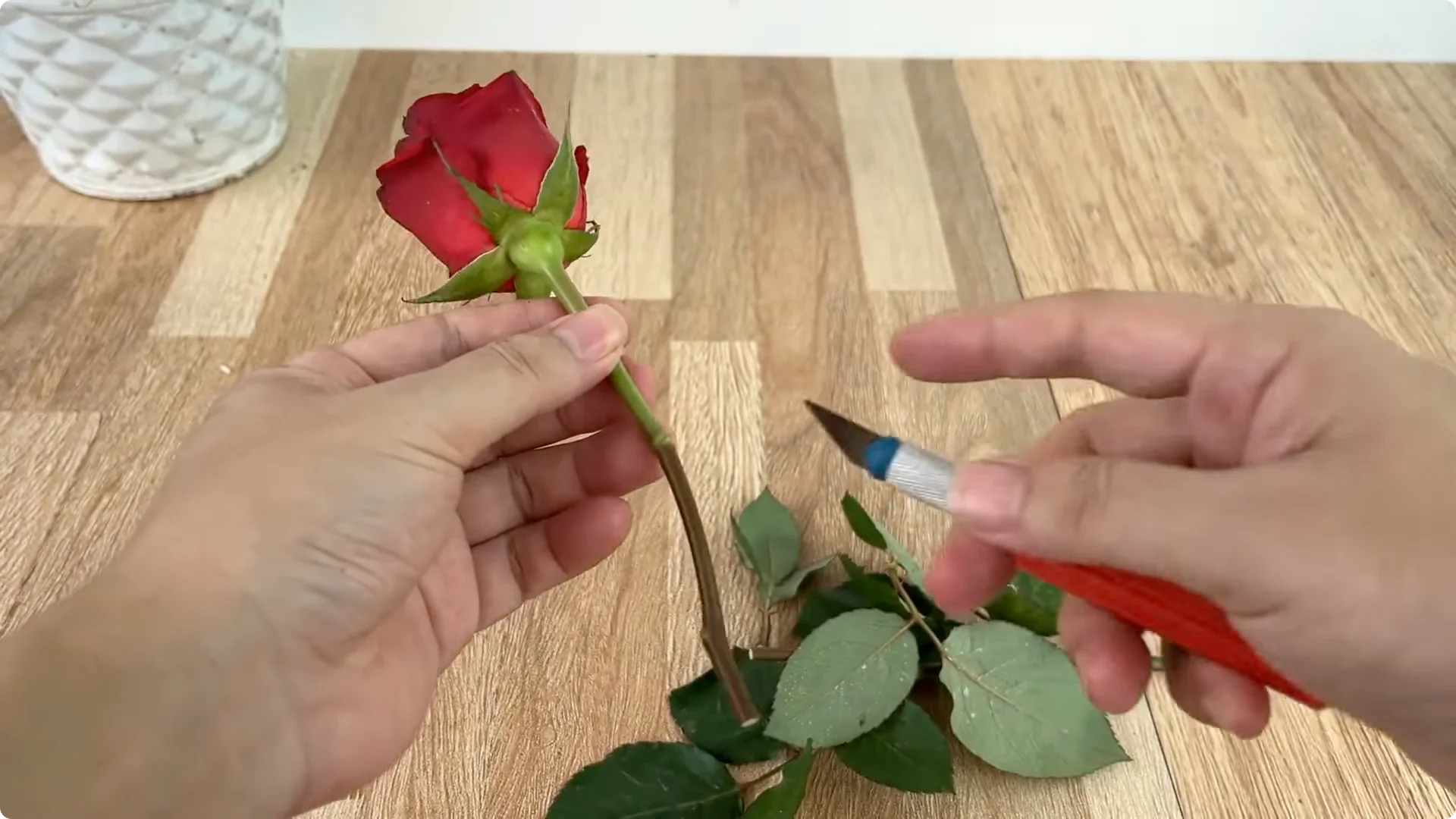
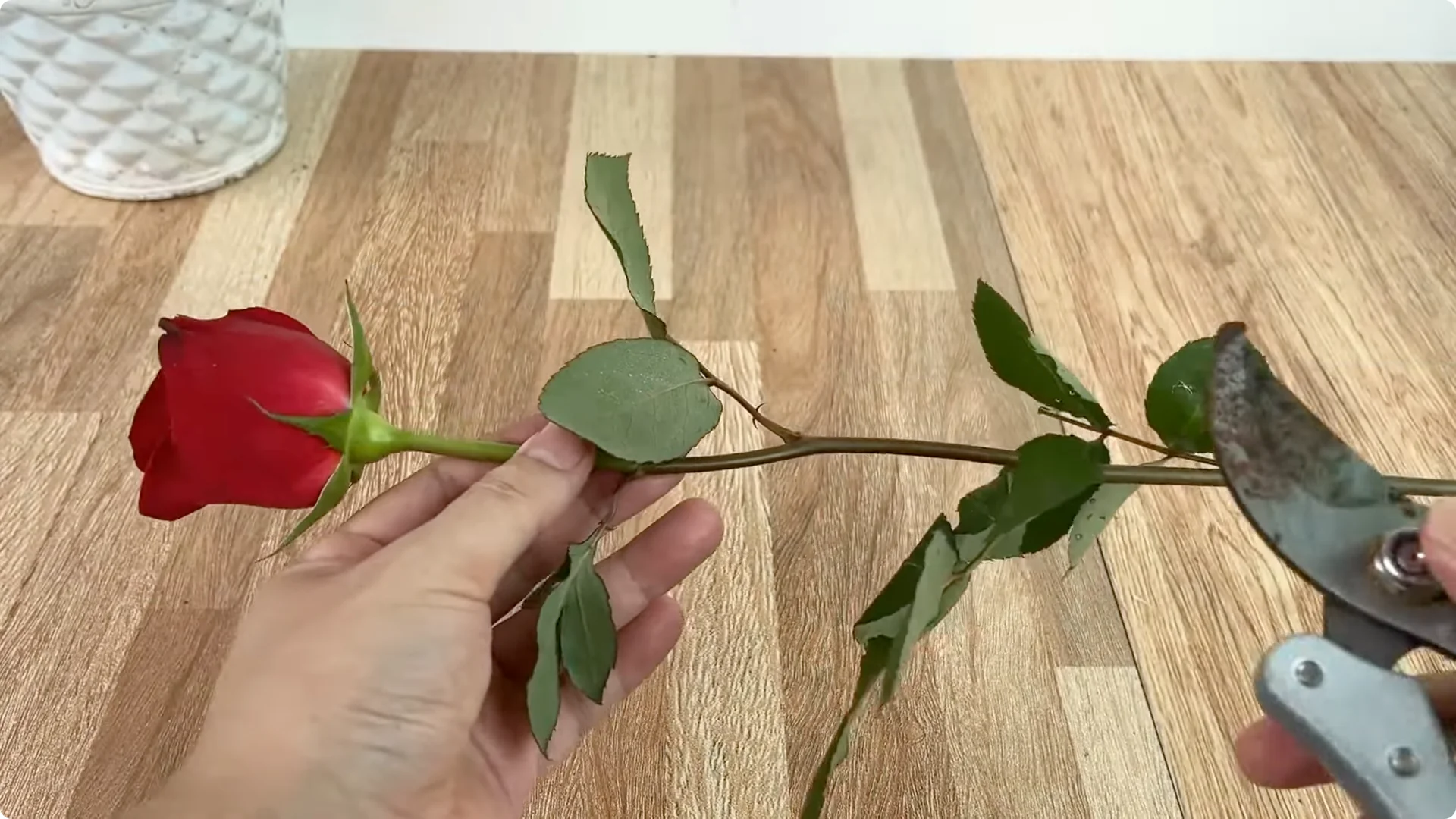
When we start the journey of propagating roses, the most important thing is to choose a healthy branch. The rose branch needs to be free of pests and diseases, fresh and flexible, because this will be the foundation that determines the survival of the young plant later.
After choosing a satisfactory branch, we cut it shorter, keeping it only about 15 to 20 cm long. At the same time, all the leaves and sharp thorns on the stem should also be removed.
2. Rose Cutting Propagation Solution
Ginger and its benefits
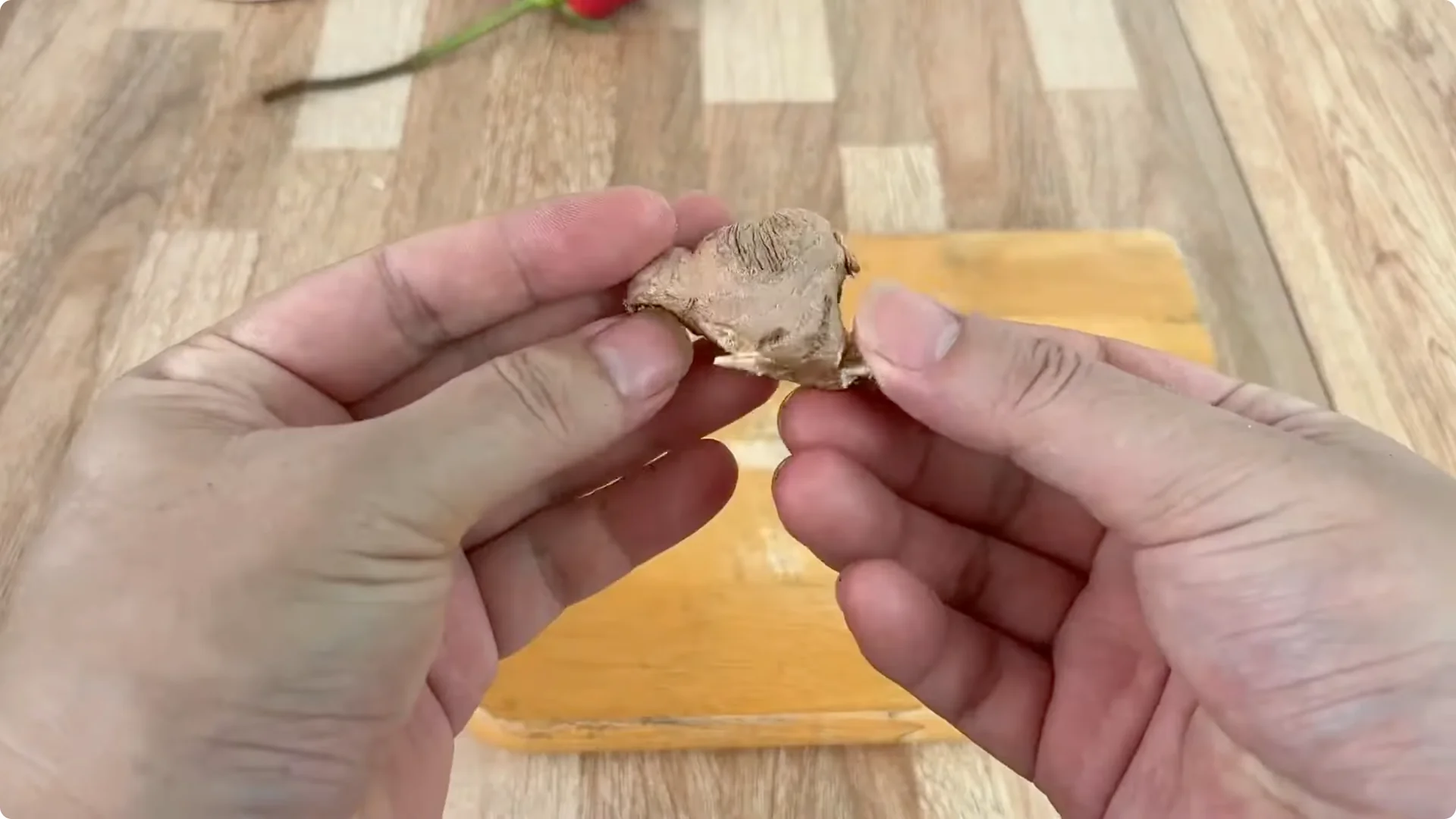
The next indispensable ingredient is fresh ginger. With its natural antibacterial properties, ginger acts as a shield to protect cuttings from harmful fungi.
When you chop 10 grams of ginger and put it in a cup, you have added a powerful source of antioxidants to the solution, helping the rose branches to be clean of bacteria and healthier. For a simple one cup tonic that supports root growth, see this method for rose roots and blooms.
Add glucose for quick energy
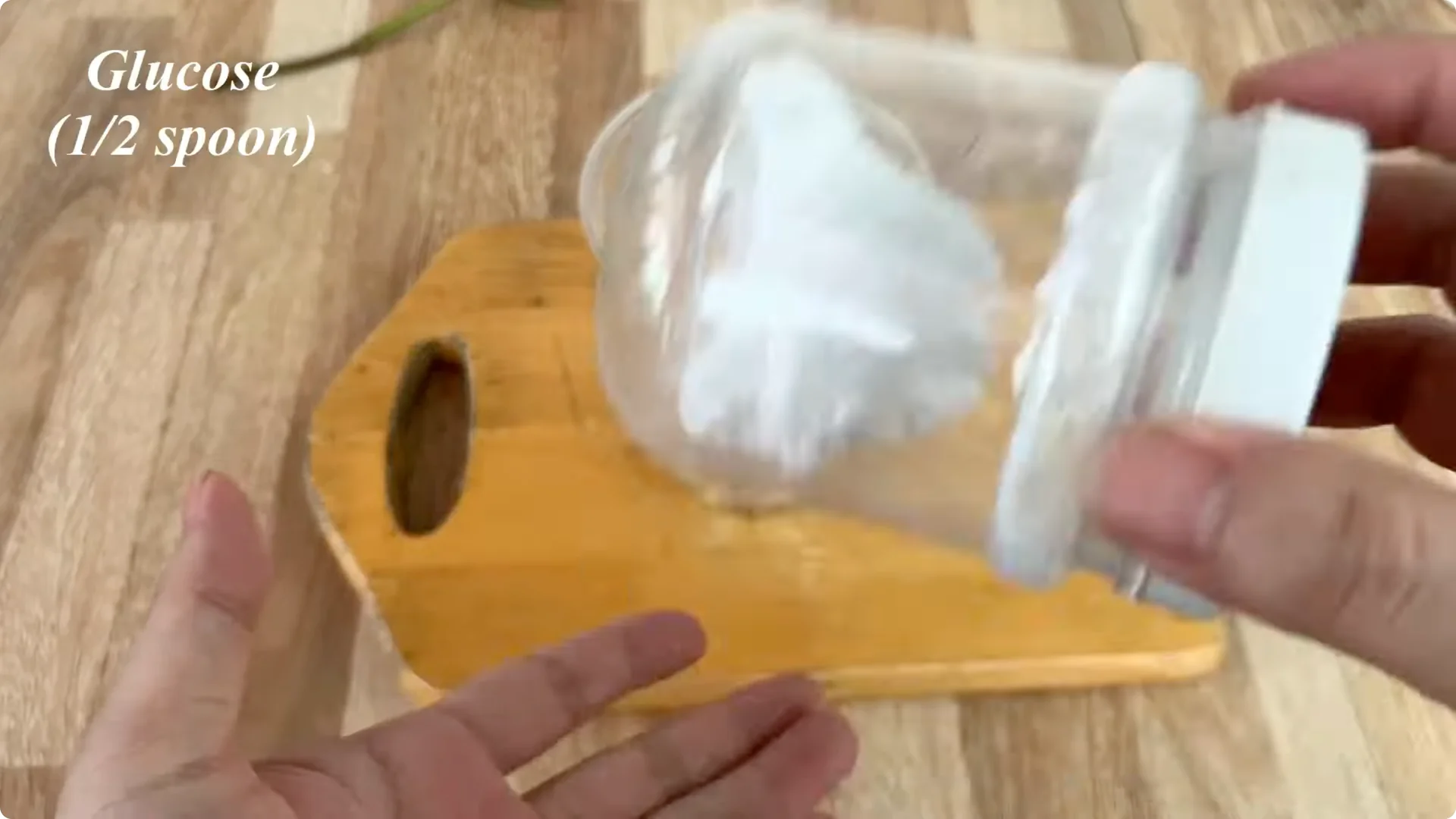
In addition, we add glucose, a simple sugar that is easily absorbed. Only ½ teaspoon is needed, but glucose acts as an immediate source of energy helping stem cells to work strongly, promoting root formation.
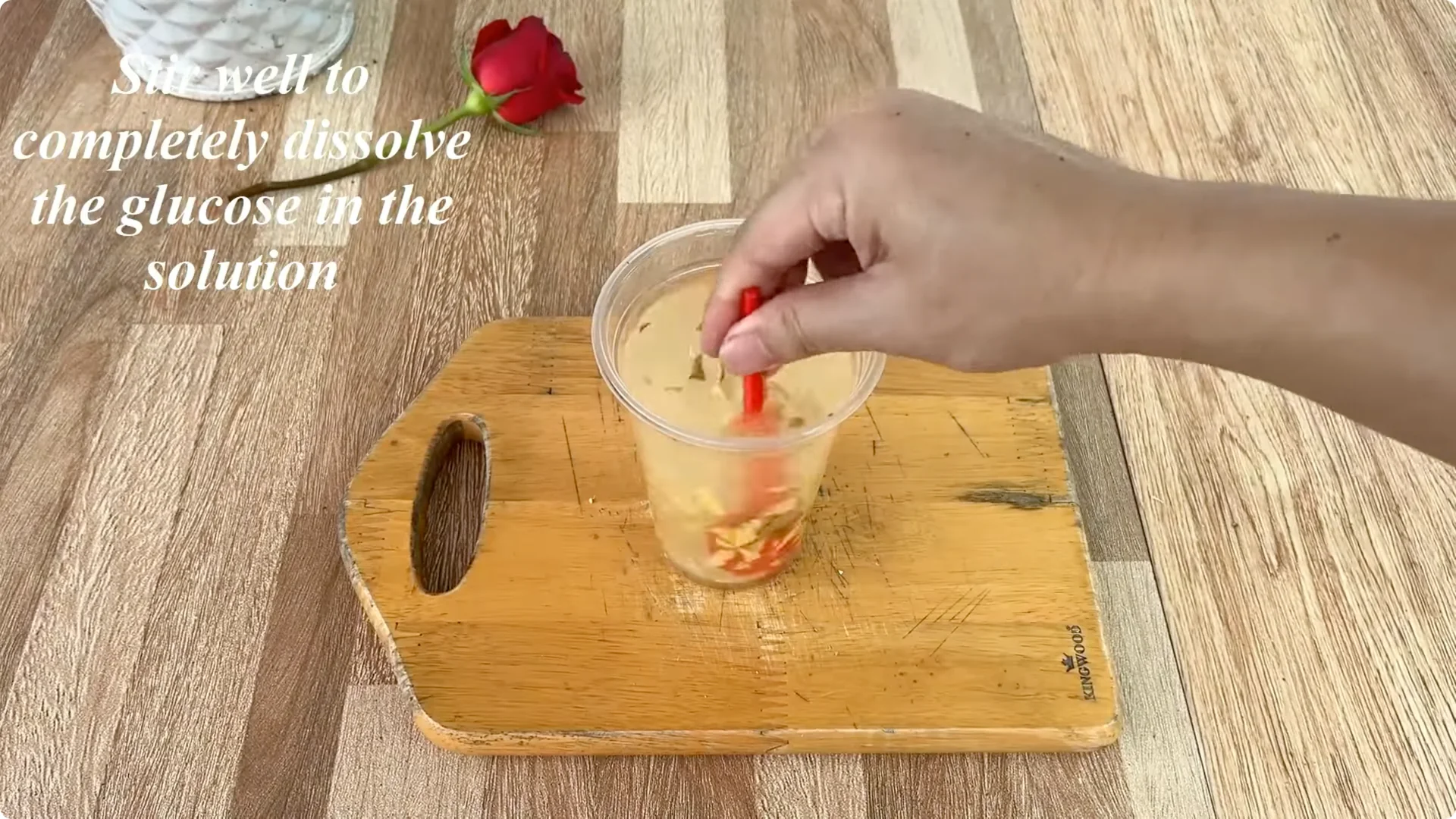
Add 0.5 liters of water to the cup and stir well to completely dissolve the glucose. At this time, the flower branches are soaked in the solution for about 15 minutes, enough to absorb the essence without causing waterlogging.
Enrich with banana peels
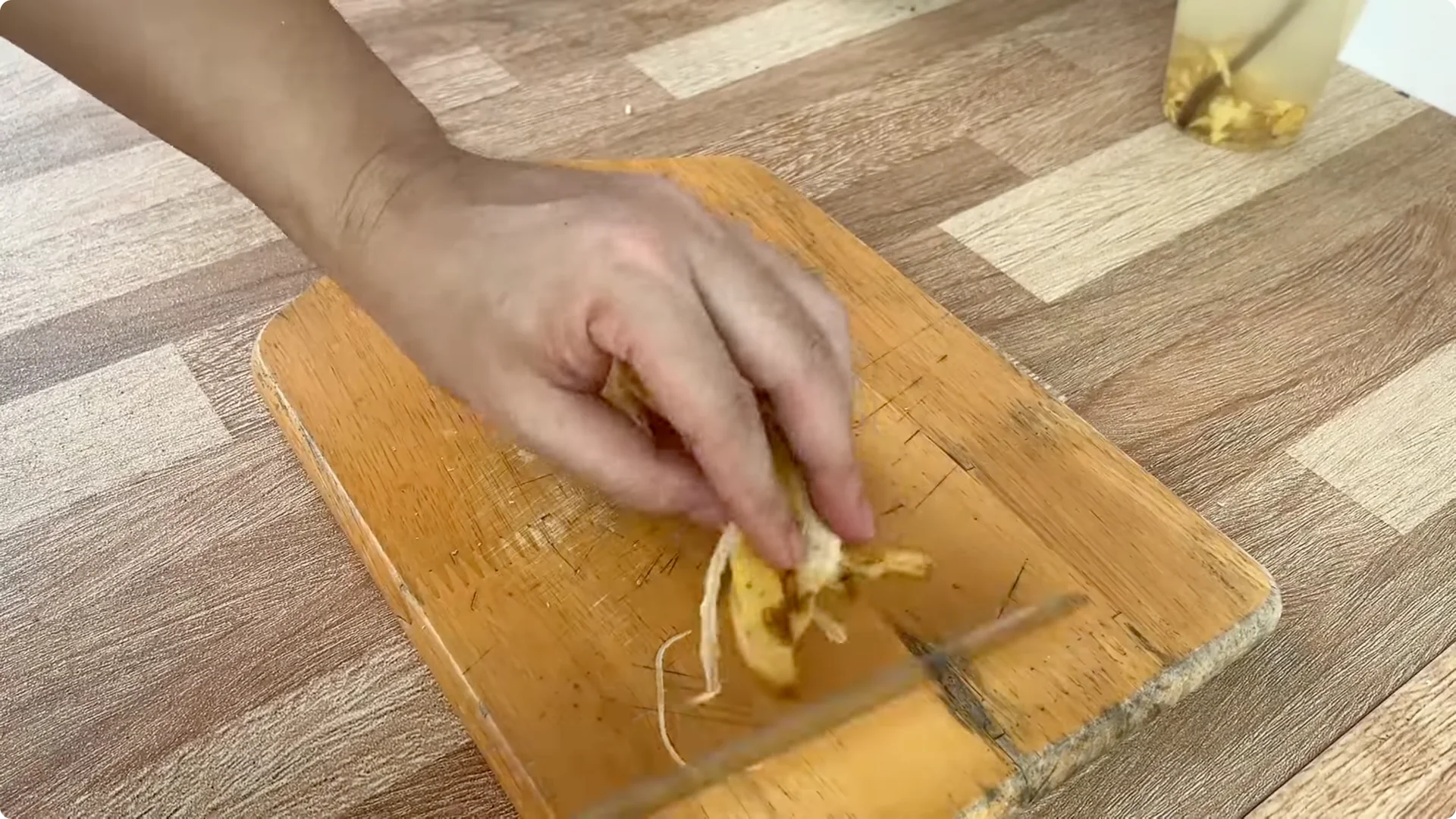
To increase nutrients, we use banana peels. Many people often throw them away without knowing that banana peels are an extremely abundant source of natural potassium and phosphorus, factors that determine the development of young roots.
When the banana peel is chopped and added to the ginger and glucose solution, the active ingredients are gradually released, mixed into the solution, adding more strength to the root formation process. After stirring well, we leave it for about 15 minutes so that the nutrients dissolve more deeply.
This is a smart combination of antibacterial support, energy supplement, and mineral supply. When the soaking time is sufficient, the rose branch is removed from the solution.
Filter and dilute
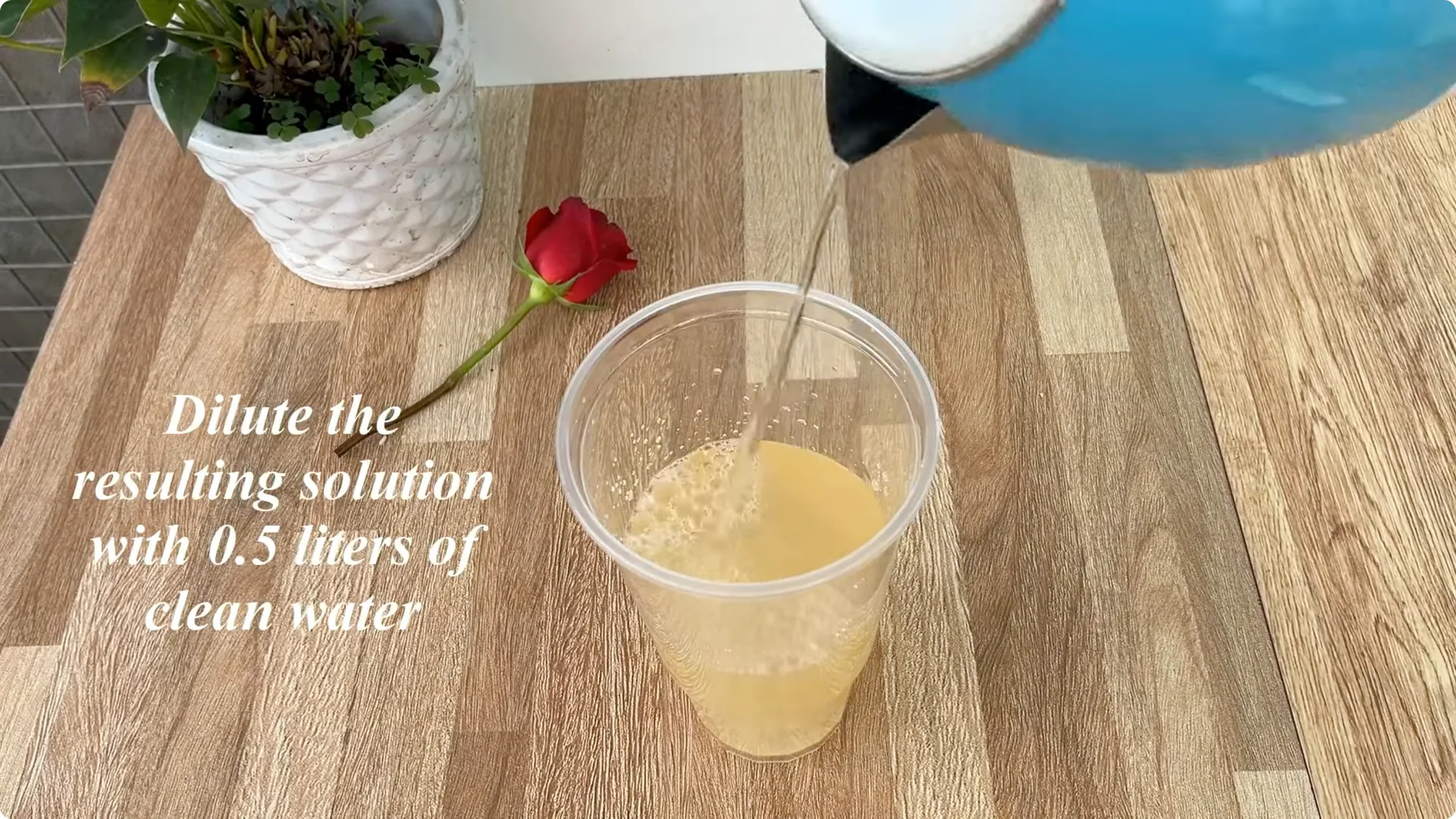
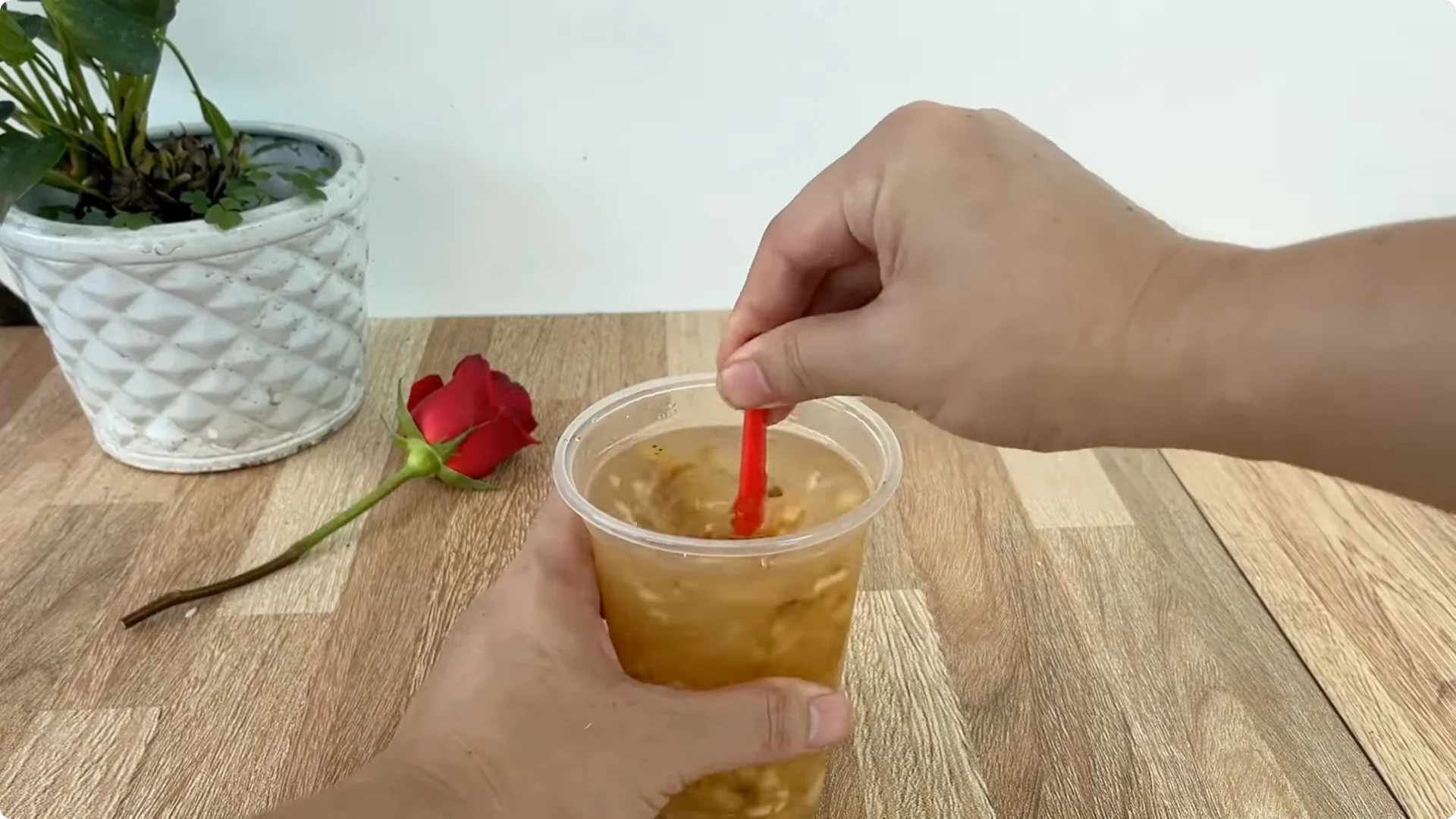
This is the time to filter out the residue, keeping only the clear solution for use. Another important step is to dilute the solution with 0.5 liters of clean water.
This dilution helps reduce the density of the solution and avoids shocking the weak rose branches.
3. Rose Cutting Propagation Setup
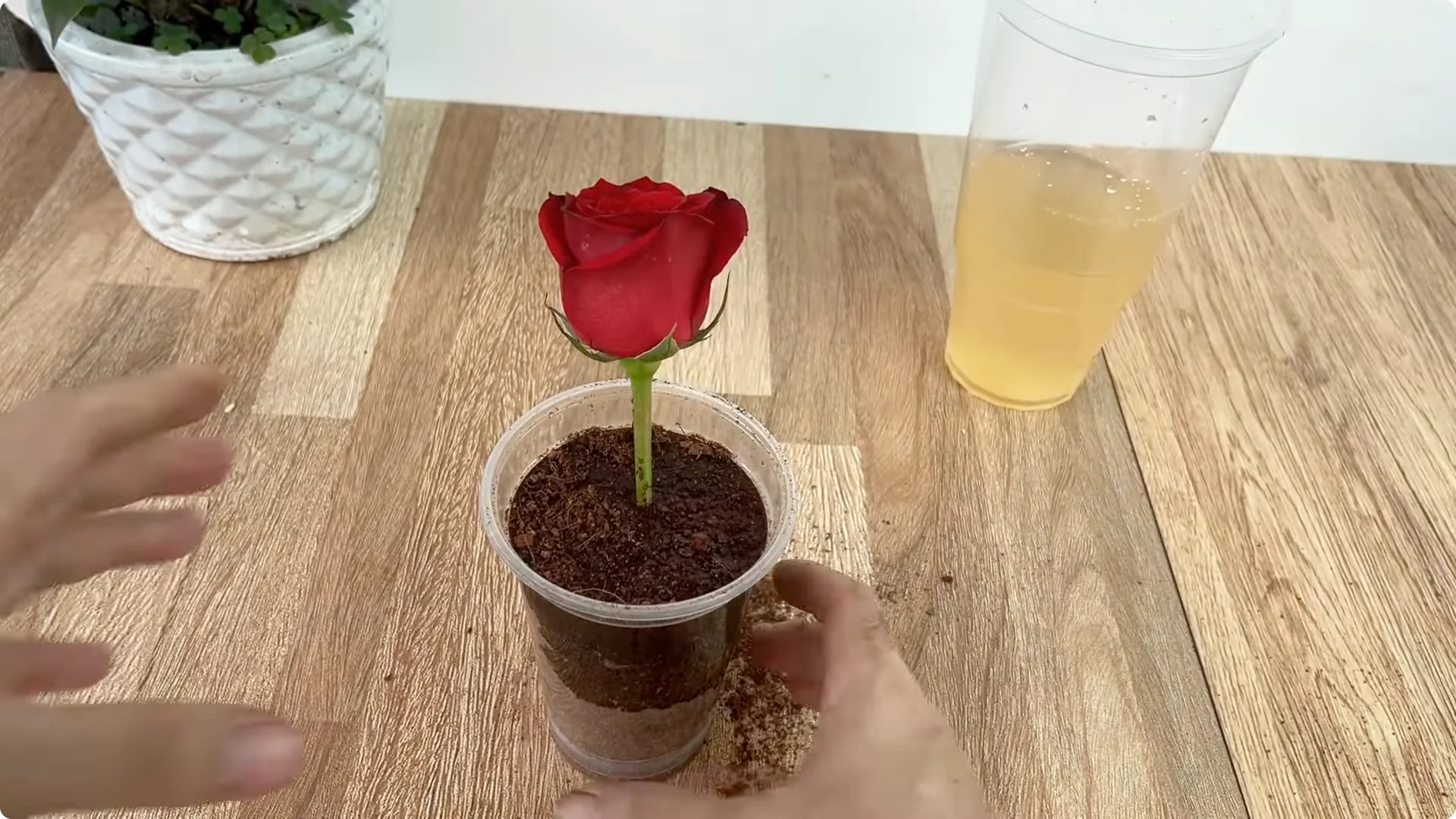
Prepare the medium
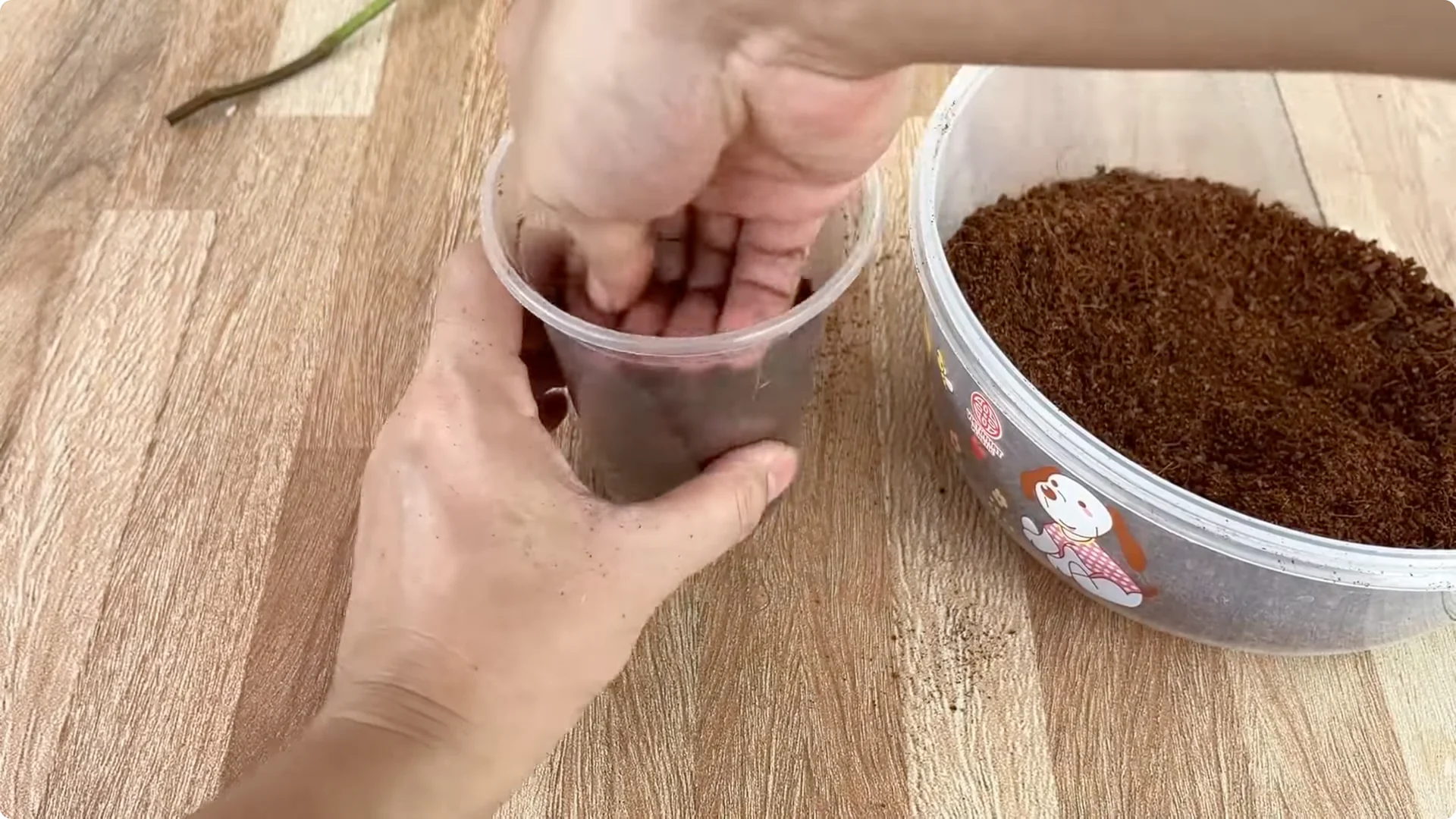
Next, we prepare the processed coconut fiber. Put the coconut fiber in half a plastic cup and press it down a little to secure it.
Make a small hole in the middle and place the rose branch in. Once finished, we continue to add coconut fiber to hold the branch firmly.
Slowly pour in the ginger, glucose, and banana peel solution to moisten it enough. Thus, the rose branch is both firmly secured and fully supplied with nutrients from the surrounding environment.
You can also explore another one cup approach that helps cuttings root fast and flower well.
Create a mini greenhouse
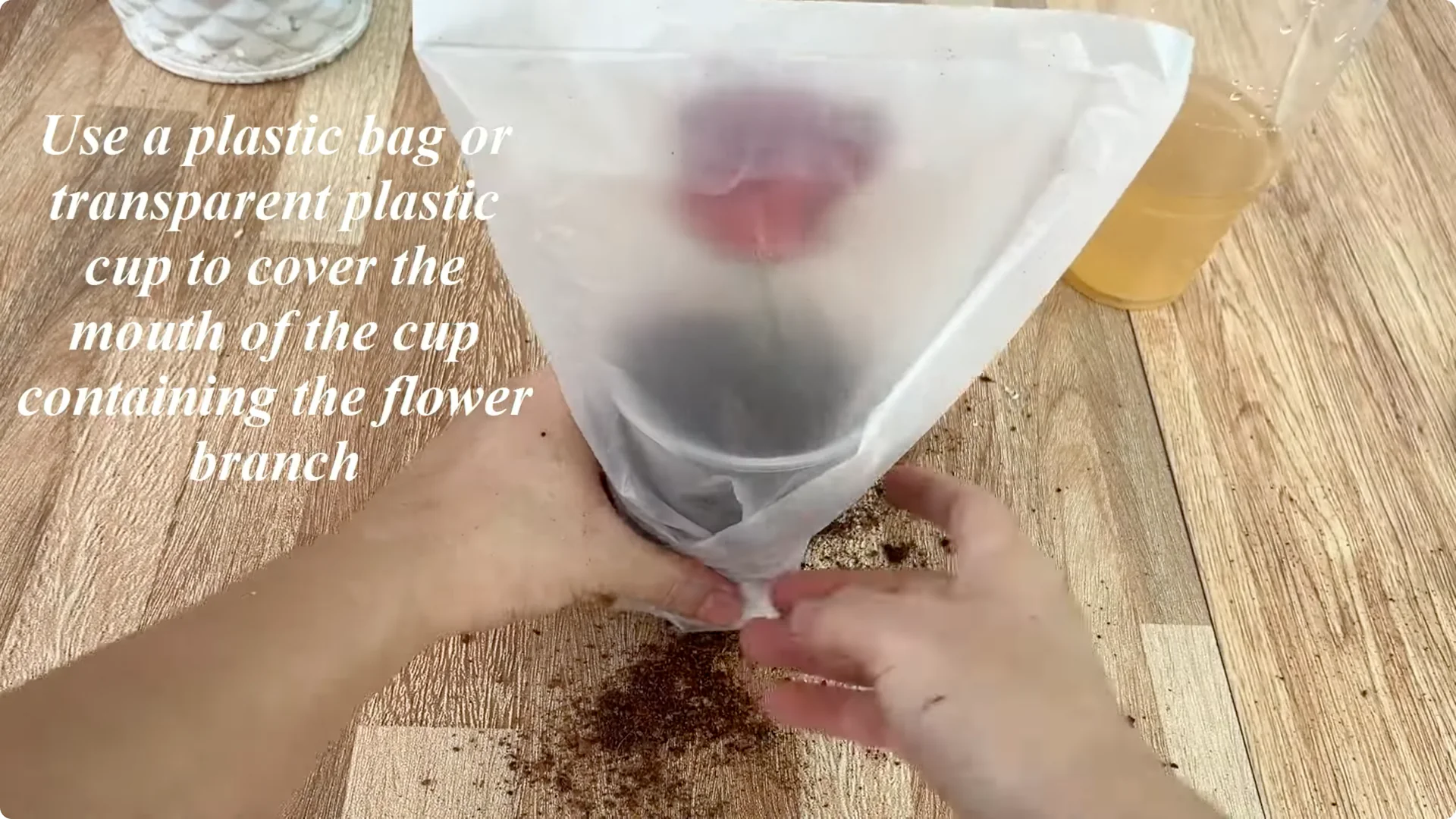
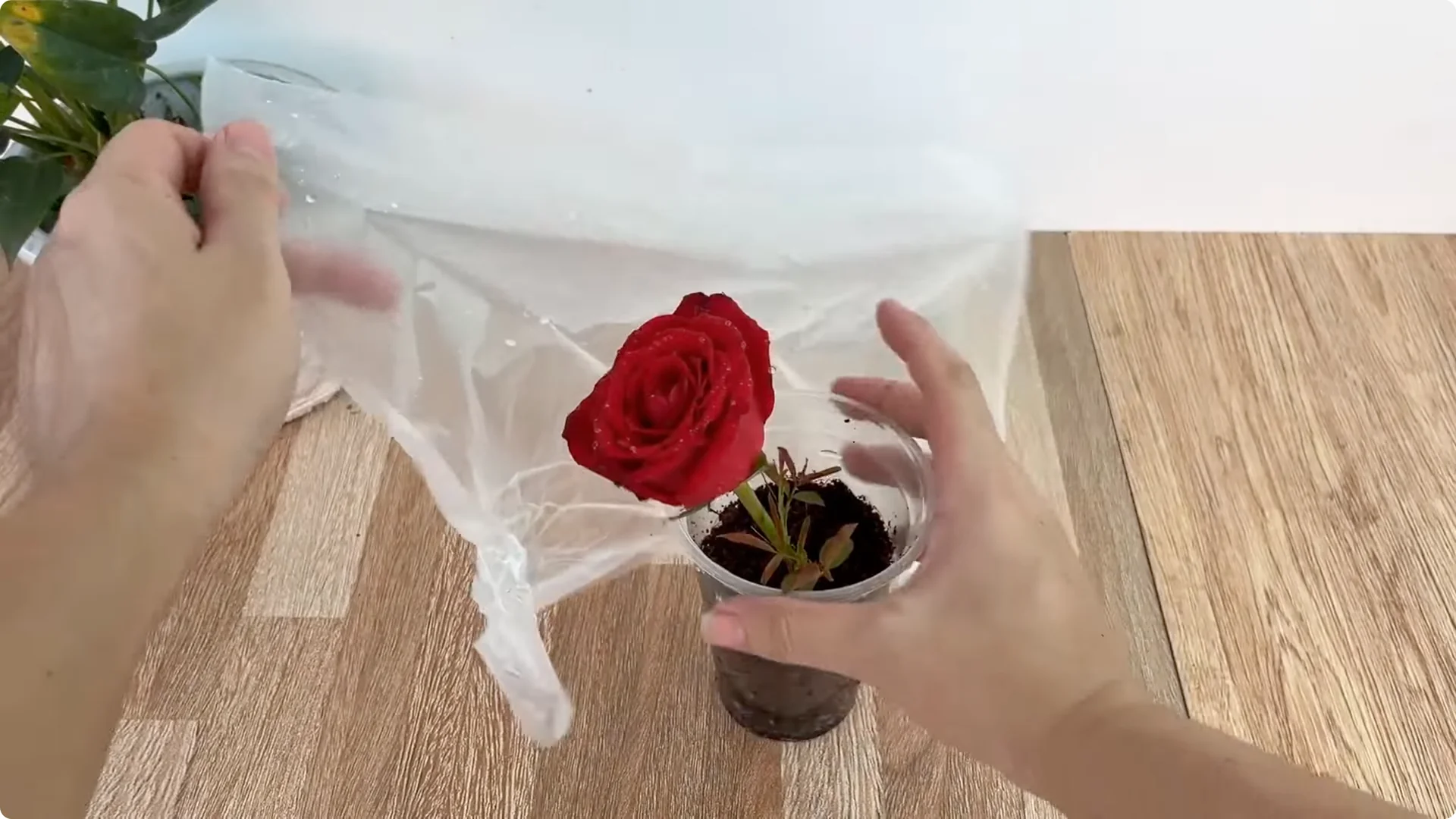
One detail that cannot be overlooked is the covering step. By using a plastic bag or a transparent plastic cup, we create a mini greenhouse that helps maintain humidity, limit water evaporation, and protect the young branches from strong winds or harsh sunlight.
This is a safe space for the rose branch to focus on developing its roots.
4. Rose Cutting Propagation Results and Next Steps
Signs of success
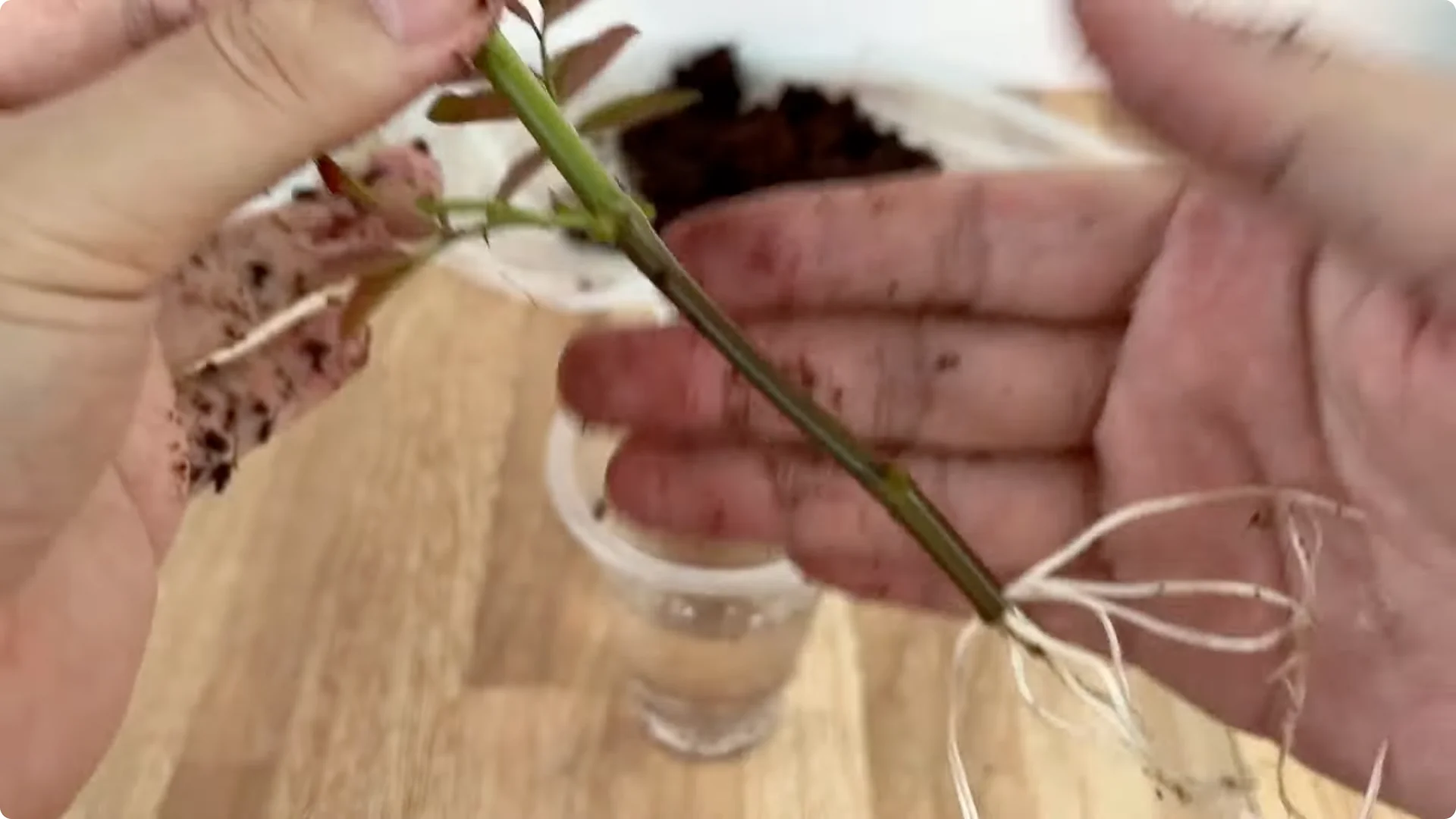
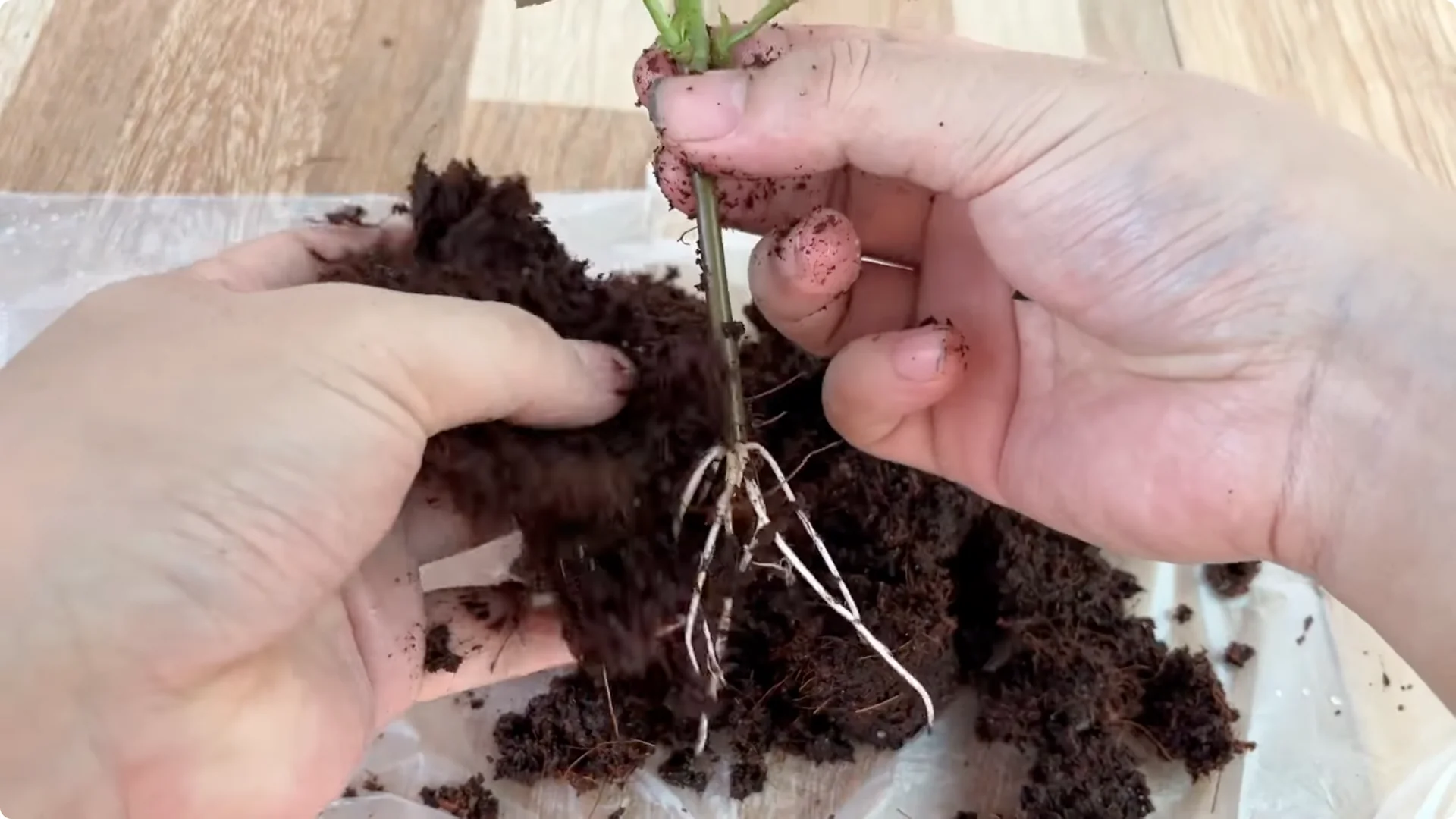
After about 10 days, the results are surprising. The green shoots begin to grow, proving that the branch has received enough nutrients and vitality to regenerate.
At the base of the branch, new white, plump roots appear, growing in clusters around. This is a clear sign that this method has been successful.
Potting up
From here, you can transfer the rose branch to a new pot using a well drained substrate such as river sand. The plant continues to grow healthily and bloom quickly.
Final Thoughts on Rose Cutting Propagation
From a seemingly simple rose branch, with the support of ginger, glucose, and banana peel, all of which are cheap and easy to find ingredients in life, we create a perfect environment for the young plant to form and grow. This method is effective, safe, natural, and does not require chemicals.
If you love roses, try this method and enjoy the joy of seeing the first young shoots stretching out full of vitality. For a second variation of the one cup recipe, check this helpful guide to boosting roots and blooms.