

I share tips on how to care for and propagate roses effectively. If you are looking for a way to help rose branches quickly root and sprout healthy buds that is simple and easy to do at home, this method is for you. For more ways to speed things up, see these fast rooting tips.
First, we need to choose a healthy rose branch with moderate age – this is an important factor that determines the success of cutting branches. Branches that are too young often have difficulty rooting, while branches that are too old are prone to drying out and taking root slowly.
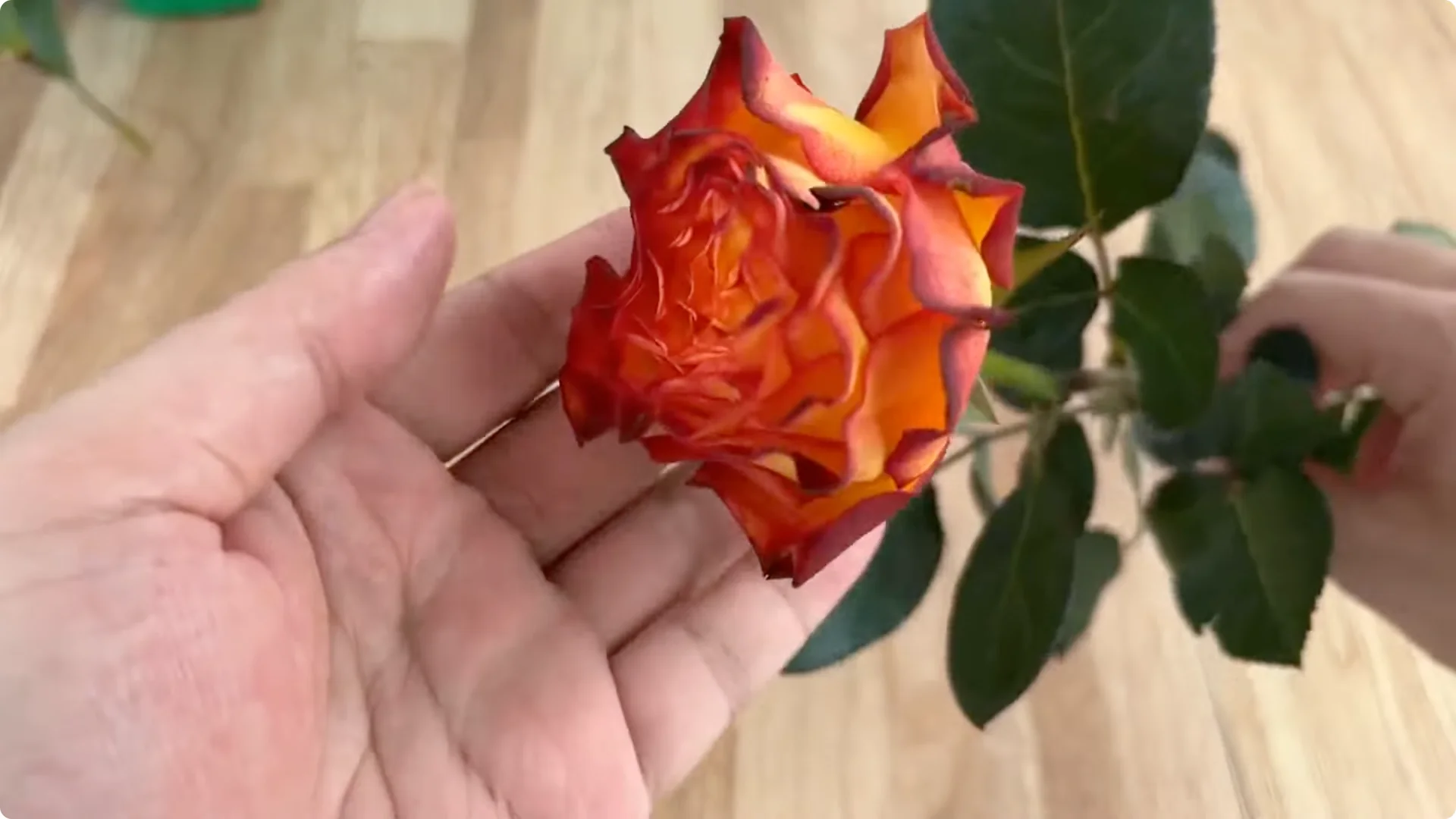
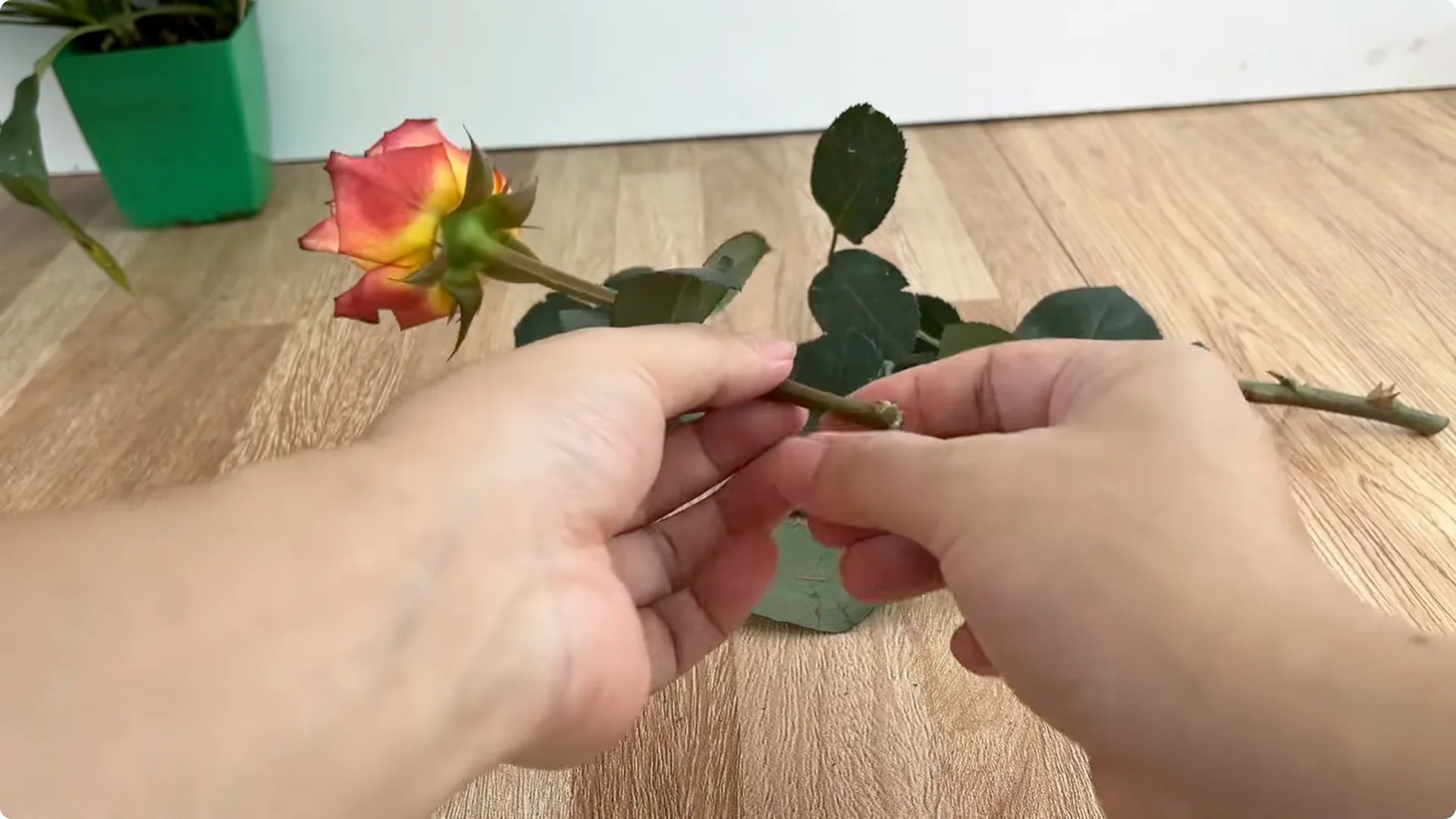
Cut the branches to a length of only about 15-20 cm. This length not only helps the branches stand firmly when cutting, but also helps the plant focus its energy on forming new roots and shoots. Cut off all the thorns and leaves below, keeping only about 2-3 leaves on top.
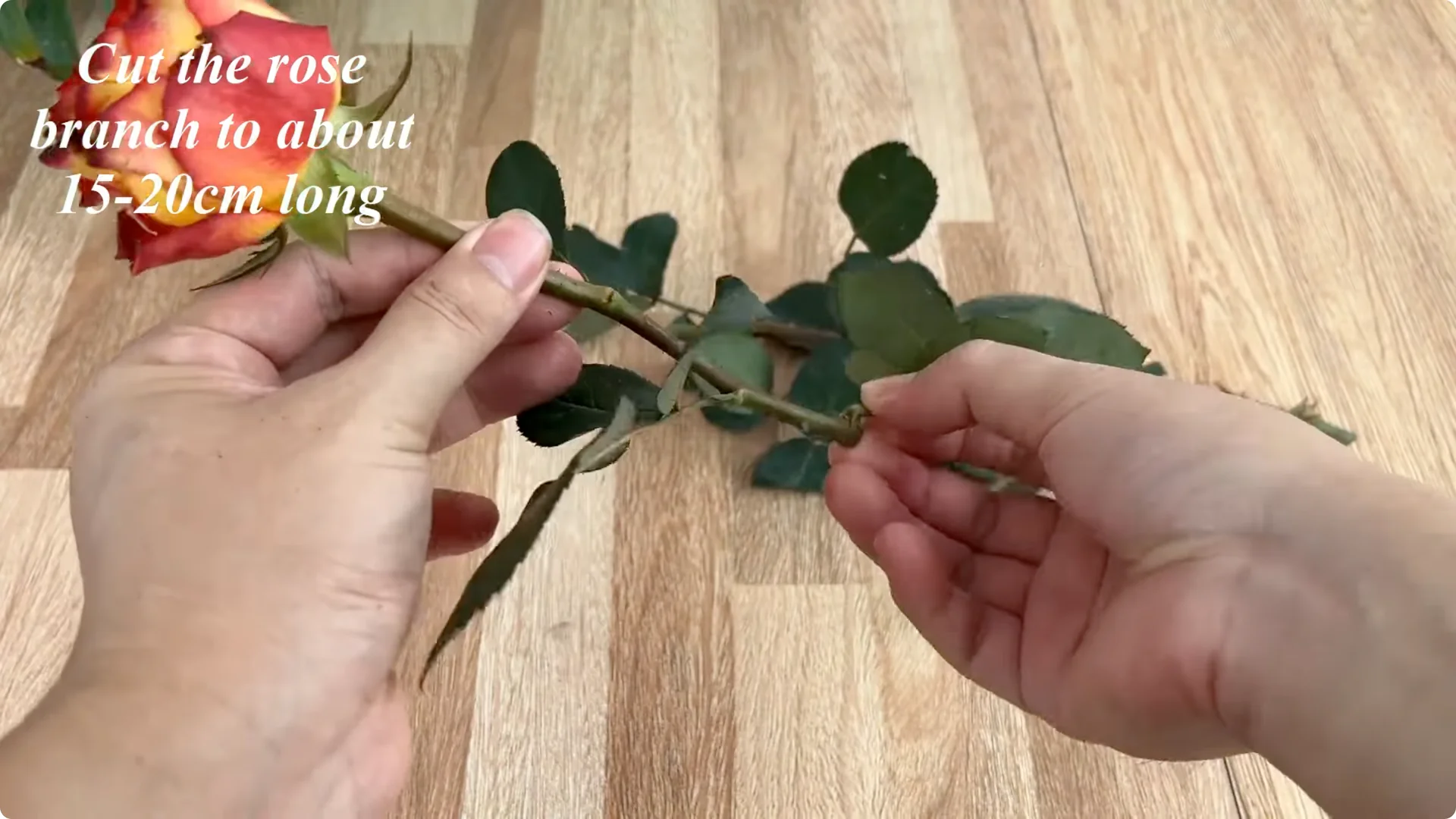
This minimizes water loss while still maintaining the ability to photosynthesize for the branches in the early stages. You will prepare a special solution to stimulate root growth.
1. Rapid Rose Cutting Propagation: Prepare the Rooting Solution

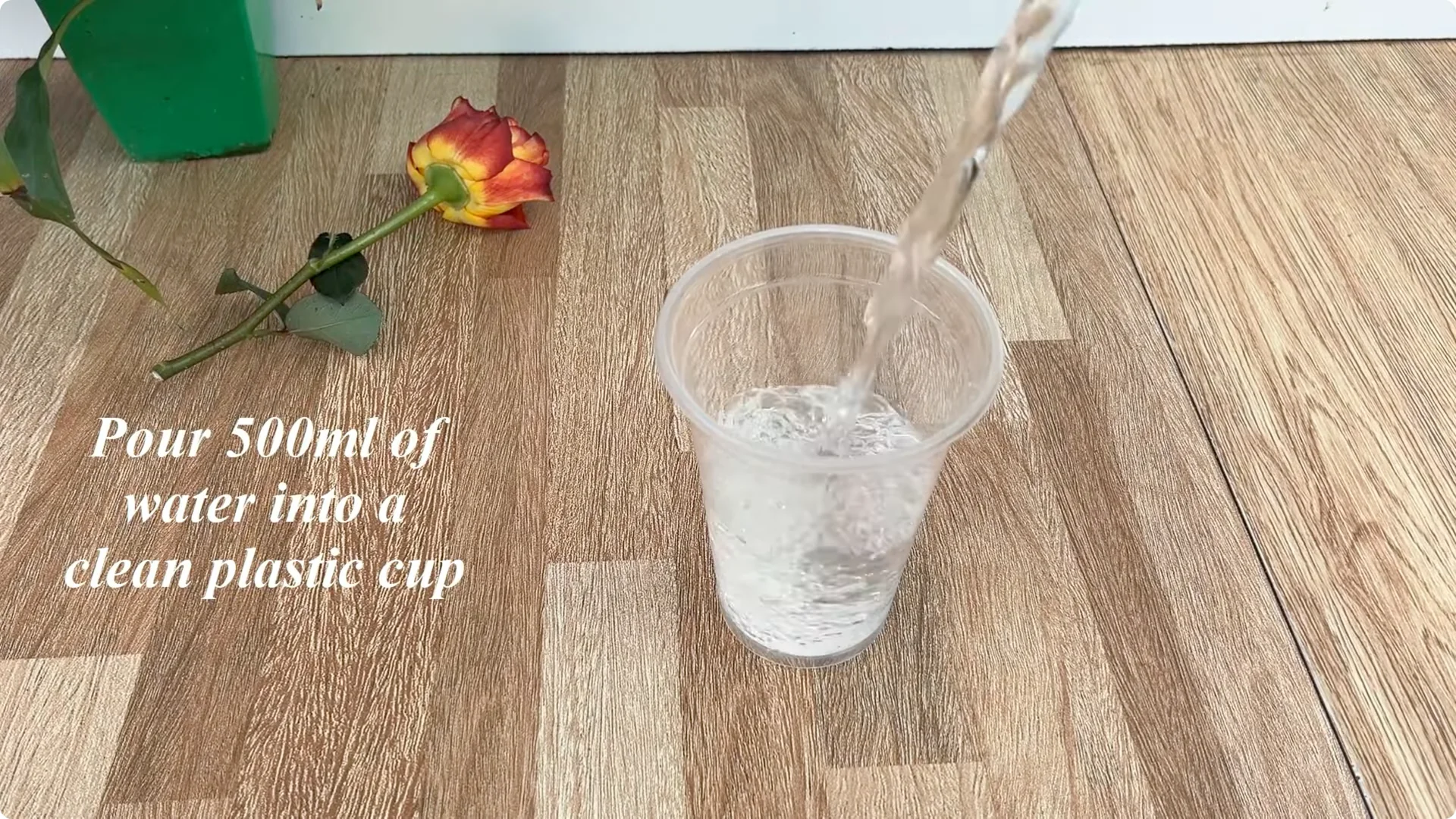
First, pour 500 ml of clean water into a plastic cup. This is baking soda. Baking soda (sodium bicarbonate) has the ability to mildly disinfect and balance the pH in the environment around the cuttings.
When the pH is stable, the root tissue will easily develop, while minimizing the risk of mold. Add 1/2 teaspoon of baking soda to the cup.
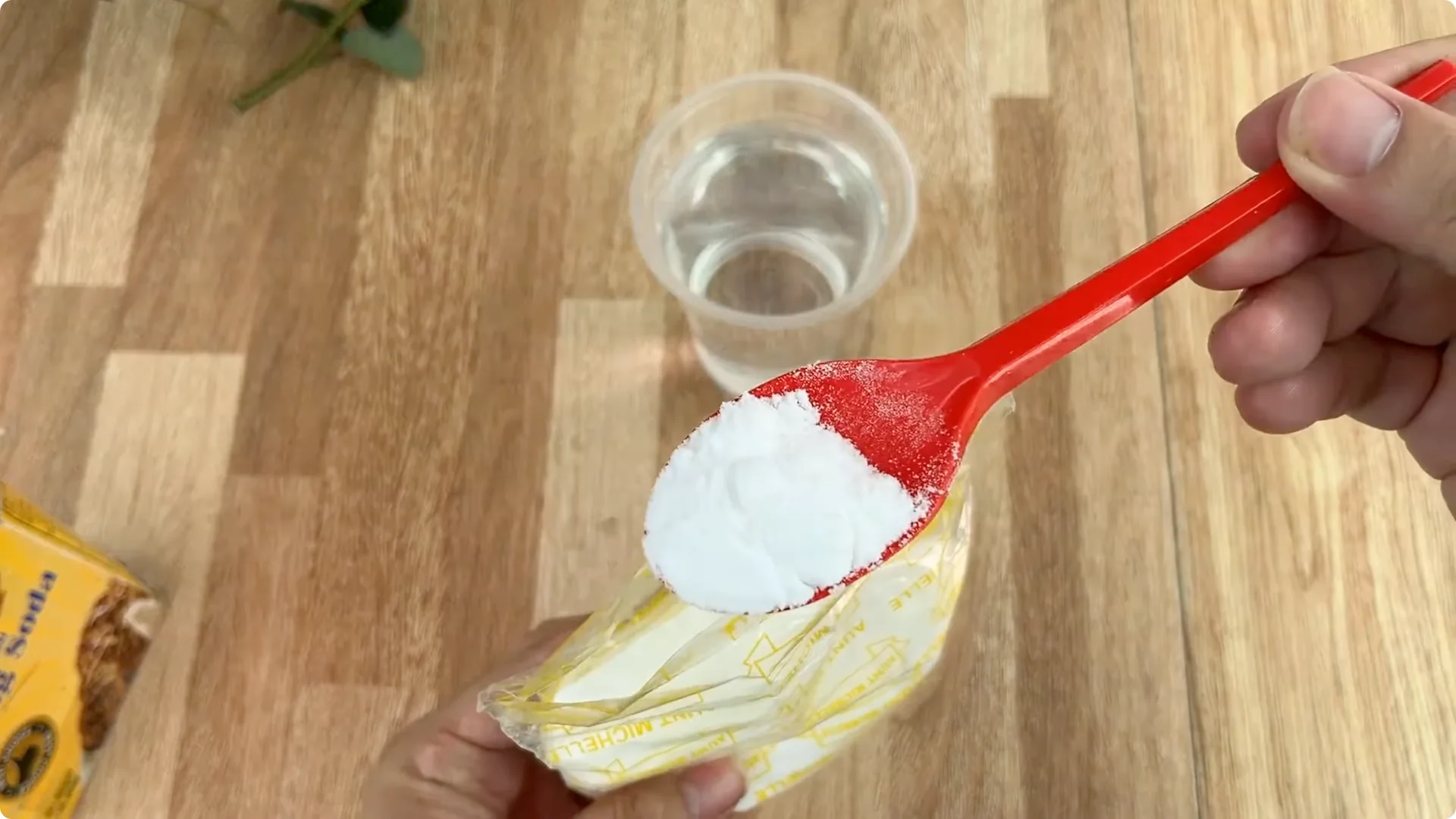
Next, add 1/2 teaspoon of glucose to the cup. This is a quick source of energy for the flower branches in the early stages when there are no roots to absorb nutrients from the substrate. Glucose helps the callus cells at the base of the branch divide quickly, from which the new roots form stronger.
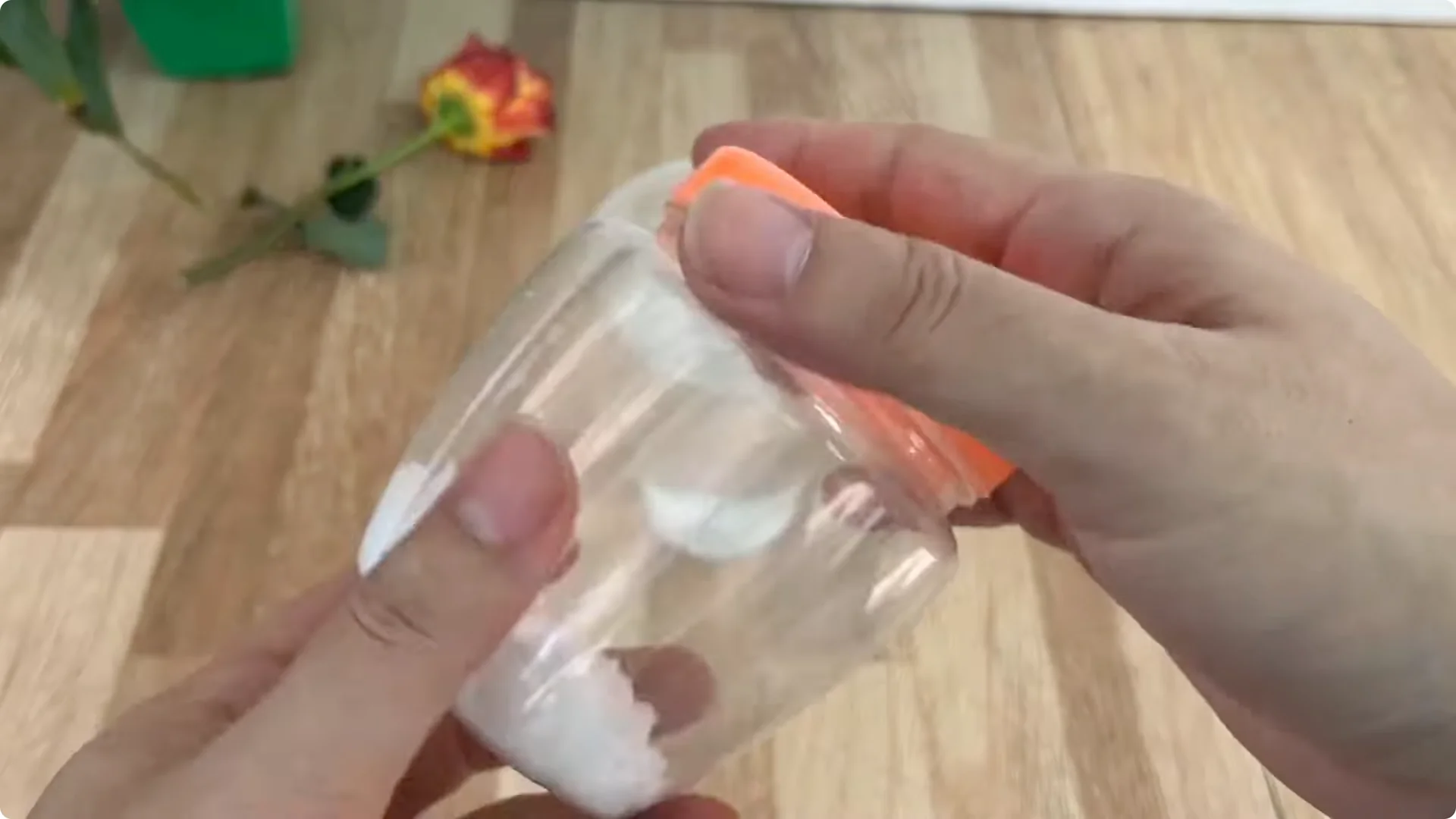
Soak the rose branches in this solution for about 30 minutes. For a quick boost to early sprouts, explore this overnight sprouting method.
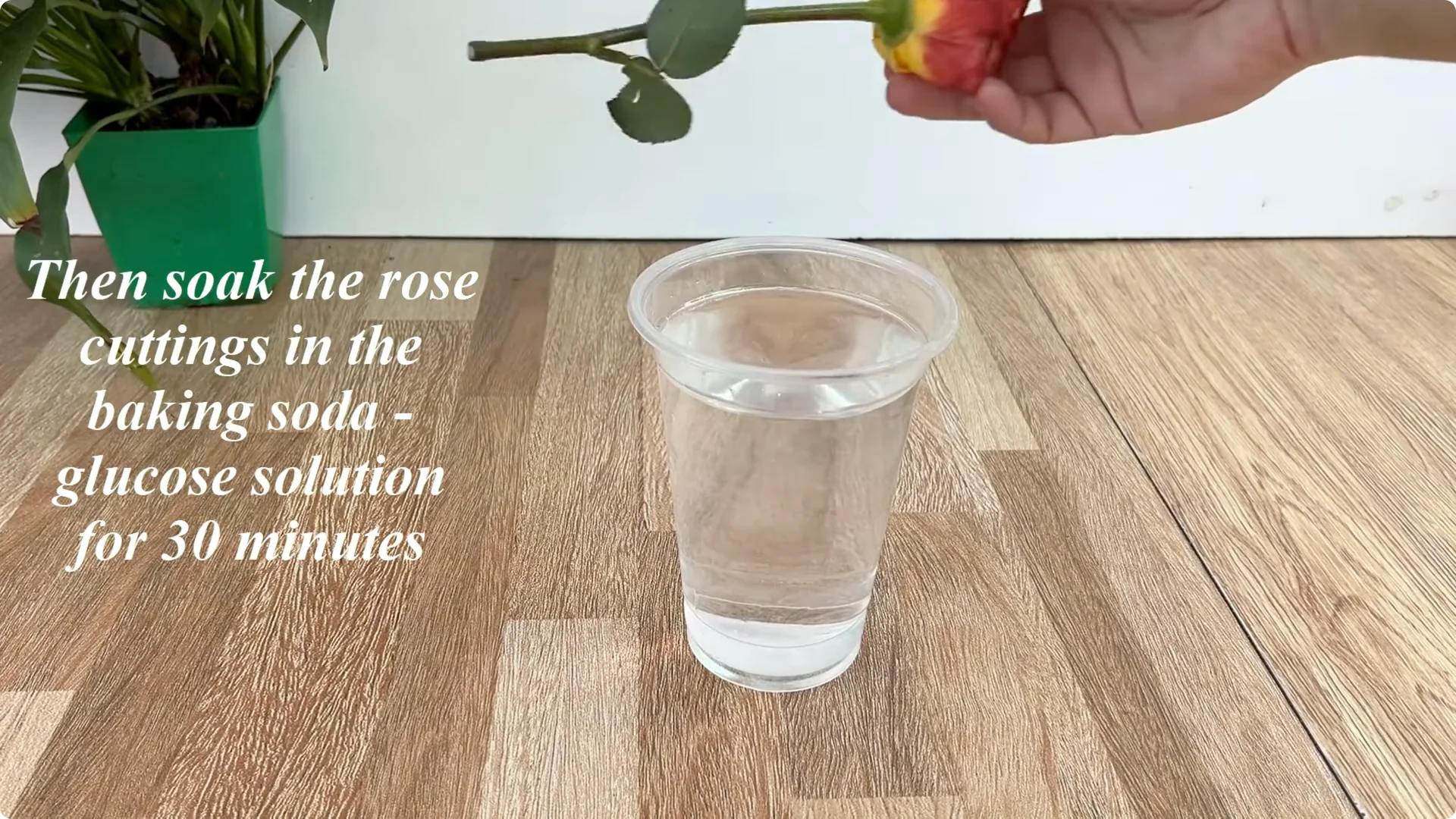
Baking soda and glucose pre-soak
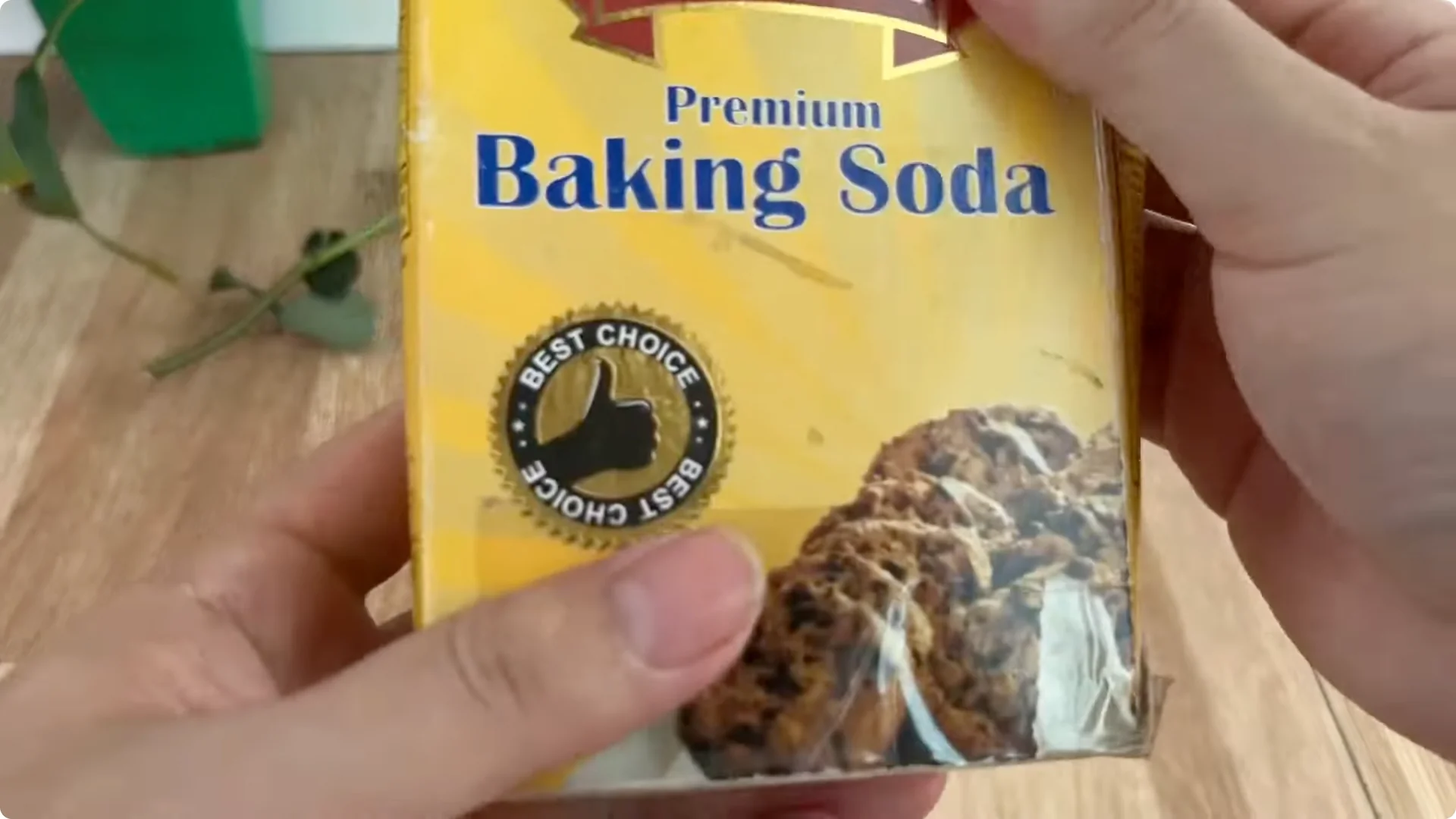
Keep the ratio at 500 ml water, 1/2 teaspoon baking soda, and 1/2 teaspoon glucose. Ensure everything dissolves well before soaking the cuttings. Maintain cleanliness of the cup to avoid contamination.
Tomato solution
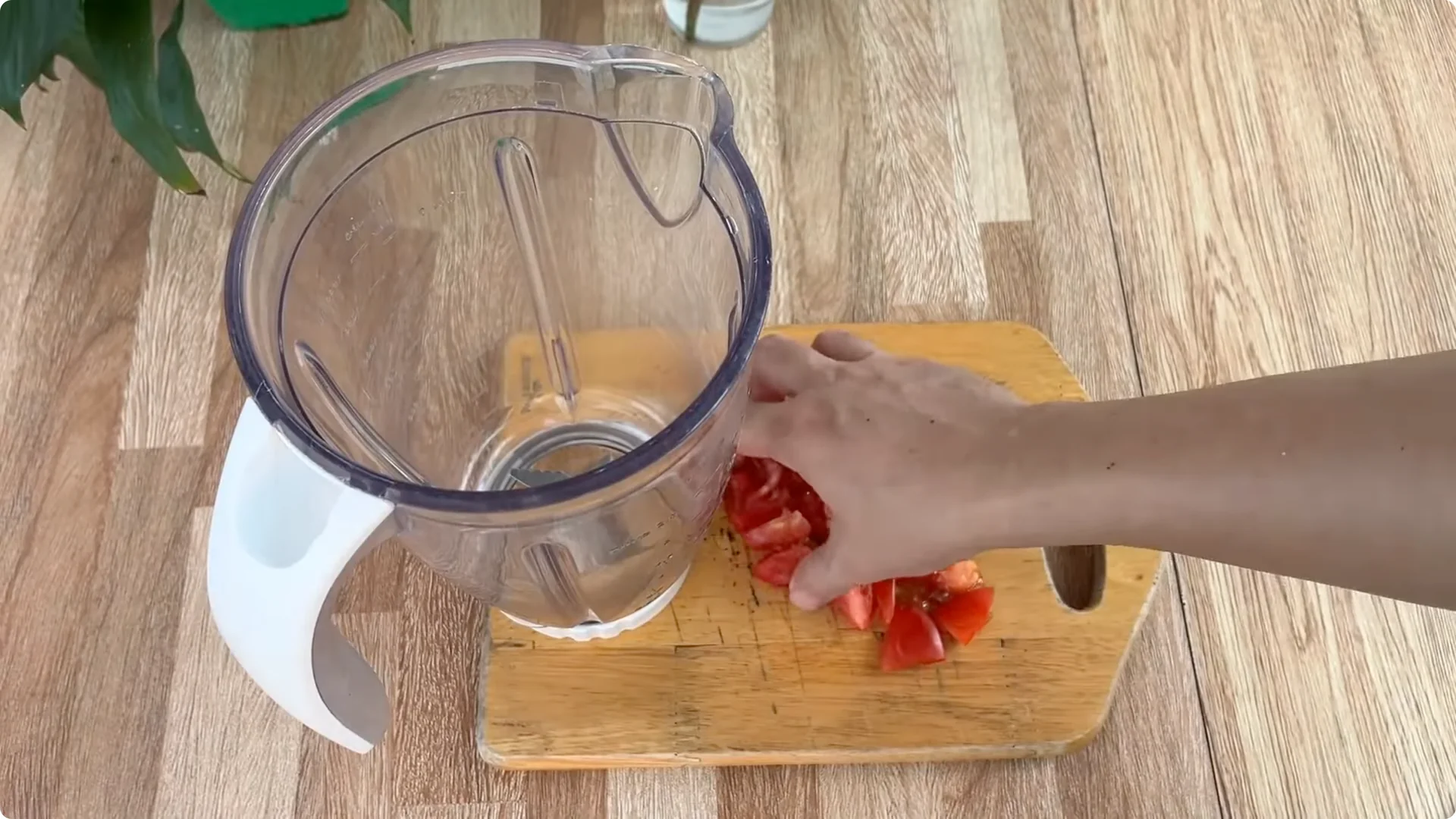
Prepare a small tomato (about 30 grams), cut it into small pieces and put it in a blender. Add 0.5 liters of water, cover, and blend until smooth. Then, filter out the pulp and keep the water.
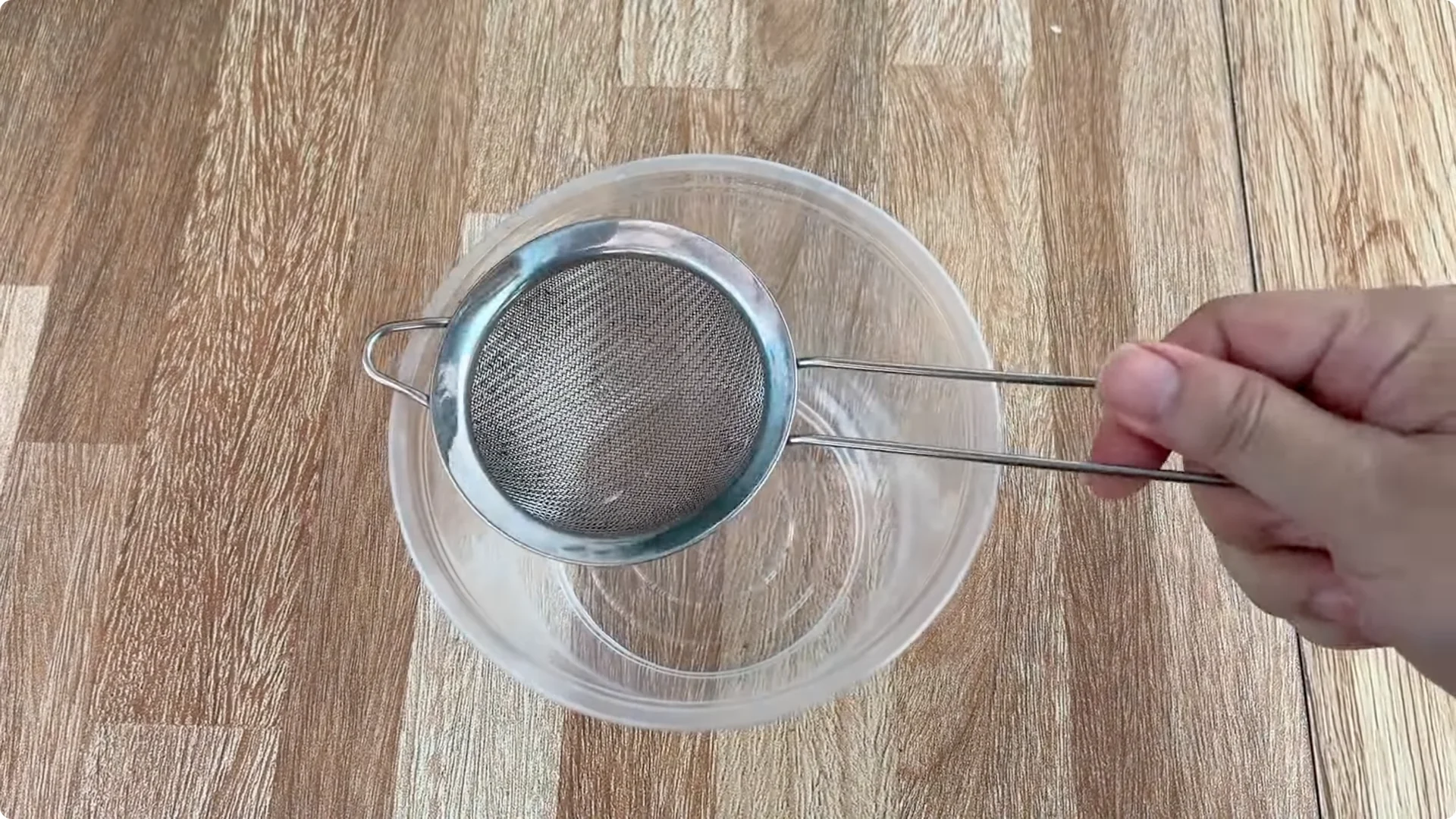
Tomatoes contain vitamin A, vitamin C, natural organic acids and especially auxin – an important plant hormone that stimulates root formation. The amount of natural sugar and minerals in tomatoes also helps young shoots grow healthily. Therefore, tomato solution acts as a natural growth water for cuttings.
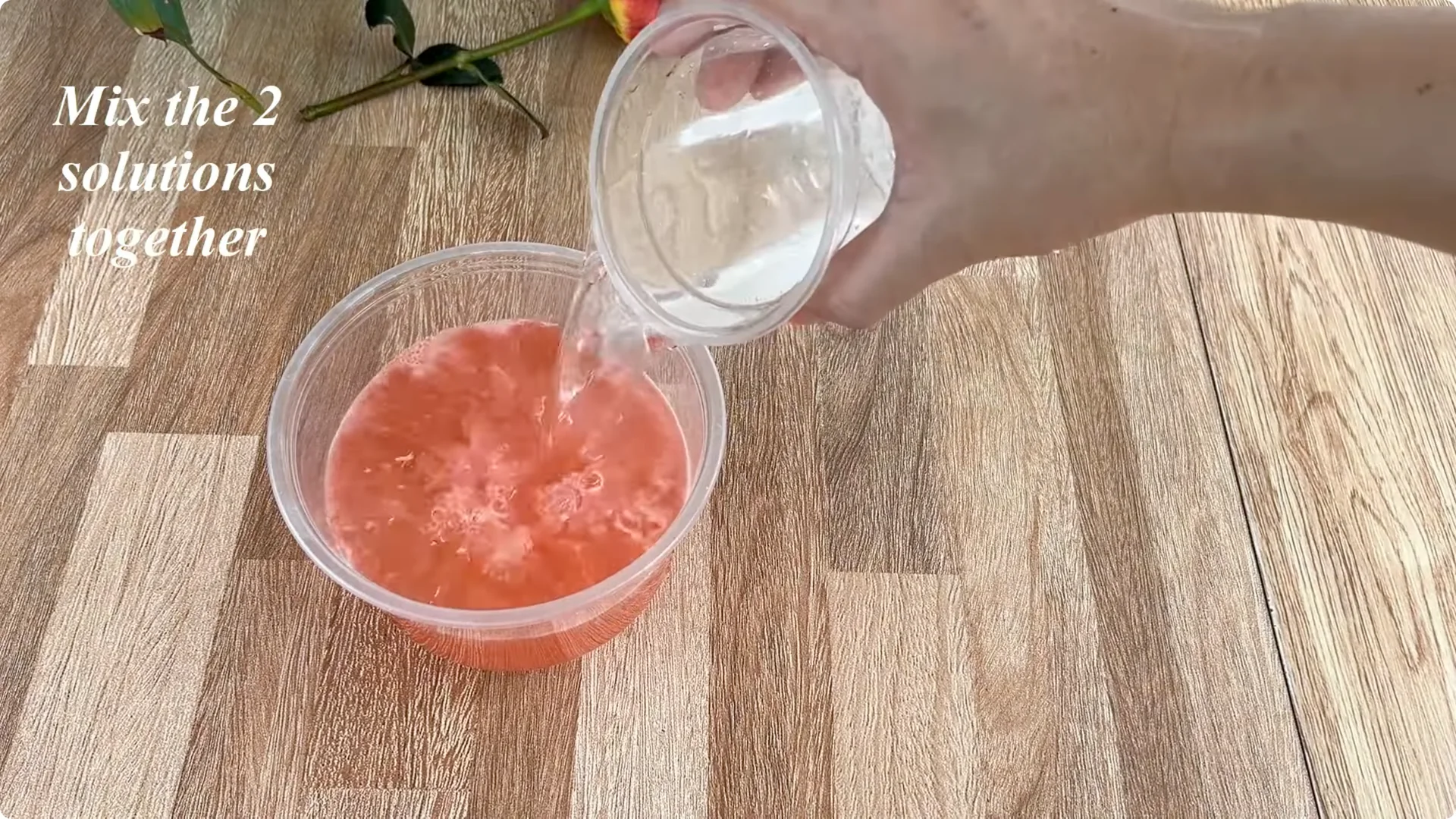
After the branch has been soaked in the baking soda – glucose solution for 30 minutes, take the branch out. Mix the remaining soak solution with the tomato solution just prepared.
2. Rapid Rose Cutting Propagation: Pot and Plant the Cutting
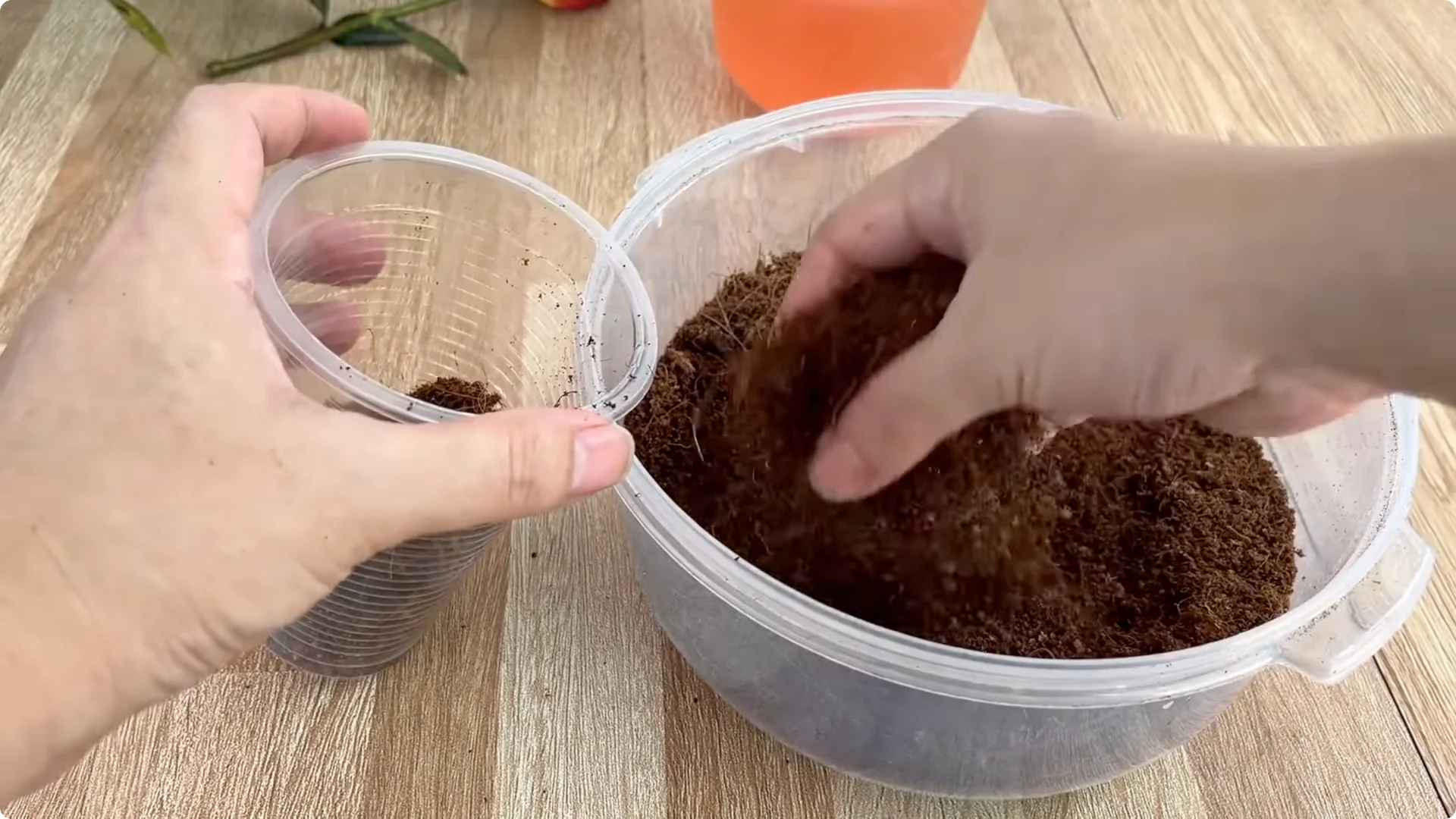
Prepare a clean plastic cup. Put in processed coconut fiber and compact it. Coconut fiber is an ideal growing medium because it retains moisture well but is still airy.
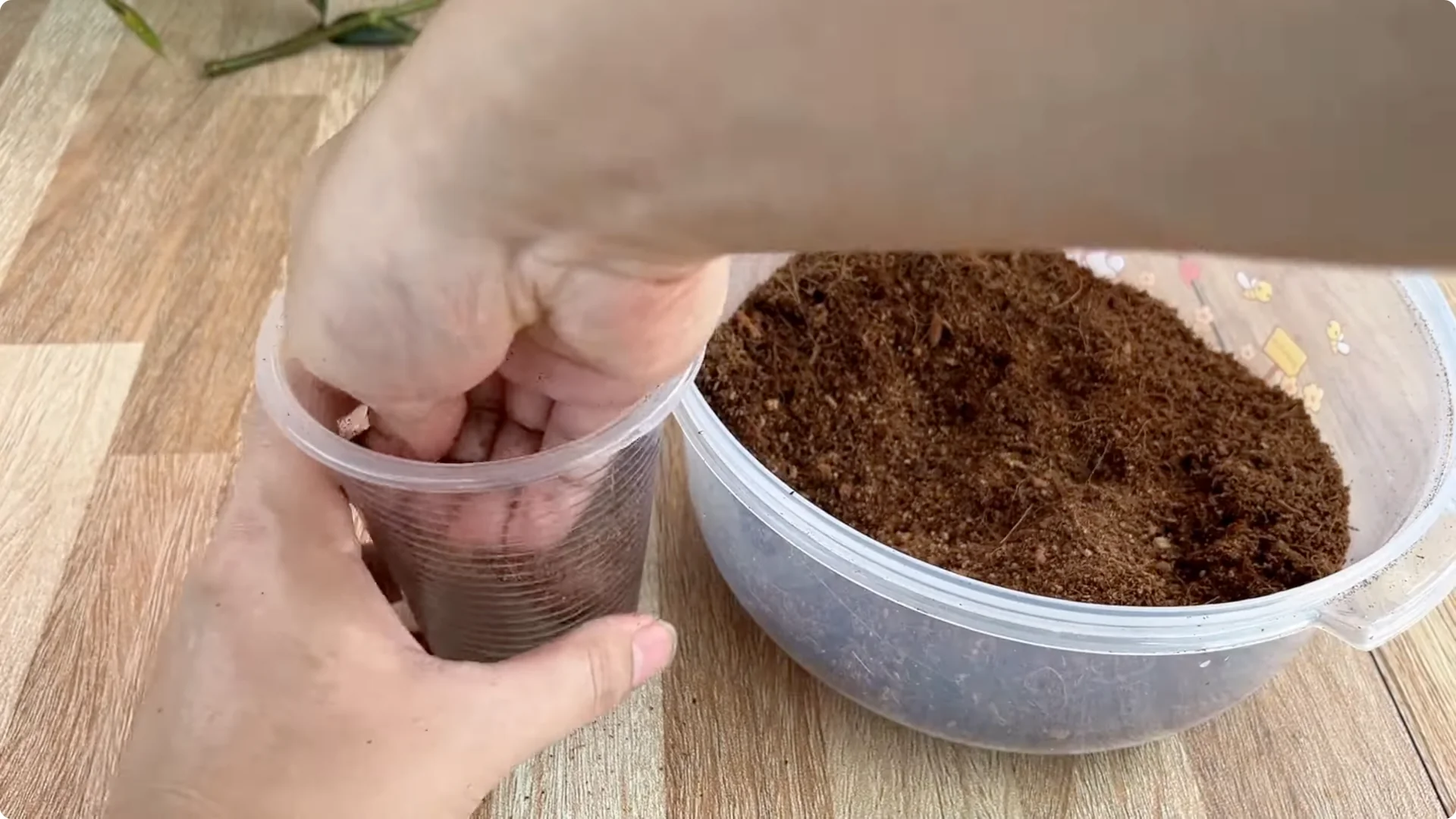
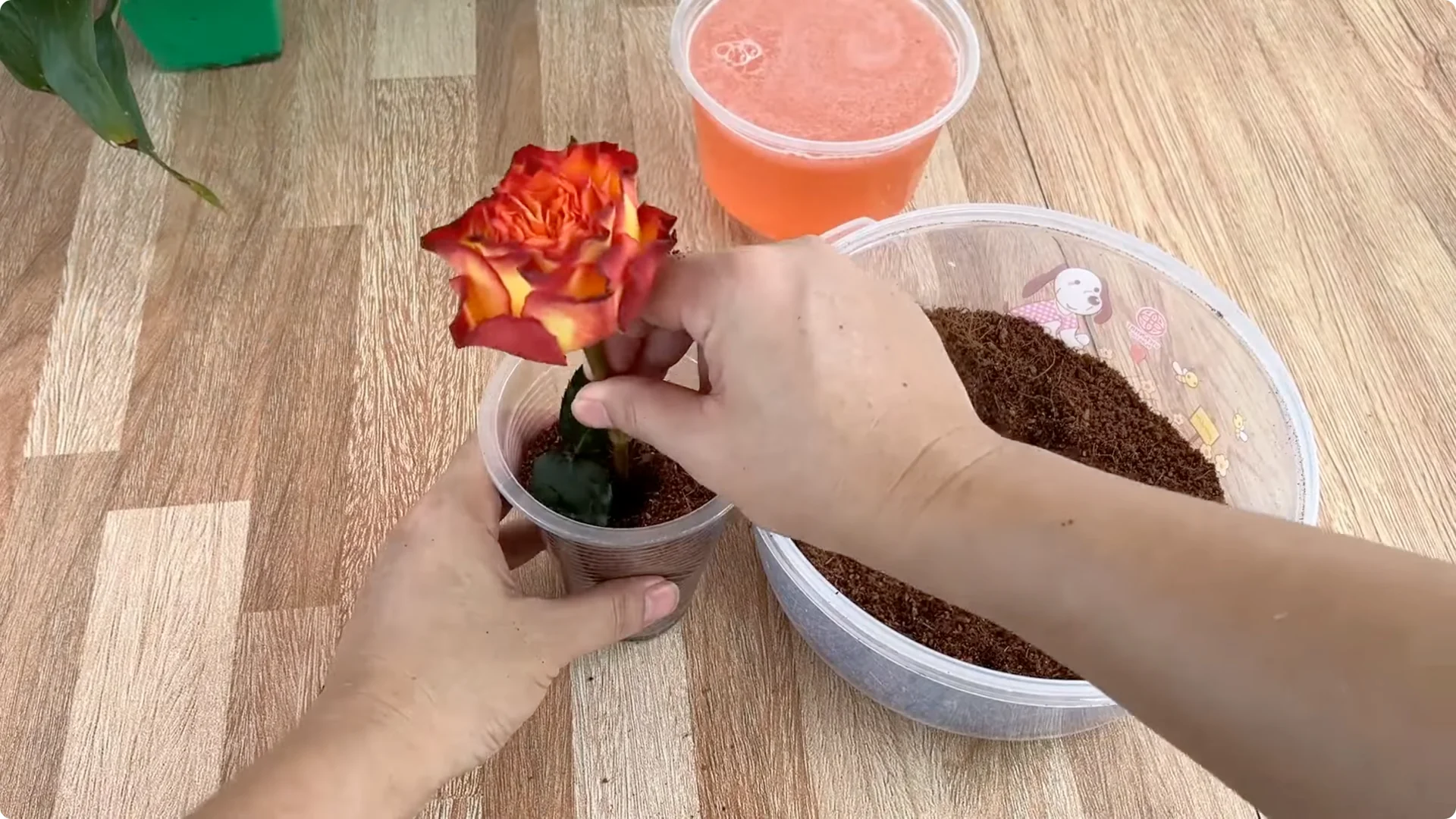
This helps young roots develop easily without being waterlogged. Use your hand to make a small hole in the middle, place the rose branch in, then add coconut fiber and compact it around to fix the branch.
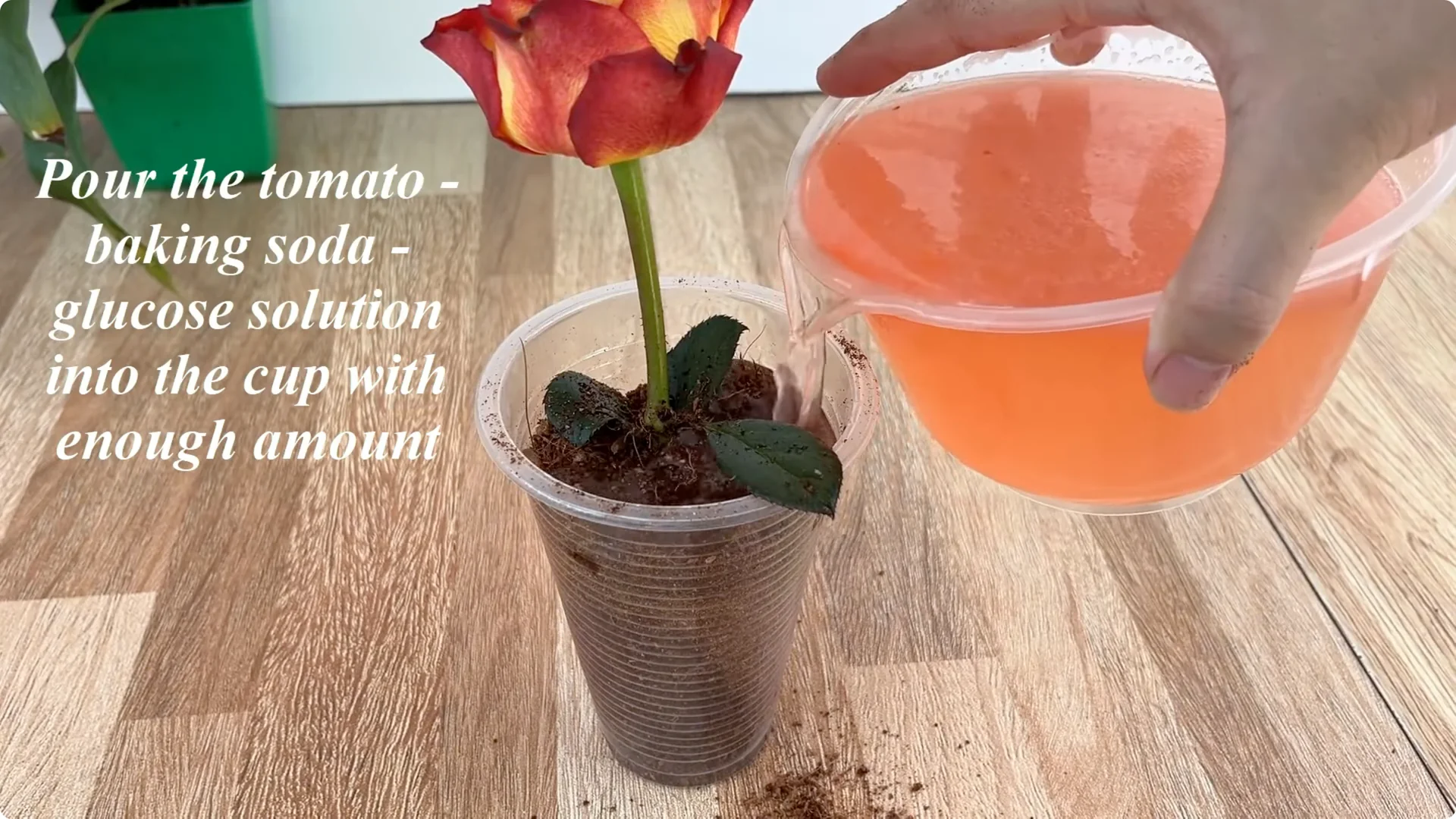
Next, pour the tomato – baking soda – glucose solution into the cup with enough amount to keep the coconut fiber moist but not too waterlogged. This is a synthetic solution that is both antibacterial and pH-balanced, and adds sugar and natural hormones to stimulate the branches to quickly grow roots. For another fast-root approach that pairs well with this method, see this fast sprout guide.
3. Rapid Rose Cutting Propagation: Create Humidity and Placement
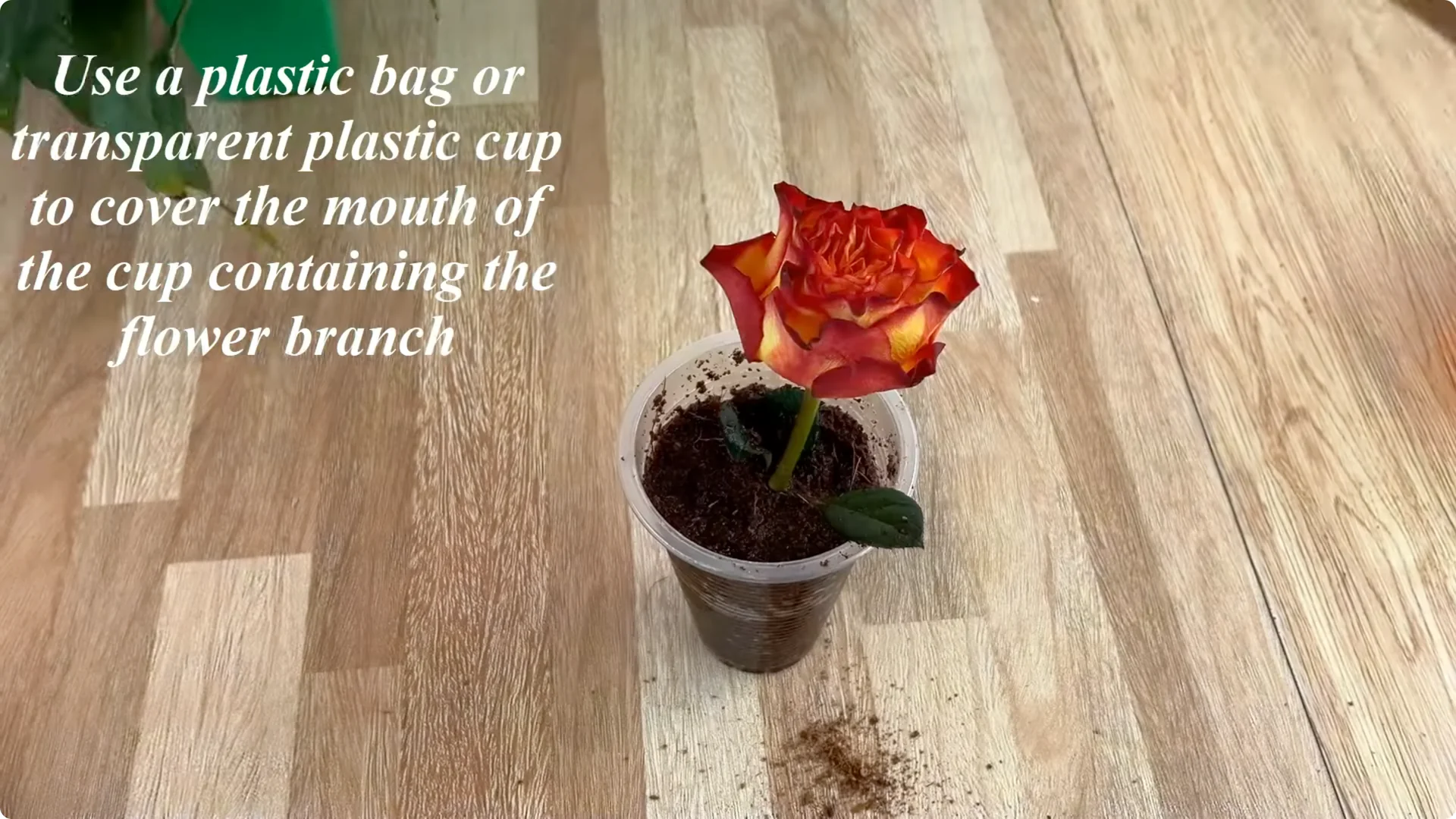
Use a plastic bag or transparent plastic cup to cover the mouth of the cup to create a humid environment like a mini greenhouse. Place the cup in a cool place, away from strong winds and harsh sunlight.
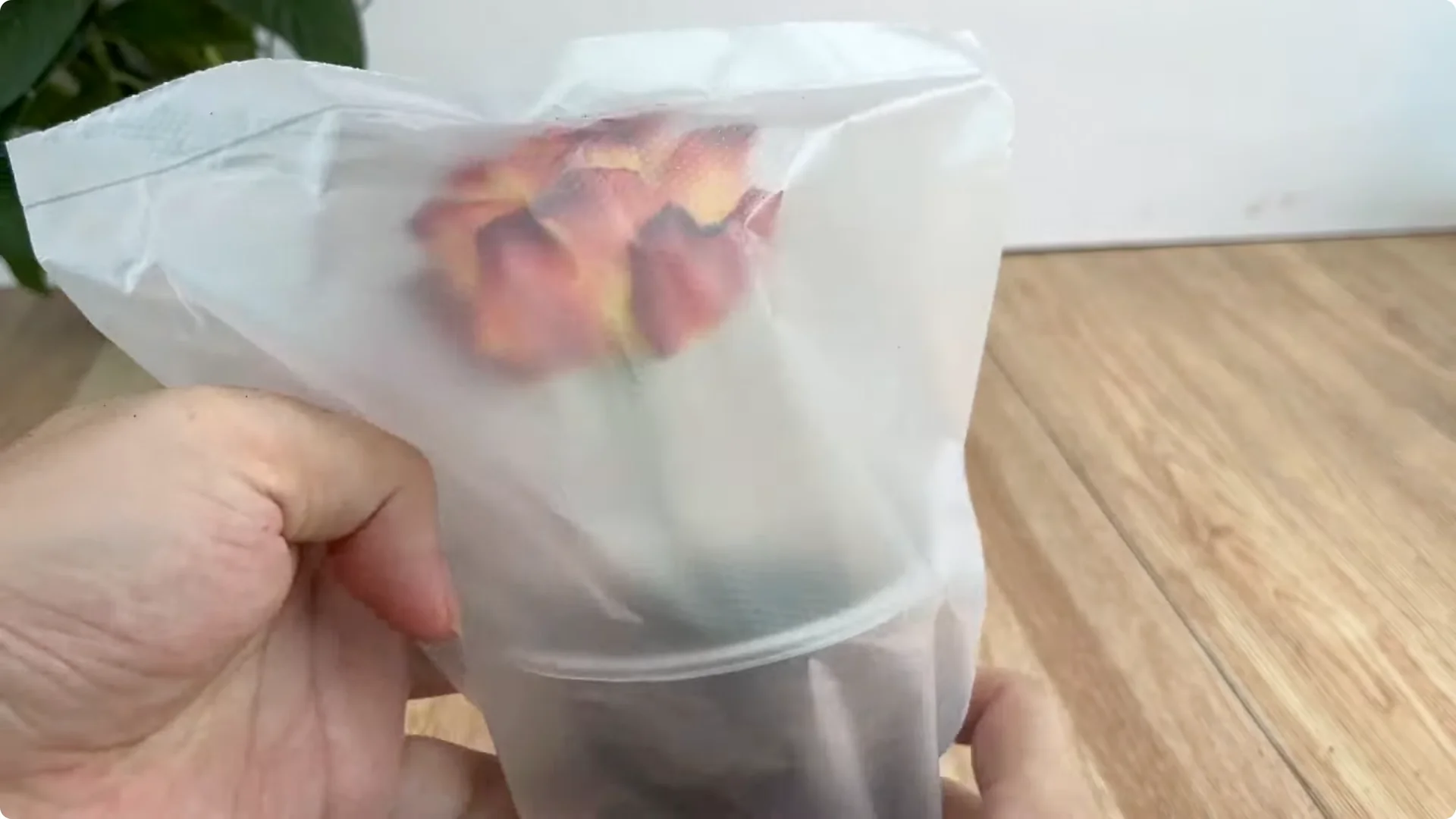
4. Rapid Rose Cutting Propagation: Results and Transplanting
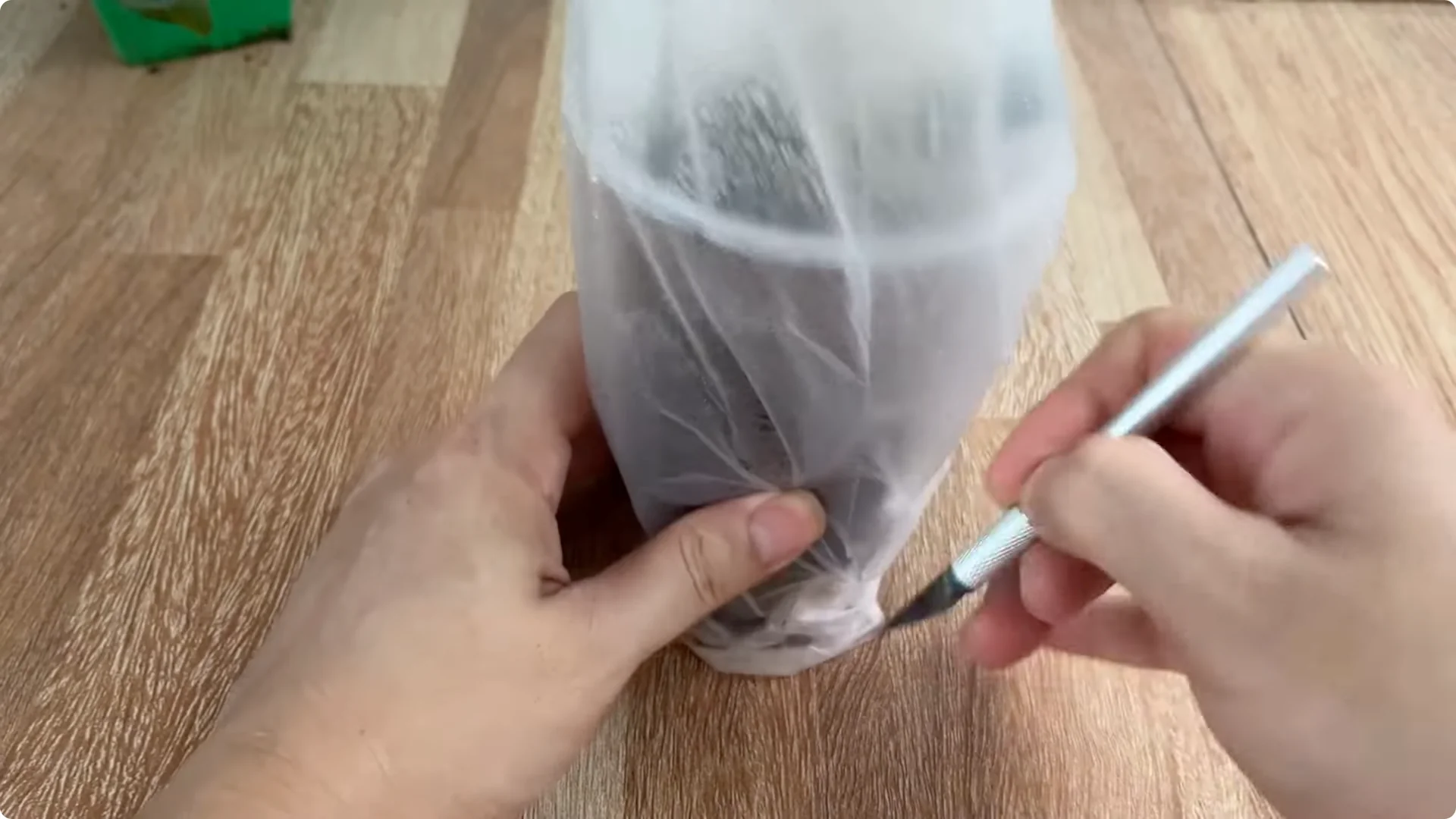
After 10 days you will see the rose branch sprouting healthy, green shoots, and many plump, white roots around the base. This is a sign that the method has been a great success.
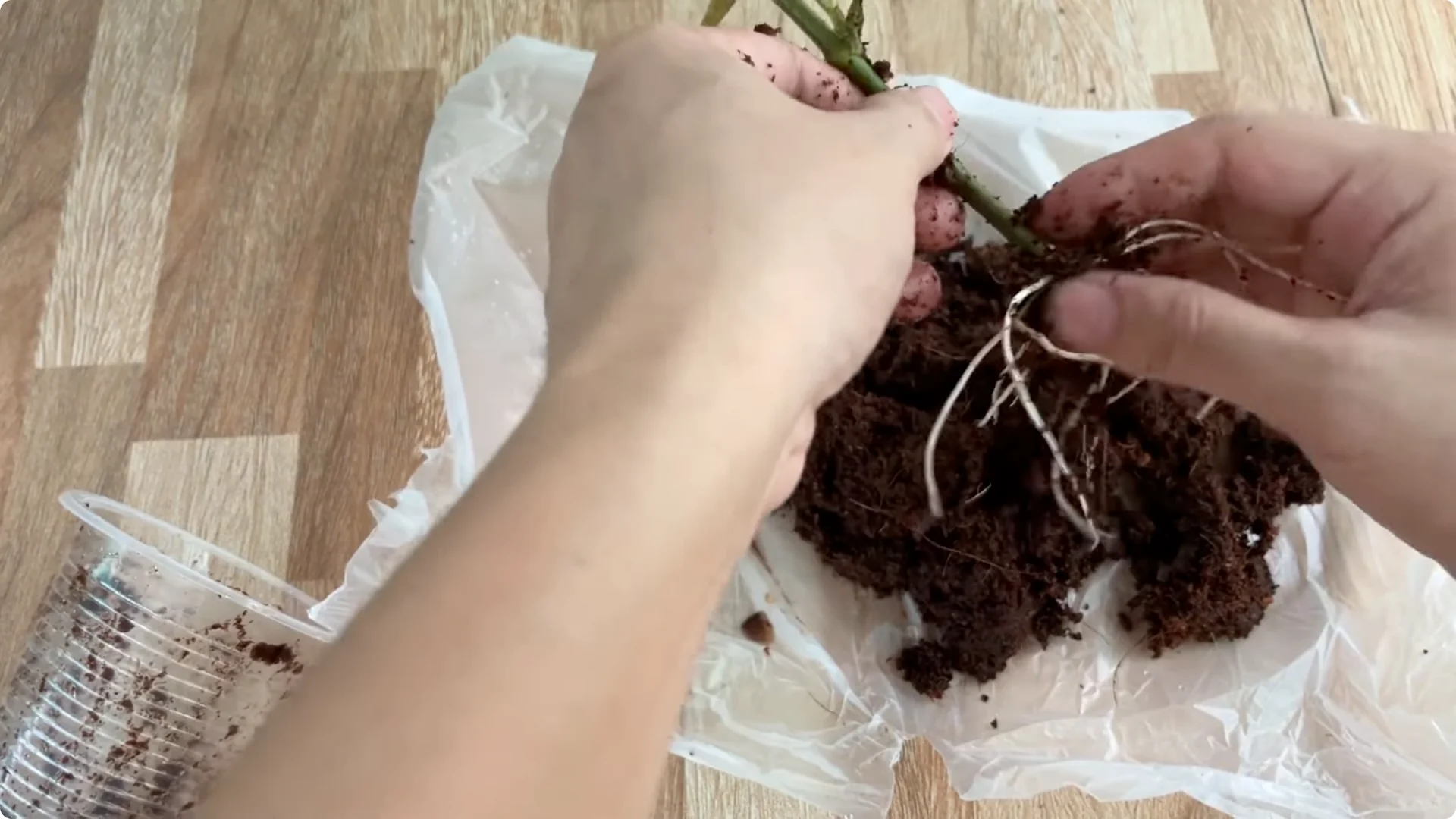
At this point, you can transfer the branch to a larger pot with a well-draining substrate such as river sand. The roots can grow strongly and the plant can quickly adapt to the new environment.
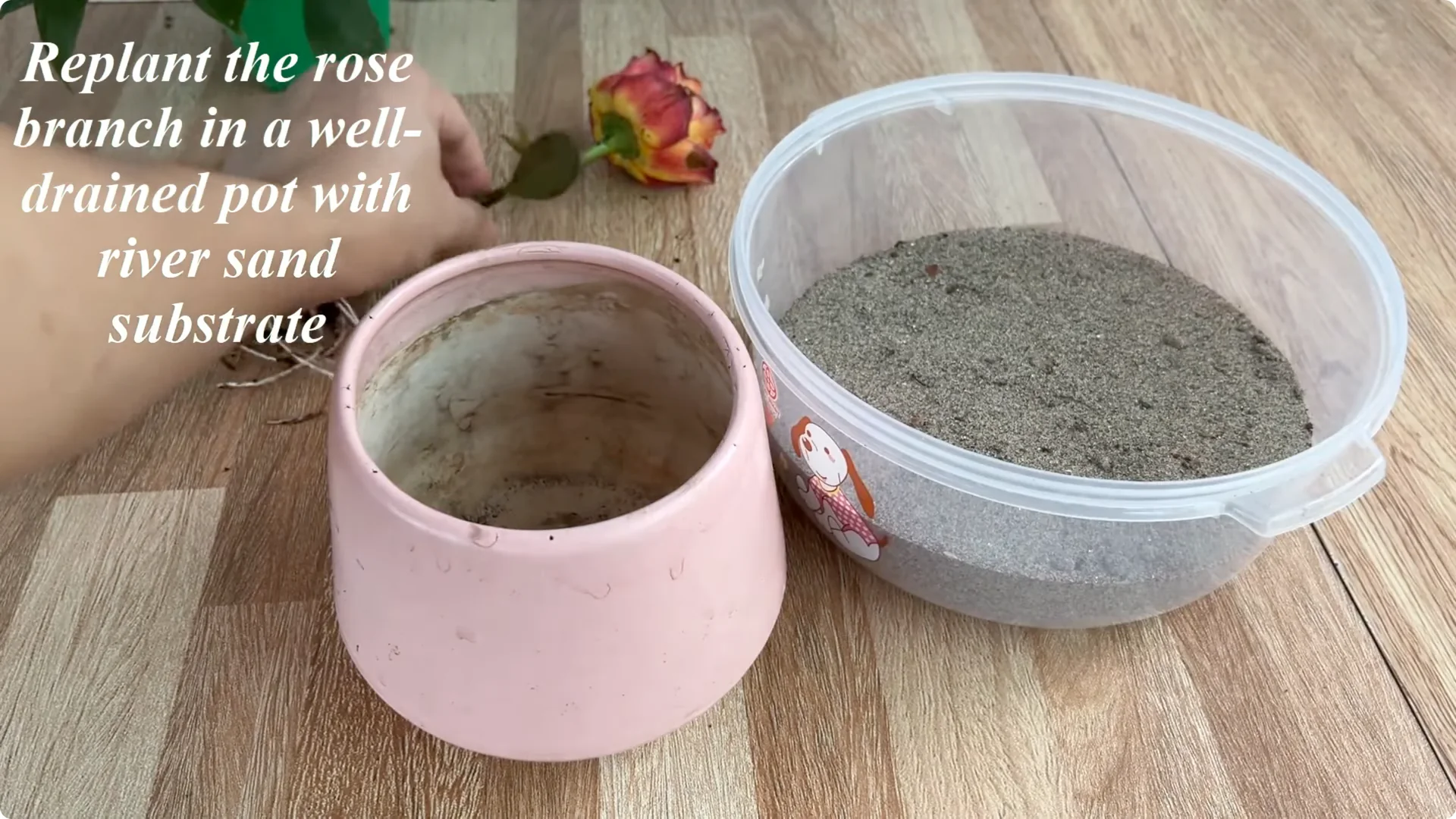
Rapid Rose Cutting Propagation: Final Thoughts
With just baking soda, glucose, and tomatoes – ingredients that are extremely easy to find in the kitchen – you can create a natural cutting solution. It helps rose branches quickly root, become healthy, and sprout strongly. Wish you successful cutting and a rose garden full of flowers all year round.