
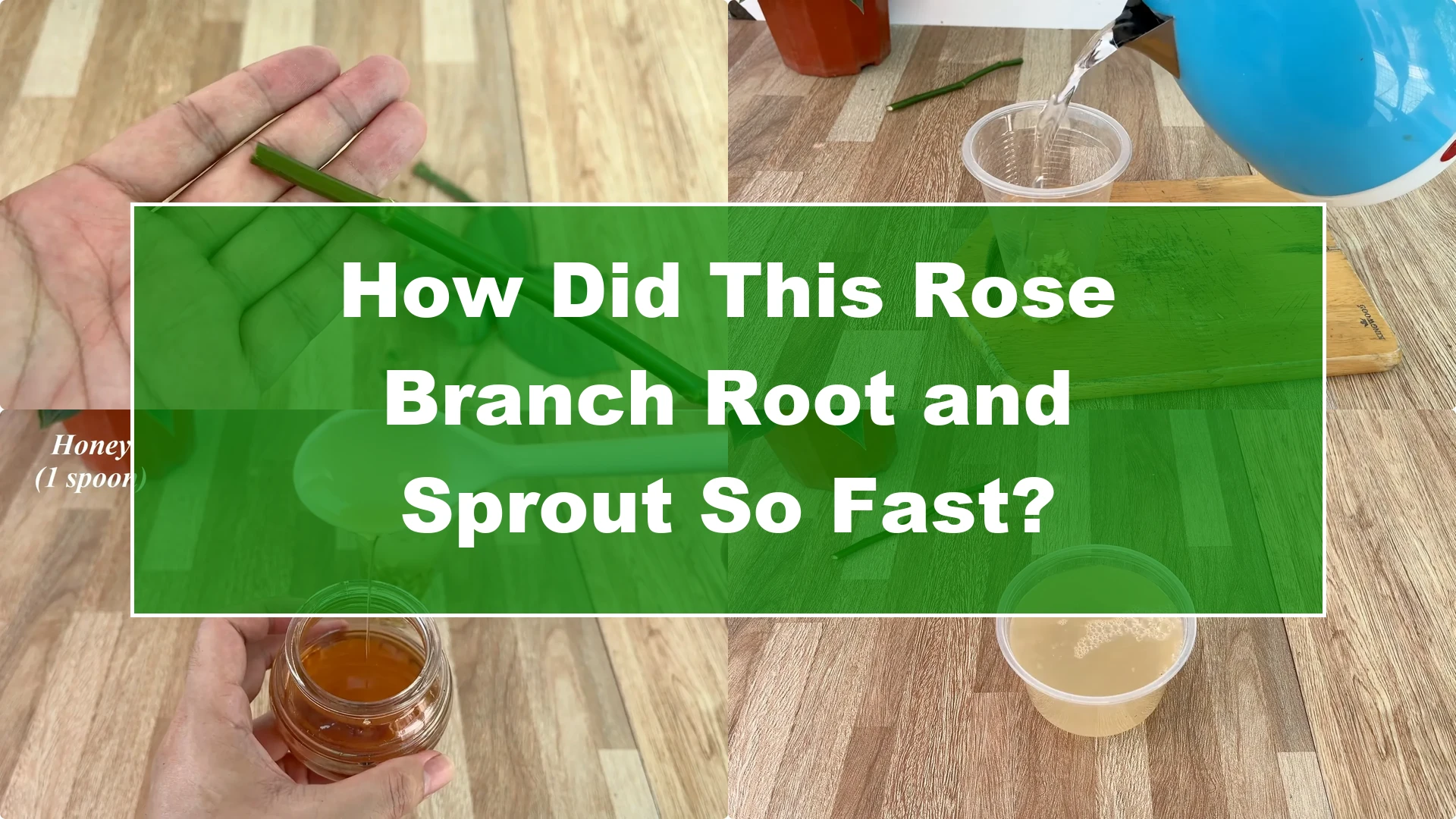
I continue to share with you a new, simple and extremely effective method of rose cuttings, which is both antibacterial and stimulates natural root growth. It is safe and easy to do at home. For more ways to get fast results, see tips to make rose branches root and sprout fast.
1. Rose Cutting Propagation: Prepare the Cutting
The Beginner’s Rose Propagation Starter Kit 🌹
A simple printable PDF guide to help you root rose cuttings successfully.
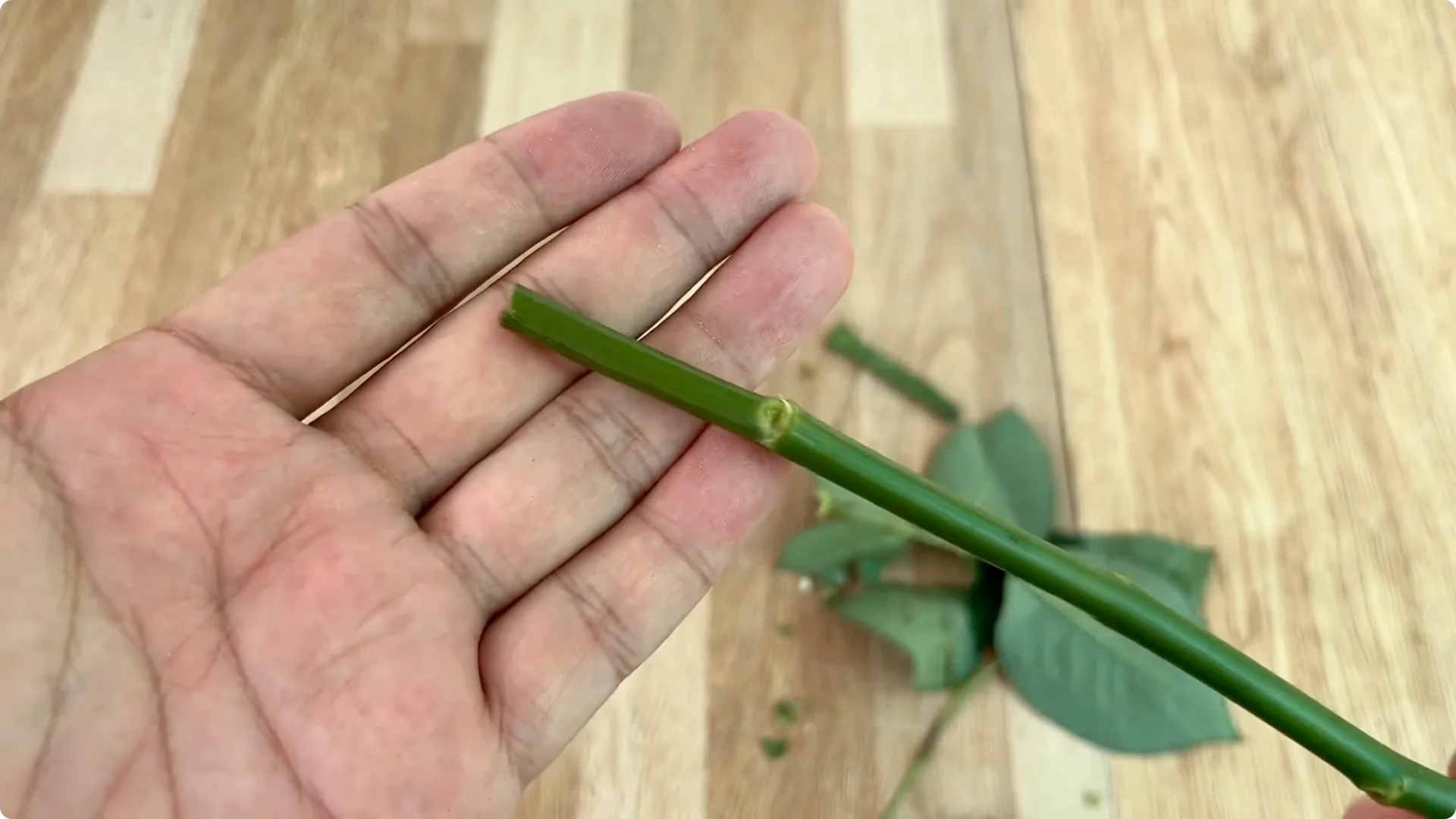
Get The Guide →Choose a healthy rose cutting with moderate age. Remove all the leaves and sharp thorns on the branch.
Reducing the leaves will limit the evaporation of water, helping the branch focus all its energy on the rooting and sprouting process. Use sharp scissors to shorten the branch, keeping only about 15-20 cm in length.
Cut the base of the branch at a 45-degree angle. The beveled cut increases the contact area, helping the branch absorb nutrients better.
2. Rose Cutting Propagation: Ginger Rooting Soak
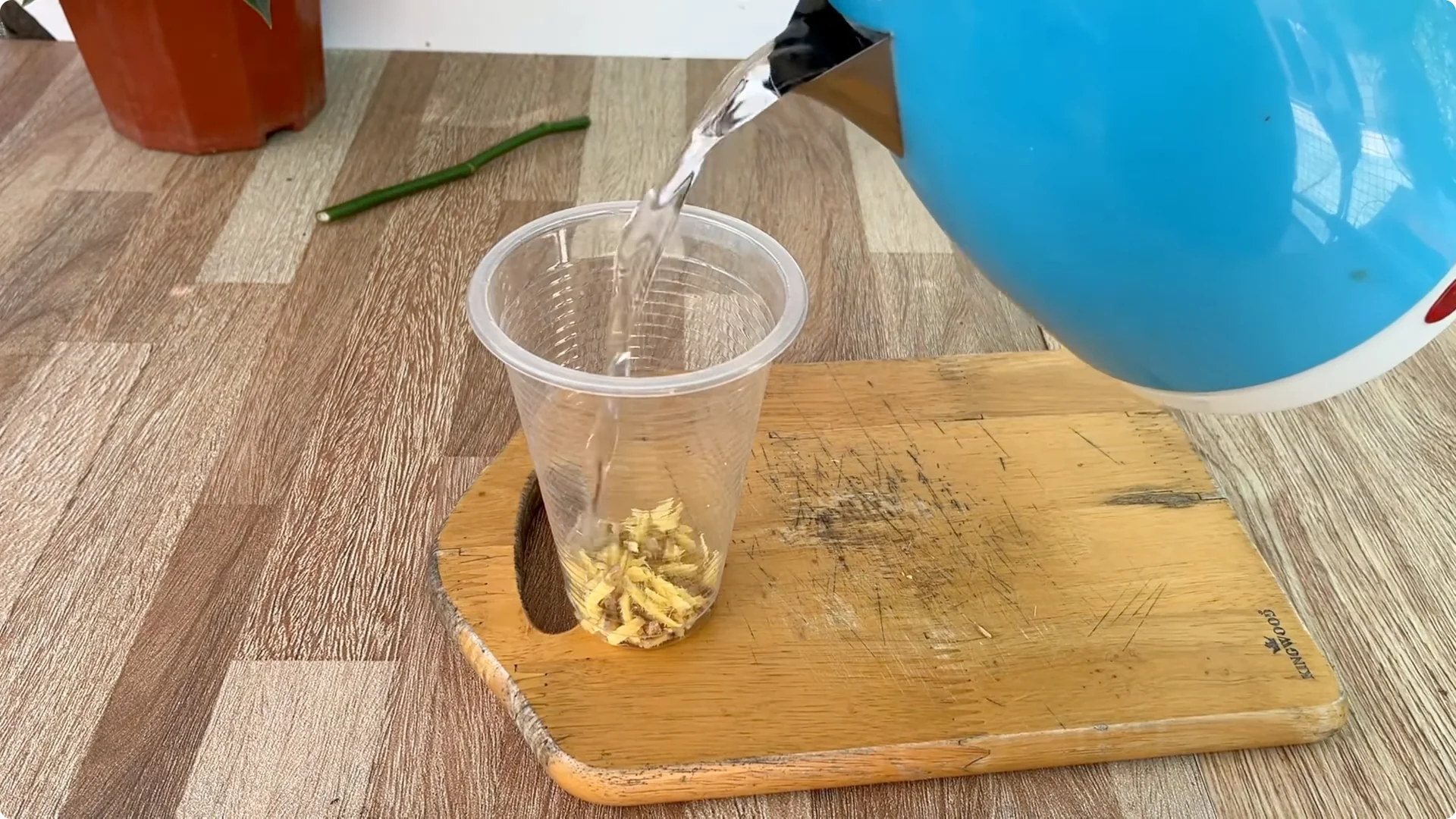
Take about 10 grams of fresh ginger, cut or chop into small pieces, and put it in a clean plastic cup. Ginger contains gingerol and shogaol – compounds with extremely strong antibacterial and antifungal effects, protecting the cut from infection.
At the same time, ginger also stimulates fluid circulation in the branch tissue, helping to speed up the formation of callus and new roots. Add 0.5 liters of clean water and stir well.
Soak the rose branch for 15 minutes. For quick sprouting tricks, see how to get rose branches to sprout overnight.
3. Rose Cutting Propagation: Add Potato and Honey
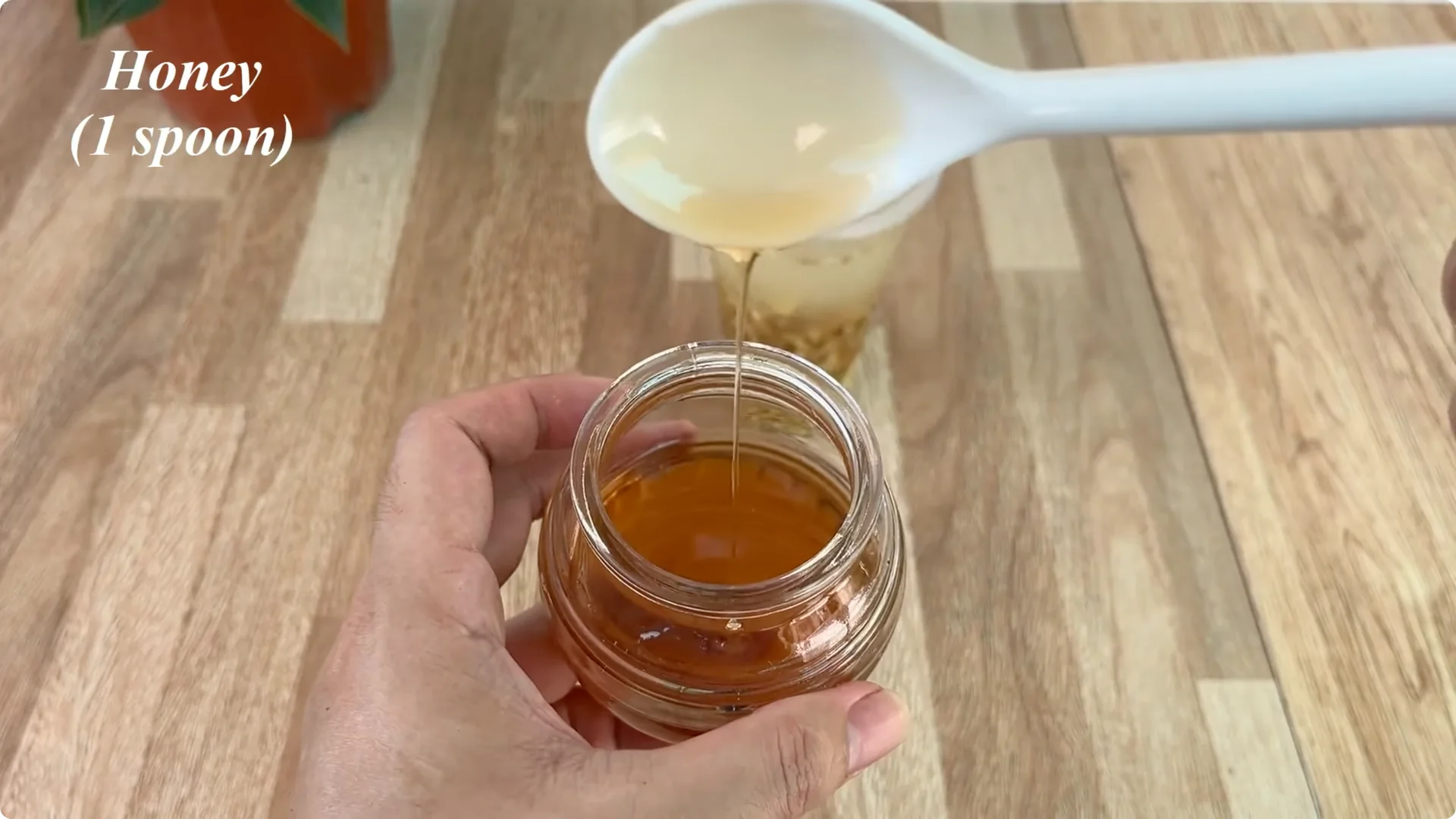
Prepare 1 large potato, peel and cut into small pieces. Potatoes are rich in starch, vitamin B6, and vitamin C, which are a great source of energy for the root tissue.
These nutrients help root cells grow quickly and healthily. Put the potato skin in the cup with ginger.
Add 1 tablespoon of honey and stir well to completely dissolve the honey in the solution. Honey is a natural antibacterial agent, helping to prevent the invasion of harmful bacteria and fungi.
It also provides natural sugar, an easily absorbed energy source for the root tissue, supporting the rapid rooting process. Leave for 15 minutes to let the nutrients blend.
4. Rose Cutting Propagation: Clarify and Dilute the Solution
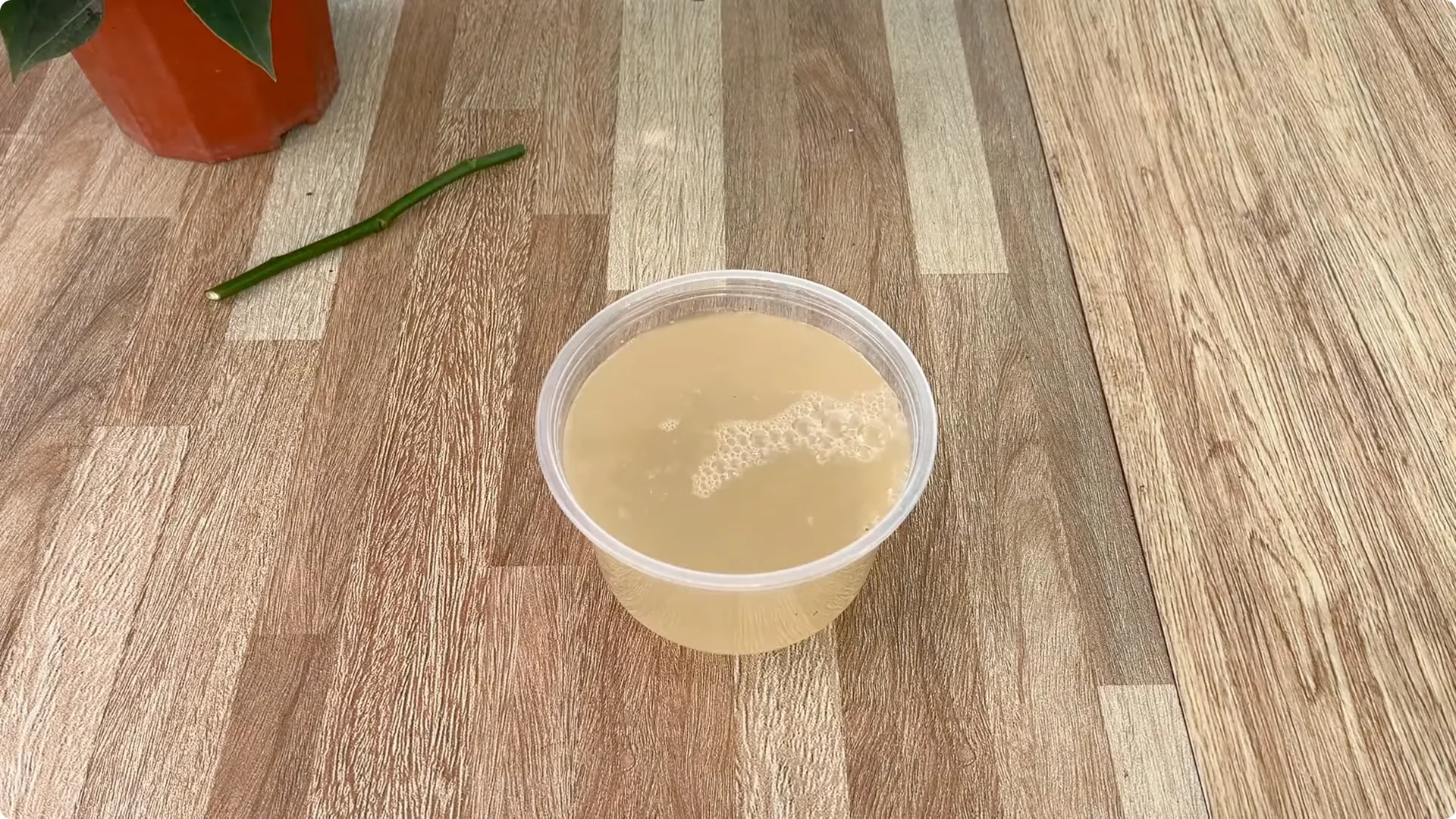
After soaking for enough time, take out the rose branches. Stir the mixture well and filter out the residue, keeping the clear solution.
The combination of ginger – potato – honey creates a strong antibacterial mixture, supplementing abundant energy and nutrients. This helps the branches to easily take root and grow healthily.
Dilute the extract by adding 0.5 liters of clean water. The solution is now ready for planting.
5. Rose Cutting Propagation: Planting Medium and Setup
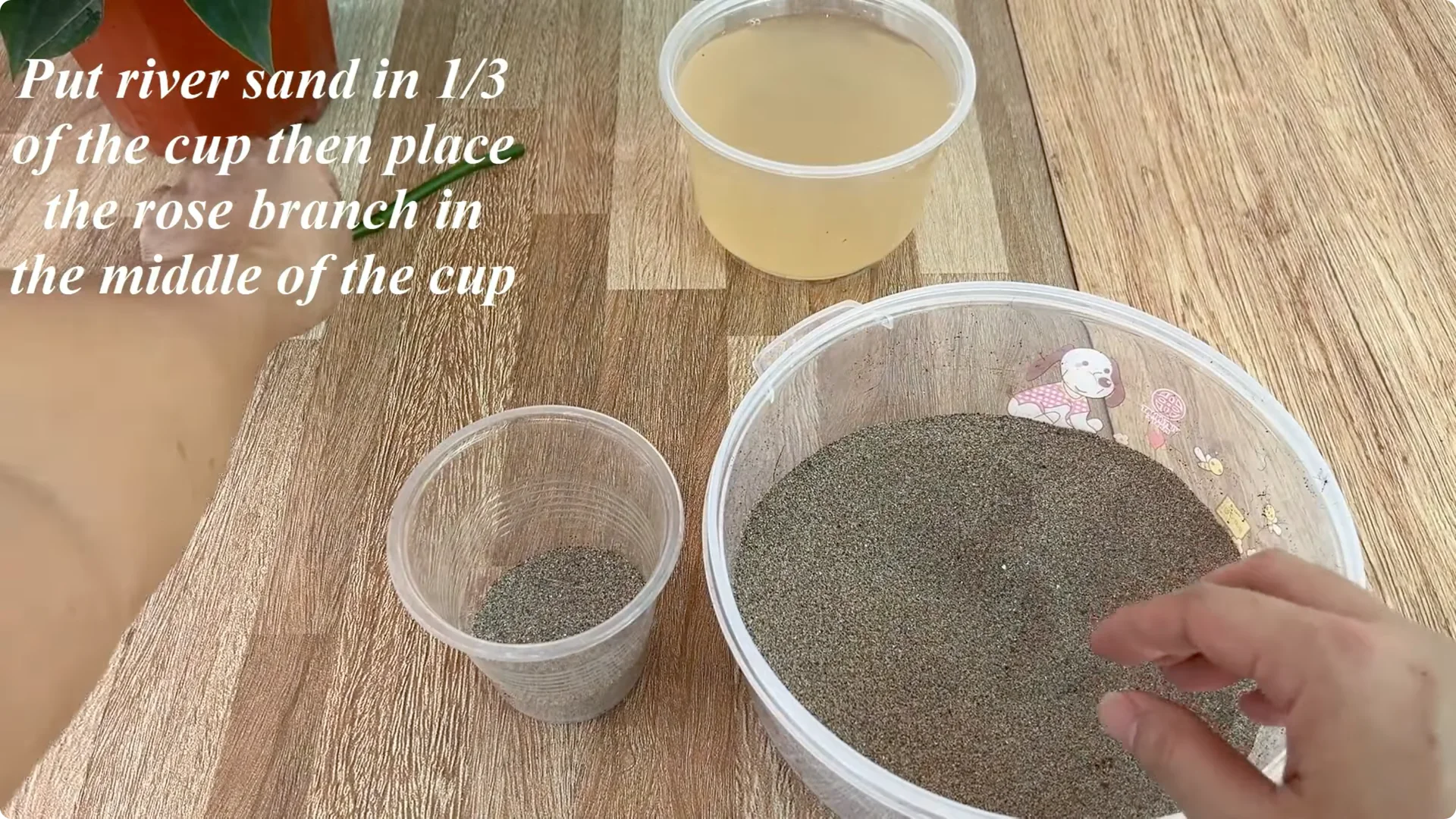
Use a clean plastic cup and add 1/3 of the treated river sand to the cup. Place the rose branch in the middle.
Add sand and press lightly around the base to fix it. River sand has high ventilation and good drainage, helping young roots not to be waterlogged and easily develop.
Pour the ginger – potato – honey solution into the cup so that the sand is moist enough but not too waterlogged. Use a plastic bag or transparent plastic cup to cover the mouth of the cup.
This creates a humid environment like a greenhouse, helping to keep the temperature stable and reduce water loss. Place the cup in a cool place, away from strong sunlight and wind.
6. Rose Cutting Propagation: Rooting Conditions and Timeline
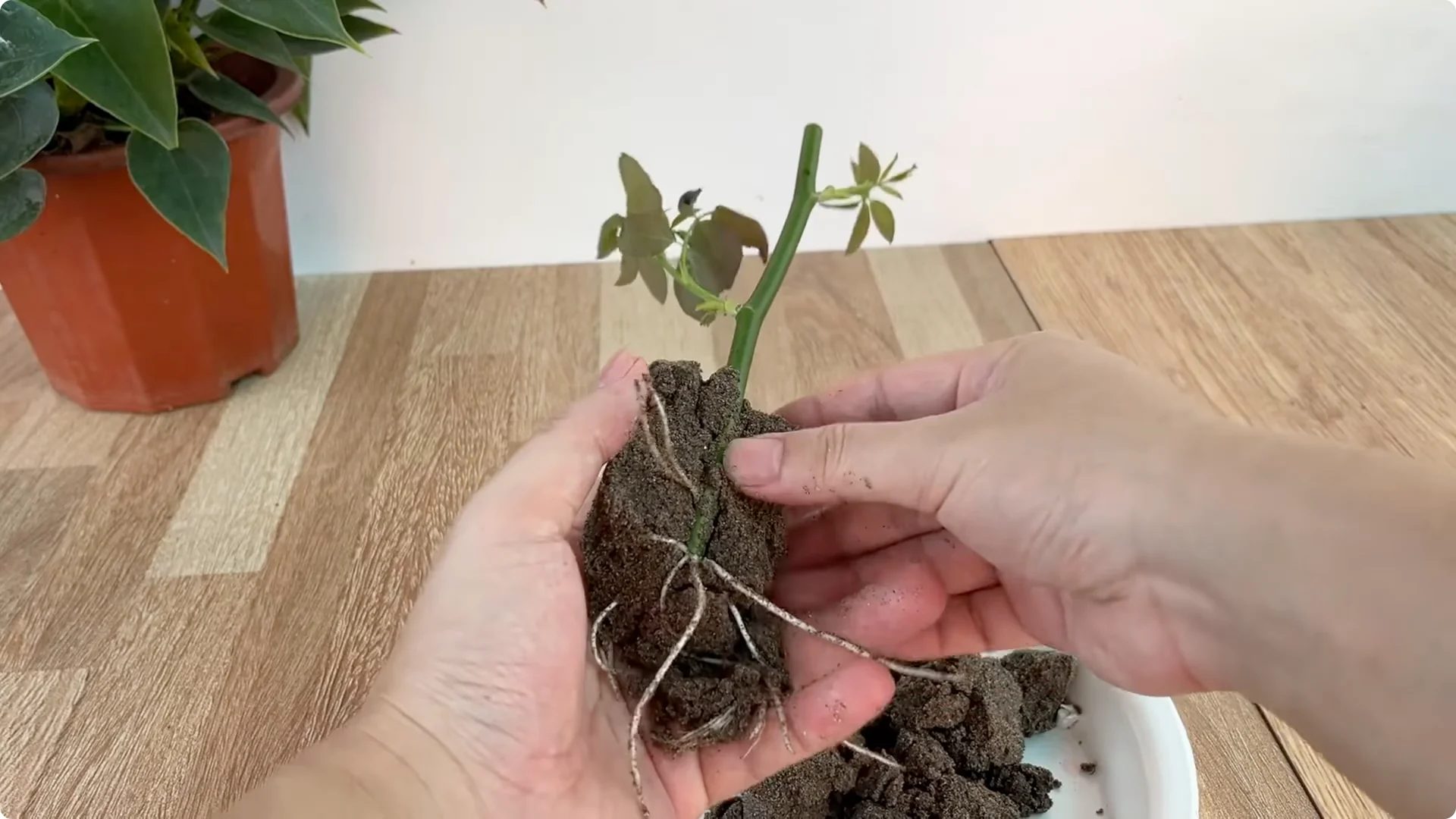
Here is the most interesting part: after just 10 days you will see green shoots starting to sprout from the dormant buds. New, plump, white roots grow thickly around the base.
This is a sign that the branch has successfully taken root and is ready to be planted in a larger pot.
7. Rose Cutting Propagation: Transplant to a Larger Pot
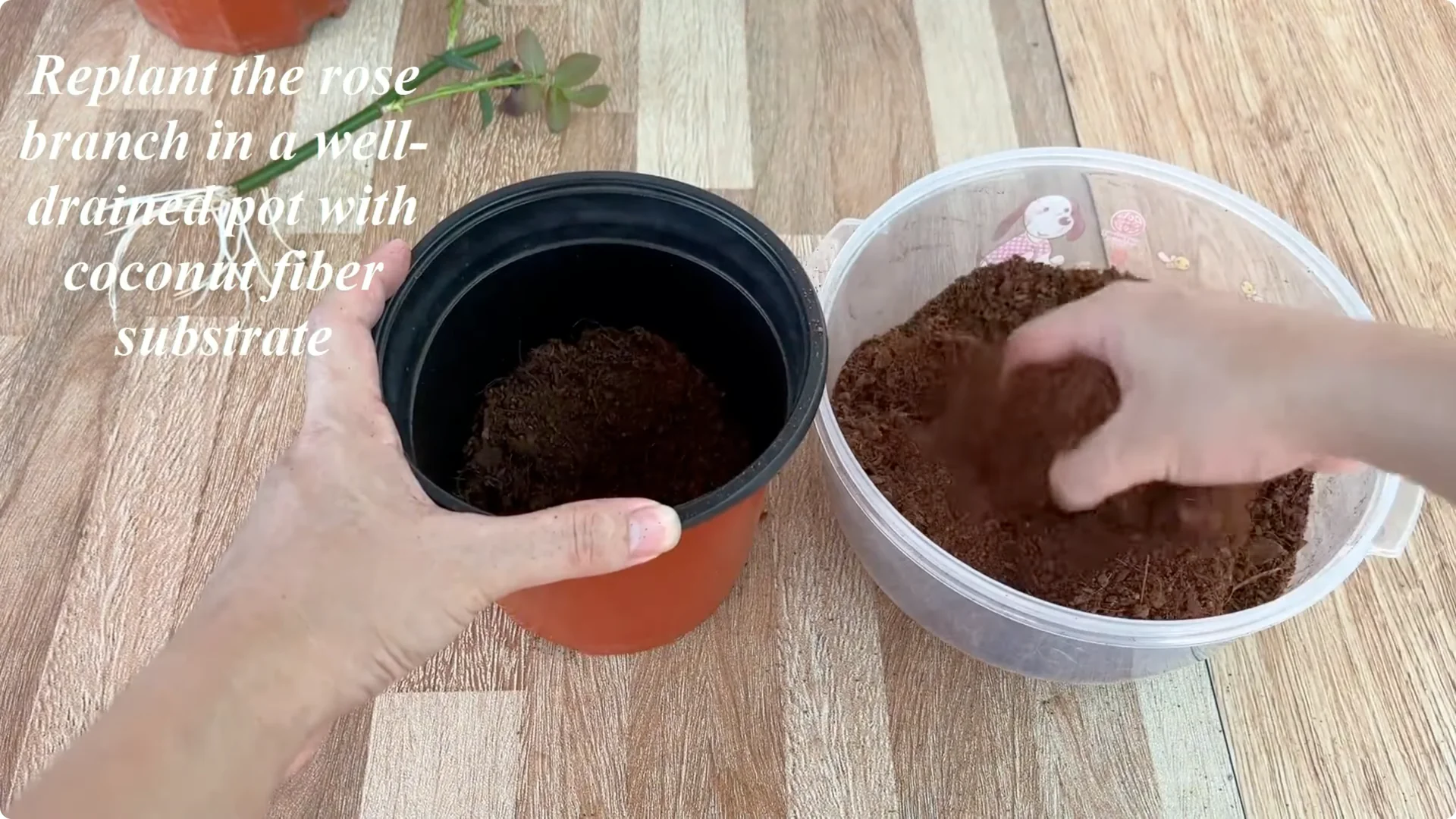
Move the branch to a pot with a well-drained substrate such as coconut fiber. You can also use a mixture of coconut fiber – sand – humus.
This helps the plant grow healthy and sustainable. For stronger post-rooting development, see this guide to fast growth after rooting.
Final Thoughts on Rose Cutting Propagation
Ginger – potatoes – honey, ingredients that seem to be only for cooking, are the secret to helping rose cuttings sprout and root extremely quickly. Apply this method to build a bright, healthy rose garden all year round.
About The Author

The Beginner’s Rose Propagation Starter Kit 🌹
A simple printable PDF guide to help you root rose cuttings successfully.
Get The Guide →