

I will guide you through a detailed, scientific and methodical rose propagation process – helping the branches to quickly sprout, root early and grow healthily.
The entire process is optimized based on the physiological characteristics of roses, the biological effects of each material, and the technique of processing the substrate to suit the growing conditions at home.
1. Rose Propagation with Lemon: Prepare the cutting
First, we need to prepare a healthy rose branch with moderate tissue age – that is, not too young to make the tissue vulnerable, but not too old to slow down the process of forming new roots.
After selecting the branch, all leaves and sharp thorns will be removed.
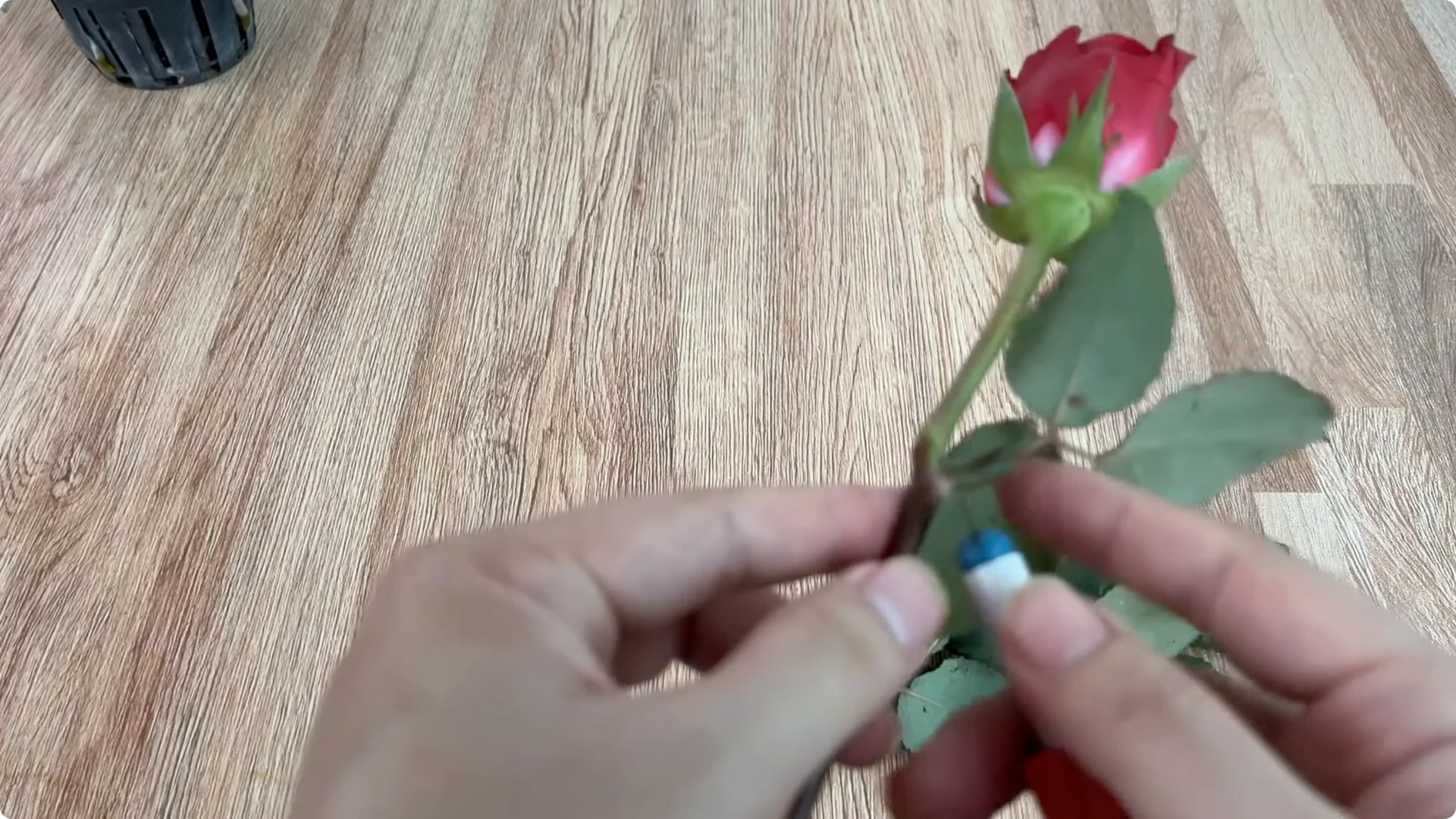
This helps reduce water loss, limit fungal diseases and concentrate nutrients on the stem to stimulate root formation.
Then, cut the branch to about 15-20 cm, keeping the healthy dormant buds to ensure the ability to sprout later.
Read More: methods to help cuttings root and bloom fast
2. Rose Propagation with Lemon: Lemon solution
Next, we prepare 1 fresh lemon.
Lemon is a natural ingredient containing organic acids that help disinfect while softening the outer layer of woody tissue, helping the rooting process to take place faster.
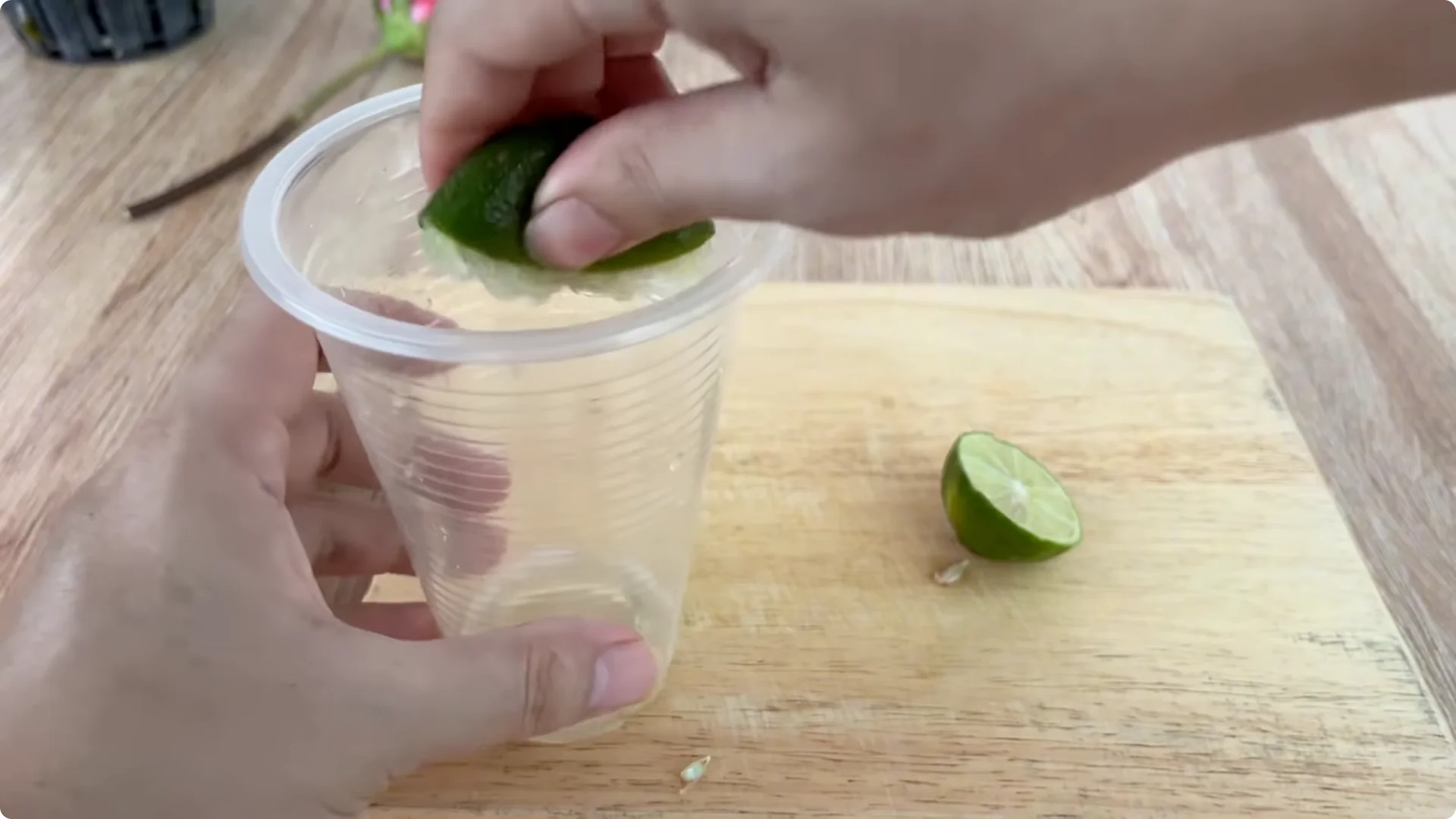
Wash, cut in half and squeeze all the lemon juice into a clean plastic cup.
To increase the effectiveness, we add 1/2 teaspoon of baking soda.
When combined with the acid in lemon, baking soda creates a neutral environment – slightly alkaline helping to kill bacteria but still safe enough for plant tissue.
Then, add 500 ml of water and stir well.
Soak the rose branch for about 30 minutes – this step helps the branch to clean the outer layer, while absorbing a beneficial amount of natural minerals.
3. Rose Propagation with Lemon: Peel and oatmeal
We also take advantage of the lemon peel to increase the rooting effect.
Do not throw it away, but cut it into small pieces and put it in another clean cup.
Lemon peel contains many essential oils and antioxidants, when soaked, it will create a natural antibacterial support solution.
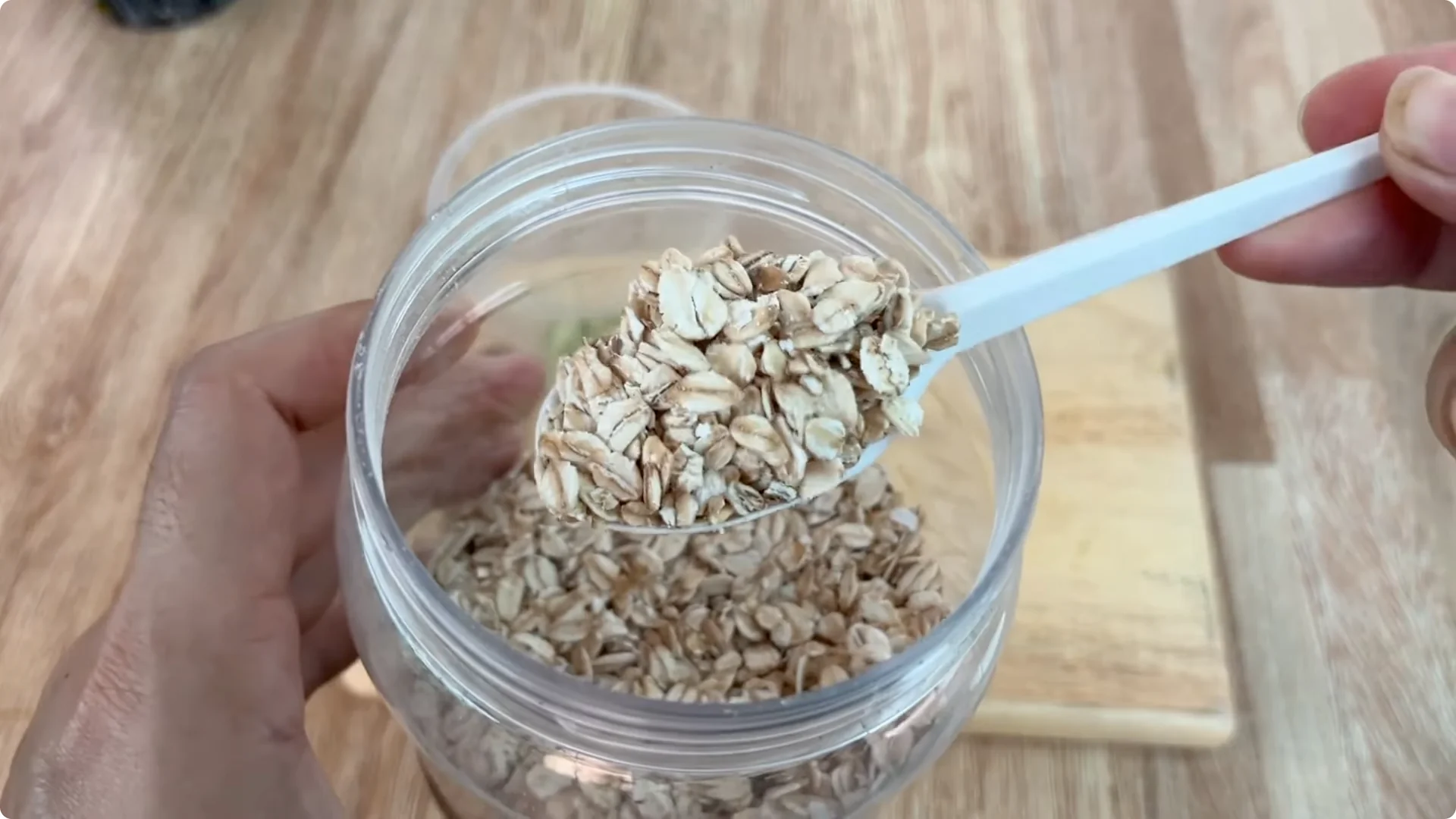
Continue adding 2 tablespoons of oatmeal – a source of nutrients containing vitamin B, minerals and mucus that helps retain moisture very well.
Pour into a cup of 500 ml of warm water, stir well and let stand for 30 minutes to dissolve the active ingredients.
Read More: a simple trick that boosts rooting and blooming
4. Rose Propagation with Lemon: Filter and mix
When the rose branches have soaked for enough time, gently remove them.
Filter the clear water from the lemon juice – soda mixture, remove the seeds so that the solution does not have sediment.

The lemon peel – oatmeal solution is also filtered to collect the clear, nutrient-rich water.
Then, mix these two solutions together into a balanced mixture – lemon helps to clean bacteria – soda adjusts pH – oatmeal provides nutrition – lemon peel supports natural antibiotics.
5. Rose Propagation with Lemon: Growing medium
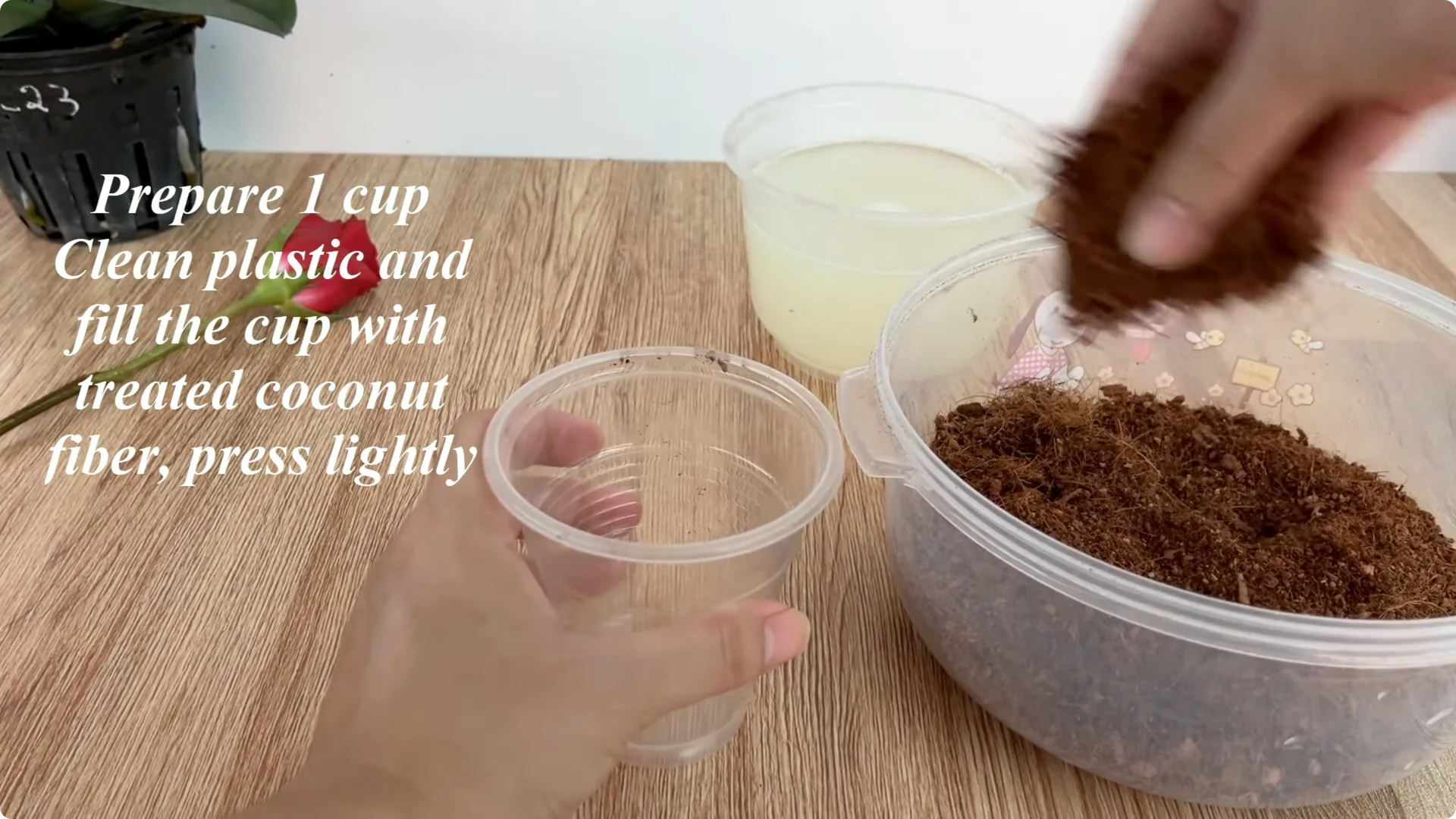
Use a clean plastic cup, put in the treated coconut fiber and press lightly to create a loose texture but still tight enough to keep the branches standing.
Pour the mixed solution into the cup of coconut fiber with a moderate amount – just enough to moisten, do not let the growing medium get too soggy.
Use your finger to make a small hole in the middle, place the rose branch in and gently secure it by stuffing the coconut fiber around it.
6. Rose Propagation with Lemon: Microclimate
To create a moist, sealed environment to help the branch quickly take root, we use a plastic bag or a transparent plastic cup to cover the mouth of the cup.
This is a method of creating a microclimate – keeping the humidity high, reducing evaporation and stabilizing the temperature, helping the rooting process to take place more smoothly.
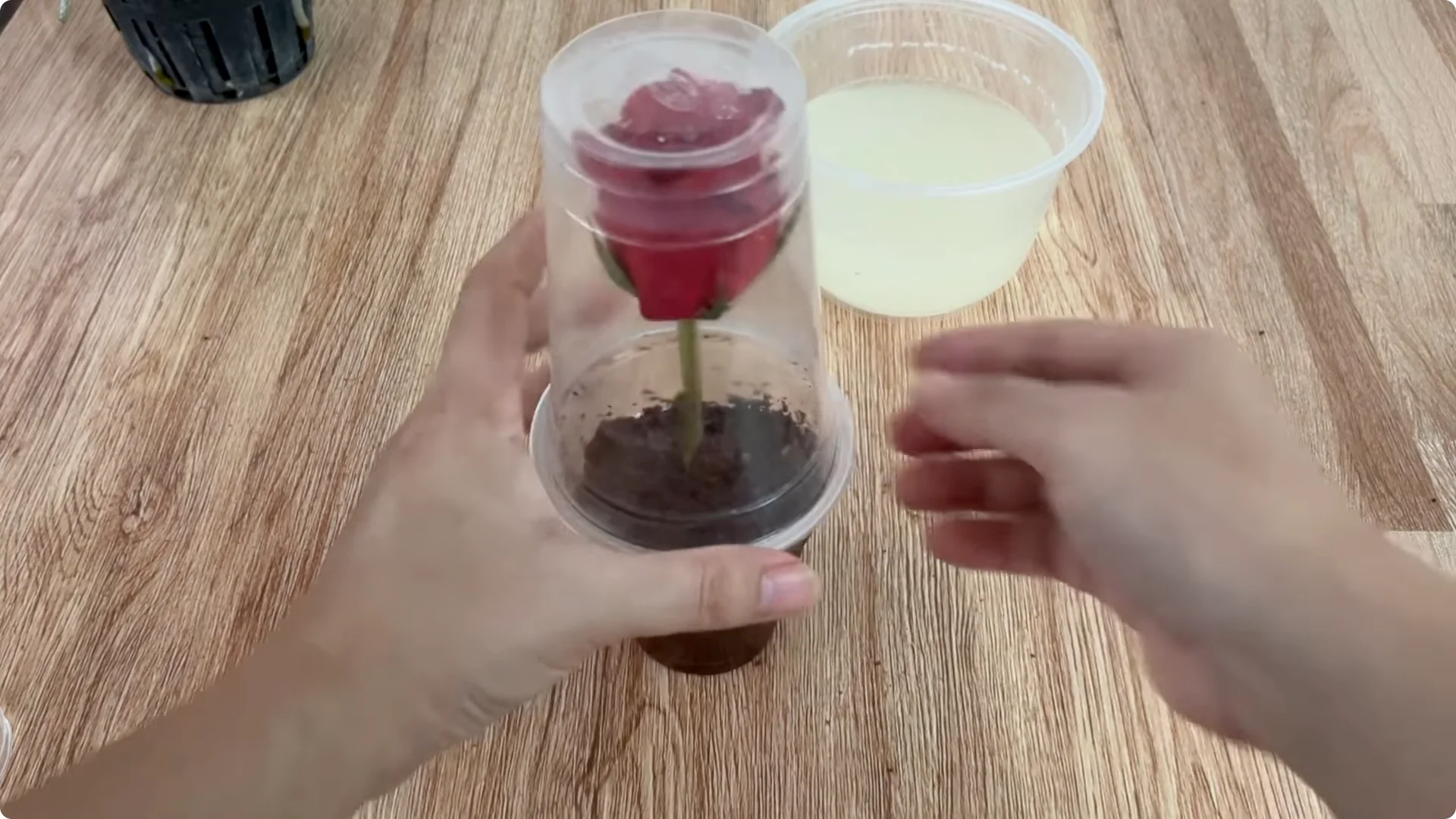
Place the cup in a cool place, away from strong winds and out of direct sunlight.
7. Rose Propagation with Lemon: Results
After about 10 days, you will see very clear results.
The dormant buds on the branch begin to sprout new, green and healthy buds.
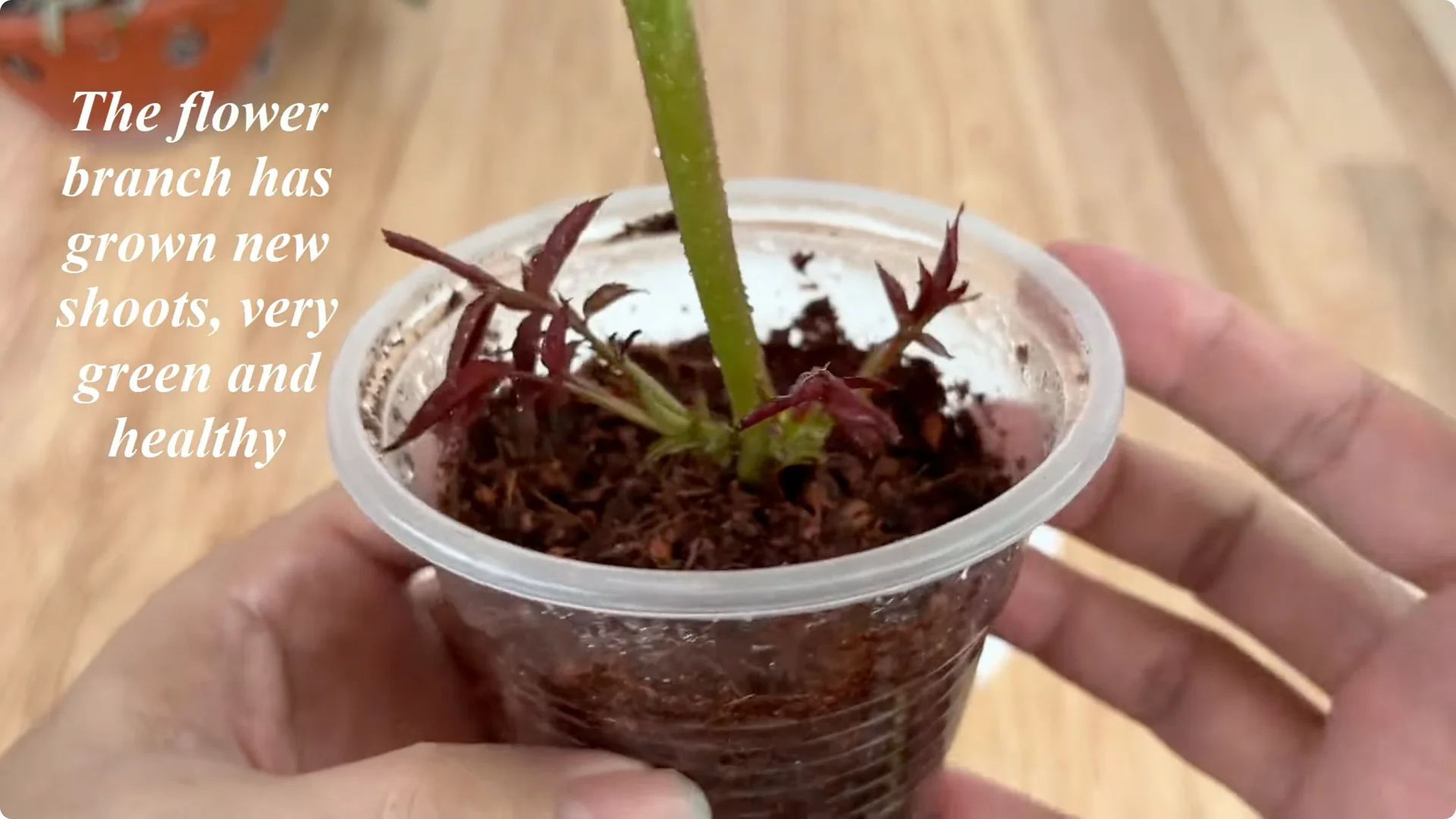
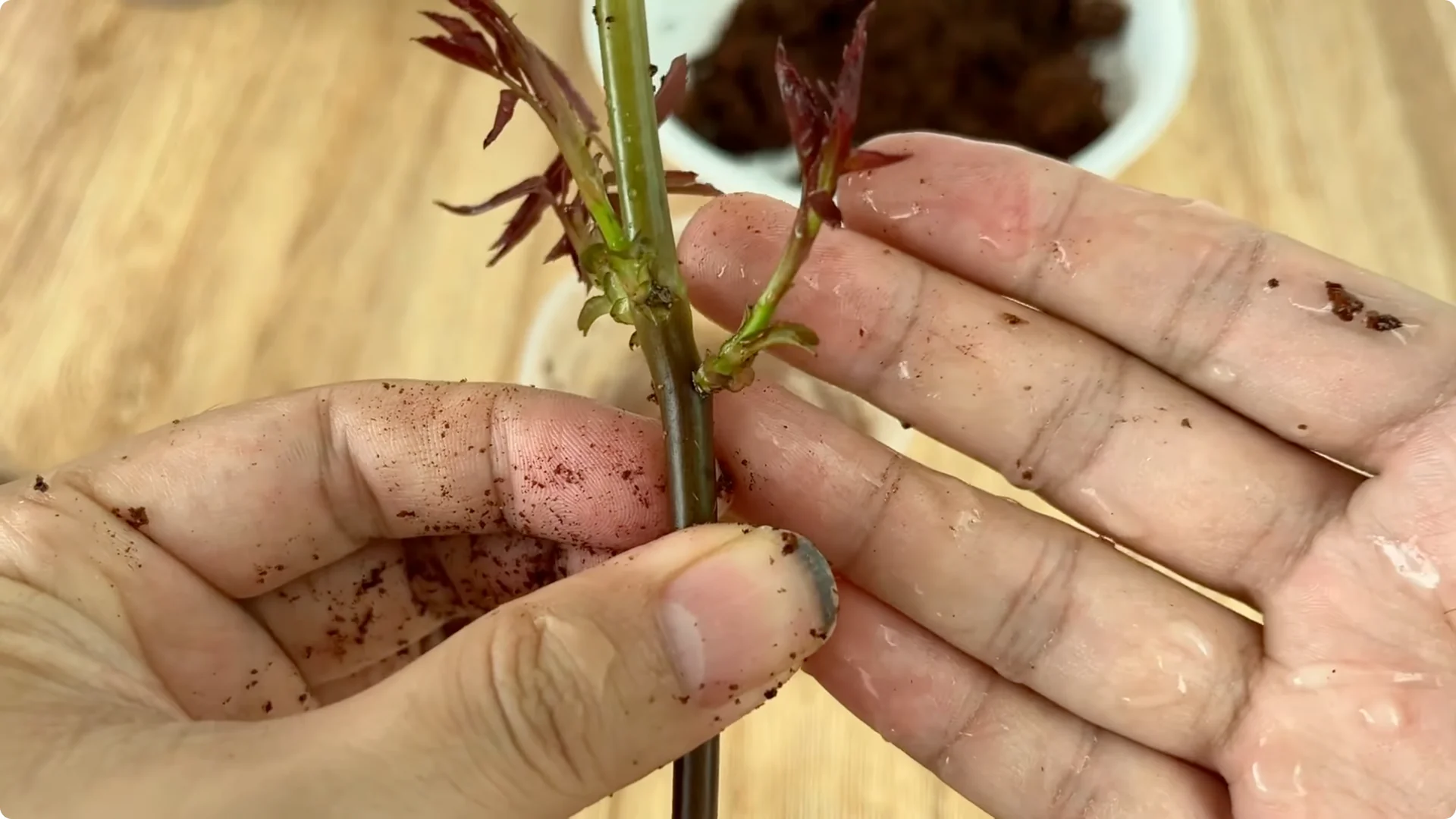
At the base, many white, plump and succulent roots have appeared – a sign that the branch has adapted well and is ready to move on to the development stage.
Read More: how an egg can spark rose branches to root and bloom
8. Rose Propagation with Lemon: Transplanting
When the roots reach a stable length, you can replant the flower branch in a pot with good drainage.
Continue to use coconut fiber as a growing medium to maintain optimal ventilation and moisture.
Final Thoughts
Hopefully this process will give you a simple, effective and scientific experience in rose propagation.
Wish you success and a garden full of flowers!