

I will share with you a special method – using a combination of garlic, apples and glucose to propagate rose cuttings. This is a simple and effective secret that can help flower branches that seem difficult to germinate to take root healthily.
Read More: One Cup Rapid Growth Rose Branches
1. Rose Propagation by Cuttings: Garlic, Apple, and Glucose
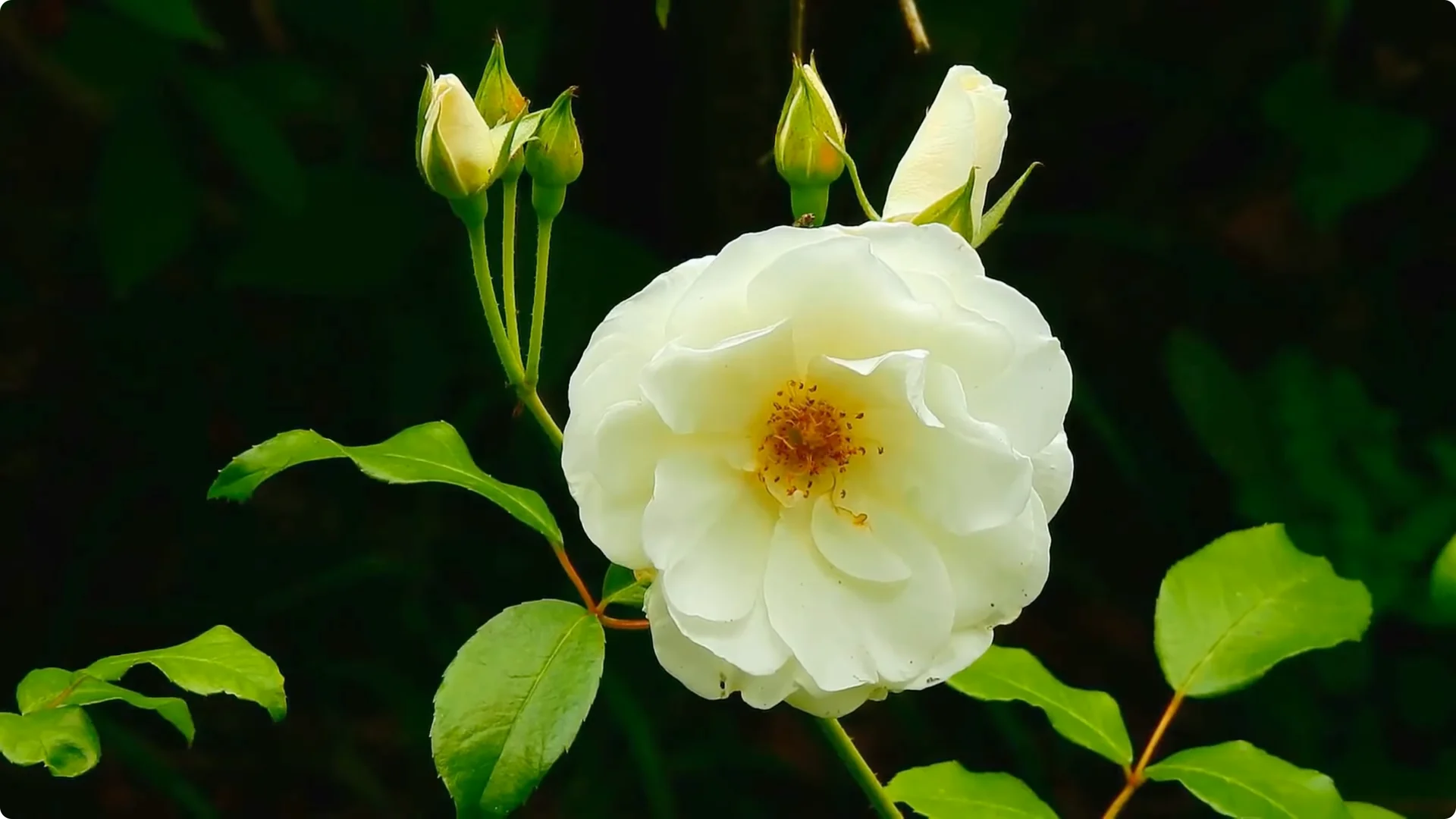
Choose and prep the cutting
First of all, we need to prepare a healthy rose branch, free of pathogens and of moderate age. It is best to choose a young branch – not too young to avoid waterlogging, but not too old to make it difficult to germinate.
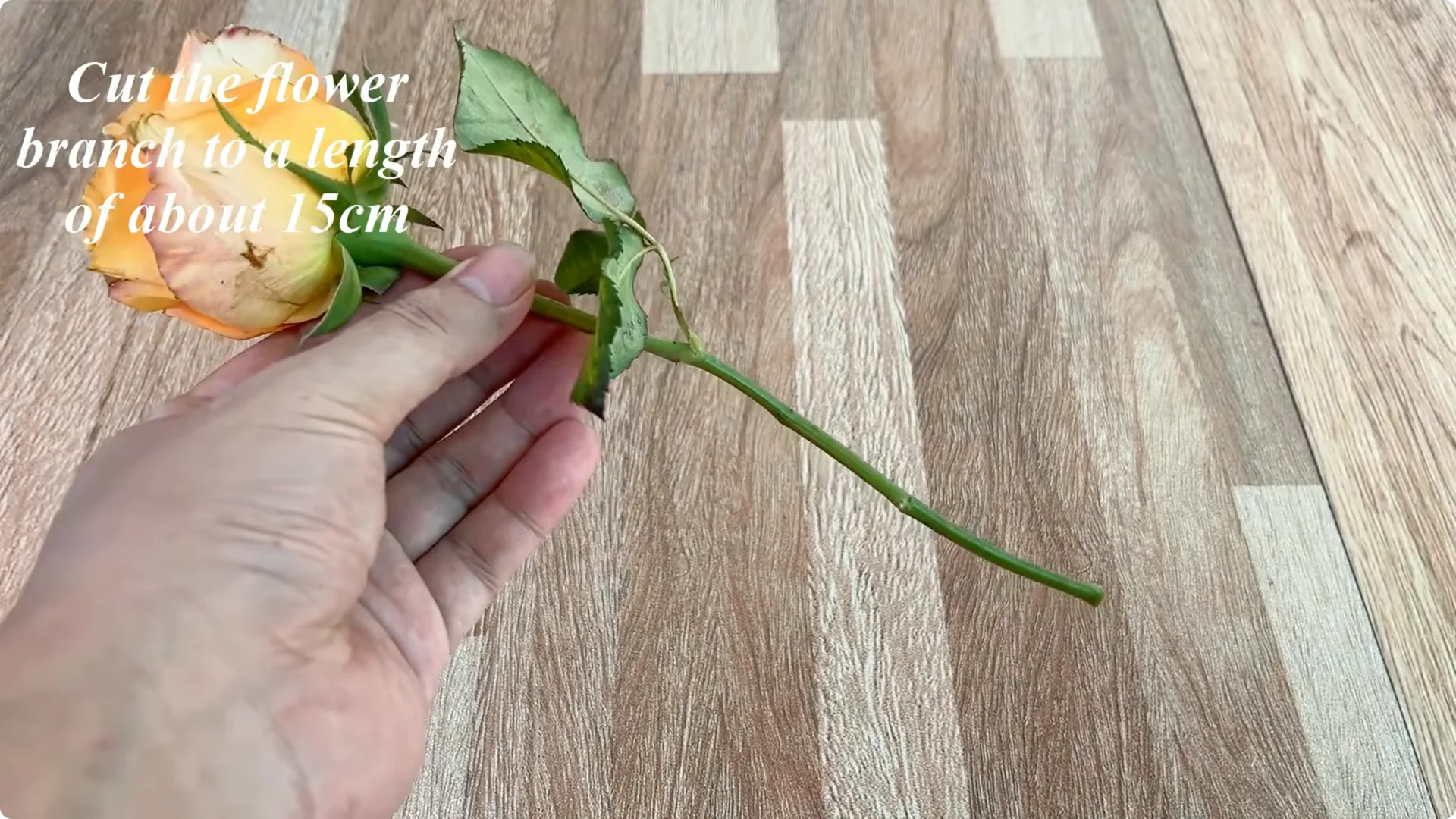
The branch is cut short to about 15cm, then all leaves and thorns are removed. Removing leaves helps limit water loss, keeping the branch focused on forming new roots. Removing thorns also limits bacteria from entering and makes the next steps easier; if prepared carefully, the flower branch will have a much higher chance of survival.
Garlic treatment
Next, we will need garlic, a very familiar ingredient in the kitchen but extremely powerful in plant propagation. Prepare about 3 small cloves of garlic.
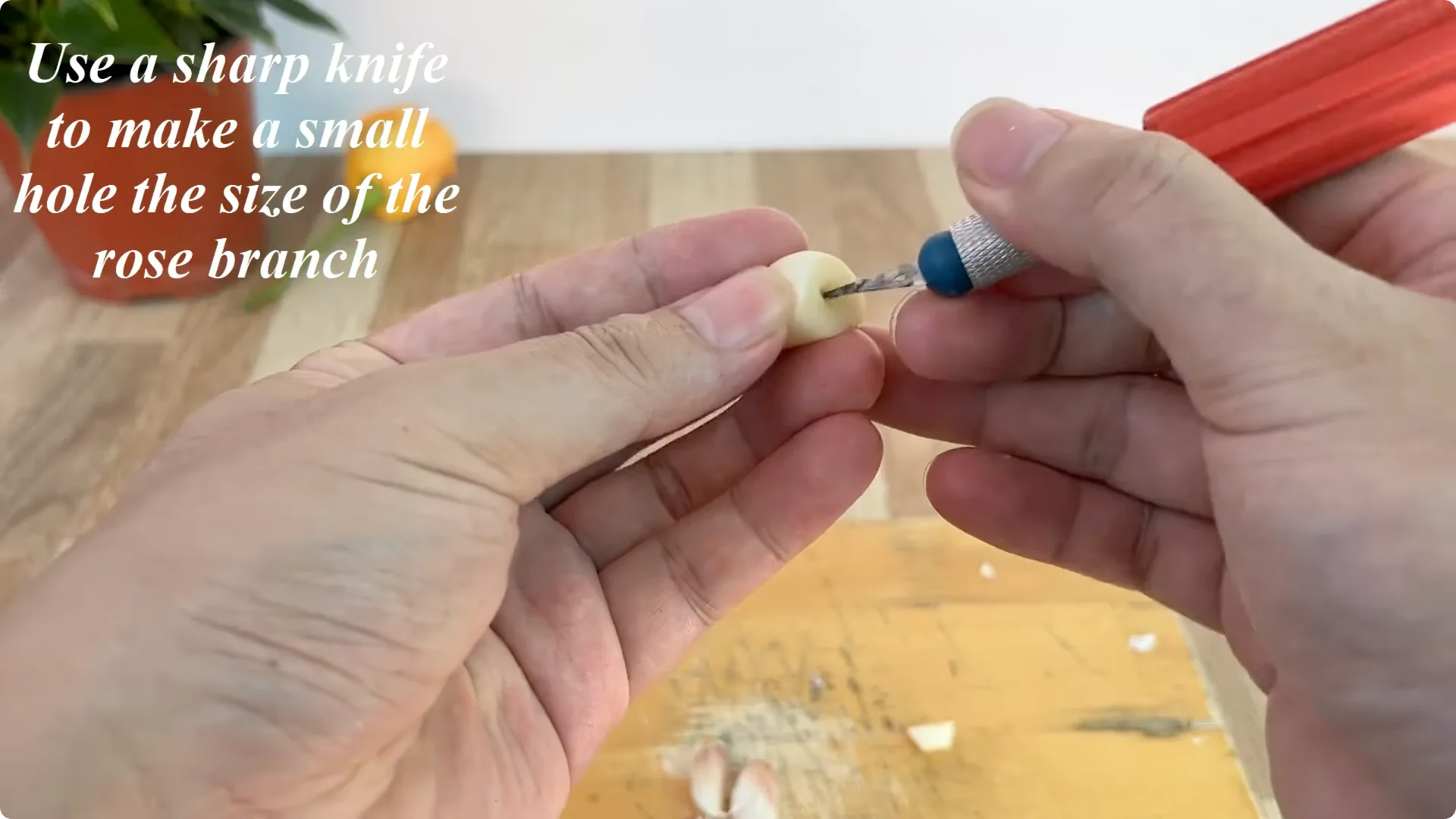
Peel a clove of garlic, cut off one end and use a sharp knife to make a small hole that fits the size of the rose branch. Insert the rose branch into this garlic clove. At this time, the allicin essential oil in garlic will exert its antibacterial effect, helping to protect the cut from fungi, while stimulating cell division at the contact point.
Use the remaining part of the garlic clove to gently rub the entire stem, like a layer of antibiotic coating. Peel the remaining garlic, cut into thin slices and put in a clean plastic cup. Garlic is the silent guard, keeping the flower branch from rotting during the cutting process.
Apple and glucose blend
Next is apples – a fruit rich in vitamin C, phenolic compounds and especially antioxidants. They help reduce oxidation in cuts, helping rose branches heal quickly. Prepare a piece of apple about 20 grams, cut it into small pieces and put it in the cup with the prepared garlic.

It seems simple, but adding apples at this stage is like adding starting energy to the flower branch, helping it not to be exhausted before forming roots. Add 1/2 teaspoon of glucose to the cup. Pour about 500ml of warm water into the cup and stir well to completely dissolve the glucose.
This is a source of simple sugar that plants can absorb immediately. Glucose acts as a fast fuel source, providing plant cells with energy to start the process of division and root formation. Leave this mixture for 30 minutes so that the essences are secreted and completely blended, then stir and filter the solution.
Planting medium and setup
Prepare a clean plastic cup, put the treated coconut fiber inside and compact it to create stability. Coconut fiber is an ideal growing medium because it is airy, retains moisture well and is rich in lignin, helping new roots to develop easily without drowning.
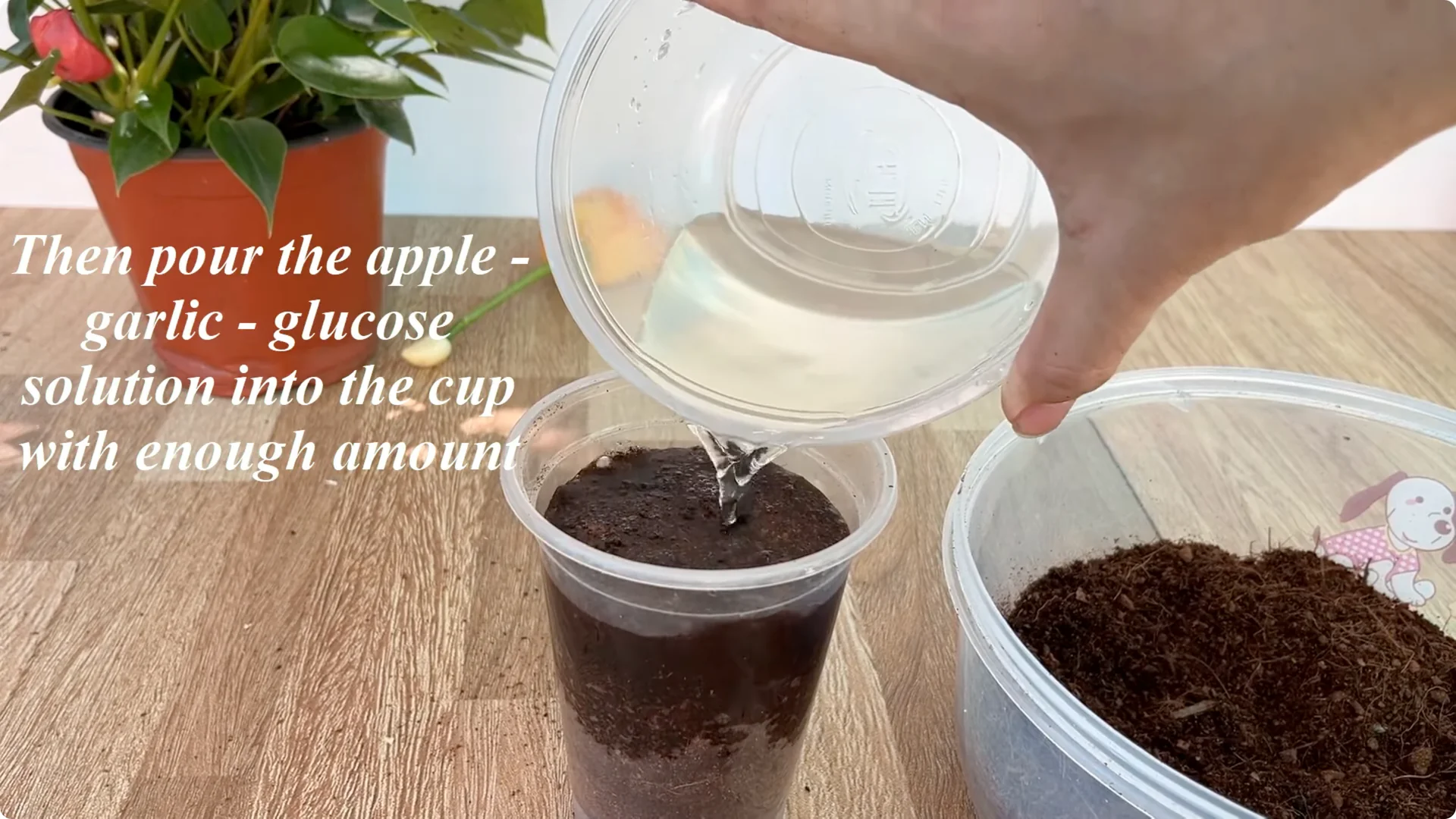
Pour the apple – garlic – glucose solution into the cup with enough amount to moisten the coconut fiber. Take the rose branch out of the garlic clove, then insert it directly into the middle of the cup so that the base is deeply immersed in the coconut fiber.
Mini greenhouse for rooting
Use a plastic bag or transparent plastic cup to cover the mouth of the cup. This is the way to create a humid microclimate – a kind of mini greenhouse, helping to maintain high humidity around the flower branch.
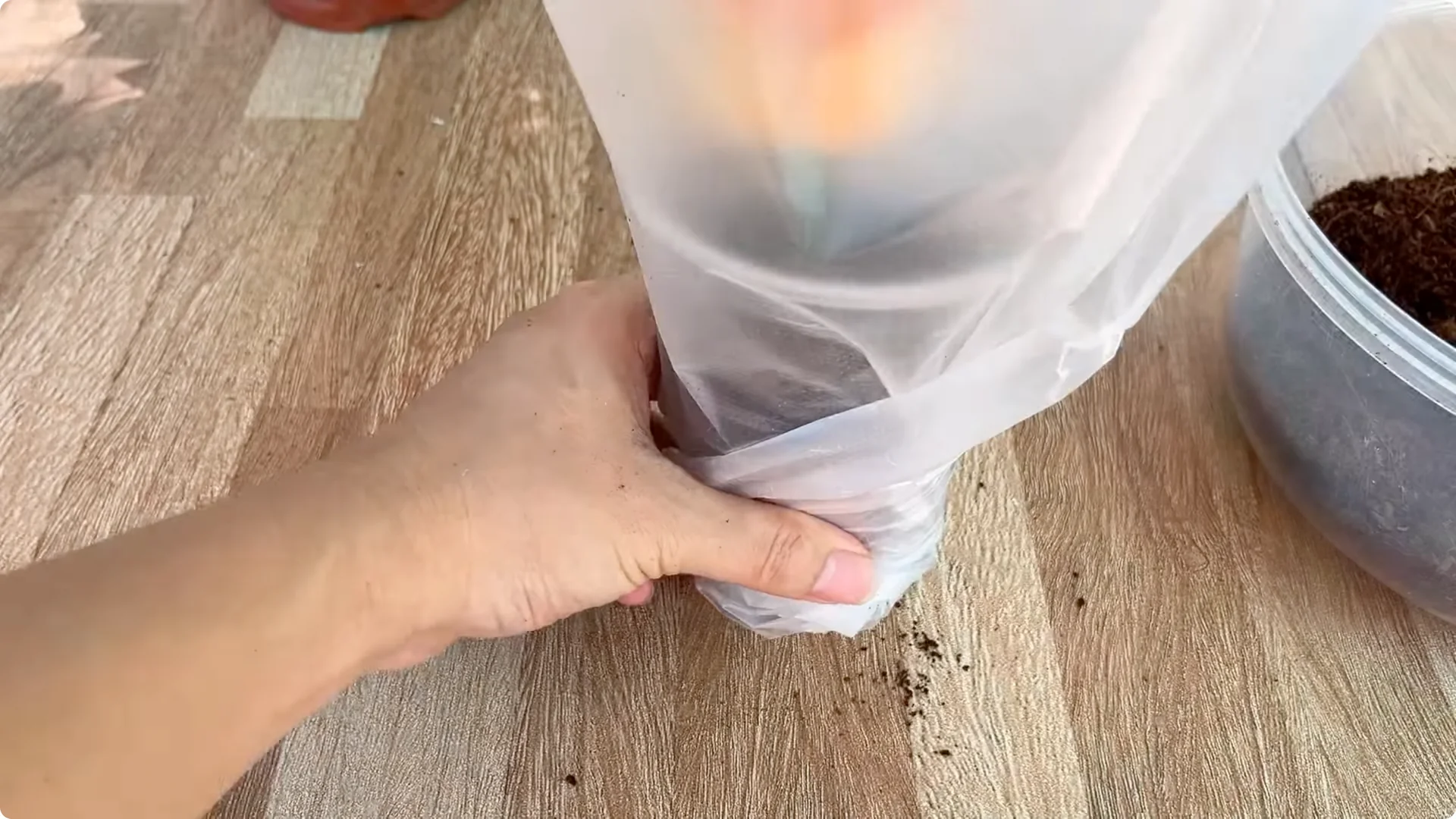
The flower branch will not lose water during the stage when it has no roots, thereby increasing the survival rate. Place the cup in a cool place, away from strong winds and direct sunlight so that the branch does not suffer from heat shock.
Rooting and transplant
After about 10 days, the rose branch will sprout new green shoots, full of vitality. Look closely at the base, you will see a lot of new roots growing, white, plump and healthy. This is a sign of success – the flower branch has really started a new life.

When the root system is strong enough, replant the flower branch in a pot with loose, well-drained substrate such as river sand or a mixture of soil and coconut fiber. At this time, the plant will quickly take root in the new environment and grow into a beautiful, healthy rose bush.
For a natural boost to rooting and flowering, explore this egg method for stronger roots.
2. Rose Propagation by Cuttings: Onion, Honey, and Rice
Select and trim the cutting
I will share with you a simple but extremely effective secret combining familiar ingredients right in the kitchen: onions, honey and rice. After just one week, your rose branch can sprout, grow healthy, white roots.
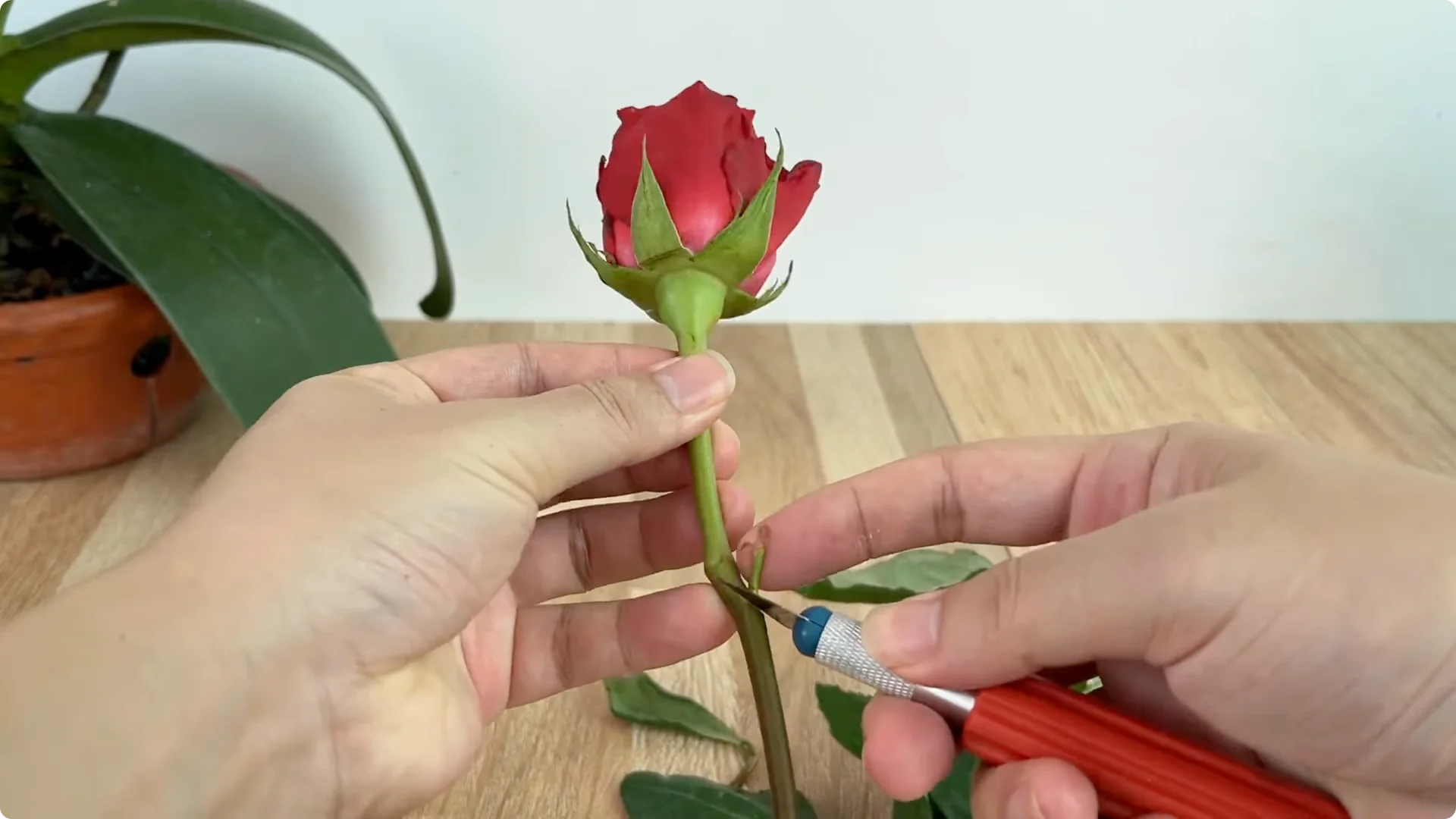
First, you need to choose a healthy rose branch that is free of pests and diseases. This is very important because if the branch is weak, has fungus or aphids, the chance of survival when cutting will be significantly reduced.
Cut off all leaves and sharp thorns to limit water evaporation as well as reduce the risk of infection. Cut the branch short, leaving only about 15-20cm, just enough for the branch to have energy to focus on rooting.
Onion and honey soak
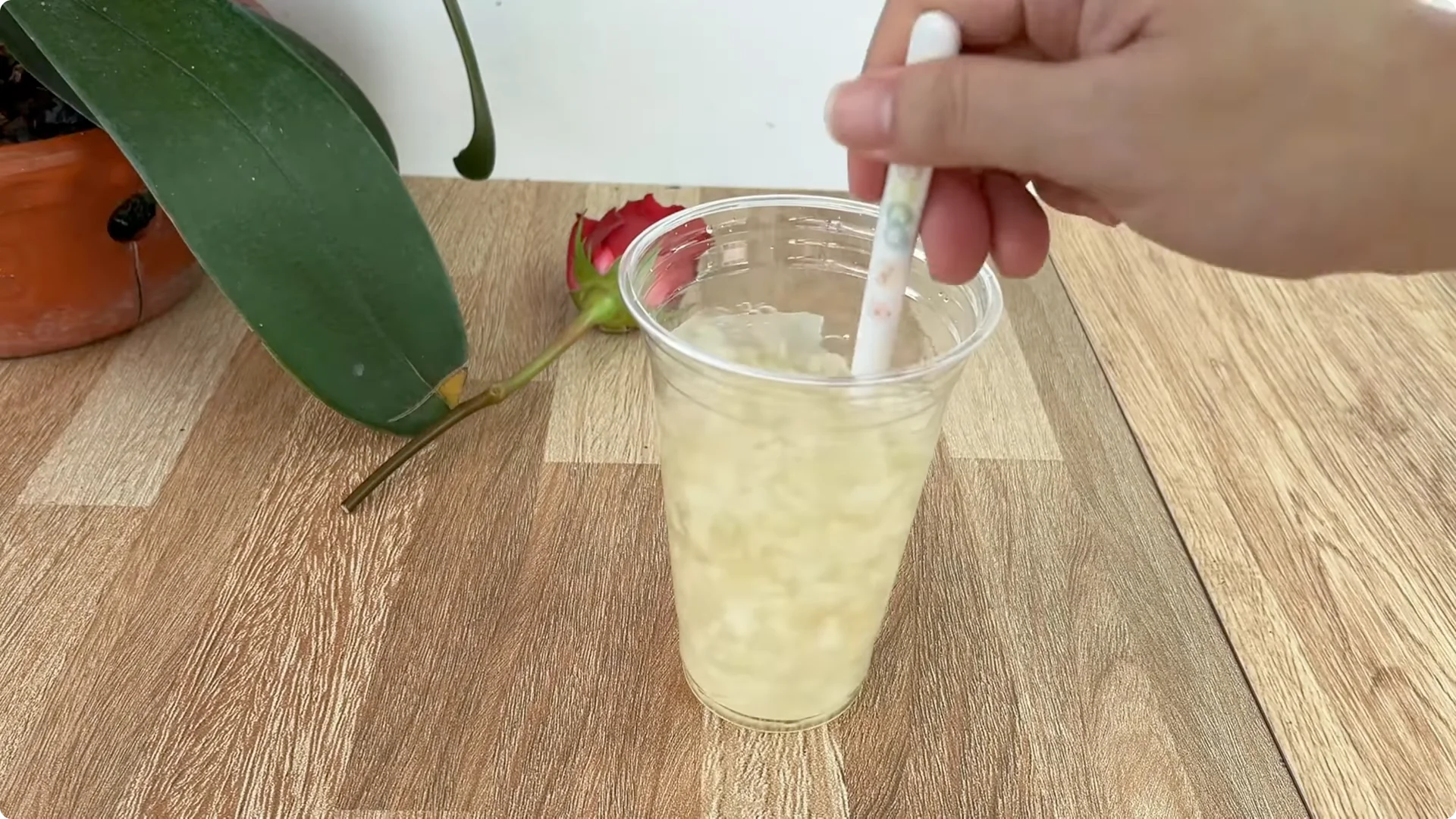
Prepare about 30 grams of fresh onions, cut them very small and put them in a clean plastic cup. Onions contain many sulfur compounds and vitamin C, which have strong antibacterial properties, helping to protect the cut at the base of the rose branch, preventing mold and bacteria from causing rot. At the same time, onion essence can also stimulate the cell regeneration process, contributing to promoting the formation of young roots.
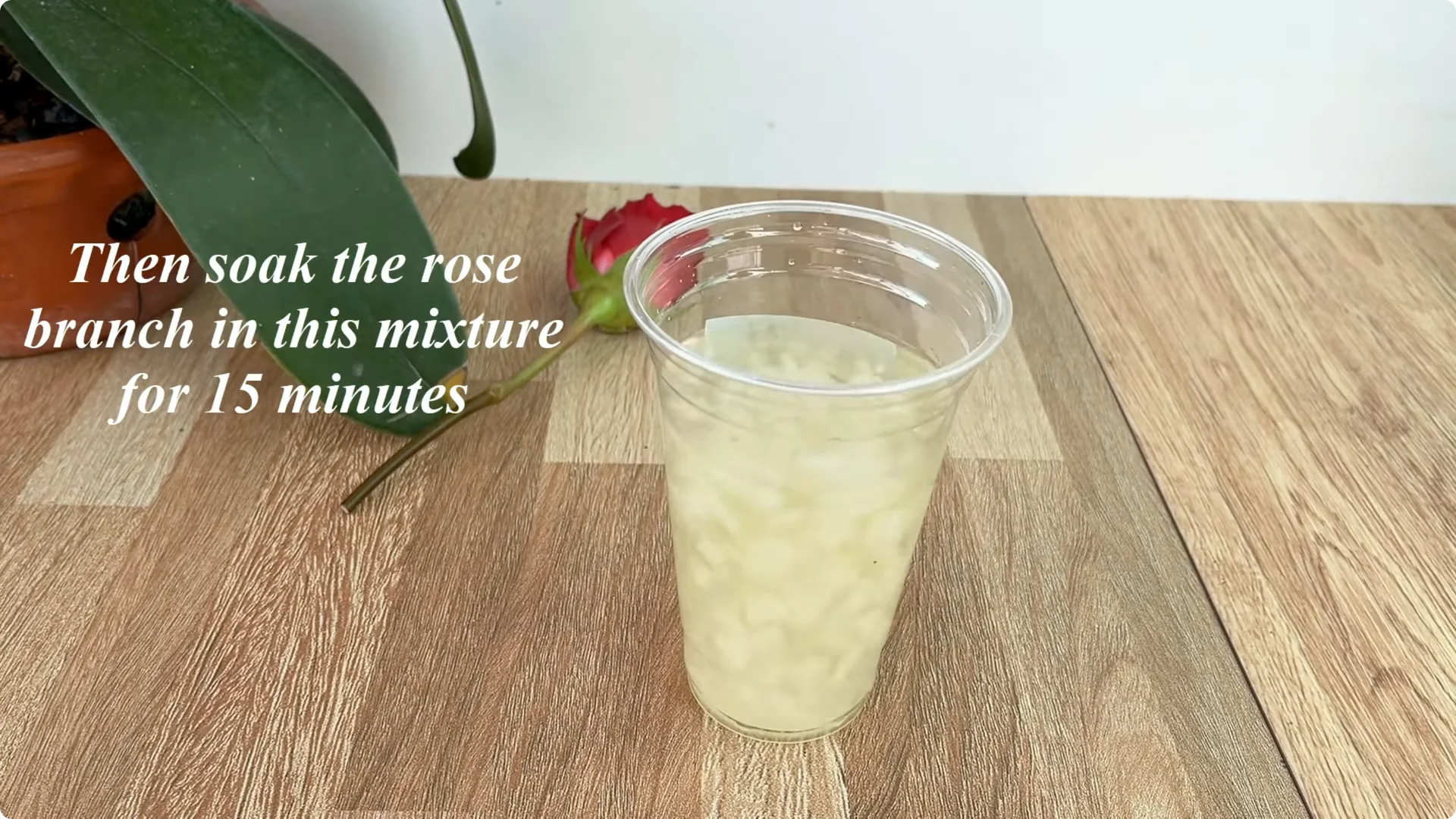
Add a spoonful of pure honey to the onion. Honey has long been known as an effective anti-inflammatory and antibacterial agent. Pour into a cup of 0.5 liters of clean water, stir well until the honey is completely dissolved, then soak the rose branches in the mixture for 15 minutes.
Add rice and finish the solution
After soaking for 15 minutes, continue to add 3 spoons of rice to the mixture. When the rice absorbs water, it will secrete vitamin B, starch and minerals, acting as a growth stimulant. In particular, vitamin B1 in rice helps young roots form faster and stronger.
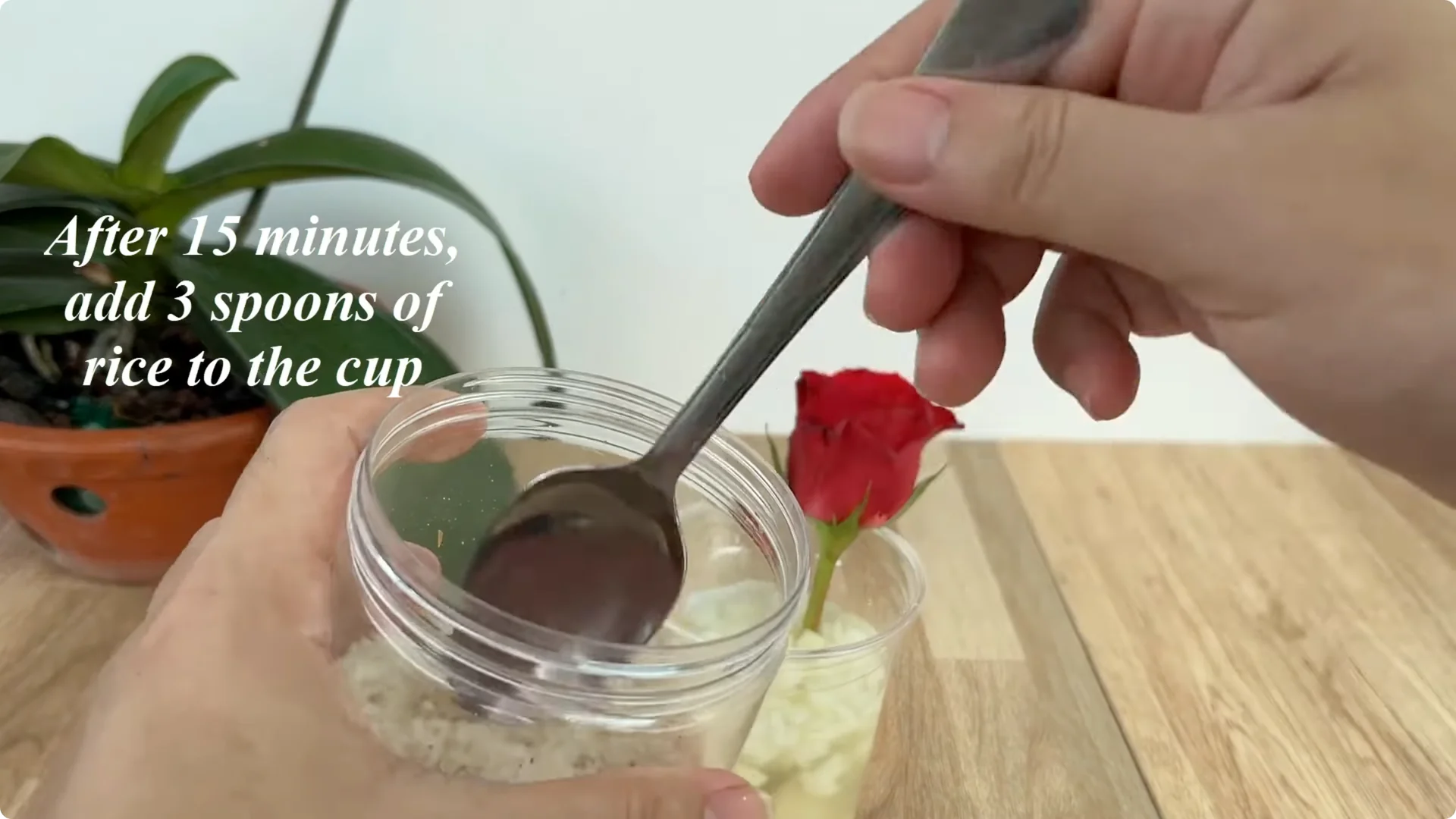
Stir the mixture well, then let it sit for another 15 minutes to let the nutrients soak into the flower branches. Remove the rose branches from the onion – honey – rice solution. Stir well again, then filter out the residue to get a clear solution.
Dilute this solution with 0.5 liters of clean water to reduce the concentration, helping the flower branches not to be shocked. Prepare a clean plastic cup, fill the cup with treated river sand and compact it. River sand drains well, limits waterlogging and creates a well-ventilated environment for young roots to develop.
Sand medium and setup
Pour the diluted solution into the cup with enough quantity. Honey also contains many natural sugars and minerals which help provide energy for the flower branches in the early stages, when there are no roots to absorb nutrients. Insert the rose branch in the middle, so that the base is buried deep in the sand layer.
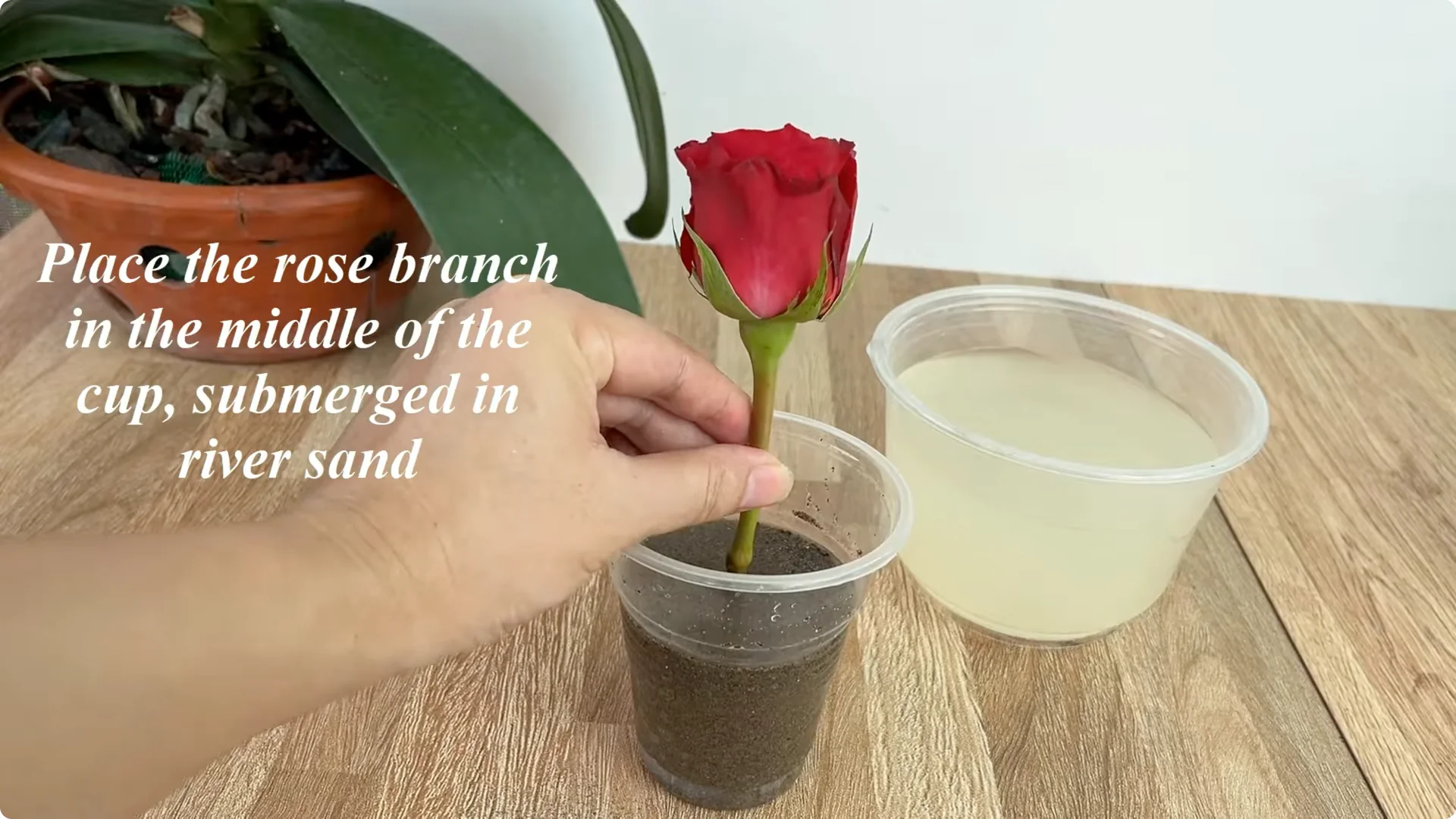
Use a plastic bag or a transparent plastic cup to cover the mouth of the cup containing the flower branch. A humid and airtight environment helps reduce water evaporation, while creating a stable microclimate for rooting. Place the cup in a cool place, away from strong winds or direct sunlight.
Rooting and transplant
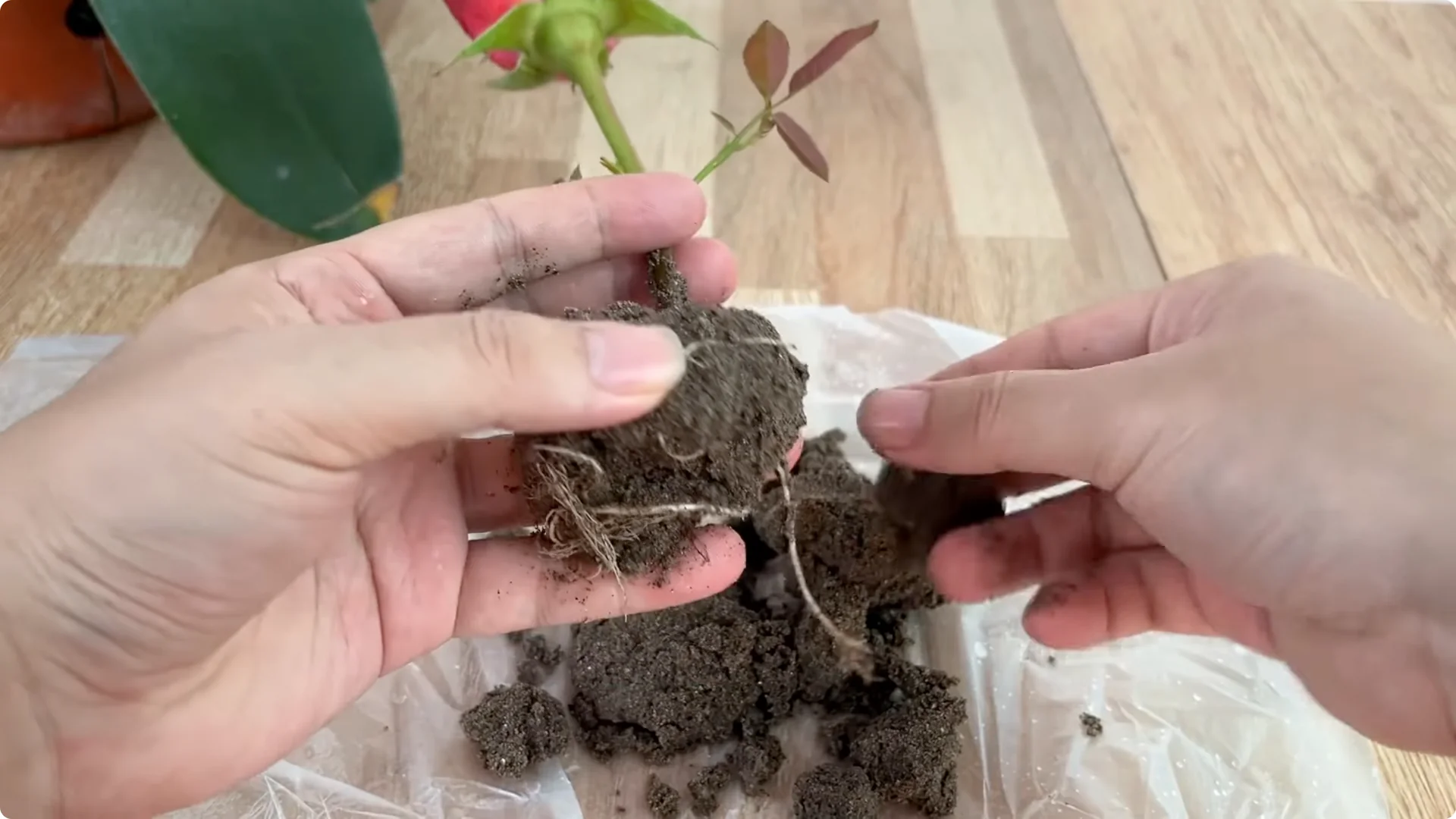
After about 7 days of patience, you will see encouraging results: the flower branch begins to sprout healthy, green shoots. Under the sand, new, pure white, plump roots grow around the base, signaling that life has been successfully initiated. Gently transfer the rose branch to a new pot with a coconut fiber substrate combined with good drainage material, so that the plant can continue to grow and develop.
For another kitchen-friendly approach to stronger roots and blooms, see this updated egg technique.
Final Thoughts on Rose Propagation by Cuttings
With just a few very simple ingredients in the kitchen – garlic, apples and glucose – we can turn a small rose branch into a new plant full of vitality. The combination of antibacterial onions, nutritious honey and vitamin-rich rice also creates a wonderful solution that helps rose cuttings sprout and root quickly.
This is clear proof that taking care of flowers is not only about technique, but also about creativity and patience.